Different Way There … and Back – Post 9

Day 47 – 13th May – Castlemaine to Kerang – 165 Km

At this point we deviated from the original plan, which was to turn south to Geelong, drive the Great Ocean Road and then turn north through Western Victoria. This part of the trip was predicated on reasonably warm weather so had been in some doubt since the weather had turned cold a couple of weeks before. But when we saw the forecast for wind, rain and very cold conditions we decided to keep moving north.  In this decision Mildura was abandoned as well. We would go to Mungo National park via Balranald.

Once through the ever spreading suburbs of Bendigo the road to Kerang is on the edge of the Murray Valley. This area produces grain in copious quantities. The fields, often trimmed by rows of trees, alternated between last year’s stubble, ploughed awaiting grain and already planted. Many areas have had insufficient rain to plant yet so all eyes are turned to the sky. So were ours as a huge rain storm seemed to follow us for a while, but it crossed our path to the rear. We had heavy rain that night.

A surprise along the way, at our lunch stop, was the town of Serpentine. This small country town was the site of Australia’s very first air race. Four aircraft fought out the battle for first place. A small memorial commemorates the event.

Day 48 – 14th May – Kerang

Reporting deadlines were due in the next couple of days, so we stayed in Kerang for a second night. It was a good day to stay in the van and work. It was cloudy, windy and cold all day.

Day 49 – 15th May – Kerang to Griffith – 341 Km

Ruth’s knee continued to give her problems and the need to be constantly climbing into and out of both van and car was awkward and painful.  Add to this that the coming couple of weeks of the trip would take us into much rougher country the sensible conclusion was that we should head for home. We decided against a dash and instead decided to make our way north via the Kidman Way.

To put this revised plan into action we started out to the north across the Murray River to Deniliquin, turned east to Finlay and then made our way along the Newell Highway to Jerilderie, where the Kidman Way commences. The Kidman Way, of course, is named in honour of Sir Sydney Kidman, one of Australia’s true beef industry pioneers.

This southern area of NSW is flat grazing country with some agriculture. We travelled through this kind of country until we reached the irrigation area at Coleambally and then Griffith. As we approached Griffith the vineyards and orchards increased and lead into the commercial sprawl which seems to occupy the roadsides into towns of this kind.

We found a parking spot near a grocery store to do some shopping. This activity took us along the main street both going and coming. It has to be one of the longest shopping strips we have seen and one of the busiest as well. We found a caravan park and settled for the night.
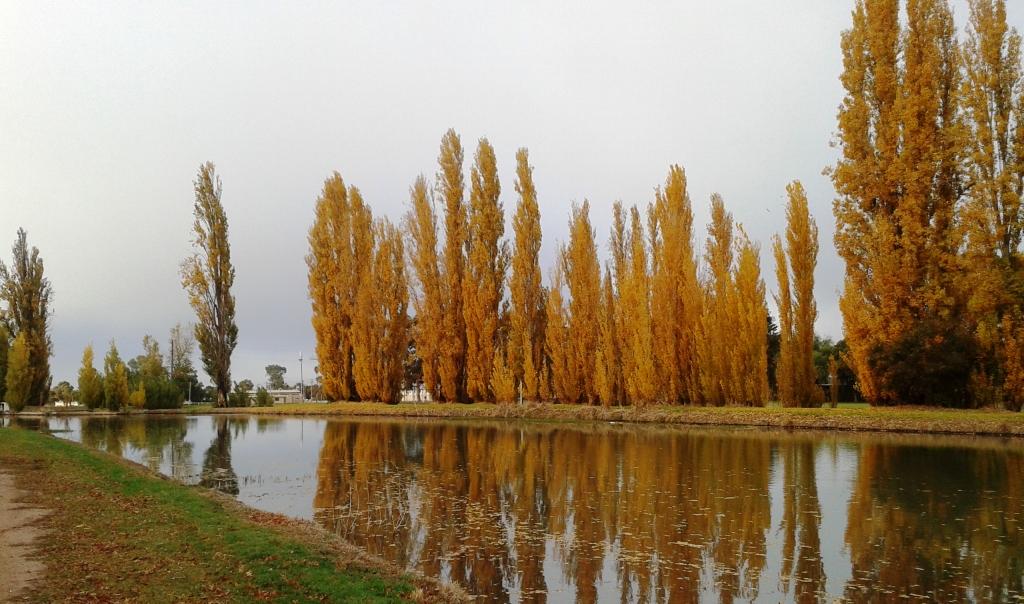
The RV parking area at Griffith is right by this attractive canal.

The RV parking area at Griffith is right by this attractive canal.

Day 50 – 16th May – Griffith to Cobar – 366 Km

The day dawned with a heavy fog blanketing everything but soon the sun started poking through with the promise of a better day. The gentle climb out of town took us past more vineyards and orchards but then the country flattened to rich agricultural and grazing land. We passed several large wheat silos with additional grain stored under tarpaulins. Last year must have been a good harvest.

The main town on the way to Cobar is Hillston, a town about which I knew nothing. I joked to Ruth as we left Griffith “If there is a McDonalds at Hillston I’ll have a skinny chino”.  There was no McDonalds but as we pulled into a caravan parking space (Hillston is a RV friendly town), to continue the joke, I said “I’ll have fresh scones for morning tea”. I didn’t even get a laugh!

As we got out of the car Ruth said, “Isn’t that a coffee shop over there?” So we were introduced to The Shed on the Lachlan, where we did enjoy a skinny chino and fresh scones with jam and cream. We were a bit early for sausage rolls. They were under construction in the food preparation area behind the counter. The building was in the style of a shed with the river literally at its back door.
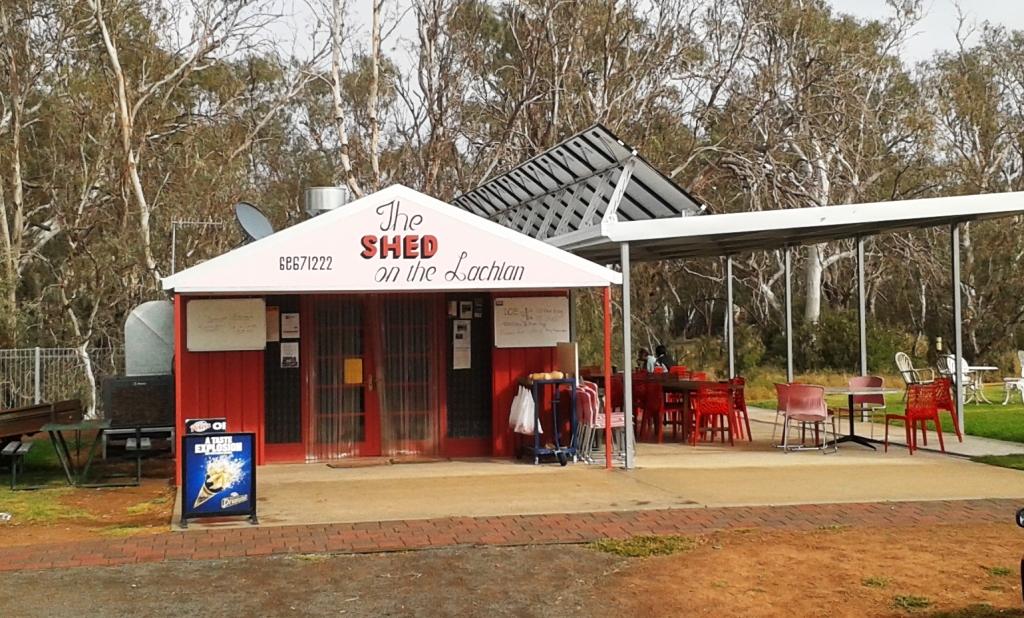
The Shed on the Lachlan. The coffee shop at Hillston.
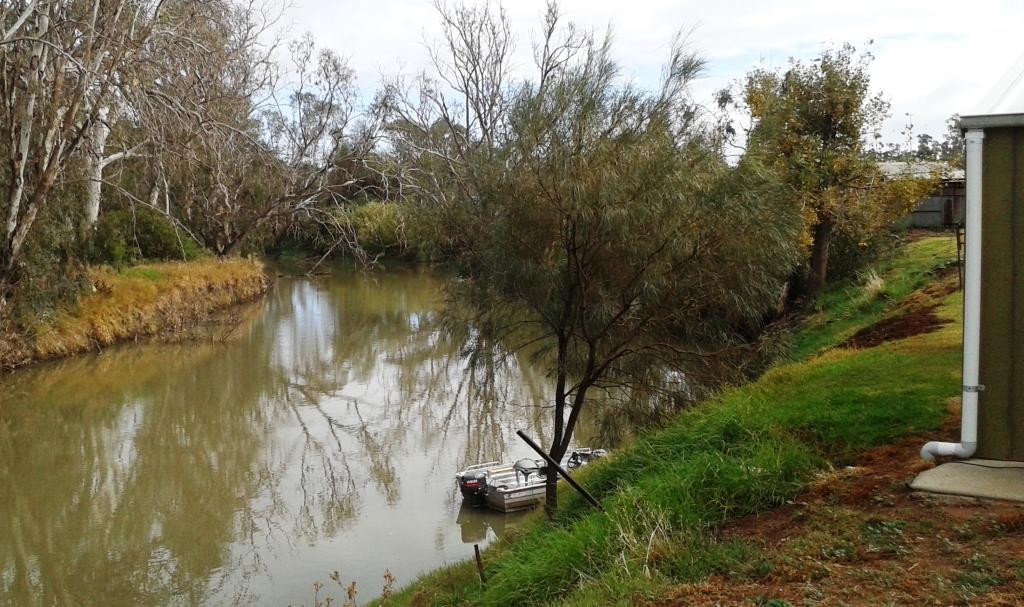
The Shed on the Lachlan. The coffee shop at Hillston.

The Lachlan right behind the Shed.

The Lachlan right behind the Shed.


Hillston is a substantial town and is a service centre to grazing and agriculture and cotton production. The cotton harvest has recently finished and large yellow wrapped cylindrical cotton bales were lined up in the fields waiting for transport.
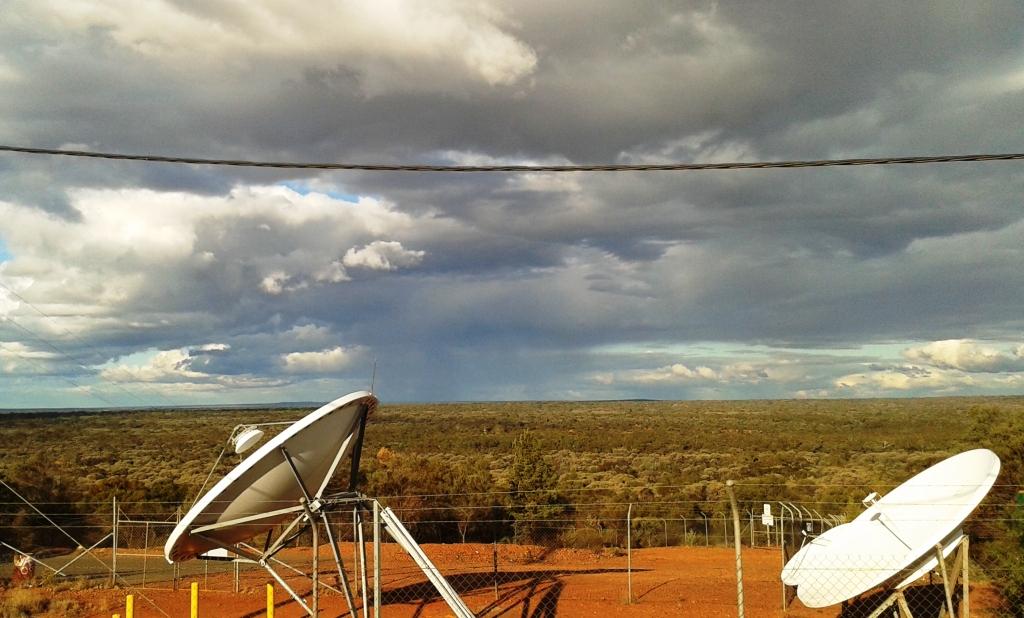
The country through which we travelled as we approached Cobar.

The country through which we travelled as we approached Cobar.

Finally the flat farming lands gave way to low hilly scrub covered country that continued until we reached Cobar. The initially fine day gave way to dark patches of rain clouds which moved in strips across the landscape producing alternatively wet and dry sections of road.
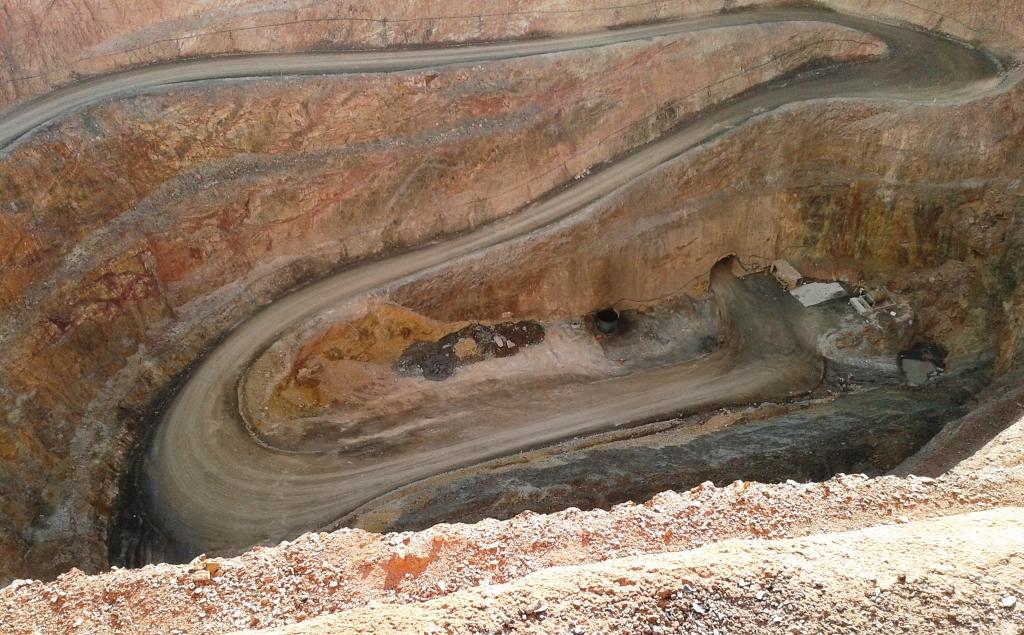
The deep hole of Cobar's copper mine.

The deep hole of Cobar’s copper mine.

Cobar is a mining town with a very deep hole just outside the town where copper has been extracted. We drove to the look out where we could see to the very bottom of the hole and then drove around some of the back streets of town looking at the miners’ cottages. Most were small, many with clear signs of extension and a substantial proportion probably getting on towards the century mark.

Day 51 – 17th May – Cobar to Willie Retreat – 235 Km

I have been interested in the Macquarie Marshes since reading about the grief they gave to some of Australia’s early explorers. They stretch from Warren in the south almost to Walgett in the north. A visit had been in our south bound itinerary but got bumped for other activities. Since the area was not too far from our path home we decided to visit for a couple of days and stay at Willie Retreat on Willie Station.
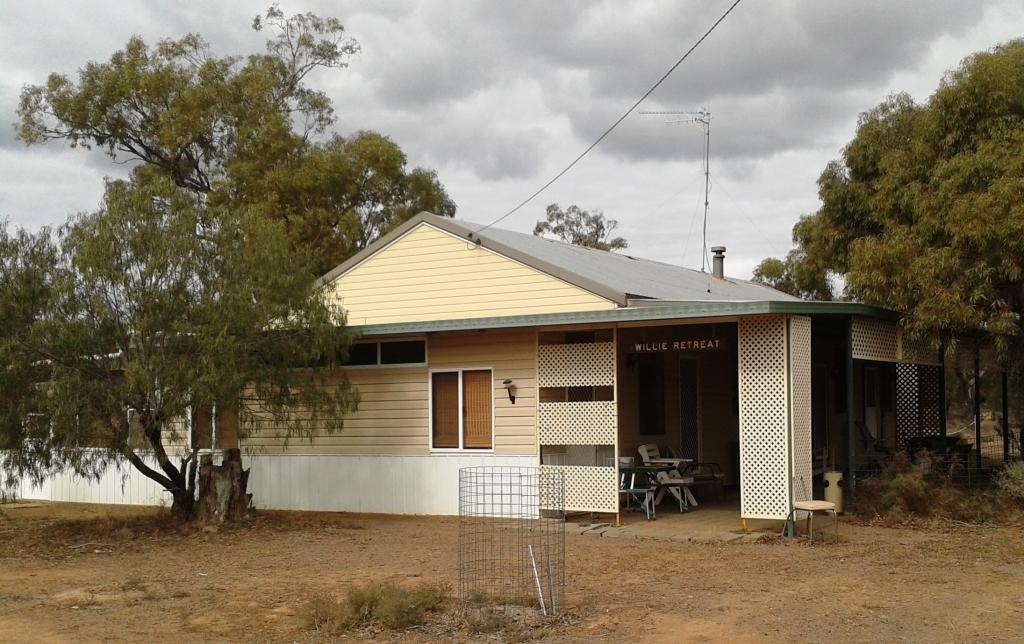
The shearers' quarters anr the main accommodation building.

The shearers’ quarters anr the main accommodation building.

To get there we abandoned the Kidman Way at Cobar and turned east to Nyngan. Then we travelled in a north easterly direction for about 110 Km over sealed reads that started at full width but progressively narrowed until just wide enough for one vehicle. We were passed by two and met by only one vehicle in the whole journey. The country was uniformly flat with most trees along water courses and passed station homesteads or roads regularly both sides. We ran out of tar and onto a good dirt road about 10 Km from Willie Retreat. Our lunch stop was by Duck Creek without a single duck in sight.

Willie Retreat is on Willie Station which abuts the southern Macquarie Marshes.  The station no longer runs cattle or sheep but Myra Tolhurst, survivor of a partnership with her late husband Philip, runs the Retreat for visitors to the marshes. In the few days before our arrival she played host to a national parks training group who were being taught how to shoot feral animals from a helicopter.
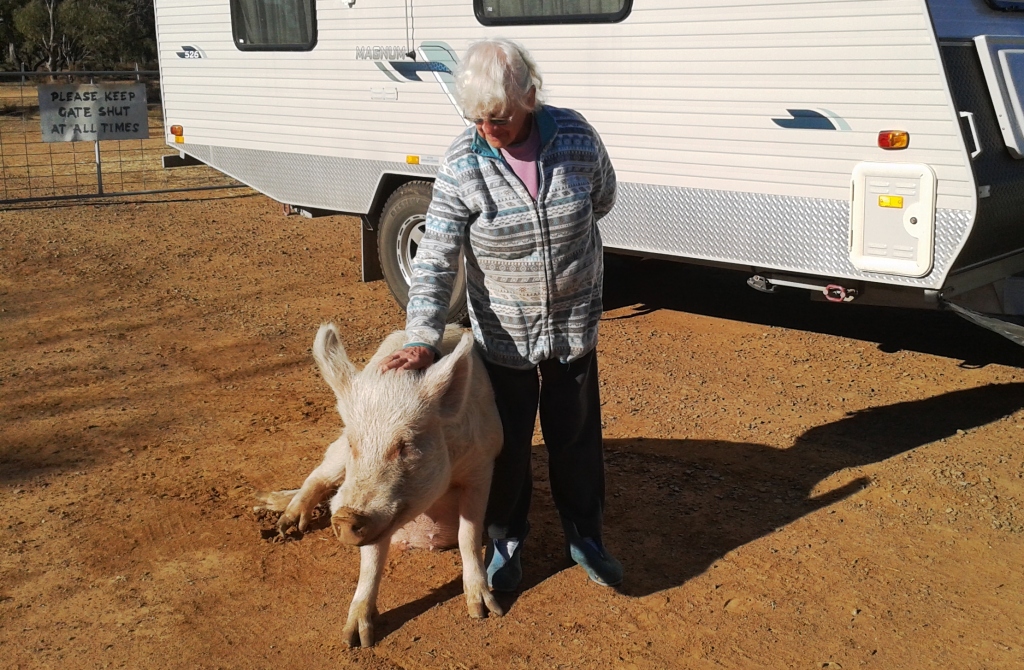
Myra with Patrick the pet pig.

Myra with Patrick the pet pig.

Willie Retreat is not a caravan park but a station stay with facilities suitable for that purpose. Like many such establishment the accommodation is based on the original shearers’ quarters. A bit rough but comfortable and supplemented by a bunk house, on site vans, powered van sites and an extensive camping area.
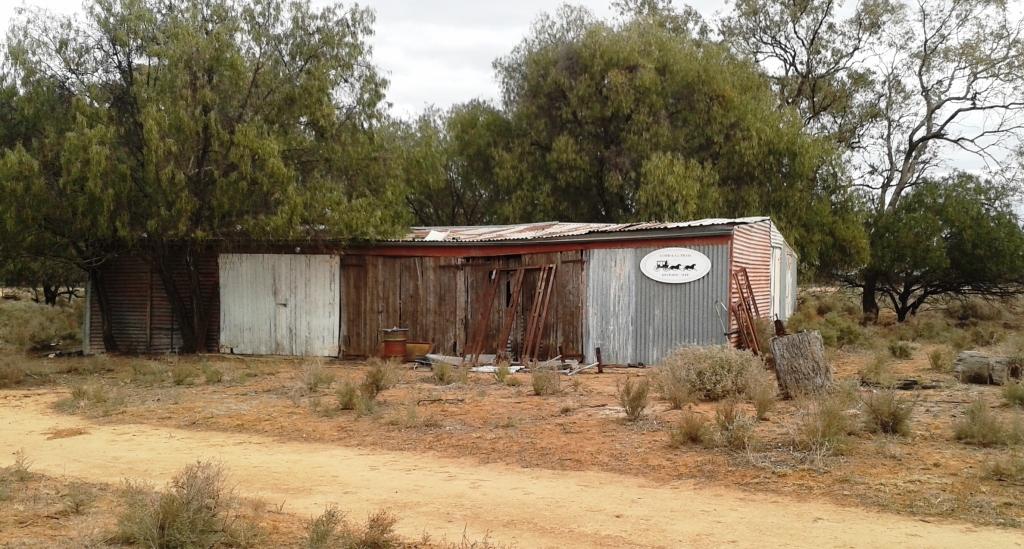
The station is on a historic road and hosts the remains of a Cobb & Co depot.

The station is on a historic road and hosts the remains of a Cobb & Co depot.

Day 52 – 18th May – Macquarie Marshes

Yesterday’s sunshine was a memory and a cloudy cold day a reality. We made a late start and rewarded ourselves for our lack of application with bacon and eggs for breakfast. We walked around the property greeting the pet emus and examining the edge of the marsh which, at the moment, is more dry land than wet land. It has been dry in this part of NSW for the last year or so.
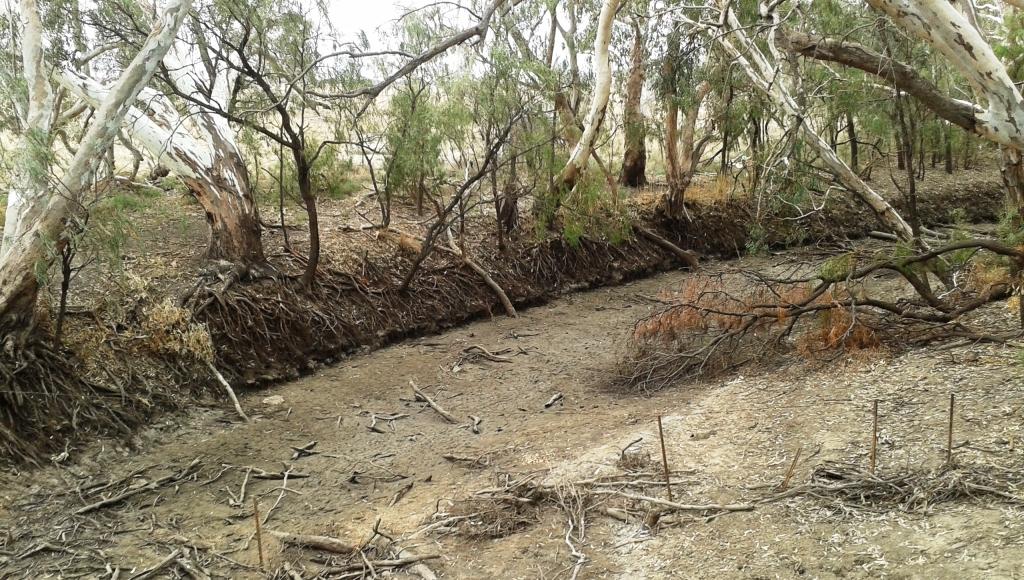
The Macquarie River near Willie Retreat.
The Macquarie River near Willie Retreat.

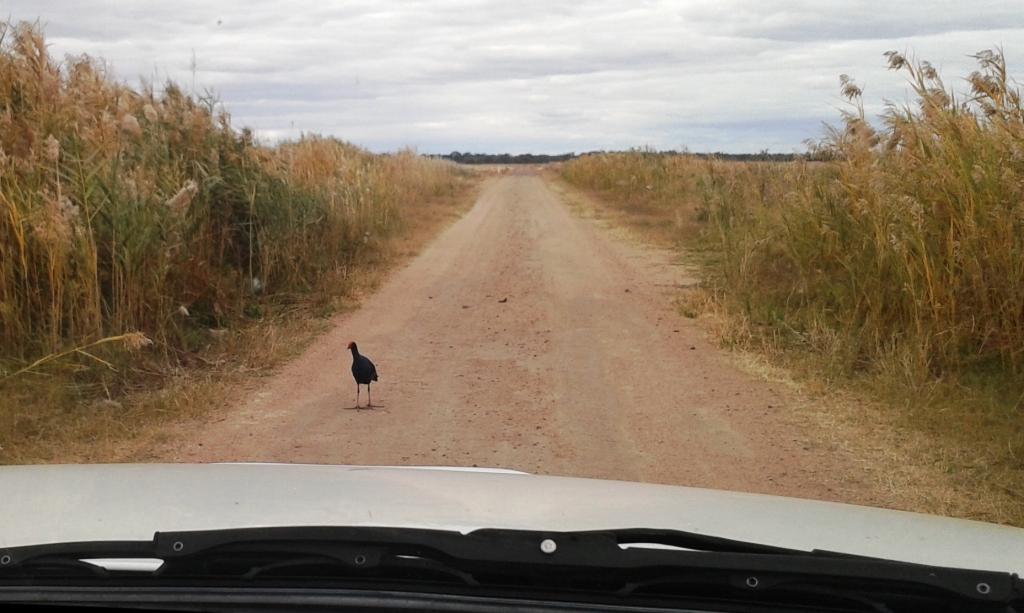
A black winged stilt blocking our way.

A black winged stilt blocking our way.

After lunch we drove along the dusty Gibson Way that runs through the middle of the marshes. This road is cut when the Macquarie is in flood. The Macquarie River, just 1 Km down the road, is totally dry but as we drove on we found a few places where we could see the marshes as they are in wet conditions.  There were lots of water birds but few compared to the number involved in the mass breeding of recent years.

This picture should have contained water and birds.

This picture should have contained water and birds.

The road is dirt and was in good condition but a bit dusty. Rain turns it into a quagmire. We decided to drive its full length to the small town of Quambone on the eastern side of the marshes. The sign at the entrance of the town advises that 197 people live in the Quambone district. That would include those residing on station properties.
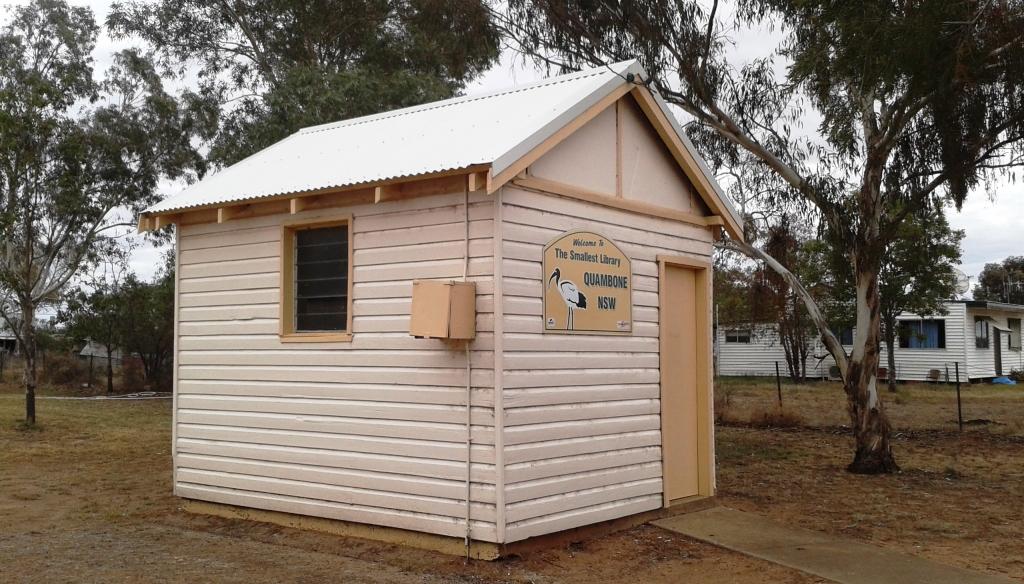
Quambone claims the smallest library. And it has propper sized books.

Quambone claims the smallest library. And it has propper sized books.

As we drove along the main street we noticed great activity around what appeared to be the only shop. We stopped to investigate when we saw a sign that said “Paint today, free lunch tomorrow”. It seems that the previous owner of the shop, which is also the post office, allowed it to almost run to a dead stop. A young couple from Perth have taken it over and are trying to turn it into a general store, coffee shop and take away business. But there is no quick fortune to be made here so getting it up and running was a real challenge.
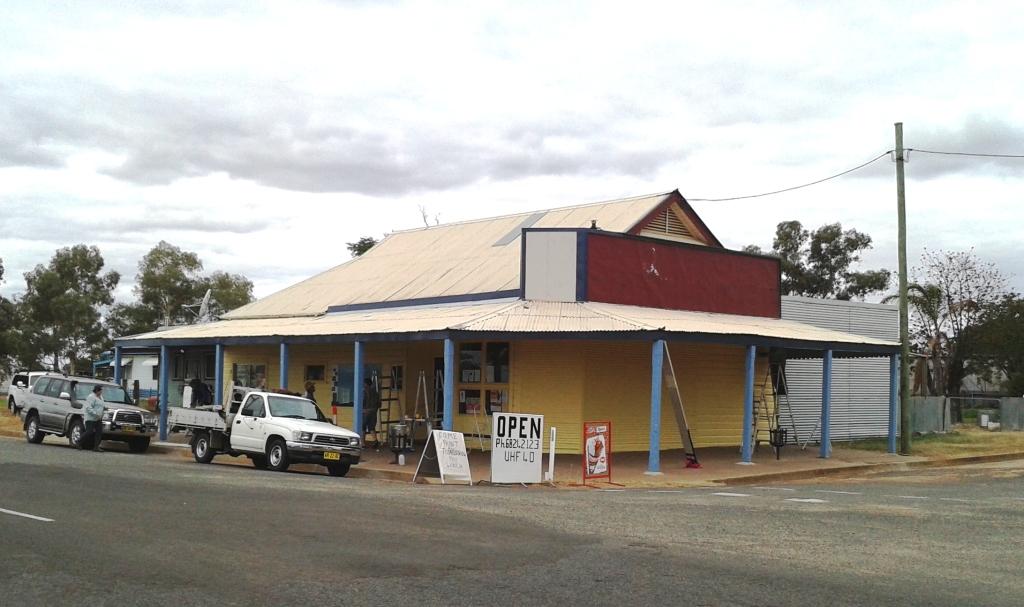
The working bee at the Quambone store.

The working bee at the Quambone store.

Somehow the local Salvation Army rural chaplaincy found about the problem and with the help of a Rotary Club from Canberra set up a project to renovate the building. So a team of workers arrived in town and set to work. The team had to return home on the previous day but the painting had not been completed. So the Salvation Army chaplains (husband and wife) and some volunteer farmers were painting and putting on finishing touches. We contributed by having coffee and cake and posting it on Face Book. We chatted to the helpers. Lovely people all!

Day 53 – 19th May – Willie Retreat to Lake Keepit – 360 Km

Our journey east crossed our southbound track at Coonamble on the Castlereagh Highway. We left Willie Retreat at about 9.30 am after acquiring a bottle of Willie Retreat honey. River Red Gum flavour!

The first part of the journey retraced our drive of the previous day to Quambone,  then to Coonamble, Baradine, Coonabarabran where we stopped to shop and for lunch and finally to Gunnedah and the caravan park overlooking the waters of the dam at Lake Keepit State Park.

It was a very cold night at Lake Keepit, with a minimum of around 0C.

Day 54 – 20th May – Lake Keepit to Warwick – 476 Km

We had not previously driven the length of Fossickers’ Way so this was a good chance to do so. The track or the day took us through Manilla, Barraba, Warialda, Texas, Inglewood and Warwick.

A slight mishap occurred as we passed through Manilla. The bridge over the Namoi River is narrow. Four vehicles were coming in the opposite direction as we drove onto the bridge. Number three vehicle was a little too close to the centre line of the roadway and hit and destroyed our right hand towing mirror with a frame to hold a towing mirror on his vehicle. So the left hand mirror had to be moved to the right hand side and we finished the trip with only one mirror.
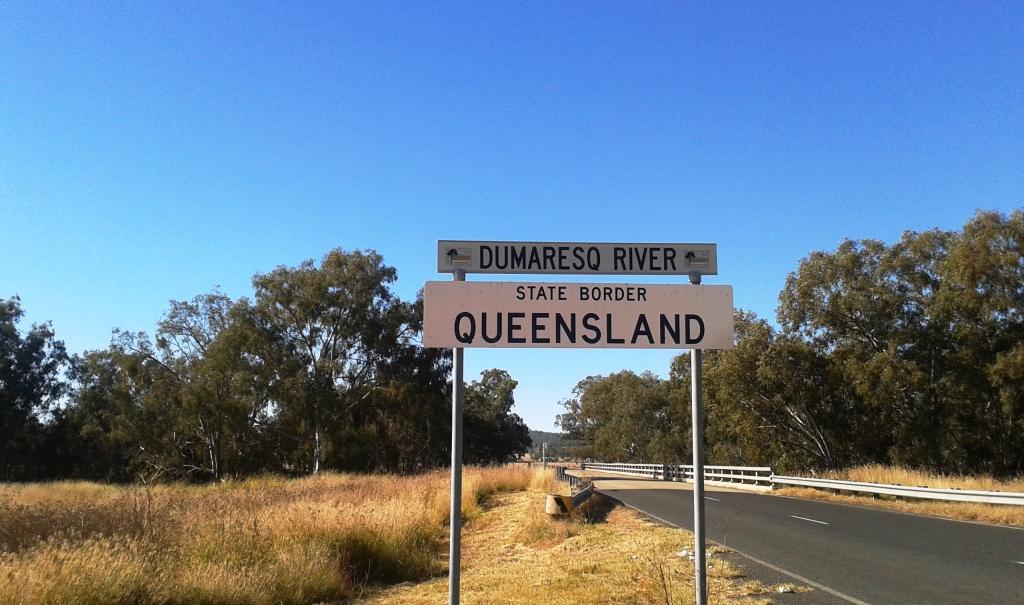
A blue sky welcome to Queensland.

A blue sky welcome to Queensland.

We had started the day under cloudy skies but as we approached the Queensland border the cloud ended in a straight line across the sky and beyond this was clear blue. But it still wasn’t warm. The cold weather is following us, or perhaps it has come on ahead.

Day 55 – 21st May – Warwick to Home – 239 KM

There was frost on the ground in the caravan park at Warwick. The park manager had remarked, as we booked in the previous evening, that he had lit his fire the day before and did not expect to let it go out until September.

We avoided Cunningham Gap on the Cunningham Highway to miss the road works that are still under way repairing damage caused by the deluge over the area earlier in the year. We took the Clifton to Gatton Road instead. This is a fairly narrow road but is a pleasant drive through a gorge and then through farm lands culminating with the small crops of the fertile Lockyer Valley.

We arrived home at about 11.30 am to commence the inevitable task of unpacking the van and getting back into the routine of daily life.

Ruth has an appointment with the doctor tomorrow morning so we will keep that and see where it leads.

Footnote: The doctor prescribed physiotherapy. The first treatment occurred this afternoon
A Different Way there … and Back – Post 8

Days 36 – 1st May – Stratford to Lakes Entrance – 90 Km

A short drive had us in the park at Lakes Entrance at lunch time despite having stopped at Bairnsdale to buy some warmer clothes. A bitterly cold wind was blowing from the south and totally negating any influence that the sun was having on the temperature. Two digits required to express the temperature, but only just. Other family members arrived mid afternoon so the catch up has commenced.
Days 37 to 40 – 2nd to 5th May – Lakes Entrance Area

A day by day description of these days would be like watching paint dry so I will comment only on the highlights.

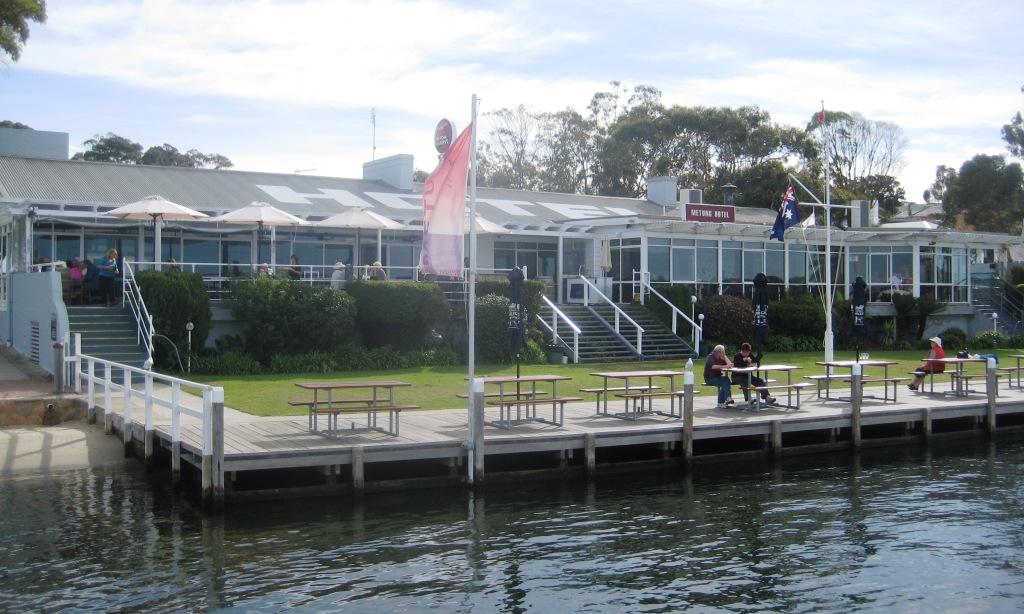
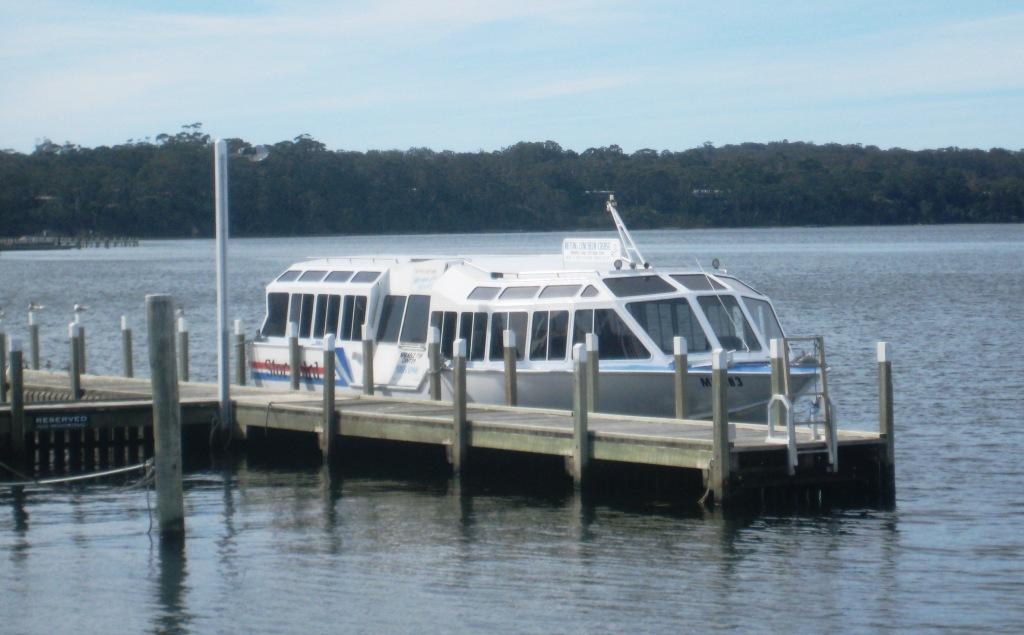
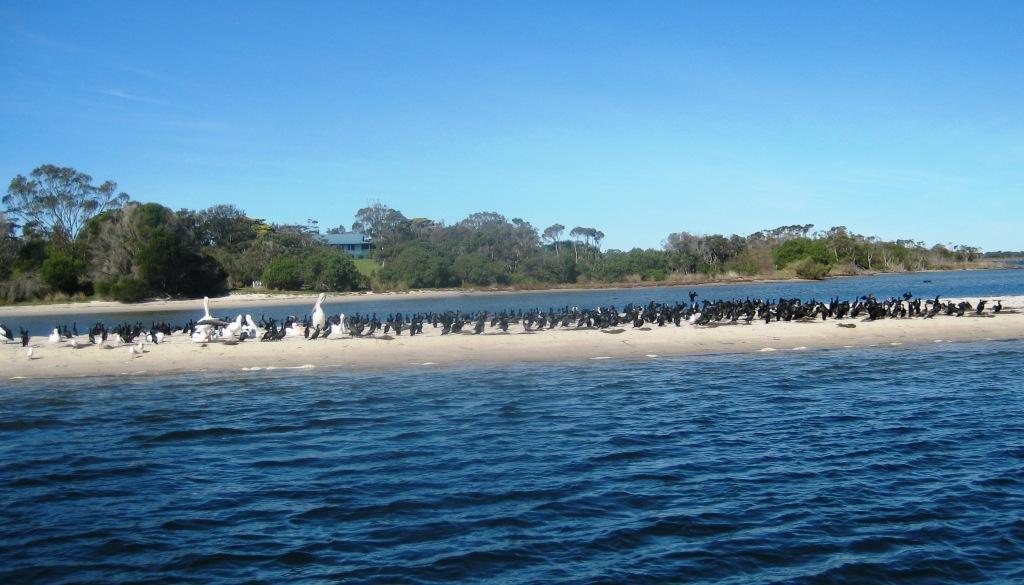
On Friday (Day 39) the entire party of 6 joined a ferry cruise on the lakes. The objective of the cruise was lunch at the Metung Hotel but with sightseeing, accompanied by a commentary from the skipper, as a bonus. The entire event took about four hours and occurred under clear skies and sunshine. Thursday and Friday were both much better days that the day that we arrived, although the mornings were still very cold.  If winter is not actually here it is not far away.

Cormorants crowd a sand bank.

Cormorants crowd a sand bank.

Metung is a small village on a point, or tongue of land that provides one shore of the channel into Lakes King and Victoria, when approaching from Lakes Entrance. Its status as a village is confirmed by the presence of a genuine village green. There are a few businesses. The housing is a mixture of luxury and humble but the overall effect is

The hotel is right by the lake

The hotel is right by the lake

an attractive one. The hotel is right on the water with its own jetty. We simply moored, disembarked and strolled in for lunch. I think this is how the rich do it!

Parked for lunch

Parked for lunch

On Saturday we took a lay day and on Sunday (Day 41) we embarked on a two car tour convoy. Quite coincidently Aileen and Colin had friends holidaying in Lakes Entrance, so we invited them to occupy two of the spare seats. We set roughly a triangular course. I like triangular courses. They mean that you don’t have to pass the same point twice.

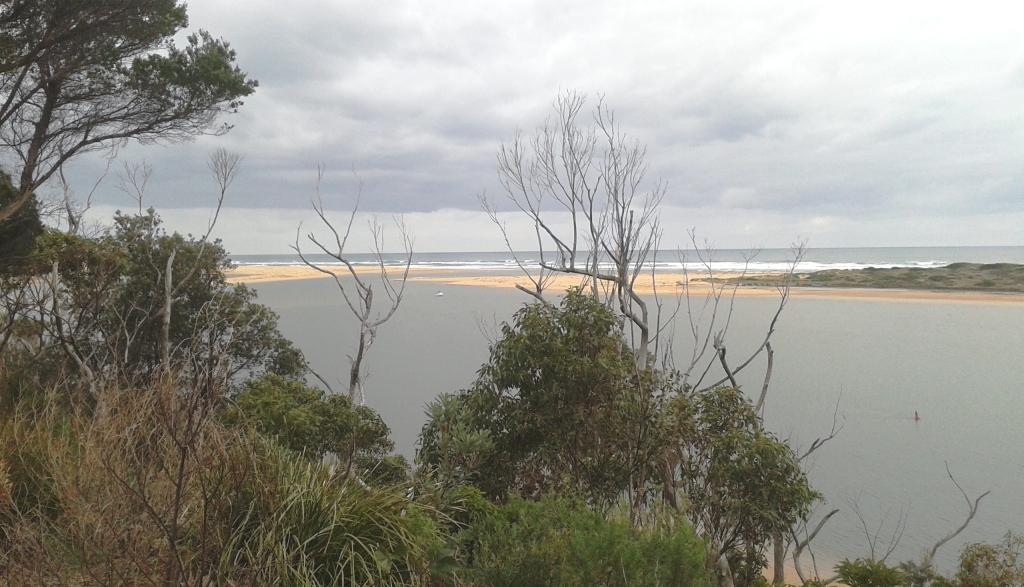
Mouth of Snowy River

Mouth of Snowy River

Marlo, a small village at the mouth of the Snowy River, was the first destination. When we did our day trip out of Corryong we were near the source of the Snowy, so it was interesting to be standing on the bank watching it empty into the ocean. A bit further along the coast from here, to the east, is Cape Hicks, the first part of the Australian coast to be sighted by Lt. James Cook in 1772, but we didn’t drive that far.

The day was cold and cloudy, so the shop on the edge of town with a sign that promised hot coffee was irresistible. On a quiet Sunday seven for morning coffee was probably quite acceptable. To reach the coffee shop it was necessary to walk through a fishing tackle shop. There were no customers for bait while we were there but a few more came in for coffee.

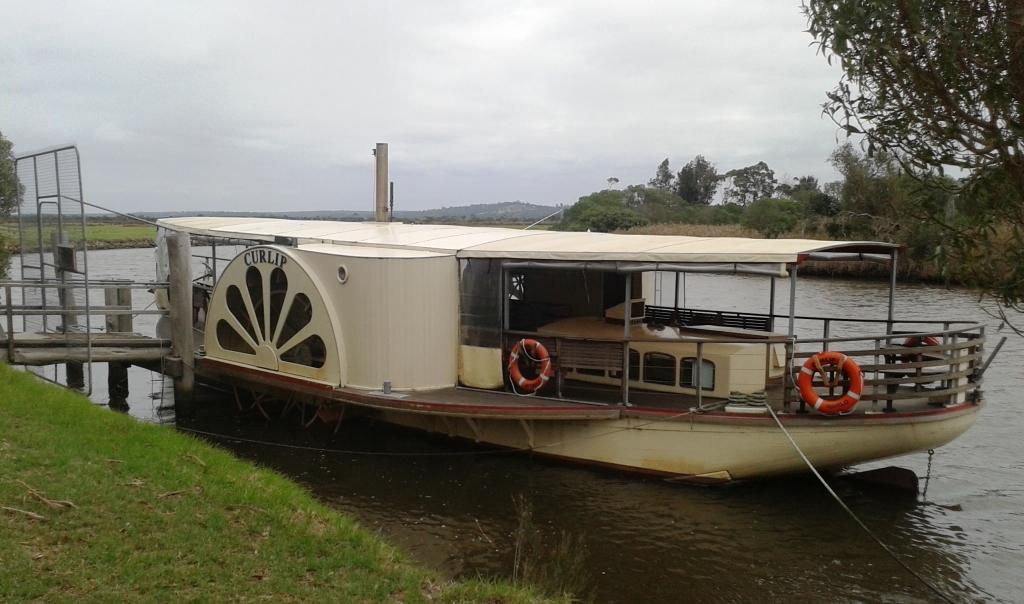
On our way into town we had noticed a sign to a side road showing “PS Curlip”, so as we passed the sign on way back we turned in to see what it was all about. Moored in the Brodrib River, just upstream from its junction with the Snowy, was a paddle steamer of about 15 meters, fitted for passengers.

PS Curlip II at her mooring

PS Curlip II at her mooring

This is the second PS Curlip. Curlip I was a work boat in the area for many years but was lost in a flood in 1919. In about 2002 locals devised a plan to rebuild the Curlip, and this was done as a community project. The vessel now is used as a cruise boat. Had we been in the area for another week we could have boarded for a Mother’s Day Lunch Cruise. A diary entry for a future visit to the area is appropriate.

We had been told that there was nowhere to eat in Buchan, the next corner of the triangle, so we drove back to Orbost, the larger town in the area, for some lunch before taking on the narrow mountain road to Buchan. Fish and chips and the like seemed appropriate on such a day so we stopped off at Chooky’s Nook. Good food, if a bit fatty. Great chips!

Parked in Orbost's main street

Parked in Orbost’s main street

Many years ago when I worked in the transport industry I had accounting responsibility for a transport operation that we had bought in the town. In those days Orbost was an important bean growing centre, producing hundreds of truck loads of beans for the snap frozen bean market. There is no sign of bean production now but the pastures are dotted with dairy cows.

Even more years ago, I explored much of this part of East Gippsland with a friend, each riding our own Vesper motor scooter. With sleeping bag, tent, clothes and food on the rack at the rear, or in a pack on our back, we travelled the area on long weekends and holidays. It was on one such trip that I first visited Buchan, travelling in from Nowa Nowa and departing along what is now known as the Barry Way, to the north.

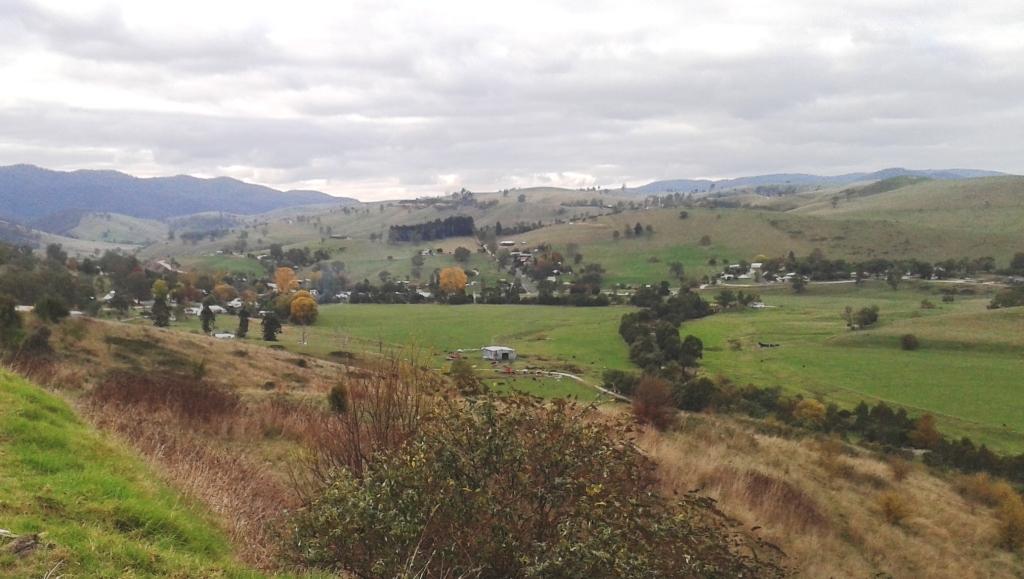
So the road in from Orbost was a new experience. Along the 56 Km of this road forest and farm land alternate. On a couple of occasions we broke out of the bush on a hill top to be met by a picturesque valley complete with farm houses, sheds and autumn tintedtrees. The winding road meant that we were proceeding at a steady pace but that added to the charm of the drive. This part of the trip was the highlight of the day.Buchan is a rural centre but its main claim to fame is the limestone caves that are located near the small town. No one in our group was interested in tours of the caves but were keen to visit, or revisit, this quite unique place. The cave administration buildings, the day use area and small caravan park are on the bank of a stream and enclosed by steep hills on either side. The caves are in the hill side on the far side of the stream.

Buchan Caves NP

Buchan Caves NP

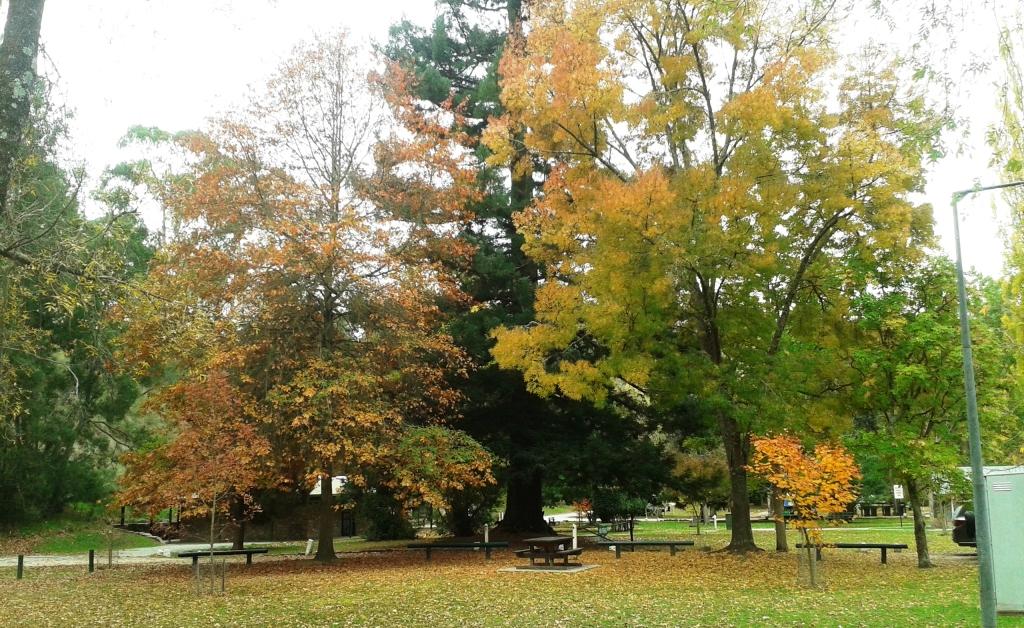
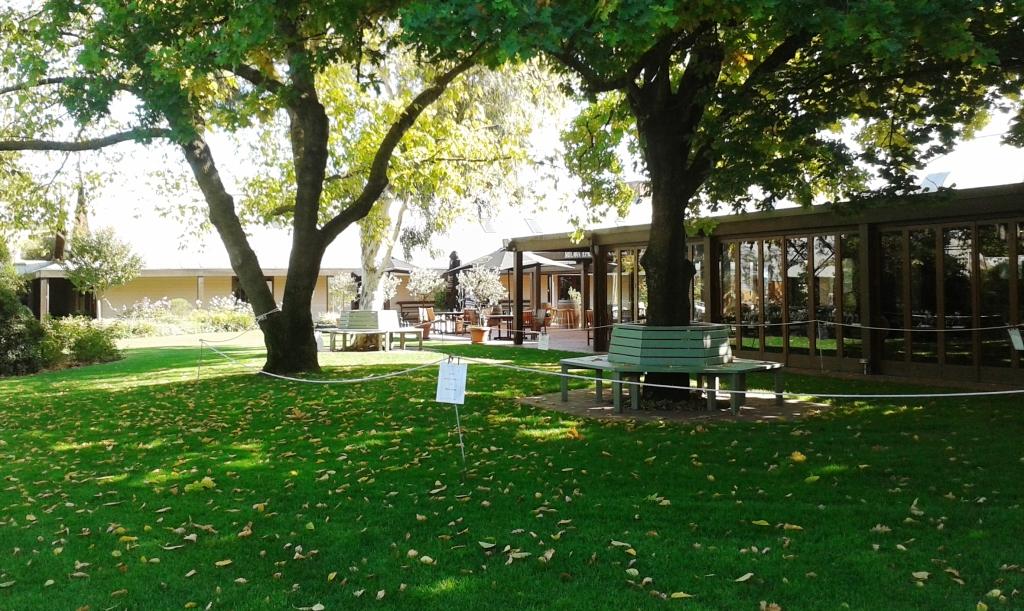
The area is sheltered by well established Australian natives interspersed by pines and more of the deciduous trees that are responsible for the autumn colours. It is a truly delightful spot. And it was sheltered from the cold wind!

Buchan Town & Valley

Buchan Town & Valley

The person who told us that there was nowhere to eat in Buchan badly maligned the town. A cafe and a road house both provide meals, but it was too soon after lunch to eat again so we continued on to the small town of Bruthen on the Great Alpine Road, where we invaded another small shop for tea and coffee, before making our way back to Lakes Entrance following the road that runs along the banks of the Tambo River to Swan Reach and from there back to base.

A departing view of the entrance from which the town gets its name

A departing view of the entrance from which the town gets its name

Day 41 – 6th May – Lakes Entrance to Ringwood North – 307 Km

We left Lakes Entrance in sunshine, experienced cloud and drizzle through the Latrobe Valley and finished in sunshine. We parked the van at the Wantirna Caravan Park, packed three days gear into a plastic bin and shopping bags and drove the remaining few kilometres to our friends place at Ringwood North.

Days 42 to 45 – 7th to 10th April – Ringwood North

Thelma and Joe have been friends for almost 50 years. Our families grew up together to a large extent and our youngest daughters remain in contact. We drank much tea and coffee and talked. These pleasant interludes were interspersed with some other activities. Ruth sustained a knee injury early in the trip and as it is still worrying her, she sought medical advice. We also went out to lunch one day. We returned to the van on Friday afternoon ready to depart Melbourne the next day.

Day 46 – 11th May – Ringwood North to Castlemaine – 149 Km

The first part of the journey was across the suburbs of Melbourne to the Calder Freeway. As we passed through the new suburbs that were country towns when we lived in Melbourne, we were once again reminded of the growth of this southern city. The Calder Freeway runs to Bendigo and passes by Mount Macedon and a sign to Hanging Rock that reminds of a very nice wine and a certain picnic.

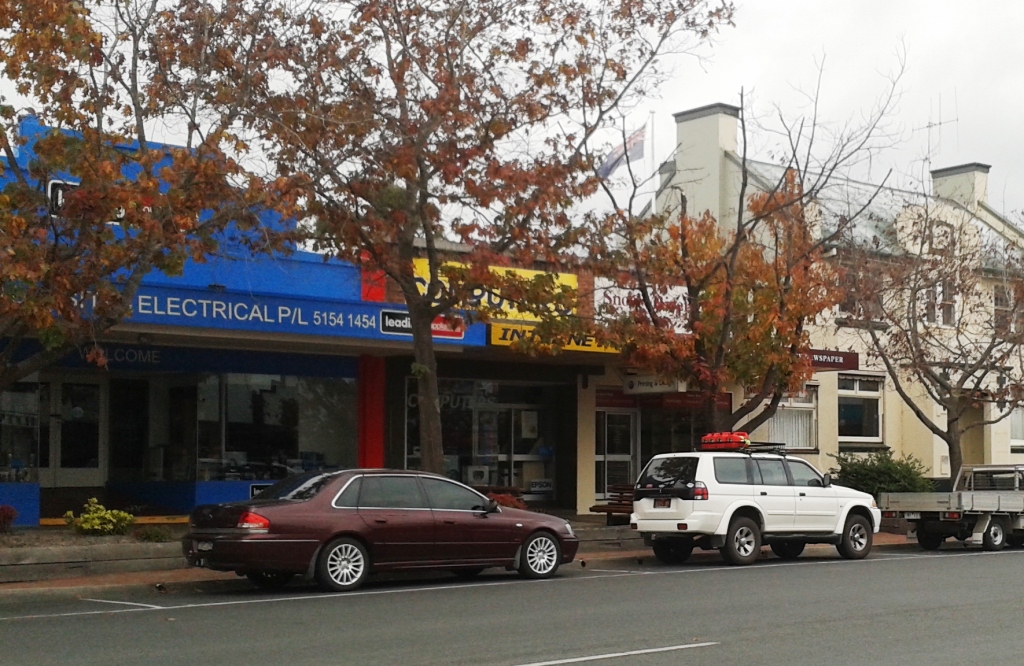
We stopped off at Kyneton, now bypassed by the freeway, to top up supplies. Many historic buildings line the main street. I remember them from when the highway passed their doors. It was a very busy day. Kyneton has excellent markets, we are told. If the crowded streets are an indication they must be very good indeed. In the IGA supermarket I spied a familiar face from a TV program. I am still trying to fit a name to the face.

Days 46 – 12th May – Castlemaine

Keith and Lynda lived near us at bay side Edithvale where we lived before moving to Queensland. As often happens, Ruth met Lynda at school where our daughter Briony and their son Dean were in the same class. Keith and I were drawn together by a common love of sailing. I used to crew for him in various long distance races on sheltered waterways in Victoria. They now live in Castlemaine in alleged retirement. I say alleged retirement, having heard their activity schedule.

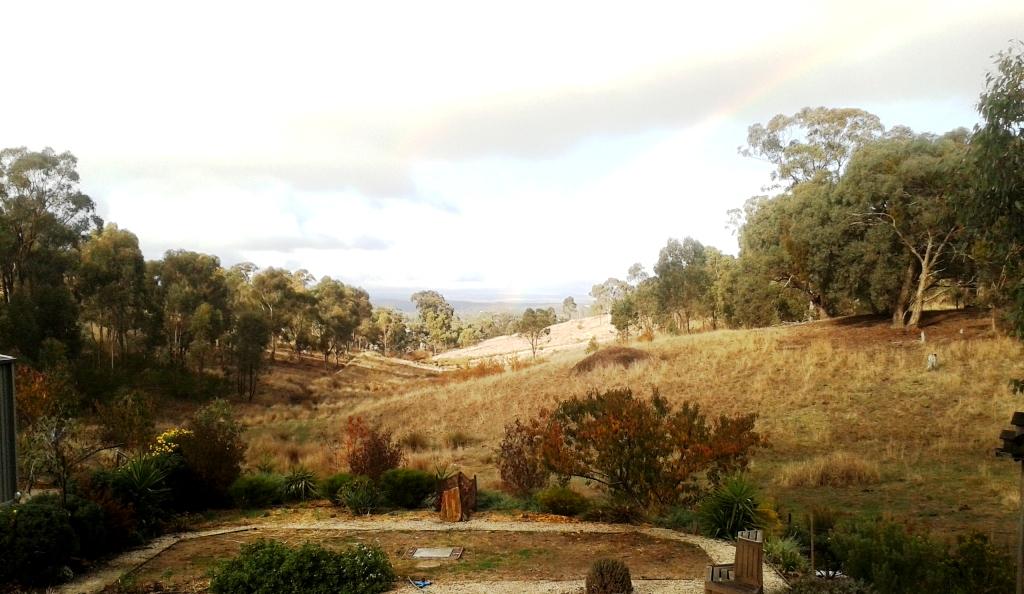
The Giles have a view that they can never loose

The Giles have a view that they can never loose

A quite day, but as it was Mothers’ Day and our 51st wedding anniversary we enjoyed lunch at Tog’s Place in Castlemaine. The town’s proximity to Bendigo has provided opportunities to entice citizens of that fair city to drive down and dine. Good eating places abound. We were very satisfied with the meal that we shared.

Lightly Curried Beef Pie

Lightly Curried Beef Pie

A Different Way There … and Back – Post 7

Day 31 – 26th April – Mt Beauty to Mansfield – 200 Km

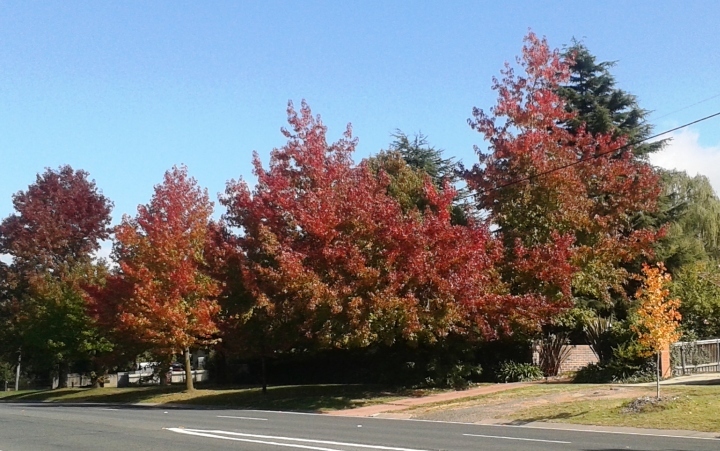
We made an early start, ground our way up Tawonga Gap, stopped at the lookout at the top and eased down the other side to Bright. We have visited Bright before so we contented ourselves with a slow drive through its tree lined streets. The autumn tints are not as far advanced as in Mt. Beauty but are still most attractive.

Mount Buffalo was the next geographical feature and appeared prominently on our left as we left Bright. It is on the list for a visit some time. The entire area is worth more time but so does much of Australia.

I wonder, as we pass through this former tobacco growing region, why property owners have never removed the drying kilns that seem to be a feature of most properties. Do they think that the anti-smoking movement is just a passing fad?

Tasting Room and Restaurant at Brown Brothers Winery

Tasting Room and Restaurant at Brown Brothers Winery

Our first objective was to visit the Brown Brothers winery at Milawa and perhaps to sample some of the other culinary delights of the Gourmet Trail. Brown Brothers lived up to expectations, perhaps exceeded them. We would like to come back at some time to experience a meal in their epicurean centre. We did become members of their Epicurean Club which is worth 10% on purchases.

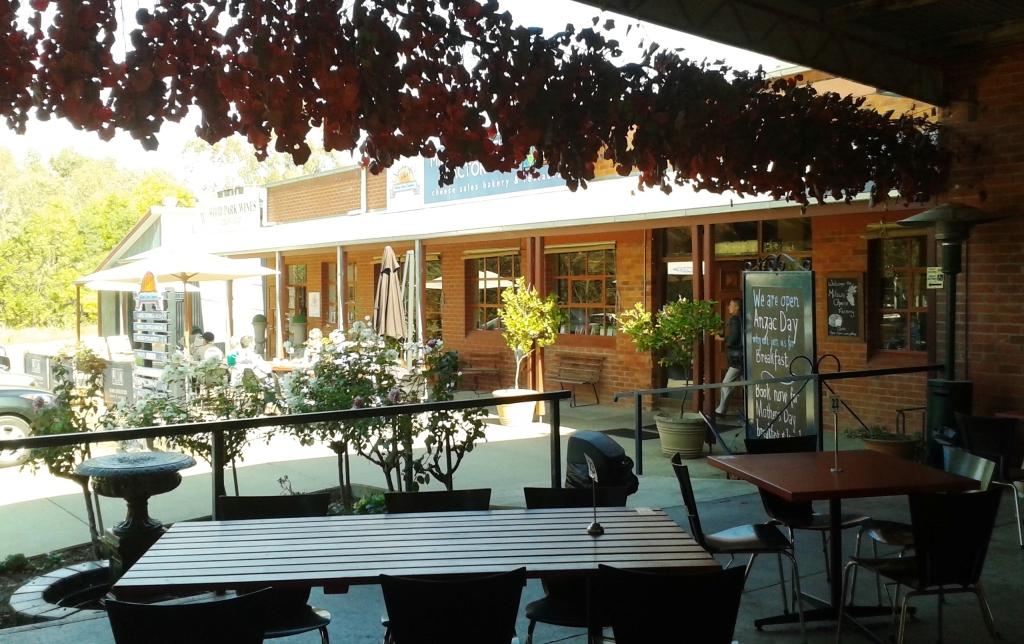
We also checked out the cheese shop at the other end of town. Another delightful place where to linger too long would not be good for the waist line. The shop incorporates a bakery and a restaurant. The show cases almost bulge with goodies.

Milawa Cheese Shop cafe area

Milawa Cheese Shop cafe area

The rest of the day, until mid afternoon, was spent travelling to Mansfield via Whitfield. This trip involved climbing a mountain range to about 800 metres before descending again into the valley that leads to Mansfield. We made a small detour to Power’s Lookout, where we had lunch. I had not heard of Harry Power but it appears that he terrified the good people around Whitfield back in the days when bush rangers were doing their thing. The detour allowed us to share his view into the King Valley. He was looking out for policemen. We were looking at a tranquil valley.

Harry Power's view of the King Valley

Harry Power’s view of the King Valley

Day 32 – 27th April – The Victorian High Country

In recent years, as I have developed my interest in four wheel driving, I have read quite a bit about the Victorian High Country. The High Country covers a substantial part of Victoria from Central Victoria right through to where it joins the NSW Southern Alps at the Snowy Mountains. Mt, Beauty and Mansfield are both part of this region but, from a 4WD point of view, Mansfield is the more popular.  The roads into the mountains provide access to a vast selection of mountain roads, bush tracks and camping sites.

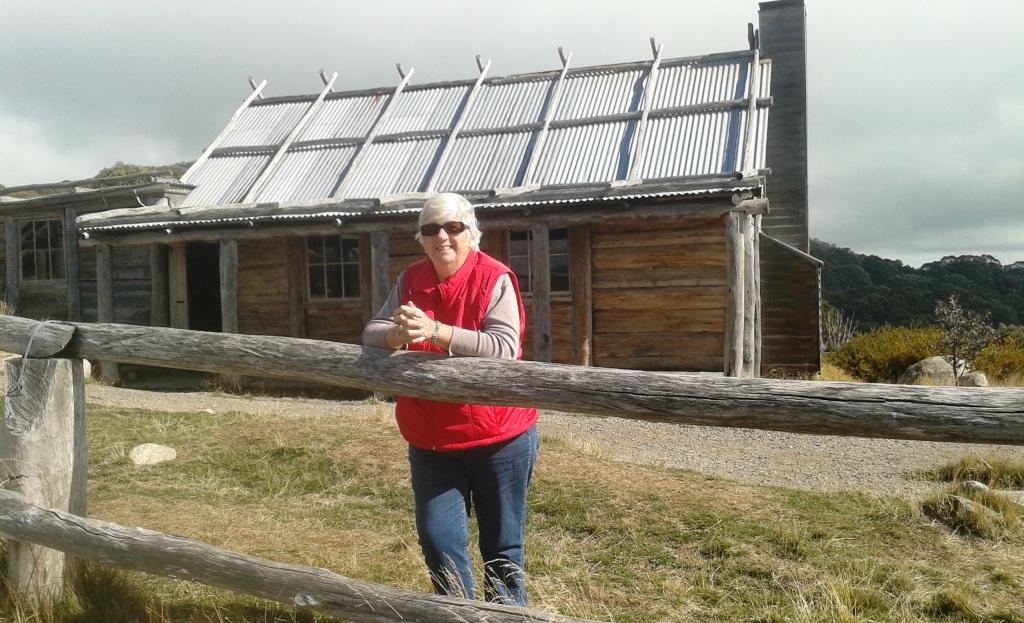
We used our day at Mansfield to explore some of this country. We chose the Mt Stirling Circuit because it allowed us to visit the iconic Craig’s Hut, a prop built for the shooting of the film “The Man from Snowy River”. We and a large number of other people!

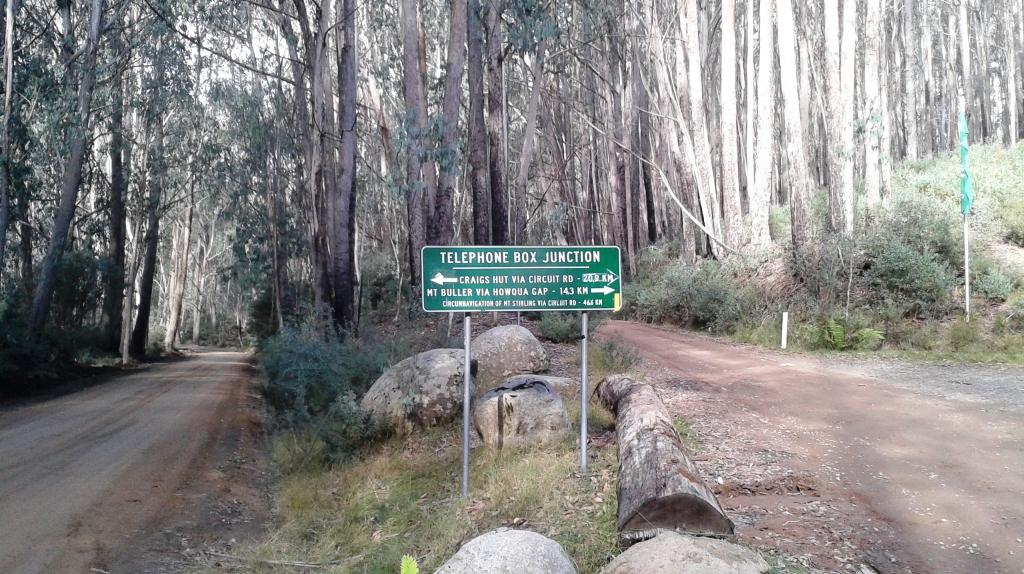
Telephone Box Junction - the start of the circuit propper. Out to the left .. back to the right.

Telephone Box Junction – the start of the circuit propper. Out to the left .. back to the right.

The circuit road is about 80 Km of mountainous gravel road. Most is winding and narrow. Its main contribution to tourism is the magnificent views that it offers of Victoria’s mountain ranges but it also leads to other roads and tracks. The roads were originally used for carting logs to saw mills and still carry some log trucks at times. But the main users are drivers of SUVs, although in dry weather it is a 2WD road as well.

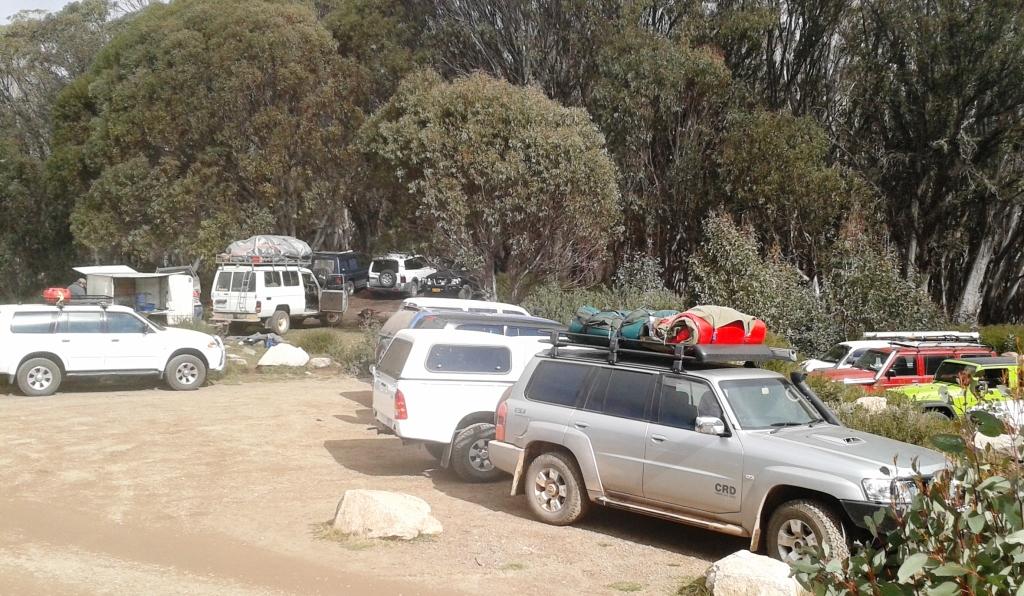
Most of the road was in good condition but there were some areas of fairly severe corrugations.The only real 4WD track in this drive is the track from the circuit road to Craig’s Hut. This track is narrow and steep and today it was busy. When we arrived at the destination, after giving the Challenger the best work out that it has had to date, the car park was full with more than 30 4WDs of all descriptions.

Part of the crowded car park

Part of the crowded car park

There was also a horse riding tour group. The horses tethered to the rail fence around the hut gave the whole scene a sense of authenticity which was offset by the number of people walking around. There was a great deal of movement at this station!

Horses tethered to the fence of Craig's Hut

Horses tethered to the fence of Craig’s Hut

Ruth leaning on the back fence of Craig's Hut

Ruth leaning on the back fence of Craig’s Hut

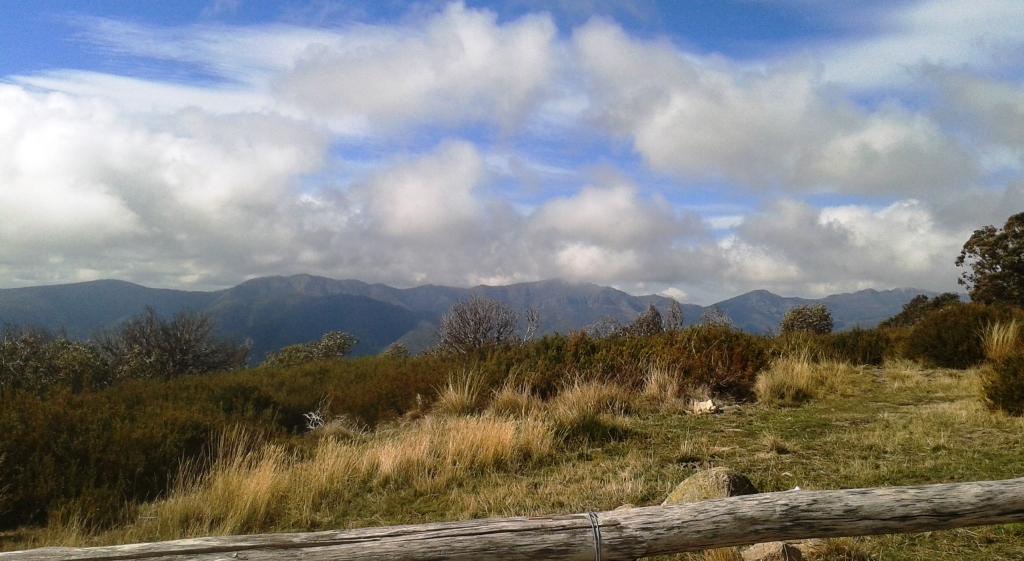
The view from Jim Craig's back fence

The view from Jim Craig’s back fence

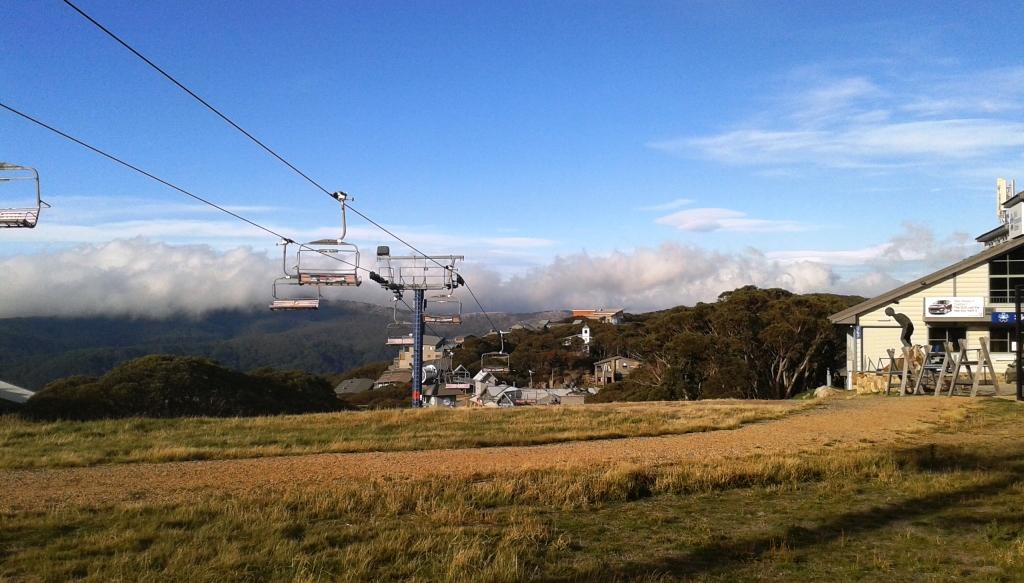
After completing the circuit, we drove up the serpentine road to the Mount Bulla ski village. But it is no village. It is a small city placed at the very summit of a mountain peak that rises to almost 1,700 metres above sea level. Many of the buildings look almost new and additional accommodation is being added now. I don’t like snow very much but I would like to visit there during the snow season just to see what it is like. But I would stay inside by the fire!

A chair lift passes right by houses at Mt Bulla

A chair lift passes right by houses at Mt Bulla

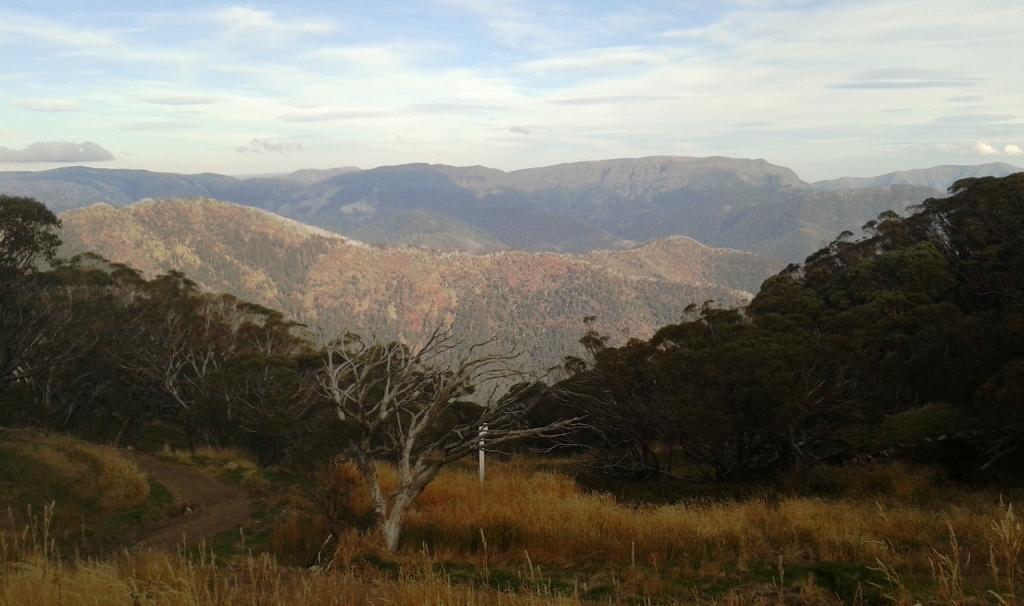
The view from a Mt Bulla street

The view from a Mt Bulla street

Day 33 – 28th April – Mansfield to Drouin – 270 Km

We left Mansfield in cloudy and cool (well, perhaps cold) weather heading for Drouin in West Gippsland. Drouin is the town where I spent the second half of my teens and where Ruth and I lived for the first two years of married life. My sister Aileen and her husband Colin now live there having moved from their home of the 48 years of their married life at neighbouring town, Longwarry. Aileen and Colin will be joining us at Lakes Entrance but we wanted to see their new house.

The trip was uneventful but interesting. I had no idea of the extent of the wine industry in the Yarra Valley. It reaches out almost to Healesville. The vineyards grow on rolling hillsides on both sides of the highway. Vines in this area have not yet lost their leaves but the foliage has turned an almost uniform shade of yellow that, from a distance, looked like canola fields.

Aileen and Colin have a very nice home. We backed the van into the drive at the side of the house and abandoned it for a bed inside. A very warm and comfortable bed!

Day 34 – 29th April – Drouin to Stratford – 133 Km

We made a late start after a leisurely breakfast and then morning tea sitting in the sunshine. Our destination is Stratford on Avon. Yes, Victoria has one as well as England. And the town hosts, unsurprisingly, an annual Shakespeare Festival. The caravan park is on the banks of the Avon River and we have another river side site.

We arrived mid afternoon and settled in. And that was it for the day.
Day 35 – 30th April – Dargo and more High Country.

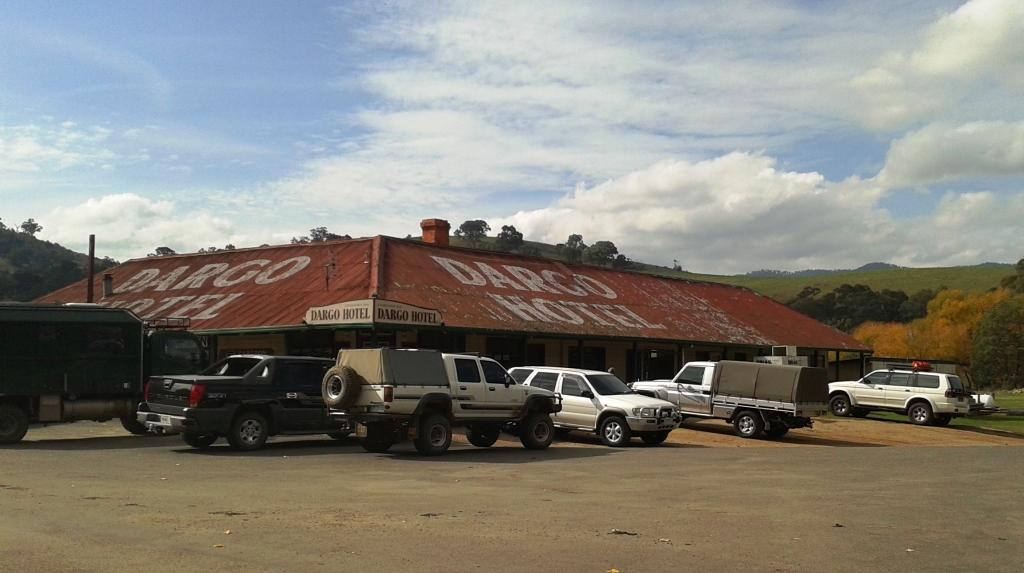
Many of the mountain roads and tracks that can be accessed from Mansfield can also be reached from Gippsland. One of the most popular entry points is the small alpine town of Dargo. Dargo is a small town, its few houses stretching along the valley through which runs the Dargo River. It’s most famous and prominent building is the Dargo pub, which I am sure has retained its tumble-down appearance for good commercial reasons.

Dargo Hotel

Dargo Hotel

The road from Stratford runs first along the Princes Highway and turns north to traverse flat open farm country, although most of the paddocks were empty with only a few sheep and cattle in evidence. Then the road climbs to about 600 metres above sea level and undulates a bit over two or three timbered mountains before dropping into the Dargo Valley.

Immediately after passing through Dargo the mountains start in earnest. In about 8 Km the road rises to around 1,200 metre and the views are spectacular. This area has numerous roads and tracks. They ascend to the giddy peaks of mountains, run along the spines of alpine ridges and dive into protected valleys where camping areas sprinkled along the river banks.

One of the main rivers is the Wonnangatta, which runs through the mountains accompanied by tracks that lead to historic locations unknown to most people. This was gold rush country and relics of mining history are still there to be seen.

We drove to the top of the mountain above Dargo so that we could claim to have seen the Dargo High Plains, the scene of many years of summer grazing activity as well as timber getting. We also did the first few kilometres of the Crooked River Track that runs beside the Wonnangatta and checked out the Wonnangatta Caravan Park, although it is already closed for the winter. The 4WD season is almost finished for this year. There were few other vehicles on the road and Dargo was very quiet.

Part of the Wonnangatta Caravan Park

Part of the Wonnangatta Caravan Park

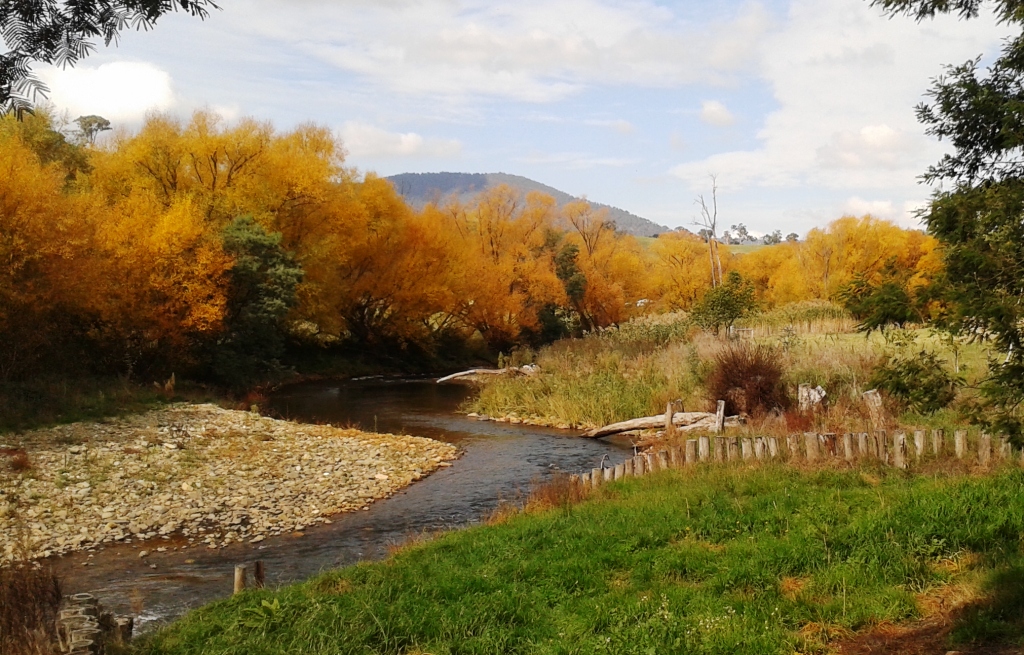
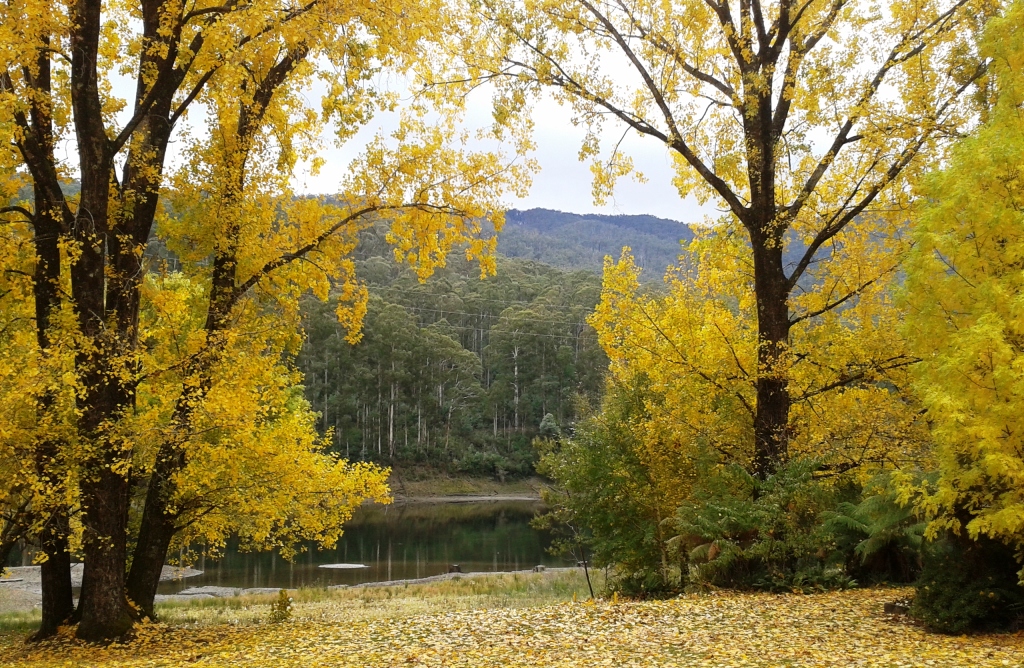
I will always be grateful to the pioneers who planted the deciduous trees that so add to the beauty of the scenery with their magnificent colours. The Dargo River near the town is lined with large autumn tinted trees that provide a brilliant backdrop to the town. From the heights of the mountain we looked down into the Dargo River valley, upstream from the town, and there were splashes of gold and scarlet contrasting with the lighter green of the grass and the grey green of the Australian bush.

Autumn colours along the Dargo River

Autumn colours along the Dargo River


A Different Way There …. and Back – Post 6

Day 27 – 22nd April – Temora to Corryong – 270 Km

A cool morning, but not quite as cold as the 2C and 4C of the previous two, greeted us as I took the car for a service. With that chore attended to we left Temora at 11.30 am bound for Corryong via Wagga Wagga and Tumbarumba. The run to Wagga Wagga and then along the Tumbarumba Road to where it crosses the Hume Highway is fairly flat but then its character changes abruptly. From flattish open farm country it changes to mountains covered with forest. The first steep hill starts immediately on the other side of the Hume Highway.

Wagga Wagga was a fuel and lunch stop. It appears to be a prosperous regional city with a great deal of commercial building going on. We found a pleasant little park for our break. Having just come from Temora Aviation Museum we did not stop at the aircraft display at the front of the RAAF base at North Wagga but continued on through the small town of Ladysmith (it made me think of apples) and on, after much climbing and descending, to Tumbarumba.

We had not been to this very pretty town before and were not prepared for the sight of it nestled in its valley and expanding onto the surrounding slopes. We were not able to stop for a photo, as there was nowhere for a caravan to park on the steep descent into the town. You cannot see a town properly unless you spend a bit of time in it. And you often have to retrace your steps to get good photographs.

In the centre of Tumbarumba.

In the centre of Tumbarumba.

The earlier part of the road to Corryong was again a series of steep climbs and sharp descents with some really choice spots at which we could have camped if arrangements had permitted. There were about four caravans in one clearing beside a creek. We would have loved to join them.

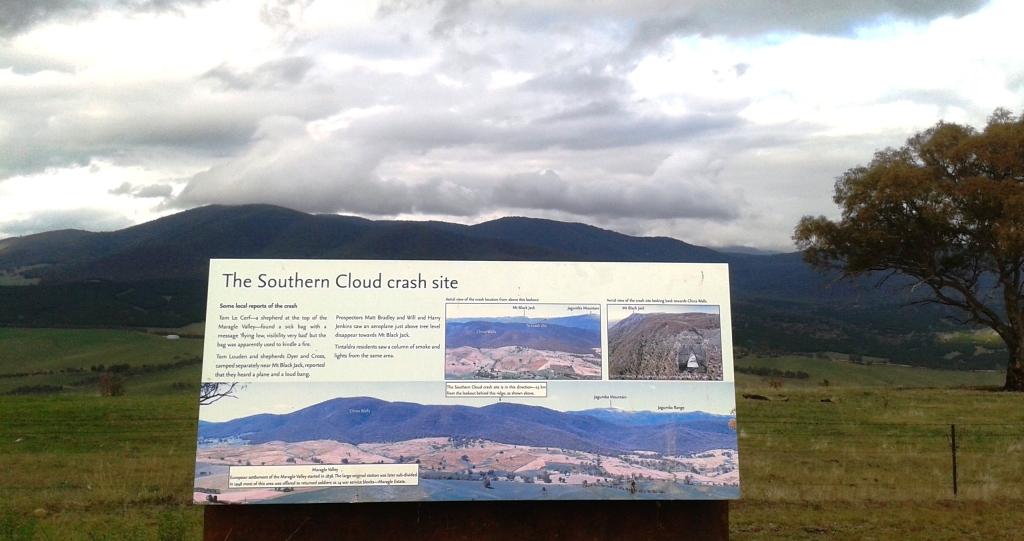
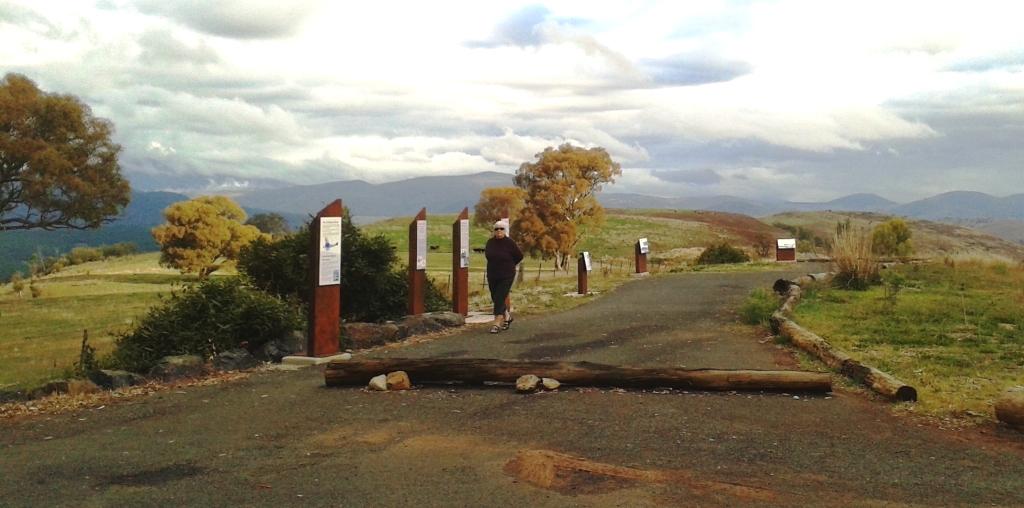
Further along this road we came across a memorial to lost aircraft the Southern Cloud. This aircraft, an Avro 618 Ten, went missing on a flight from Sydney to Melbourne in May 1931 with 6 passengers and a crew of 2. A search failed to find it and its remains were not discovered until 27 years later when a Snowy Mountains Authority employee stumbled upon it.  The memorial occupies a site on a hill top beside the road, looking across a valley to the mountain side where the aircraft crashed. A number of display boards tell the story.

The mountains of the crash site behind the sign that tells the story.

The mountains of the crash site behind the sign that tells the story.

Ruth walks among the story boards of the memorial.

Ruth walks among the story boards of the memorial.

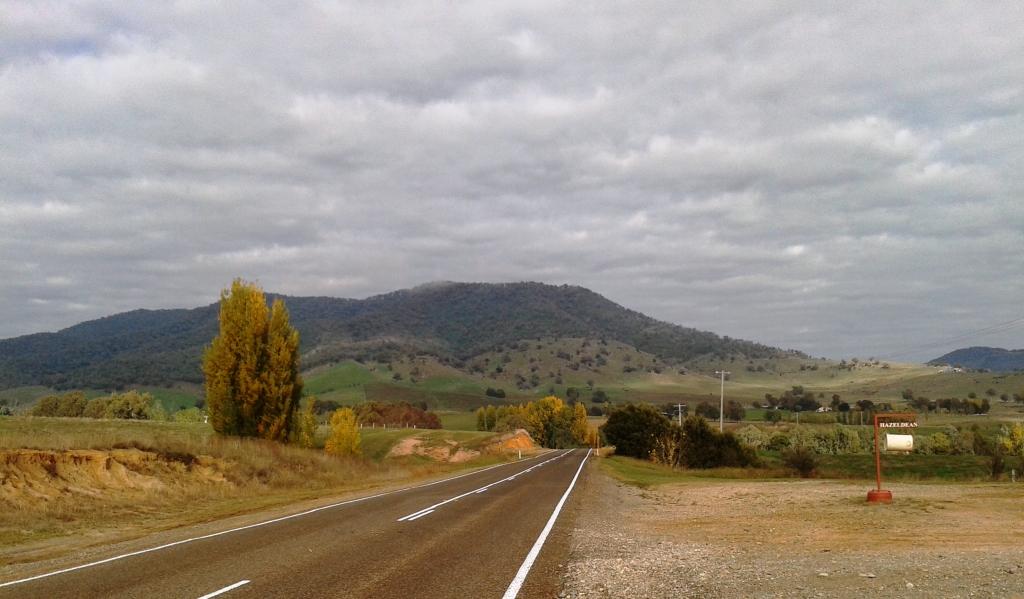
From this point on the forest dissipated and deep cleared valleys and rolling hills of farmland commenced. The natural vegetation has been replaces with clumps of deciduous species such as maples and poplars. With autumn well progressed the leaves have turned to the lovely colours that precede their fall. The hills and valleys are dotted with sheep and cattle with scattered farm buildings. Smoke rises from chimneys into the still afternoon air. You can almost feel the warmth of the fire side as you drive past.
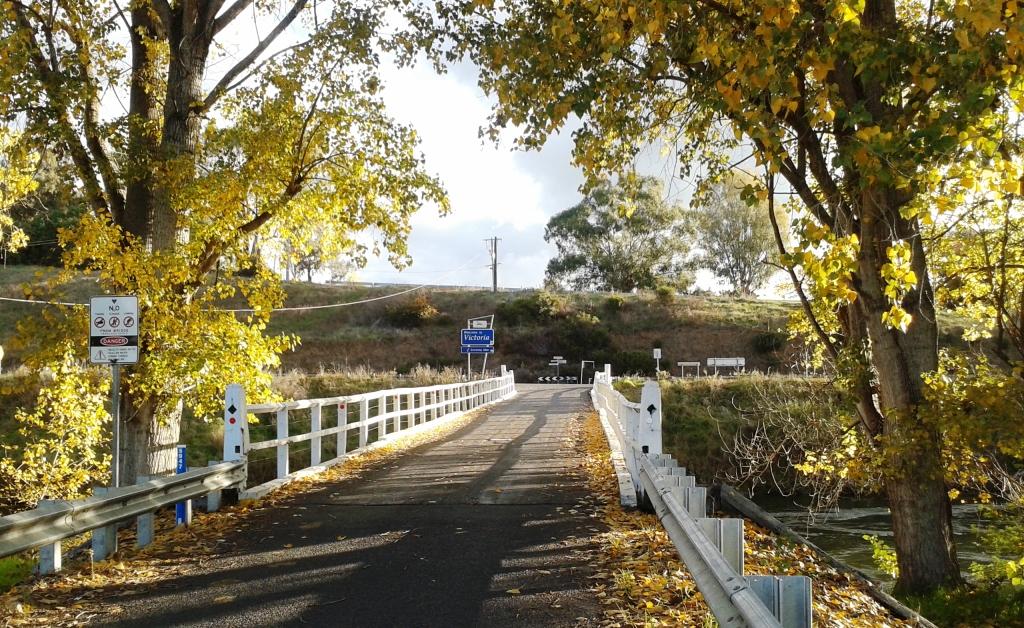
Entry to Victoria at Towong

Entry to Victoria at Towong

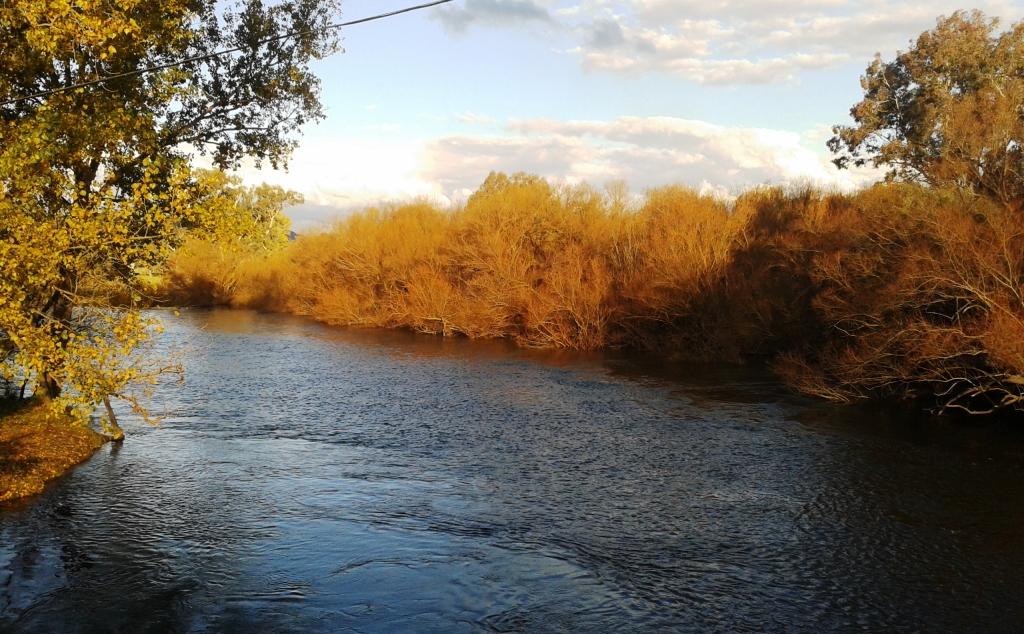
There are many points on the Murray River where you can cross from NSW to Victoria but surely not many as pretty as the crossing at Towong. The river, at this point, is not very wide and the bridge is a simple timber structure, but it has a welcoming appearance that is most attractive. The run from Towong to Corryong is along a valley between grassy hills. Pastures rise from the stream to the crests of hills with a background of tree covered ranges and are dotted with cattle with a few sheep. This town is the nearest of any size to the Snowy Mountain area so it has claimed “The Man from Snowy River” as its own. There are representations of horses and riders all over the place.

Murray River viewed from the Towong bridge.

Murray River viewed from the Towong bridge.

Day 28 – 23rd April – Khancoban & the Snowy Mountains

It is not possible to do justice to this area in a day so it was a pity that overnight rain kept us in until about 11.00 am. But the sky started to clear so there seemed a good chance that we would be able to see some mountains instead of cloud. It was midday by the time that we reached Khancoban so we stopped there for lunch, knowing that there was no food to be had before Thredbo, and we certainly were not going that far.

Khancoban Town Centre

Khancoban Town Centre

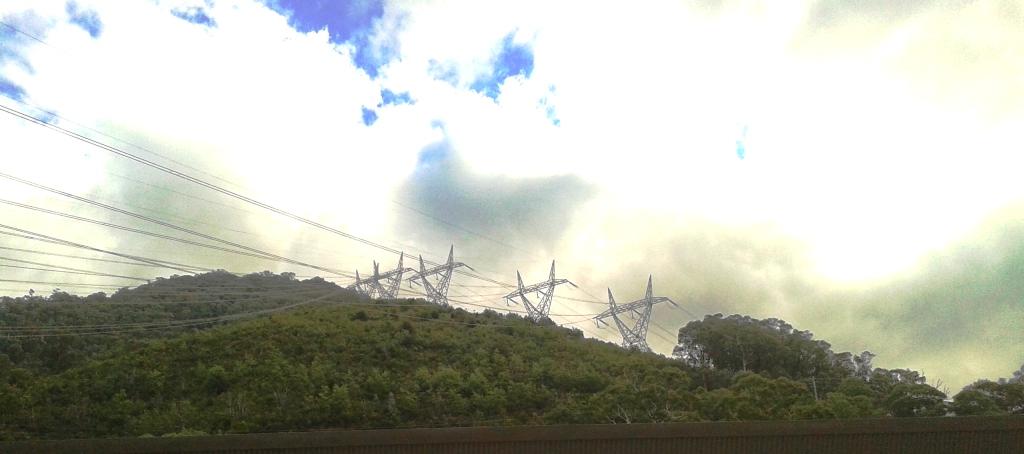
We commenced our sightseeing at the Murray No 1 Power Station lookout. You will probably recognise this place. It is the one where the three big white pipes come down the hill carrying the water to drive the turbines and with towers that carry the power lines step up the escarpment like giants. The sun was shining on it so it looked grand.

Murray No 1 Power Station

Murray No 1 Power Station

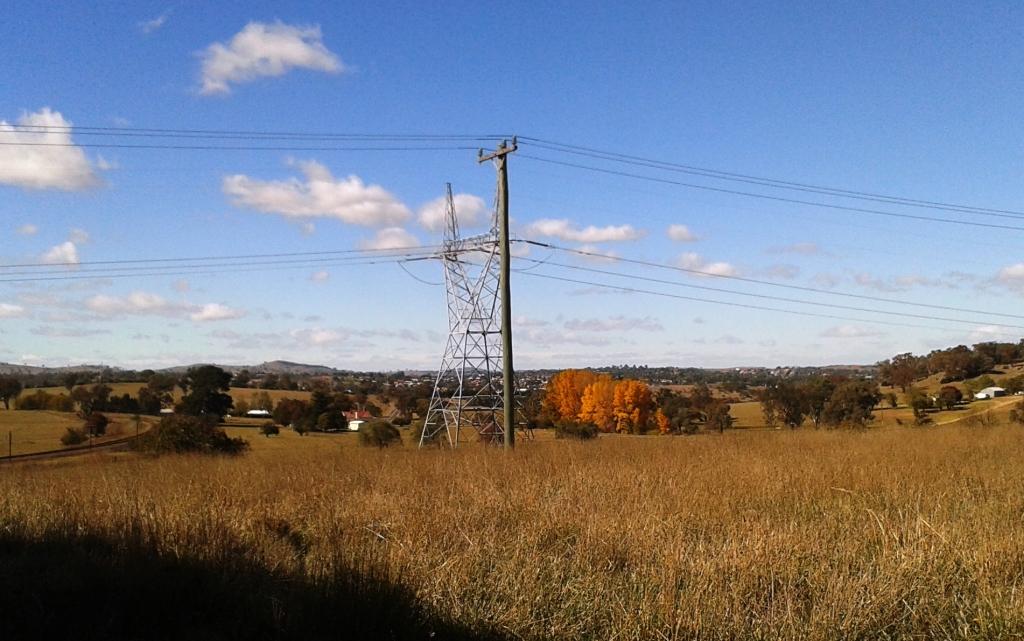
Towers like giants on the hillside.

Towers like giants on the hillside.

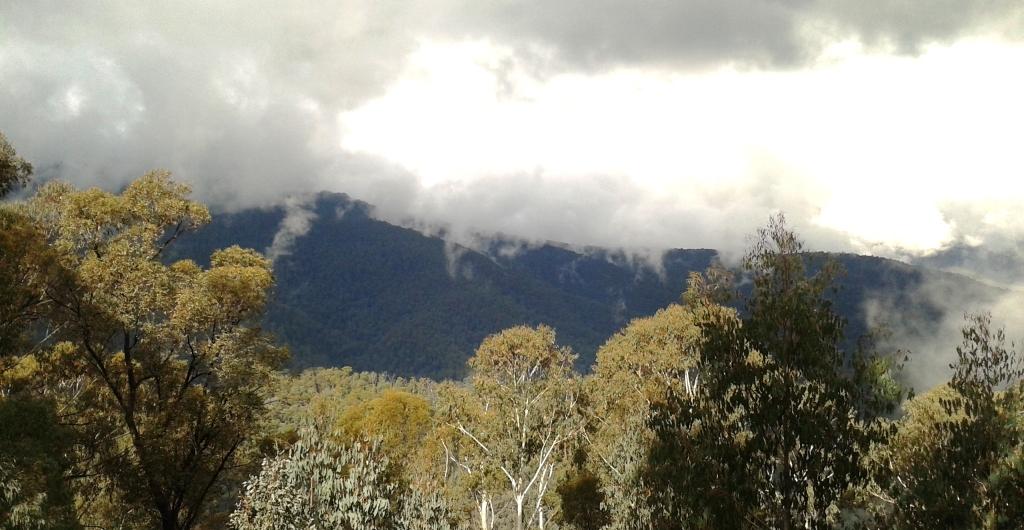
The next stop was at Clews Ridge, named in honour of the late Major Clews who was the main surveyor for the Snowy scheme. The well known (to 4WD people) Major Clews dry weather 4WD track starts from here. A little further on is the Geehi Walls mountain range and then Schammell Spur Lookout. From the observation deck of this lookout a sweeping vista of the western face of the Main Range of the Snowy Mountains greets the beholder. The mountain tops were partly lost in cloud and huge banks of mist rose up the mountain sides. The sight was a bit awe inspiring.

Western Fall of Main Range of the Snowy Mountains.

Western Fall of Main Range of the Snowy Mountains.

We journeyed on to Geehi camping area where the Alpine Way crosses the Swampy Plains River. We stopped to chat to a fisherman in a motor home who had been trying his luck with trout in the stream. He claimed to have had no luck at all.

Geehi Hut at the camping area

Geehi Hut at the camping area

This camping area is the site of huts built many years ago by cattlemen as camps for that part of the year when cattle were grazed in the high country. We saw Geehi Hut where it stands beside the river. It is constructed of river stones set in concrete. This hut has been destroyed by fire but has been restored by NSW National Parks. The hut, and others like it, is left open so they are available as shelter in emergencies. Campers are requested not to use them and this restriction appears to be honoured.

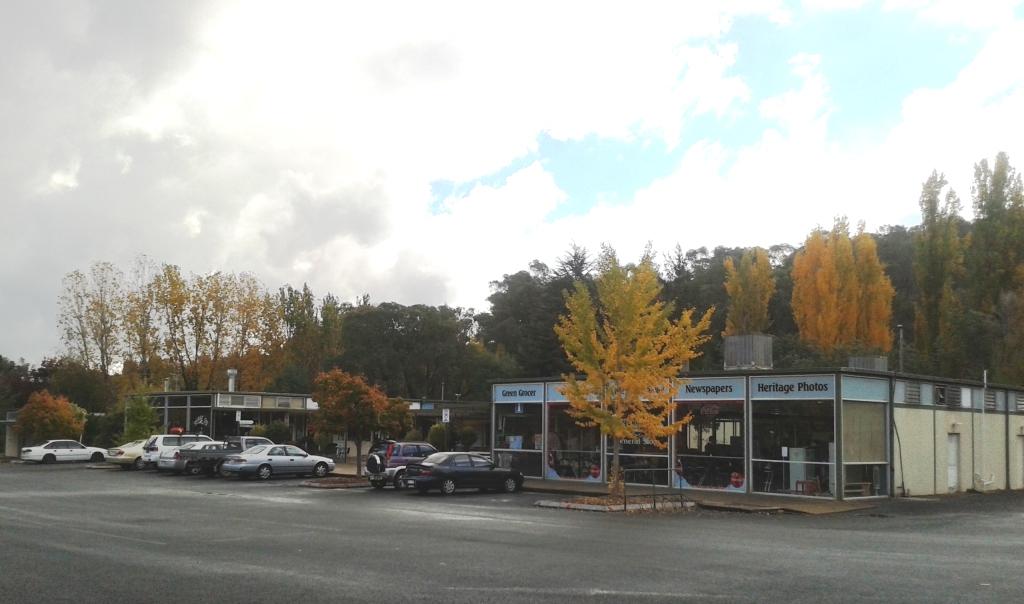
We turned for home, but detoured to the visitors centre at the Murray No 1 power station. It has a very interesting display that sets out the history of the Snowy Scheme and includes a great deal of information for the technically minded. We discovered that there was food to be had past Khancoban, as the visitor centre contains a neat little coffee shop.

Day 29 – 24th April 2013 – Corryong to Mt. Beauty – 161 Km

We changed our minds this morning and changed them back again this afternoon.

The plan had been to travel to Omeo via the Omeo Highway, but while checking road conditions I noticed that a road closure for the Omeo Highway had just been lifted. Snow and rock falls had closed the road in the last few days. After discussions with the police at Tallangatta we decided that prudence ruled it out and that we would have to reach Lakes Entrance via Melbourne.

Plan B became the Bright area. The GPS sent us via Mt. Beauty and the Tawonga Gap. As we drove into Mt. Beauty we saw a sign that said “Omeo 110”. Enquiries produced information that the road is regularly used by caravans so we decided to revert to plan A. So tomorrow we will set off up the road, past Falls Creek ski area, over the Bogong High Plain and on to Omeo.

Murray Valley Highway

Murray Valley Highway

The drive this morning has been along the Murray Valley Highway, so it has been another morning of ups and downs as the road traverses the valleys that host the streams that feed the Murray and the hills that separate them.

From the time that we left Tallangatta late morning we have been following the Kiewa River along the Kiewa Valley. The road follows the foot hills on one side of the river with the golden leaves of maples and poplars lining the stream and with the foot hills on the other side rising to the tree line with the ranges of the Victorian Alps in the background. A truly beautiful sight!

Just before reaching Mt Beauty a rest area provides a fine view to Mt Bogong whith a Lions Club sign pointing out that it is the highest peak in Victoria.

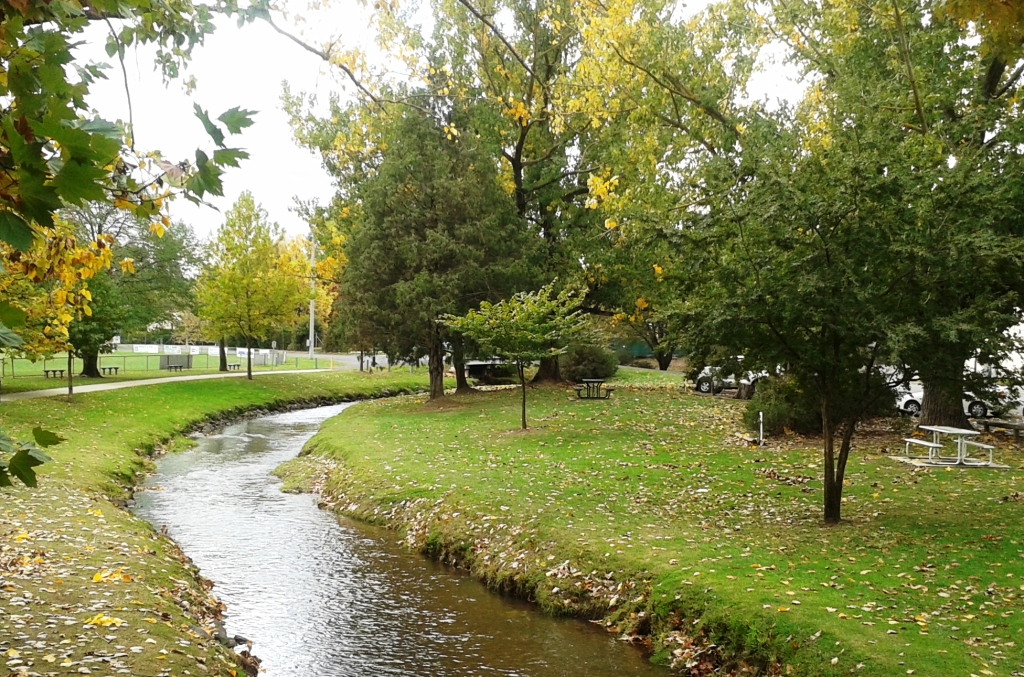
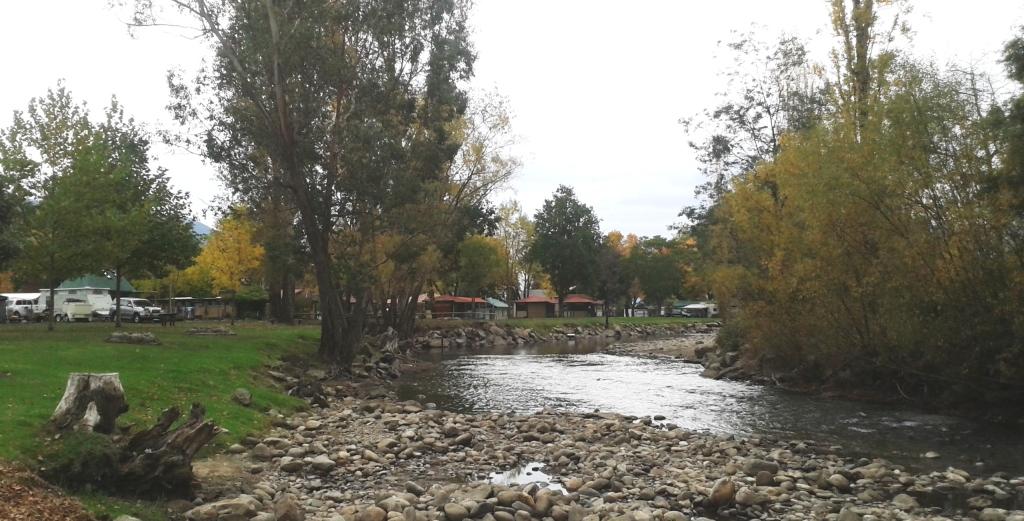
We have a sight in the caravan park on the banks of the West Kiewa River. It is a very pretty spot with lush green grass, rippling clear water and autumn tints. If it was a bit warmer we would sit out for longer to enjoy it.

Our view at Mt Beauty Caravan Park

Our view at Mt Beauty Caravan Park

Day 30 – 25th April 2013 – Falls Creek & the Bogong High Plains

Overnight we changed our minds again. Call it losing one’s nerve, or discretion being the better part of valour, I decided that I did not want to tow the van over an unknown road that has steep climbs, sharp bends and reaches 1,750 meters above sea level. So we decided to stay at Mount Beauty for a second night and do a day trip up the mountain today.

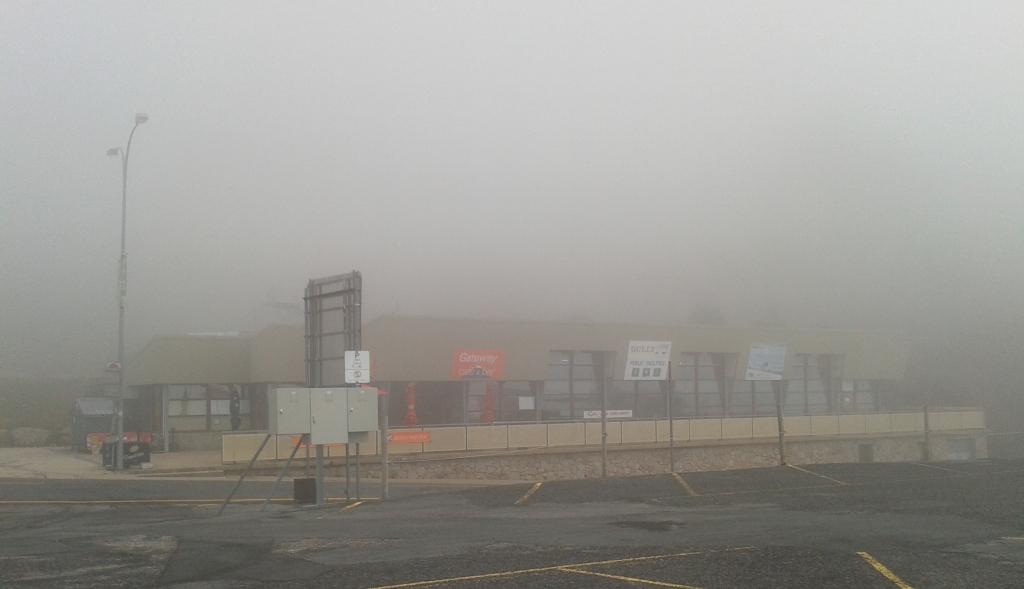
In the 31 Km from Mount Beauty to Falls Creek there is a change in altitude of over 1,500 meters. That means sharp climbs and a winding and, in this case, fairly narrow road. We left town in light overcast weather but about 1 Km below the top we started to encounter mist that became relatively thick cloud by the time we reached the first buildings of the ski resort.

Foggy Falls Creek

Foggy Falls Creek

There was no view and it was not an occasion for a picnic but a bar/restaurant was open so we became its sole, and I think, its first customers of the day.

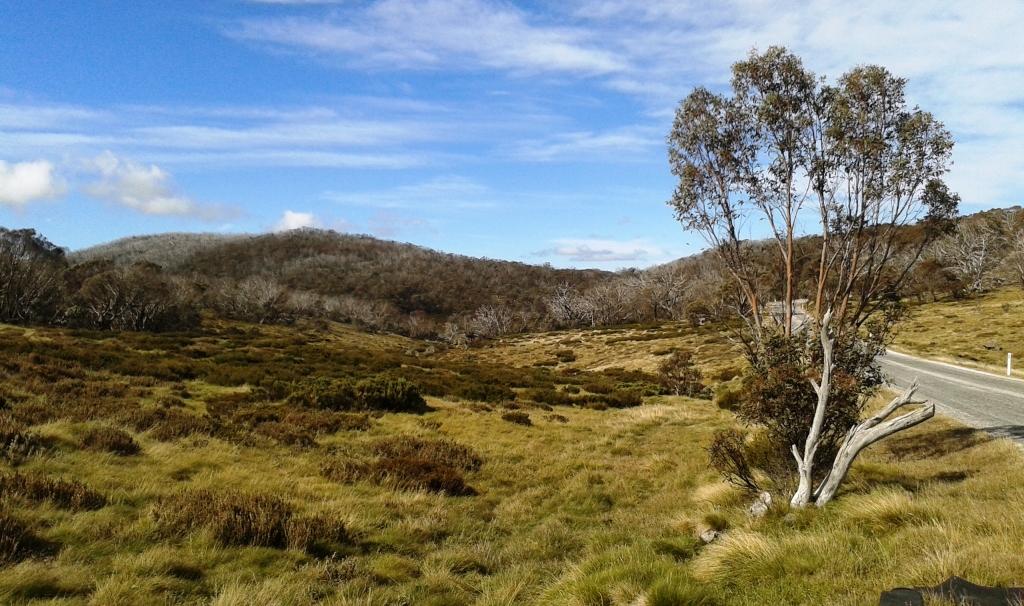
Weather conditions in mountains can be quite fickle so we decided to press on to see if Rocky Valley Dam could be seen. The dam was half visible and the fog was performing some amazing tricks above the water. As the wall of the dam, which is also the bridge, was fairly clear of fog we drove on for another 20 Km towards the Omeo Highway intersection. This extra distance gave us a good look at the Bogong High Plains.

Bogong High Plains 1

Bogong High Plains 1


Bogong High Plains 2

Bogong High Plains


Bogong High Plains 3

Bogong High Plains 3

There are a number of walks, or bike rides, some to the sheltering huts that dot the plateau and date back to the days when the area was grazed during the warmer months. Tracks are well marked and often have an information kiosk at the start that gives a variety of relevant information.

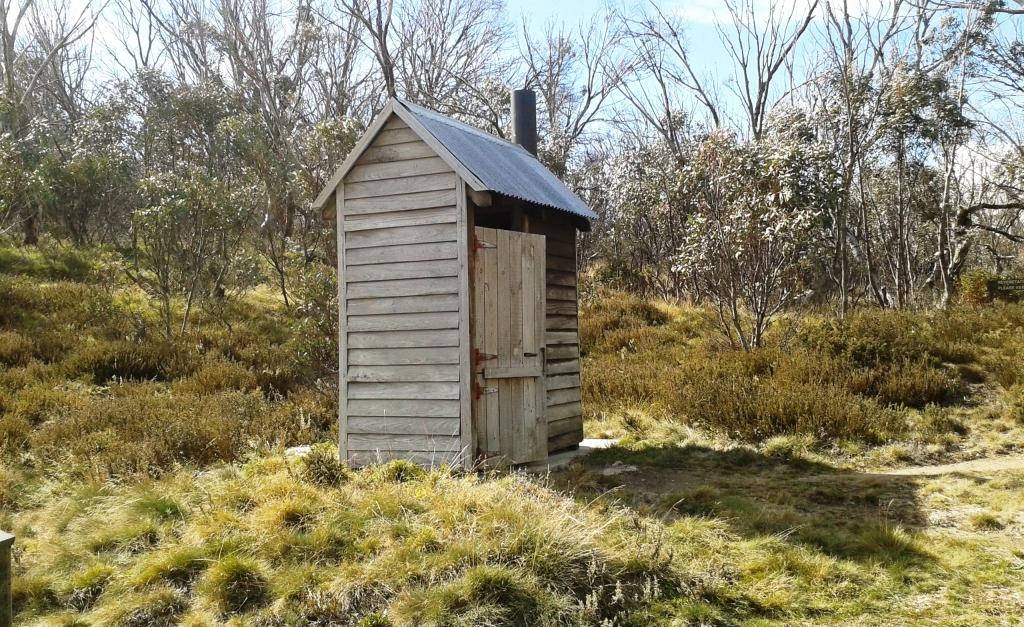
At the point at which we turned around to return to Mt Beauty we saw a sign to a camping area just off the road. We went to investigate. One of its purposes was to provide a camping spot for horse riding parties so it had a fenced area to secure horses overnight. Picnic tables were set among the snow gums and there were fire places as well. There was also a wonderful weatherboard toilet which reminded me of the one for which I had to dig holes when a teenager at Bulahdelah.

The Rustic Loo

The Rustic Loo

As we returned to Falls Creek we could see the cloud billowing up over the mountain top, driven by a cold wind that had developed considerable strength by that time. There was nowhere for us to enjoy a sheltered picnic lunch so we headed back down the mountain to the small alpine village of Bogong.

Too cold for lunch here

Too cold for lunch here

Bogong is a small town, built by the electricity authorities during the construction of the Kiewa hydro electricity scheme, where the houses have now been sold to individuals. We had driven into the village on our way up the mountain and thought that we were in a ghost town. There was not a person in site at 11.00 in the morning. During our return visit folk were abroad but town businesses, the whole two of them, were closed for the holiday. Even Bogong Jack’s bar and bistro, that bore a sign undertaking to open at 11.30 am 7 days a week, was securely closed.

Autumn colours at Bogong Pondage

Autumn colours at Bogong Pondage

The town is built down a steep slope, as alpine villages are, to a pondage on the Kiewa River. There quality tourist facilities have been built. The edge of the pondage is lined with poplars and maples which, rapidly turning to their autumn shades looked spectacular against the green backdrop of the native bush. Under SEC ownership the town was a show place with flowers growing in the garden beds. The flower are long gone under private ownership but a sign remains that says “Please don’t pick the flowers”. No doubt as a memorial to better times now gone – just like the flowers.

A Different Way There …. and Back – Post 5

Day 21 – 16th April – North Ryde to Mittagong – 109 Km

Day 22 – 17th April – Around Southern Highlands

The weather didn’t hold. The rain on the way home from the Blue Mountains continued through the night and into the next morning. I can’t remember the last time that I have had to wear wet weather gear to pack up to leave a caravan park. It was not only wet but cold as well. By the time we reached Mittagong the sun was breaking through but it was still cold. We hope that winter has not arrived.

Autumn tints at Mittagong

Autumn tints at Mittagong

The next two days were about visiting relatives and friends. We set up at Mittagong Caravan Park before travelling on to Bowral to visit Ruth’s younger brother and his wife. Wall and Ginny are long term Southern Highlands residents. We had a good “catch up” and an excellent meal.

The next afternoon we visited Cliff and Marion at Burradoo. Ruth and Marion were friends in their teenage years. We have seen them on visits by them or us over the years. It is one of those friendships where each time we meet we simply pick up where we left off last time. We stayed for a bit longer than we had intended so had to make a dash back about 65 Km to Mt. Annan for dinner with Ruth’s youngest sister Dot and her husband Peter and their two beautiful daughters, Deahna and Madison.  Another great meal and a very pleasant evening!
Day 23 – 18th April – Mittagong to Gunning – 131 Km

Our departure from the Southern Highlands marked the end of visiting relatives but we still had one friend to go. My correspondence with Barry Medway started through the ExplorOz.com web site when we both owned Holden Jackaroos. Barry still does. When he heard that we would be passing by he invited us to park our van at his home near Gunning, which is near the better known town of Yass.

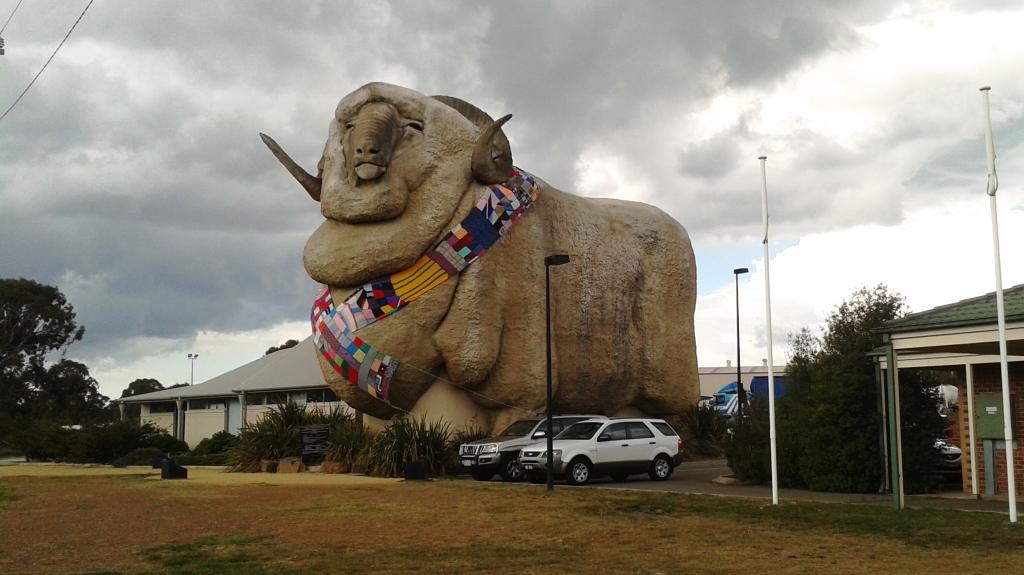
We paused at Goulburn to top up supplies and found a park with kerb space to park the van for lunch. In the interests of reporting things “BIG” we paused at the service centre at the southern end of town to see the Big Ram. It dominates the area, dwarfing McDonalds and Subway.

The Big Ram at Goulburn

The Big Ram at Goulburn

Barry is a retired farmer who still lives on his farm property. When we arrived he was busy helping his son to prepare several hundred sheep for shipment. We were invited to dinner with Barry and Ros, his wife, and enjoyed another excellent home cooked meal. We spent the evening discussing many issues including travelling remote parts of Australia. They are off on a trip that will include the Great Central Road that runs west from Ayres Rock and The Pilbara.

The farm house is in an elevated position so we were very aware of the freshening westerly wind that moved to the south west and brought with it memories of Victoria.

We left Barry the next morning assisting his son to load the sheep into trucks for a journey that will ultimately lead them to the dinner table. Perhaps your dinner table?

Day 24 – 19th April – Gunning to Temora – 182 Km

The turn off to Temora is a few kms south of Yass. A service centre is located where the southern entrance to the town leaves the highway which bypasses Yass, as it does Gunning. We refuelled and had morning tea before heading on. The main centre of civilisation on this road is the twin towns of Harden and Murrumburrah that sit cheek by jowl separated only by a small creek. Jointly they represent a substantial community.

Yass at a distance

Yass at a distance

Temora is larger than I had remembered with a main street lined with older buildings including some that are both stately and colonial. Woolworths and McDonalds are here and even a small branch of Harvey Norman. The many agricultural equipment suppliers confirm that this is a grain area. We drove past many fields of wheat stubble and several silos, most with additional wheat stored under tarpaulins.

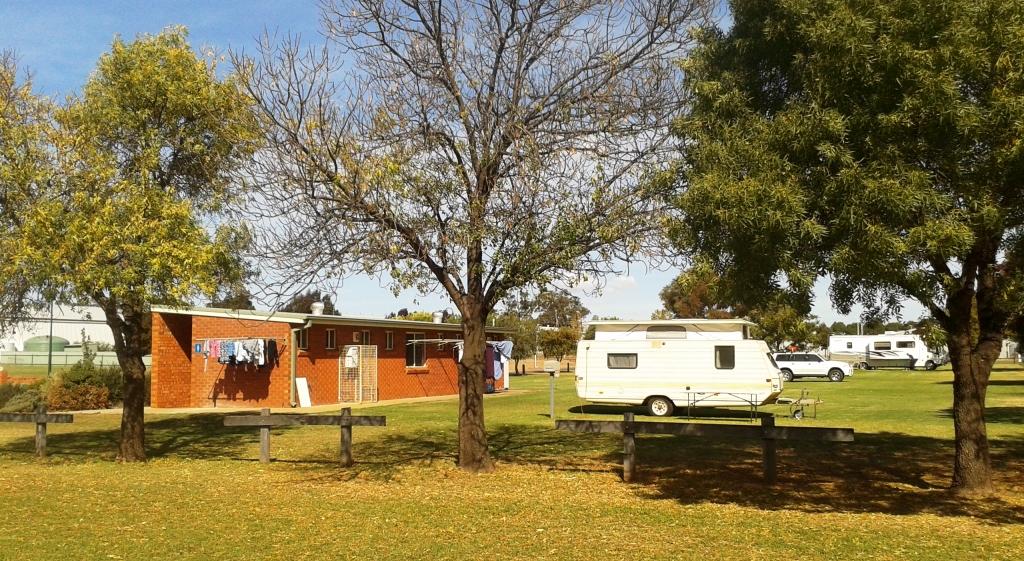
Our van is in the Temora Airport Tourist Park which is part of the airport grounds. As we set up for our stay we could keep an eye on arriving small aircraft as they landed and were carefully lined up at the side of the runway. Towards evening a loud roar alerted us to a small jet fighter taking to the skies to give us an appetiser for tomorrow’s main event.

Temora Airport Tourist Park

Temora Airport Tourist Park

Day 25 – 20th April – Temora Military Air Museum

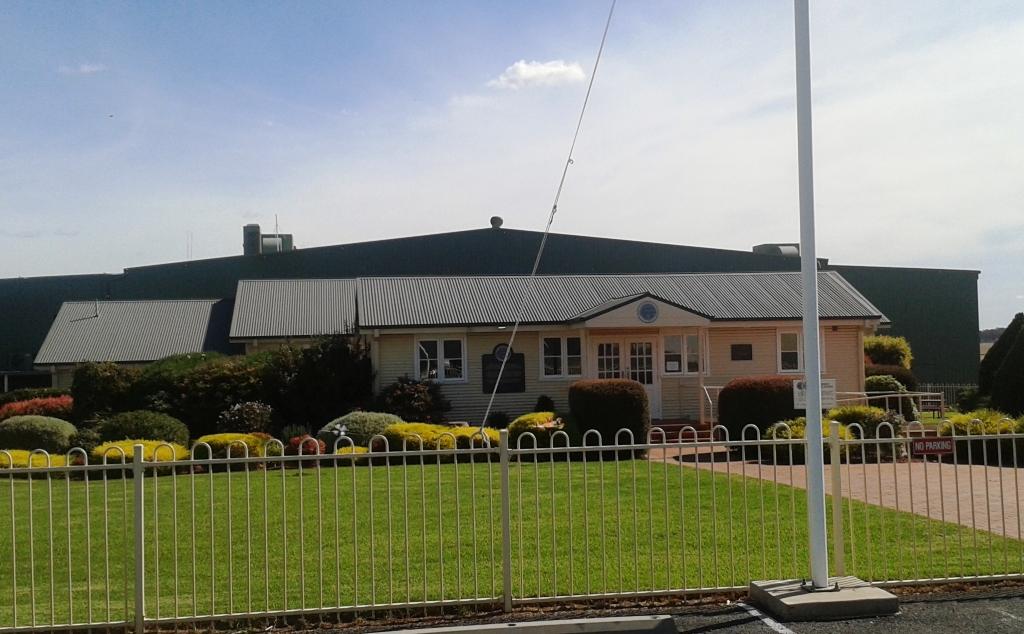
Temora Aviation Museum entrance

Temora Aviation Museum entrance

We have come to Temora for an Angel Flight Fly/Drive In at the Military Aircraft Museum. For those who don’t know of Angel Flight, it is a charity that organises volunteer private pilots to transport people with health and financial problems (the two often go together) from country areas to the city for treatment. Volunteer drivers (I am one of them) meet the plane at the airport and transport the patient and other family members to the place of treatment. I am called an Earth Angel. Pilots are Air Angels.

Angel Flight has been in existence for 10 years. The Fly/Drive In is a celebration of this mile stone. There are many more pilots than drivers as it is easier to fly to a place like Temora than to drive.

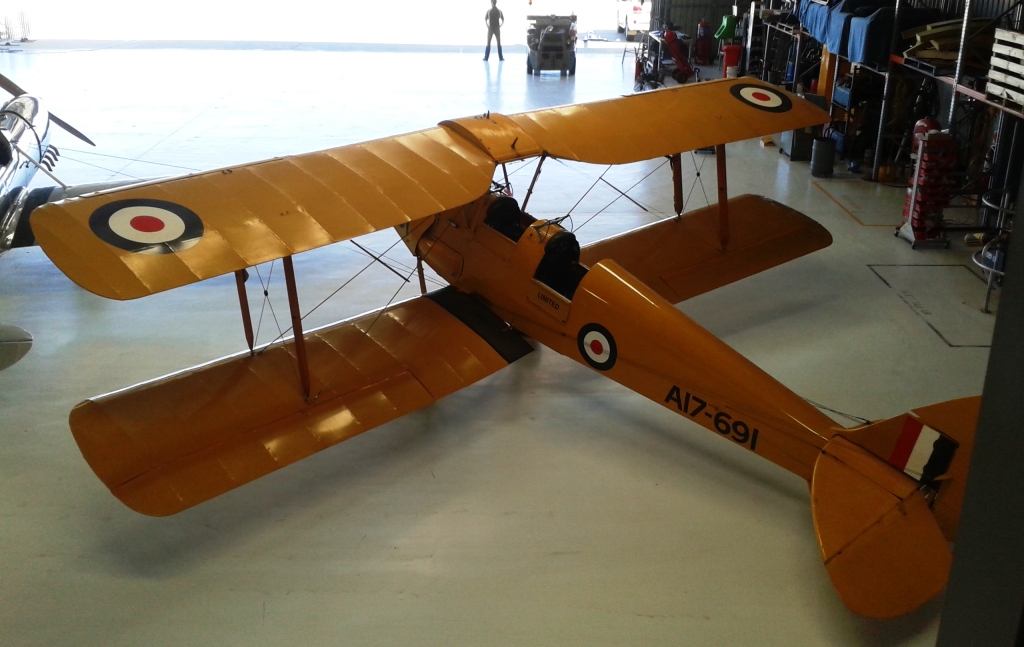
DH-82A Tiger Moth

DH-82A Tiger Moth

Ryan STM S2 USA trainer

Ryan STM S2 USA trainer

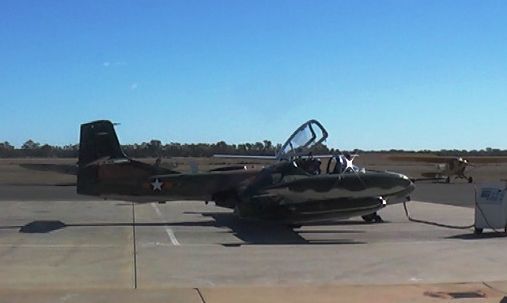
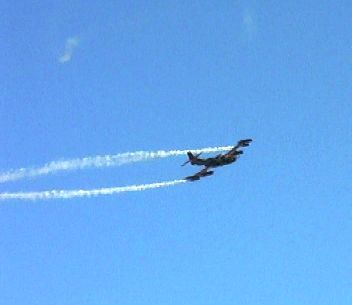
The museum is worth a visit. It is located on the site of a WWII pilot training base where Tiger Moth bi-planes were used to provide basic training for fighter and bomber pilots. The older of the aircraft date back to WWII but some come from the Vietnam era. All are capable of flight and on a flying day such as this some four or five aircraft will be demonstrated by experienced pilots. The line up for our visit was a Tiger Moth, a Ryan trainer, a Boomerang which was an Australian designed and built fighter, a genuine WWII Spitfire fighter and a Cessna A-37B Dragonfly, a jet fighter produced during the Vietnam war.

CA-13 Boomerang fighter

CA-13 Boomerang fighter

CA-13 Boomerang in flight

CA-13 Boomerang in flight


Supermarine Spitfire Mk VIII

Supermarine Spitfire Mk VIII

David Lowy, son of Frank of Westfield shopping centre fame, founded and heavily supports the museum. He is a world class aerobatics pilot and has been a world champion. He flies the Cessna jet fighter. It and the other aircraft are flown to demonstrate their capabilities so there is a great deal of noise and much craning of necks as all eyes are skyward. The sound of the Rolls Royce Merlin V12 engine in the Spitfire was a real treat to an former teenage reader of Biggles books like me.

Cessna A-37B Dragonfly Fighter

Cessna A-37B Dragonfly Fighter

Cessna A-37B Dragonfly Fighter in flight

Cessna A-37B Dragonfly Fighter in flight

In the evening we attended a dinner at the Temora RSL club, a sort of 10th birthday callebration. An excellent meal and very few speeches allowed pilots to talk aircraft all night. We Earth Angels and our partners just listened or allowed our attention to wander.If you would like know more about the museum go to www.aviationmuseu.com.au

Day 26 – 21st April 2013 – Temora

A lay day! Work catch up, washing and some reading and blog writing, of course.