Playing in the Sand – Fraser Island Part 4

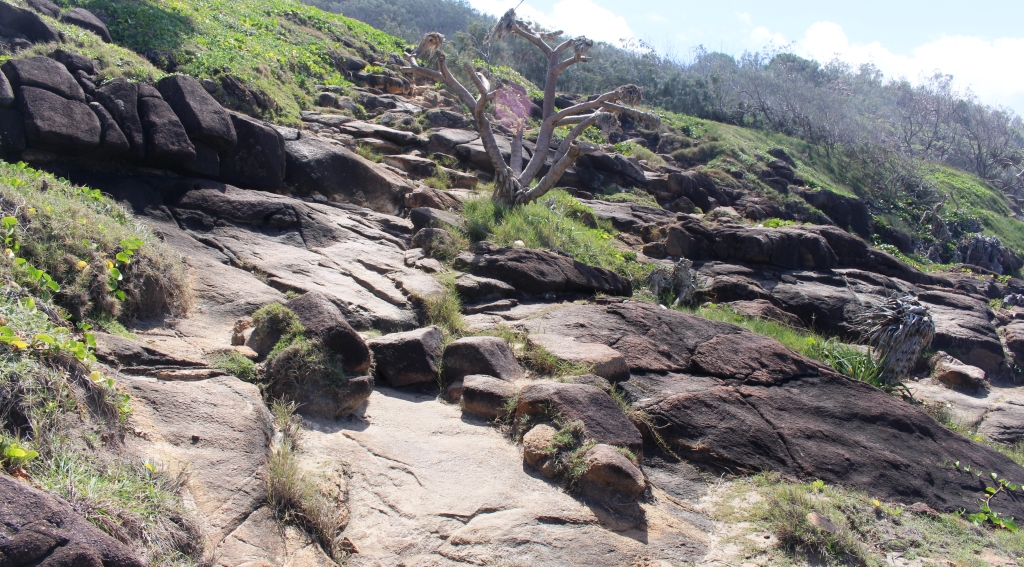
Rocks at the start of the climb

Rocks at the start of the climb

We went south yesterday, so its north again today. I had decided to climb Indian Head.

We left the camp as soon as the height of the tide made it safe to travel on the beach. When we arrived at the northern end of Seventy Five Mile Beach there was only one other

vehicle there and its occupant was fishing. The first part of the climb is steep and rough but then the rate of attrition eases and an easy path leads ahead. I only needed two “breather” stops on the way up, so I didn’t do too badly.

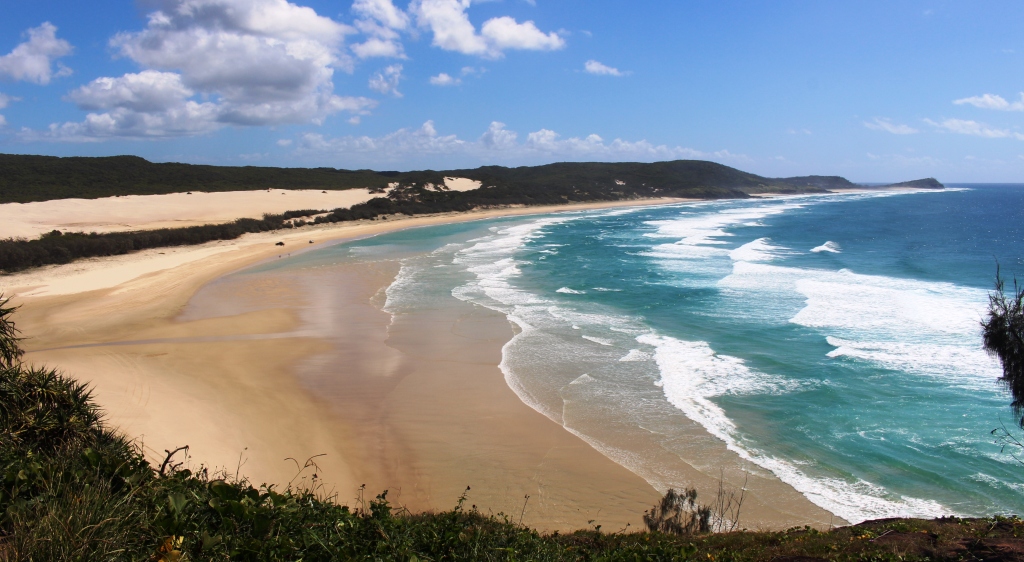
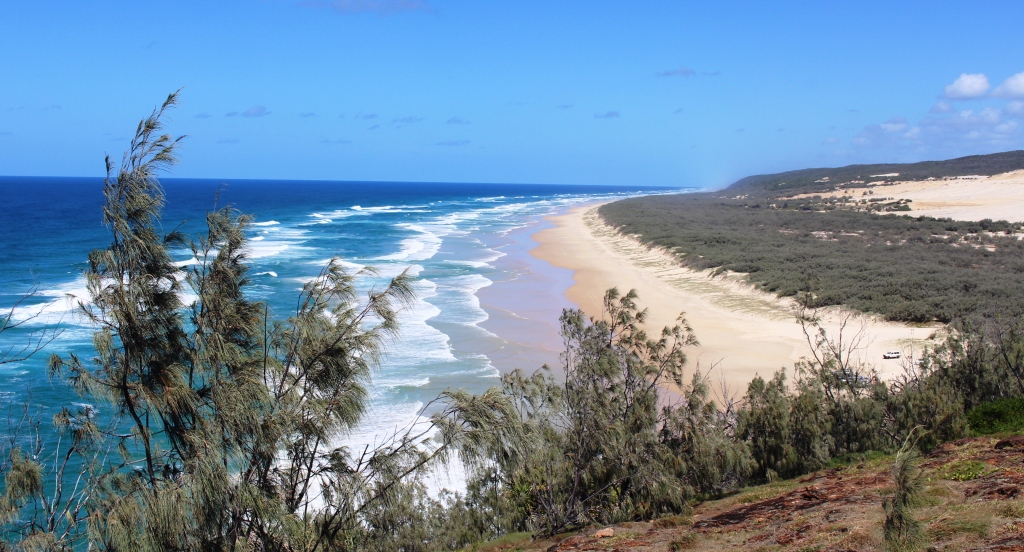
The Climb - The View to the North

The Climb – The View to the North

The view from the top is magnificent in both directions. To the south the beach goes out of sight around a bend in the dunes but the the blue sea stretches to the horizon. To the north the beaches are shorter, divided by the small headland at the foot of which lie the Champagne Pools and then Waddy Point. Beyond Waddy Point the coast swings away to the north

The Climb - View to theSouth

The Climb – View to theSouth

so beaches past Waddy Point are not visible from Indian Head.

Having seen what lay beyond Indian Head, I was determined to get there. So, having descended from the heights, I asked questions of a couple of people who had arrived during my climb. I decided to give the loose sand that leads to the bypass behind the headland a try. The worst that could happen

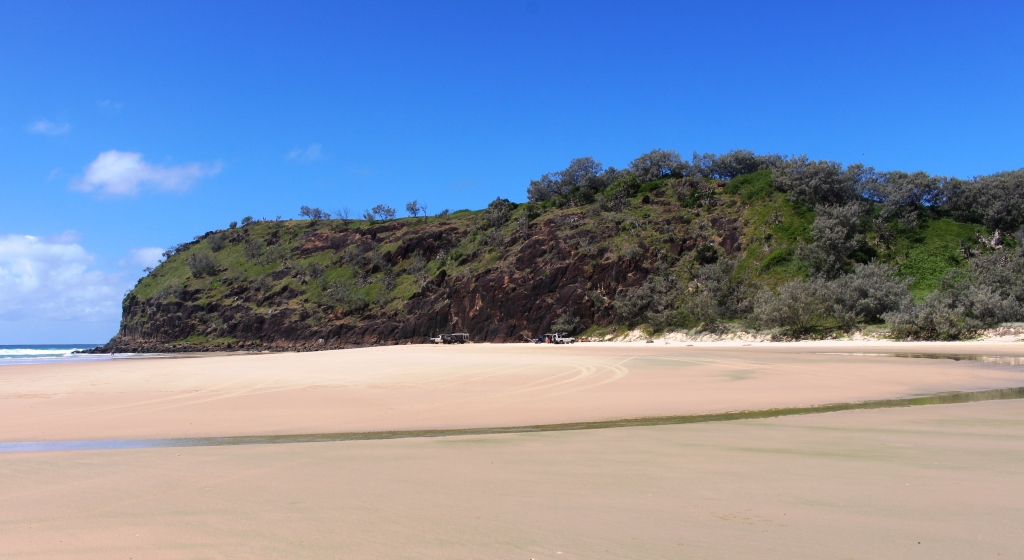
Indian Head from the north

Indian Head from the north

was that we would get bogged. In low range and second gear we drove onto the hard sand to give us a bit of a run up and off we went.

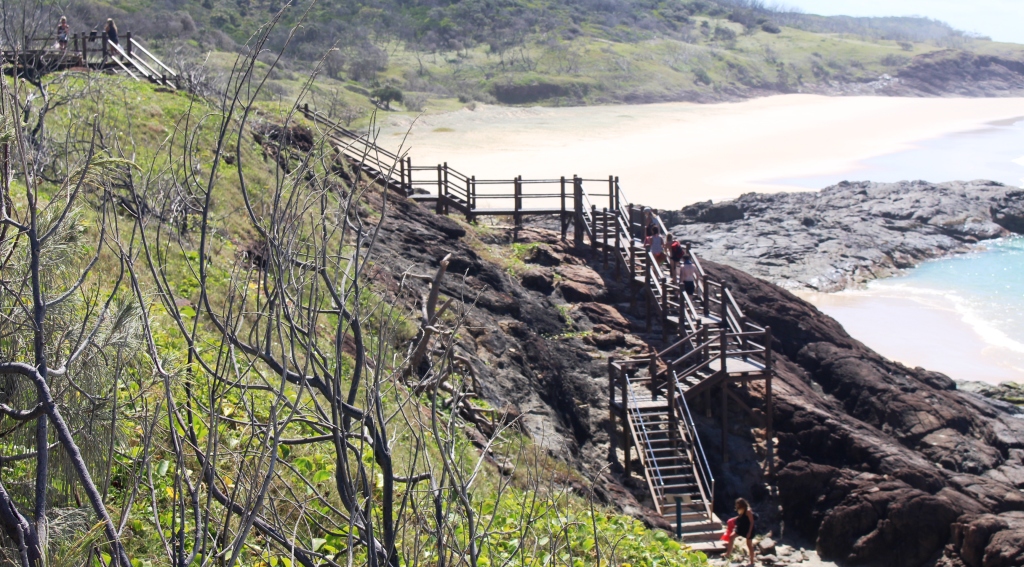
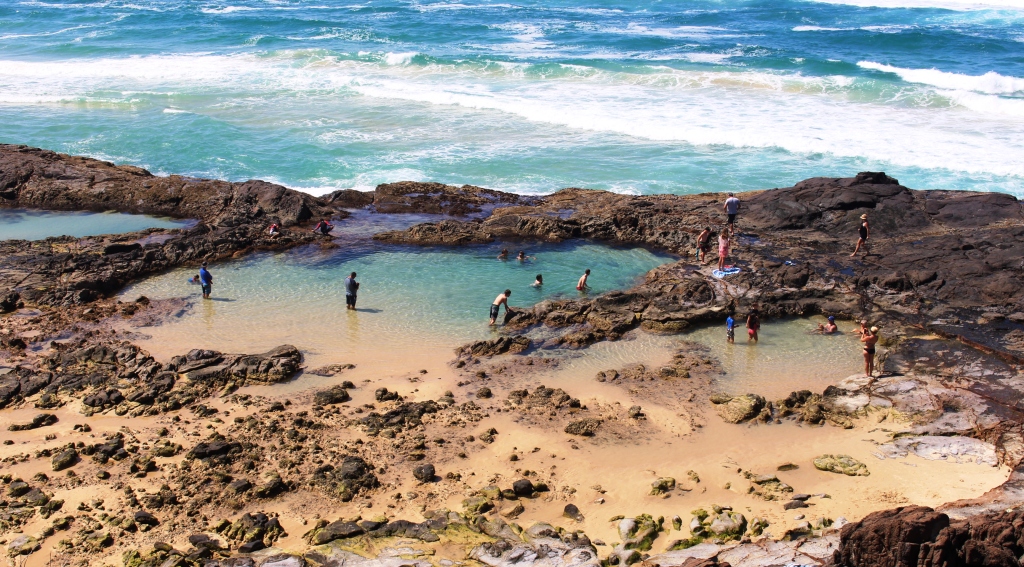
Whatever was I worried about? The Challenger took the whole thing in its stride. In no time we were through and onto the next beach where we paused for a cold drink and to savor the achievement and our surroundings. We then drove to the northern end and up another sandy incline to the Champagne Pools south car park. Access to the pools is by a board walk and stairs. We walked to an observation point overlooking the pools and which also gave great views back towards Indian Head.

Stais to the Champagne Pools

Stais to the Champagne Pools

There are two pools. They sit together within the protection of stone walls. They are filled by the rising tide and if the tide is high enough, or the waves large enough, the surge of the breakers wash over the protective natural stone walls, flooding the pools with sea water and creating a champagne bubble effect. The backpackers love the place. The

The Champagne Pools didn't have much champagne

The Champagne Pools didn’t have much champagne

opportunity to swim there is on the itinerary of every tour bus or tag-along group.


To go further north requires passage through a particularly challenging bypass behind Waddy Point, so we left that for another trip and returned the short drive from the car park to the beach to eat our lunch. We did it buffet style, standing at the back of the car on the churned sand and enjoying the cooling sea breeze. Did I tell you that the weather was perfect?

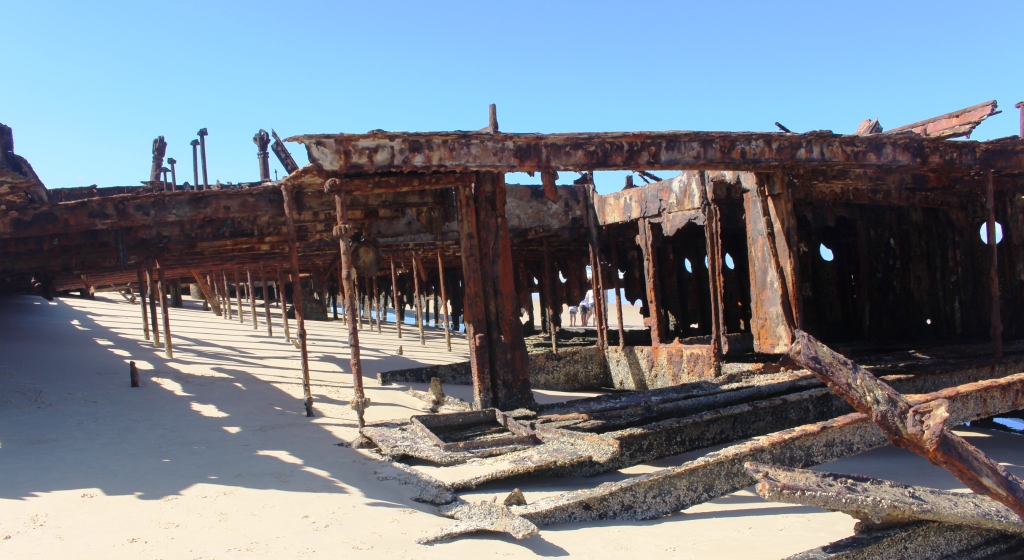
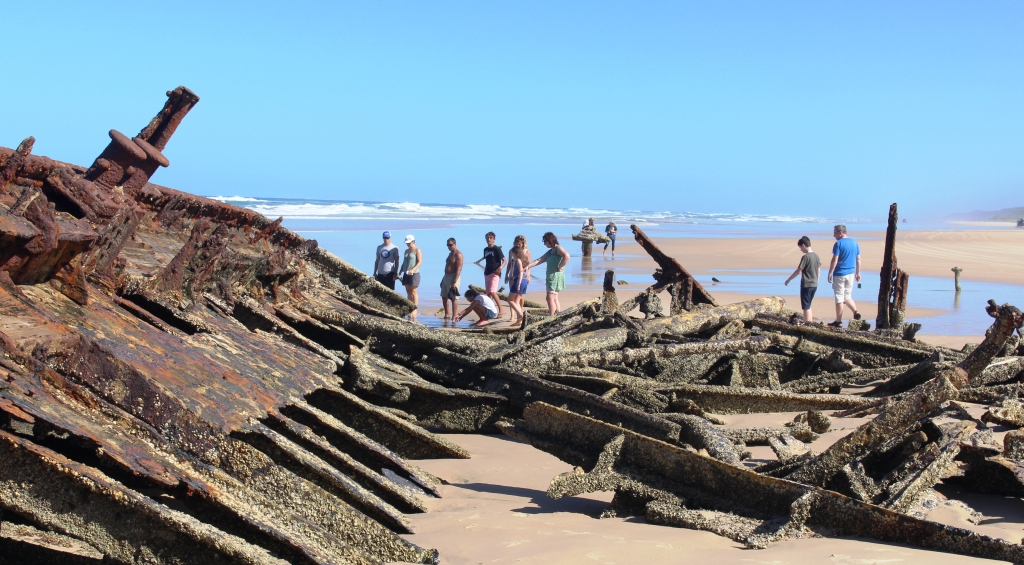
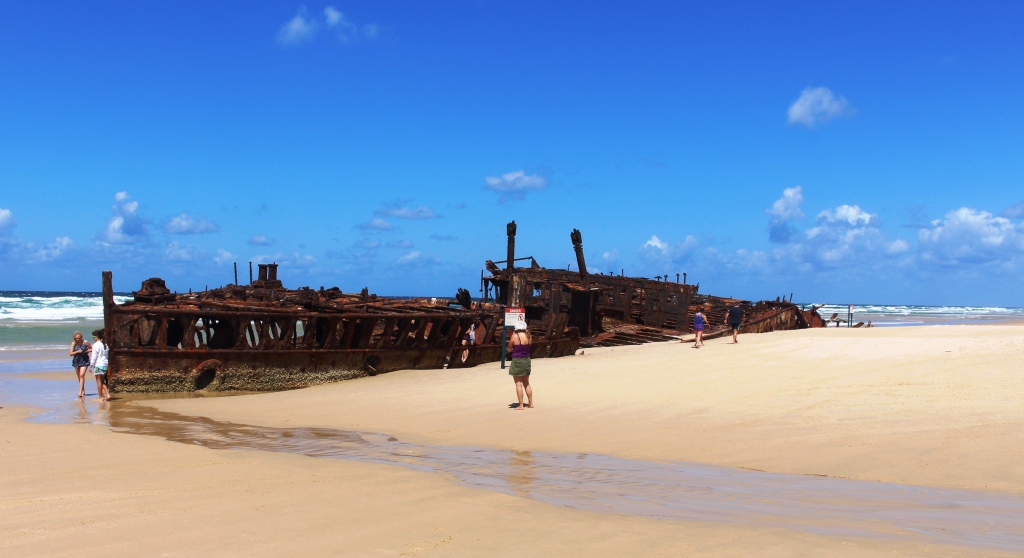
Some of the structure of SS Maheno

Some of the structure of SS Maheno

We still had most of the afternoon so we returned back, past our camp to revisit the SS Maheno wreck and Eli Creek, both places worth multiple visits and which had their normal level of visitors.

The information kiosk at the back of the beach informed us that SS Maheno had been a luxury liner on the Tasman Sea trade but had been retired in the mid 1930s and had been sold to Japan as scrap metal. A rare winter cyclone IMG_4192coincided with the tow to Japan, the tow line broke and SS Maheno ended up permanently on Fraser Island. It was used by commandos for explosive training during WWII and the RAAF used it for bombing practice at one point. But there it remains, partially buried in the sand and washed by every rising tide. And during the course of a year it is examined and photographed by tens of thousands of tourists.

Eli Creek and the foot bridge

Eli Creek and the foot bridge

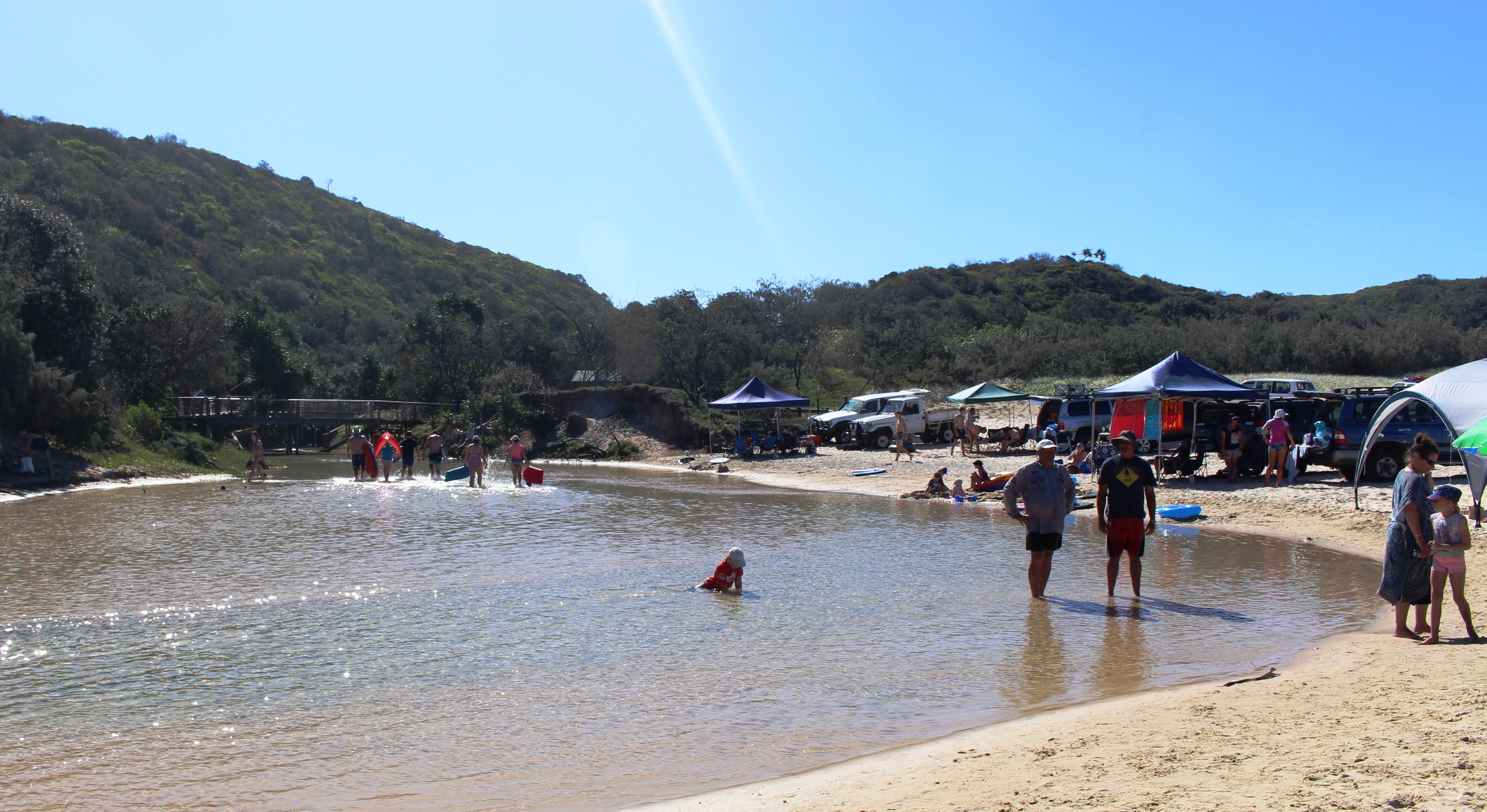
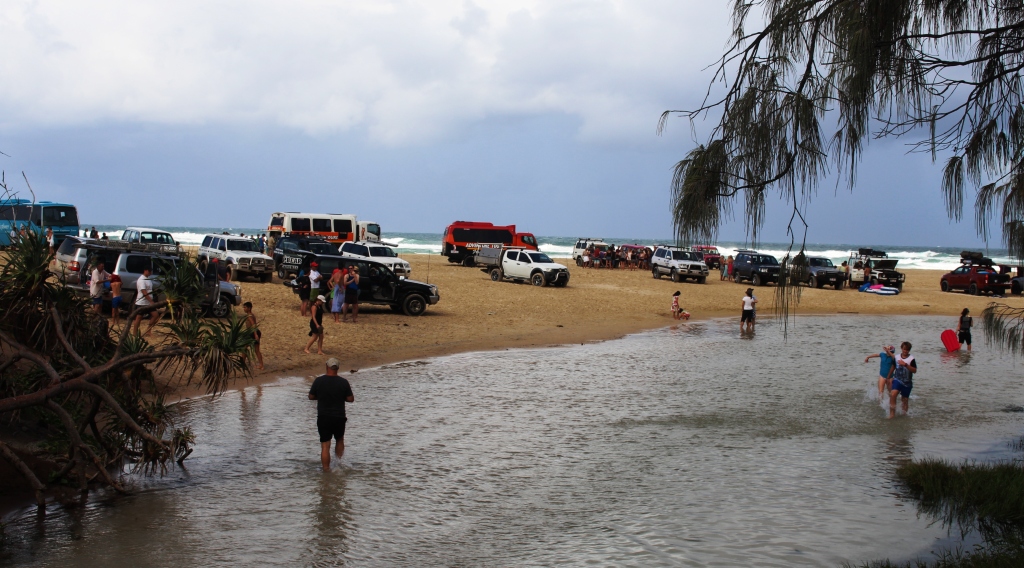
We then moved on to Eli Creek again. The creek below the foot bridge was lined by parked vehicles, including buses, with a number of gazebos and vehicle awnings extended to provide shade for relaxing adults and playing children. Eli Creek, after it exits the sand dunes, turns along the beach for a couple of hundred metres so it provides excellent parking opportunities for its fans.

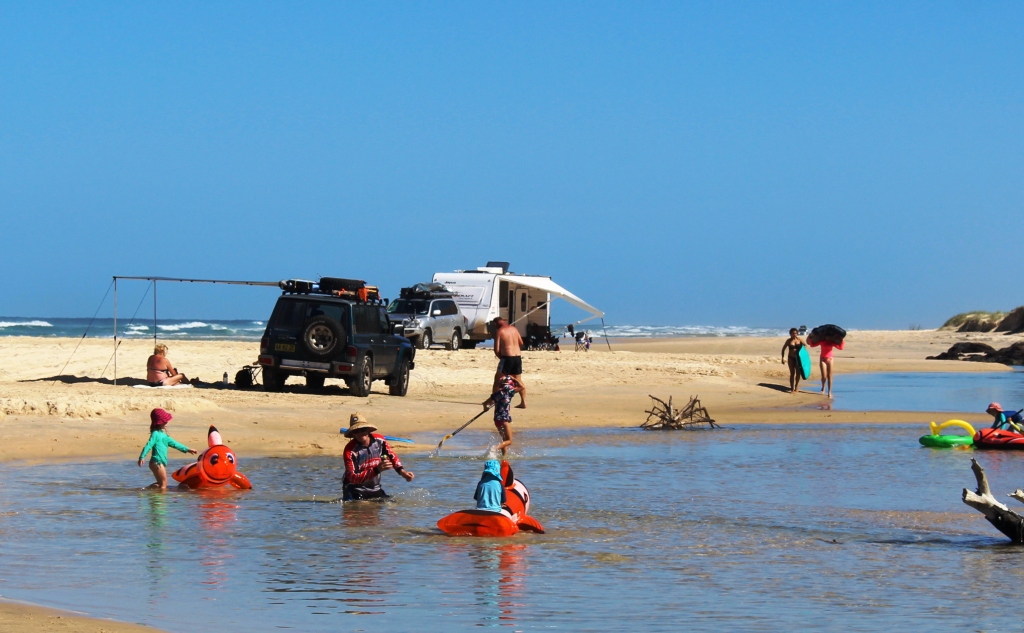
A caravan by Eli Creek

A caravan by Eli Creek

Someone, towing a large caravan to a camping spot somewhere, had pulled up beside the creek and extended the caravan awning to maximize their comfort as they whiled away some time.

Those who were not relaxing were making the pilgrimage over the foot bridge and along the board walk to indulge in the joys of floating, swimming or wading down the creek. The attached video clip shows something of the popularity of this pastime, as a group who had just arrived in three 12 seater aircraft hurried into the fray. A very good time was being had by all.

Five Days Playing in the Sand – Fraser Island 4     [youtube]https://www.youtube.com/watch?v=iHsAprtBxJI[/youtube]

Playing in the Sand – Fraser Island Part 3


We just love driving on a wide flat beach

We just love driving on a wide flat beach

Coffee rock at Poyungan Rocks between Eurong and Happy Valley

Coffee rock at Poyungan Rocks between Eurong and Happy Valley

We retraced our track down the beach for about 36 km to Eurong and then inland to Central Station and Lake McKenzie. This was our first trip on inland tracks, so it called for some different driving techniques to those required on the beach. Speed limits on the beach are generally 80 kph with 40 kph near popular and residential areas, but on inland tracks the limit is 30 kph so speeds are mostly less than 20 kph average.

Eurong Village is quite near to the beach

Eurong Village is quite near to the beach


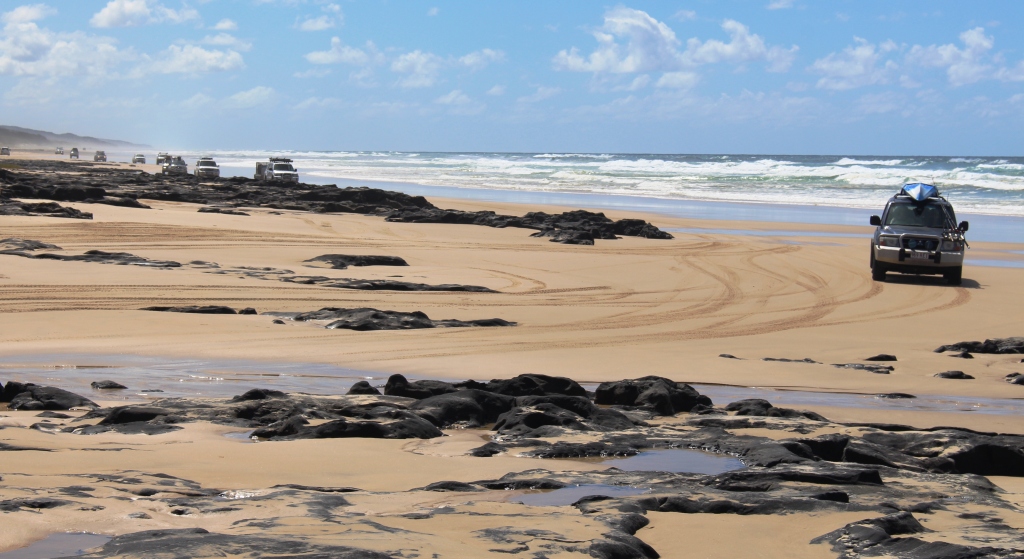
We headed south, past a small crowd at The Pinnacles, past a larger crowd at the SS Maheno wreck and past an even larger crowd at Eli Creek. We were again forced onto the bypass track at Yidney Rocks where the waves were lapping at the coffee rock, making it impossible to drive by on the beach. Coffee rock is embedded in the sand and can be

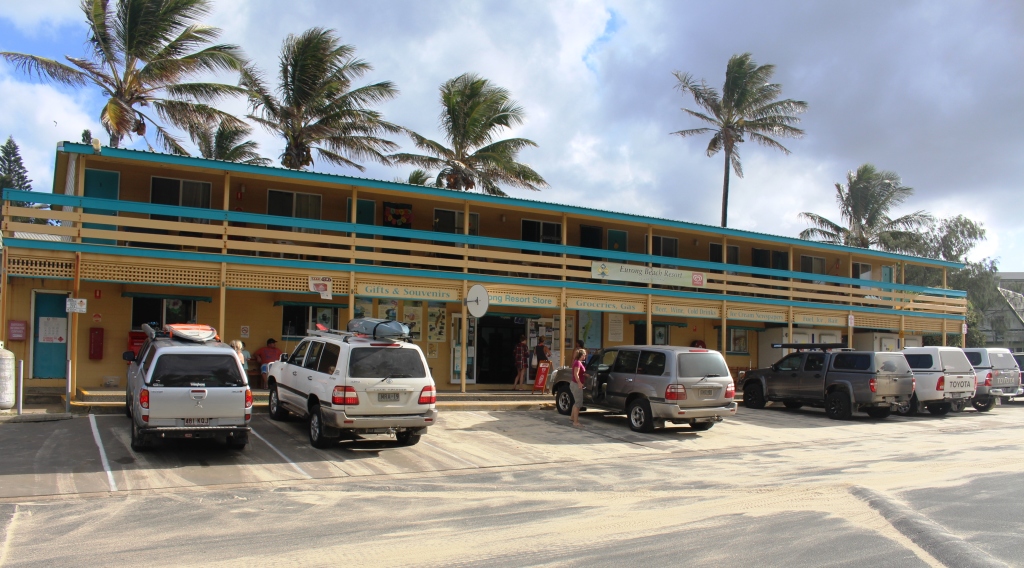
Eurong Beach Resort

Eurong Beach Resort

more or less exposed after a single tide. It frequently runs all the way back to the foot of the sand dunes.

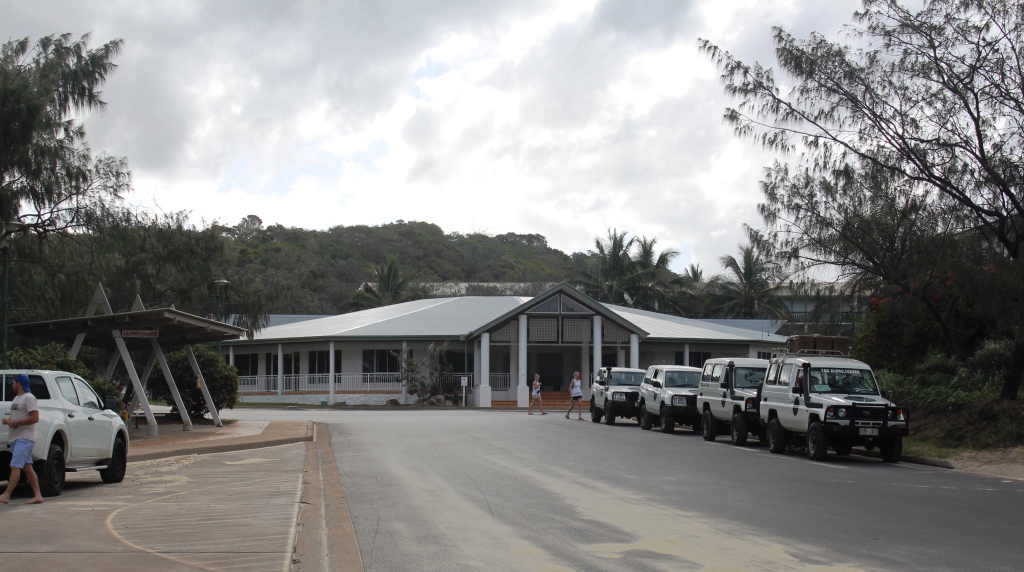
There is not much to see at Eurong. The resort dominates the commercial area and is complimented by some shops. The town has a bakery, police station and fire station.  Most of the residential area is hidden in the

The main shop at Eurong

The main shop at Eurong

trees. Queensland National Parks main office for Fraser Island is also located there.

Most tracks in the area where we travelled were one way. Lake McKenzie is probably the most popular feature on Fraser, with Central Station not far behind, so the area attracts a great deal of traffic including tourist buses and tag-along groups. The tracks are narrow and winding so to meet a large bus on a blind corner can be rather frightening. The tracks are sand so become badly damaged, particularly in dry weather. A good deluge of rain washes sand into the deep holes thus improving the track. At the moment an average of 20 kph is the best that you could hope for and for much of the journey it was less.

Ruth preparing lunch at Central Station

Ruth preparing lunch at Central Station

Central Station was the headquarters of the logging operation that werenpersued from the late 1800s to about 1950. Some historical artifacts are on display, including a logger’s cottage and a shed containing the artifacts, the walls of which are covered with pictures and text setting out the history of the early days, including Indigenous history.

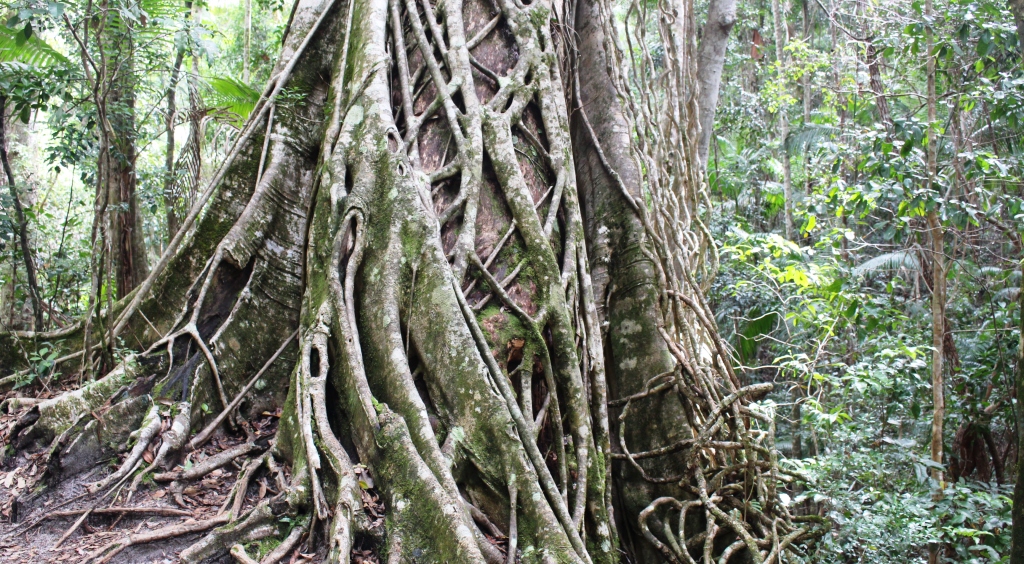
A Strangler fig at Central Station

A Strangler fig at Central Station

There are extensive picnic facilities with tables aplenty, both exposed and sheltered. This is a favorite lunch stop for the tourist buses.

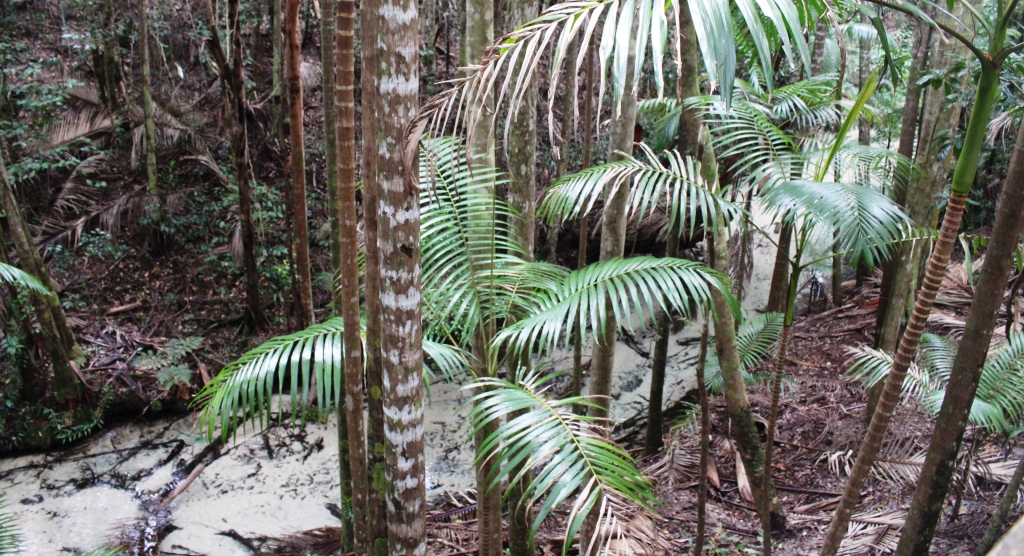
Palms line the creek

Palms line the creek


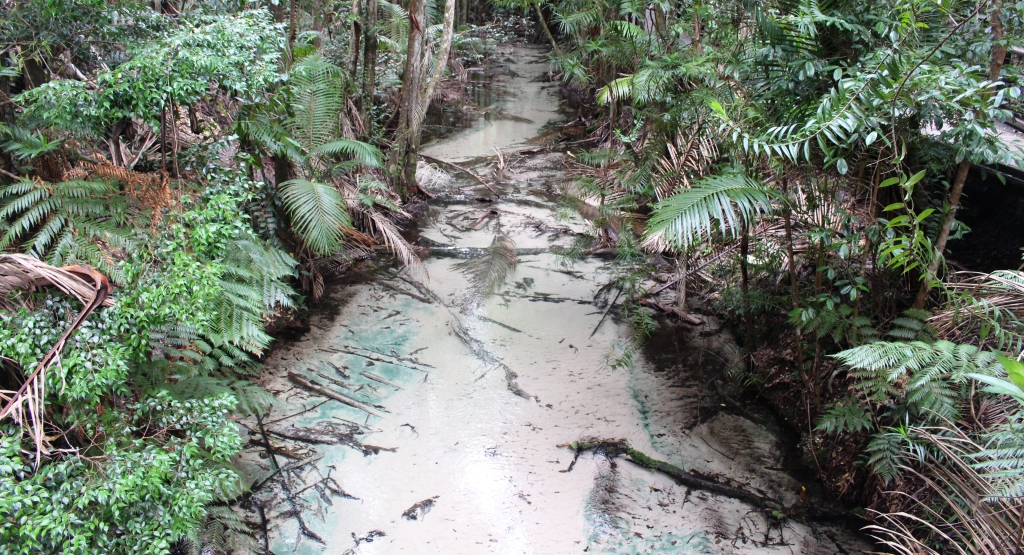
And then there is Wanggoolba Creek. Central Station was built on its banks, probably for the water supply. It’s almost clear water runs slowly over a bed of pure white sand that is tinged in places with the green of the mineral content in the sand, hence the sand mining in times past. Ancient green palms grow in its waters and its banks are lined with tall straight

The creek photographed from the boardwalk

The creek photographed from the boardwalk

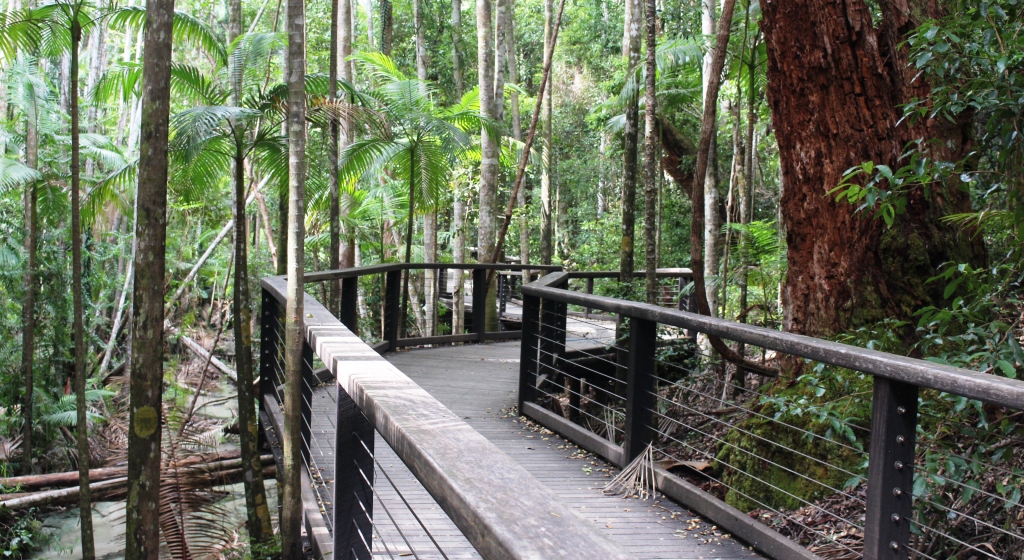
trunks of trees reaching for the sun and the natural debris that nature produces in this kind of environment. All this can conveniently be viewed from a board walk that is part of a loop track that starts and finishes at Central Station.


A section of the boardwalk beside the stream

A section of the boardwalk beside the stream


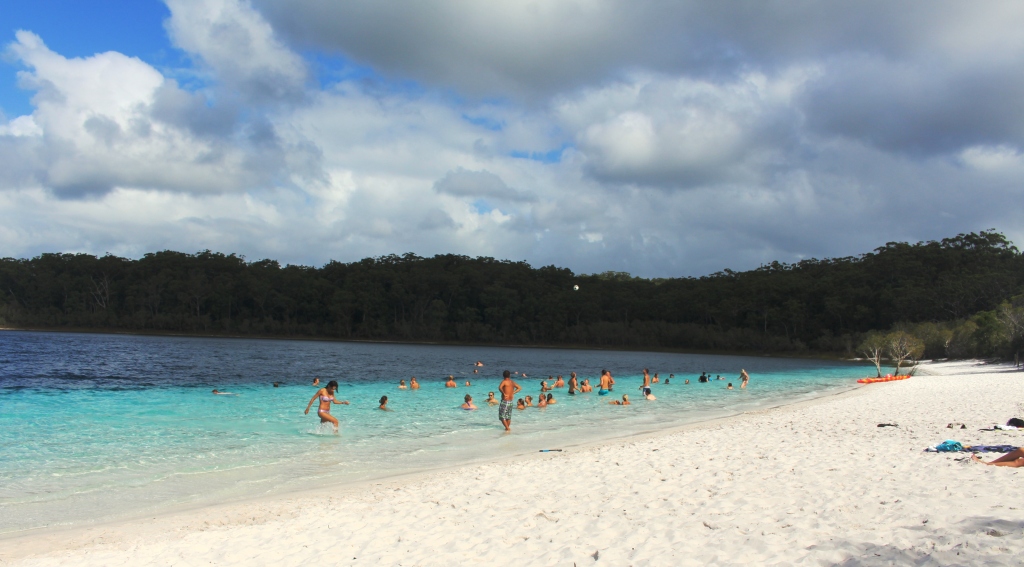
Bathers at Lake McKenzie

Bathers at Lake McKenzie

It is a further 11 kilometres to Lake McKenzie. In busy periods the large car park there is often filled before lunch time as visitors seek out this unique spot. Dingo management has lead to the banning of food lake side, but a large fenced picnic area has been provided. Visitors love the clarity of the water and somehow the pure white sand that surrounds the lake seems to invite sunbathing.

Amenities and lake access at Lake McKenzie

Amenities and lake access at Lake McKenzie

By the time we had spent a few minutes at the lake, the day was advancing. One thing that you can never forget, if the trip that you are doing requires much beach travel, is the state of the tide. Our target was to be home by 4.00 pm and the distance back to the beach at Eurong from Lake McKenzie is about 18 kilometres, probably at about 15 kph for a fair part of the way. We made it to Eurong at a few minutes after 3.00 pm. We refueled here, as 91 octane petrol was $1.85 per litre instead of $2.20 per litre at Cathedrals.

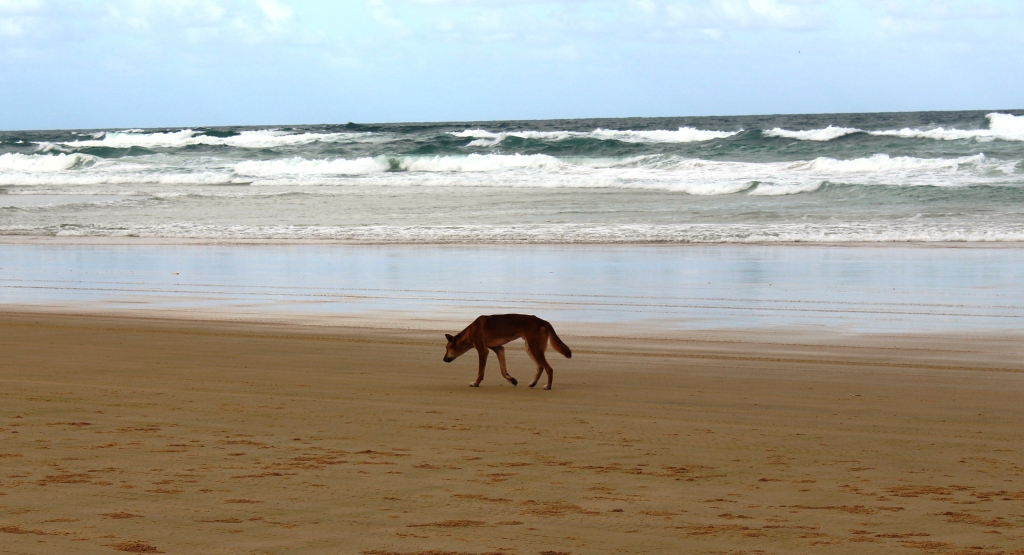
A genuine Fraser Island dingo

A genuine Fraser Island dingo

The 39 km run back along the beach took about 45 minutes but was interrupted early when, soon after leaving Eurong, we spotted a dingo trotting along the beach, near the edge of the water. We were able to drive up quite close to the animal. We were totally ignored.

We parked Cathedrals on Fraser at just after 4.00 pm but we would have been OK travelling on the beach for another hour.  High tide was at about 7.30 pm.


Five Days Playing in the Sand – Fraser Island 3 [youtube]https://www.youtube.com/watch?v=0Q6Ifg9D_Jo[/youtube]

Playing in the Sand – Fraser Island Part 2

Part of The Chathedrals

Part of The Cathedrals

The sun rose over the dunes, but was sharing the sky with cloud patches. We found ourselves at the end of the family group queue when we wanted to wash the breakfast dishes. Two of the men were on duty for dish washing. It took them forever. But finally our dishes were done so we had another cup of coffee and then went exploring.

Part of The Chathedrals

Part of The Cathedrals

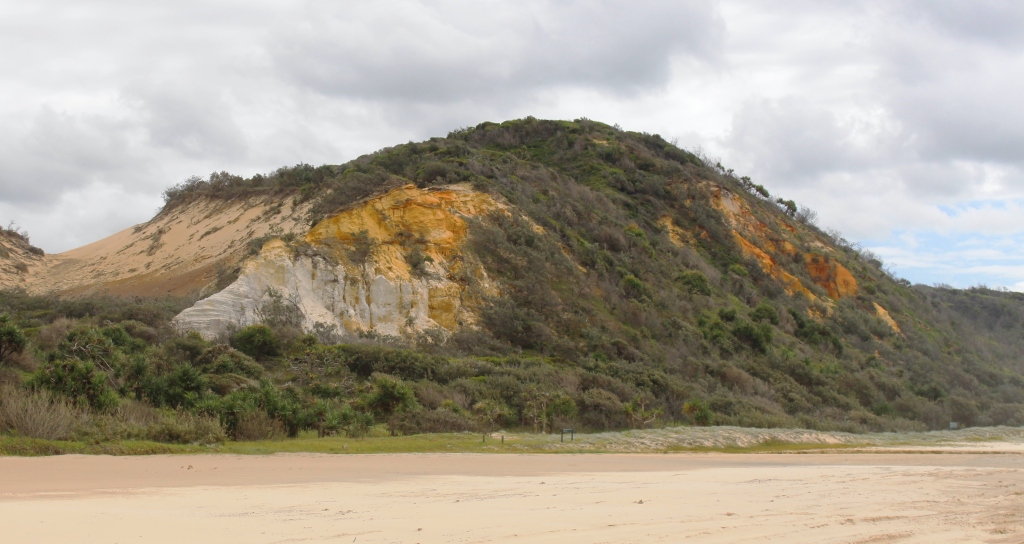
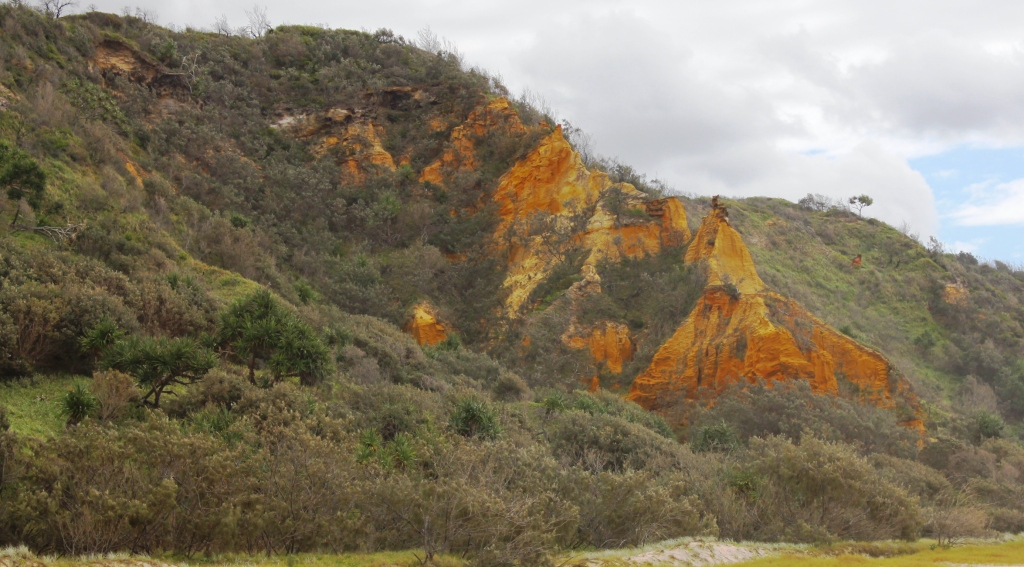
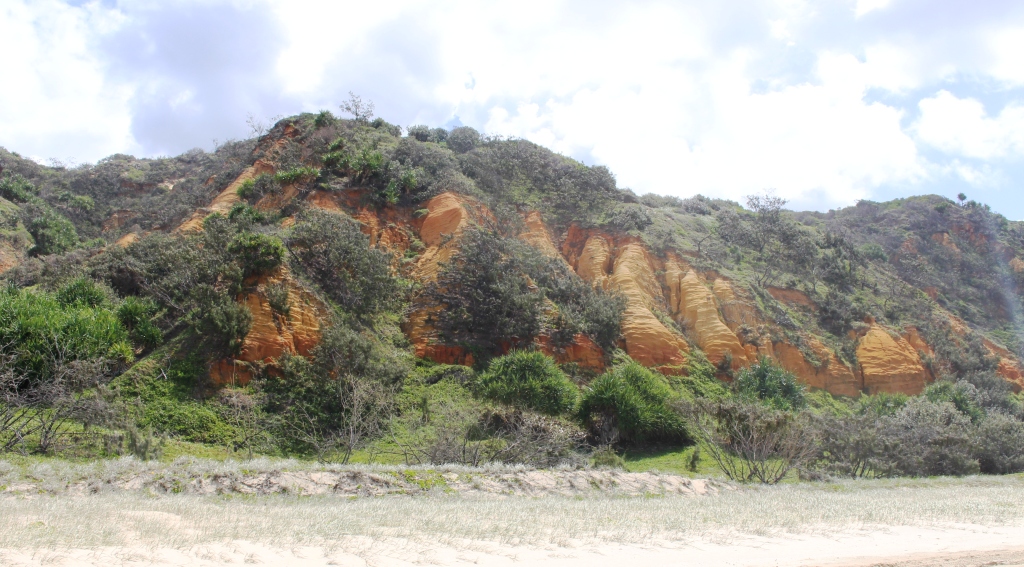
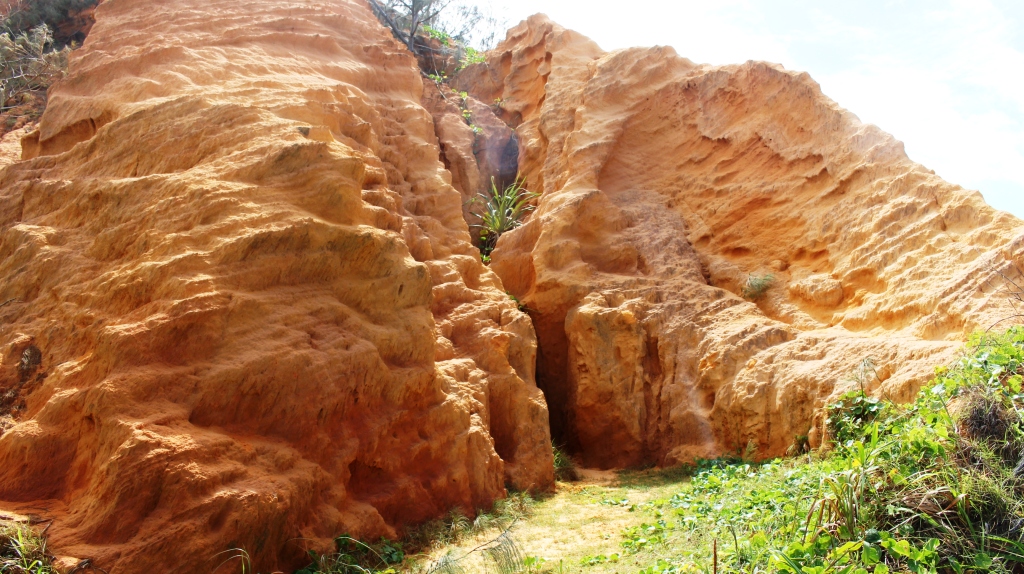
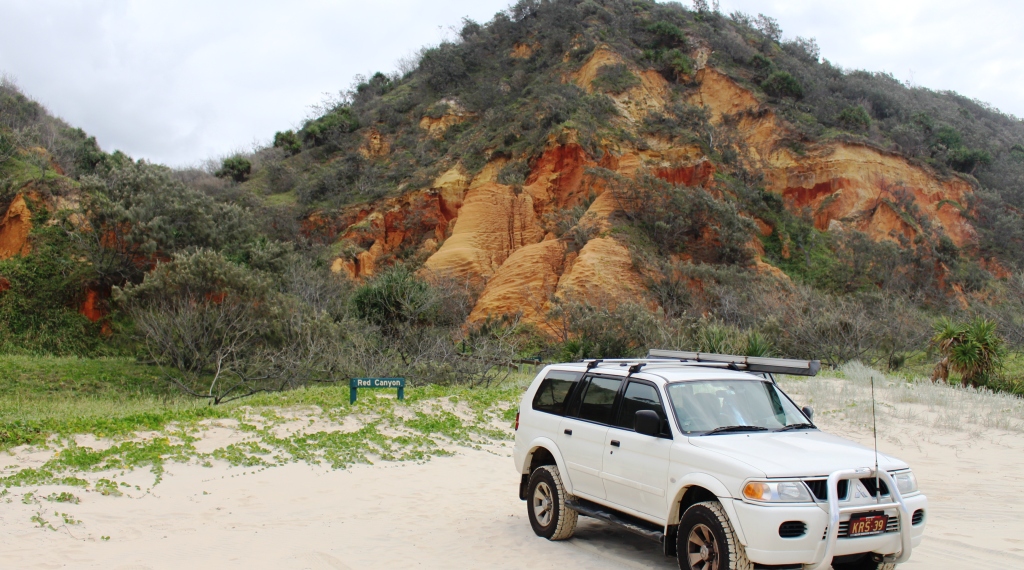
Cathedrals on Fraser, where we were staying, is named for the coloured sand formations, known as “The Cathedrals”, because of their shape. They are formed from highly coloured, solid sand material and have weathered into their shape over eons. We made several stops for photos and for a short walk where a pathway has been provided at the area known as Red Canyon.  There are many really remarkable formations in this area.

Part of The Chathedrals

Part of The Cathedrals

The path at Red Canyon leads to the foot of solid sand cliffs that reach tens of metres up the side of the sand dunes. A viewing platform and information board is supplied.


Part of The Chathedrals

Part of The Cathedrals

The Challenger at The Cathedrals

The Challenger at The Cathedrals

More of The Cathedrals

More of The Cathedrals

Indian Head

Indian Head

Our objective was Indian Head, the rocky promontory that is the northern end of the Seventy Five Mile Beach. It was named by Captain James Cook during his passage along the Australian coast in 1772. As he sailed past, he could see a number of Aborigines standing on top of the headland watching him watching them. Our arrival today was similar. The vehicles of a tag-along group were parked at the bottom of the access path and almost all of the occupants were standing along the summit. Indian Head looked like it had had a buzz cut.

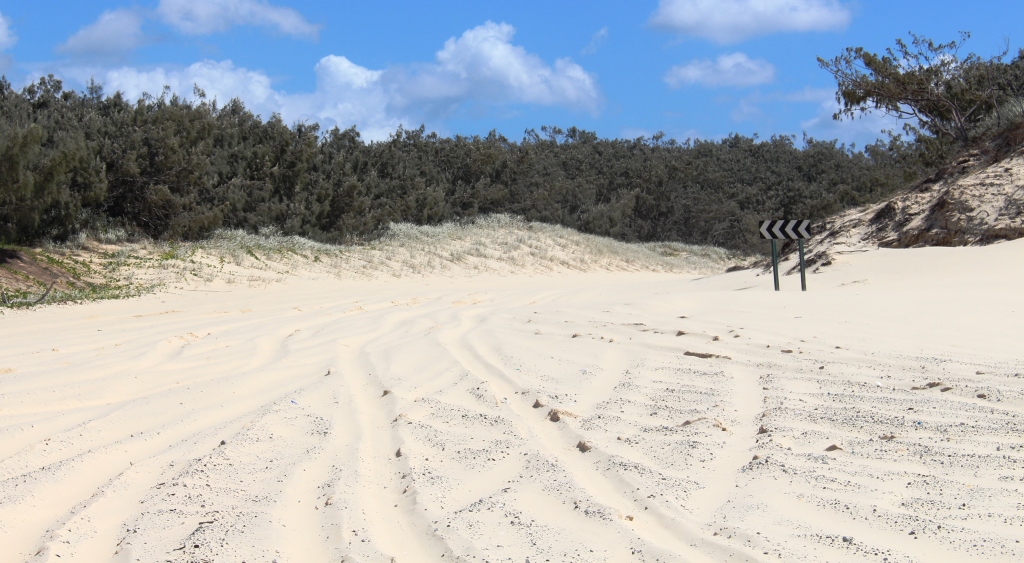
Soft sand approaches to Indian Head bypass

Soft sand approaches to Indian Head bypass

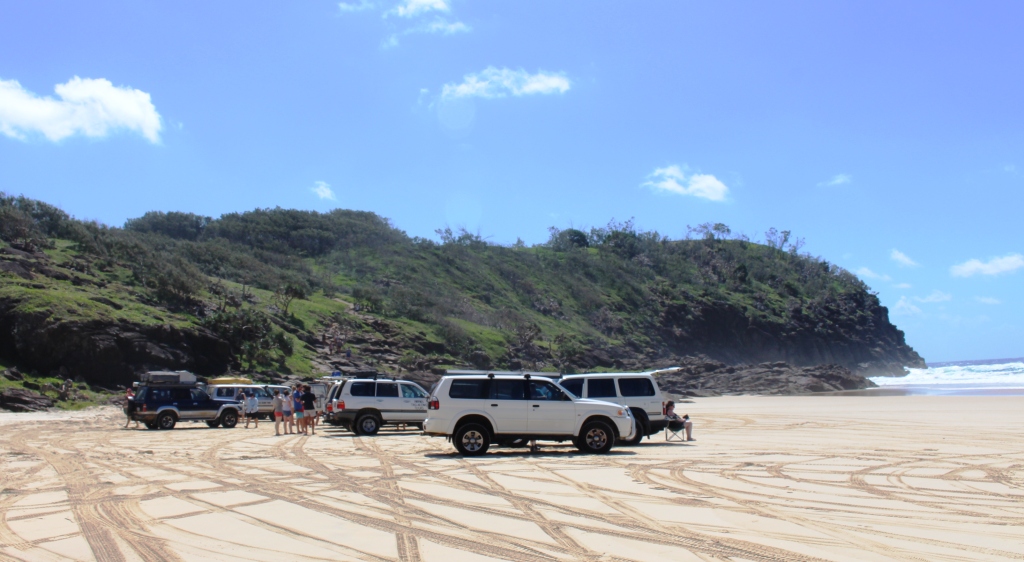
There is a great deal to see beyond Indian Head, including Waddy Point, The Champagne Pools and Orchid Beach Resort, not to mention Sandy Cape and the lighthouse. But the beach stops at the headland and starts again on the other side. To get to the other side it is necessary to negotiate a bypass track that is well known for its covering of soft. loose sand. We watched as the tag-along group and several other vehicles made multiple attempts to get

The northern end of Seventy Five Mile Beach

The northern end of Seventy Five Mile Beach

through the loose sand. All of them finally disappeared around the first turn and presumably got through, but not without considerable effort and further reduced tyre pressures. We decided that being on our own this was not our day to push on. We returned the 26 km to camp for lunch.

The Pinnacles

The Pinnacles


After lunch we travelled back south to Eli Creek, passing the wreck of SS Maheno, with its mob of admirers, on the way. We also stopped to have a proper look at The Pinnacles. They are a similar formation to The Cathedrals but have a quite unique formation.


Aircraft parked near The Pinnacles

Aircraft parked near The Pinnacles

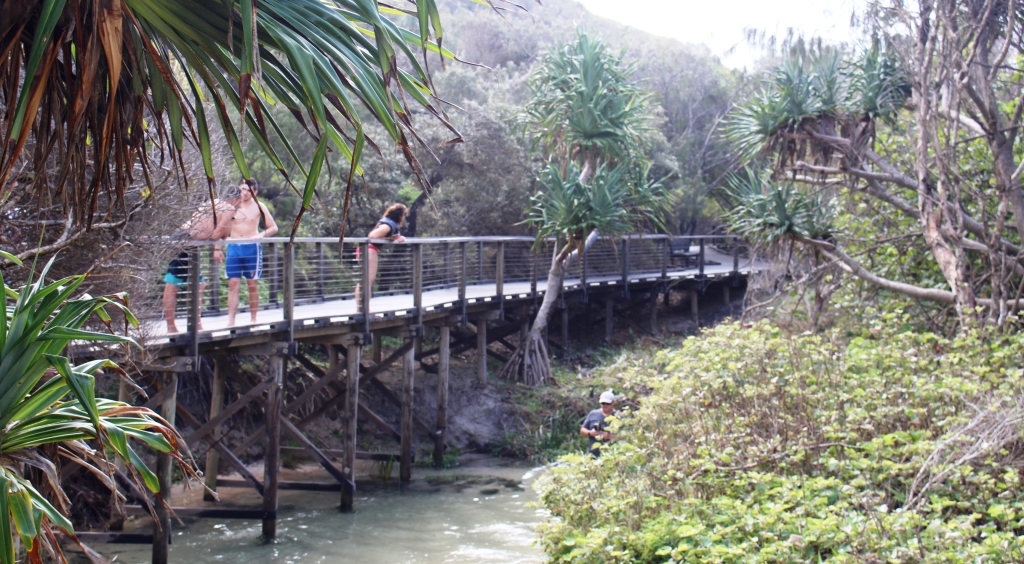
Eli Creek boardwalk

Eli Creek boardwalk

The top activity at Eli Creek is to walk along a board walk that parallels the creek for several hundred metres and then to enter the creek and wade, float or swim back to the beach. This must be fun because people, including some mature folks, repeat the performance over and over, despite quite low water temperatures. I remember swimming down the creek with the flow many years ago, but we gave it a miss this time.

Eli Creek is the largest fresh water stream on the east side of Fraser but seems to be now much smaller, with a reduced volume of water, that it was in years gone by. But the flow is reliable and much enjoyed by its admirers. Visiting family groups will often spend the day there,in the shelter of gazebos or roof rack awnings. Children love it as do parents. It provides an ever changing supply of safe clean water. But it often closes the beach to through traffic at high tide as the rising surf washes into the creek’s mouth.

RVs beside Eli Creek

RVs beside Eli Creek

Any further thought of examination of Eli Creek was quickly dismissed when the day’s promised shower descended on us without warning, so instead of going on to Happy Valley we returned to base.

The large group mentioned earlier in the story went to Lake McKenzie for the day and were having dinner at Happy Valley on the way back, before returning to camp after the 7.00 pm high tide. They came in quietly a little after 9.30 pm. But preparing the evening meal was a breeze without them there.

I guess they are typical of groups who visit Fraser Island. The four ladies all teach as the same Sunshine Coast school and their children attend there too. One couple are seasoned visitors to the Island and seemed to ast as leaders on group outings. All friendly people with well disciplined children who made lots of noise while playing but went quietly to bed. They were probably exhausted.

Five Days Playing in the Sand – Fraser Island 2 [youtube]https://www.youtube.com/watch?v=mwLvmTYgg_8[/youtube]

Playing in the Sand – Fraser Island Part 1

It was an adventure just getting there!

Our track along Fraser Island. Note the tracking line along the coast

Our track along Fraser Island. Note the tracking line along the coast

We woke before the alarm’s set time. Five am! Too early, but when the timetable depends on tides then it is smart to know who is boss. And it wasn’t us. “Time and tide wait for no man”, Geoffrey Chaucer once wrote.

But the early start allowed us to drive out of our gate by about 6.30 am. After a stop for fuel and a call at the ATM we were on the sparsely populated north bound lanes of the Bruce Highway, a little before 7.00 am. The south bound lanes were another story, but someone else’s story.

The vehicular ferry to the south end of Fraser leaves from Inskip Point, about 10 km north of Rainbow Beach. That’s about 225 km north of home. We arrived at Rainbow Beach at about 9.30 am, treated ourselves to coffee, topped up the fuel, bought a ferry ticket, went through the car wash booth for a protective spray to be applied under the car and headed for the ferry departure point for that all important deflation of tyres for sand driving.

The only just fitted us on

The only just fitted us on

I had a great plan to video the ferry before we boarded, but as we approached it appeared to be fully load. But as we were about to stop the attendant waved us forward into the last remaining space.  No sooner were we on board than the ramp was up behind us and the ferry was under way. The crossing only takes about 10 minutes ($6.00 per minute), and we were deposited onto the island. We paused to take the missed photos and by the time we were under way again all of our fellow passengers were out of sight.

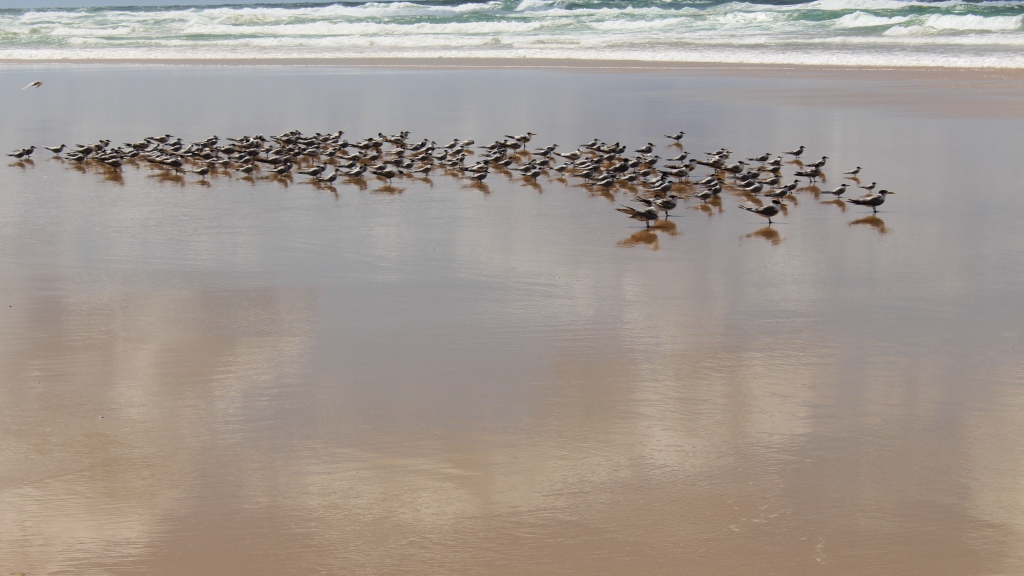
Resting migratory birds near the edge of the ocean

Resting migratory birds near the edge of the ocean

If you are last off the ferry there is no one coming up behind you for a while so, all alone, we set off on the 80 kilometre drive along the beach. The beach first runs easy west but soon turns in a of north of north east direction. The beach is a series of small sandy bays but the dunes to your leafy stretch straight ahead as far as you can see. We did meet the occasional vehicle heading back towards the ferry.

There was a fair amount of cloud around, with the sun shining through most of the time and the sea that steely blue that often comes with those conditions. The sand was quite firm most of the time, except for when we were directed further up the beach at the places reserved for small passenger aircraft operation. The aircraft get the smooth flat parts and the motor

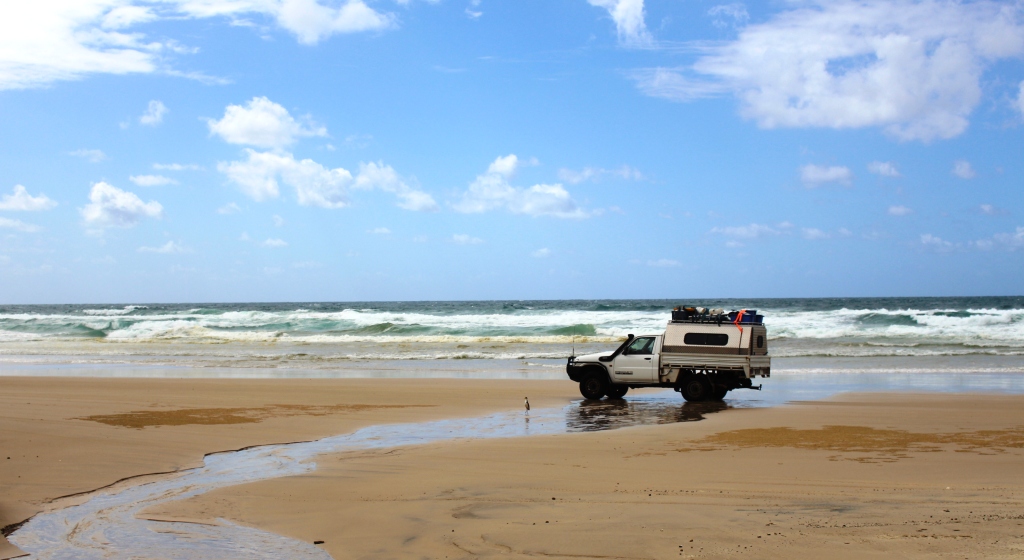
A fellow beach driver crossing a small fresh water stream

A fellow beach driver crossing a small fresh water stream

vehicle traffic is directed into the loose sand. But it was not too bad. Just a bit of slalom style driving for a few hundred metres as the tracks in the sand try to determine your direction.

Apart from aircraft and soft sand, the greatest hazard on Fraser is the frequent water courses that run across the beach into the sea. Rainfall is temporarily retained in the sand of the dunes but much of it makes its way to the edge of the beach and then through eroded sand banks to the sea. The sand embankments are most prominent and easy to see near the base of the dunes. From there they decline, depending on the height of the tides. So keeping one’s eyes open is mandatory.  Crossing where the banks are too high can be quite disastrous.

The bones of SS Maheno lie broken in the sand

The bones of SS Maheno lie broken in the sand

But there are other traps. I was driving with my window open, savoring the fresh sea air. We crossed at the seaward end of a stream. It was a bit deeper than I thought and I drove through just a tad too quickly.  The spray from the front wheel was caught by a rather brisk south easterly which blew it through the window all over me. Some of the spray even found its way onto Ruth. You may wonder if the water remains fresh right to the edge of the ocean.  It does.

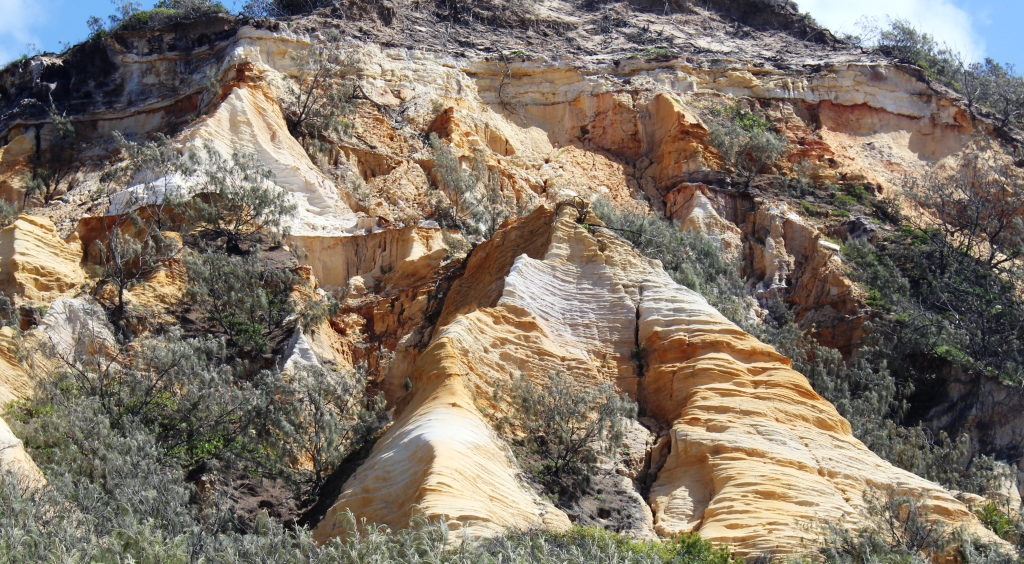
Part of The Pinnacles just south of Cathedrals on Fraser

Part of The Pinnacles just south of Cathedrals on Fraser. One of the charms of this drive is the coloured sands

As we came north, we passed in order, Dilli Village, once the base of Dillingham Mining during sand mining days, now an education facility operated by the University of Southern Queensland;  Eurong, the largest settlement on the island, with its resort and residential areas; Happy Valley, probably the second largest community on the island, with a general store, bistro and residential area; Eli Creek, the largest of all the beach streams; the remains of the SS Maheno passenger liner, resident on Fraser since the mid 1930s; and finally, Cathedrals on Fraser, our home for the next four nights.

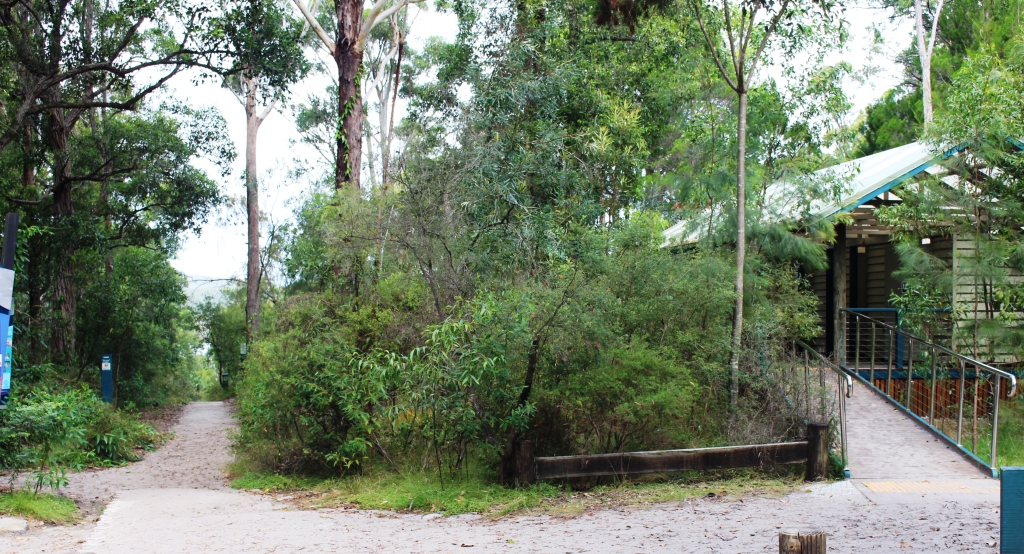
The shop and reception at Cathedrals

The shop and reception at Cathedrals

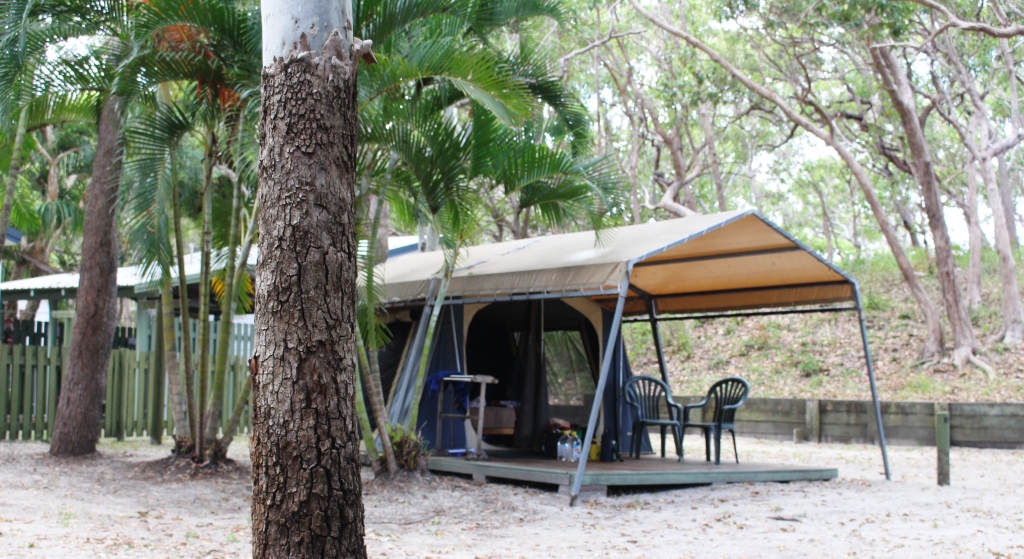
We are accommodated in a permanent tent that boasts a double bed, a towel rack and two plastic chairs as the total compliment of its furnishings. Our possessions are in bags arranged along the walls. We prepare and eat our meals in a camp kitchen that has plenty of refrigeration and freezer capacity but this is supplemented by the Waeco 12 volt fridge in the back if the car.

Our home for four nights

Our home for four nights

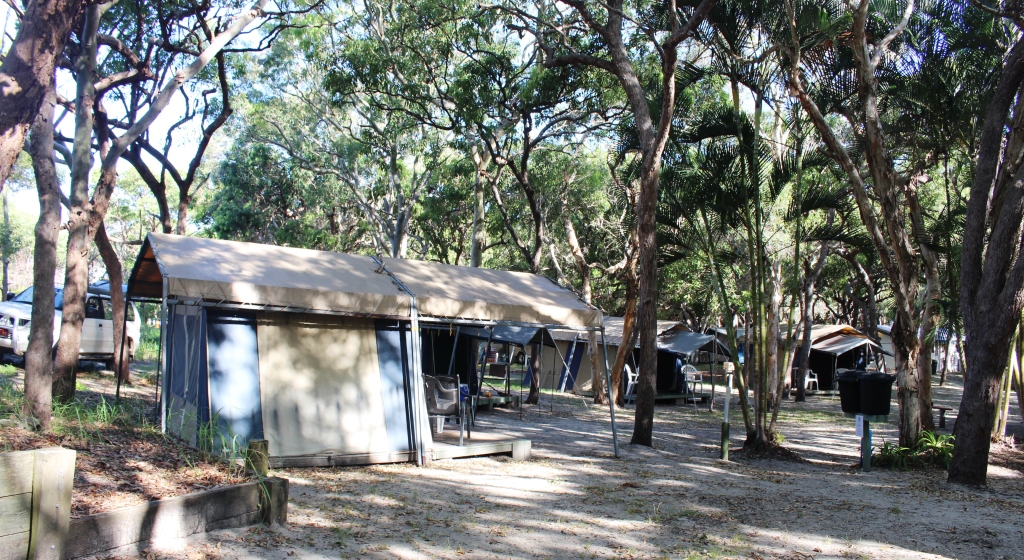
In our immediate area, besides us, there are four family tents which between them contain eight adults and about 10 kids, most of who are between the ages of four and ten. So until their bed time there is not much peace and quiet. Their biggest impact however, is in the camp kitchen at meal preparation time. It is hard to get a look in when half a dozen adults are preparing food for a group of almost twenty. Washing up is a similar story.

Our small canvas community

Our small canvas community

I had forgotten that, in warm weather, when sleeping in a tent, a balance has to be struck between privacy and comfort. The only method of cooling is the breeze. Fortunately, on this coast, the sea breezes are reliable, so we spent the night largely on display through the insect screens, but no one was watching. We were awoken next morning by the early light. The aspect of the camp  and our tent, was towards the east.

Border Country

I have been a bit slack. This material is almost a month old. It has taken me this long to get motivated to produce this blog post.
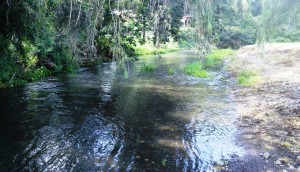
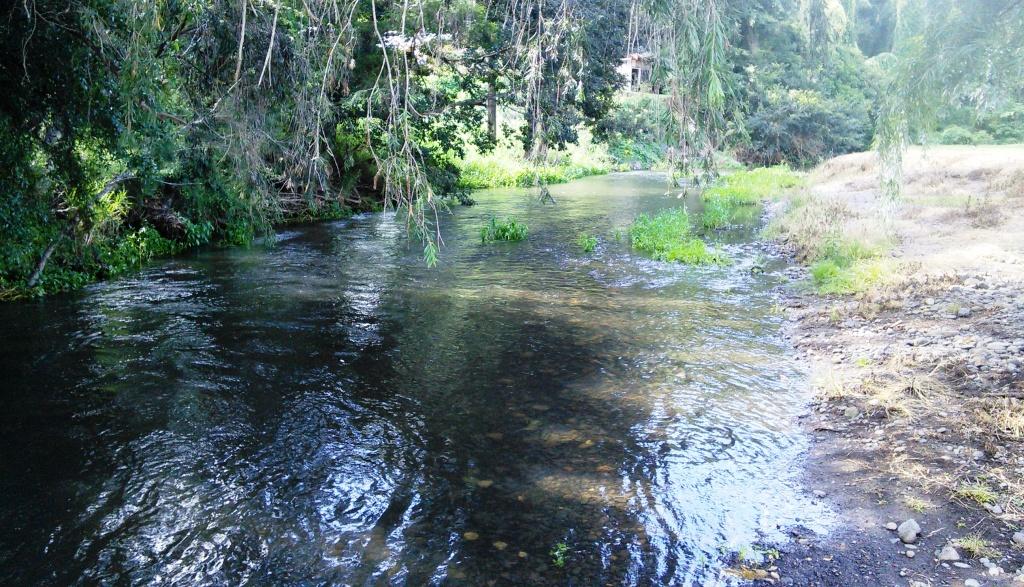
Canungra Creek runs along the back of the camping area

Canungra Creek runs along the back of the camping area

Our travel plans for 2016 include a reasonably substantial trip, which we will do, subject to a couple of contingencies.  We normally try to do a short run with the van to check that everything is working before setting out on the main event.  We have already found an issue with our Waeco portable fridge.  It won’t work properly on 12 volts. This means that it is not cooling while we travel. We need to have that fixed before we leave on the next trip.
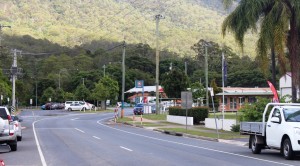
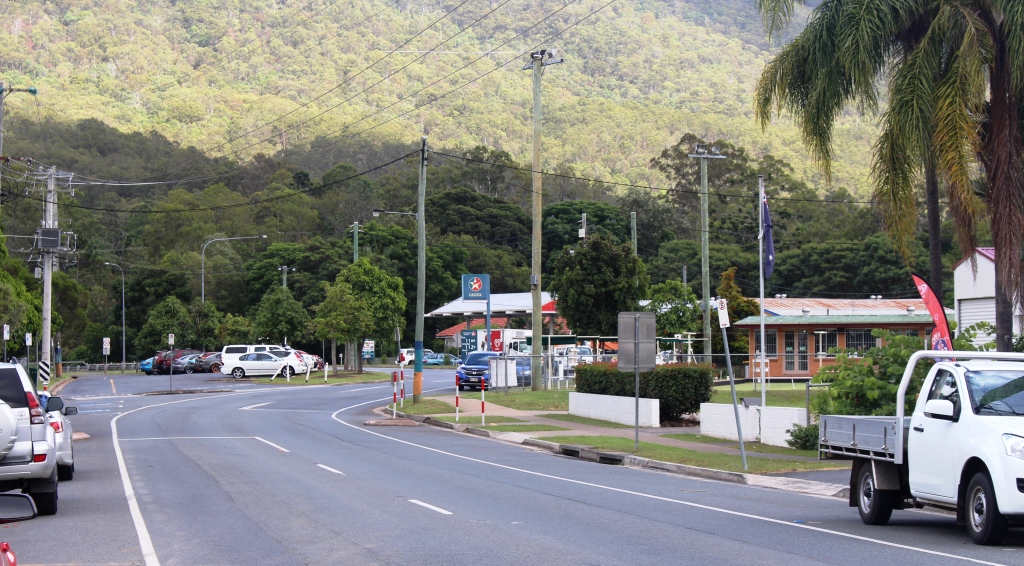
Part of Canungra's main street

Part of Canungra’s main street

We have just completed a long hot and humid February and not much has changed with forecasts for the early part of March. But a bit of elevation normally means cooler nights, even if the days are just as warm. So our first camp site is at Canungra, to test the theory.
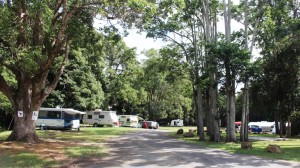
In a grassy corner of Canungra Showgrounds

In a grassy corner of Canungra Showgrounds

Canungra is not really in the hills but it is close. We have the heights of Mount Tamborine to the north east and a little further away, to the south, is that part of Lamington National Park that hosts the well known O’Reilly’s Rain Forest Retreat. They are both on our list of places to visit while we are here.

The caravan park at Canungra is
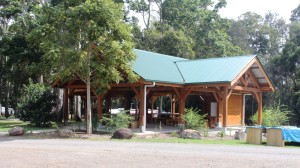
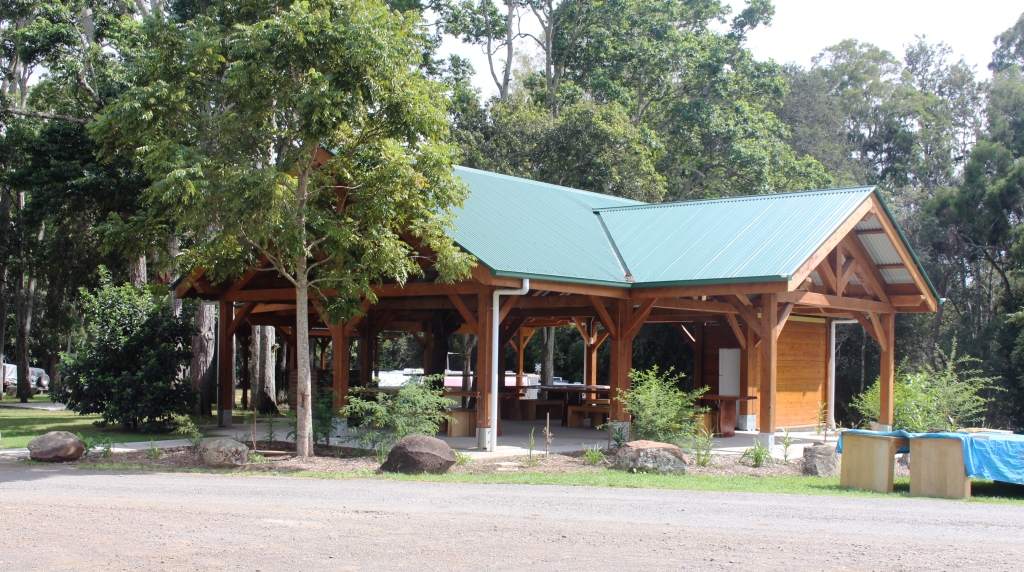
The camping area has a brand new camp kitchen

The camping area has a brand new camp kitchen

part of the local showground and is set within a bend in the Canungra Creek. Canungra is in the Canungra Valley.

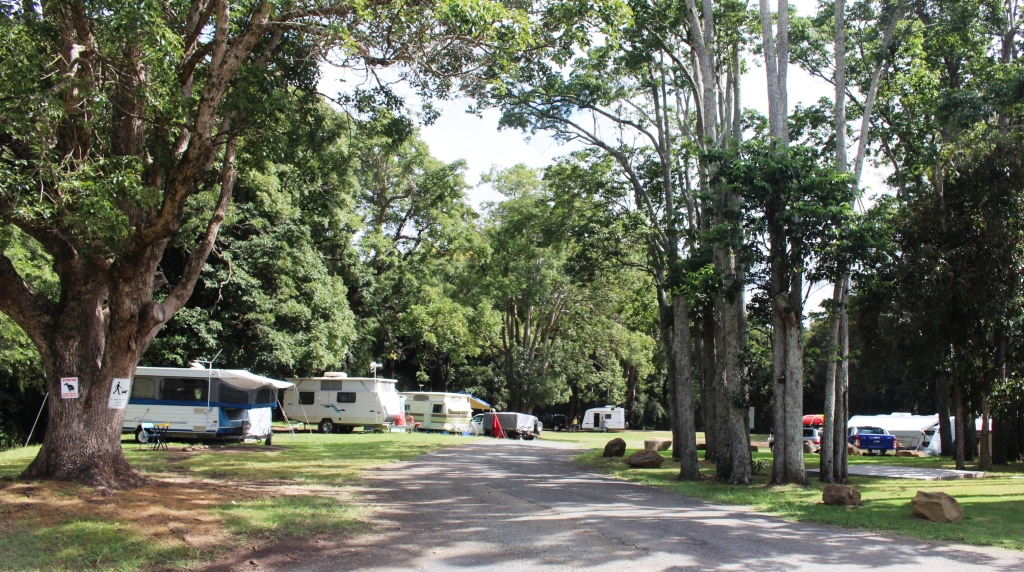
Some sites are in the open, near the events area and exhibition sheds, but we have secured a site beside a clump of trees on a bank overlooking the creek. We are sharing the area with a tent and half a dozen vans of various sizes. It was quite warm as we set up, but as the sun’s passage took it behind the trees, the heat went with it, leaving us to enjoy an unexpected coolness as we sat outside of the van. We had been hiding inside with the air conditioning on before the change occurred.

Day 2 presented clear blue skies at sunrise.  Then fog filled the valley and quickly became rain clouds. The Weather Chanel’s prediction of 40% chance of rain became 100%. Drizzle continued until just before we left for our drive, but then cleared away to reveal patches of blue among the grey.
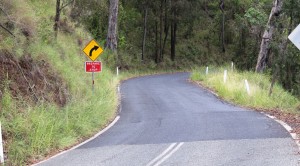
The road to O"Reilly's Rain-forest Retreat is narrow, winding and steep in parts

The road to O”Reilly’s Rain Forest Retreat is narrow, winding and steep in parts

O’Reilly’s Rain Forest Retreat, at Green Mountain in the western part of Lamington National Park, is 36 kilometres from Canungra, firstly along the Canungra Valley and then up the range along a sealed road. There are many short single lane sections, so there seems to be almost as many “Give Way” signs as there are trees. The road was dry for most of the way but that changed. O’Reilly’s is near to 1,000 metres above sea level. Canungra is at a little over 100 metres, so the climb is constant and steep in some sections, often with totally different weather at the top.
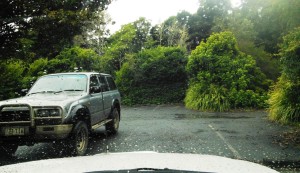
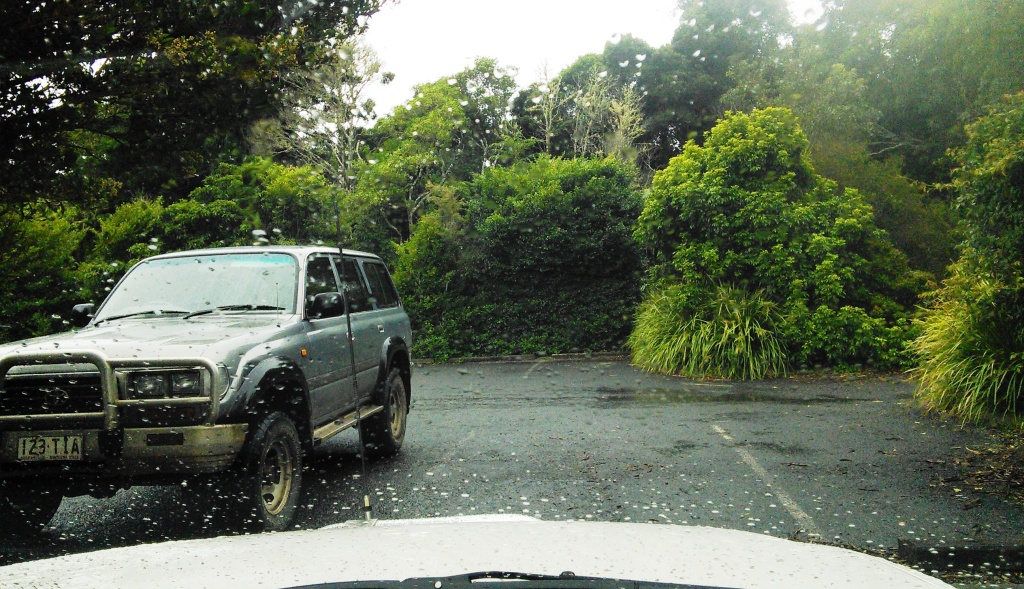
Rain drops on the windscreen and a grey sky

Rain drops on the windscreen and a grey sky

As is often the case with mountain tops, the clouds are not far above. The drizzle had returned, to make things inconvenient, so we looked around for a while, to give the weather a chance to improve, but it wasn’t cooperating.  It seems that a shower had moved through the area, as on the return journey the road was wet well down the mountain.

Back at the caravan, the sun was out and a pleasant breeze was keeping things comfortable. The creek seems to have a bit more water in it after the rain. On the far bank the farmer, mounted on his trail bike, has just rounded up his dairy herd.  It will soon be time for happy hour. Not for the cows, though. Its milking time for them.
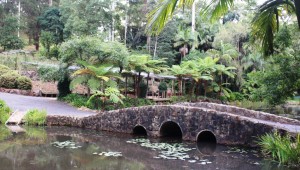
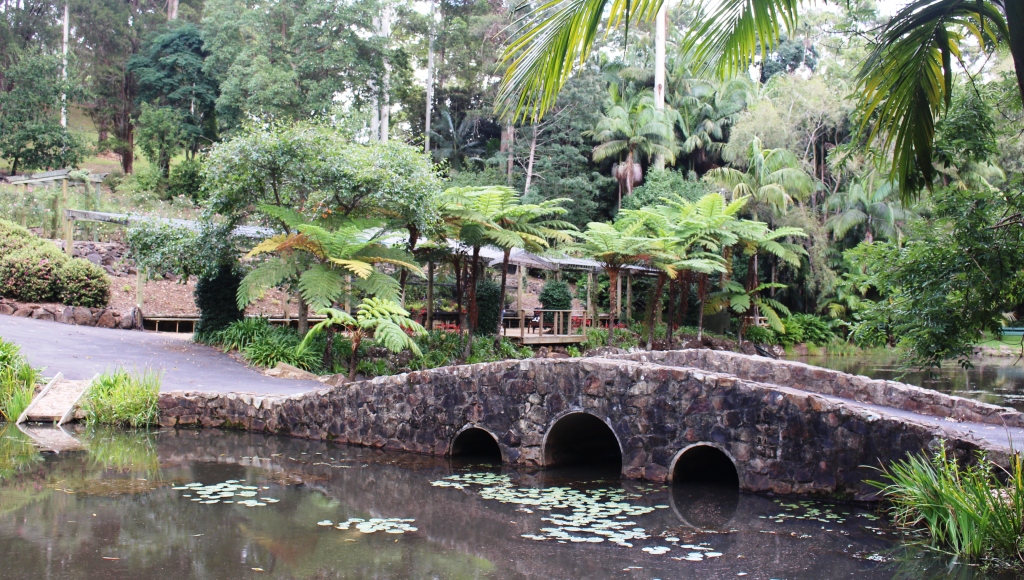
The foot bridge and shelters at the Tamborine Botanical Gardens

The foot bridge and shelters at the Tamborine Botanical Gardens

Day 3 had a much cooler start. It was great to sleep under a blanket, probably for the first time in about three months. There was a bit of rain overnight, then some early fog, cleared to a fine morning.

It’s only thirteen kilometres up the mountain to North Tamborine, which is the first bit of commercial activity you come to after reaching the top. Then it is just a short run to
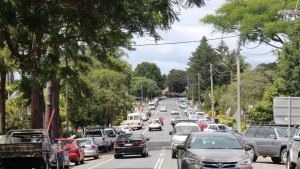
The busy roadway of Gallery Walk

The busy roadway of Gallery Walk

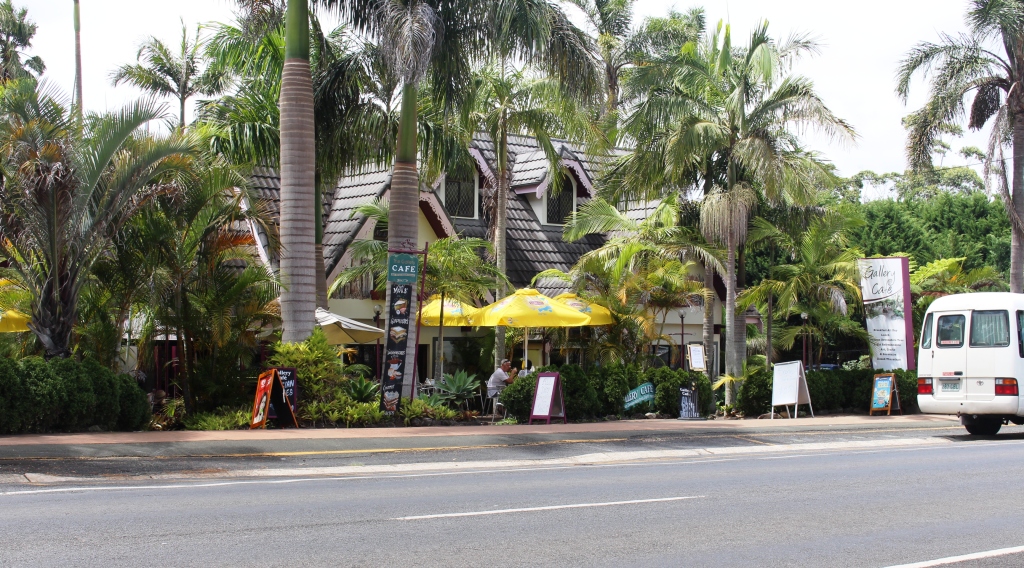
The Gallery Walk, at Eagle Heights, where the action is. The main street is lined with eateries, galleries and a host of other shops, intended to tempt the jaded palette of the Gold Coast tourist who goes up there to escape sun, salt and sunburn for a day. There are three cellar doors offering samples of the local vintage and at least two shops featuring fudge. And of course, massage operators and tarot card readers. And souvenir and gift shops.
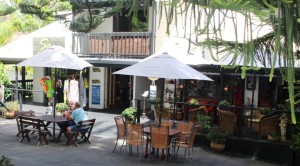
Places to eat are plentiful at Eagle Heights

Places to eat are plentiful at Eagle Heights

Our first stop was the Botanical Gardens, where we made our morning coffee in one corner of the picnic shelter, to the back ground sounds of a young child’s birthday party. It was one of those events where young mums turn up with children, pushers, minute bicycles and soccer balls. We walked some of the paths and then moved on to do the mandatory walk down one side of Gallery Walk and back up the other side.
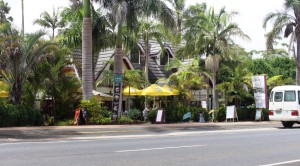
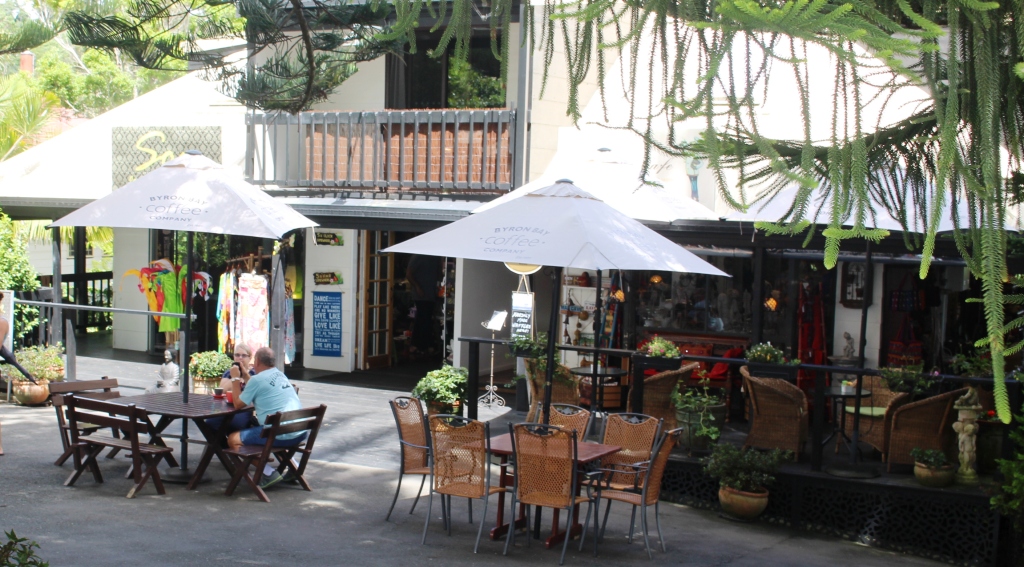
Another eating place

Another eating place on Gallery Walk at Eagle Heights

From there, we returned to Tamborine North to drive out to The Knolls National Park to enjoy the views back over the town of Tamborine towards Brisbane.and over the ranges to the west and south.  Rows of ranges reach into the distance. With sunshine and a pleasant breeze we decided that this was a great location for lunch so we drove back to Tamborine North for some food and returned to the park to eat. It was a very pleasant lunch spot. On completion we returned to the caravan for a nana nap.

In the early hours of Day 4, we pulled up the doona to supplement sheet and blanket. It was quite a pleasant experience after over three months of nothing more than a sheet. The day dawned sunny and had reached the point of warmth and humidity by the time we had packed to start the day’s journey. A very easy day had been planned, with less than 100 km to Woodenbong, a small town just across the border into NSW, just off the Summerland Way.
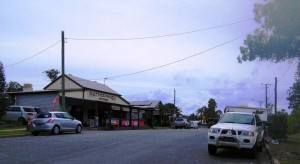
Early Saturday commerce in Rathdowney

Early Saturday commerce in Rathdowney

After refueling at Beaudesert, we continued on, past the turn to the Kooralbyn Golf Resort to the small rural centre of Rathdowney, for the obligatory morning coffee. At the butchery/coffee shop (yes I know, a strange combination), motor cyclists and the occupants of SUVs were having breakfast or morning coffee while next door, at the general store, others were buying in essential supplies, for their trip into the hills. It was Saturday morning.

Over the road, a visiting team of lady bowlers had arrived for that day’s competition. We did BYO coffee at a table in the small park that separates the shops from Mount Lindsay Highway.
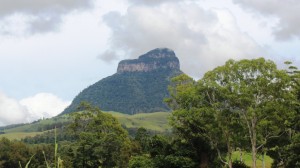
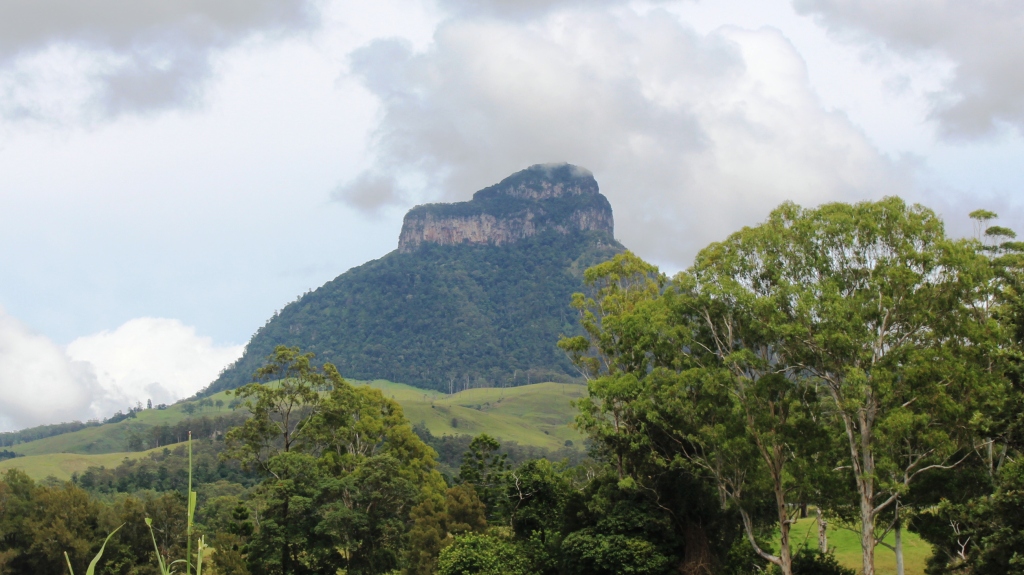
Mount Lindsay, from the highway that bares its name

Mount Lindsay, from the highway that bares its name

We passed Mount Lindsay and 11.00 am in Queensland became 12 noon as we had crossed the border into NSW. Another 30 minutes saw us settled into the green and neat nomad community of the Woodenbong Caravan Park, in time for lunch and a quiet afternoon.  A breeze tempered the sun’s warmth and abundant shade provided suitable reading and dozing locations.

Another doona night was promised with a low of 13C. That is too cold for me as a daytime temperature but good for sleeping at night.
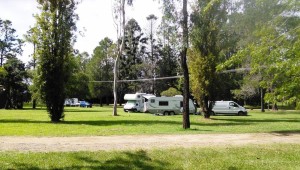
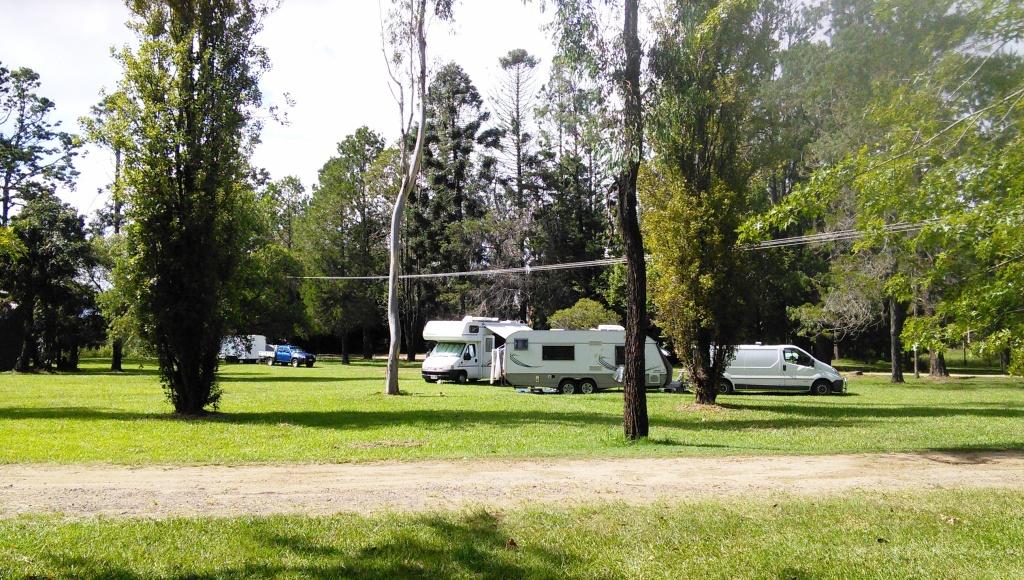
Motor homes in the Urbenville municipal camping area
Motor homes in the Urbenville municipal camping area

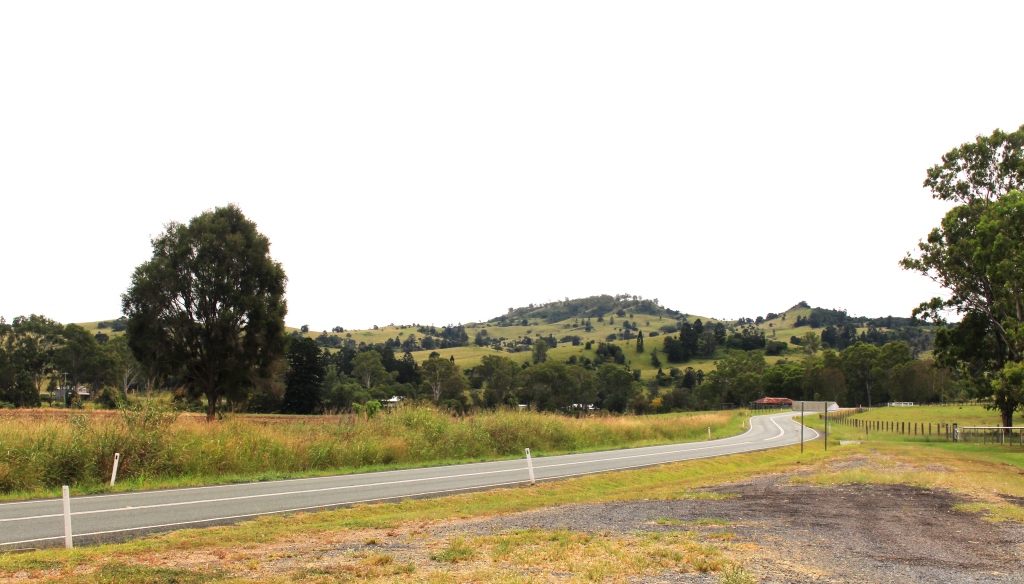
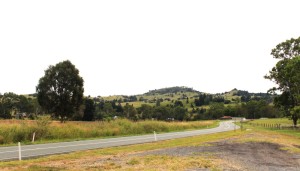
Mount Lindsay Highway wending its way through farmland

The road south runs through picturesque farm land

Day 5 dawned so quietly that we slept until 7.45 am. Not even a rooster in this small rural town, to wake us. As a result of our tardiness, there was a bit of a scurry to be out by the 10.00 am check out time, but we made it. We drove off into beautiful cool, crisp morning. The theory about coolness at higher altitudes has been proved.

We made for Urbenville, which was only a short distance into our day’s journey, but far enough to make it a coffee stop. We pulled in to look at the Urbenville camp ground, another council run facility similar to Woodenbong, but a bit less formal. It proved a suitable location for our coffee.

As we continued south, we first passed Old Bonalbo and then Bonalbo, which I assume is really New Bonalbo.  I had not heard of either town before, but there they were, in the middle of nowhere. Old Bonalbo is a collection of houses up a side street with a couple of business, including the post office, on the main road. A few kilometres south, Bonalbo, also mainly built to the side of the main road, is larger, with a substantial commercial centre. Some businesses were open on this Sunday morning. Shops were also open in Woodenbong and Urbenville. Such weekend services are different to how it was in country towns when I lived in the bush.
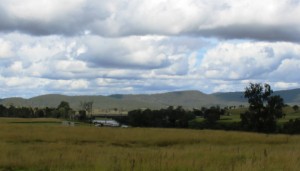
The bridge over the Clarence River at Tabulam

The bridge over the Clarence River at Tabulam

The Bruxner Highway is a good road over its entire length and this includes the Tabulam to Tenterfield section that we travelled, commencing with the magnificent single lane timber bridge over the Clarence River. Altitude increases by about 700 metres as the road crosses a couple of mountain ranges. We stopped at the small town of Drake, which is in a valley between two of the ranges, for lunch, reaching Tenterfield at about 2.00 pm NSW time.

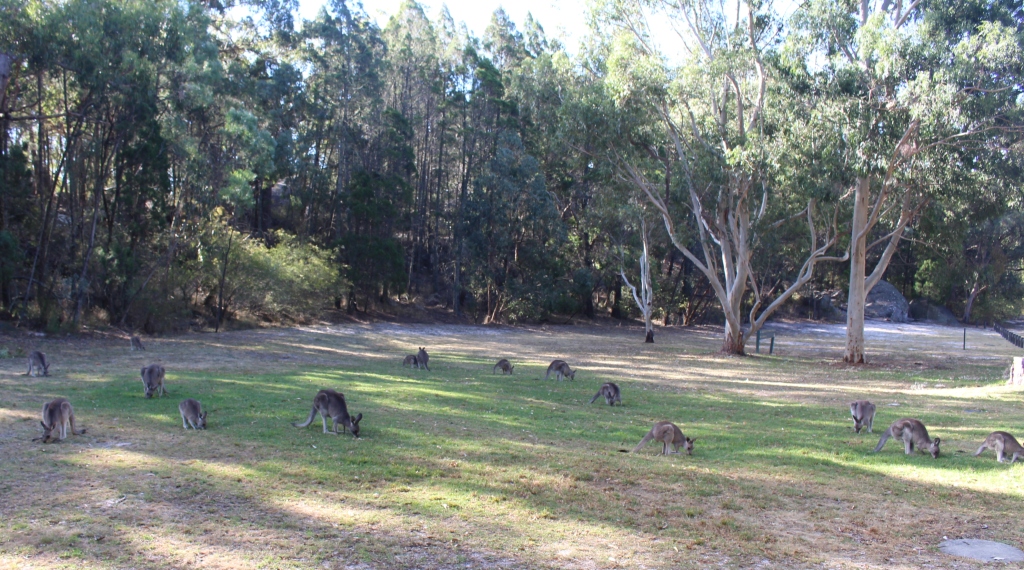
We stopped at Tenterfield to add to our stock of provisions. It is only about 30 km from Tenterfield to Girraween National Park, our location for the next two nights. We arrived at about 2.30 pm Queensland time and settled into our site. This is a rare National Park camp ground with flushing toilets and hot showers. It is about 2/3 full of caravans and camper trailers. Everyone seems relaxed and friendly including the kangaroos and bird life.
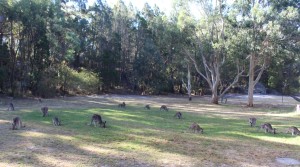
Grazing kangaroos at Girraween

Grazing kangaroos at Girraween

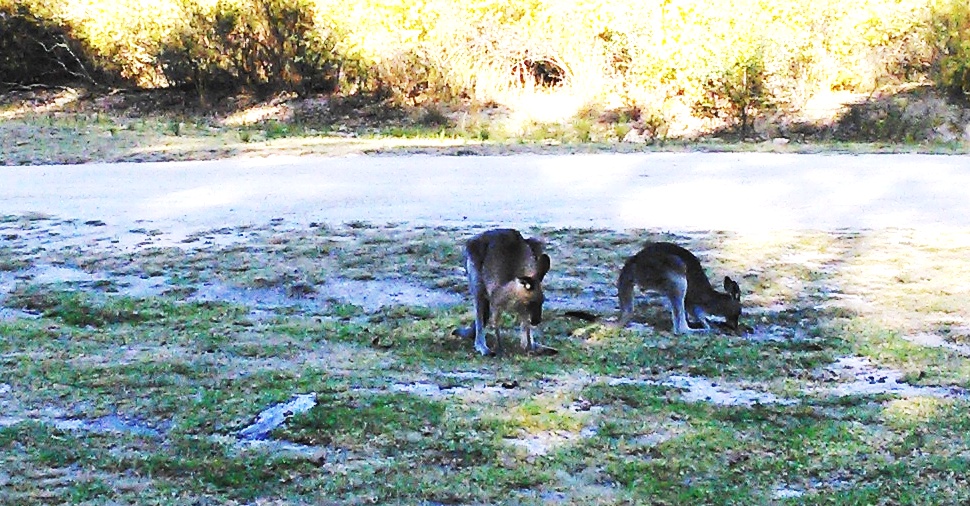
When we arrived, a group of about 20 kangaroos were nibbling the green grass in a fenced area beside the amenities block.  For some reason two of their number, a mother and partly grown Joey, judging by their size, separated from the main group, hopped through the area around which the caravans and camper trailers are parked and began feeding a few metres from our van. They were
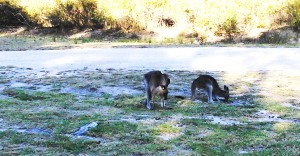
These two were quite friendly, grazing right by the van

These two were quite friendly, grazing right by the van

not the least bit disturbed by us moving around near them and were still there when we went to bed.

Another overcast morning for Day 5. A strong breeze was disturbing the upper foliage of the trees. It was good walking weather, so we did two morning walks.

The first was the Wyberba walk, a distance of about 400 metres that
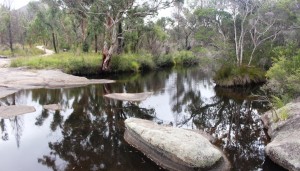
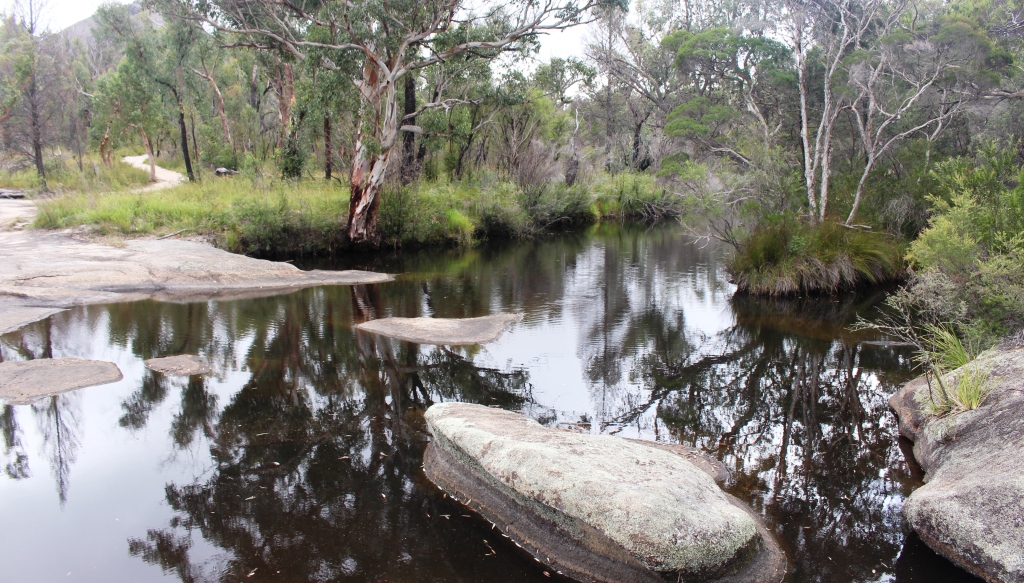
Waterhole in the creek on the Wybera morning walk

Waterhole in the creek on the Wybera morning walk

starts at the main car park and runs along Castle Rock Creek, the main stream in this part of the park. Rock pools in this stream are used for swimming, but there were no swimmers about today. Perhaps some will appear later, if the sun comes out.

The first walk completed, we returned to the van for coffee, then drove towards the eastern end of the park to the commencement of
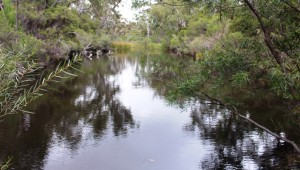
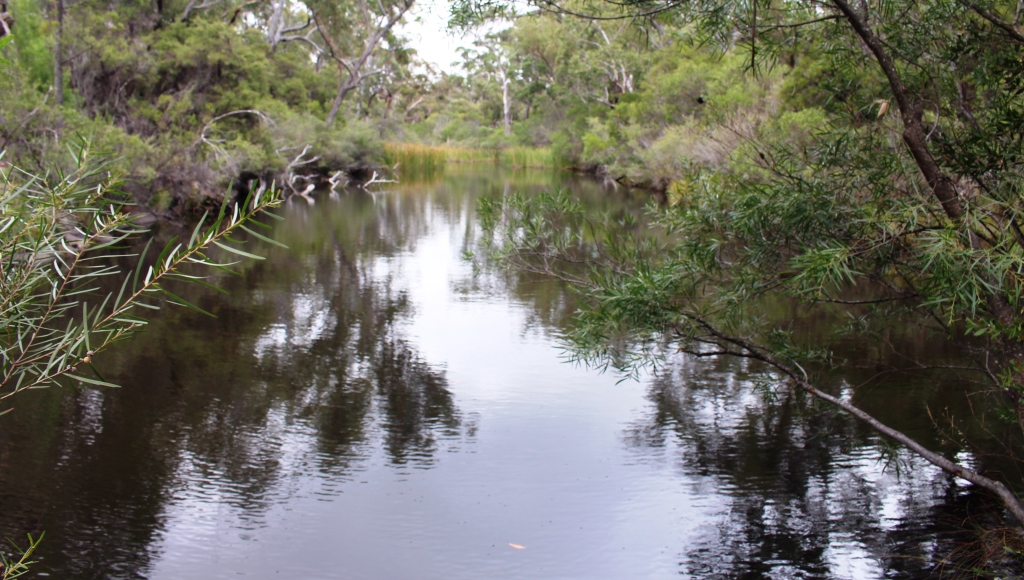
Dr. Roberts Waterhole

Dr. Roberts Waterhole

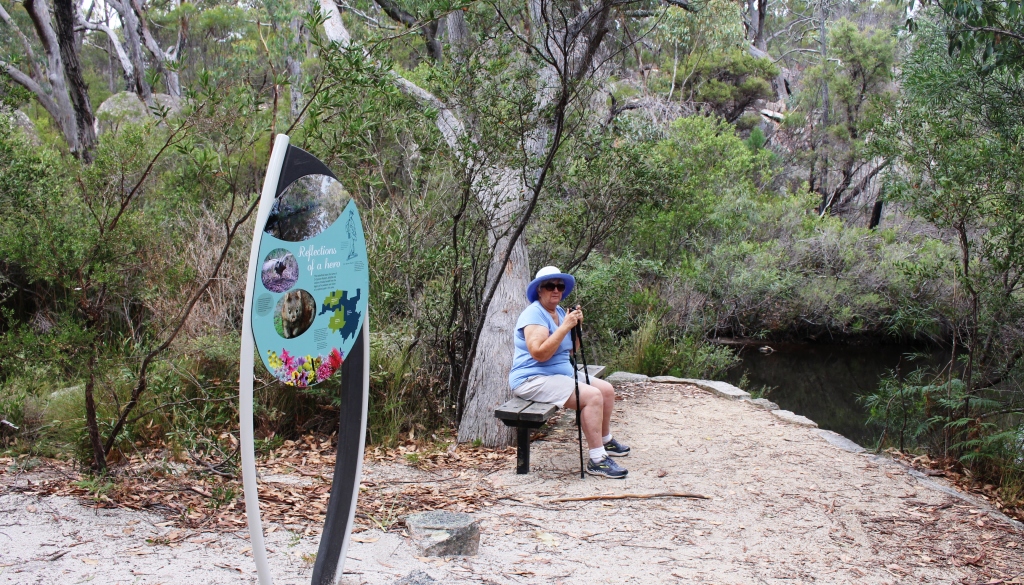
the Dr Roberts Waterhole walk. This is a 1.2 km return stroll along a well graded gravel path to one of the areas of the park used by early settlers. The large waterhole was a reliable swimming location, visited by groups travelling in carts and drays. It is named in honor of one of the main campaigners for the establishment of Girraween as a national park. It was well worth the walk.
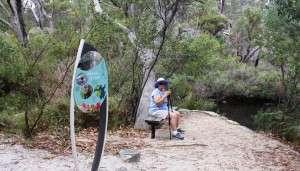
A well placed seat has views along the waterhole
A well placed seat has views along the waterhole

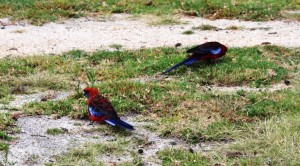
Feeding Rosellas

Feeding Rosellas

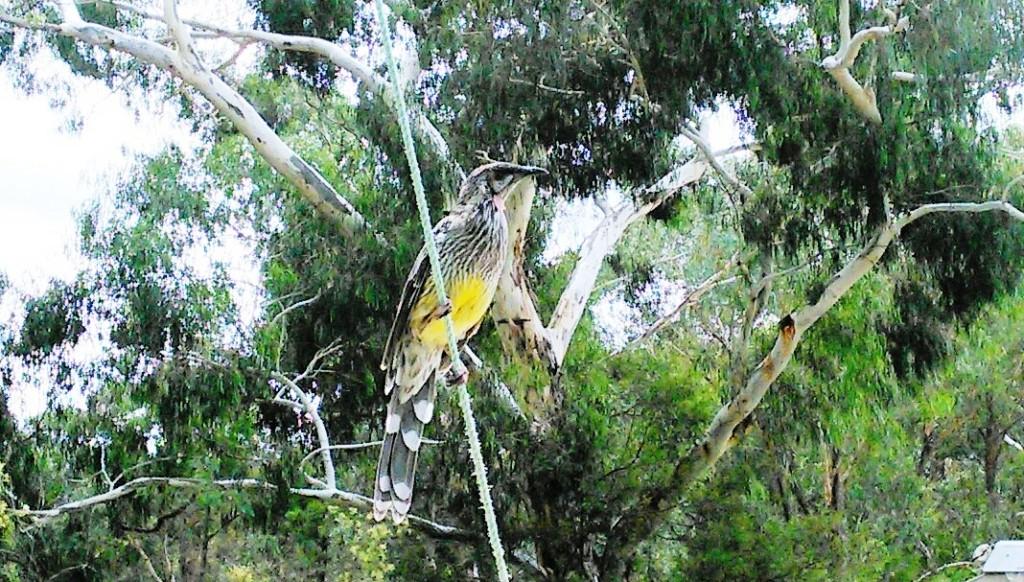
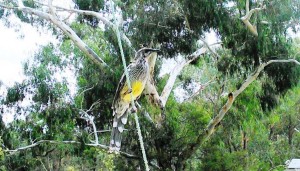
Back at camp, fathered wild life paid us visits during the afternoon. Rosellas were feeding in the grass, with two of them coming quite near to us. They totally ignored me as I photographed them. Then, quite suddenly, what we later identified as a Red Wattle Bird, landed in the guy rope of our awning and was content to remain there as we had a close look and
The Red Wattle Bird

The Red Wattle Bird

took photos. The Red Wattle Bird is identified by small red dangling bits, not unlike ear rings, that hang just behind the eyes, on both sides of the head. We had neither heard of or seen a Red Wattle Bird before. Our bird guide tells us that there are Yellow Wattle Birds in the southern parts of Australia.

Day 6 was going home day. There is one of those days at the end of every trip and I never want to get to it.

This morning a second problem became apparent. The water pump was quieter than normal, a sure sign of a voltage drop in the electrical system. This was surprising as
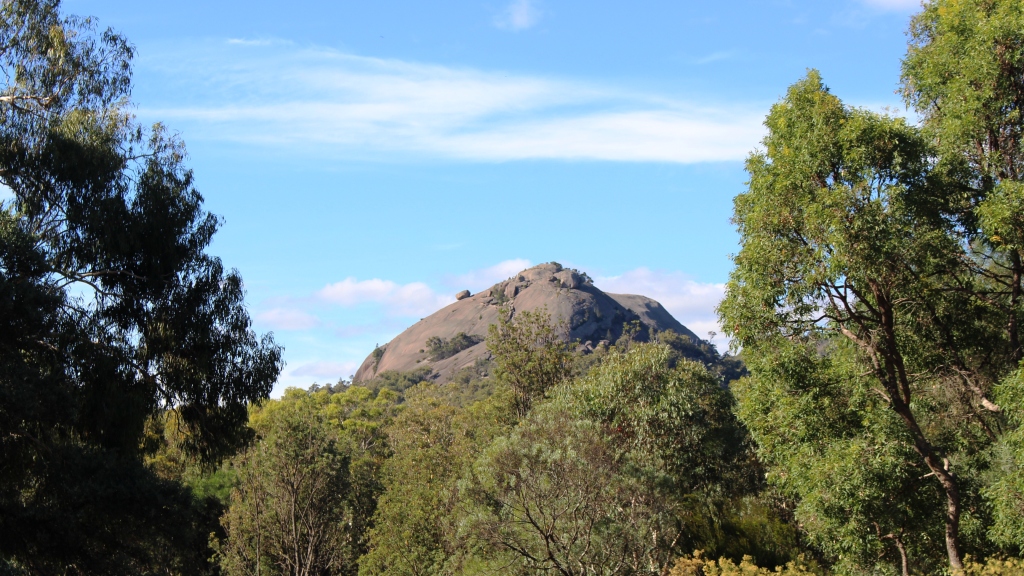
The Pyramid is a prominent feature of Girraween National Park

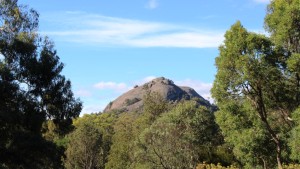
The Pyramid is a prominent feature of Girraween National Park

the battery had tested at a satisfactory level last night. Then the lights on the refrigerator control panel went out. In a national park, with no power, the fridge was operating on gas. So we turned everything else off and the 12 volt control lights came back on but, the battery was showing about 9 volts. Way too low!

Hooked up, with the alternator in the car providing power, the problem was solved in the short term.

The next item on our itinerary was morning coffee with Ruth brother and sister-in-law, at Warwick. Said brother had a birthday in a day or so. We spent a jolly 90 minutes with them and were on again on our way.
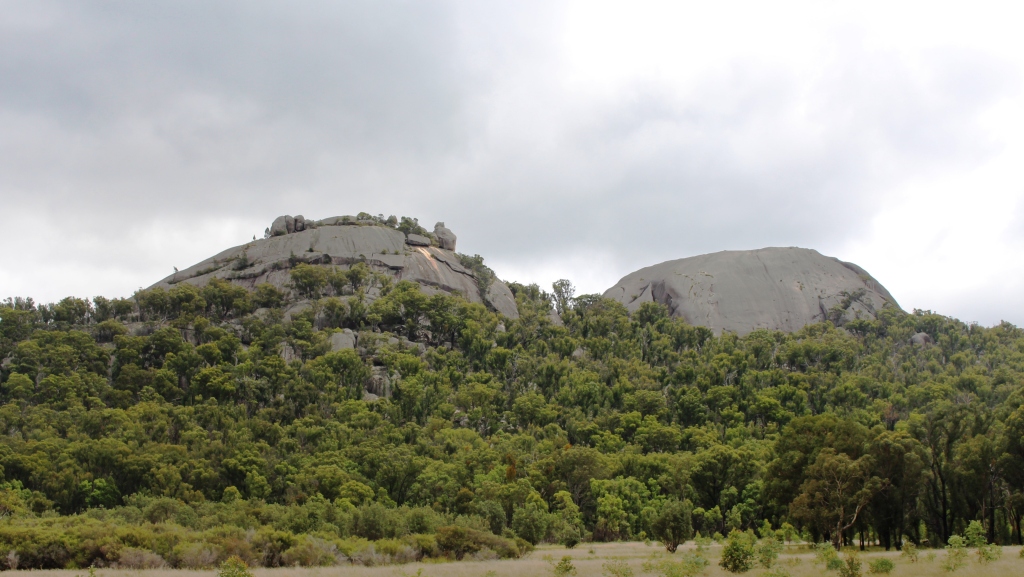
Other prominent rocks near the Pyramid

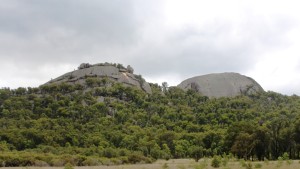
Other prominent rocks near the Pyramid

All that was left was to drive home, which we did via the Clifton to Gatton Road, arriving at about 4.00 pm, after a lunch stop at the Heifer Creek rest area at the foot of the Great Dividing Range.
To hark back to the problem with the Waeco portable fridge, the reason for a flashing error light first appeared to be that the “house” battery in the back of the Challenger, that is there to run the Waeco, is past its use by date, so must be replaced. Subsequent testing indicates that the battery in the caravan has also reached the end of its useful life. So two batteries need to be replaced before we head off again.

But there is more. With the battery replaced, the error light on the Waeco was still flashing. So that piece of essential equipment is currently with the service agent for repair.

Better to have happened now than somewhere in the outback. But that’s why we try to do a small trip before we commence a big one.