You have read the book – now see the movie : Cape York 2015

After we return from each of our extended tours I go through our images and videos and combine them into a video, or in some cases into a series of videos. When we did the Big Lap in 2009 the material took up almost all of 4 DVDs.

Normally I have produced one long story for each trip which has not been easy to break into sections. But for the Cape York trip last year I complied twelve shorter videos, which when combined, ran for almost an hour.

I have put links to some small video clips in various blog posts covering the Cape York trip so I thought I may as well break the longer production into manageable portions and load them to You Tube, to make the material more easily accessible to my blog readers.

The end result is six videos, each of a bit less than.ten minutes duration. Here is a summary of the videos and the link to each.

Cape York Adventure 2015 – Part 1. Covers from home to Airlie Beach and a day cruise through the Whitsunday Passage to Whitehaven Beach.

[youtube]https://youtu.be/Gb-xM_mio00[/youtube]

Cape York Adventure 2015 – Part 2. This video tells of the section from Airlie Beach to Weipa and our explorations around Weipa

[youtube]https://youtu.be/s3l03Rt5bdc[/youtube]

Cape York Adventure 2015 – Part 3. You will see much of what we saw as we travelled from Weipa to Punsand Bay, our visit to The Tip and our trips around Bamaga and Seisia

[youtube]https://youtu.be/Q693fD5CiFo[/youtube]

Cape York Adventure 2015 – Part 4. This covers two separate day trips to Thursday and Horne Islands. The material is combined into one story.

[youtube]https://youtu.be/1G168MSeuik[/youtube]

Cape York Adventure 2015 – Part 5. Join us as we travel down the East Coast of Far North Queensland from Seisia to Cairns and then visit Cairns city and the rain forest areas of Daintree and Cape Tribulation

[youtube]https://youtu.be/LrKySa1q42w[/youtube]

Cape York Adventure 2016 – Part 6. This video wraps up our trip with our visits to Tully Gorge and the Central Queensland gem field towns of Rubyvale and Sapphire.

[youtube]https://youtu.be/q0-Aud4KUYU[/youtube]

We hope that you will enjoy seeing something of the scenery and points of interest that we encountered on this enjoyable and challenging journey.

Until next time,

Kevin


Days 34 to 37 – Cape York Adventure

We departed Kurrimine Beach on Saturday morning, needing to be home on the next Wednesday; with a little over 1,600 km to do via the coast and a bit more if we took the inland route. Inland won, as that gave us a chance to at least drive through the gem fields. We had intended to spend two or three days there.

Ready for a quiet night

Ready for a quiet night

We left the Bruce Highway at Townsville and took the Flinders Highway, heading for Charters Towers. The revised plan was to spend the Saturday night at Macrossan Park on the east bank of an almost dry Burdekin River. Macrossan Park is a popular overnight stop, with flushing toilets and cold showers for the Spartan.

Information shelter and toilets at Macrossan Park

Information shelter and toilets at Macrossan Park

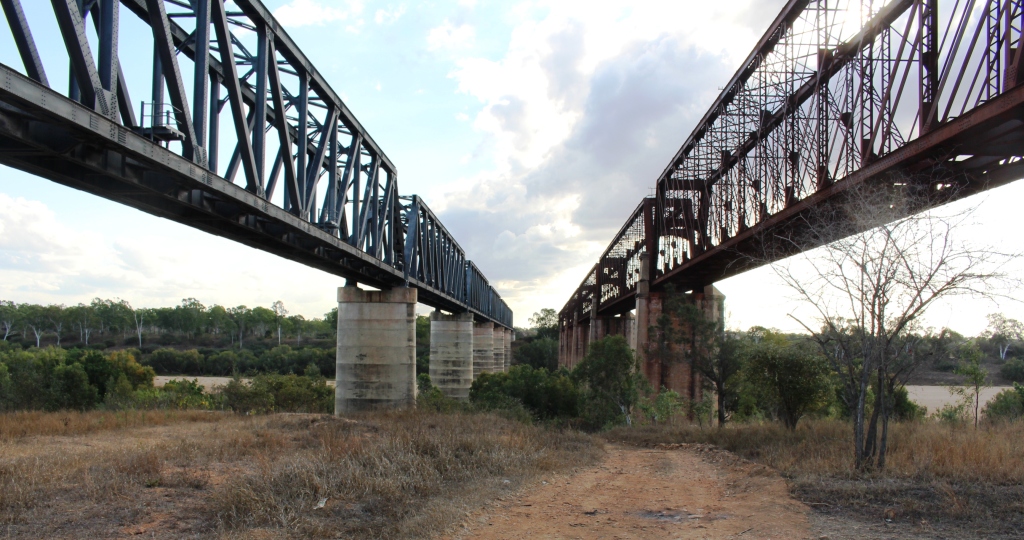
The camping area is between the highway and the railway, which is carried over the river by an impressive iron bridge. With the van set up for a comfortable night I went for a walk, to have a closer look at the rail bridge. Imagine my surprise when I found two rail bridges. It seems that many years ago the original iron bridge was replaced by a new bridge of similar design. The old one probably became unsafe, so a new bridge was built, just a few meters to the south. Once you know that the second bridge is there you see it straight away. But if you are expecting only one bridge then chances are that is what you will see, the structures are so similar.

[youtube]https://youtu.be/vfoHUPAXhUg[/youtube]

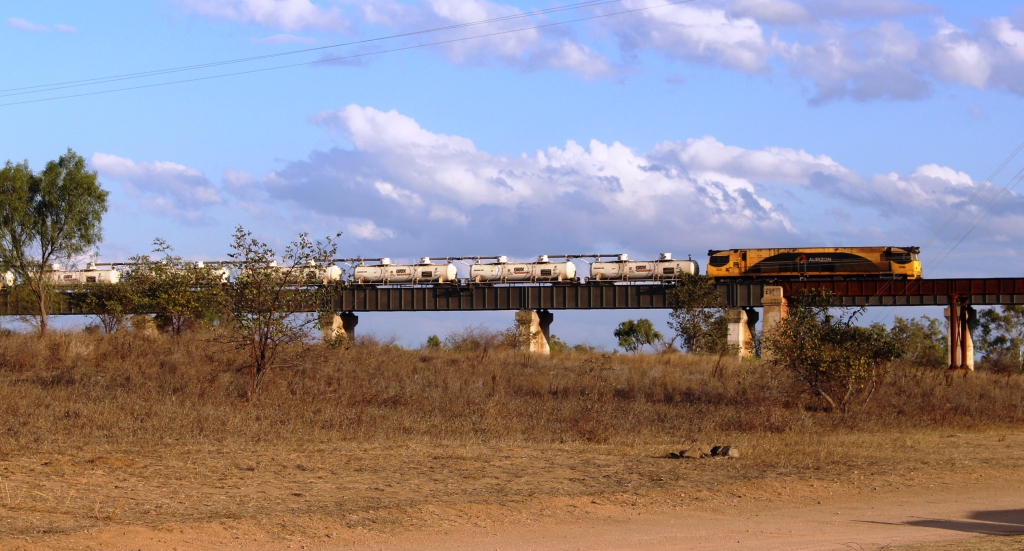
Fertiliser train approaching the main bridge

Fertiliser train approaching the main bridge

Queensland National obliged by sending a long fertiliser train over the bridge before dark and an other one after dark. There was at least one more during the night. The sun slid quietly behind the low range of hills that constitute the horizon, with a tinge of colour in the distant clouds which were rather a dark shade of grey. But the cloud

Tinges of sunset on the edge of storm clouds

Tinges of sunset on the edge of storm clouds

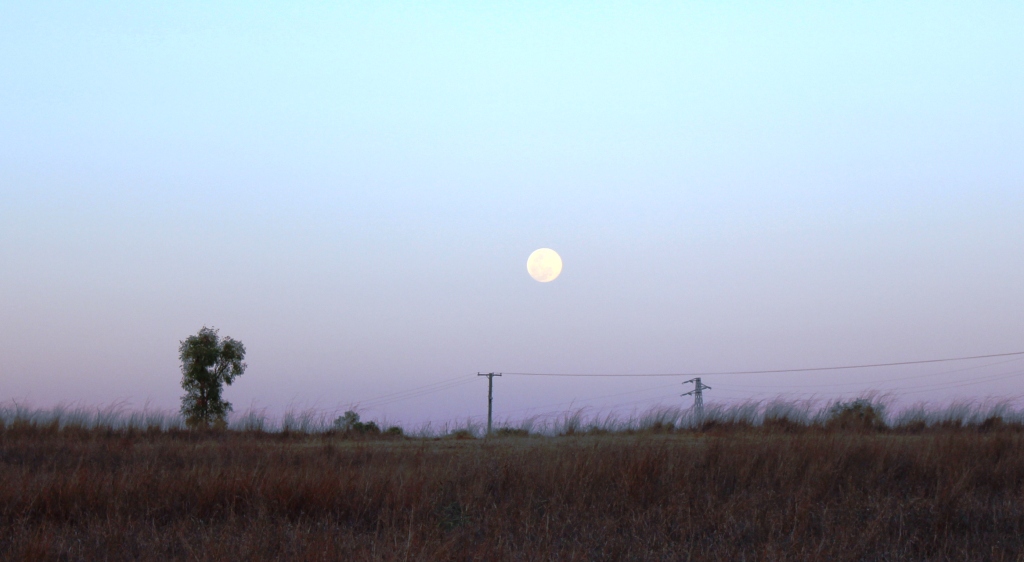
vanished westward with the sun and left us with a full moon rising into a clear sky.


A full moon commences its assent

A full moon commences its assent

Res, there really are two bridges

There really are two bridges

On Sunday morning, a short run brought us to Charters Towers, where we refueled for the run south through Belyando Crossing and Clermont to our next overnight stop. Quite early in the trip we started to see signs of recent reasonably heavy rain. There looked to have been enough rain to put a smile on local farmers’ faces. When we crossed the first range from the coast the previous day, we could see how dry it was. That amount of rain would at least have brought some relief for beleaguered farmers. It certainly explained the grey clouds on the horizon the previous evening.

The Gregory Developmental Road passes through a mix of flat and undulating grazing country on its way through Emerald to Springsure, where it becomes the Dawson Highway, but we were not going that far. We refueled at the Belyando Crossing Roadhouse and continued on into the coal mining area of Clermont where we turned onto minor

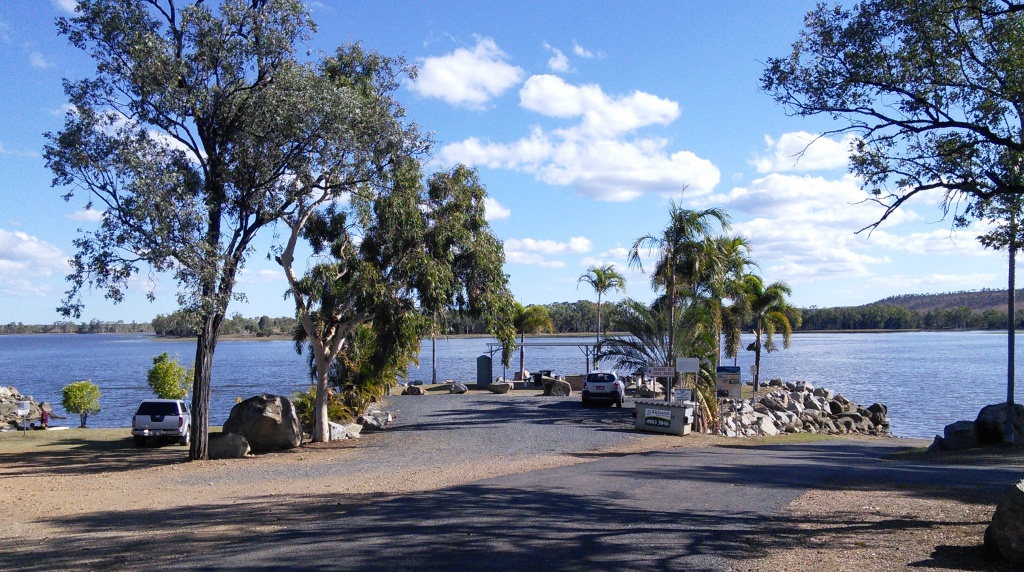
Theresa Creek Dam

Theresa Creek Dam

roads to reach the caravan park at Theresa Creek Dam, about 25 km to the south west of the town. We noticed that one long coal carrying conveyor that was working when we came through this area last year was now stationery, a victim of the slowdown in coal exports, probably.

Theresa Creek Dam has been there for many years with a recreation area for locals on its banks. But in recent years the local council has developed what was formerly an informal camping area into a comfortable caravan park. We lined up with other vans in the overnight area, but at a comfortable distance from our neighbor.  But not for enough away not to hear our next door neighbor’s generator. Peace was restored when it was turned off an hour later but we had spent that time walking about the caravan paek, so were not really inconvenienced.

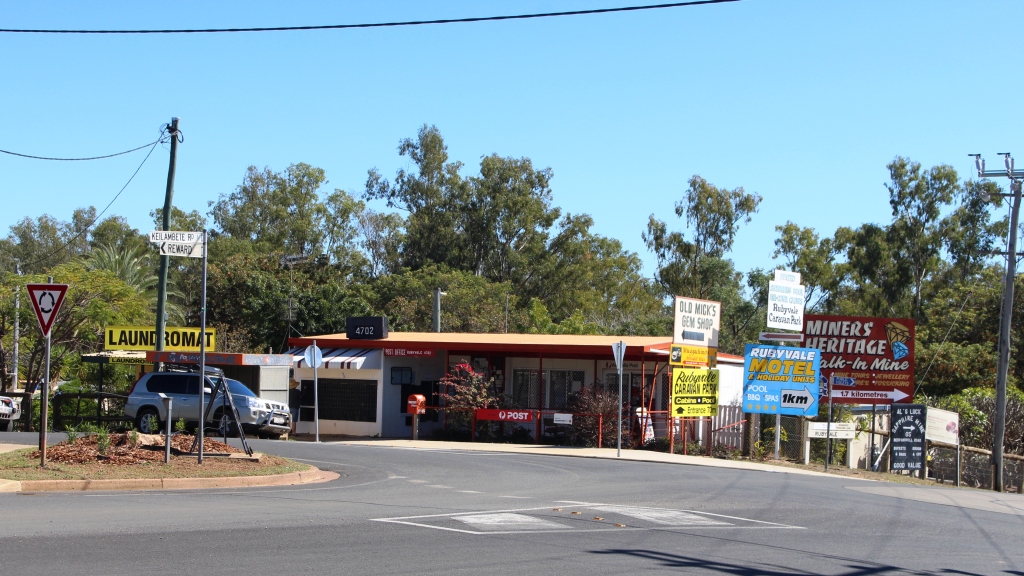
Rubyvale Post Office

Rubyvale Post Office

After another peaceful night we moved on for our drive through the gem fields. It wasn’t very far, probably about 50 km and we were parked in Rubyvale. Gem mining towns tend to be a bit of a shambles, due, I think, to the kind of people who become gem miners and the limited means with which they initially ply their trade.

Rubyvale town centre

Rubyvale town centre

Rubyvale, however, has a very orderly centre with a general store, post office, caravan park and a new gem display and sales gallery that also houses a stylish coffee shop. There were not many gems in the gallery priced below $1,000 but the commodious coffee shop, probably built with the tourist coach trade in mind, had very affordable Devonshire Tea (or coffee). We also bought a small bag of washed gravel to put aside

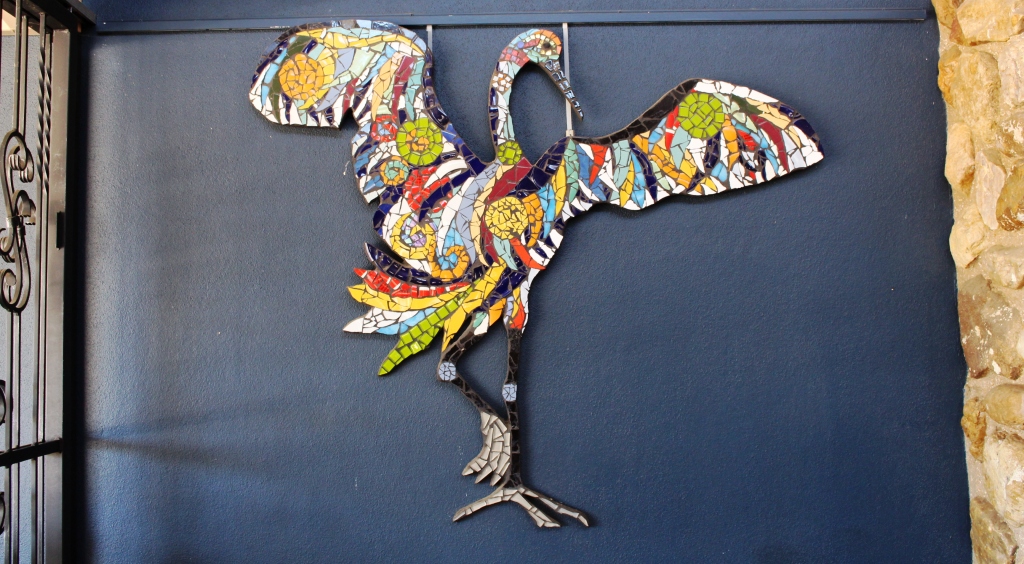
Decorations on the coffee shop wall

Decorations on the coffee shop wall

for sieving with our granddaughters at some suitable time. Perhaps we are sitting on a fortune. And perhaps not! But we may find something worth cutting and mounting into a piece of jewelry.

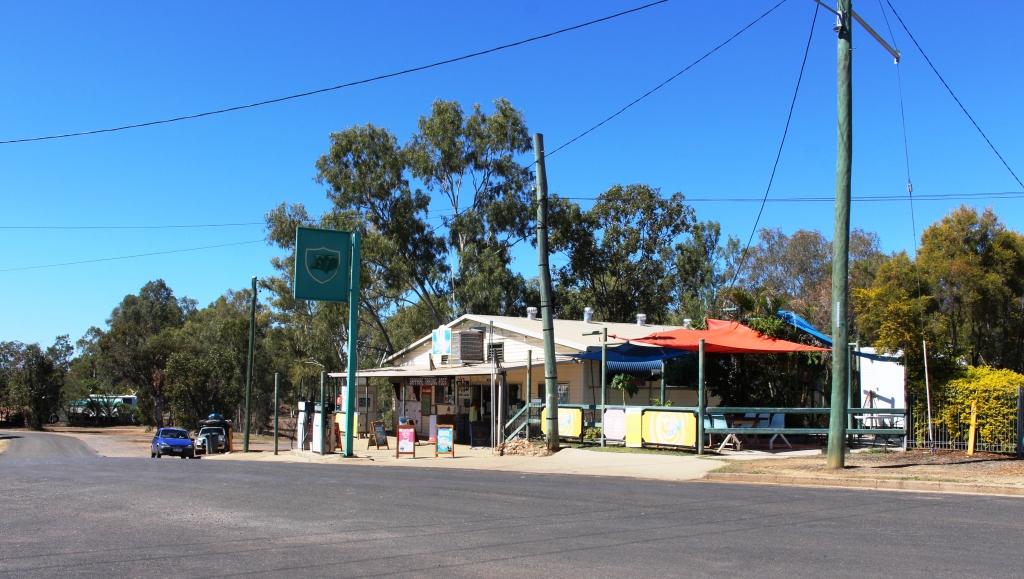
Coffee and scones consumed, we continued on to Sapphire, another ragged town with a less orderly centre than Rubyvale, but it’s town centre is clearly older. After a look around we continued to the

Sapphire General Store

Sapphire General Store

Capricorn Highway and then to a lunch stop at Emerald.

At Emerald we were back on the Gregory Developmental Road for the 56 km to Springsure. It was now a matter of how much further we went that day. We had in mind a river side camp where the Dawson Highway crosses the river from which it takes its name, but the caravans already there appeared to have been inserted by a sardine packing machine. We continued a further 20 km to the largely deserted caravan park in Moura. It is a large park, mostly of motel units and cabins for mine workers.

Hills near Springsure

Hills near Springsure

Our site was adjacent to a very noisy Coca-Cola machine that seemed to be trying to freeze its contents. We didn’t check. It was more of a night for hot drinks in this Central Highland town, the sleeping part of which we spent under a doona.

Home was now not much more than 600 km away with two days in hand, so we had the option of spending another night on the road or go for home. I find that these kinds of decisions take care of themselves. As the day progressed it was resolved in favor of going for home. We took a mid morning break at Monto, lunch at Ban Ban Springs and as the afternoon wore on stopped at Kybong, south of Gympie, for a very large container of caffeinated coffee and a serve of crisp hot chips.

So that brought us to the end of 37 days of fascinating adventure. Before we left home I had read a comment on Facebook where someone had remarked that a trip to Cap York was more an adventure than a holiday. That is one reason that I called this series of posts our Cape York Adventure. It’s both, really. Whoever said that you can’t have an adventure while on holiday?

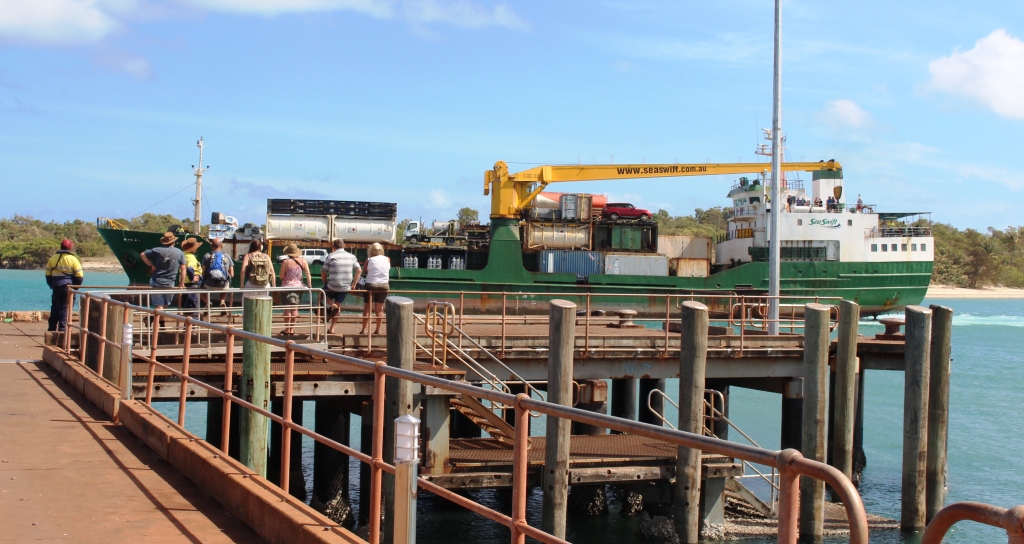
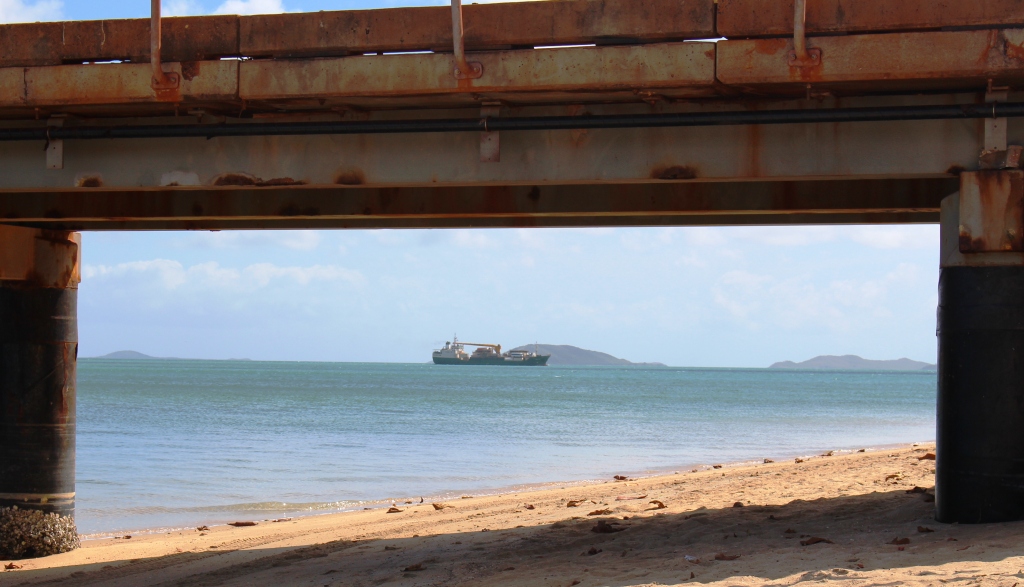
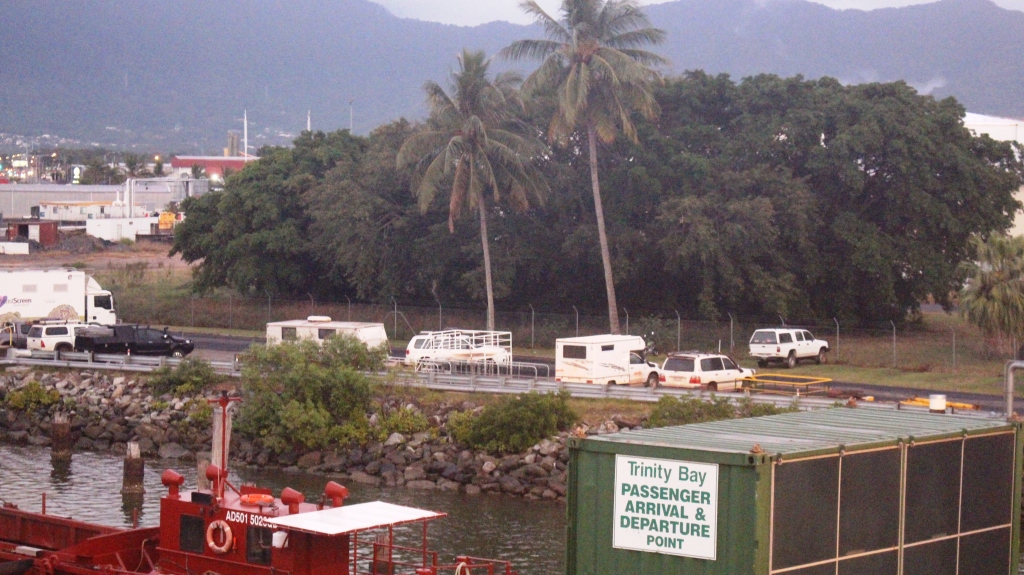
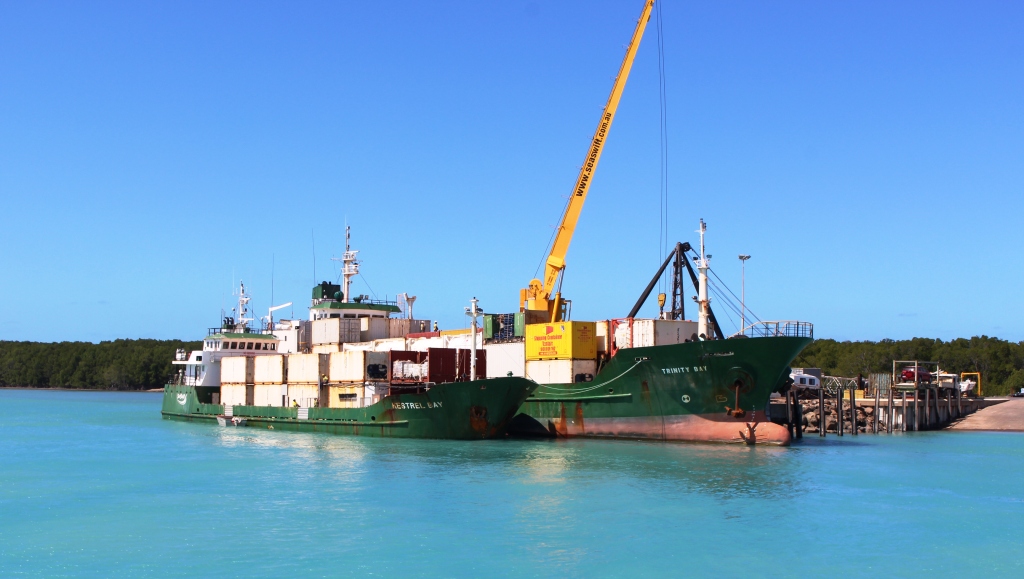
MV Trinity Bay berthed at Saisia wharf

MV Trinity Bay berthed at Saisia wharf

The opportunity to return by ship was pure luck, but the experience added greatly to the memories. I don’t mind driving on rough roads as we have the equipment to handle them, but I don’t go looking for them. If there is a choice of a sealed road that doesn’t take me too far out of my way I will opt for it every time, but there are iconic remote dirt roads and I get a great sense of satisfaction successful driving them.

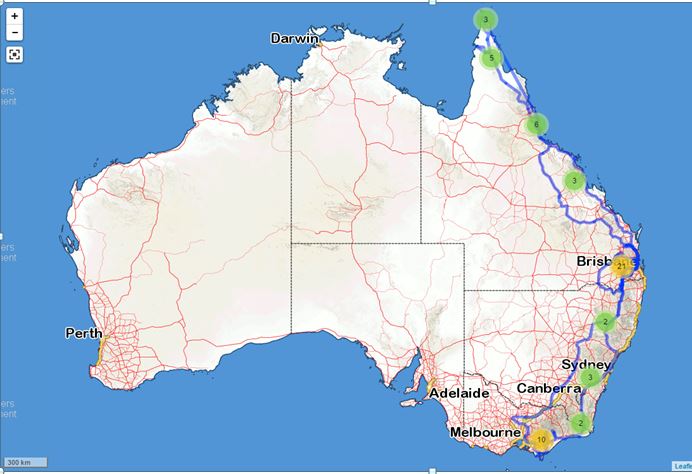
2015 travels

2015 travels. The blue line traces our path.

I have mentioned previously that we track our movements using a satellite tracking device. This provides a recorded track that can be superimposed on a map. I had a look at ours the other day, only to realise that  we had literately travelled from one end of the country to the other during the last twelve months. In the dying days of 2014 we were at Wilson’s Promontory and less than a month ago were at the tip of Cape York. Here is how it looks on the map.

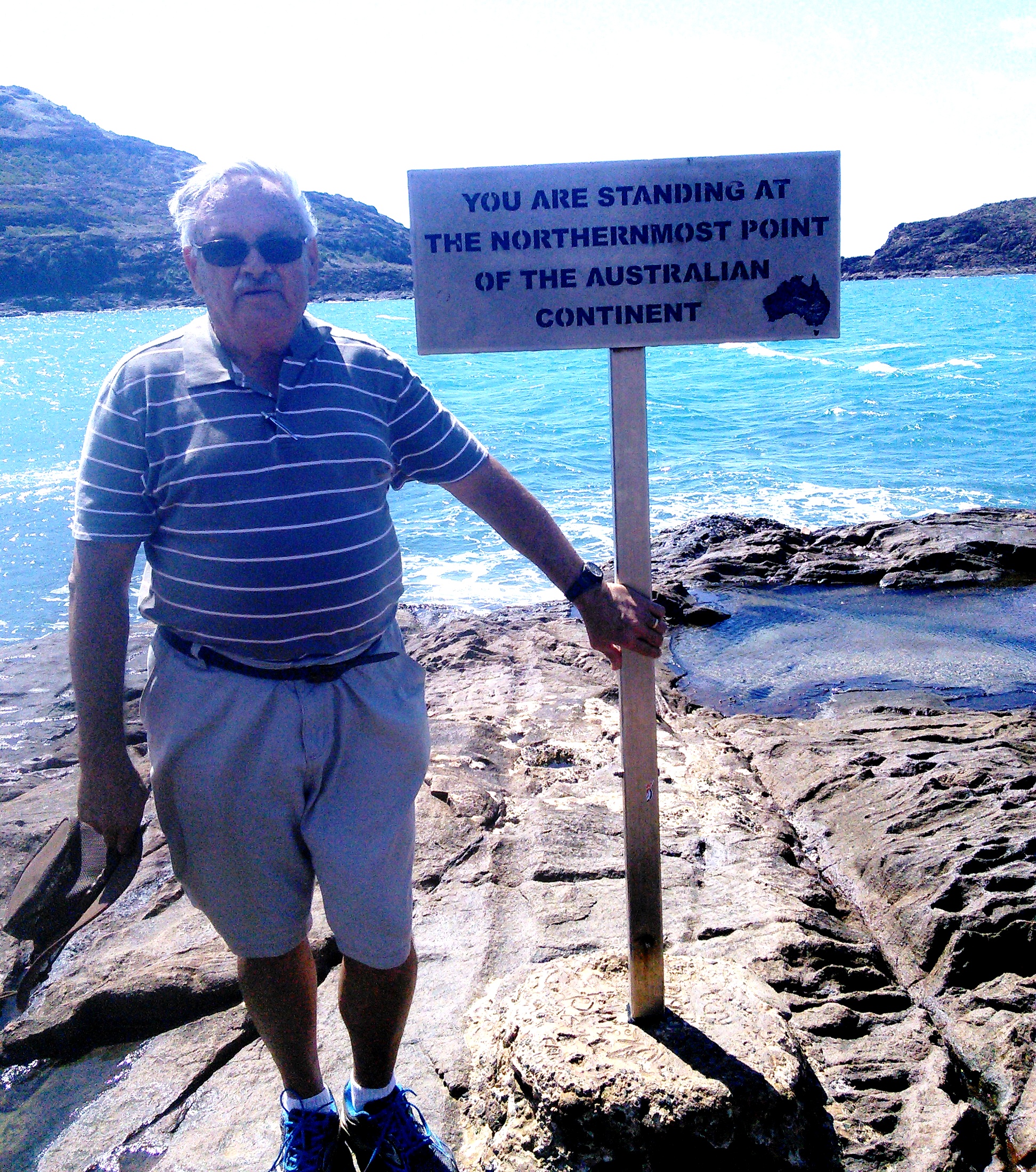
A windblown yours truly at the Tip

A windblown yours truly at the Tip

So, until next time, thanks for coming along with us to the Tip.

Days 29 to 33 – Cape York Adventure – Daintree & Tully Gorge

We had originally intended to spend a couple of days at Cape Tribulation on our return from Cape York, but returning south on MV Trinity Bay meant that we had landed further south so had to decide whether or not to take the van back north. We finally decided to reduce that part of the plan to a day trip, even though to do so meant that we would not have time to drive the Bloomfield Track as we had planned. When we visited Cooktown in 2010 we had driven the northern end of the track, south to the Bloomfield River. During the planned stay at Cape Tribulation we had intended to fill the gap on our “where we have been” map, between Cape Tribulation and the Bloomfield River. But you can’t do everything.

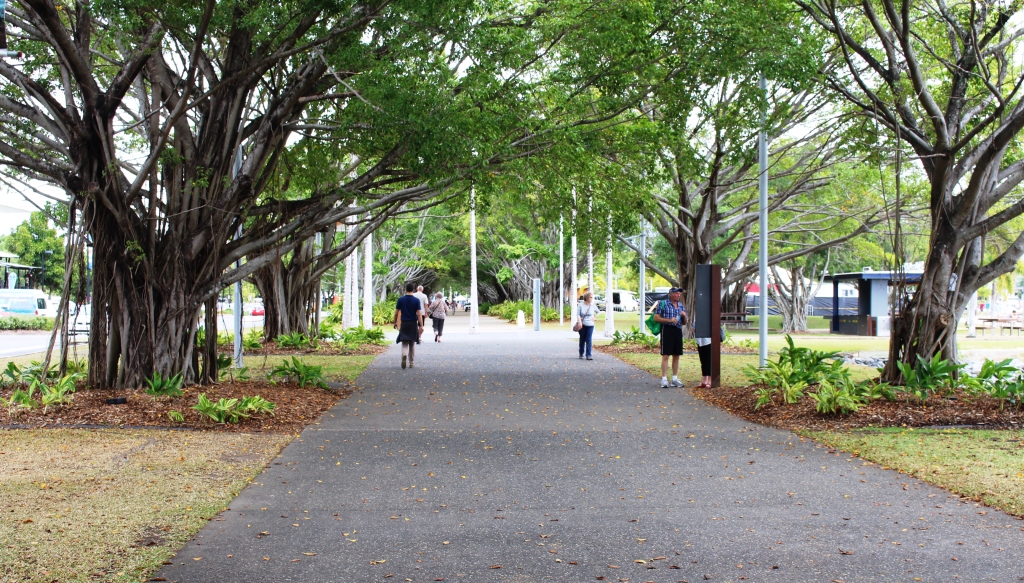
In the park by the waterfront

In the park by the waterfront

IMG_3796

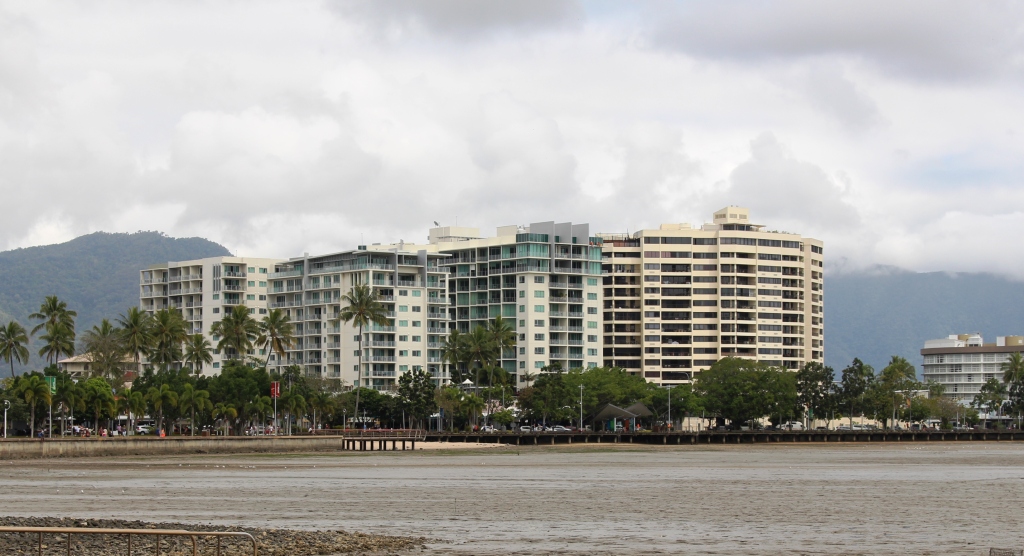
Water front high rise at Cairns

We had based ourselves at Lake Placid Tourist Park, which is the northern most caravan park in suburban Cairns. But to visit the Cairns area without paying a visit to the city itself was unthinkable, so we spent our second morning pounding the pavement and wandering the waterfront. There is always something going on in this ever expanding tourist Mecca. Tourist boats were coming and going, helicopters were fetching and taking passengers and people were moving around as they went about their business or leisure. There was a set for some kind of circus under construction on the grass near the large swimming pool.

Of course, most tourists were out doing tourist things. Cairns central would come alive at night as the restaurants and bars began to fill. The street that runs adjacent to the waterfront seems to be an endless succession of such establishments, punctuated by tour booking offices.

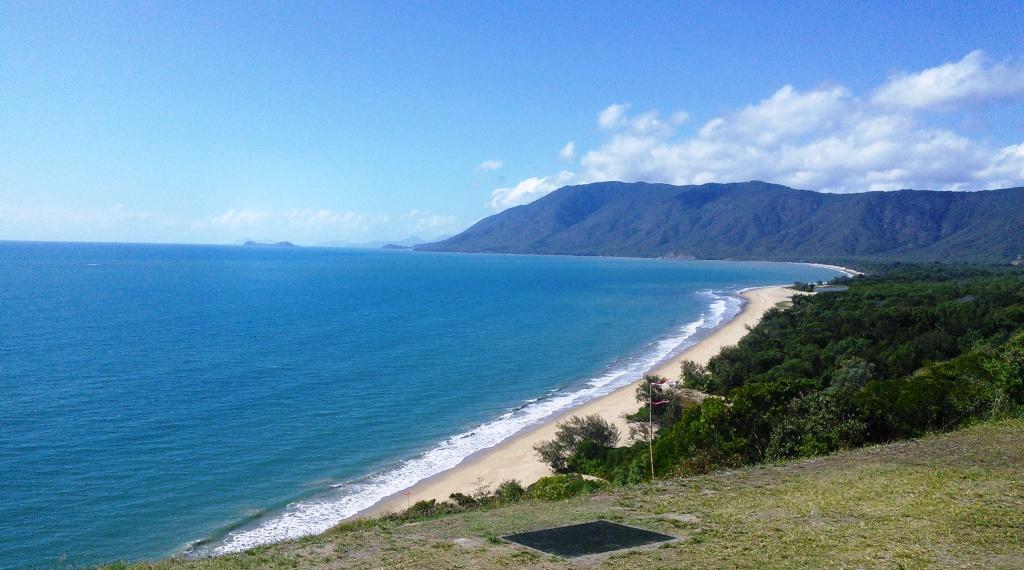
The coast south of Port Douglas

The coast south of Port Douglas

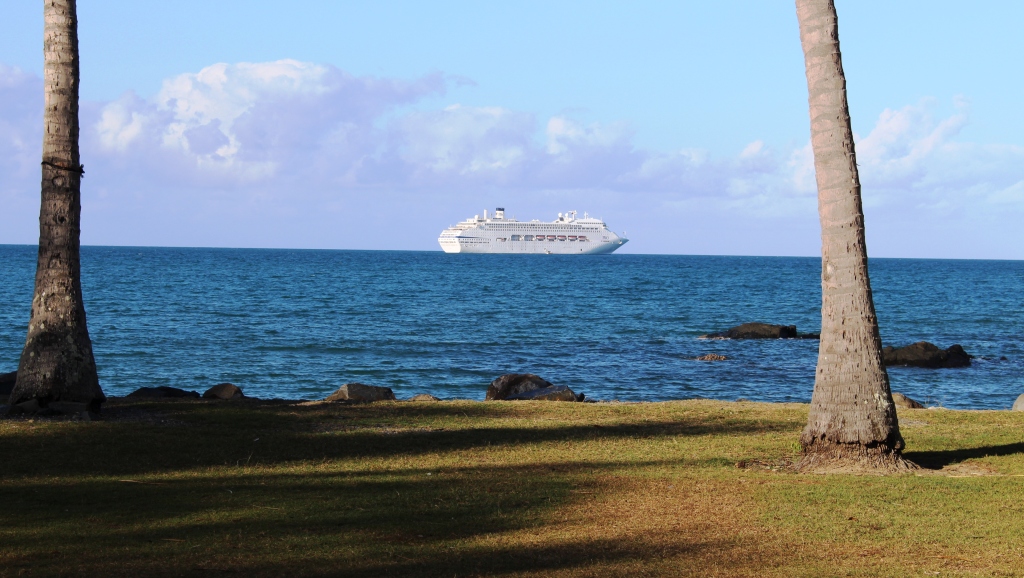
I have probably said in previous blog posts that the coast between Cairns and Port Douglas is one of the most attractive drives in Australia, particularly the section where the road hugs the coast. We had struck a fine sunny day, so the sea and most of the sky was blue and the traffic was not too heavy. A cruise liner was off the coast as we approached Port Douglas, but we drove on, with still some distance to go to reach our destination.

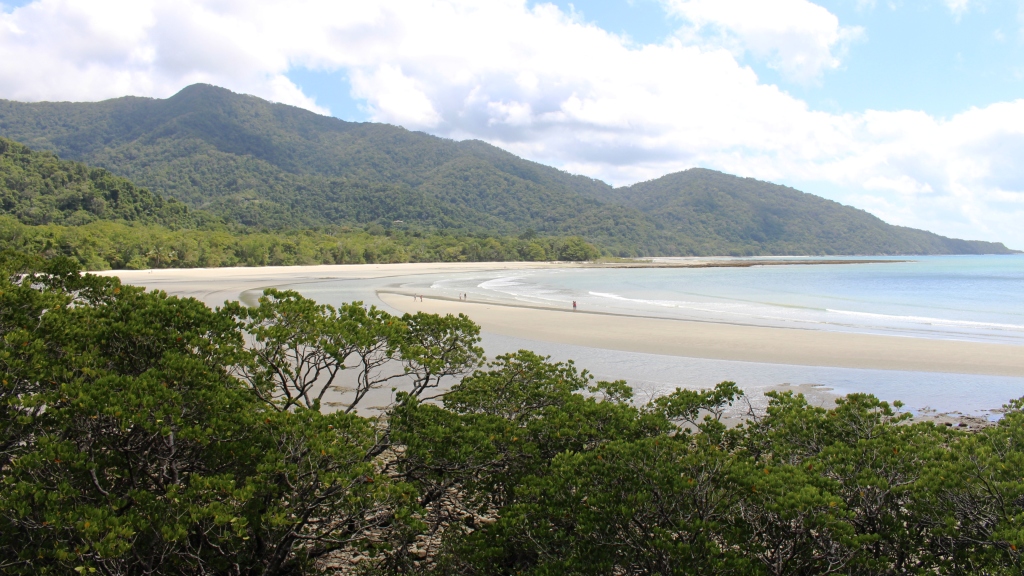
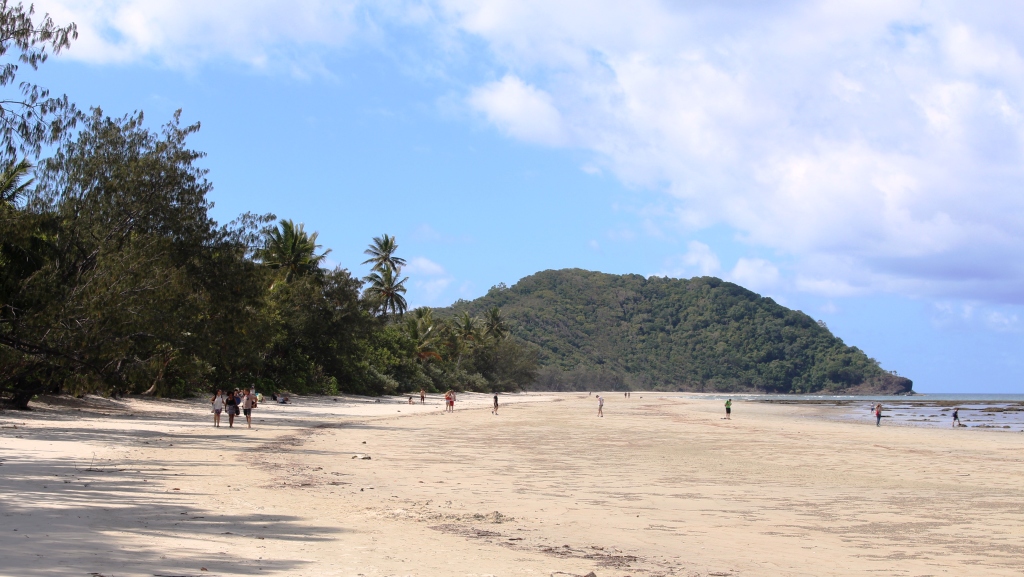
Cape Tribulation Beach

Cape Tribulation Beach

The picnic shelter where we had morning coffee at Mossman was shared with another couple just returned from Cape York. Returning Cape travelers are rather thick on the ground at this time of the year around Cairns.

We reached Cape Tribulation in good time and spent the remainder of the morning looking around. This included a walk to the beach, which

Rain forest on Cape Tribulation

Rain forest on Cape Tribulation

can now be viewed from a vantage point accessible by a wheel chair friendly concrete path. As usual, the sand on the beach was firm, almost wheel chair friendly.

Following lunch at Mason’s Café, we headed back south, but as on a previous occasion, stopped in at the place where they make ice-cream from local native and

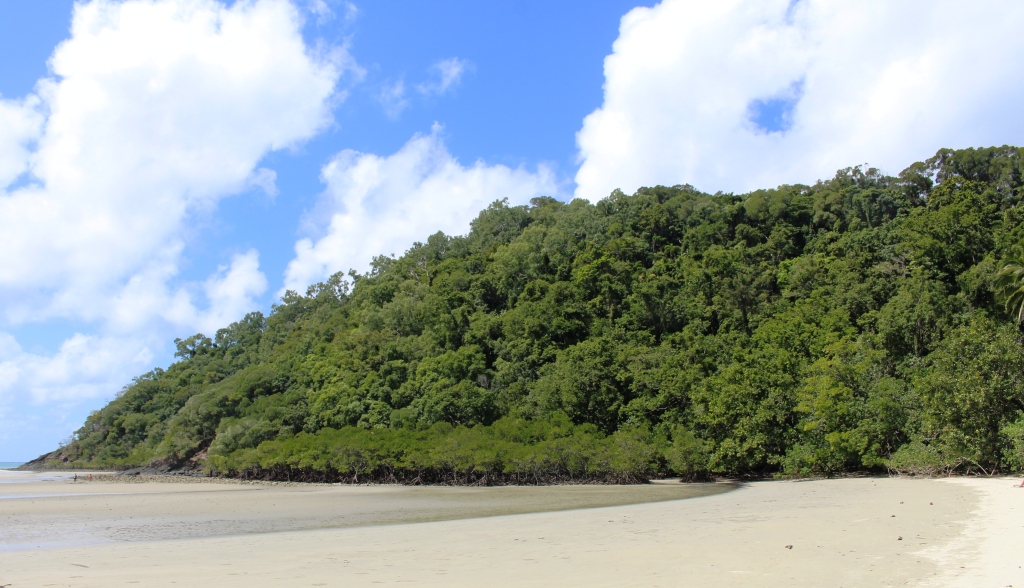
Myall Beach is immediately south of Cape Tribulation

Myall Beach is immediately south of Cape                                         Tribulation

introduced fruit. How fashionable is that? The main luncheon course at one establishment and desert at another?


Mason's Cafe at Cape Tribulation

Mason’s Cafe at Cape Tribulation

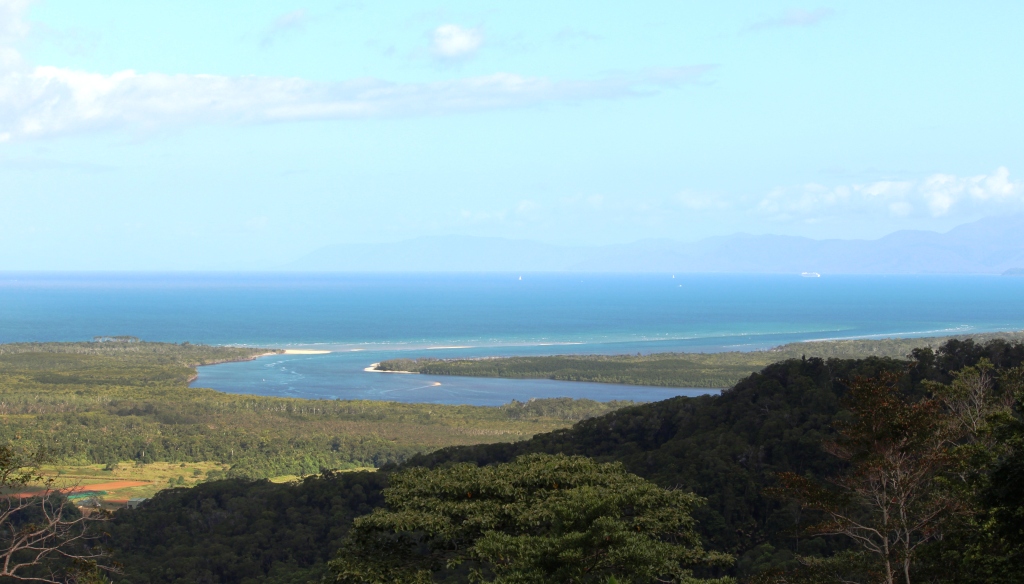
The Daintree Estuary

The Daintree Estuary

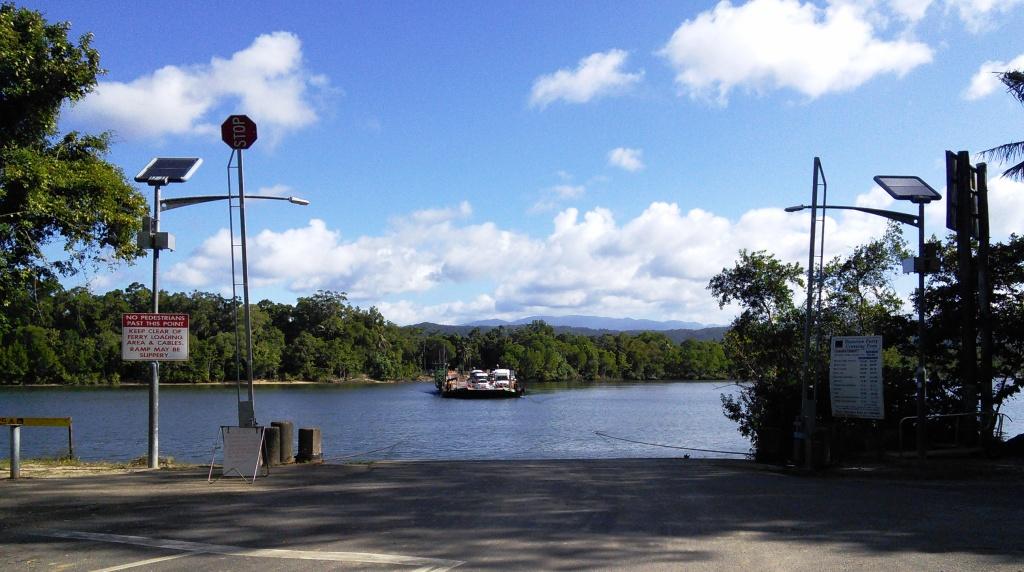
Before reaching the Daintree River ferry, we made the mandatory stop at the lookout that provides such superb views of the Daintree estuary and the coast south towards Port Douglas. Last time that we were here the area was enveloped in cloud so low that there was no view at all.


The Daintree Ferry

The Daintree Ferry

The Pacific Dawn at anchor off Port Douglas

The Pacific Dawn at anchor off Port Douglas

As we approached Port Douglas, we noticed that the cruise liner that we had seen in the morning off the coast was actually at anchor. Passengers were obviously having a day ashore. So we drove in to take a look. The town was busy as usual with lots of people still on the beach at 4.00 pm. The harbor was busy too, with boats that normally take people out to the Great Barrier Reef running shuttle services transporting passengers back to

Ferrying passengers back to Pacific Dawn

Ferrying passengers back to Pacific Dawn

the cruise liner from their day ashore. We believe that the cruise liner was the Pacific Dawn.


The following morning we left to spend a couple of nights at Kurrimine Beach. We had selected it as a base to explore the Tully Gorge. Not long after our arrival we received news of the passing of a colleague from transport industry days. Our association was at both a business and family level, so our spirits were rather dampened. We received information about funeral arrangements next morning, so were able to plan to be back in Brisbane for the funeral service.

Power substation in Tully Gorge

Power substation in Tully Gorge

Timing still allowed us a day to visit Tully Gorge. This part of our plan was a legacy of our trip to the Atherton Tablelands in 2010. On that occasion we had driven in to the point where the Tully River tumbles over the edge of the Tableland and down a series of waterfalls, to the valley floor below. The initial fall is in a deep gorge and cannot be seen from the lookout, but after heavy rain it can certainly be heard. We decided then that we would like, one day, to see it from the bottom.

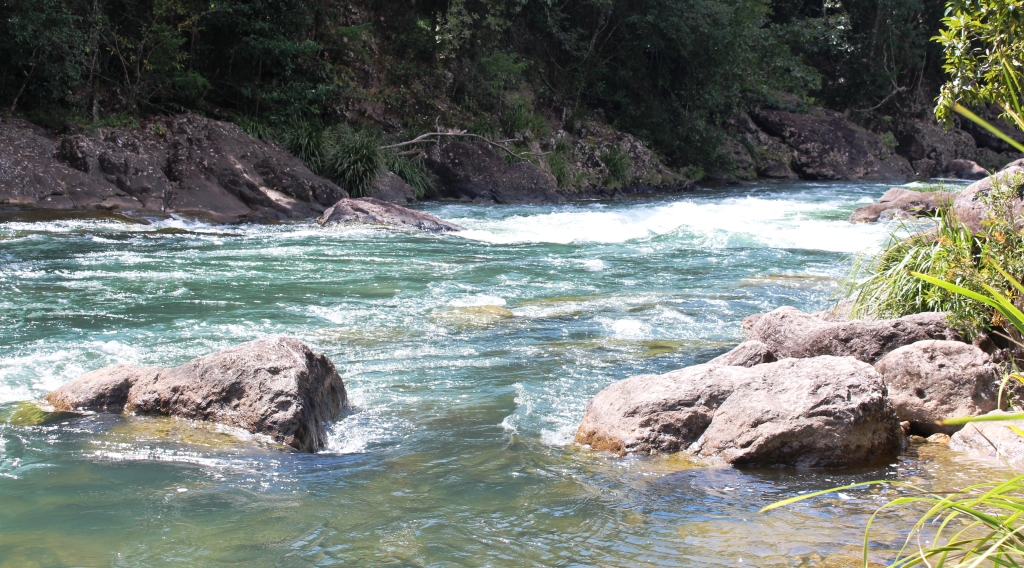
Tully River white water

Tully River white water

Tully Gorge is known throughout the tourist industry as a popular white water rafting location. As we drove in we saw vehicles associated with rafting but did not see any rafting groups. Water levels are low in the river at the moment, making it more suitable for kayaks than for inflatable rafts.

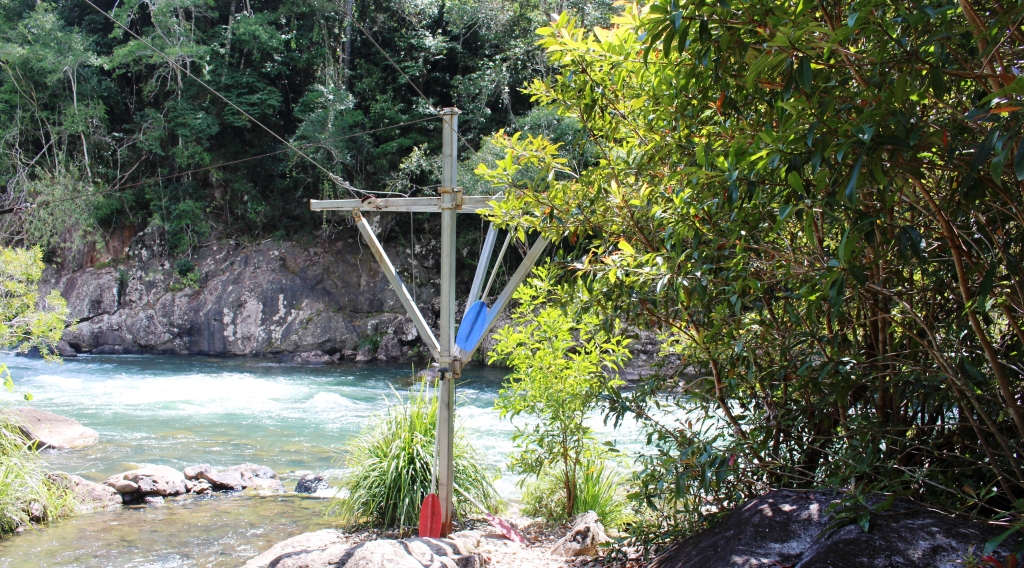
The river end of a raft lalunching system

The river end of a raft lalunching system

The drive in is about 50 km to the point where the road terminates at an electrical substation that we think takes power from a hydro plant at the dam on the river above the falls. This effective barrier prevents you from reaching the falls, but you can see the white water cascading down the side of the gorge further up but too far away for a good photo.

The first part of the drive is through cattle country with abundant grass reaching well up the sides of the grazing animals. Cattle properties are interspersed with the odd sugar plantation. Then comes the banana plantations. Reaching back into the foothills on both sides of the valley, they line about 15 km of roadside. Plantations are enclosed in new barbed wire fencing with locked gates and “Keep Out” signs. Employee vehicles are parked on the roadsides. Owners are serious about keeping the disease that is damaging banana crops in North Queensland, out of their plantations.

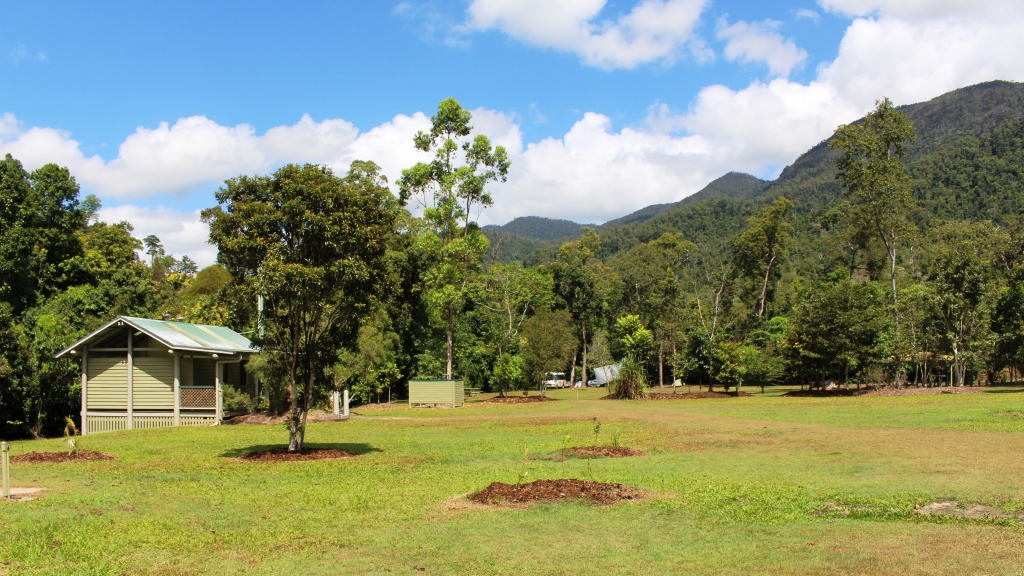
Tully Gorge National Park camping area

Tully Gorge National Park camping area

At the mouth of the gorge the road crosses to the south bank of the river and follows the stream quite closely, to the end of the road. Thick roadside vegetation hides the river for much of the drive but there are a number of vantage points and access roads used by the tour operators to reach the river. At a number of locations flying fox type structures make transporting the rafts to the water’s edge easier than it would otherwise be possible.

The retrieval pond at the NP camping area

The retrieval pond at the NP camping area

The Tully Gorge lies within the Tully Gorge National Park. Park authorities have provided an extensive day use and camping area with toilets, showers and change facilities that doubles as a local base for tour operators and provides facilities for overnight or more extended accommodation.

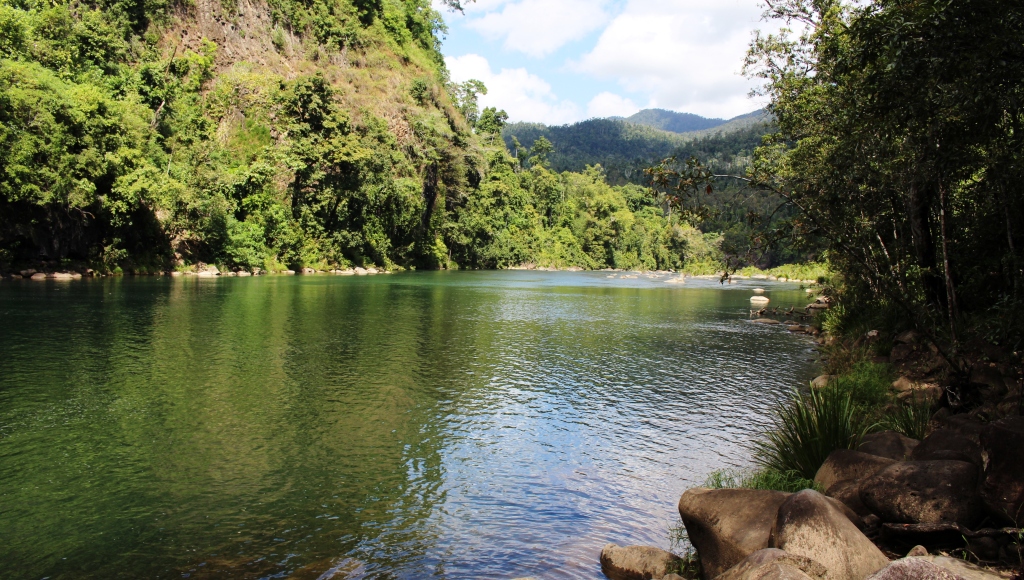
The road is sealed over its entire length. The gorge is deep with towering escarpments, covered by lush rain forest that rises directly from the river banks.

Tully Gorge is a worthwhile drive for anyone wanting a break from the beach and humiditywhile holidaying in the Tully and Mission Beach area.

Cape York Adventure – Days 21 to 28 – Bamaga and the Voyage South

I had been wondering how I would handle reporting  our return over the same roads in my blog when the problem was solved in an unexpected way.

We had travelled down from Punsand Bay to Seisia on Sunday, with the intention of doing the Seisia to Bramwell Junction section the following day. That meant again traversing the Bamaga Road and I wanted to be well rested for it. Driving on those roads requires intense concentration and is rather tiring.

I did not sleep well on the Sunday night, so we decided to take a rest day. Early on Monday morning I walked to the camping park office to pay for another night and was

MV Trinity Bay approaching Seisia

MV Trinity Bay approaching Seisia

confronted by a sign that said, “Why drive back?” I really related to that question. And since it was on a sign for SeaSwift, the shipping company that services Torres Straight, I figured that they just might have vacancies on the ship back to Cairns.

So I went to their office, and yes, there was space for the car and van and yes, they had a cabin available. And just to clinch the deal, because departure was only four days away, stand by rates would apply. Done deal!

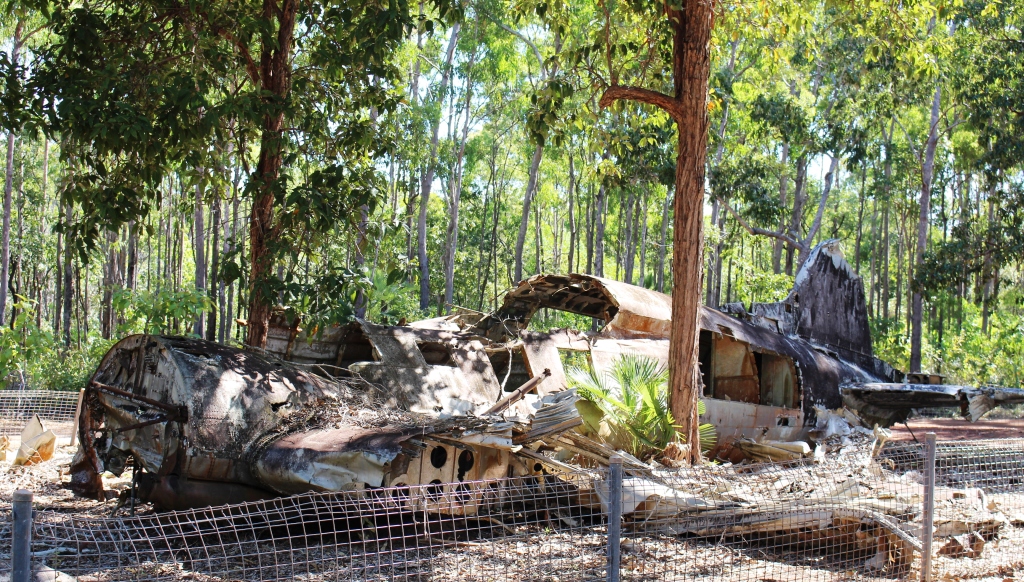
The crash site of a DC3 near Bamaga airport

The crash site of a DC3 near Bamaga airport

We filled in the intervening days easily. One was spent on the trip back to Thursday Island and during one other I got as much of the red paste off the car and van as possible. The vehicles were to be shipped as deck cargo. I didn’t want to arrive in Cairns with salt encrusted red paste all over the car and van. As it turned out we had a very smooth passage, so there was not much spray. A heavy rain

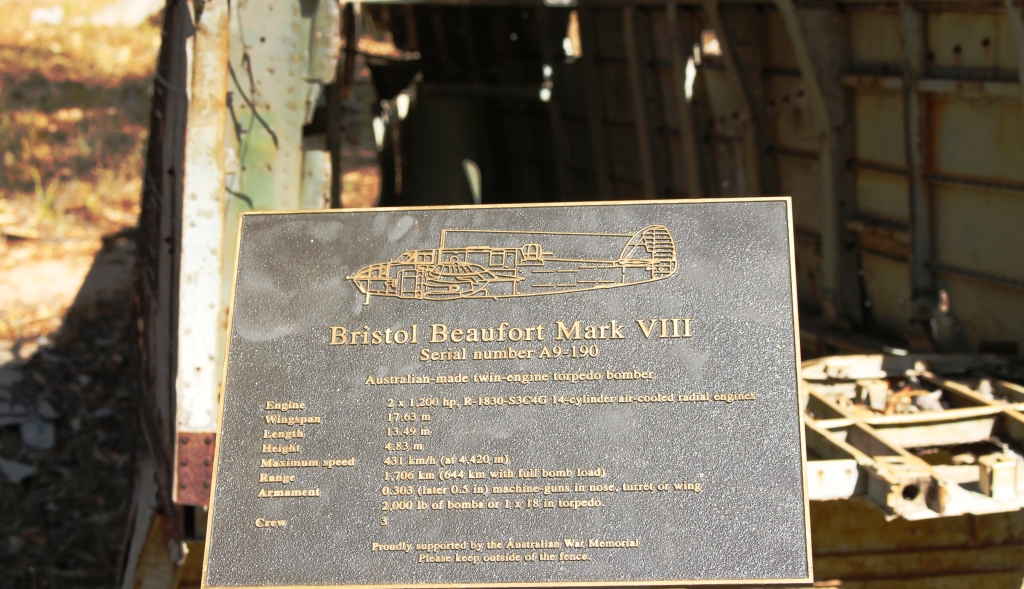
The plaque commemorating the loss of a Bristol Beaufort Mark VIII with all crew near Bamaga Airport

The plaque commemorating the loss of a Bristol Beaufort Mark VIII with all crew near Bamaga Airport

shower as we approached Cairns took care of any salt that had settled on the vehicles.

We also took the opportunity of visiting some of the WWII history around Bamaga. The current Bamaga airport was an air force base during the war so logically there are crashed aircraft in the area. Two have been retained and partially protected for posterity. To reach the crash site near the airport it is necessary to drive through an area of bush. Lying in the undergrowth there are thousands of rusting fuel drums. Imagine the logistical task of moving those huge volumes of supplies to such a remote area over 70 years ago.

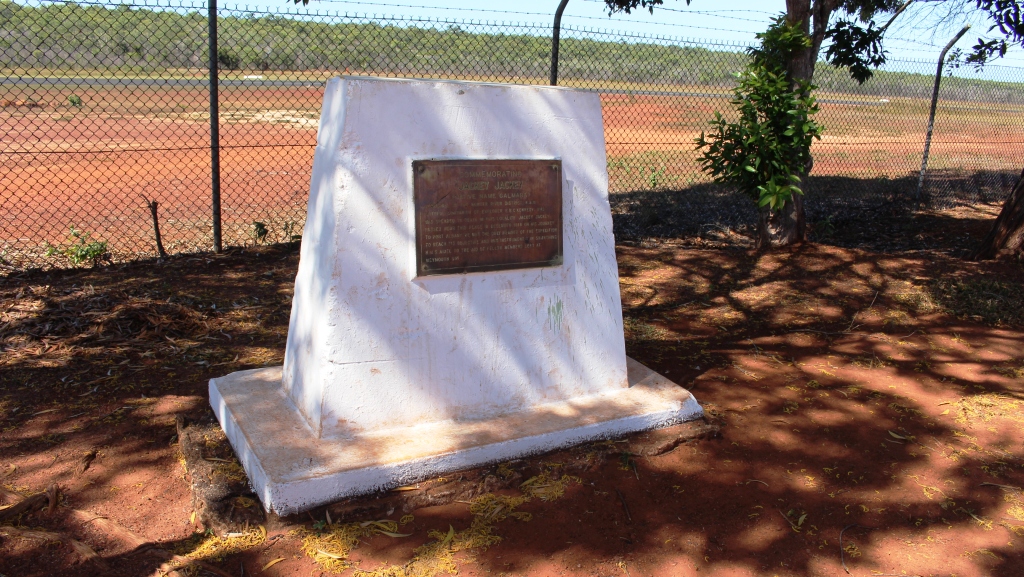
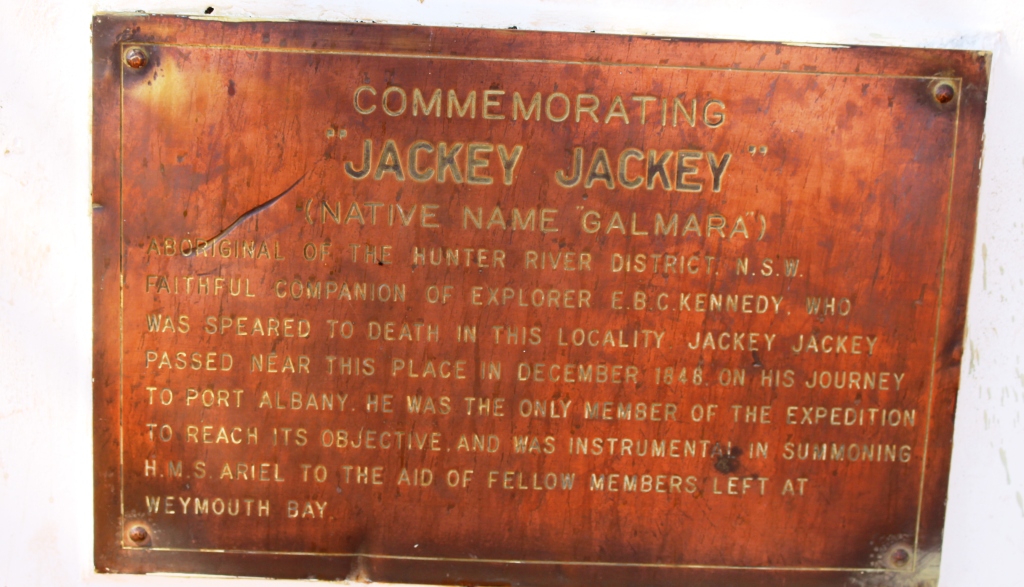
The Jacky Jacky memorial is placed in a corner of the car park at the airport.

The Jacky Jacky memorial is placed in a corner of the car park at the airport.

There are two interesting memorials in the airport car park at Bamaga. One is to Aboriginal tracker and loyal companion to the ill fated explorer Edmond Kennedy, Jacky Jacky. There are a number of reminders of his bravery and loyalty in the northern area of the Cape. Indeed, I wonder if Loyalty Beach near Seisia is named in honour if his actions.

The wording on the Jacky Jacky memorial

The wording on the Jacky Jacky memorial

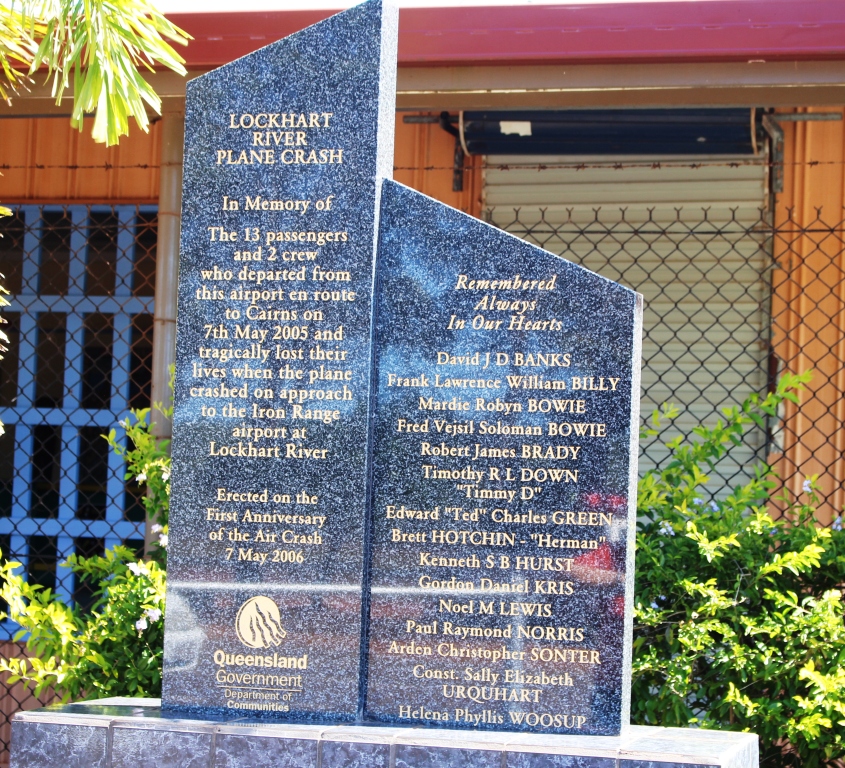
At the front of the small airport terminal, a monument to the victims of that aircraft crash several years ago in the Iron Range National Park near Lockhart River, has been erected. The doomed aircraft departed Bamaga airport and was lost before it reached its first stop on its run back to Cairns. The shape of the memorial is similar to many of the headstones that we

The memorial for the Lockhart River aircraft crash

The memorial for the Lockhart River aircraft crash

saw on graves at Thursday Island cemetery.


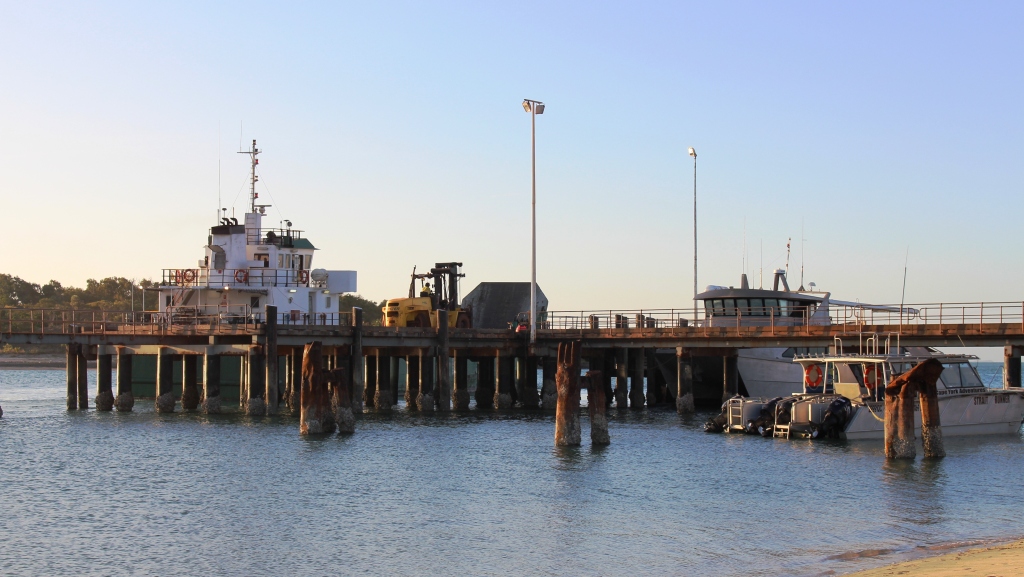
MV Trinity Bay berthed at Saisia wharf

MV Trinity Bay berthed at Seisia wharf

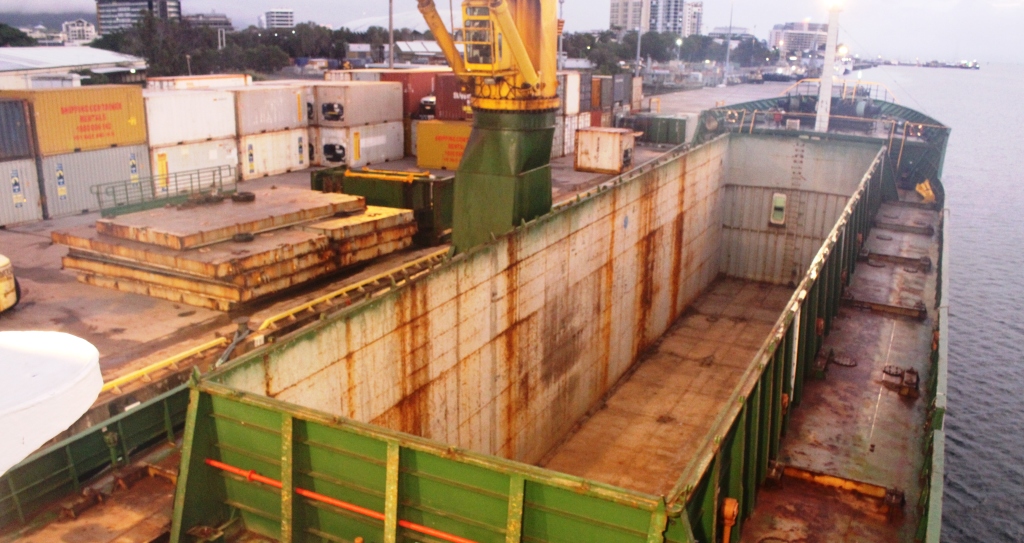
We boarded MV Trinity Bay at about 11.00 am, settled into our cabin, lunched and then watched the container unloading and reloading process. The ship is fitted with a crane.The whole process of loading and unloading is handled by the ship’s crew, as there are no stevedore facilities at Seisia or Thursday Island.

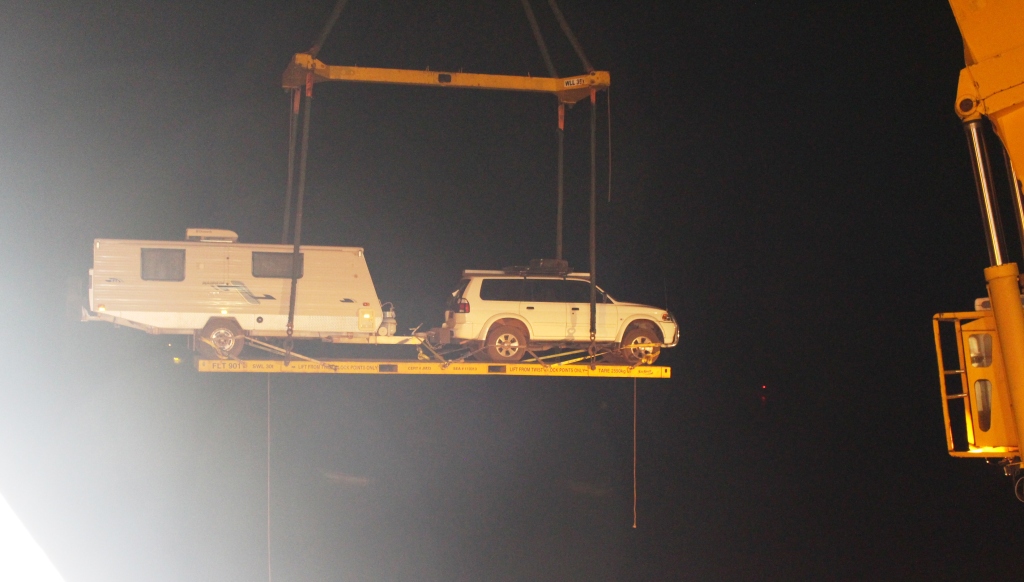
Our car and van being positioned for lifting on board

Our car and van being positioned for lifting on                                          board

Passenger vehicles are loaded last at Seisia so they can be unloaded first at Cairns, so it was dark and we had finished dinner by the time vehicles were loaded. Ours was second last. Car and van were loaded coupled for towing. They had been driven onto a freight base with the front wheels of the car at one extremity and the wheels of the van at the other. That portion of the van behind the wheels was hanging

Up, up and away!

Up, up and away!

in space. Our pride and joy swinging into the sky before being deposited cross ways at the very front of the ship is a sight that I will never forget.

We had gone to our cabin for the night before we left Seisia but when we started to move I went on deck to watch the lights if Seisia disappear astern. Normally Trinity Bay heads directly for Cairns from Seisia, but had to return to Horn Island to load more containers, before returning south. We slept through the first couple of hours of loading containers but were awake for the last hour and for the departure from Horn Island at about 3.00 am.

[youtube]https://youtu.be/jLkYV09ct_k[/youtube]

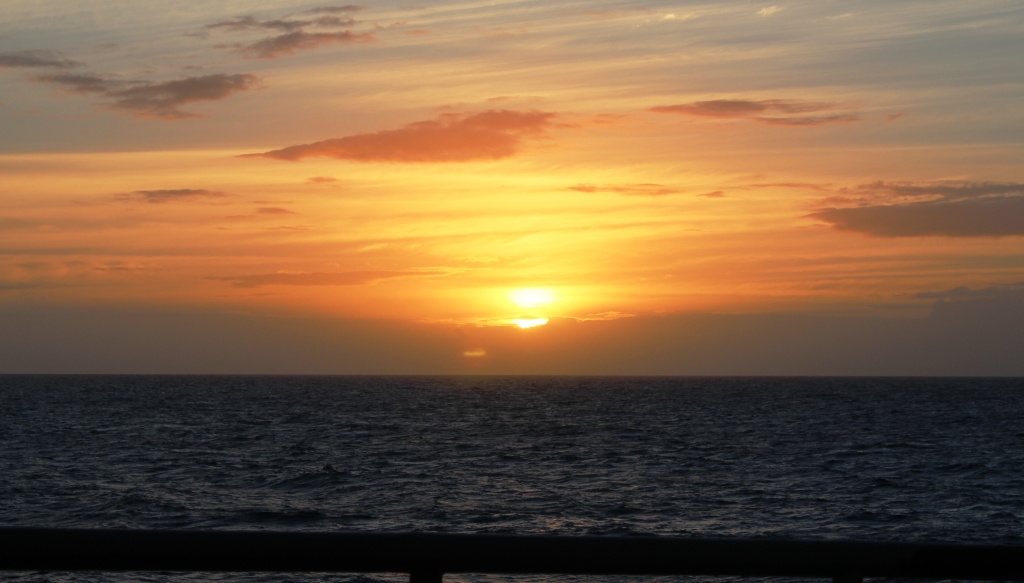
Sunrise at sea

Sunrise at sea

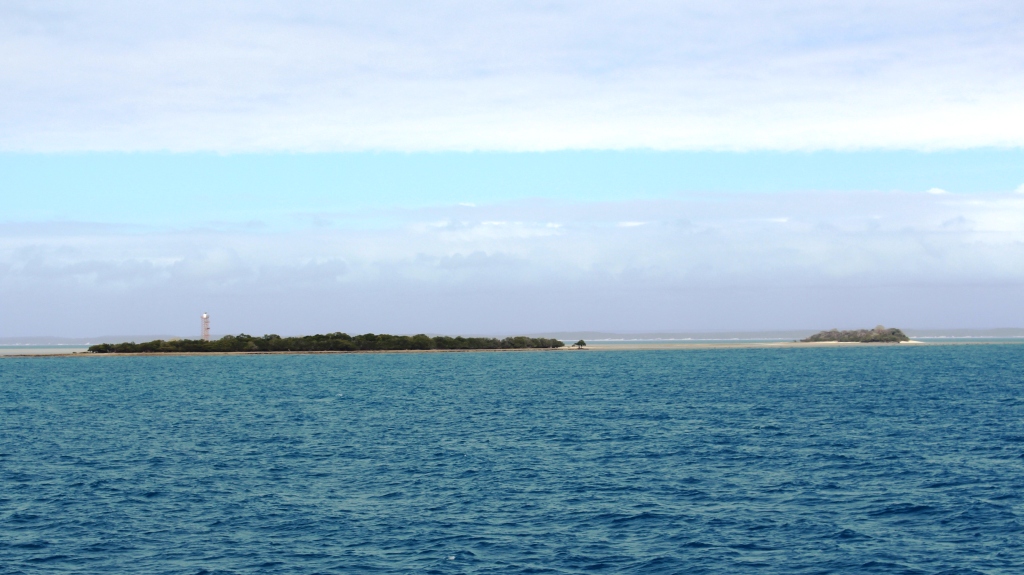
A typical coral cay with light tower

A typical coral cay with light tower

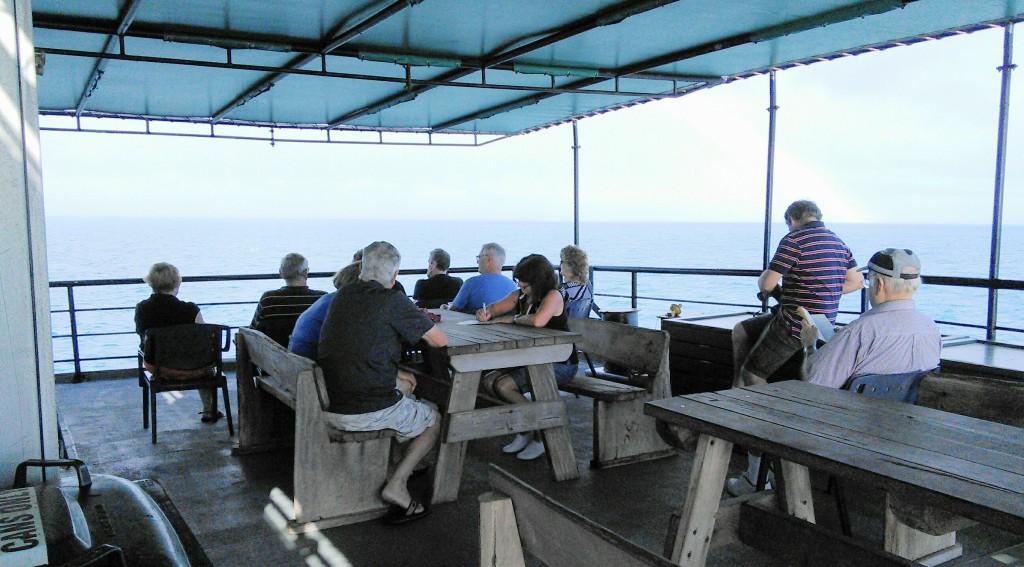
When we woke at about 6.00 am we had rounded Cape York and had commenced our passage south. Unless we were crossing a large Bay we were close to the coast and could see most of its features. There was an increase in the amount of cloud with further increased, including rain, by the time we reached Cairns. But it was pleasant weather and most passengers spent their time on the open deck at the stern where we could select sunshine or shade and were sheltered from the wind, which was coming from the direction of the bow, helped, of course, by the passage of the ship.

There is a routine to shipboard life.  Breakfast was at 7.00 am, lunch at 12 noon and dinner at 6.00 pm.  Standard procedure is for the passengers to stand back and allow the crew to serve themselves first.  It is, after all, a working ship, not a passenger liner.  A cake would appear, freshly baked from the galley at about 9.30 am and happy hour nibbles at around 5.00 pm. Coffee, tea and biscuits were available at any time, but self service, of course.

The control area on the bridge. The sailor in the chair is the duty officer.

The control area on the bridge. The sailor in the chair is the duty officer.

Passengers on the open deck

Passengers on the open deck

On Sunday morning, the second morning on board, passengers were invited by the Captain to visit the bridge for a presentation on the operation of the vessel. We were given statistical information and details of the operation and navigation. Trinity Bay has two captains and two separate crew. They work in rotation, working for four weeks on duty and four weeks off. Automatic pilot was engaged so no passengers got to steer.

There was only one task for Trinity Bay to perform on the way south. On Saturday evening, just before dusk, the ship stopped in a sheltered bay near the Aboriginal settlement of Lockhart River, where we were met by a barge. Trinity Bay used its crane to load a refrigerated container and a fork lift onto the barge. The fork lift was used to transfer the contents of the container into permanent cold storage on the barge. The empty container and the fork lift were loaded back on board and we were on our way into the gathering darkness while the barge proceeded to Lockhart River with its frozen and chilled supplies.

Passed by a larger and faster ship

Passed by a larger and faster ship

During the night we passed the broad expanse of Princess Charlotte Bay, the scene of probably the greatest maritime disaster in Australian waters.  A pearling fleet of between 80 and 100 boats was totally destroyed when Cyclone Marino swept across the bay in 1899. About 100 Aborigines and 307 pearling crew lost their lives.

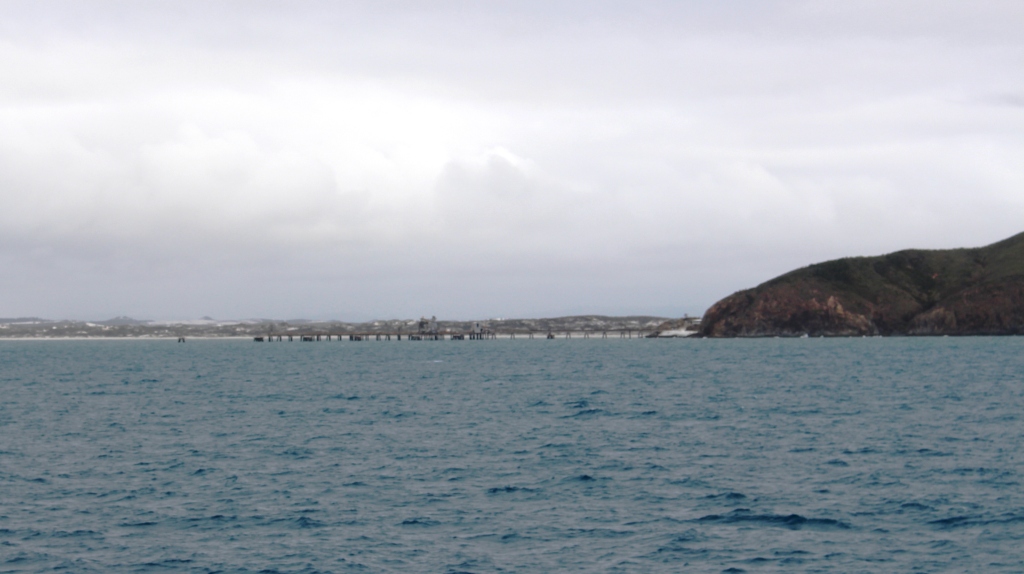
The silica loading jetty at Cape Flattery

The silica loading jetty at Cape Flattery

By morning we had rounded Cape Melville and when I went on deck before breakfast, we were off Berwick Island with Cape Flattery soon to be passed as we approached Cooktown.

Cape Flattery is home to a silica mine, the loading Jetty for which was clearly visible as we passed, but no ships were loading. The pure white of the silica deposits stand out in sharp relief from the surrounding vegetation. Not surprising since the deposits are 98% pure silica.

The coast south of Cooktown

The coast south of Cooktown

A little further south, and inland, is the Aboriginal community of Hope Vale that both supplies labour to the silica mine and is the home of well known Aboriginal leader, Noel Pearson.

We could clearly see the mouth of the Endeavor River but Cooktown is out of site behind Grassy Hill, the elevated area to which James Cook would climb to plot a route through the coral reefs as he planned his escape from the temporary sandbank dockyard  where the Endeavor was under repair by its crew.

Cloud over Cape Tribulation

Cloud over Cape Tribulation

Most passengers were looking forward to seeing the mountains of the Bloomfield Ranges and their precipitous plunge into the sea, but Mother Nature had other ideas.  A heavy rain storm came through and obliterated the view of the coast. Rain was still falling as night fell and we retired to the dining room for dinner.

Rain clouds hid Port Douglas as well but the weather had cleared

Ready for another load

Ready for another load

as we started to pass the northern suburbs of Cairns. The resulting improvement to conditions on the upper deck attracted most passengers out of the dining room to line the rails as MV Trinity Bay made her way down the long channel and turned in the basin to sidle into her berth.

Ready to drive away

Ready to drive away

Passengers with hotel accommodation disembarked, but about half of us, who were going to caravan parks, stayed on board for a third night, to allow time for vehicles to be unloaded. When we came on deck next morning the containers were all on the wharf and our vehicles were parked on an adjacent roadway in readiness for our departure. With breakfast over we were soon disembarked and on our way to our caravan park.

Cape York Adventure – Days 20 & 24 – Thursday Island

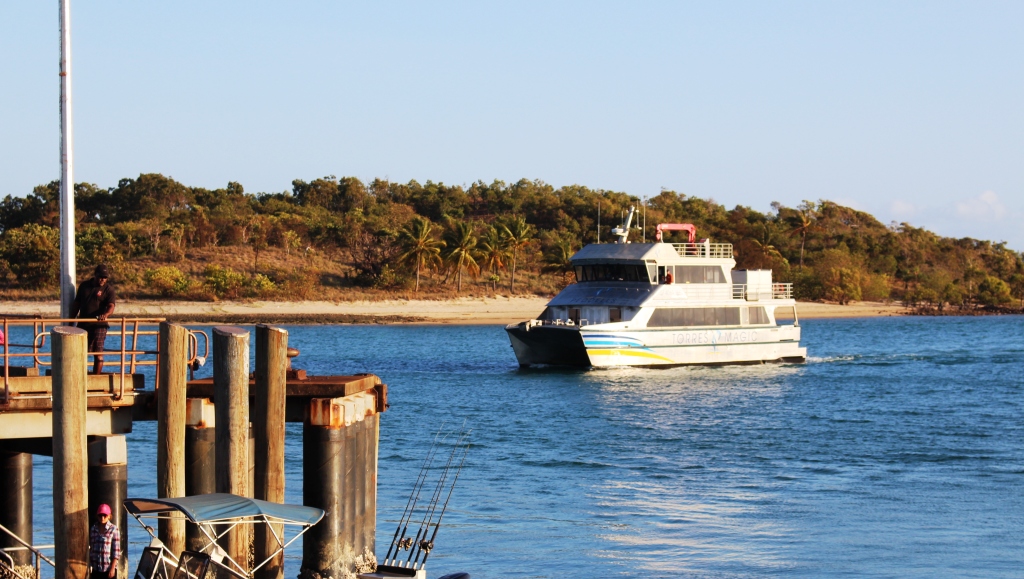
The TI ferry approaching Seisia wharf

The TI ferry approaching Seisia wharf

Travelers to the Cape York region normally have among their objectives to stand at the tip of the Cape, the most northern point on the mainland and to visit Thursday Island. We were no different. Having reached the Tip the next agenda item was Thursday Island or TI as it is known to locals. We visited TI twice.

[youtube]https://youtu.be/UfrpftbGjmM[/youtube]

On the day following the experience of standing on the northern most point, we drove over that mostly atrocious road back to Bamaga and then the additional 5 km to the TI ferry terminal at Seisia wharf. And that meant negotiating it again on the way back to Punsand Bay. The extra distance to Seisia is sealed, as are all the roads linking Indigenous communities at the Cape.
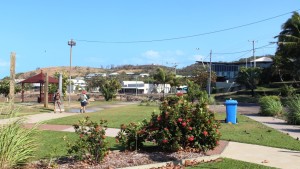
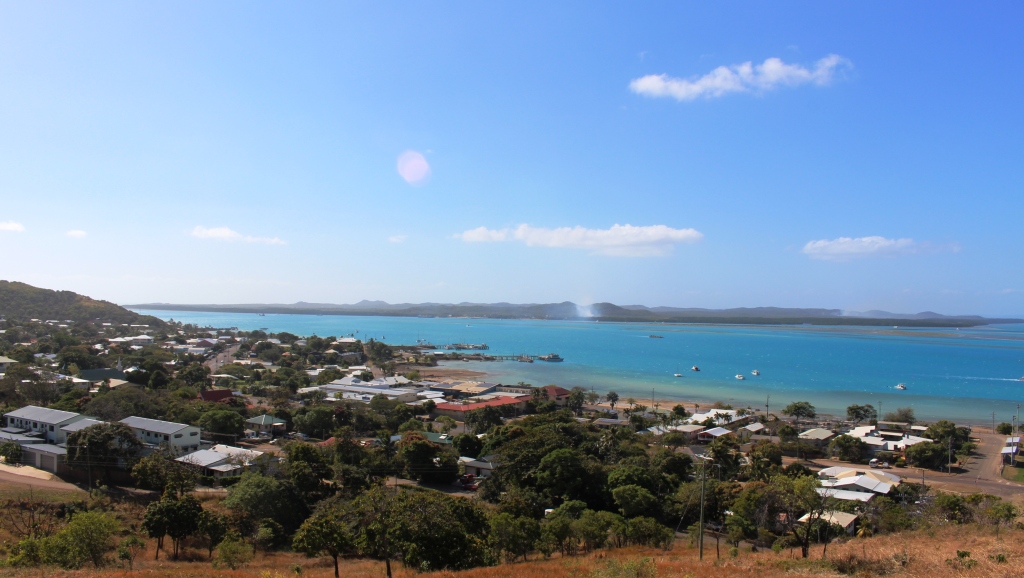
Looking towards the town from the ferry terminal

Looking towards the town of TI from the ferry                                       terminal

The ferry crossing takes a bit over an hour. For the first part of the journey the ferry is travelling in protected waters but then crosses Endeavor Straight where there is less protection, so it can be a but rough. The route then passes Possession Island, so named by Lt.  James Cook in 1770 as it was on this island, after passing through Torrens Straight, that he planted the Union Jack in the soil of the island and claimed the entire East coast of New Holland for King George III. He named the claimed area New Wales.
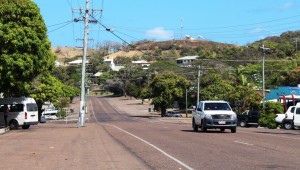
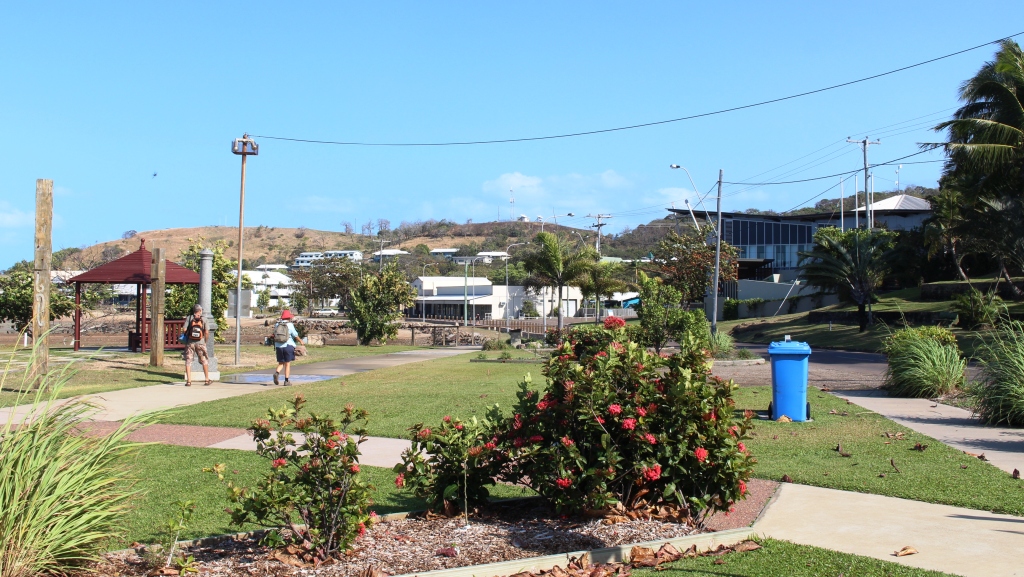
Part of the main street of Thursday Island

Part of the main street of Thursday Island

The ferry route then passes to the east of Prince of Wales Island, the second largest island in Queensland, after Fraser Island, and finally through the channel between Prince of Wales Island and Horne Island into the protected harbor formed by those two islands and Thursday Island.

Thursday Island was named by Captain William Bligh as he made his way back to civilisation from the mutiny to which he was subjected and for which he is famous. Tuesday, Wednesday, Thursday and Friday Islands were named for the day on which he passed them in a search for water. There are no Saturday, Sunday and Monday Islands, so it is left to speculation that Bligh found water and then took a long weekend.
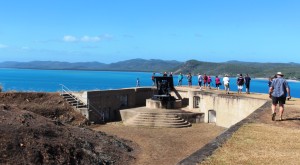
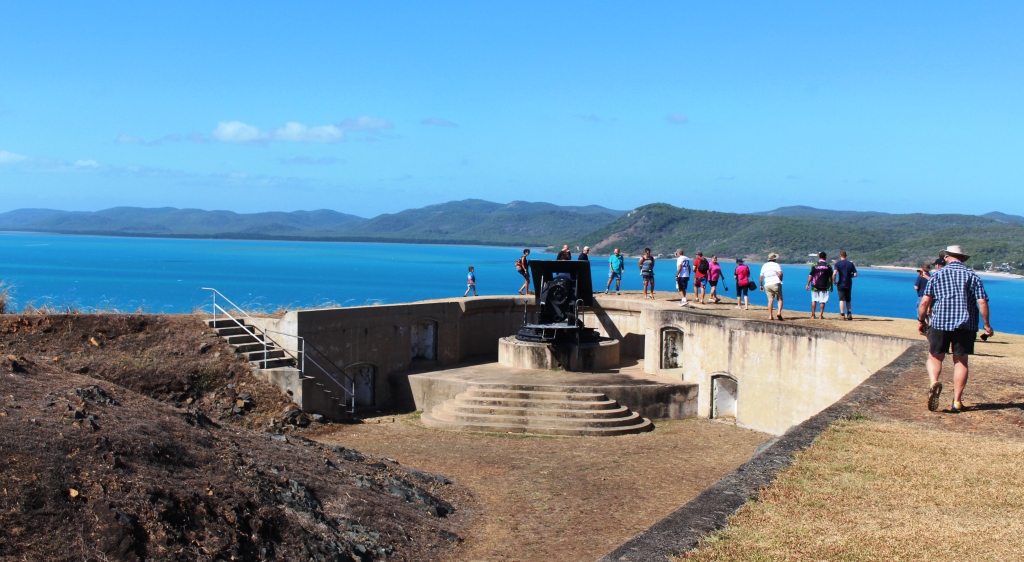
A gun at Green Hill Fort

A gun at Green Hill Fort

On our first visit, the bus for the TI tour was waiting for us, so we were straight into the program. The first and most interesting feature was Green Hill Fort. Built on a hill on the southern end of the island, it was one of many naval gun installations built around Australia in the 1890s when Australian officialdom thought that the Russians were coming.
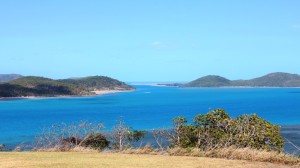
One of the passages guarded by the fort

One of the passages guarded by the fort

The guns, although no longer usable, remain in place, each one pointing directly at a gap between the islands through which a threat could have come. Some of the passage ways tunneled under the gun emplacements have been converted into a museum, with displays that tell the story of the settlement and the island people whose interests TI administers. The impact of WWII and the involvement of about 800 Islander volunteers is a major feature of the displays.
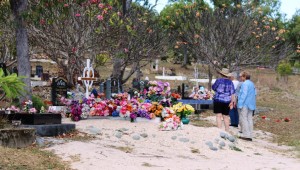
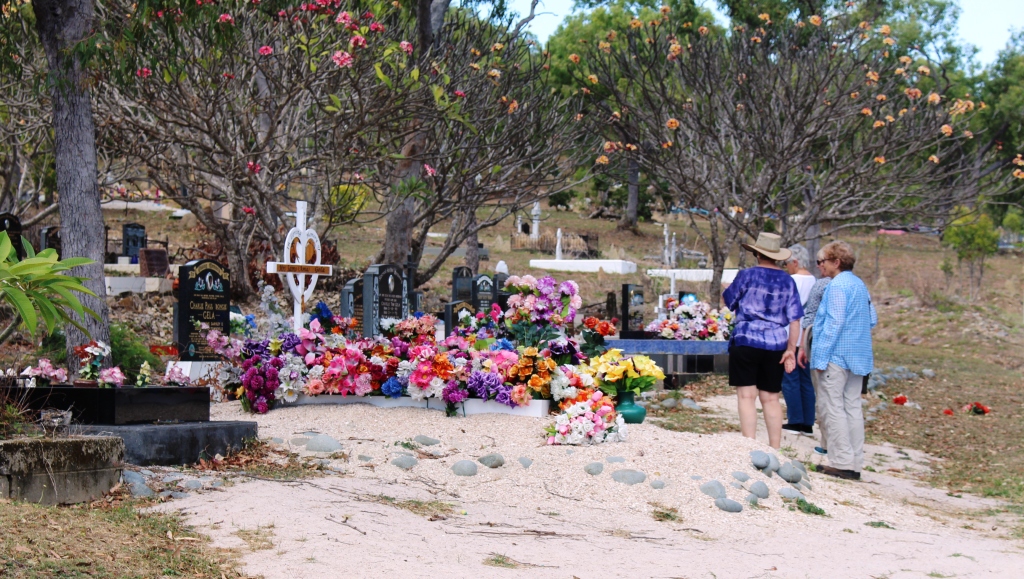
A profusion of flowers at the cemetery

A profusion of flowers at the cemetery

Our next port of call was the cemetery. Traditionally, death is celebrated to a greater extent than that to which most of us are accustomed. Headstones are very ornate with a great deal of detailed information inscribed on them and flowers, both natural and artificial are used in great quantities and to great effect .
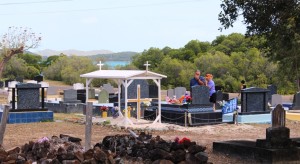
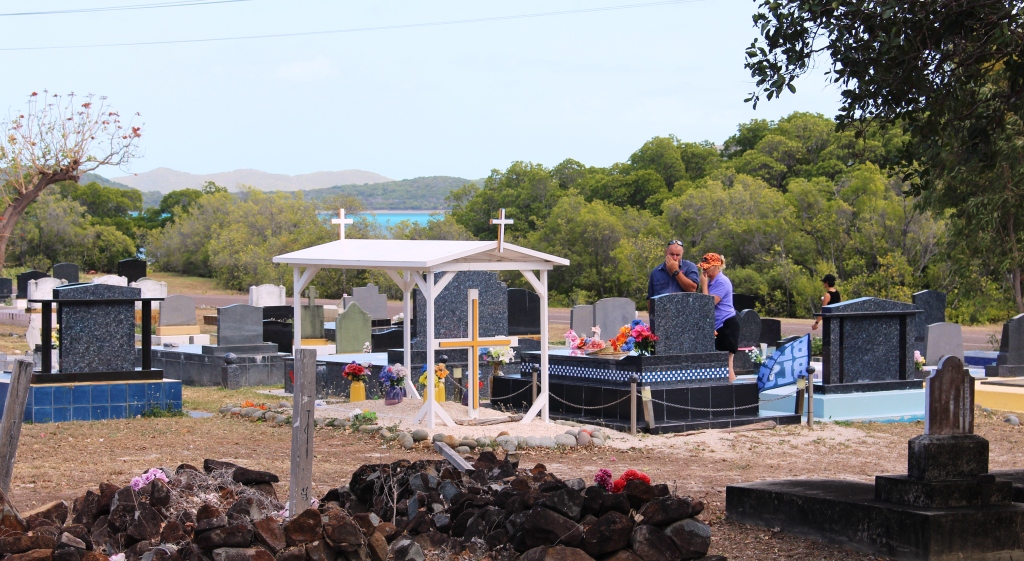
Thursday Island cemetery

Thursday Island cemetery

As I understand common practice, there is a graveside ceremony upon internment. Then there is a waiting period while the headstone is obtained. Most are shipped in from the south, mainly from Brisbane. On arrival, there is another ceremony for the erecting of the headstone, which remains covered until an unveiling and dedication is held at a later time.
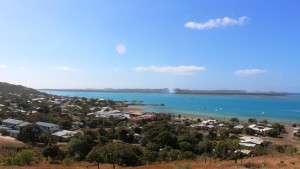
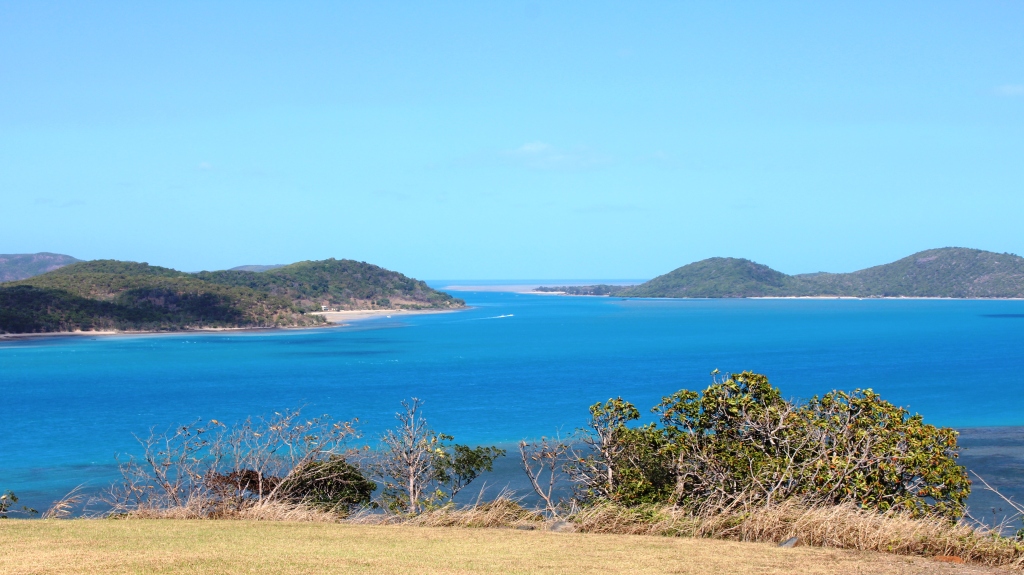
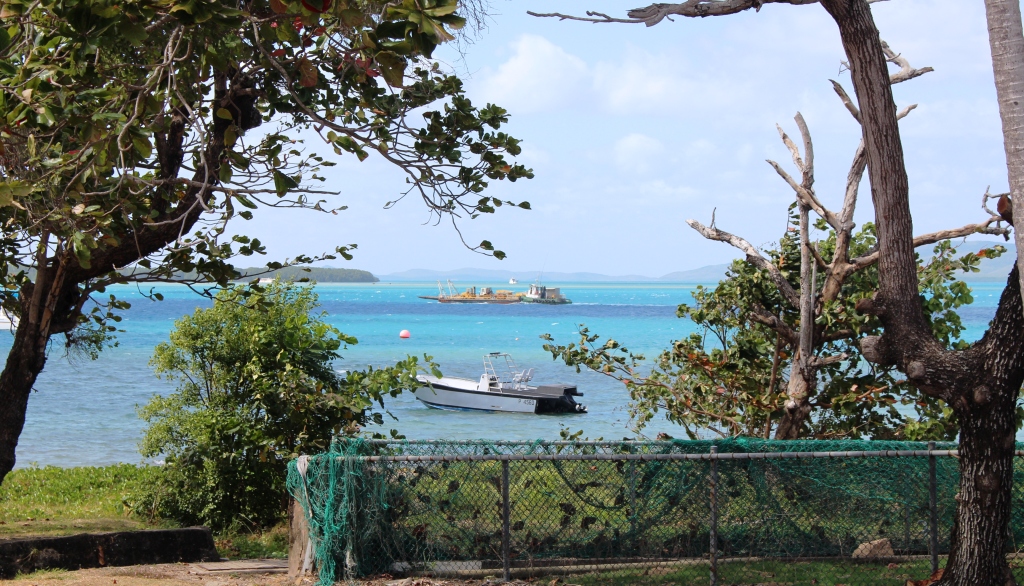
Looking over the town to Horn Island

Looking over the town to Horn Island

In addition periodic ceremonies are conducted at the cemetery by various ethnic groups, so you can see that the cemetery is a centre of cultural activity. On the day that we were there, bunting had been hung by Japanese folk, probably in association with the graves of Japanese pearl divers buried there.

The tour then covered the other
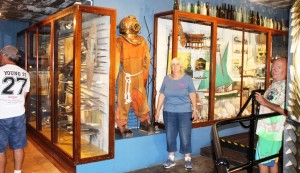
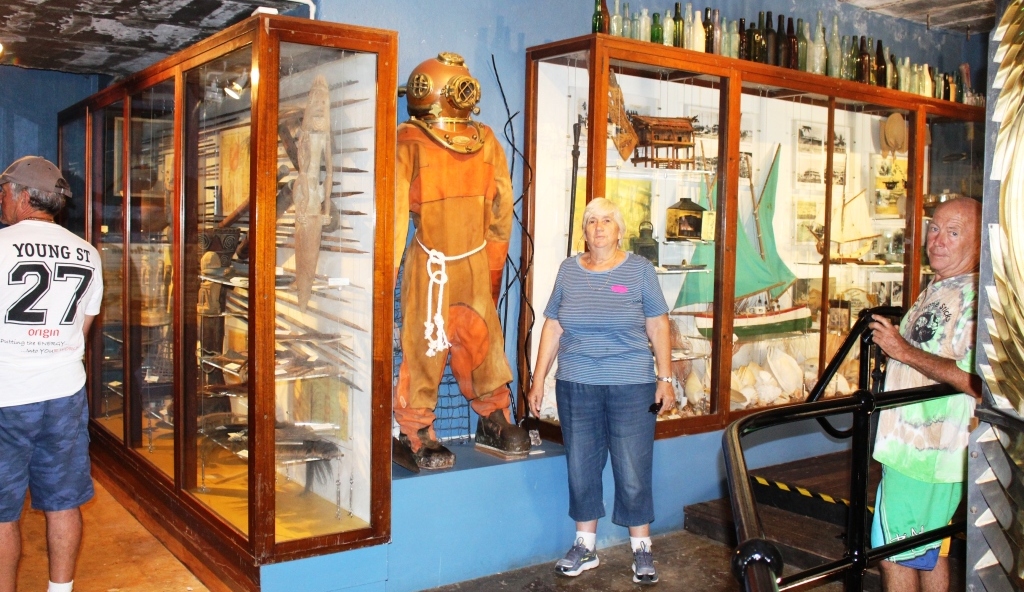
Ruth checking the size of a diving suit

Ruth checking the size of a diving suit in the Green                   Hill Fort museum

main features of the four mile square island. A multicultural community of about 3,500 resides in this confined space. This would be rather uncomfortable living if it were not for neighboring Horn Island which is much larger, relatively flat and provides the airport, water supply and services such as garbage disposal. The port at which supplies arrive from the south is
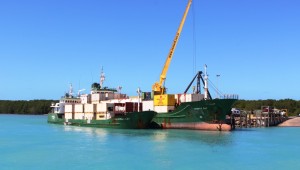
Trinity Bay unloading containers at Horn Island

Trinity Bay unloading containers at Horn Island

also on Horn Island.

With our tour of TI at an end, we were transferred by local ferry to Horn Island.
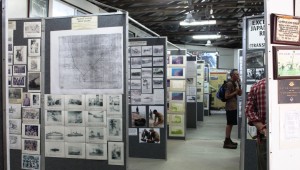
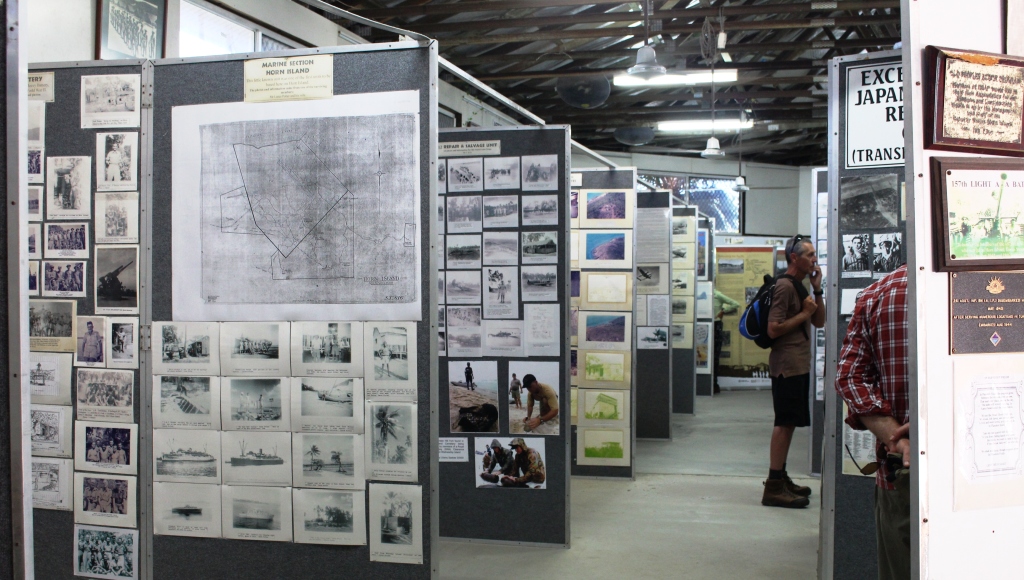
Part of the display in the Horn Island Museum

Part of the display in the Horn Island Museum

An enterprising young lady named Vanessa came to TI a few years ago as a school teacher. Not necessarily in this order, she married a local and developed an interest in war relics on neighboring Horne Island. There was much military activity on Horne Island during WWII including a forward defense airfield which hosted both Australian and United States air, sea and ground operations.  After Darwin, Horn Island was the most attack place in Australia. TI was not attacked at all because over 100 Japanese pearl divers are buried there.
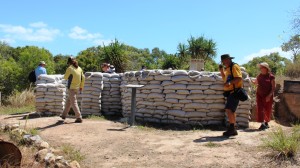
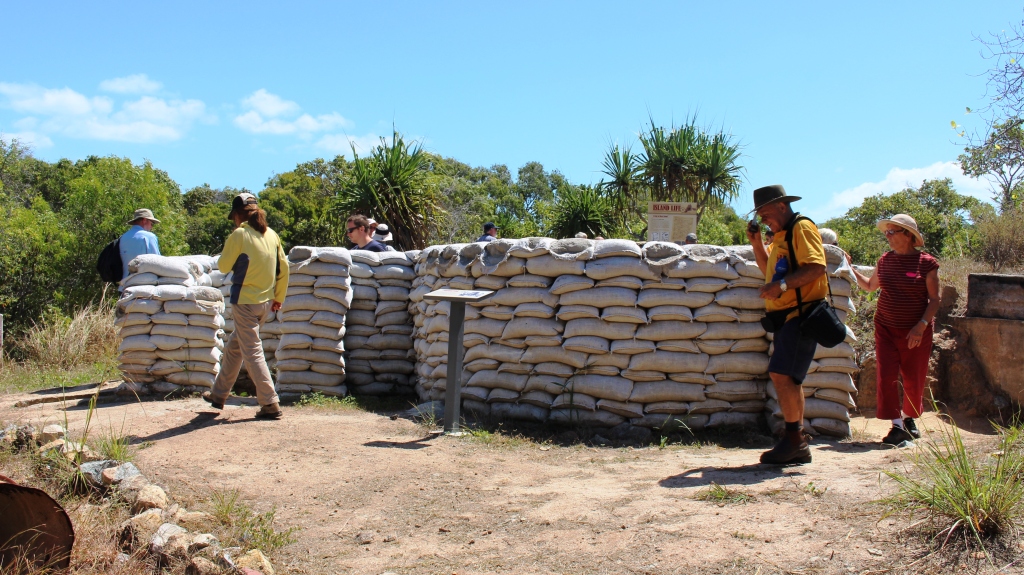
The restored WWII anti aircraft command post on Horn Island

The restored WWII anti aircraft command post on Horn Island

Vanessa and her husband have established a fine museum that tells in great detail the story of the war and the part that Torres Straight Islands played in it. There are also substantial amounts of material on local history and custom.

One section displays the pages of Brisbane’s Courier Mail that contain reports of events in the closing days of the Pacific War. We just happened to be there on the 70th anniversary of VP (Victory in the Pacific) Day.  It was quite fascinating to read the reports, 70 years after they were written, on the actual 70th anniversary.
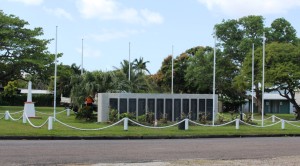
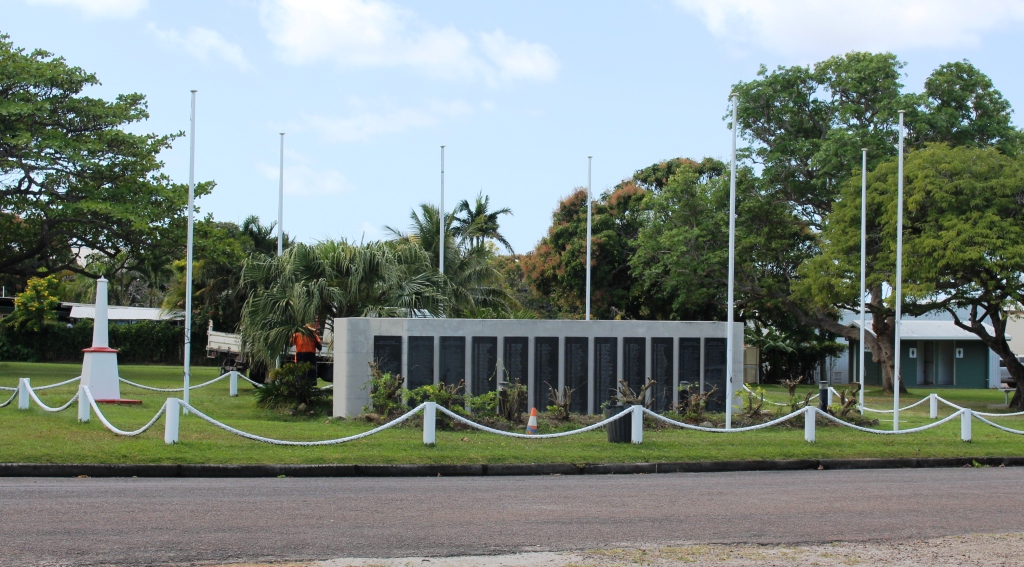
The Thursday Island War Memorial

The Thursday Island War Memorial

The tour of the island included time in the museum followed by a tour of military installation sites and aircraft crash sites. Work is under way to preserve some of the better sites. The effort to preserve these relics for future generations is being driven by the enthusiasm of Vanessa and her husband.

Our second visit was a self guided tour. With time on our hands as we waited to board Trinity Bay a return trip to TI had much to recommend it. The senior’s concession fare made a second visit to TI a better financial proposition than an overnight stay, which is what a lot of people do to allow themselves adequate time on Thursday Island.
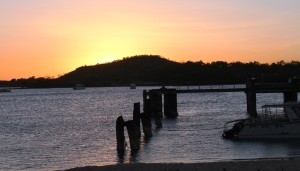
Sunset over Red Island that shelters Seisia harbour

Sunset over Red Island that shelters Seisia harbor

Our first objective was a cappuccino and as we had good reports of The Bakery, which is on the road to the town centre, that was where we headed, only to be met by a sign that said “Sorry. No coffee”. What? A coffee shop without coffee? Almost like a pub with no beer! But a short walk into the main street brought us to Uncle Frank’s Coffee Shop where we not only had our cappuccino but were introduced to deep fried banana cake. I hope I can find a coffee shop in Brisbane that sells it. I will become one of their most regular customers.
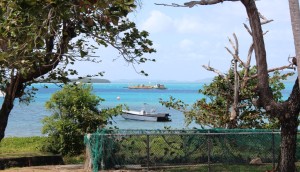
Barge activity in Thursday Island harbour

Barge activity in Thursday Island harbour

We spent the rest of the time available to us, until the 2.30 departure of the ferry, walking around town, shopping for a bag to take our gear onto the boat and buying souvenirs. The shops are mostly tourist orientated but some bargains were to be had. We lunched at Bobby’s Fish & Chips. We had fish & chips, of course. Bobby’s Fish & Chip shop is locally very well known.

Back early to catch the ferry, we sat in a shelter, looking along the channel between Horn and Prince of Wales Islands, at the distant outline of the Northern Tip of Australia, about 30 kilometres away to the south east. The ferry crossing back to Seisia was a repeat of the trip four days earlier. Our four crossings were smooth with very little movement in the ferry.
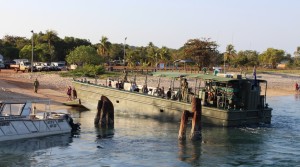
The army providing logistical support for a Prime Ministerial visit

The army providing logistical support for a Prime                        Ministerial visit

Torres Strait is named after Louis Vaz de Torres, who sailed, as second officer through the passage in 1606. The strait was named after him by Scottish geographer Alexander Dalrymple who discovered the existence of the strait from papers captured in the Philippines in 1762. His publishing of the material caused great interest and was part of the reason for the voyage of the Endeavor. Dalrymple was an aspirant for leadership of the expedition but was apparently passed over in favor of James Cook.
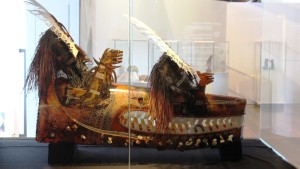
Island ceremonial masks on display in the new cultural centre

Island ceremonial masks on display in the new cultural centre

In their turn Bligh and Flinders sailed and explored the area, each naming various islands. There are said to be 274 islands, made up of three different types. Those immediately north of Cape York are part of the Great Dividing Range. Others are volcanic in origin while the remainder are coral cays. Seventeen have permanent populations. A couple of the minor islands have resorts.

We found the entire area to be most interesting. It has a rich history and a scenic beauty. Any group of tropical islands surrounded by reefs under clear blue seas will always be easy on the eye.

During the 1860s a pearling industry commenced that quickly shifted its focus to the shells of mother of pearl that was used to make buttons. The industry collapsed around 1970 when clothing manufacturers shifted to plastic buttons. It was the mother of pearl recovery from the sea bed that brought divers from many countries of the world to TI, particularly Japanese divers.
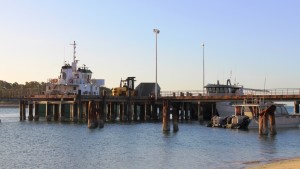
A SeaSwift barge at Seisia wharf

A SeaSwift barge at Seisia wharf

The outlying Torres Strait Islands are supplied by two barges owned by the operators of Trinity Bay. The barges ship containers and other freight that has been brought to Horn Island by Trinity Bay on to the other island communities. One of the barges has accommodation for passengers who can join the “milk run” around the islands. Each voyage takes about 5 days with the route determined by the locations to which freight is to be delivered. A real misery tour!