Cape York Adventure – Day 19 – The Tip of the Cape

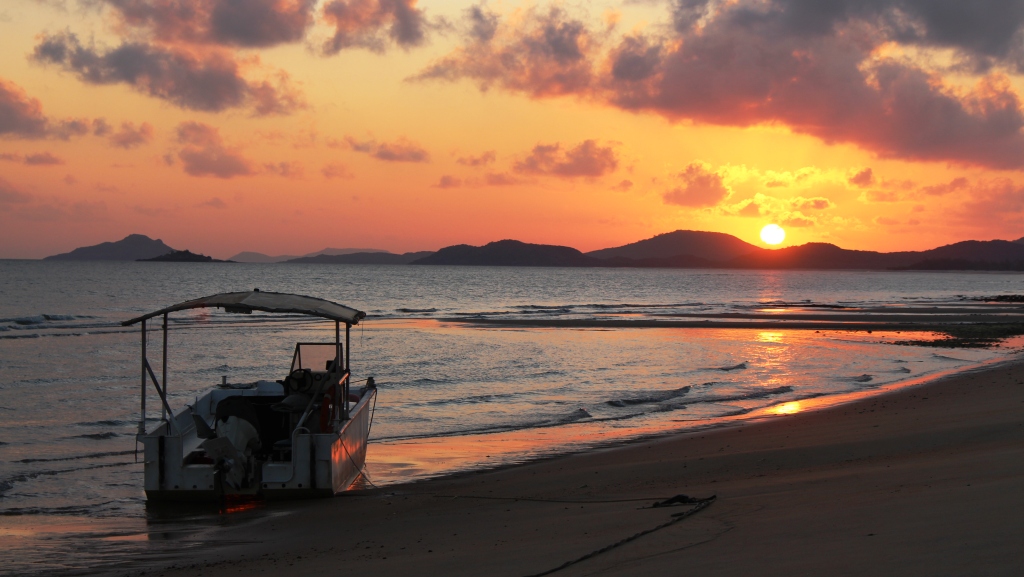
The sun rising over Cape York

The sun rising over Cape York

Punsand Bay is the most northerly caravan park in Australia. It is located on a stretch of north facing beach, within site of the tip of Cape York. Were it possible to drive along the Beach, but such a journey is prohibited by law, it would be a very short drive indeed.

The resort, of which the camping
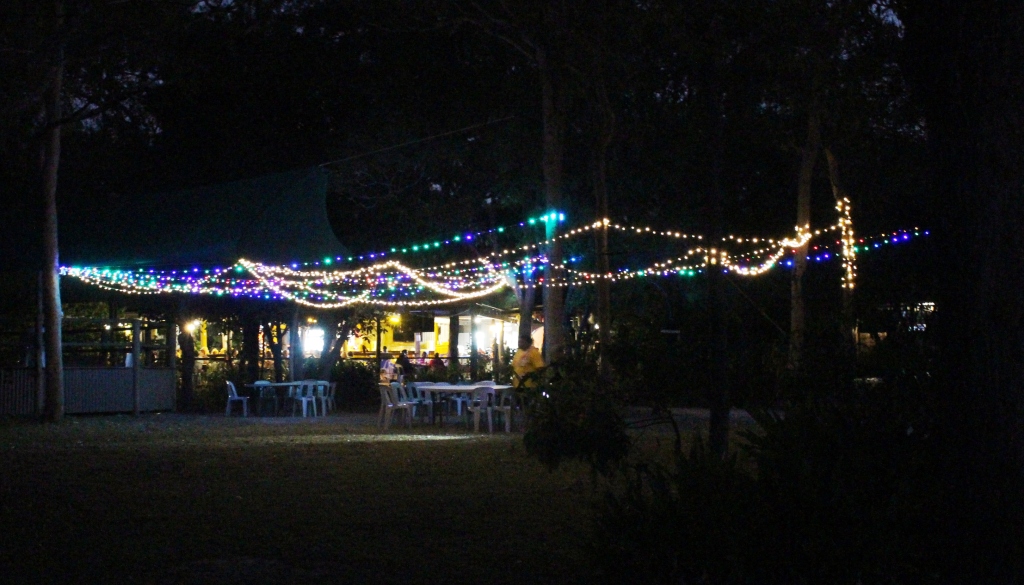
Night view of Punsand Bay restaurant

Night view of Punsand Bay restaurant

park is part, is quite old, but under current management is in good condition. The camp sites are spread out along the beach with the front row of sites only a couple of paces from the sand. These are all unpowered sites, occupied by tents, both ground and roof top and camper trailers. We were in the second row in a powered site. We don’t surrender the luxuries of the microwave, electric jug and toaster, or the air-conditioning easily!
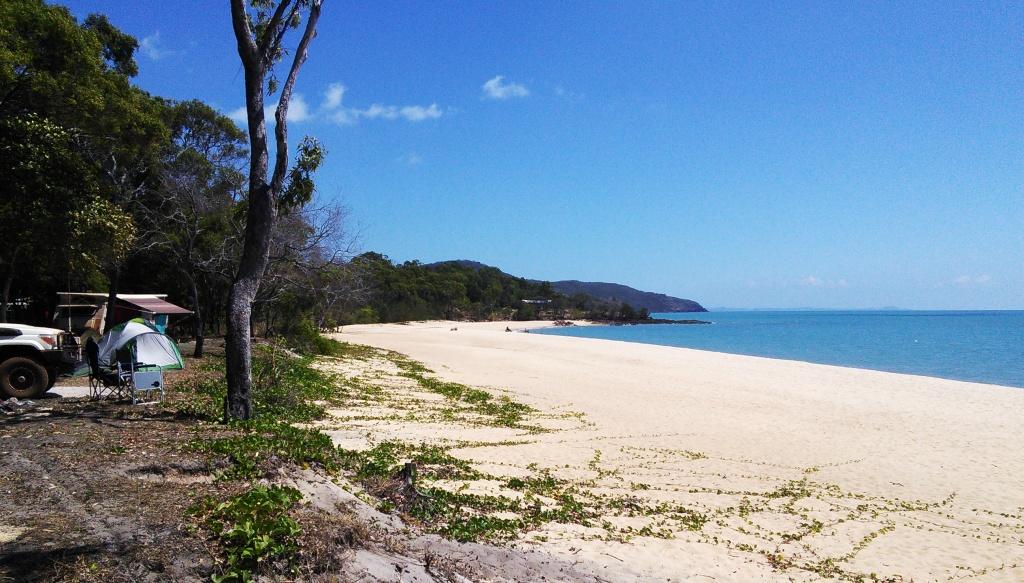
Punsand Beach looking west

Punsand Beach looking west with camp sites to the                         left of the photo.

A Punsand Bay pizza

A Punsand Bay pizza

The resort is comprised of a range of cabins, huts, permanent tents and units and a restaurant, which doubles as a coffee shop. Dining prices are on the high side, but that is to be expected this far from civilisation. But the impact of high prices has been addressed by the installation of a wood fired pizza oven. We had adequate food supplies in the van but were drawn to the restaurant on two of our four nights there, by the attraction of pizza.

We spent the first day at Punsand Bayquietly. Some down time was required after the previous day’s distance of 260 km, with the last part as rough as it was. But on day two, after a leisurely morning, we set off for the Tip.
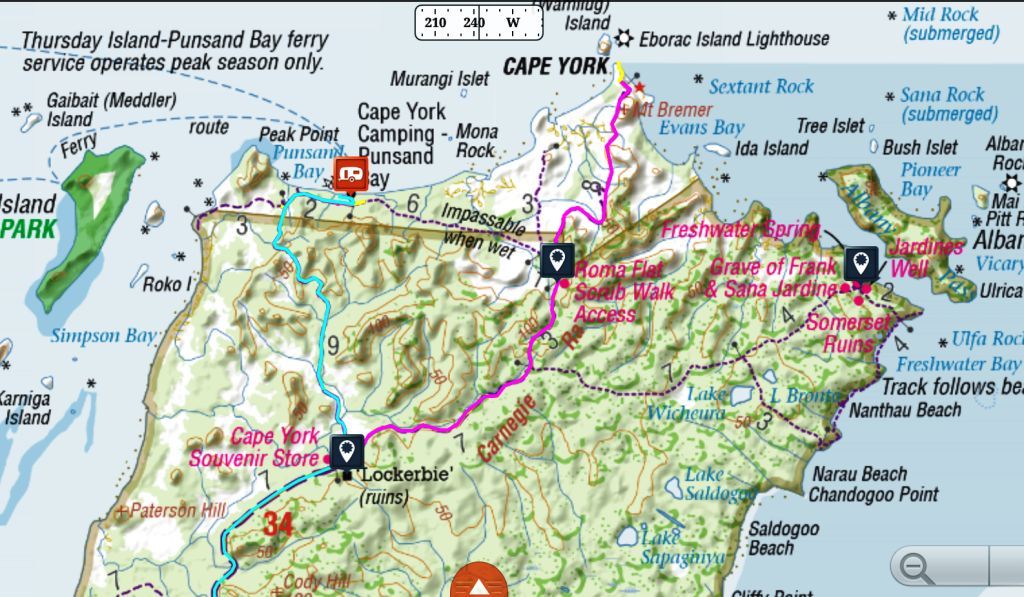
Map of the far north of Cape York

Map of the far north of Cape York

The Crock Tent has a large stock of surineers

The Crock Tent has a large stock of souvenirs

The map shows our route for the day. We started out at the caravan symbol. The blue line shows our track to the Croc Tent on the Bamaga to Cape York Road. The Purple line then shows the track to the cape. If you expand the picture to full screen you will see a yellow line that runs right to the most northerly point on the Cape. The tracking system that we use for navigation is on my Nexus 7 pad. I took the pad with me to get a photo for the daily blog, but did not turn the tracker off. So it tracked my progress to the waters edge.

A short cut was available, but notes handed out at registration at Punsand Bay warned against using it, so we did two sides of a triangle by returning to the main road and turning left and north. At this junction is an establishment known as the Croc Tent. It is not really a tent but has a temporary look about it. The Croc tent is a large souvenir shop. It is in a very isolated location and almost totally dependent on  those who take the drive to the tip of Cape York for its clientele.

The road from this junction was narrower, more winding and therefore in better condition. Speed plays a major role in damaging unsealed roads and here is an example.
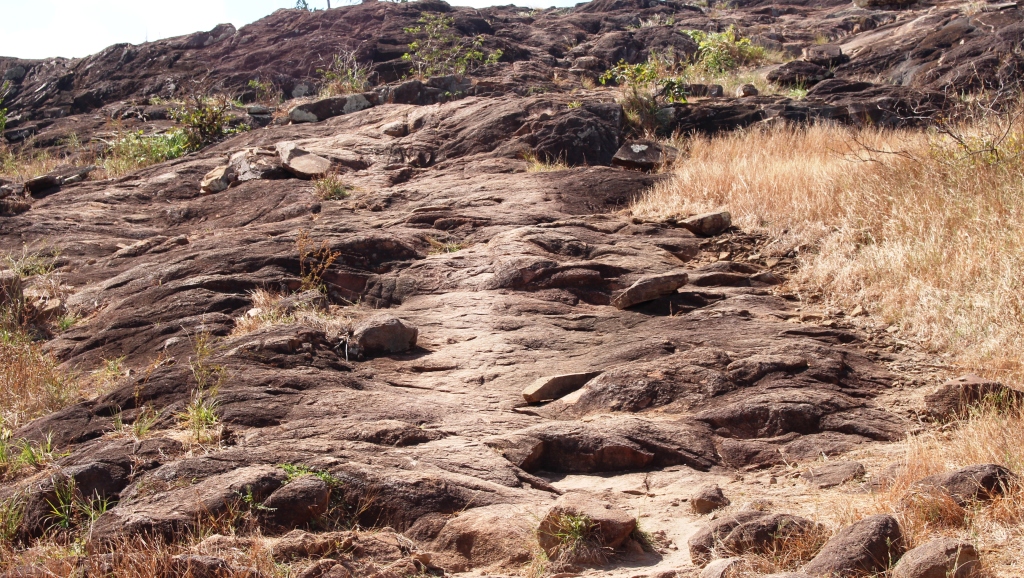
The start of the climb up Cape York headland

The start of the climb up Cape York headland

After a few more km of winding track, a few creek crossings and depressions and two attractive sections of rain forest, we arrived at the car park. We did not have the road to ourselves, having allowed several less patient vehicles to pass and having met several more who were returning. The car park was almost full but we found a space between a large rock and a large Toyota with its owners entire possessions stacked on top. Well, that’s how it looked.
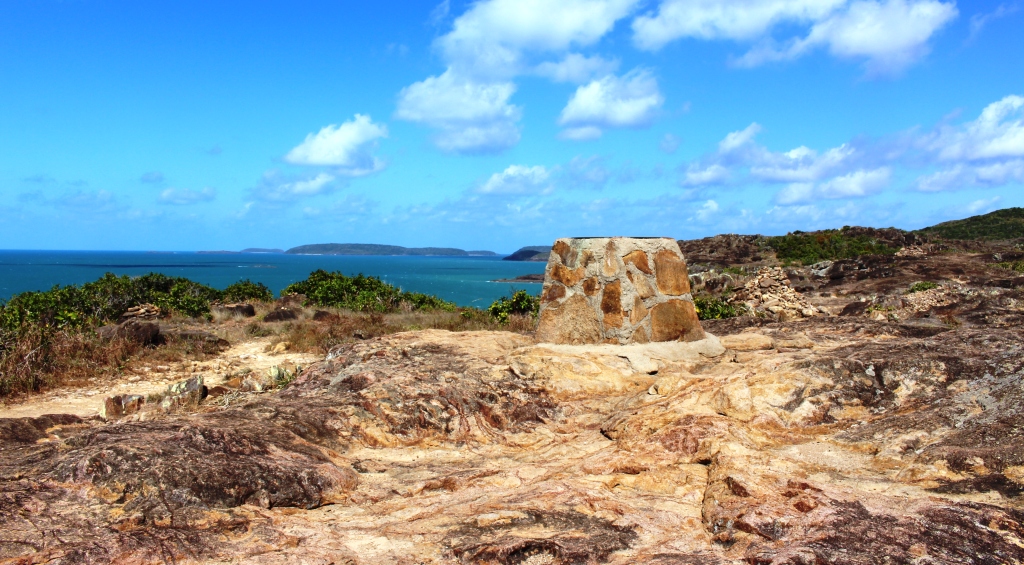
Ruth reached this point

Ruth reached this point

There are two walking tracks to the tip of the Cape. The easier of the two is to walk down to the beach to the wast of the headland and then on the sand until you reach a path around the rocks, just above sea level, to the point. It is an easy walk but was not available to us because the tide was too high.
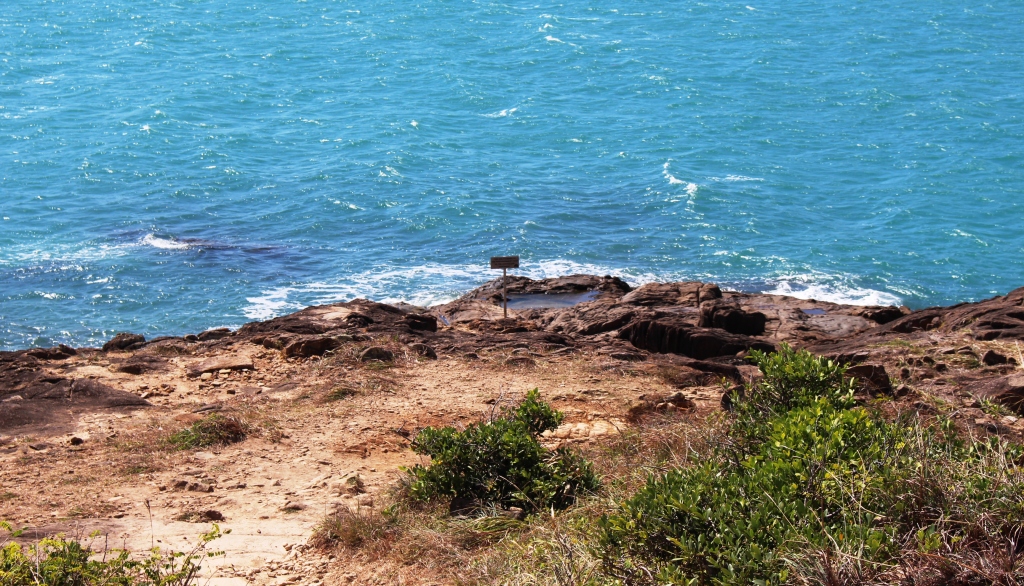
That sought after sign

That sought after sign

The alternative to paddling through crocodile infested seas is to climb over the headland. Ruth wanted to give it her best shot so we set off up the rocky path. The climb is quite steep in places and the South Easterly Trade winds were blowing a half gale so it was one hand for yourself and the other hand for your hat. We made it to the top to where there is a plaque on a plinth that shows directions and distances to points of interest and from where the views sweep over most of Torres Strait. Ruth decided that she had gone far enough.
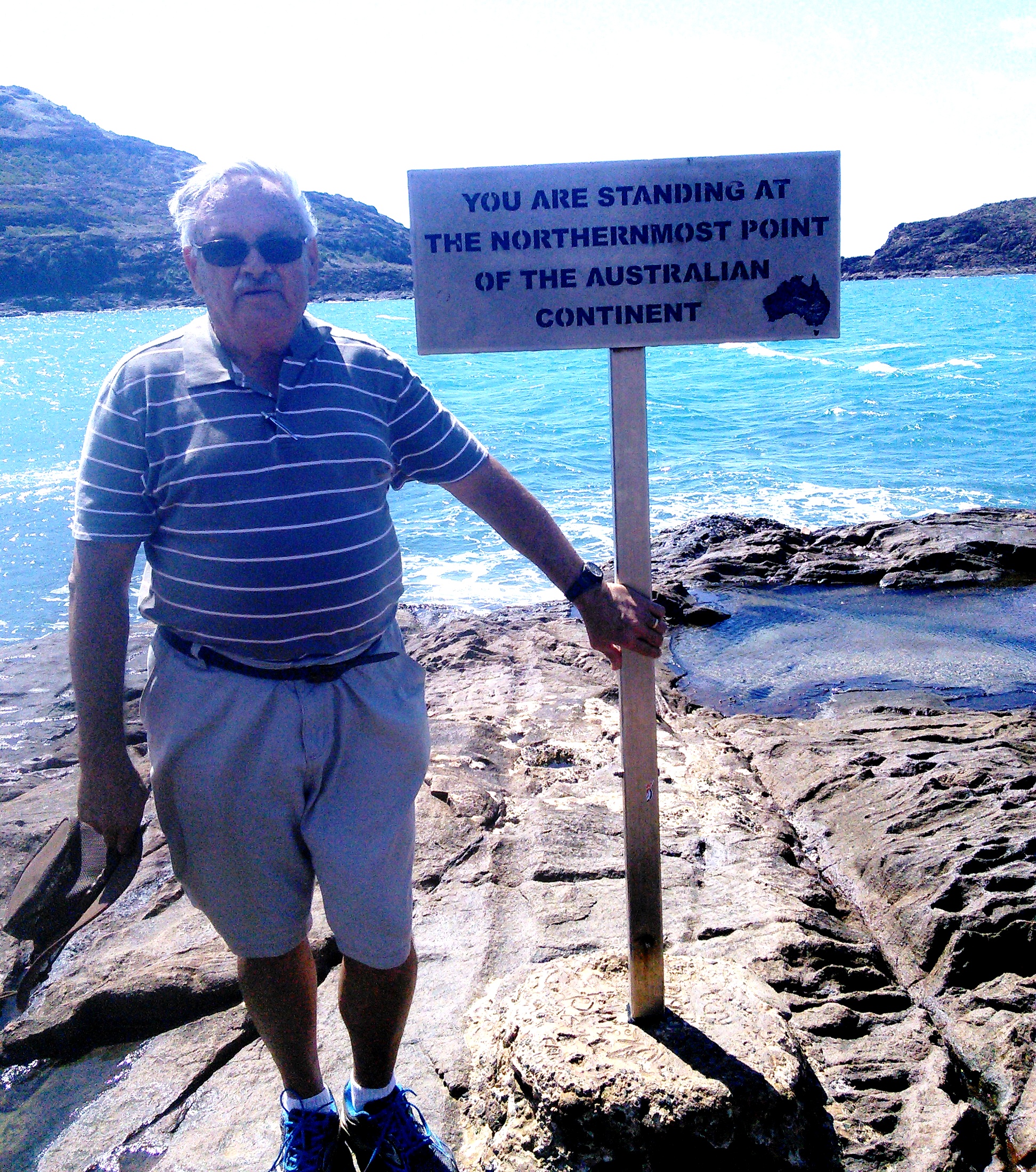
A windblown yours truly at the Tip

A windblown yours truly at the Tip

I went on, wondering if there would be someone there to take a photo of me standing beside that famous sign. As I reached the final crest and looked down on the tip of the Cape I experienced a real sense of satisfaction. Not the sense of awe that I felt when I first gazed upon Uluru (Ayers Rock) but still a sense of achievement.

We had intended to detour to Somerset on the way home. The road to Somerset  turns to the east on the way back to the junction at the Croc Tent but we were feeling a bit knocked out after our climb so we went straight back to camp.

Somerset was the administration centre for the Cape York area in the late nineteenth century until those activities were transferred to Thursday Island in the early twentieth century. Much history was made there and there are still relics to be seen. Pity to miss it, but there you go! You can see where it is from the map above.
Cape York Adventure – Days 11 to 18

Weipa is primarily a mining town with some tourist activity. Many who come here have fishing as their  main objective but most visitors seem to include Weipa as a logical part of the Cape York experience. The town has a population of about  3,500, most of who work for Rio Tinto or are in businesses that support the bauxite operations.

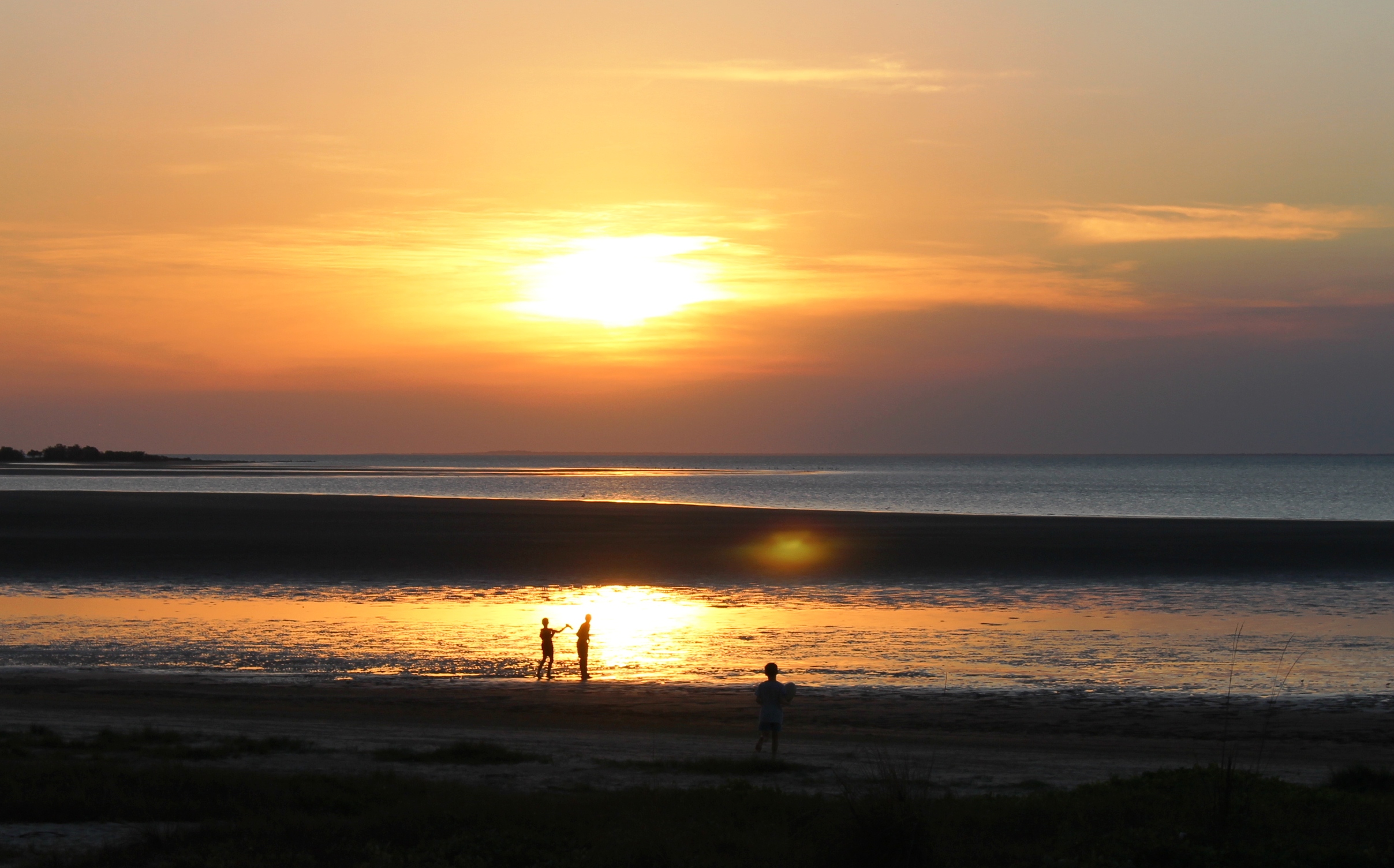
Sunset over the beach at Weipa Caravan Park

Sunset over the beach at Weipa Caravan Park

The tourist season lasts for only about half of the year so I  don’t know  what  tourist industry employees do for the rest of the year. Fishing charters probably have a longer season.

Dutchman William Janszoon sailed along the coast off what is now Weipa in 1606. The first recorded Englishman to sail the same coast was Matthew Flinders in 1802.

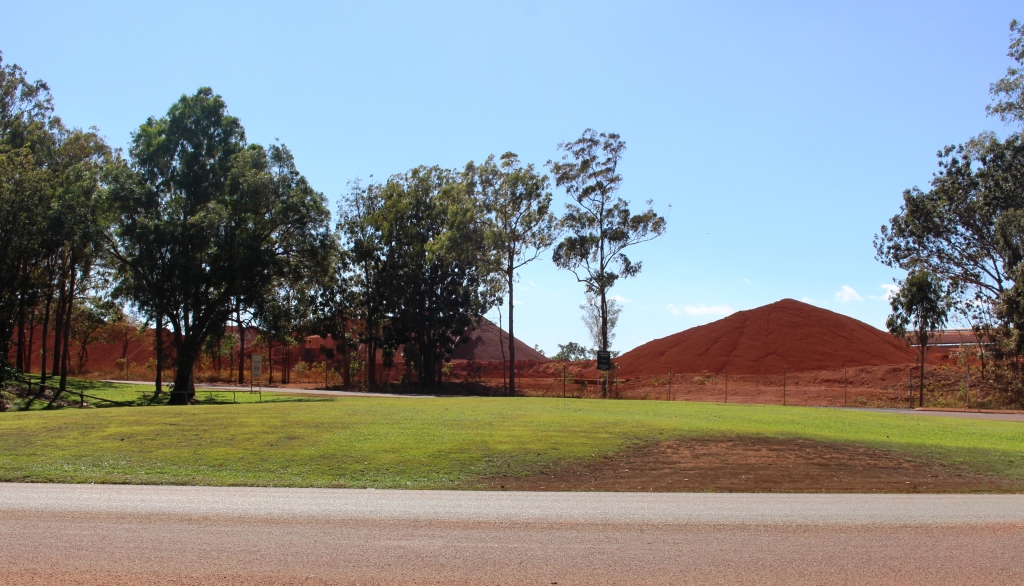
Bauxite stock piles

Bauxite stock piles

Flinders noted the red cliffs in the area.  In 1955 geologist Henry Evans discovered that the red cliffs previously reported were metal grade bauxite,  the raw material from which alumina and then aluminium are made. Serious mining and town development started in 1967.

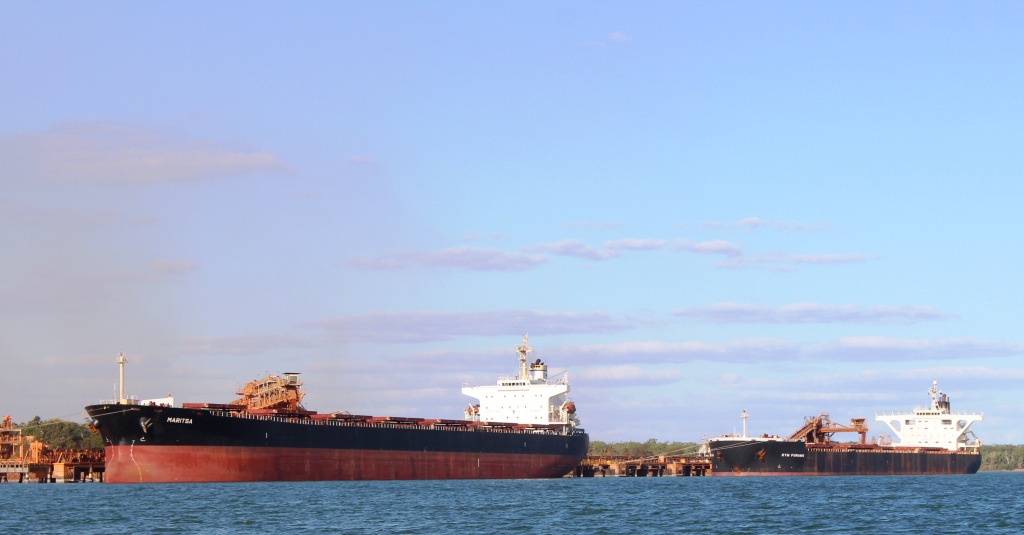
A bauxite bulk carrier destined for a foreign port

A bauxite bulk carrier destined for a foreign port

Ships of up to 86 thousand tonnes come to the Port of Weipa and carry away about 26 million tonnes of bauxite each year. Mining is expected to continue for another 60 years, at least.

After resting up for a couple of days we stirred ourselves sufficiently to look around.  The commercial centre was within walking distance

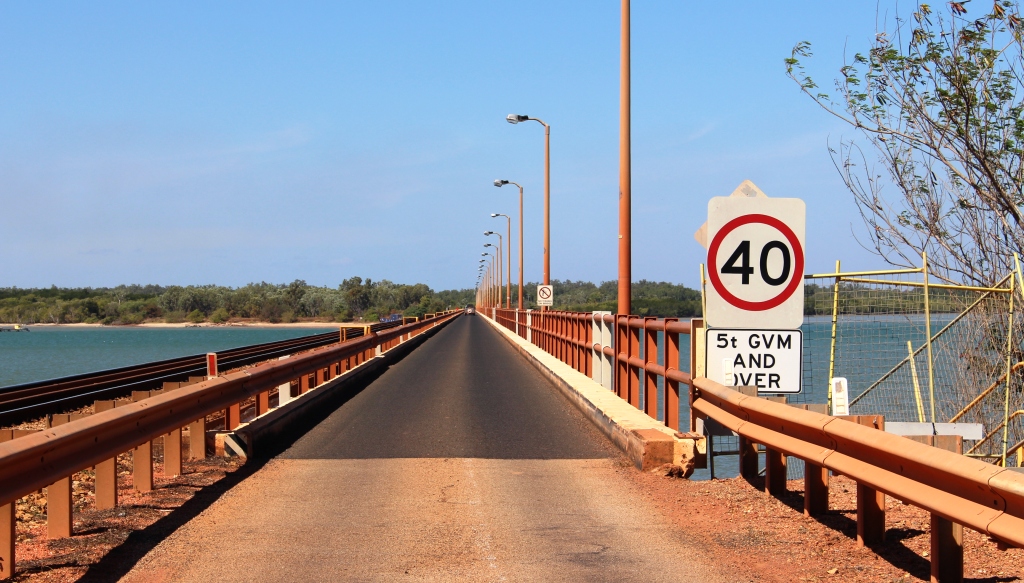
The long single lane bridge on the road to the North of the town

The long single lane bridge on the road to the             North of the town

of the caravan park with the greater part of the residential area sprawling to the north. We checked out the water front areas and the bauxite shipping facilities. The harbor is extensive and calm with good beaches but they are largely deserted.  The waterways are home to crocodiles.

We joined a sunset cruise on our last evening in Weipa. Departing at

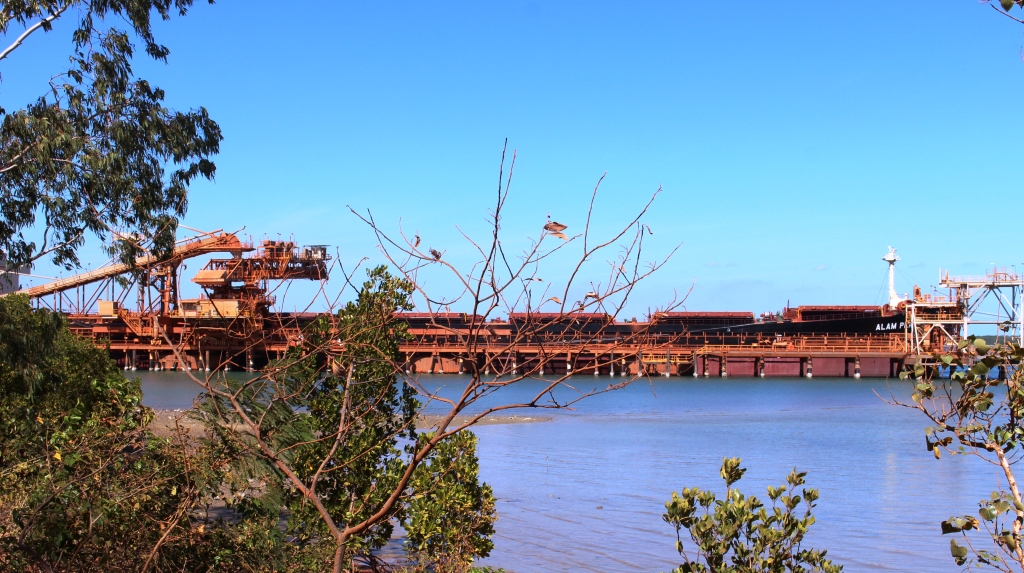
A bulk carrier loading at the Weipa wharf

A bulk carrier loading at the Weipa wharf

4.00 pm, we cruised past the bauxite loading area while listening to an extremely articulate and humorous Aboriginal guide. We then turned for the other side of the harbour and entered a broad creek in search of crocodiles. The total score was one croc  sunning itself and one brief glimpse of a head, but that kept everyone happy. The bonus was that the 2.5 metre croc that we saw on a sand bank on our way up the creek was still there when we came back.

The only crocodile that we saw in the whole trip

The only crocodile that we saw in the whole trip

After drinks had been served we cruised into the open bay to watch the sun set into the ocean. A mix of cloud and smoke from burning off operations ensured a satisfactory result. We returned to land just before darkness set in.

The guide gave us what I thought was a balanced commentary on Indigenous matters. He was a

Mangroves are crocodile habatat

Mangroves are crocodile habitat

strong believer in education and self sufficiency. One thing I found interesting was that in the Northern Cape, Aborigines don’t play the didgeridoo. No one seems to know why.

We had only a short drive on the day of our departure from Weipa. One hundred km or so back towards the intersection of Old Telegraph Track (Bamaga Road) and The Peninsula Developmental Road brought us to Merluna Station. Like many cattle stations, the Merluna homestead is a sprawl of assorted buildings to which has been

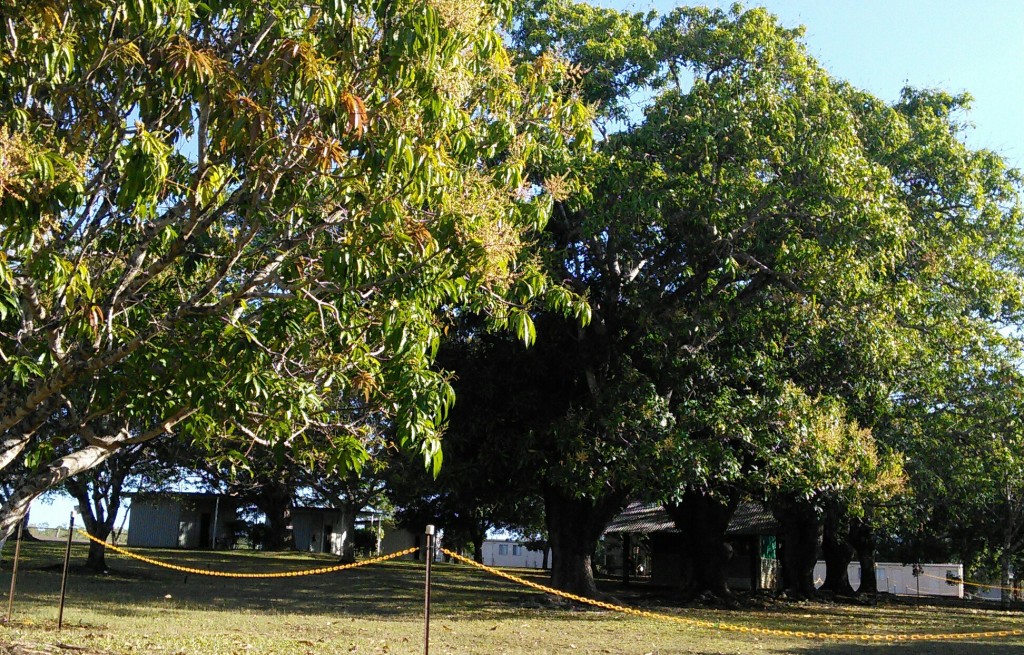
Accommodation under the shady Mango trees

Accommodation under the shady Mango trees

added a range of accommodation options, all under or near a grove of huge mango trees. The property is owned and managed by Cameron and Michelle McLean.  Cameron is a descendant of the early Scottish settlers in North Queensland and has a Scottish heritage that seems to almost go back to the times of Bonnie Prince Charlie, although his forebears come from Mull and not Skye.

A machinery shed has become a camp kitchen

A machinery shed has become a camp kitchen

Once again we didn’t do much after our arrival but did have quite lengthy separate discussions with both Cameron and Michelle. They are delightful people. They offer an evening meal as an option, so we joined them as paying guests for dinner. We shared the meal with the three grader  operators who were grading the road that we had driven on that morning. Merluna provides accommodation to road workers and other contractors when they are working in the area.

Merluna Station runs about one thousand head of cattle with markets accessed through sale yards at Mareeba or the meat works at Townsville. They are not within the catchment area for live cattle export.

Parked at the start of the Bamaga Road which follows the route of the Old Telegraph Track

Parked at the start of the Bamaga Road which follows the route of the Old Telegraph Track

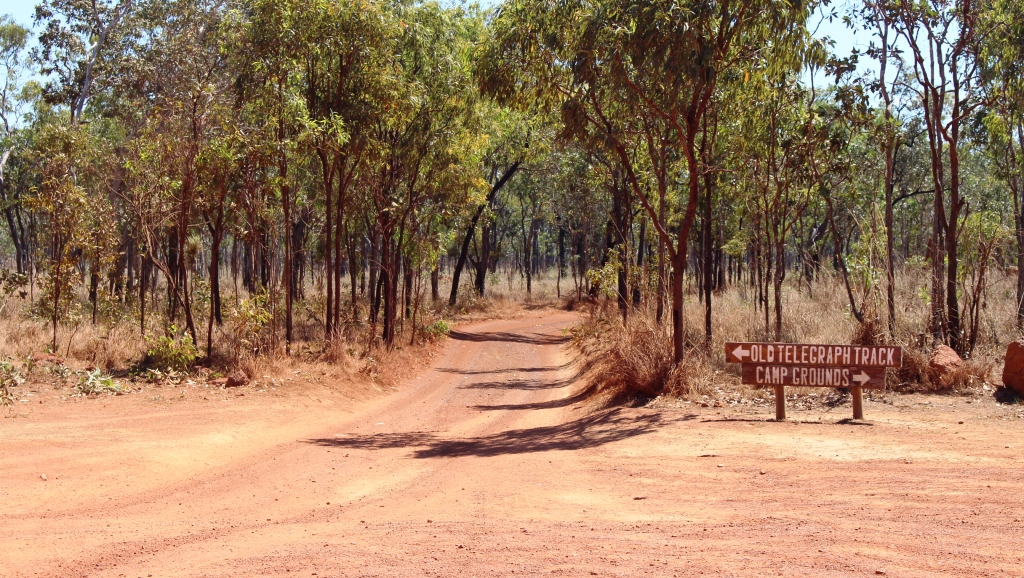
The night spent at Merluna was to break up the journey. Our next stop at Bramwell Station was for the same reason. It was in the right place, just another 160 km along the road and the main accommodation venue before the final run to the Jardine River and Bamaga. There is not much accommodation suitable for travelers like us for the next 200 km. Most people who are not towing and many with camper trailers will take the option of the Old Telegraph Track to go north from Bramwell Junction, which is only a few km away and on the same cattle station. The OTT is not maintained

The start of the Old Telegraph Track

The start of the Old Telegraph Track

and has several stream crossings which are challenging to drivers and threatening to their vehicles.  But dedicated 4WD types just can’t resist it.

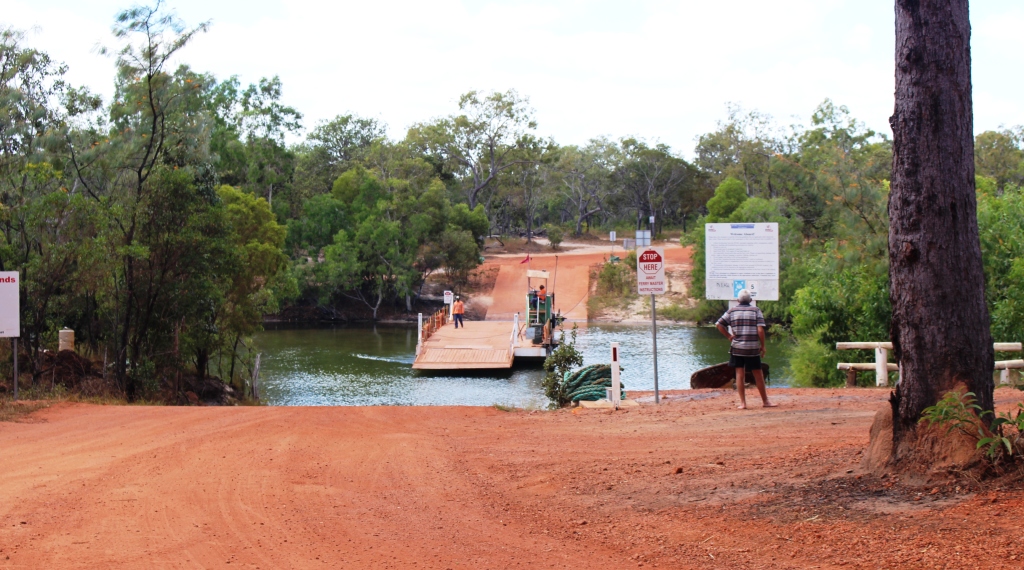
But we resisted it and took the longer but faster bypass road that runs to the east of the OTT,  then cuts across it and runs to the west until the Jardine ferry is reached.

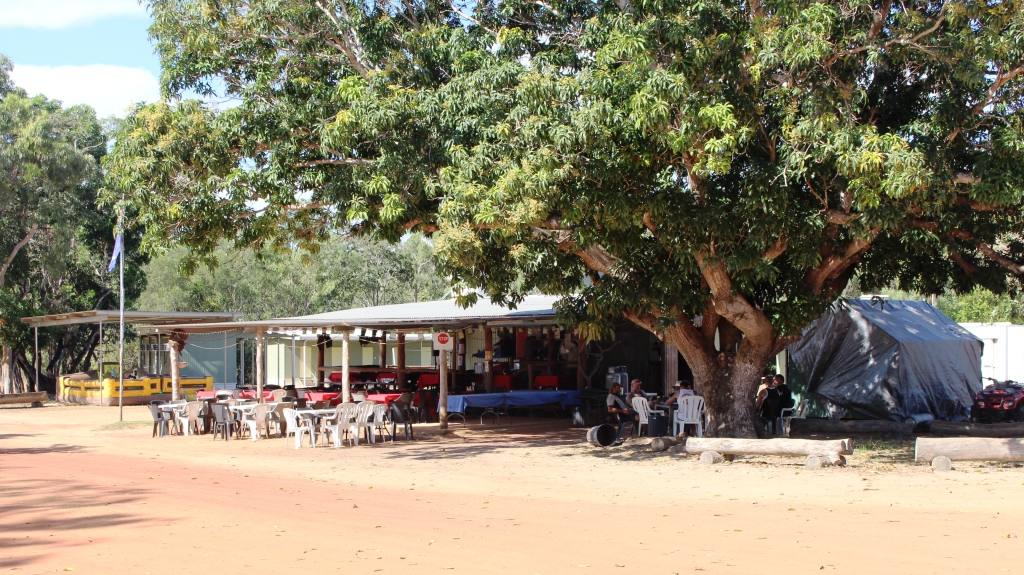
The bistro at Bramwell Station

The bistro at Bramwell Station

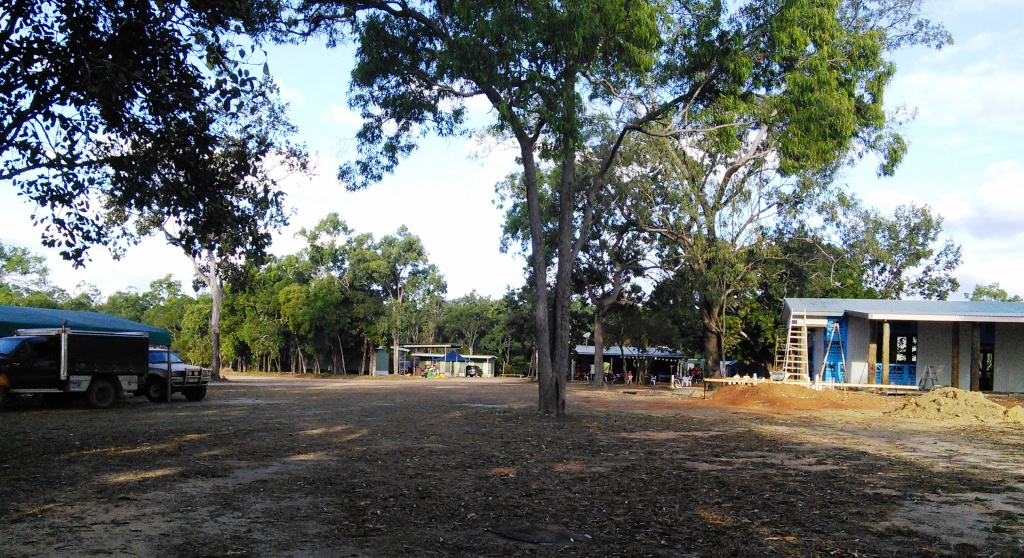
Bramwell Station has developed a good quality tourist camp about 6 km off the main road. It offers a range of accommodation options, including a restaurant/bar with live (and loud) music each night of the tourist season. Most importantly there are good quality facilities with great hot showers. The main downside is that the resort manager gives a station talk before the music starts. The talk is

The old bistro and a new restaurant under construction.

The old bistro and a new restaurant under     construction.

broadcast at full volume so everyone in the campground hears it, weather they want to or not, and he goes on and on. I think you call it a captive audience.

IMG_3559It is 163 km from Bramwell Junction to the Jardine River, a further 45 to Bamaga and 26 km to Punsand Bay. That made a planned day of 234 km but we had 13 km to do before reaching Bramwell Junction and we took a longer road to Bamaga, so our tracker put the total at 260 km for the day. The first 150 was quite good, with a long recently constructed section of dirt and an even longer sealed section. But

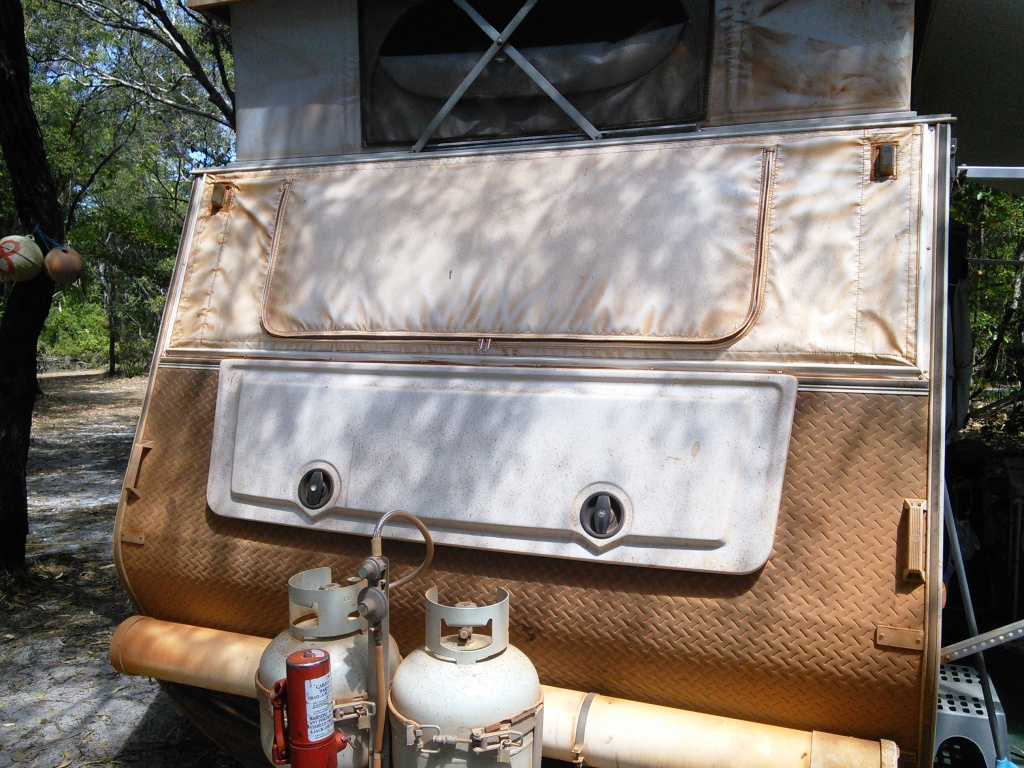
A rather dirty van

A rather dirty van

about 10 km before the Jardine River and about half the run into Bamaga, the conditions suddenly changed to deep and confused corrugations that defied driving. For some of the distance refuge was available by driving in the table drain or crawling forward at 10 kph. But we finally made it to Bamaga and then Punsand Bay in quite good order and condition. But with a dirty car and a very dirty van.

Cape York Adventure – Days 7 to 10

It is only about 45 km from the Crystal Creek camping area to Ingham, where we stopped to refuel, post some letters and refill a gas cylinder that had surprisingly run empty overnight. Surprising, because I thought that it was full. I had filled the second cylinder before we left home thinking that gave us two full. Oh well!

Hinchinbrook Island and Pasage

Hinchinbrook Island and Passage

Shortly after passing through Ingham, the road enters the mountains south of Cardwell. The road over the range has been realigned and as a bonus the roads authority has provided a magnificent lookout that alllows views over the southern end of the Hinchinbrook Passage. It provides a great view of this magnificent island.

You may recall that Cardwell was hit by a bad cyclone (was it Darcy?) a couple of years ago, doing immense damage to the resort and marina. From the road we could see boats at moorings next to houses but painted over sign boards at the front gate suggested that the resort and marina is not yet back into full operation. But grey nomads are supporting the town. Caravans were parked in great numbers in the large rest area and along the main street. We have done this part of the coast before, so we kept on driving.

Innisfail was our lunch stop and I got some extra exercise looking for a replacement filter for our water tap. Bunnings let me down. I had to go to the old traditional Mitre 10 store to get what I wanted.

We turned inland for the Atherton Tableland at Innisfail, arriving at our camp site at the Mareeba rodeo grounds at about 4.30 pm. This is a low cost basic site but ideal for an overnight stop. It is run by volunteers to raise funds for their annual rodeo and is conducted like a military operation. In no time we were in a site with power and water. There must have been at least 250 caravans there.

More fuel and perishable food purchase next morning before we headed north for the southern end of the Cape York Developmental Road that commences just north of Mt Molloy, 42 km into our journey. The only significant points of population before reaching Lakeland is Mt. Carbine, a small mining town and the Palmer River Roadhouse, sighted on the river from which it takes its name.

If you don’t turn left at Lakeland you will end up in Cooktown, but that was not the plan, so we turned. Last time we were on this road, about 5 years ago, it was only partly sealed with work under way. The unsealed sections were appalling. Now it is a first class highway, realigned to minimise flood impact, including a new bridge aver the Laura River in place of the former flood prone low level version. As a result, Laura looks more prosperous with a new motel and several caravans in storage while their owners visit the Cape.

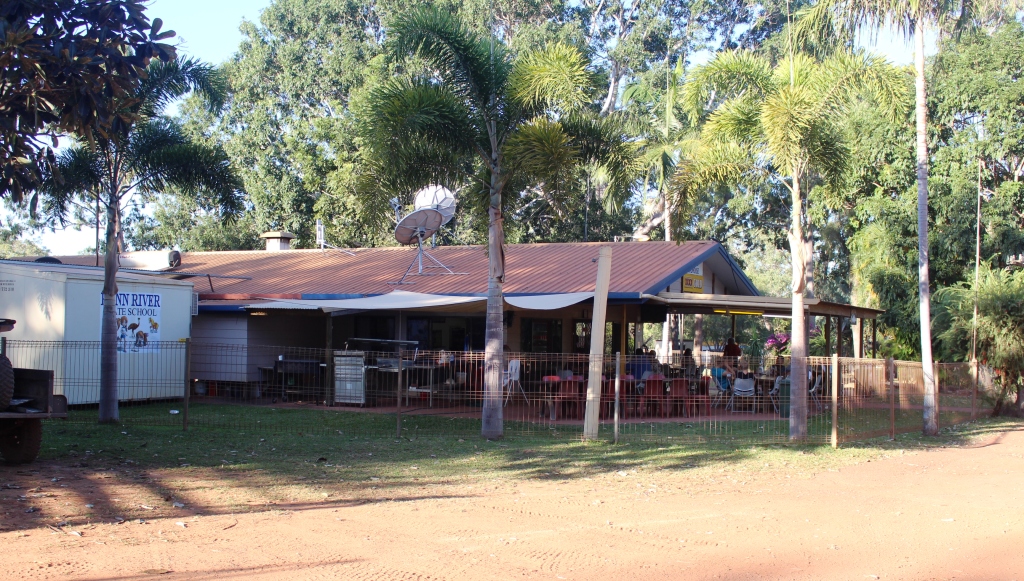
Hann River Roadhouse

Hann River Roadhouse

We stopped for lunch under a shady grove. I took the opportunity to let about 25% of the air pressure out of the tyres. We knew that we had several hundred kilometres of corrugations ahead of us. They start where the bitumen stops about 5 km north of town.
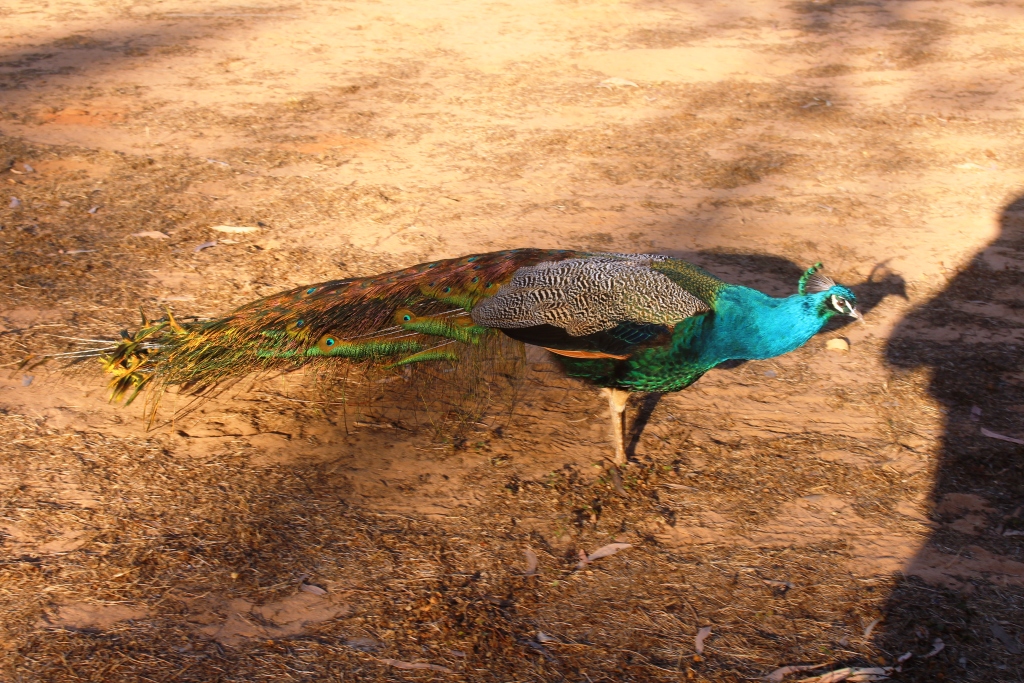
Part of Hann River's Zoo

Part of Hann River’s Zoo

I had some idea of what to expect. The first 10 km or so was quite rough and had to be taken with care but the road then improved to a point where 60 to 65 kph was comfortable, so we made good progress. The terrain varies between flat and hilly. The best sections of road are generally across flat country with the hilly sections not as good. There are many creek crossings, mostly in pronounced dips in the road, almost all of which are sign posted. Both entry to and exit from dips tend to be badly corrugated and although most of the dips have asphalt or concrete at the bottom it is not always well aligned so caution is necessary. The result is that mush of the traffic jams its breaks on at the last minute and then accelerates out of the dip thus adding to the size of the corrugations.

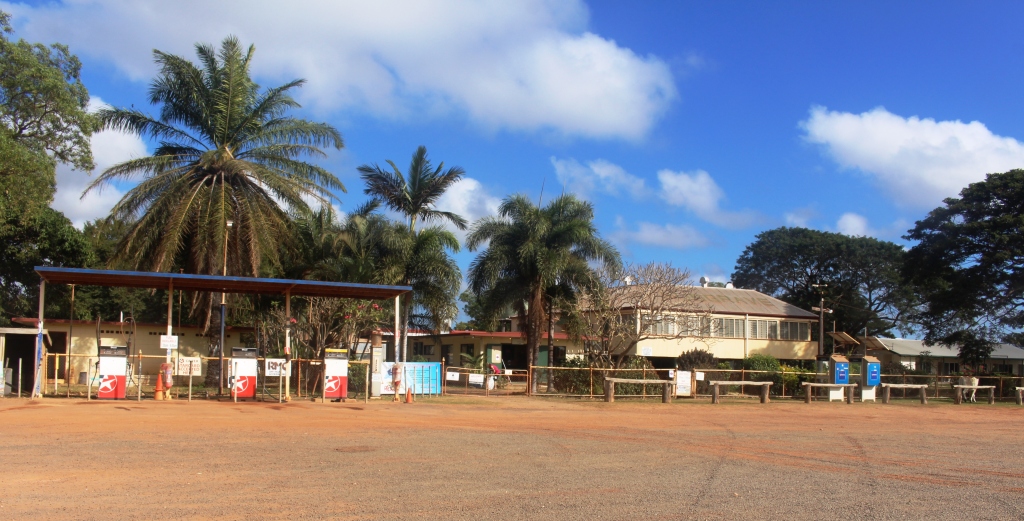
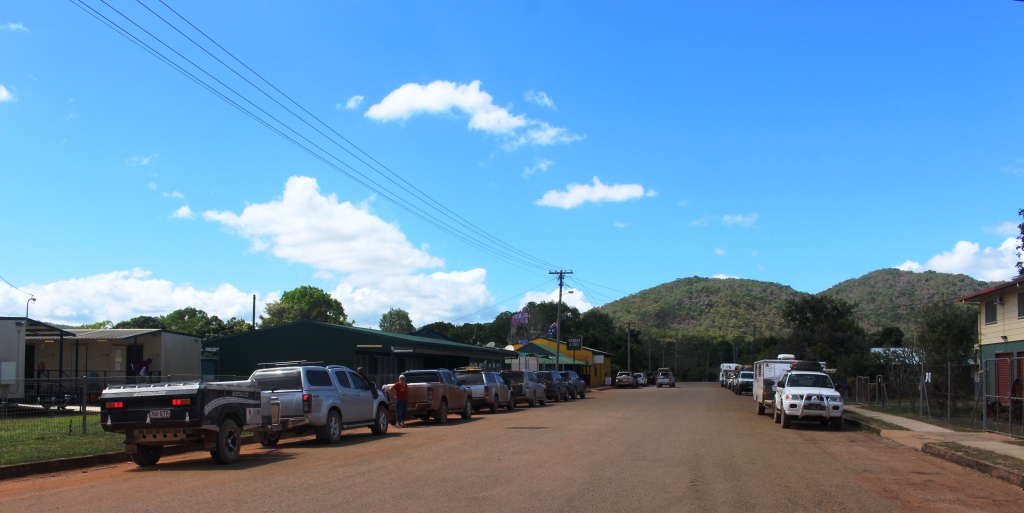
Historic Musgrave Station. Another oasis on a ling dry road

Historic Musgrave Station. Another oasis on a ling dry road

Every 30 km or so there are what are called passing opportunities. They are stretches of asphalt, full road width, from 5 to 10 km in length which give some respite from the dirt road. But most motorists don’t wait for the sealed strip. They come rocketing out of your cloud of dust, pass and pull in front of you and smother you in their dust. And then there are the road trains. They are something else again!

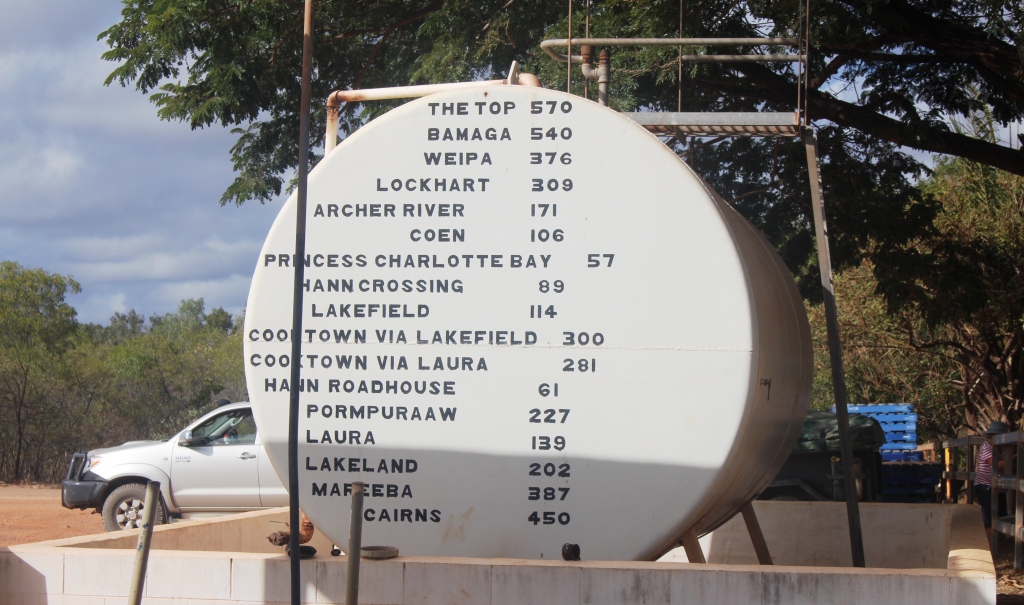
Distances from Musgrave on a fuel storage tank.

Distances from Musgrave on a fuel storage tank.

We did 75 km of unsealed road with about three sealed sections to bring us to the Hann River Roadhouse, where we spent our first night along the Cape Road. We joined about a dozen other camps, spread over the slight slope to the river. The roadhouse provides fuel, food and liquid refreshment, as well as accommodation to the travelling public. Facilities are basic but adequate. We enjoyed a comfortable night, after dining on two of their more than adequate hamburgers.
Coen's Exchange Hotel is frequently referred to as the Sexchange Hotel. Note the sign on the roof

Coen’s Exchange Hotel is frequently referred to as the Sexchange Hotel. Note the sign on the roof

There was more of the same next day. We stopped at Musgrave Station, the next road house along, for a bit of a look. It has a museum that tells the story of the overland telegraph, which we will investigate when we stop there over night on our return journey. Then on to Coen which is

Coen's main street

Coen’s main street

the third most substantial settlement on the Cape (after Weipa and Bamaga) for fuel, lunch and some communication. The town has Telstra internet coverage. We then travelled on a further 60 km to Archer River Roadhouse as our overnight stop, making about 230 km for the day.

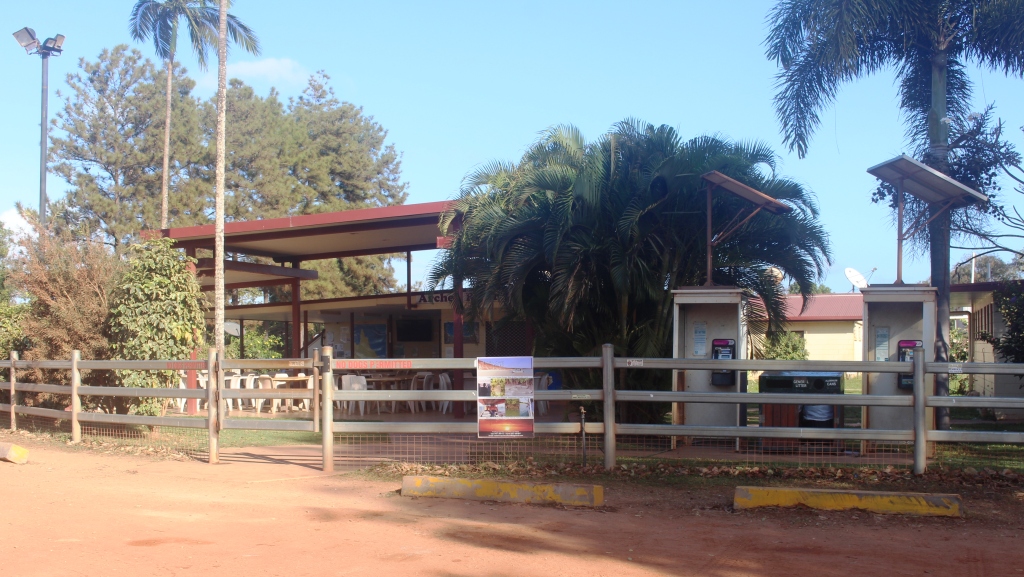
Archer River Roadhouse

Archer River Roadhouse

Archer River is a more modern establishment that Hann River, but provides the same services and charges about the same prices. Like Hann River, it sits on a hill above the river. Flood level markings on the amenities block indicate the amount

Relaxing after a hard day on the road in the Archer River

Relaxing after a hard day on the road in the Archer River

of water that rushes down these rivers during a cyclone.

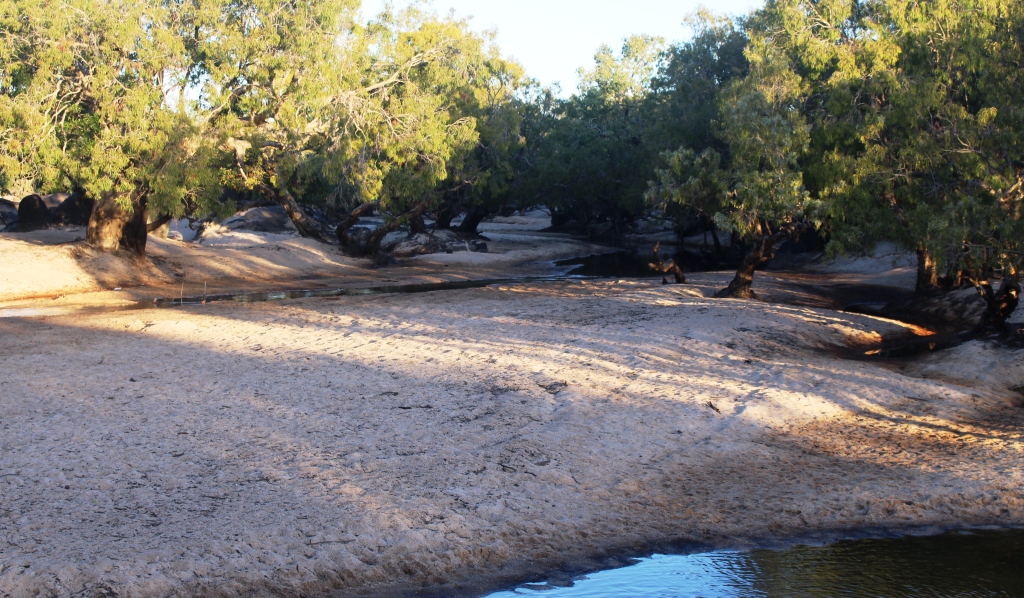
Archer River is a very pretty spot with the greatly reduced water flow of the dry season winding its way through extensive sand banks, to pass under the bridge in the

The Archer River winds through sand banks

The Archer River winds through sand banks

causeway, on its way to the Gulf of Carpentaria. Some travellers camp on the sand and unfortunately too many mark their stay with litter. Dinner in the van that night.


The Archer River Causeway

The Archer River Causeway

They have some decent floods around here

They have some decent floods around here

We were pleased that this vehicle headed out about 15 hours ahead of us

We were pleased that this vehicle headed out about 15 hours ahead of us

We started the next day a bit apprehensively, as we had been given a report in Coen that the road to Weipa was particularly bad. But the report was largely unfounded. There is a bad patch of about 10 km around 60 km out of Weipa, but the graders are working on it.

Morning coffee stop on the Cape York Developmental Road about 100 km east of Weipa

Morning coffee stop on the Cape York Developmental Road about 100 km east of Weipa

The rest is quite good and we did the 200 km in just over 4 hours, including two substantial stops.

We were greeted to Weipa by a closed boom gate and red lights and sat for a couple of minutes while one a huge dump truck made its slow passage

Ant  archetecture

Ant architecture

along the haul road bearing a load of bauxite to the processing plant where it will be processed for shipment to an alumina plant in Australia or overseas.

We are now ensconced in the Weipa camping grounds among a throng of campers, all doing what we are doing. Participating in their very own Cape York Adventure.

Cape York Adventure – Days 1 to 6

We have just about reached the end of day 6 of our trip as I  write this, sitting out beside the van in the Big Crystal Creek Camping Area in the Paluma National Park, about 60 km north of Townsville. We would have peace and tranquility if the people in the van near us were not playing rock music. But it’s not heavy rock.

The original plan was to take four days to Airlie Beach, travelling  via the inland route to Rockhampton and then the Bruce to Proserpine, but having lost the first day with unexpected things needing to be done to the van, we decided to do the Bruce Highway all the way and in three days instead of four.

The most striking feature of the drive was the number of vans coming south. We did a couple of counts. For much of the time we were meeting vans and motor homes at a rate of better than one a minute. It seems that most southerners coming north, travel through inland Queensland before turning towards the coast for the trip home. For this reason there were few vans travelling in our direction on the Bruce Highway.

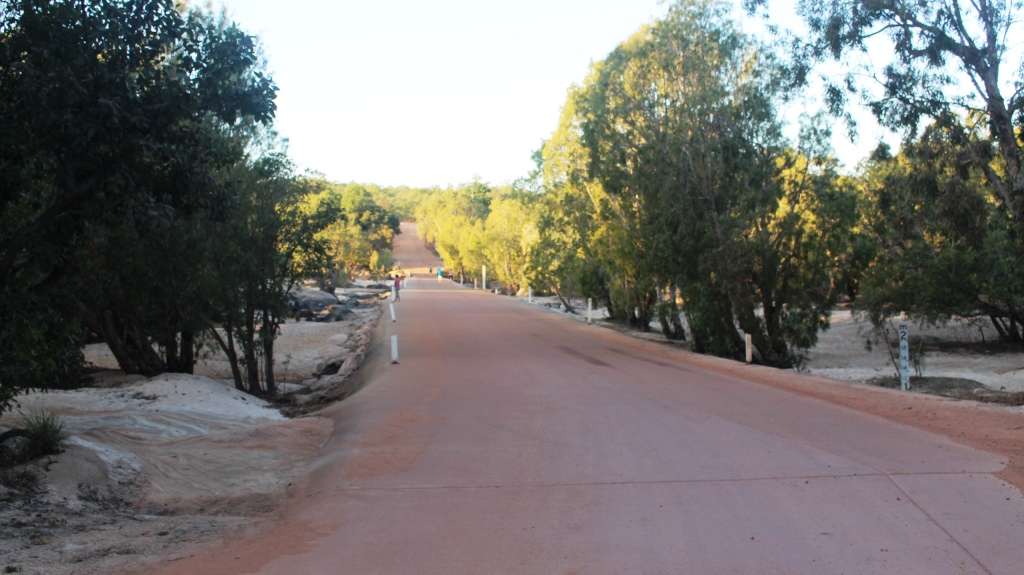
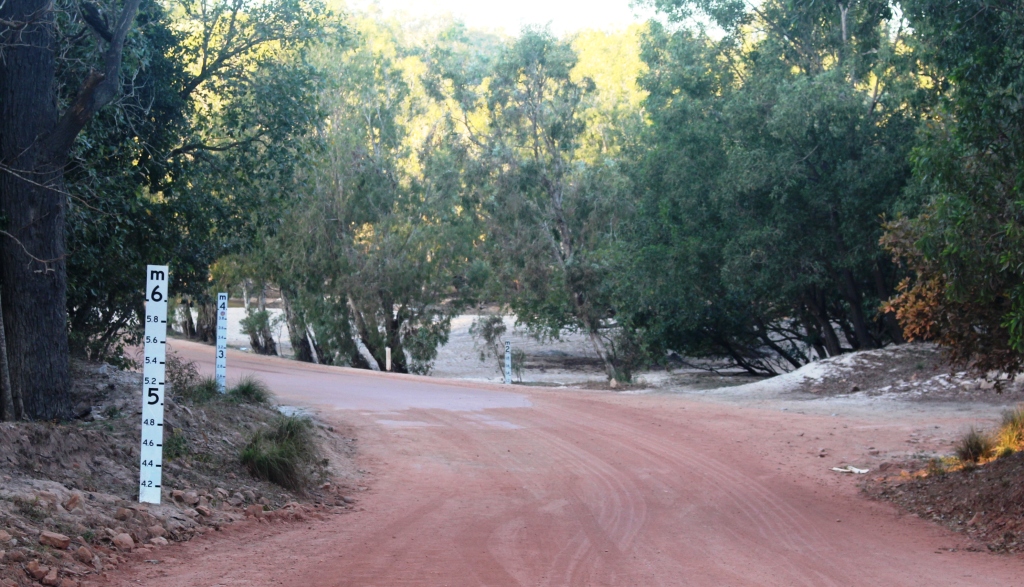
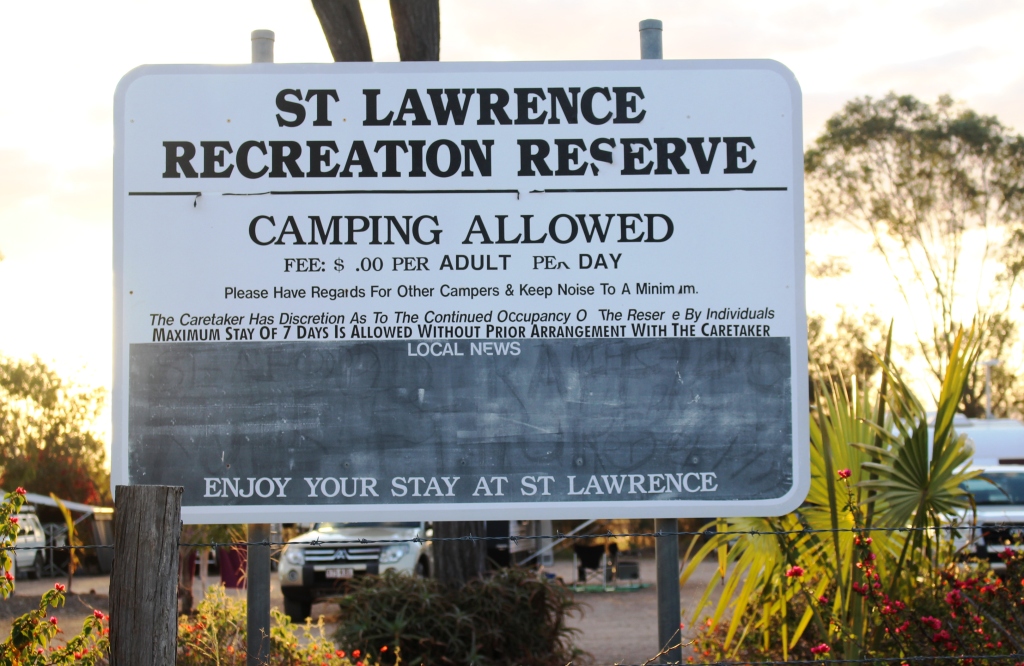
St Lawrence offers free camping to travelers - a donation is requested

St Lawrence offers free camping to travelers – a donation is requested

We reached Miriam Vale on the first day and St Lawrence the second, arriving at Airlie Beach at the end of the third day. At St Lawrence the council has provided an extensive over night camping area, supported by donations from
users. As well as extensive standing areas

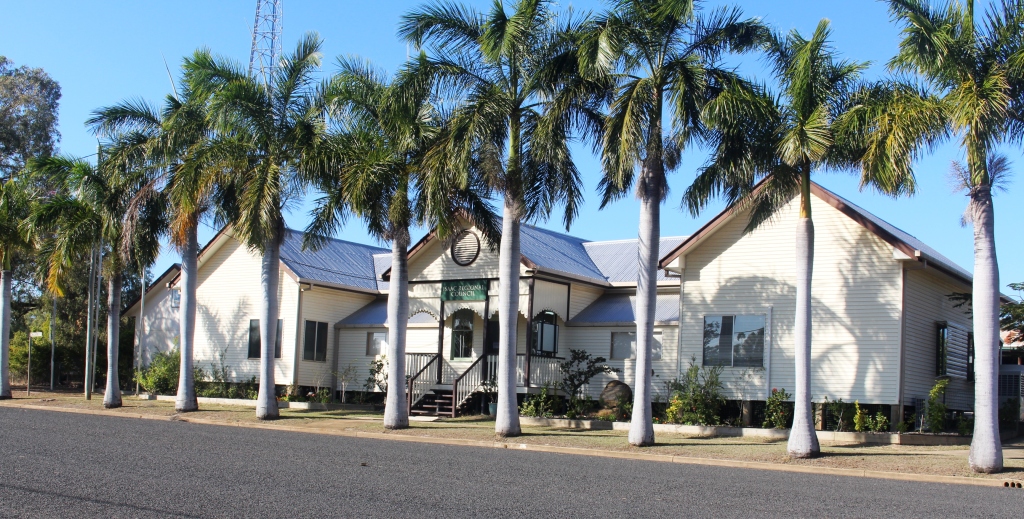
The old St Lawrence Shire Offices

The old St Lawrence Shire Offices

there is a modern amenities block with flush toilets and coin-in-the-slot showers. We drove into town before we left. The Post Office is the only retail business and the street was as quiet as Dodge City at high noon. St Lawrence was one of the first towns settled on the coast of Queensland.

We had come to Airlie Beach to do a cruise to Whitehaven Beach, as we had decided to spend a Red Balloon voucher that the family had given me for my birthday, on the cruise. And Airlie is on the way to Cape York anyway. And who needs an excuse to go there?

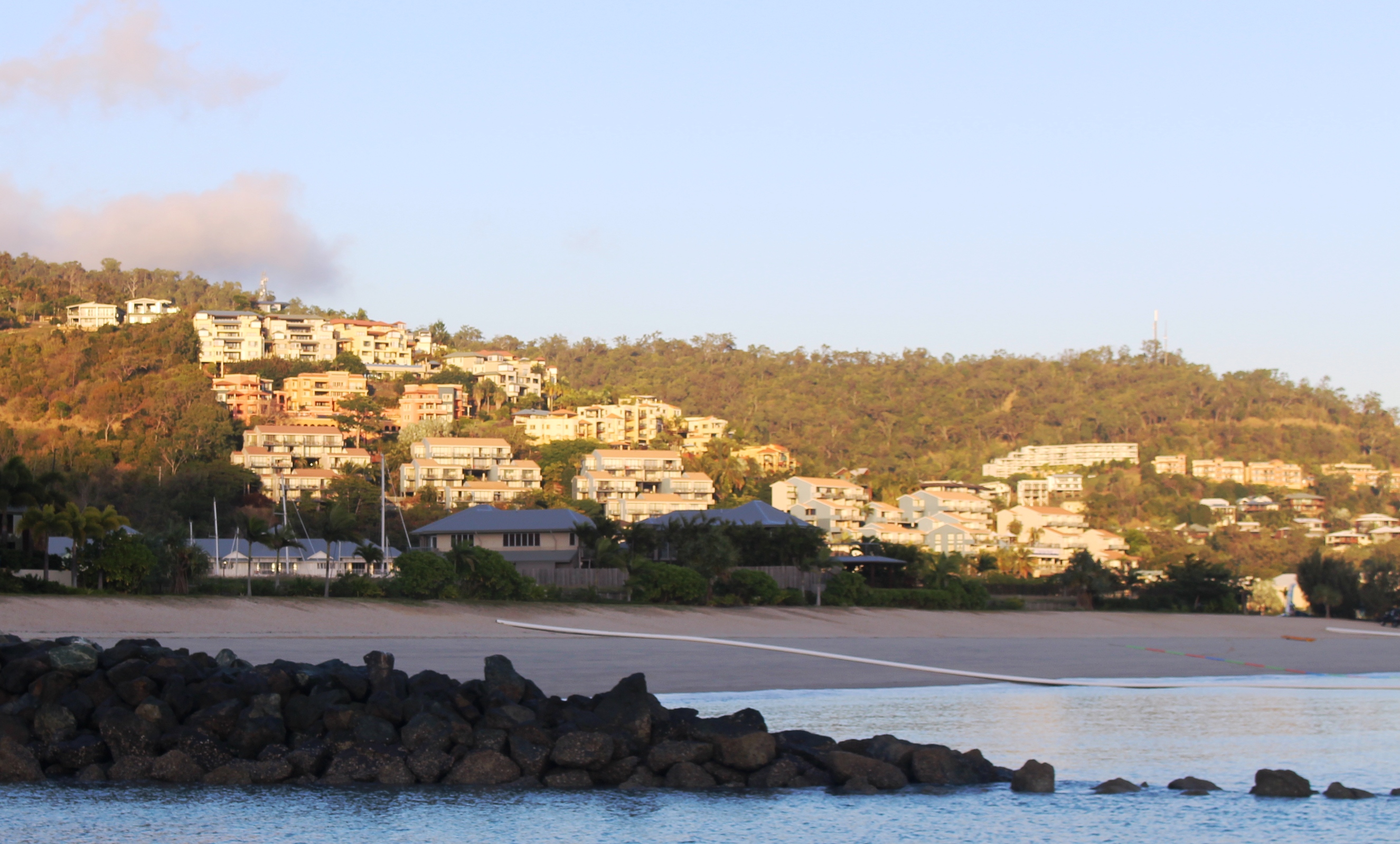
Units on the hill at Airlie Beach in the morning sunlight

Units on the hill at Airlie Beach in the morning sunlight

An early start was required. Out of bed at  5.00 am  and at the Cruise Whitsunday terminal at 6.10. Heavy cloud greeted us as day broke, but by the time we boarded the “Orca”, a sea going catamaran, the cloud had burned off to produce a clear sky that smiled on us all day.

Arrival of the ferry at Daydream Island

Arrival of the ferry at Daydream Island

Cruise Whitsunday run the ferry service that connects the island resorts. The tours are run in conjunction with the passenger transfer service. The first call was Daydream Island to exchange passengers and then off for the 45 minute run to Hamilton Island. We stayed on board for both of these ports.

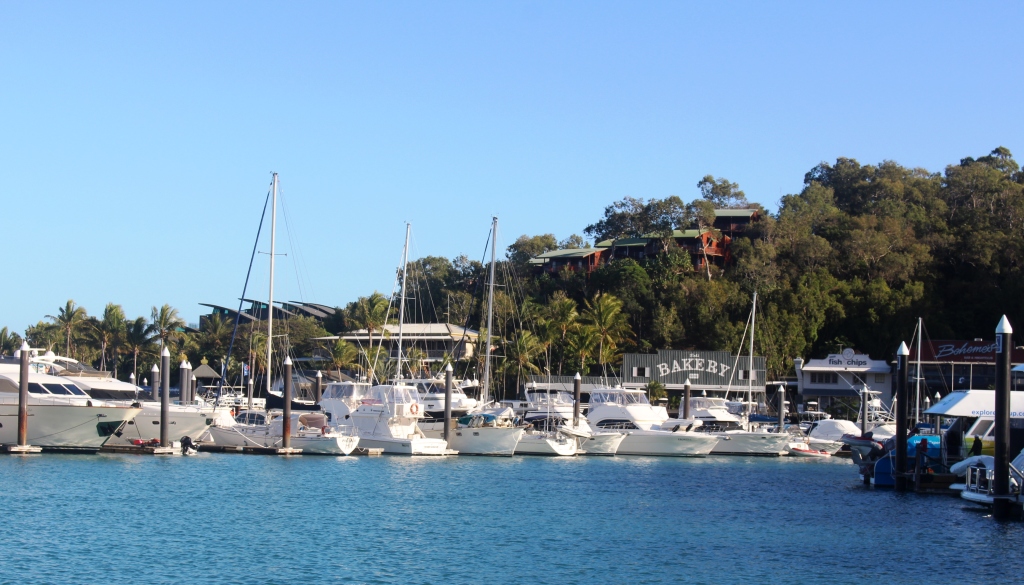
Boats in Hamilton Island harbour

Boats in Hamilton Island harbour

Then we were on our way to the main event. To reach Whitehaven Beach the boat passed to the north of Hamilton Island and then powered across relatively open sea to Solway Passage, the gap between the islands that leads to the Beach. There was reasonable swell

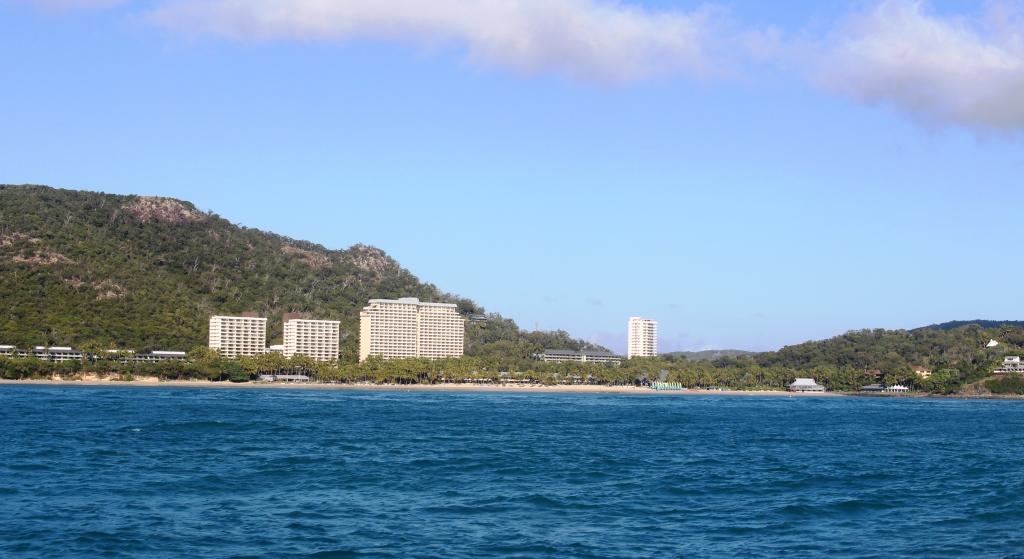
Hamilton Island High Rise from the east

Hamilton Island High Rise from the east

running, so the boat was moving around and spray was billowing from the bow. The kids on board loved it. And so did this big kid. The pure joy of a floor under my feet that moved with the sea.

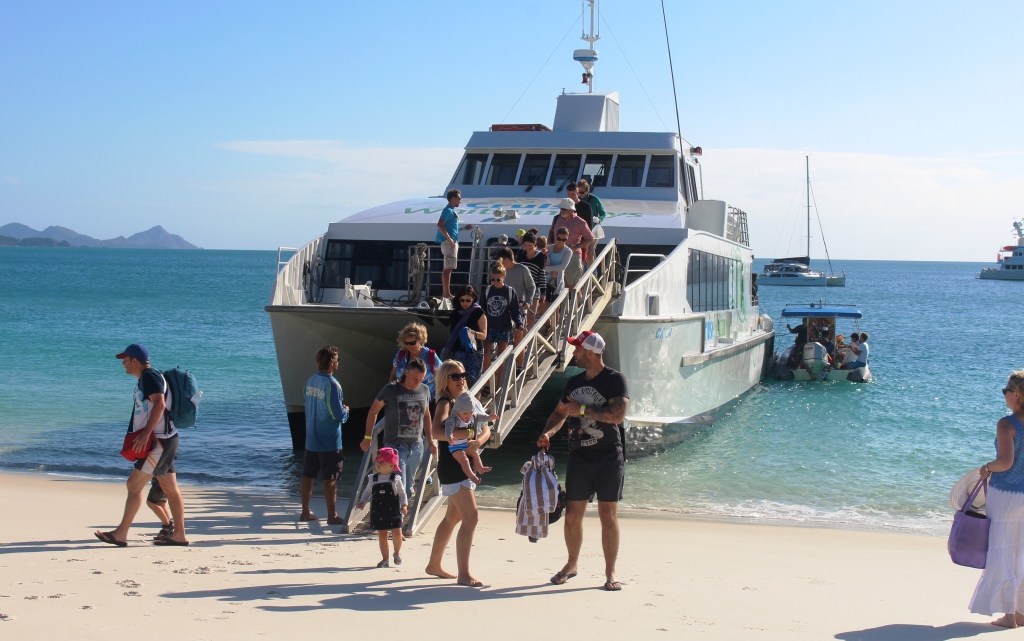
When we reached our destination the boat nosed

passengers disembarking at Whitehaven Beach

passengers disembarking at Whitehaven Beach

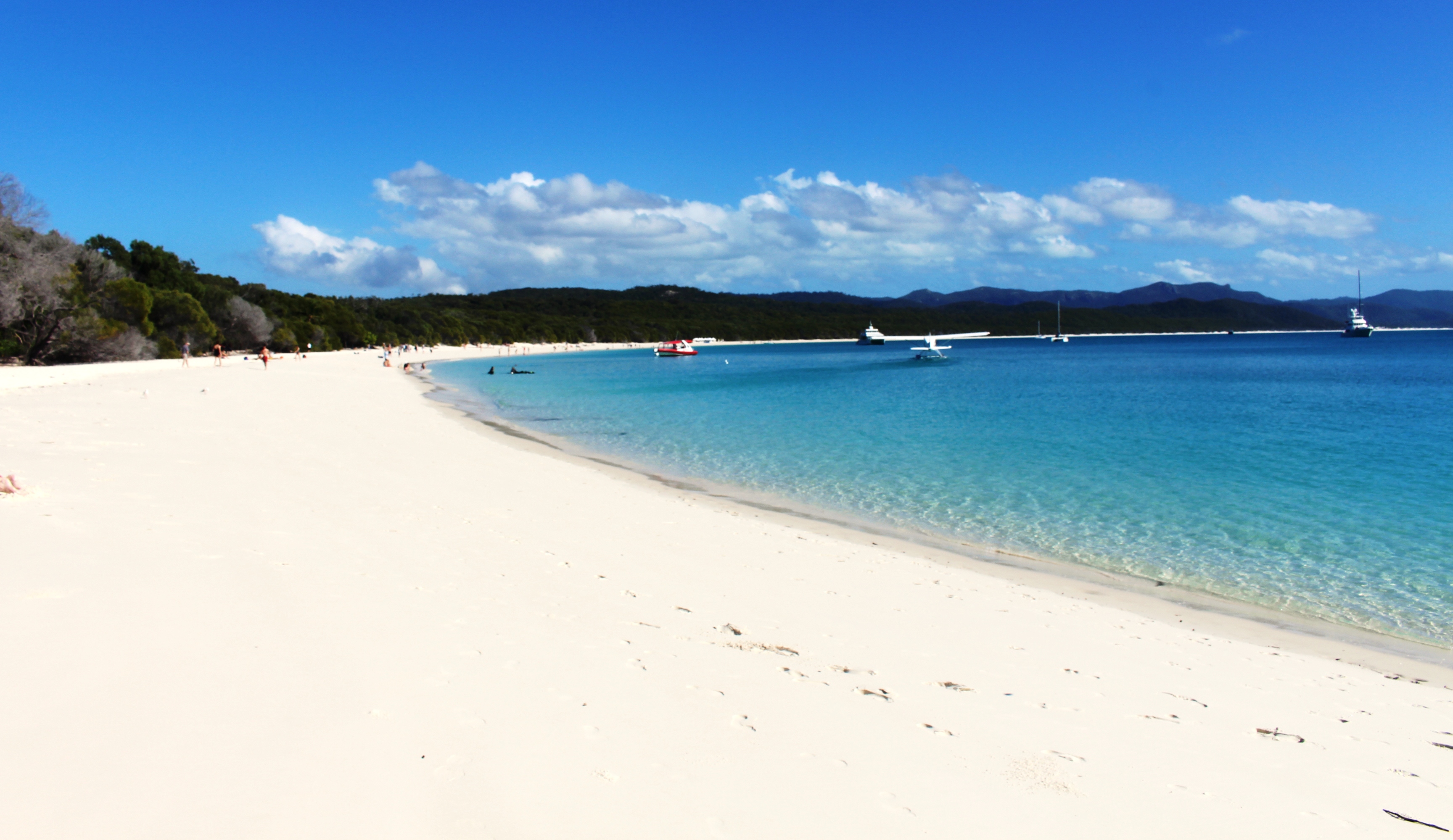
into the beach and we all disembarked via an extending ramp, along with some basic supplies so that we wouldn’t perish during the 2 hours that we were ashore. Our fellow passengers spread out on the huge beach. Some swam, others sun baked and others walked. Kids

Beautiful Hhitehaven Beach is 98.5% silicia

Beautiful Whitehaven Beach is 98.5% silica

built sand castles. One Dad buried his daughter and turned her into a mermaid. We walked and then sat in the shade, fortified by a cold drink and a Mars Bar.

Back on board, the “Orca” headed north to make a complete circuit of Whitsunday Island as we returned to Daydream Island where we changed ferries for our return to Airlie Beach.


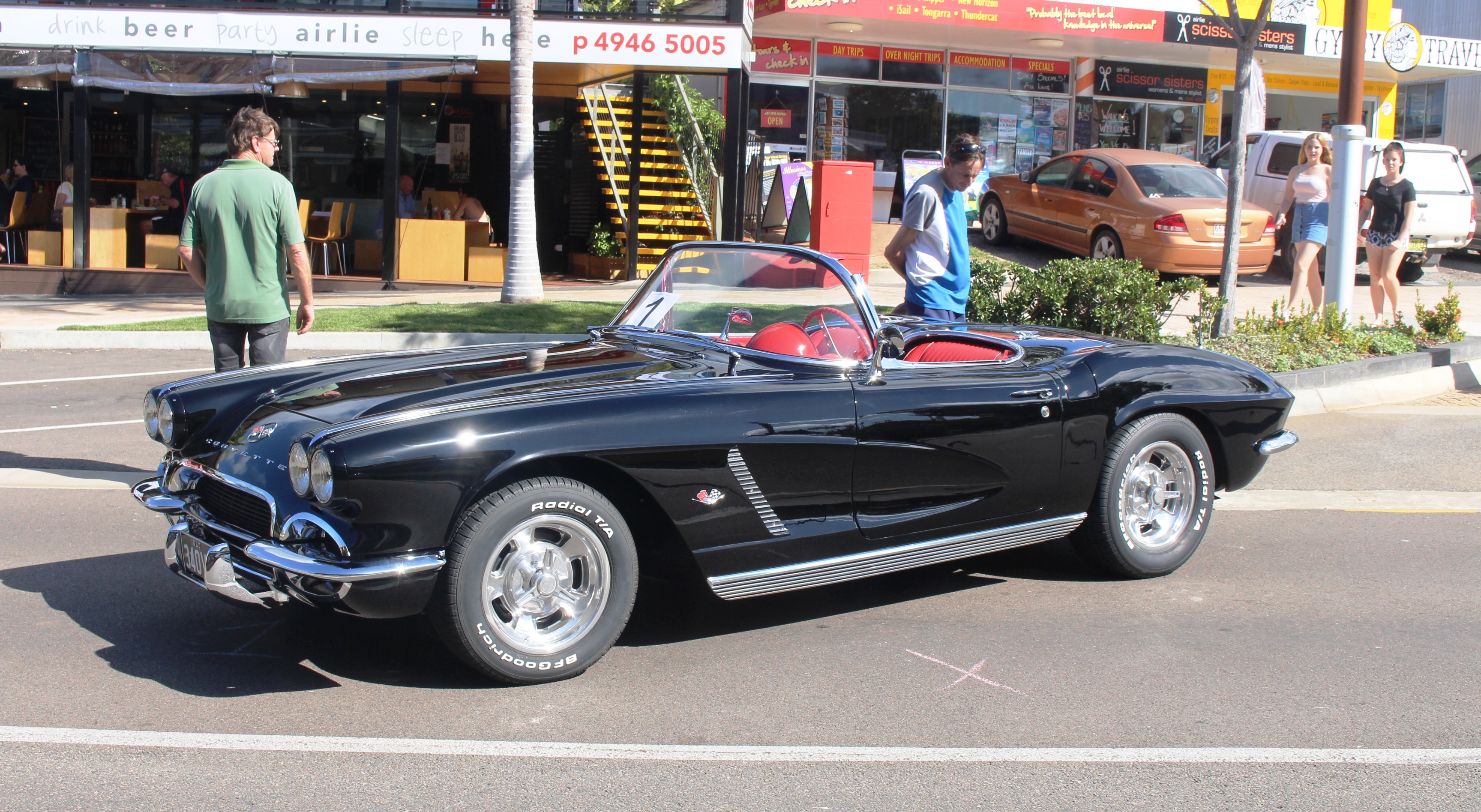
The one and only Chevy Corvette

The one and only Chevy Corvette

The Whitsunday Reef Festival was on this weekend so we walked along the main street of Airlie to take a look. Most activity is at night ,which befits a place like Airlie, but there was a brilliant display of restored classic cars, with a couple of vintage models as well. Oh, those Chevy Corvettes. Wow! There was also a very loud rock band. And I mean LOUD.

A bit of grocery shopping and then back to camp. A most enjoyable day!

The tranquil waters of Crystal Creek with smoke from a mountain fire in the background

The tranquil waters of Crystal Creek with smoke from a mountain fire in the background

Today we have travelled from Airlie Beach, a distance of about 360 km. Some  cloud around this morning but a mostly clear afternoon. Very pleasant driving.

This camp site is on Big Crystal Creek which has a large rock pool, currently full of running water. And you have guessed it. The water is crystal clear. It is in great demand for swimming and had a real workout that day, we have been told.

Preparing for the Cape

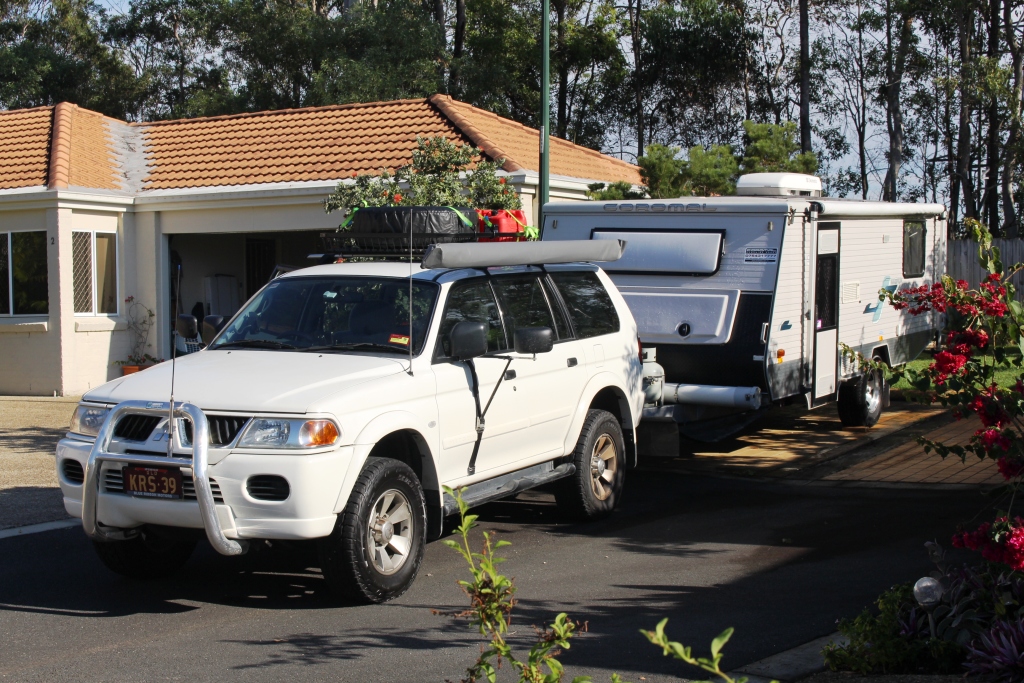
All set up for last year's trip to the Centre

All set up for last years trip to the Center

The car went in for a pre- trip service on Monday so I walked down to a local McDonald’s to spend the waiting time reading and drinking their coffee. But I found myself in a construction zone. They are rebuilding the place around the customers. I hid in an outside corner. Thankfully it was a bit warmer than previous days.

To get us started, here is a rough outline of our itinerary as it currently stands.
Days 1 to 3 – Along the road on the way to Airlie Beach. 1000 km in 3 days. Why hurry?
Days 4 to 6 –  Airlie Beach including a half day trip to Whitehaven Beach. We are spending my 75th birthday present Red Balloon voucher. Thanks family.
Days 7 to 10 – Various stops along the way to Weipa
Days 11 to 14 – at Weipa
Days 15 to 16 – Merluna cattle station
Day 17 –  Bramwell Station Stay – an over night stop to break the final run to the top into two days.
Days 18 to 21 –  Punsand Bay. This is as for north as you will find a caravan park with all facilities. The Cape is just a few km away to the east. While here we will do a day trip to Thursday Island and Horne Island.
Day 22 – Bramwell Station again
Days 23 to 25 – Traveling back to the southern Cape area
Days 26 to 40 marking our way home by a still to be finalised route. But we may extended our time on the Cape.

So that is the initial plan. We will keep you updated as we travel.