Visiting Old Stamping Grounds

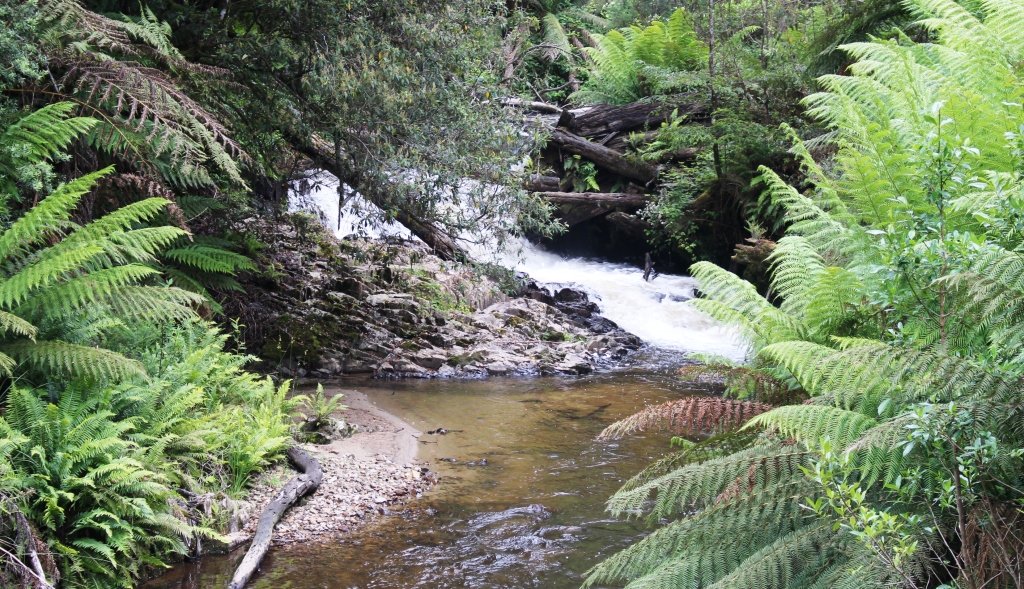
Waterfall near Mt Baw Baw

Waterfall near Mt Baw Baw

Our visit to Victoria in 2013 included some forays into Victoria’s High County, that alpine range of mountains that extends from the Eastern end of the Victorian border with NSW to the near North East of Melbourne. We had decided that we would come back for a closer look. The decision to spend Christmas with my Victorian siblings provided the opportunity. You see, our children had deserted US for Christmas. Craig and Anne took their children off to the USA to visit Disney Land and Briony decided to join them. Karen remained in India for Christmas. That had always been her plan for this year. My sister Aileen, kindly offered us a place at the Victorian Christmas Dinner table.

Of course, there was also our friends Thelma and Joe Licheri’s 50th wedding anniversary a few days before Christmas. We caught up with a number of old friends and had a pleasant few days. The period with the Gardners at Drouin provided the opportunity for the first excursion to the High County. On Boxing Day we visited Mount Baw Baw, now one of Victoria’s popular ski resorts.
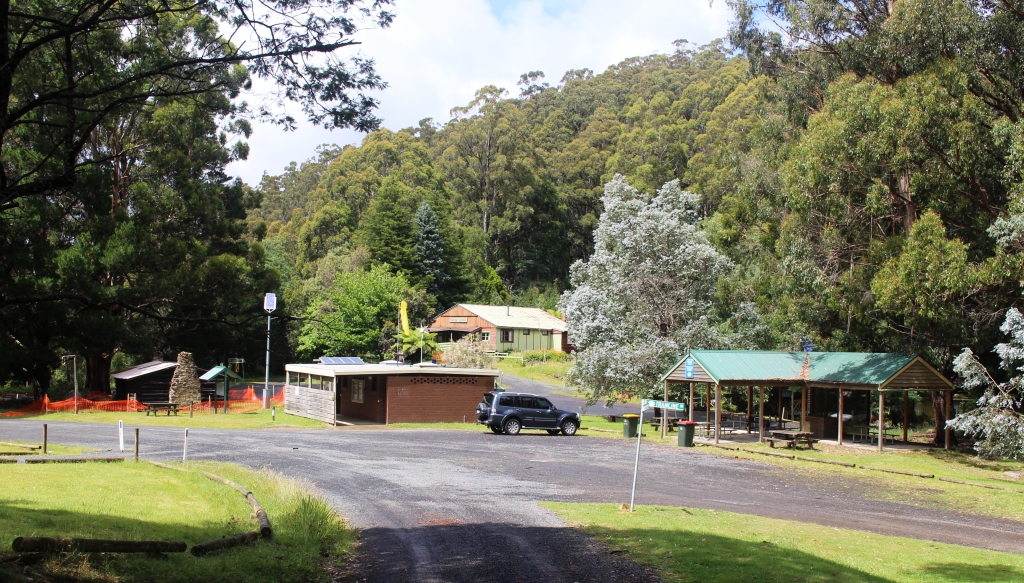
The picnic area at Tanjil Bren, on the way to Mt Baw Baw

The picnic area at Tanjil Bren, on the way to Mt Baw Baw

About 55 years ago, with me on a Vespa motor scooter and brother Winston on some sort of motor bike, we rode to the Baw Baw summit on the cusp of the ski season. Whether it was at the beginning or the end of  the snow season I do not recall, but I do recall that Winston stepped on some unsupported snow and disappeared from view. I had to haul him out.
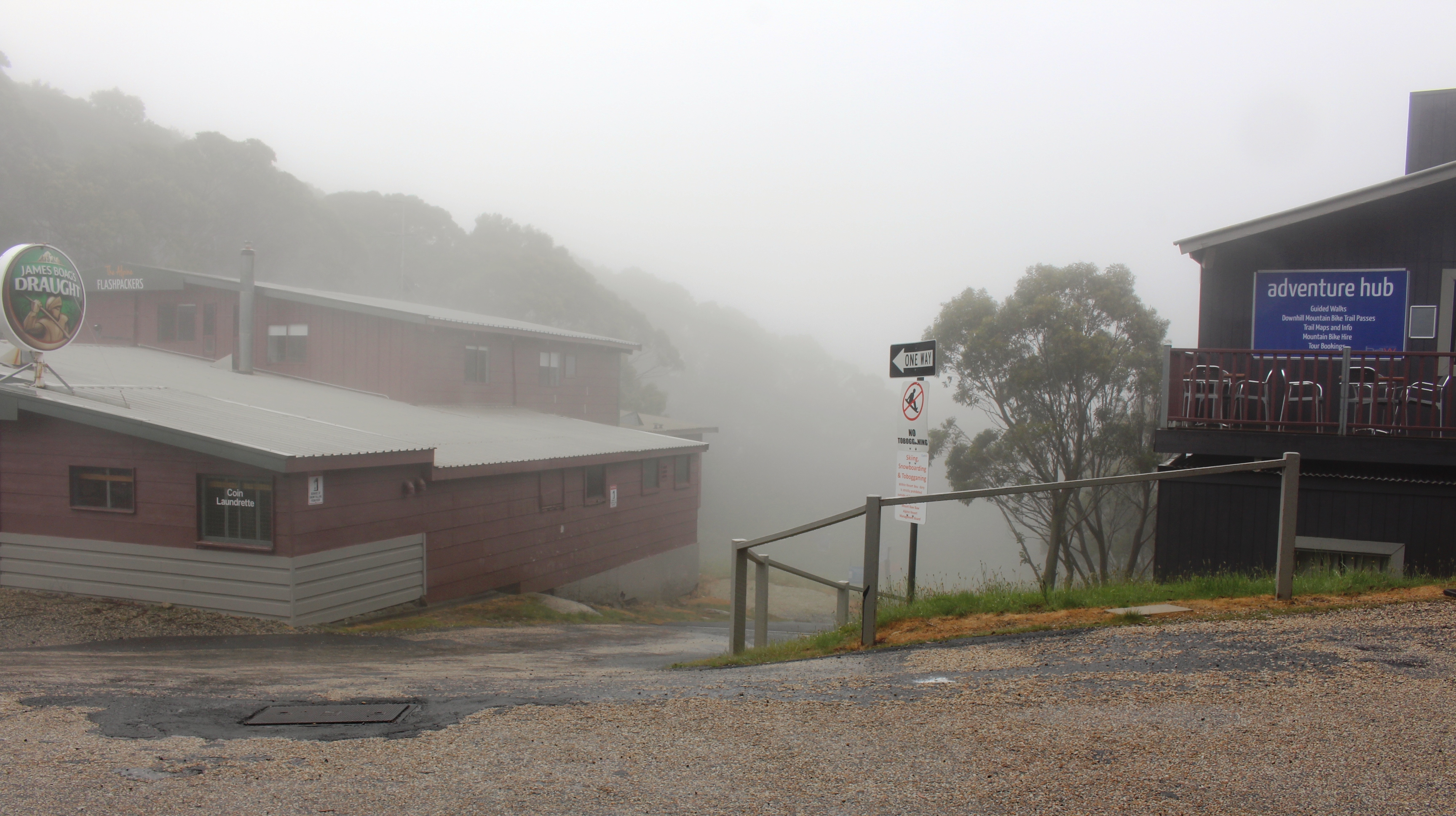
Down a foggy street. There was not much doing down there at this time of the year.

Down a foggy street. There was not much doing down there at this time of the year.

In those days the resort was a few basic lodges with a gravel road of indifferent quality, leading to what passed as the resort centre. It is now a modem resort and can be reached by a good quality sealed road. We drove from Drouin, via Neerim South and Noojee, names familiar from years gone by. There are no guarantees when visiting mountain regions and we arrived at a mountain cloaked in mist to about 300 meters below the summit.
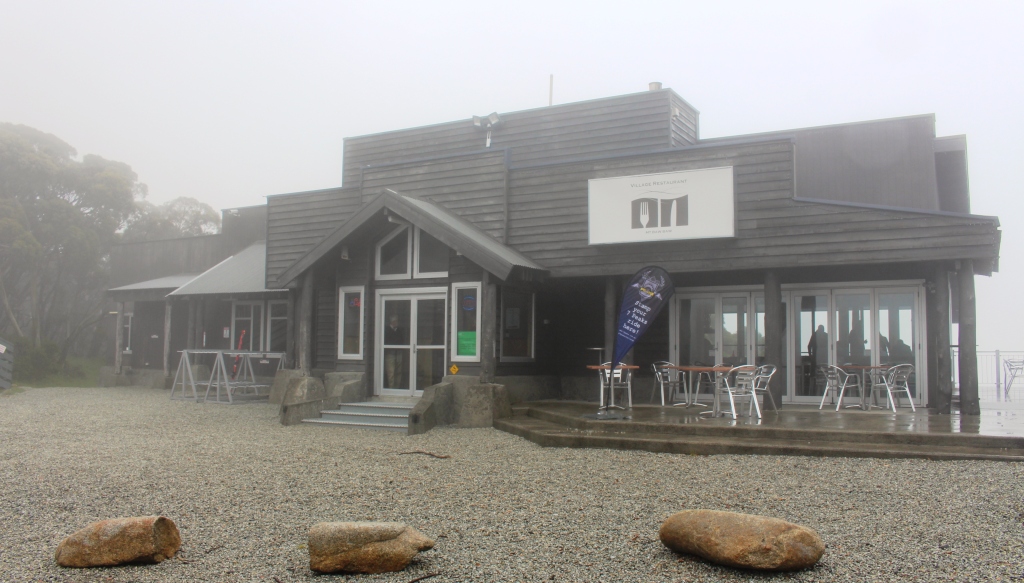
Our luncheon destination sans views

Our luncheon destination sans views

An Internet search and a phone call had assured us that food would be available and we lunched in a modern establishment with floor to ceiling glass that would have given us superb views of the mountains, except for the mist, of course. But lunch was most enjoyable and at its conclusion we returned below the mist line to return home via a partially different route.
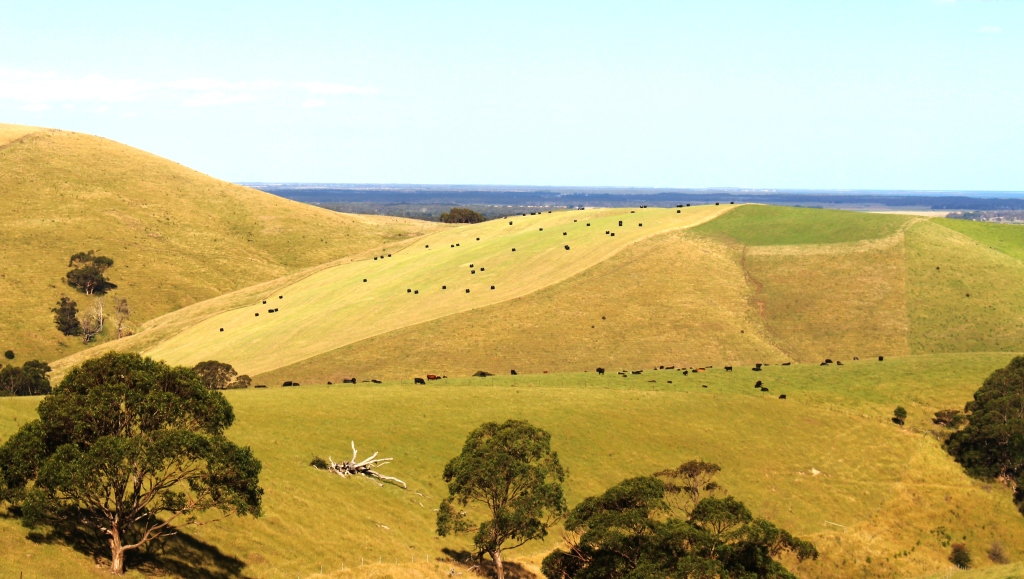
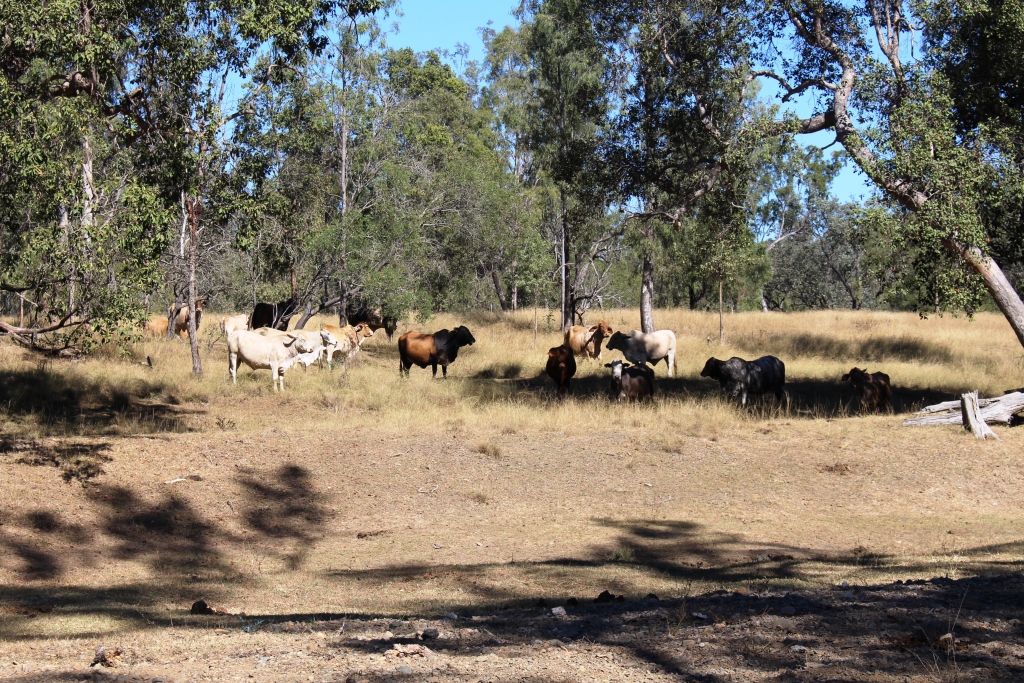
How many cows? Our travels in the outback have made us unaccustomed to such stocking density.

How many cows? Our travels in the outback have made us unaccustomed to such stocking density. Photo in South Gippsland overlooking Corner Inlet.


We left Drouin on the day after Boxing Day to travel to South Gippsland. We spent two nights in Foster which we used as a base to make a day trip to Tidal River on Wilson’s Promontory. The popularity of this tourist spot has not diminished the stunning beauty of the area, even when shared with a large proportion of Victoria’s population. It is on our list for a longer visit at a quieter time.
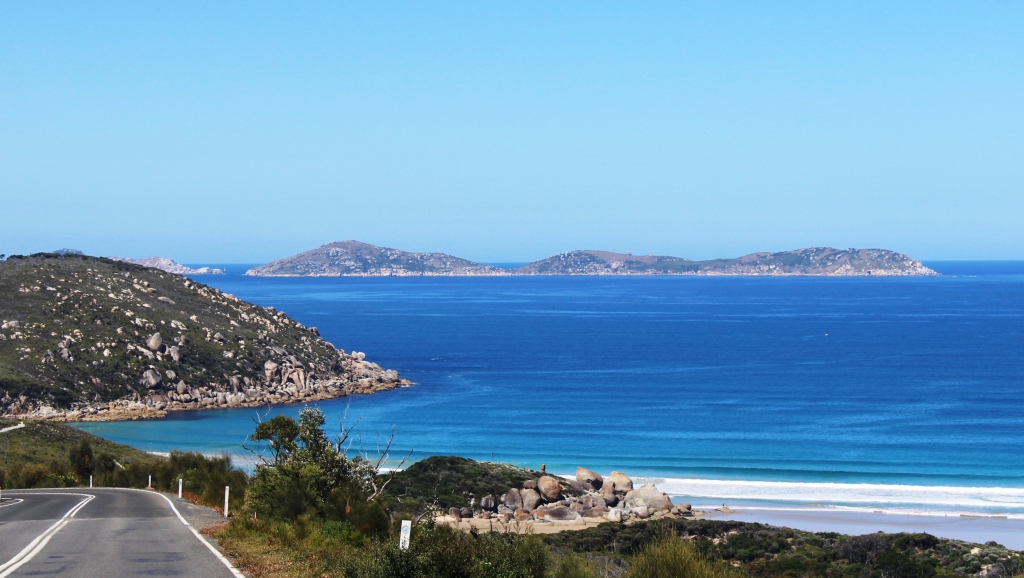
The stunning Glennie Island group come into view as the road returns to the coast not far from Tidal River.

The stunning Glennie Island group come into view as the road returns to the coast not far from Tidal River.

Norman Beach and the mouth of Tidal River.

Norman Beach and the mouth of Tidal River.

Licola General Store. It has just about everything that a camper needs.

Licola General Store. It has just about everything that a camper needs.

The second excursion to the High County was again to visit a scene of my youthful activities. My first acquaintance with Wilson’s Promontory was to hike in to the lighthouse at the southern tip. Licola was another old hiking destination.  I went there to hike into secluded Lake Tali Karng. As I recall, and it was a long time ago, we drove several kilometres along
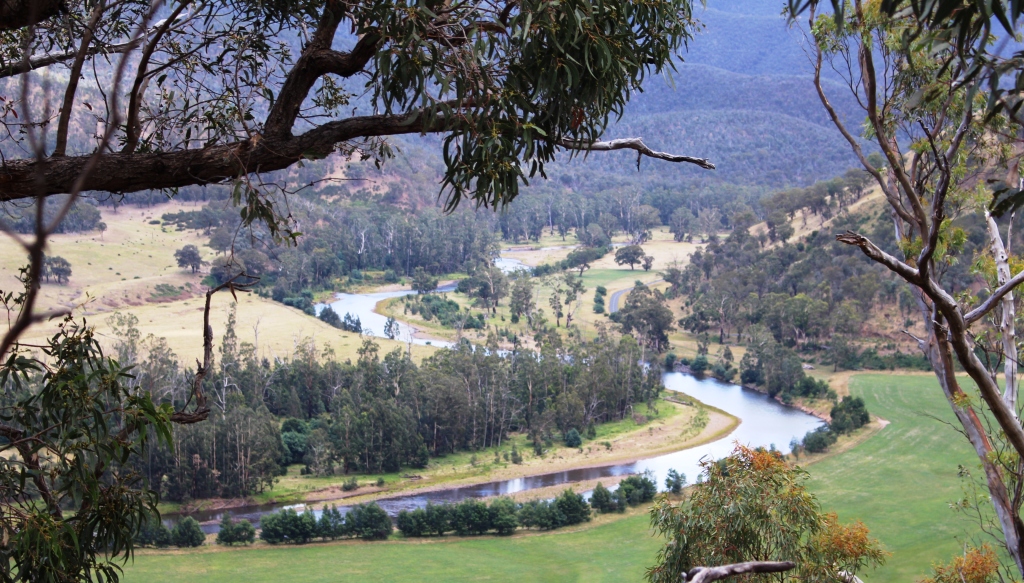
The Macalister River Valley as you approach Licola.

The Macalister River Valley as you approach Licola.

the Tamboritha Road, parked the car and began our hike. We spent the first night camped on the side of a hill. I remember hauling myself back into the tent a couple of times during the night, as the slope on which we had to camp made it difficult not to slide out, under the wall of the tent. We made it to the lake next morning, camped lake
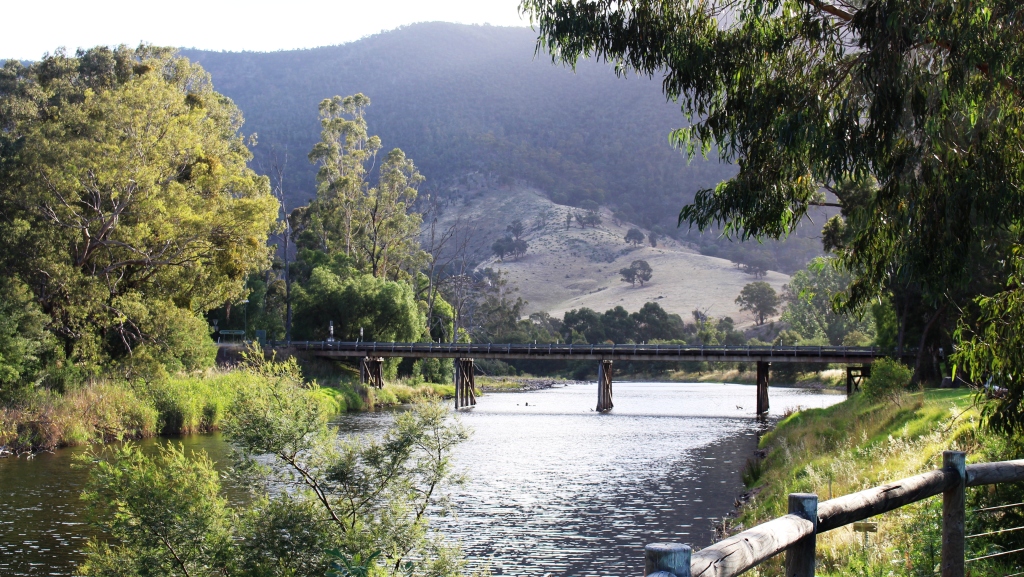
The Bridge over the Macalister at Licola.

The Bridge over the Macalister at Licola.

side the second night, walking out by a different route on day three. This route brought us out further up the Tamboritha Road, giving as a longer walk along its muddy surface. Fortunately a utility came along, and in what would be illegal today, loaded us and our packs onto the back and delivered us back to our car.

Lake Tali Karng is located at the foot of this mountain. I\

Lake Tali Karng is located at the foot of this mountain.

The attraction of the lake is simply that it is there. Located in the midst of towering mountains it was formed about 1,500 years ago by a large rock fall from The Sentinel, the mountain peak that towers above it. The rock fall dammed the waters of two creeks, forming the lake. Water has never flowed over the rocks but seeps through them, the escaping stream forming the headwaters of the Wellington River.
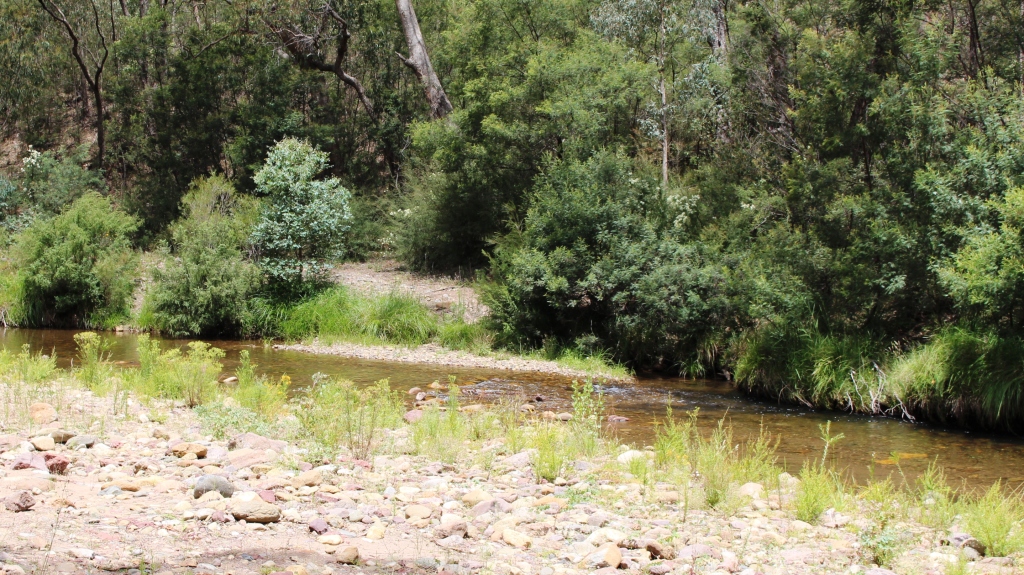
The first river crossing on the Wellington River Track to Lake Tali Karng. There are 16 such crossings.

The first river crossing on the Wellington River Track to Lake Tali Karng. There are 16 such crossings.

Licola is a former timber milling town that now exists for the bush camping and four wheel drive fraternity. Now quite small, it snuggles in a ravine between the Macalister River and hills that encroach on the valley. The Macalister meanders through a narrow valley for most of its journey, presenting many idyllic views from the road that traverses the hills that constrain it.
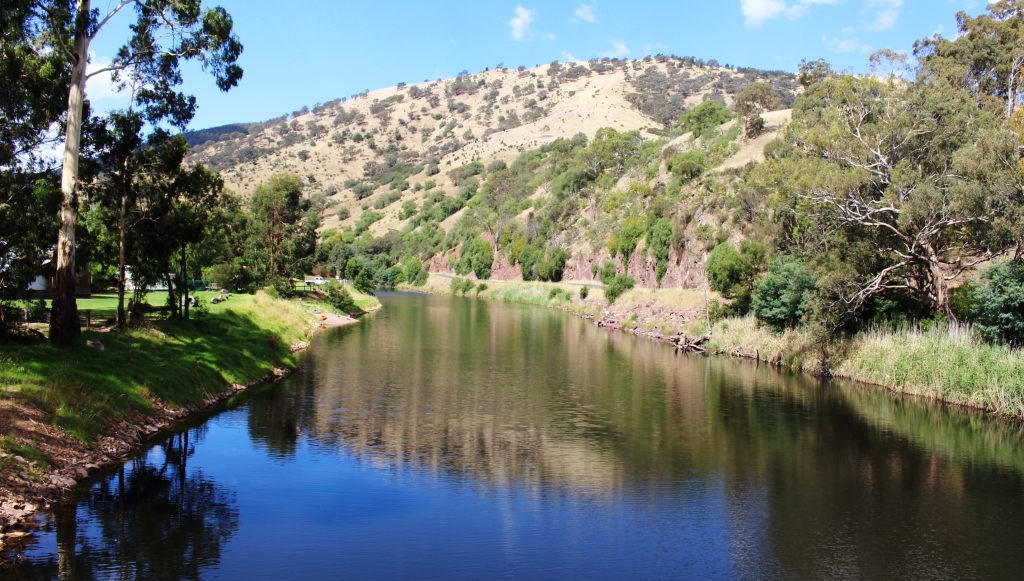
The tranquil Macalister River beside the caravan park at Licola.

The tranquil Macalister River beside the caravan park at Licola.

Glenmaggie Weir, just north of the small town of Heyfield receives its waters.

A few kilometres up stream of Licola the Macalister is joined by the Wellington River and as you already know,Lake Tali Karng is located in the headwaters of the Wellington. The sealed road now ends 22 kilometres along the Tamboritha Road, at the car park at the start of the Tali Karng walk. The Wellington Track generally follows the Wellington Valley. The walking distance to the lake is 17 kilometres and 16 river crossings. Hikers on this walk expect wet feet.
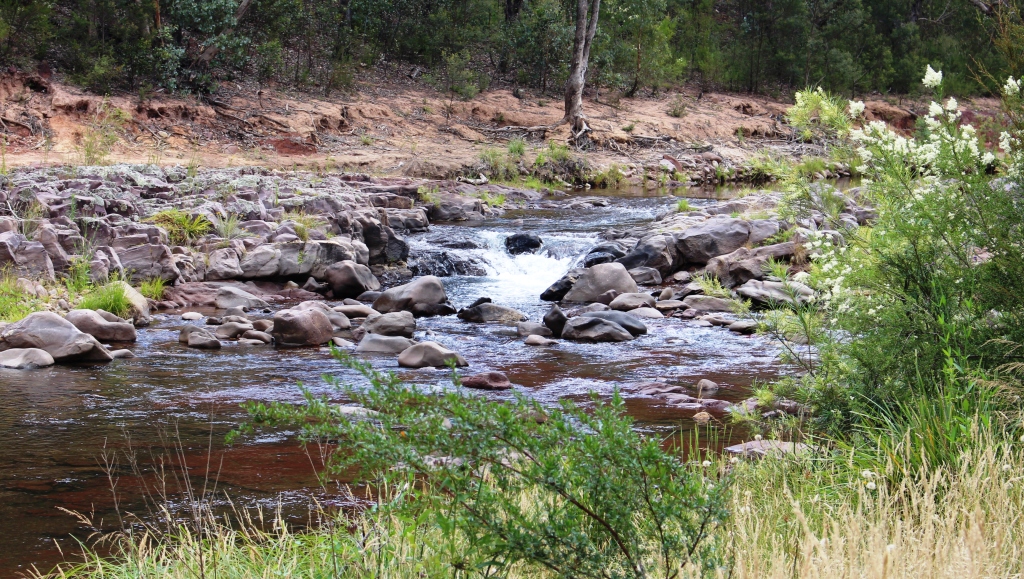
The Wellington River ripples past free camping areas provided by Parks Victoria.

The Wellington River ripples past free camping areas provided by Parks Victoria.

Between Licola and the Tali Karng car park, the Victorian Parks Authority have provided about a dozen bush camps, all of them beside the river. All are free of charge to users and equipped with a single long drop toilet at each site. The sites are sufficiently extensive to provide privacy for campers who claim sites on a first in best dressed basis. A few campers had set up and there were lots of unoccupied sites.
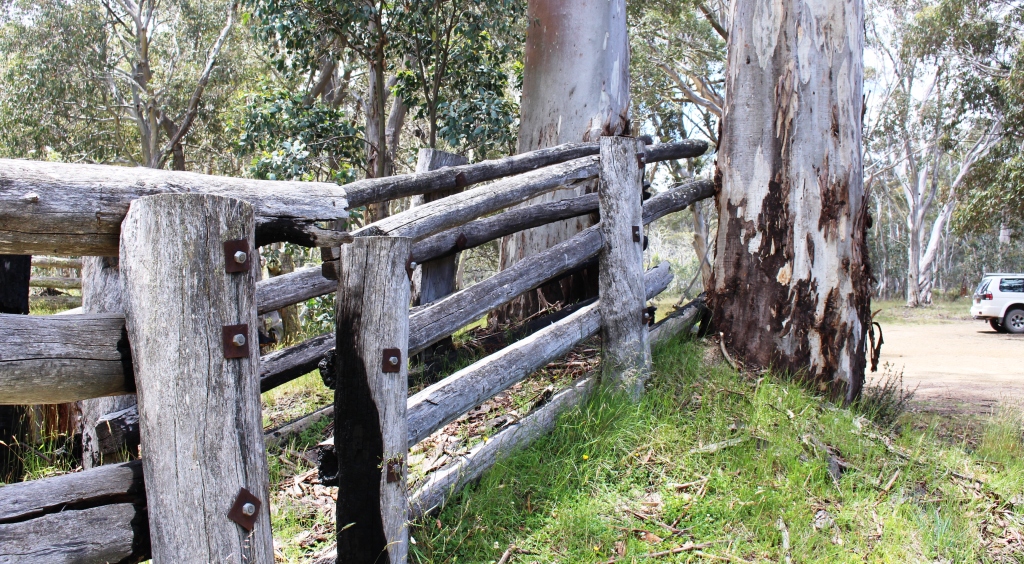
Rather clever positioning of a cattle yard at Tamboritha Saddle, 1300 metres above sea level.

Rather clever positioning of a cattle yard at Tamboritha Saddle, 1300 metres above sea level.

We drove on past the Tali Karng car park, on the gravel road, for about another 15 kilometres, firstly to take in the view at Benison’s Lookout and then to the Tamboritha Saddle. Signage at Benison’s Lookout describes the mountain panorama, identifying the location of the lake and the prominent features of the terrain surrounding it. To me the list was a litany of forgotten names from the distant past.
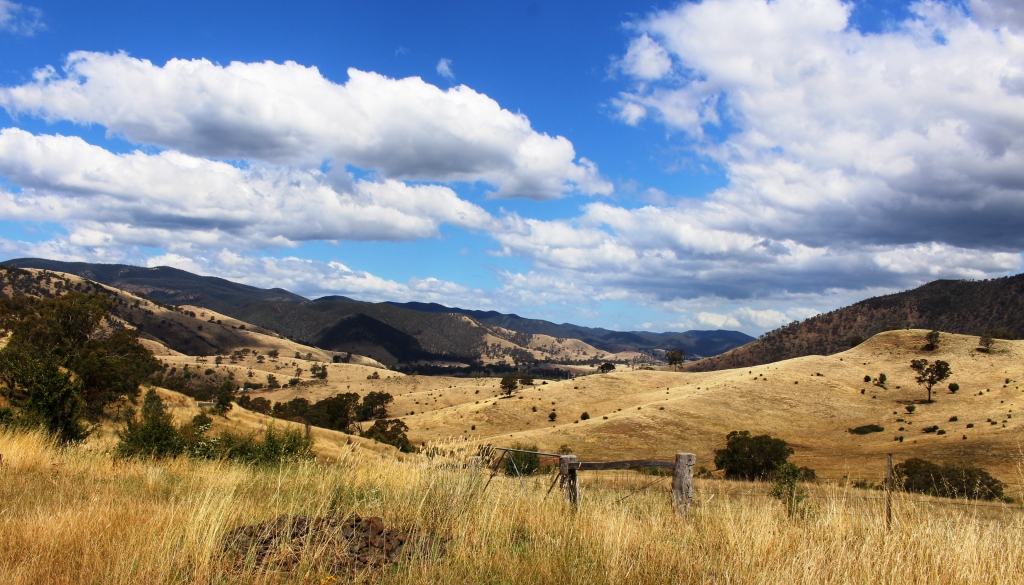
A view along the Macalister Valley from the Licola to Jamieson Road.

A view along the Macalister Valley from the Licola to Jamieson Road.

We enjoyed our picnic lunch at Tamboritha Saddle, parked under a shady eucalypt, beside the rough log fence of a cattle yard that dates back to the days when grazing of cattle in the summer months was legal. The canny cattle men chose a site where twin trees, suitably spaced, support the rails of the cattle loading ramp.

We had reached an altitude of 1,300 meters, so jackets were necessary to deal with a strong cold wind, but it had been cool all day. Good old Victoria in the summer. Scorching one day; freezing the next.

Wonnangatta Caravan Park viewed from the road above.

Wonnangatta Caravan Park viewed from the road above.

The following day we moved beyond my youthful stamping grounds, but still within the High Country, to the Wonnangatta Caravan Park at Riverford near Dargo. This section of the Victorian Alps is particularly favored by the Victorian FWD community, so articles about it regularly appear in the FWD media. And I have long held a desire to drive over the
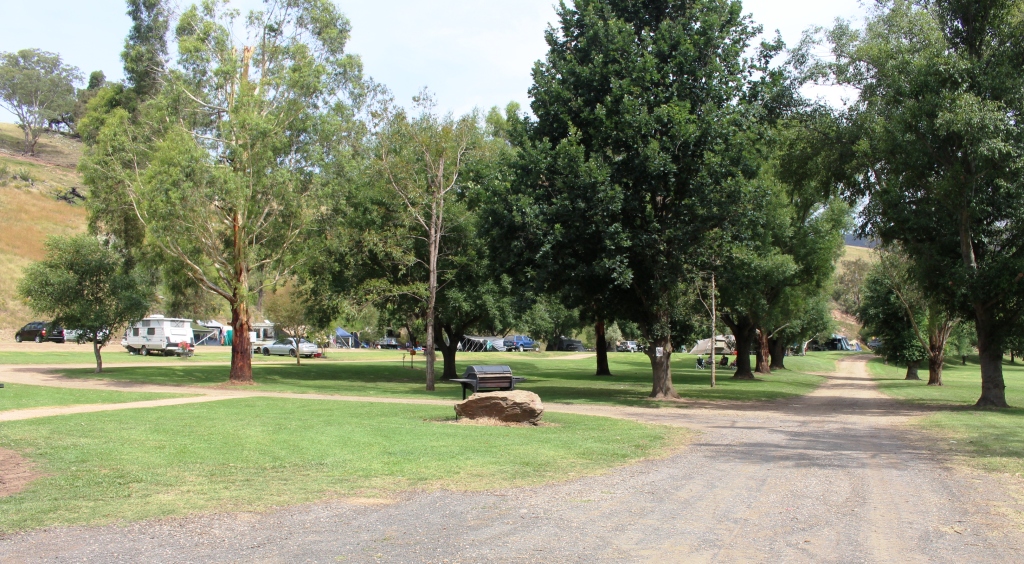
The broad spaces of the caravan park from ground level.

The broad spaces of the caravan park from ground level.

Dargo High Plains.

The Wonnangatta Caravan Park provides an excellent base for this part of the High County. Arriving on New Year’s Eve, as we did, we found ourselves in close proximity to a large group who had gathered there for the purpose of celebrating. But they were thoughtful and kept the volume of their boom box well down. We knew that 2014 had gone when we were woken by shouts and car horns. The celebrating group were packing when we left on our day trip. When we returned at the end of the day there was only unoccupied green grass to look at.
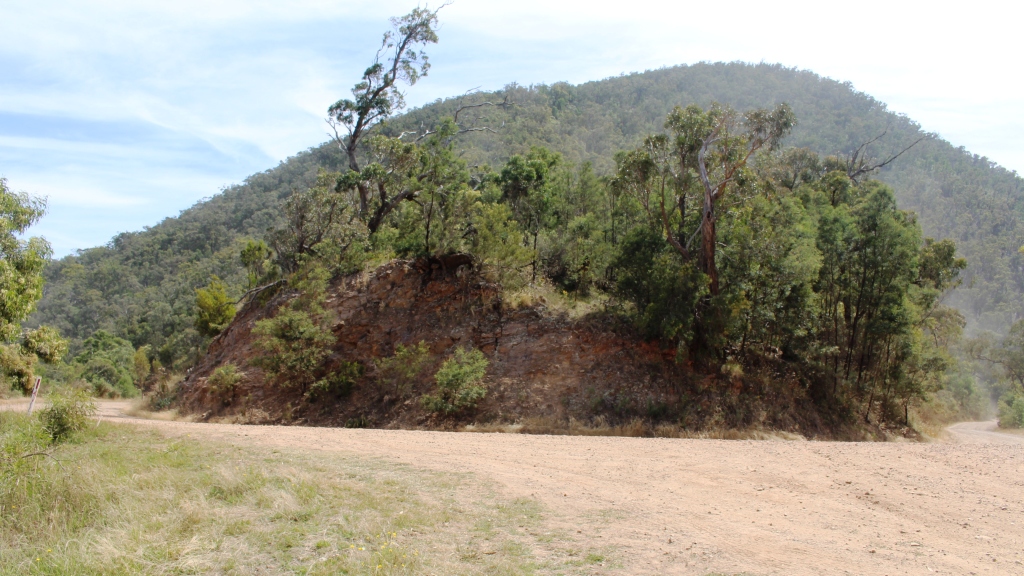
This sharp bend was the departure point for Collins Track and out eventual morning tea stop.

This sharp bend was the departure point for Collins Track and out eventual morning tea stop.

Our plan for the day was to get to the old gold mining area of Talbotville if possible, but generally to gain an appreciation of the Wonnangatta and Crooked River Valleys and the mountains that surround them.

Wonnangatta Road starts at the caravan park, running along the top of the hill above it. When studying the map I had noticed Collins Track turned off the road not far along and lead to Collins Hut, which I took to be one of the many miners and cattle men’s huts that dot the area. The map symbol suggested toilet facilities, which made it an ideal morning tea stop.
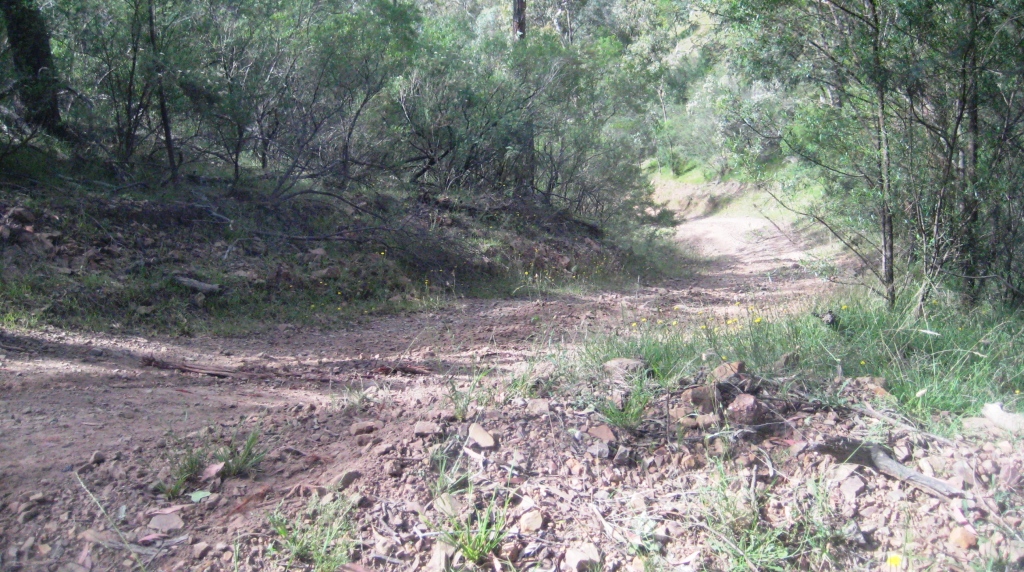
This is where we turned around on Collins Track.

This is where we turned around on Collins Track.

The track was in quite good condition but steep and it became steeper as we descended in low range and low gear. I glanced across at Ruth. The whiteness of her knuckles was plain to see. There are times when discretion is the better part of valor. “Should we turn around?” I received an immediate affirmative response. So we climbed back up to the road and
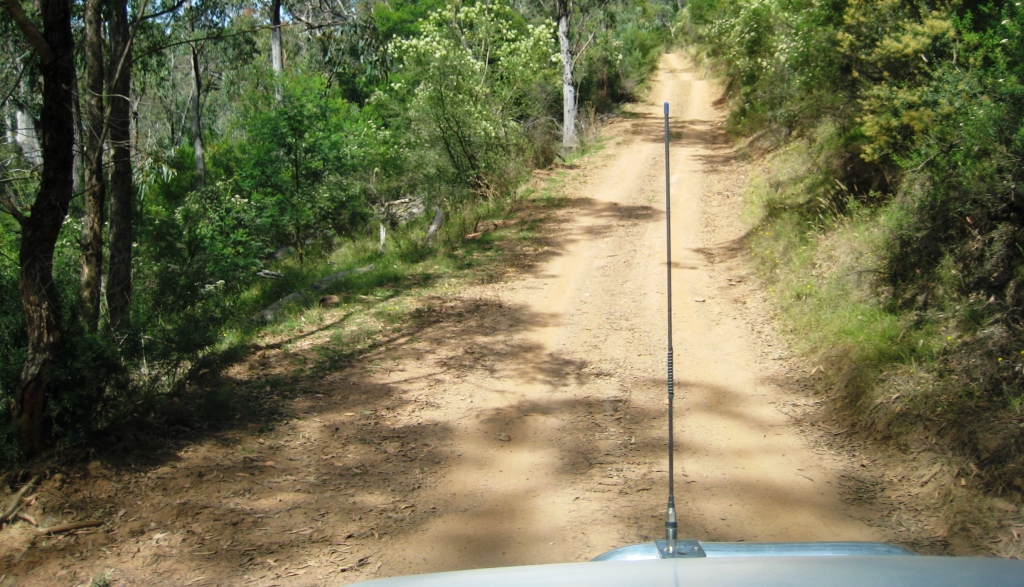
Coming back up Collins Track.
Coming back up Collins Track.

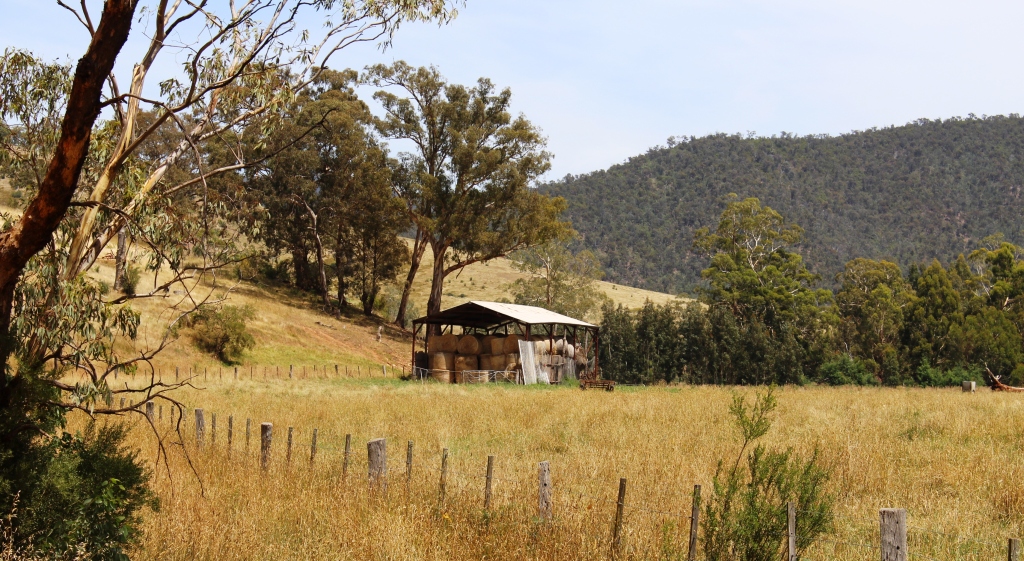
Farms continue to operate in the mountain valleys.

Farms continue to operate in the mountain valleys.

parked beside the entrance to the track. Ruth made coffee while I reduced tyre pressures to improve the quality of the ride.
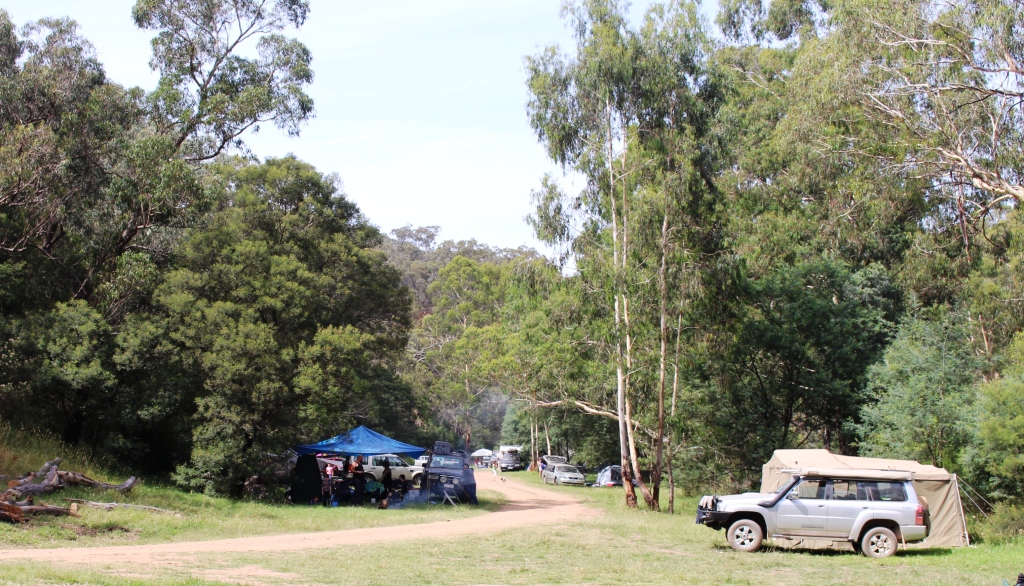
Campers in a free Perks Victoria camp site. I excluded the long drop loo from the photo.

Campers in a free Perks Victoria camp site. I excluded the long drop loo from the photo.

A cloud of dust down the hill, in the direction that we were heading, suggested a 4WD convoy. The leader of a Great Divide Tours tag-along convoy paused to say “Good Morning” and plunged into Collins

Farm lands along the Wonnangatta River.

Farm lands along the Wonnangatta River.

Track, followed by 6 or 7 tag-along customers who each paused at the entrance to the track to sight the next vehicle, as protocol and safety requires, before themselves plunging down to track. About 10 minutes later we heard the leader inform his followers on the radio that the track was closed and they

would be moving to plan B. We heard them again later in the day but didn’t see them again. So we didn’t miss anything.

Kingwill Bridge over Crooked River west of Dargo.

Kingwill Bridge over Crooked River west of Dargo.

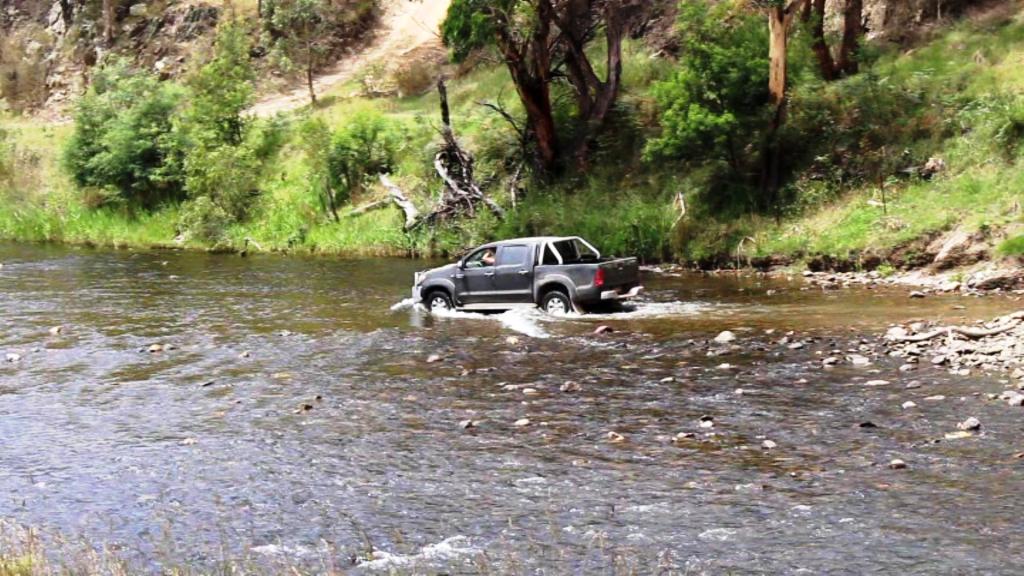
About 20 kilometres by road from the caravan park a rather rustic and attractive bridge spans the Wonnangatta. It is Kingwill Bridge. In earlier days it would have kept the main road open during times of higher river levels. So as not to spoil the fun, upstream from the bridge is a river crossing where 4WD enthusiasts can get their wheels wet. We were entertained by some of them when we later parked there for lunch.

Not far upstream from the bridge the Wonnangatta is joined by the Crooked River which is an extension of the Wongangarra River. The Wongangarra rises near Mount Hotham while the Wonnangatta continues to the north west towards Eildon Weir. Its headwaters are divided from those feeding Eildon by the highest ridges of the Great Dividing Range.

Water from the Wonnangatta, Wongangarra, and other rivers, flow into the Mitchell and then through Bairnsdale to the Gippsland Lakes. The waters then enter the ocean at Lakes Entrance to add to the waters of Bass Straight. Eildon waters, those that are not used for drinking and irrigation, flow to the Goulburn and thense to the Murray and the Southern Ocean at Goolwa in South Australia. Aren’t our rivers fascinating?
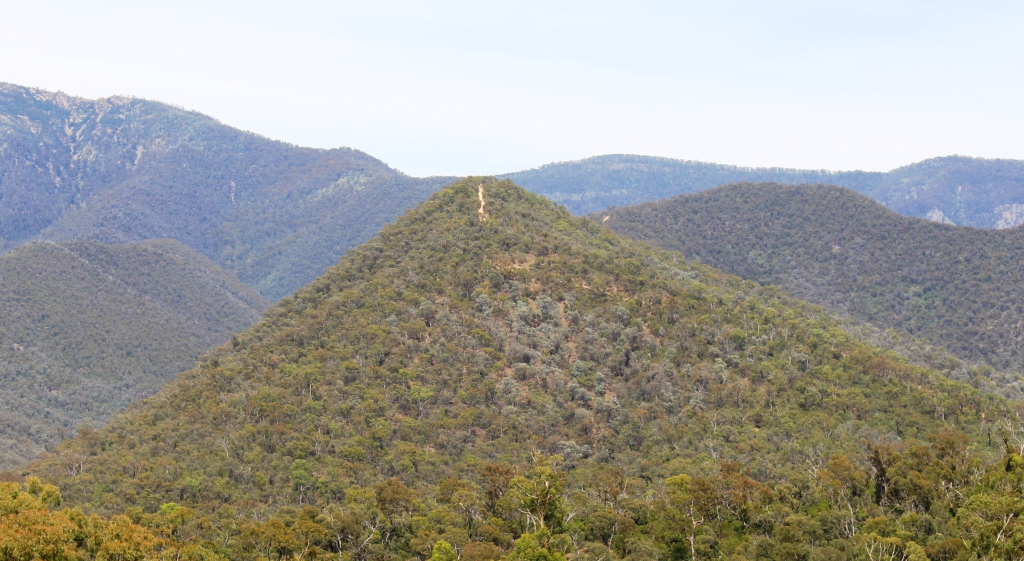
Members of the Four Wheel Drive community come to this area to drive the mountain tracks like this one to the summit of Billy Goat Bluff.

Members of the Four Wheel Drive community come to this area to drive the mountain tracks like this one to the summit of Billy Goat Bluff.

Ignoring for the moment the Talbotville Road sign at the near end of the bridge, we crossed and drove on for about another ten kilometres, travelling through grassy valleys with isolated farm houses and over ridges to reach the next valley and at times on ledges cut into the rocky cliffs that send the stream rippling off in another direction.

But if you can't drive them it is OK to look.

But if you can’t drive them it is OK to look. Note the track at the top of the range?

And then there are the camp sites. Mostly visible below the road, some are in officially sanctioned bush camps, sighted by a river and supplied with a solitary long drop toilet, but many more are on farm land nestled under shade trees where the green pastures meet the river bank. I wonder how they got to know the farmer to get permission.
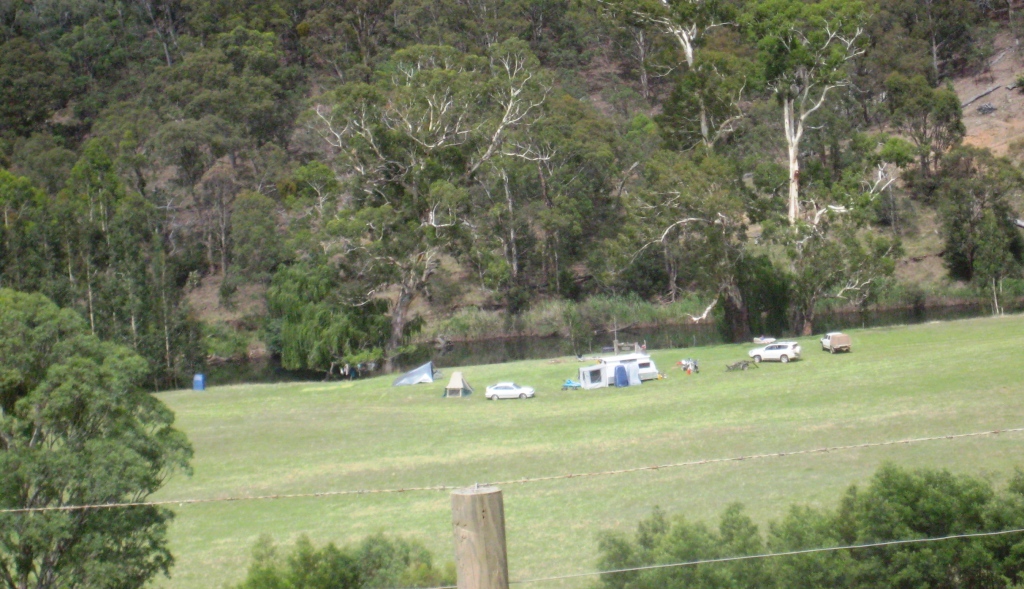
 

These folk must know the farmer.

These folk must know the farmer.

The camps are not restricted to tents and camper trailers but include some of the largest caravans on the market. The roads are reasonably good but there are narrow parts where someone would have to back up. I thought of them later when we met a ranger in his utility on a very narrow section of the Talbotville Road. He reversed to find a wider place for us to pass but I think his outside wheels were supported by not much more than air as we squeezed between him and the side of the cutting.


The crossing near Kingwill Bridge allows 4WD owners to wash the dust from their wheels.

The crossing near Kingwill Bridge allows 4WD owners to wash the dust from their wheels.

We followed this road for about ten kilometres as well but not knowing how much further it was to. Talbotville and knowing that there were several water crossings of unknown depth, we decided to retrace our steps to Kingwill Bridge, where we parked on the river bank in the shade of a large tree.

There are 4WD tracks everywhere
And here is someone actually washing their wheels.

And here is someone actually washing their wheels.

in this area. Most people who come here do so for the tracks, although many simply like to camp beside the rivers and creeks. And we saw one man, dressed in what appeared to be trout fishing attire, closely examining a stream.

Our two way radio was scanning all 80 channels, so we could hear the chatter of groups in the hills near us. I lost track of the number of times that I heard the word “awsome” used to describe the track they were driving.

Farms continue to operate in the mountain valleys.

Farms continue to operate in the mountain valleys.

A group that we had been monitoring came out of a nearby track and  towards where we had stopped for lunch at Kingwill Bridge. Once the leader saw the water crossings the bridge was forgotten. First the leader crossed, exercising due caution as befits a leader. Then two girls in a twin cab ute carefully crossed. It may have been their first water crossing. Then the third and last crossed with speed, throwing water up in a great spray, just like the professionals do on TV. Finally numbers 1 and 3 raced each other back across, water spraying all over their vehicles. Perhaps they were just washing off the dust from the track.

Lunch complete, we made our way back to camp, pausing to use the hill behind the caravan park as a vantage point for photographs. But not before we had communicated with the outside world. We had virtually no Telstra coverage at the caravan park but 4 bars there in the middle of the mountains.

Our plan had been to leave next morning via the Dargo High Plains Road to Hotham, then on to Omeo to drive the Omeo Highway. But that was not to be. The camp manager came around on his quad bike to advertise that weather patterns had moved more quickly than expected so that the following day was forecast to be 40 degrees with a total fire ban.

We though about it overnight and decided that it would not be smart to go deeper into the bush in such weather, so decided to retrace our path to the coast. That took care of our plans to see more of the High County. So it is back on the bucket list with other new and unfinished adventures.

Journey to Trilby Station – Our Stay at Trilby

With the dirt roads closed for an unknown period, we needed to choose a new route to Trilby Station and we needed to be on sealed roads until the dirt roads dried out. To wait in Balranald until the dirt roads were usable would not give us time to use the roads along the Darling River as initially planned and still get to Trilby on time. The logical route was north on the Kidman Way to Cobar, as this would give the dirt sections of the road in via Louth time to dry out and become usable again.

So we followed the rain back along the Stuart Highway, turning north at Darlington Point and detouring to have a look at Leeton on our way to Griffith, where we planned to spend the night. From the moment that we left Balranald we could see a large rain storm ahead of us, tracking along the Murrumbidgee. We finally caught it just before Hay, driving through its trailing end as it crossed the highway.

The court yard at Yanga Statiom

The court yard at Yanga Statiom

But before we caught up with the rain, just east of Balranald, we made a brief detour to Yanga Homestead, now located in a national park that takes its name. The homestead, which opens for tours at times, is still a magnificent structure, set on a hill overlooking the impressive Lake Yanga. Park HQ is located here and national parks rangers conduct the tours of

The view of the lake from the homestead.

The view of the lake from the homestead.

the house and tag along tours of the property. Our schedule did not allow us to participate in such activities but it was interesting to see an example of how life was lived on a large station in times gone by. We were able to see into quite a lot of the rooms, still furnished, through the windows. A visitor centre in the old cook’s cottage contained a great deal of information about the station and the role that is played in the area.

We struck heavy rain between Leeton and Griffith. It conveniently removed all of the red mud that we had picked up on a short, but wet and muddy area of road works on the drive into Leeton. The extensive vineyards along this stretch of road are just coming to life after the winter hibernation, so the growers would have been delighted with the rain.

Lake Cargelligo

Lake Cargelligo

Instead of following the Kidman Way out of Griffith we took the Rankins Springs Road and continued from there to Lake Cargelligo, where we spent two days, doing nothing much. There really isn’t much to do there but, after all the driving we enjoyed the break. I remember Dad talking about Lake Cargelligo. I understand that he visited there during his time based at Condoblin. Lake Cargelligo is on the Lachlan River so has a sort of connection to Lake Mungo. Its water is used for irrigation.

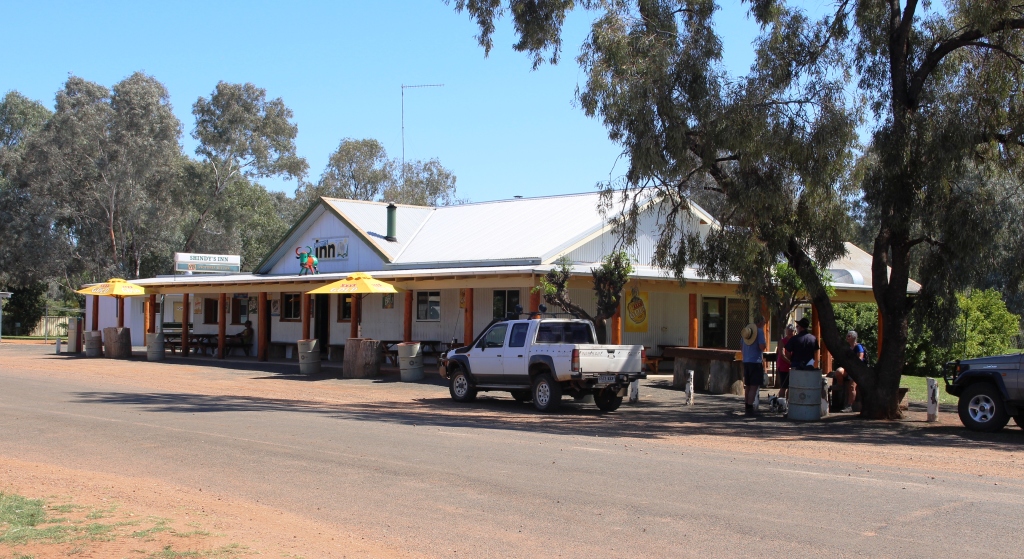
Louth Pub - Shindy's Inn

Louth Pub – Shindy’s Inn

Our path from Lake Cargelligo lead through the small town of Eubelong, then along a road that until recently had gravel sections but is now fully sealed, to join the Kidman Way at the old copper town of Mount Hope. An easy run on a good road, one that we had used only a little over a year ago, brought us to its intersection with the Barrier Highway at Cobar. The Bourke

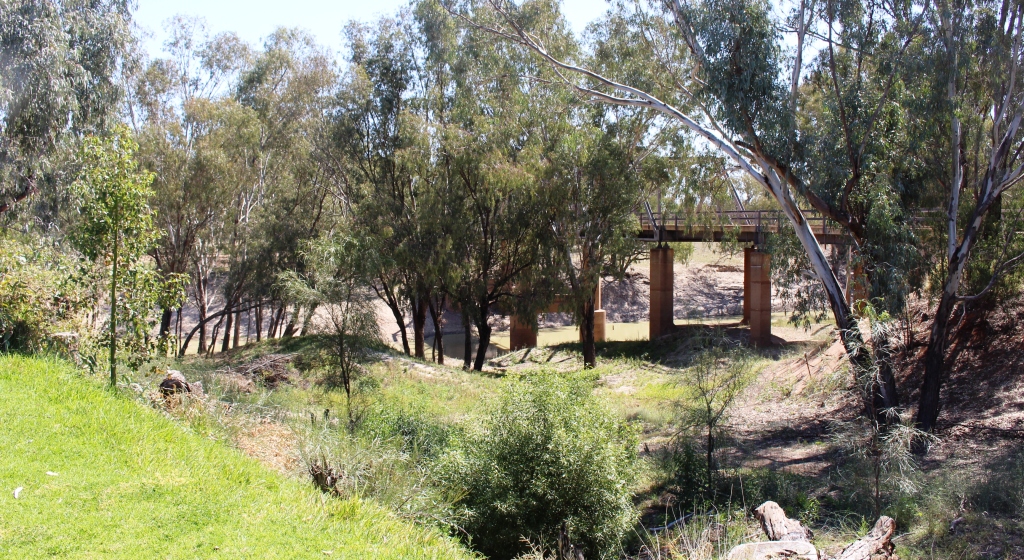
The bridge over the Darling at Louth

The bridge over the Darling at Louth

Shire web site declared the dirt parts of the Louth Road open to light traffic, so we were good to go next morning.

It is about 150 kilometres from Cobar to Trilby Station, the first third of which was a good sealed road with the balance varying between good and not so good dirt

Range lands west of the Darling River

Range lands west of the Darling River

and gravel. The country side is fairly flat and scrubby with cleared areas for agriculture and grazing. There was not much road kill and we saw one kangaroo, hundreds of feral goats and more emu than I think we have seen anywhere.

A sign at the pub in Louth declares it to be the site of the “East Side Port”. The Darling River is currently at a level

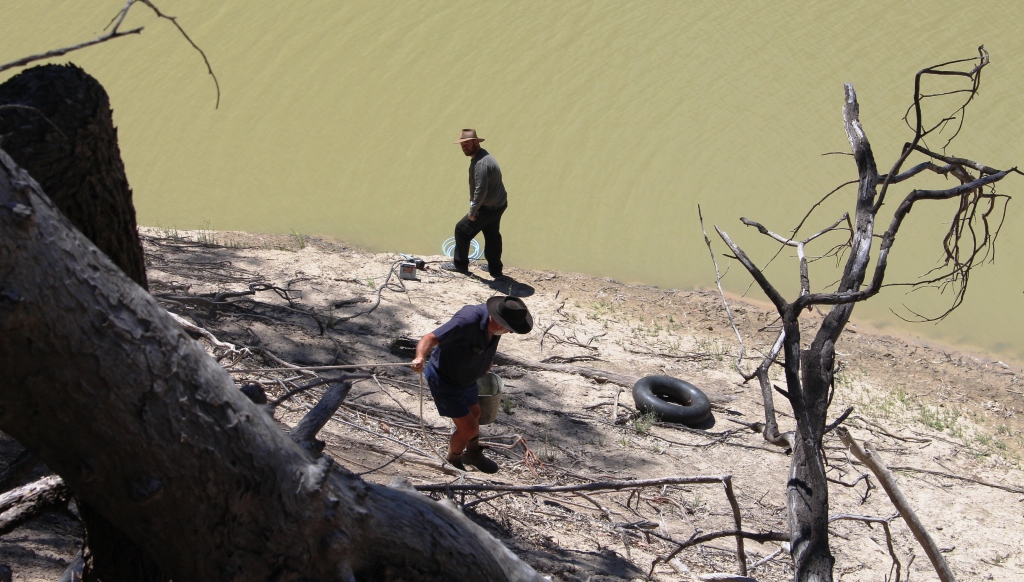
It's a long climb down to the water

It’s a long climb down to the water

that would have made it unusable to paddle wheel steamers with not much water and plenty of exposed sand banks, but the height of the exposed banks shows the adequate navigable depth available when the river is running near to the top of the banks, or even when only partly full.

Louth is a very small town with a district population of 103 at the last census. The pub doubles as shop, restaurant and fuel supply. It has an attached camping park. The town also boasts a tennis club, and turf club. The annual race meeting attracts folk from near and far. It is an event of such significance that the Bourke Shire Council grades the approaching gravel roads in preparation. That all occurred not that long before we were there and the roads were generally in quite good condition as a result.

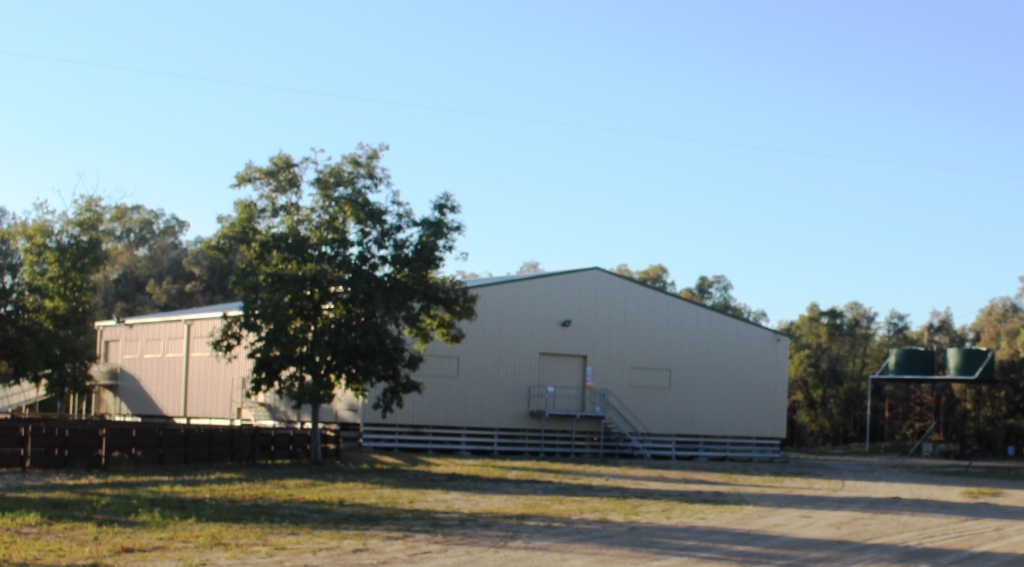
The wool shed provided a venue for our group activities

The wool shed provided a venue for our group activities

Trilby station is on the west side of the river, so we crossed the bridge over the Darling and drove the 25 km to our destination. Users of the ExplorOz web site (the one to which I direct you if you want to follow our movements) conduct what are known as “gatherings” at locations around Australia. They are self help ventures and can be set up by an individual. Interested

Accommodation is available on the shearers quarters, located among shady trees

Accommodation is available on the shearers quarters, located among shady trees

members then indicate their interest and the convener makes sure that all of the details are pulled together.

About 120 of us gathered at Trilby Station. Some of us occupied powered sites near the homestead while others camped in a series of camp sites along the river. Trilby has Telstra Next G coverage so we were able to maintain contact with the outside world.

Vans on the powered sites naer the shearers quarters

Vans on the powered sites near the shearers’ quarters

Gathering programs are not very formal and attendees are left to do what they like for most of the time. There is a formal meeting at around 3.30 each afternoon where fund raising activities take place. The station owners, the Murray family (Murrays living on the Darling), hosted a three course dinner in their modern wool shed on the Wednesday night which also saw some fund raising activities, including the rather unpredictable sport of yabby racing. The beneficiary of the charitable activity was the Louth committee of the Royal Flying Doctor Service to who we presented around $3,200. They were delighted!

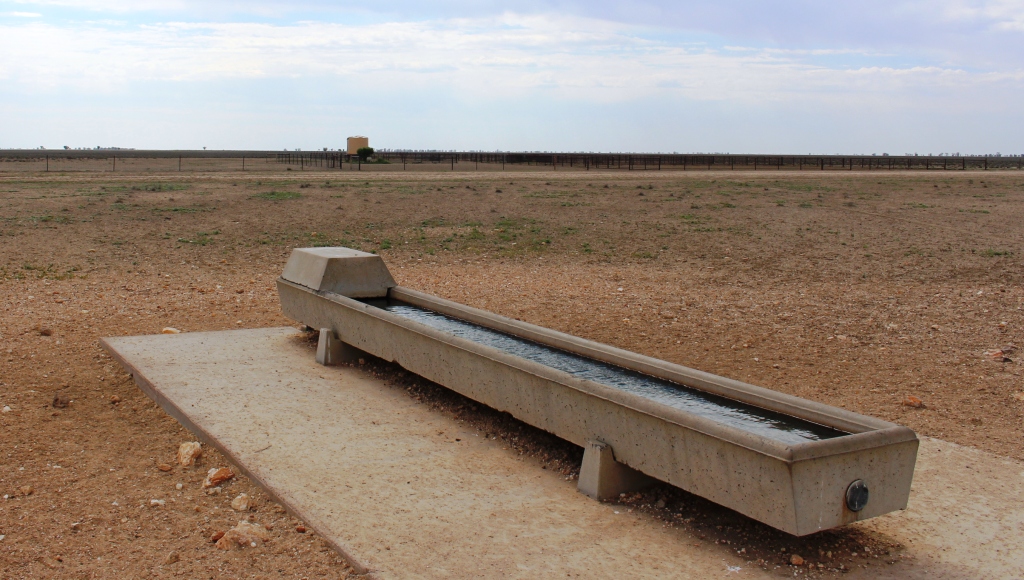
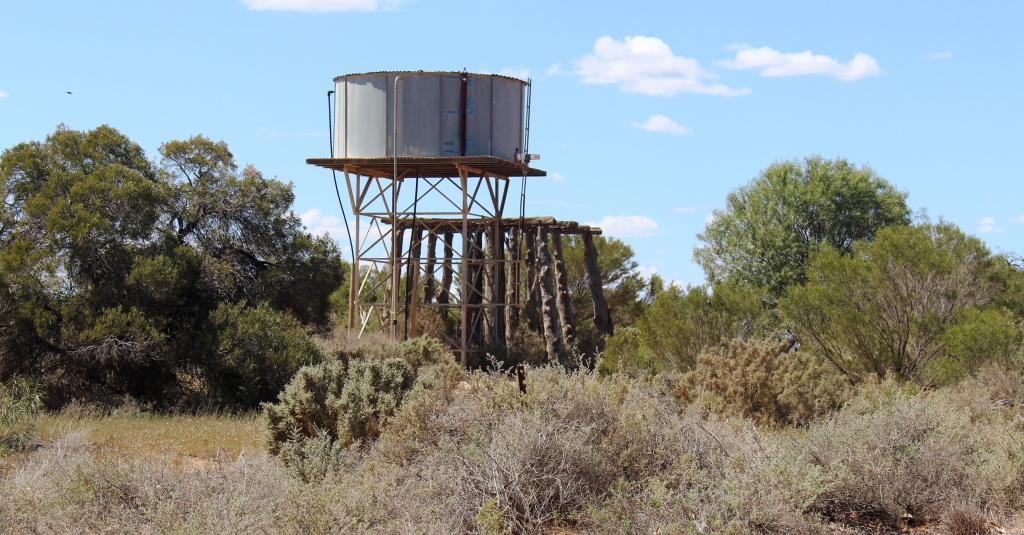
Water trough with a storage tank in the background.

Water trough with a storage tank in the background.

One available activity was to borrow a station “mud map” and take a look at the property. There is no shortage of roads to drive. Trilby Station covers 320,000 acres and supports up to 24,000 Marino sheep. On the day of our arrival they were sheering the station rams, of which there are about 300. Quite a hand full for even an experienced shearer! There are 6 sheering stands in the very modern

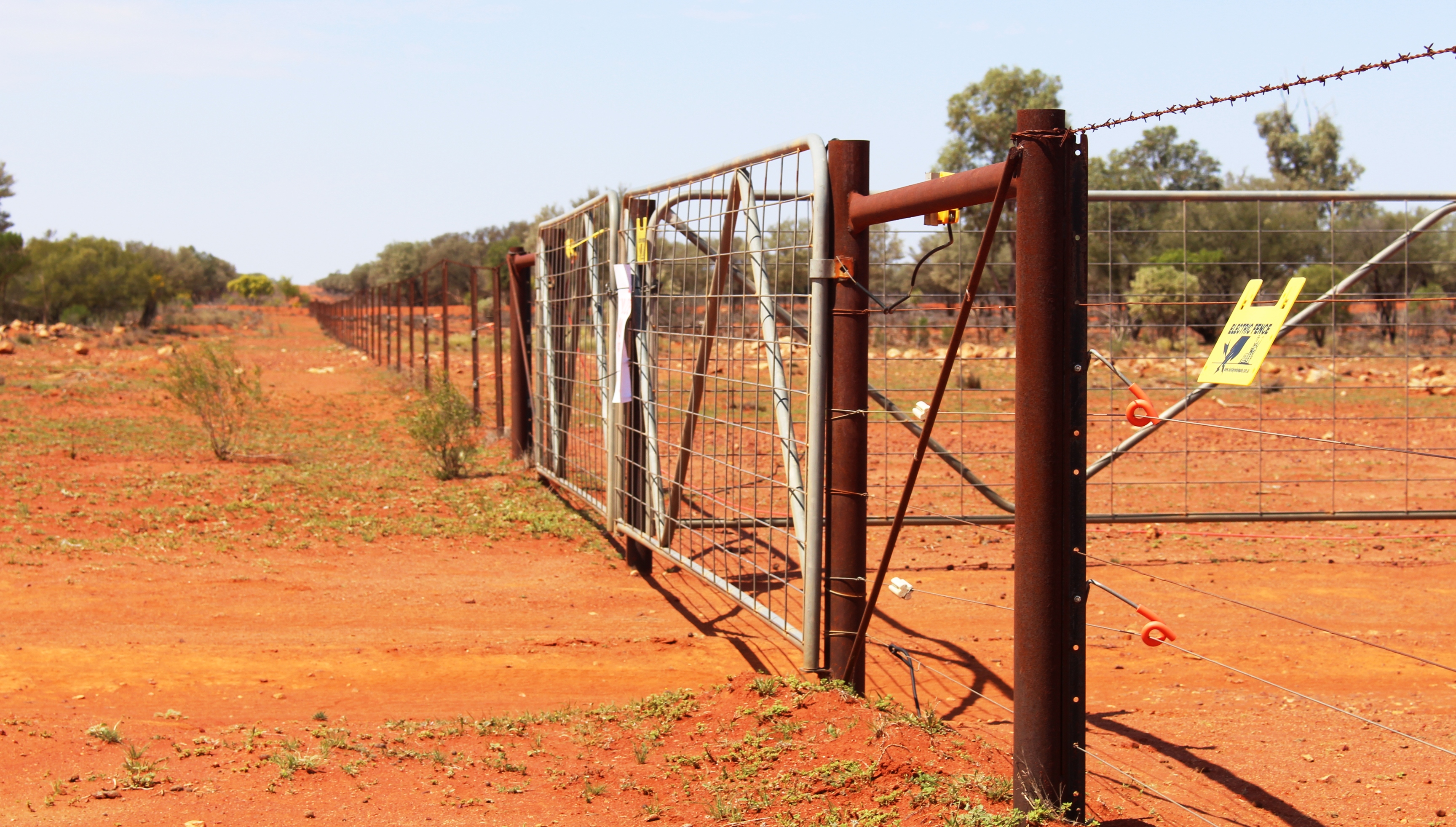
A long straight fence

A long straight fence

and clean wool shed. Wool producing activities are supplemented by the capture of feral goats which are fattened for the export market.

We did both station drives on roads with multiple gates. Ruth says she opened and closed about 20 of them. The longest station tour was about 80 kilometres with a distance at one point of 8 kilometres between gates in a direct line. I think that was what they call the 50,000 acre paddock.
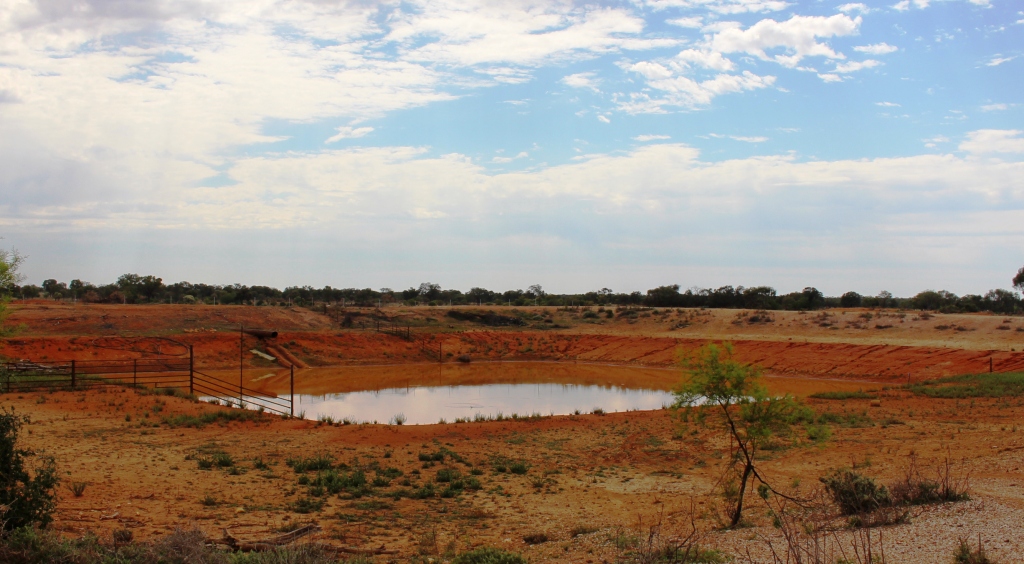
A ground storage tank or dam

A ground storage tank or dam

As you drive around this type of semi arid property the paramount value of water becomes very obvious. Tanks, both the conventional above ground type and those dug into the ground, appear at regular intervals with accompanying drinking troughs and windmills or pumps to lift the water. This country sits atop the Great Artesian Basin so that is the main source of water but rain is needed to provide feed for the sheep.
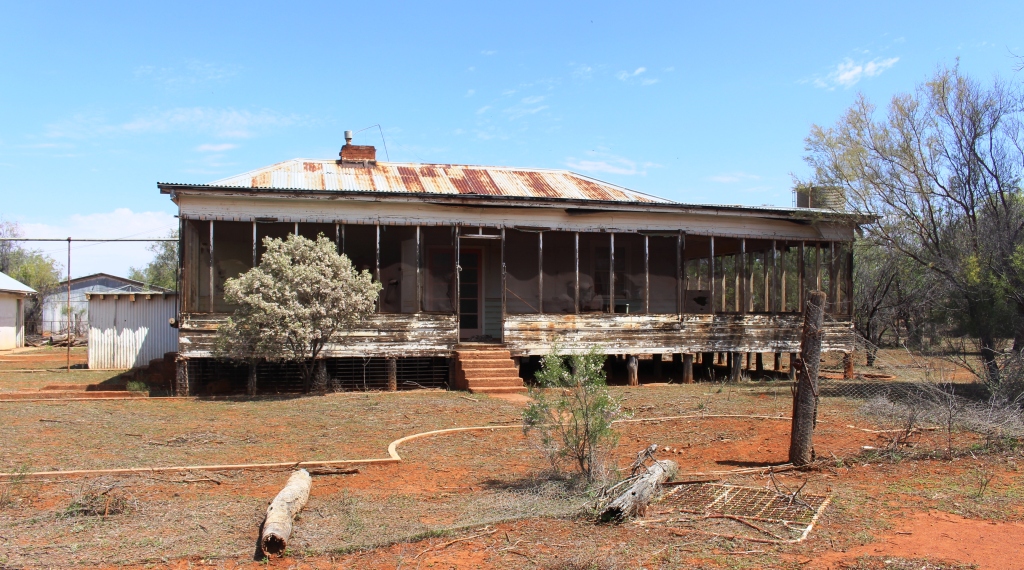
Abandoned New Chum homestead

Abandoned New Chum homestead

In these days of increasing station size, properties are often merged. Sometimes the second homestead is used as a residence for station workers but at times these houses are no longer required. Such was the case on Trilby many years ago. The occupants of what had been the New Chum homestead were moving to a fully furnished house so just walked out, taking only

Ruth remembering going to work in Sydney

Ruth remembering going to work in Sydney

clothing and personal effects and left everything else there. In case someone was stranded and needed it, they said. The homestead is a feature of the drive, still remarkably intact, with packaged food items and crockery still in the cupboards.

Nearby a large tank or dam supplied many of the racing

Sheep on the higher country near New Chum homestead. The hills in the far distance are on the other side of the Darling

Sheep on the higher country near New Chum homestead. The hills in the far distance are on the other side of the Darling

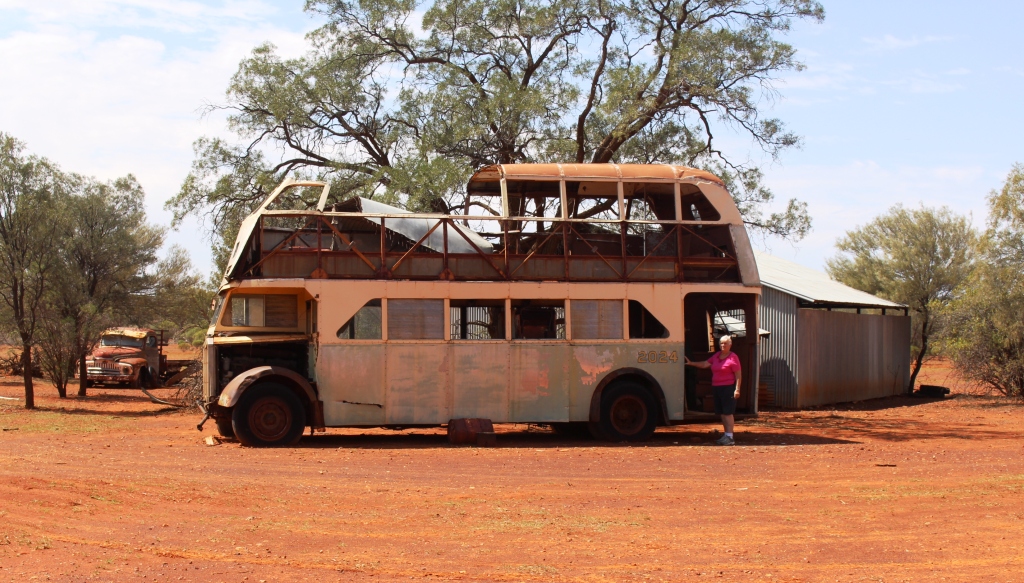
yabbies and continues to supply water to the stock. The aircraft hanger still stands and is host to a collection of old motor vehicles including a very old Sydney double decker bus. The air strip is still used for station activities.

The second mud map excursion, which we did a couple of days later, took us to the area where

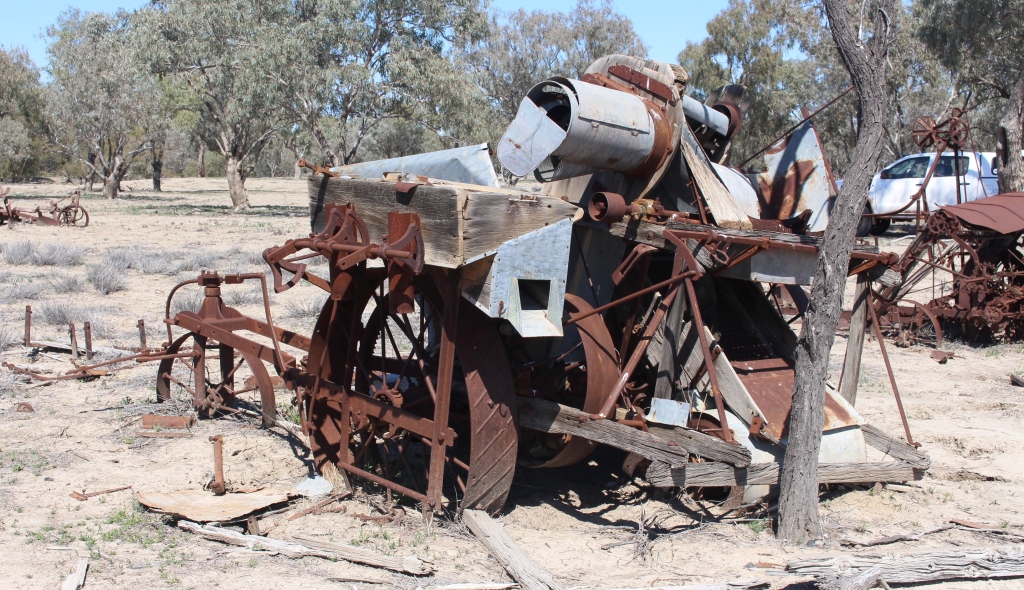
This machine appears to be a harvester of some kind

This machine appears to be a harvester of some kind

agriculture once flourished, mainly as a food source for the large number of animals that provided the energy to get things done on the property. The area is adjacent to the Darling River and is the final resting place of the early farm machinery. Name plates include some well known names such as H.V. McKay & Co.

The remains of the wood carrying jinker

The remains of the wood carrying jinker

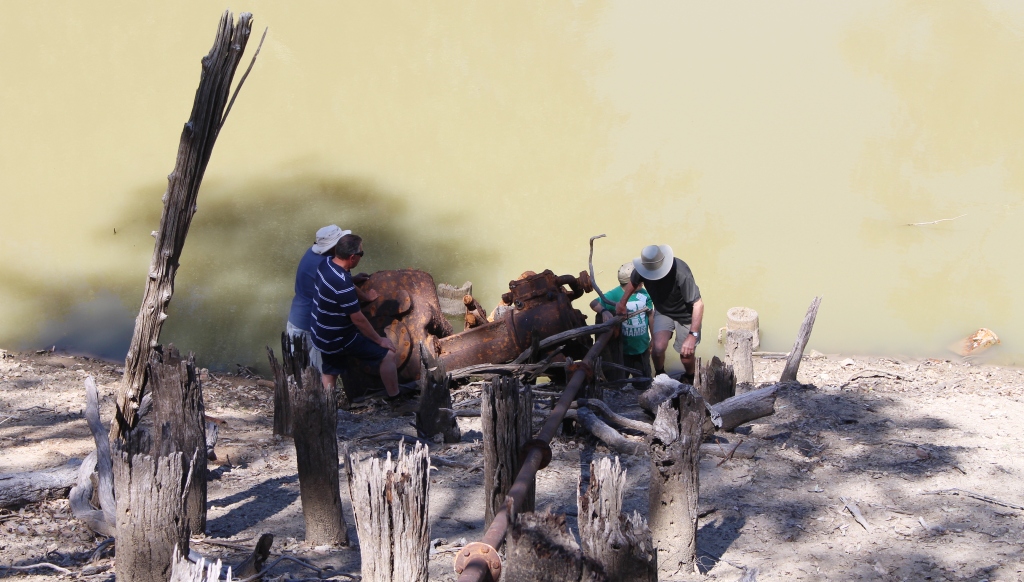
Of particular interest to me was the remains of the jinker that was used to transport wood for the boiler that provided steam to drive the water pump that drew irrigation water and water for the stock, from the river. It had wheels made from sawn sections off a log.

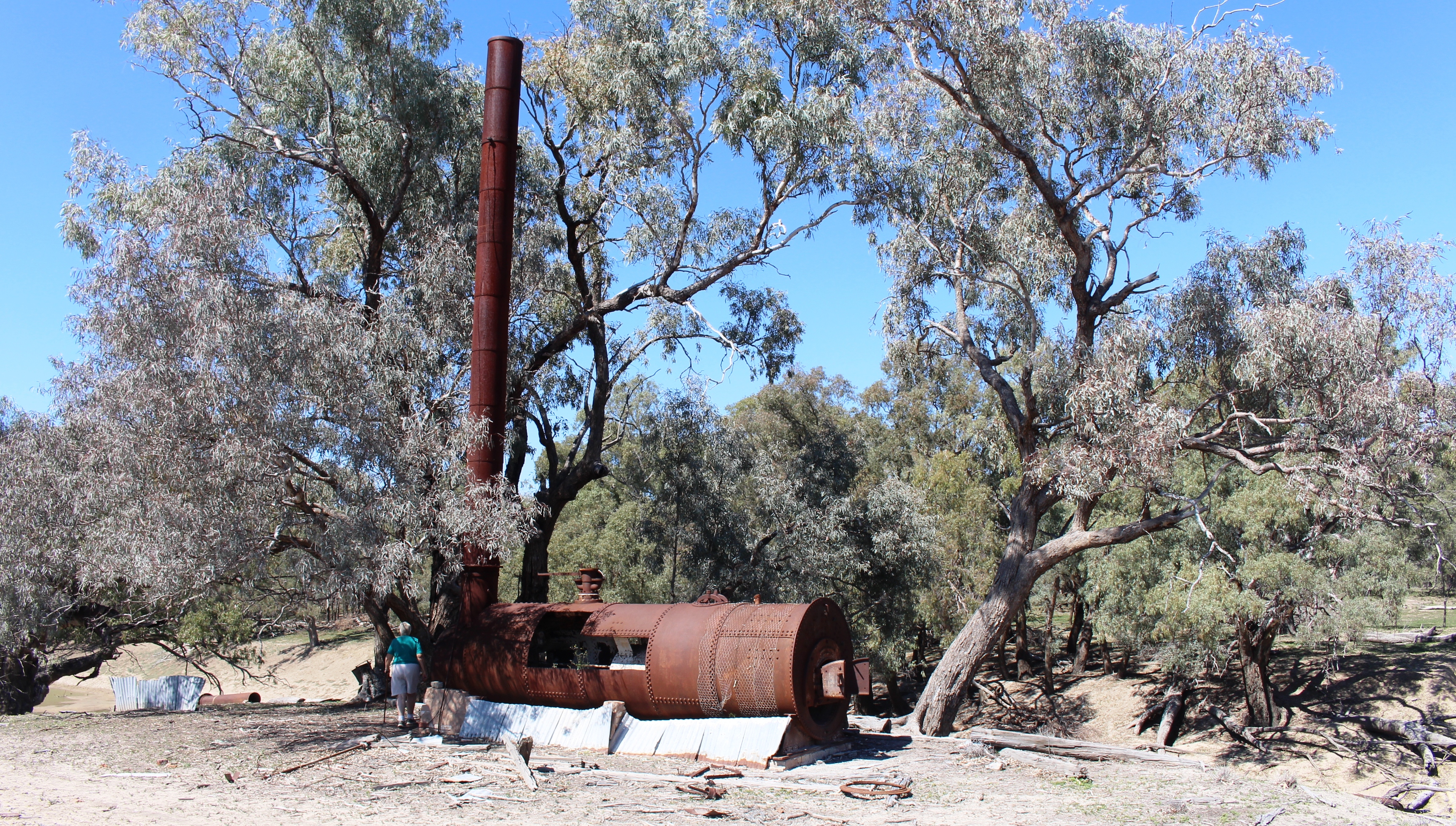
The remains of the boiler stand on the edge of the bank above the river, and a pipe still connects to the pump that lies partly submerged at

The steam boiler on the river bank

The steam boiler on the river bank

the edge of the river. The pump formerly resided under the bottom end of a slide wharf that was used to load wool and unload supplies, but has been left exposed as the timbers have rotted away.

Floods are quite common along the full length of the Darling and Trilby is no exception. There is no need for there to have been local rain as

Members of our party examine the pump at the waters' edge.

Members of our party examine the pump at the waters’ edge.

Darling River floods come from afar, mostly from the central highlands of Queensland. Rivers from this area, starting with the Paroo that raises North West of Charleville and then successively swing in an arc to the south east to the McIntyre River that forms the NSW/Queensland border, and several in northern NSW, all run into the Darling. So, a few weeks after places like Charleville and Roma flood the good folk at Trilby will find themselves isolated on their own island, formed by the levy banks that keep the waters of the Darling away from the homestead and other important buildings. It is just as well that the levy banks enclose the air strip and hangar. But that is by design.

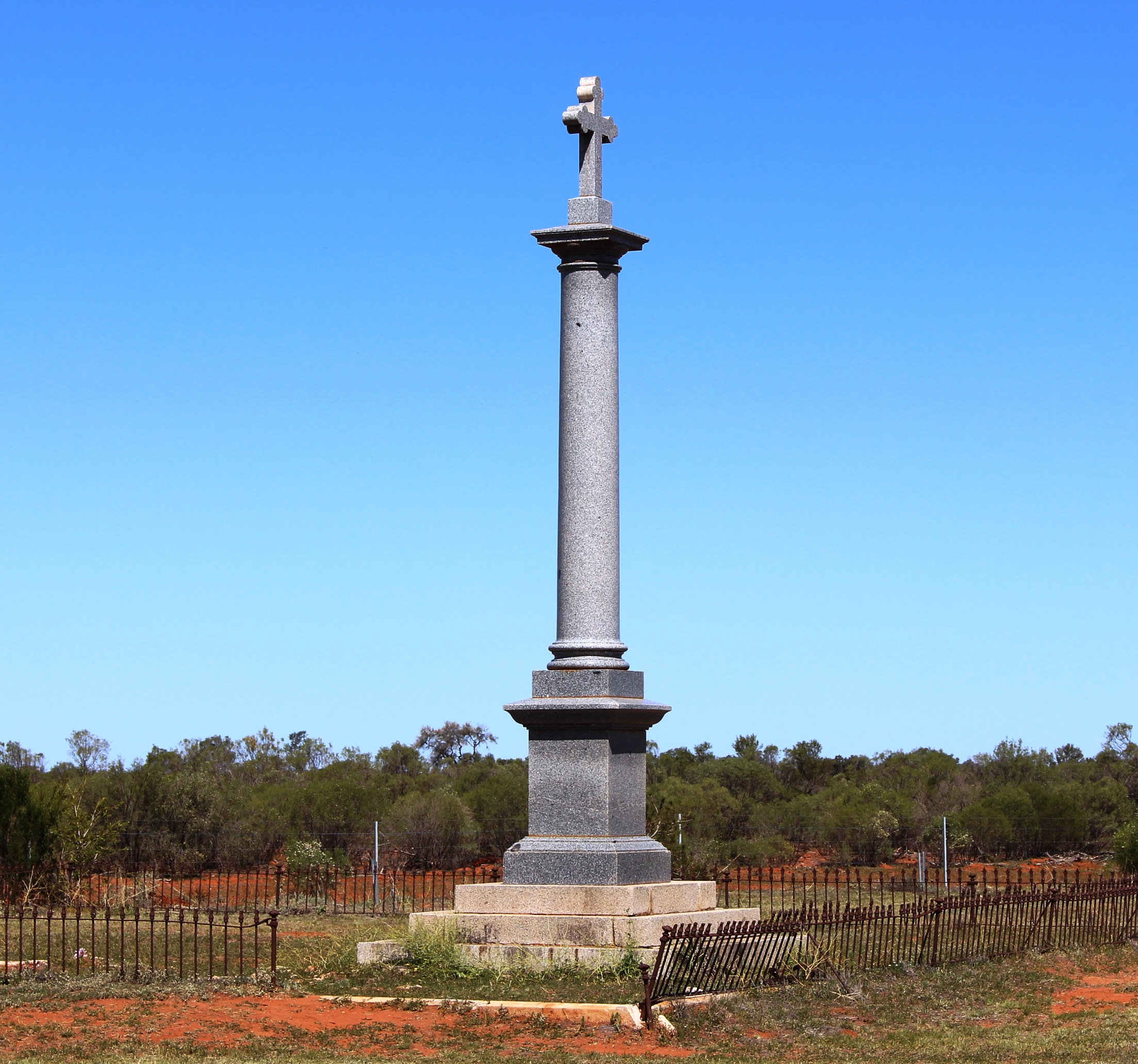
A memorial to Mary Mathews, first wife of TA in the cemetery. On the anniversary of her death the polished cross reflects light onto the spot where the house stood in which she lived.

A memorial to Mary Mathews, first wife of TA in the cemetery. On the anniversary of her death the polished cross reflects light onto the spot where the house stood in which she lived.

One of the founding fathers of the district, an Irishman by the name of Thomas Andrew Mathews, later known as the King of Louth, was born in County Louth in Ireland, hence the name of the town. One of TA’s early business ventures was a pub on the river bank. There is a pub there today called Shindy’s Inn, which is the one that provides most of the services available in the town. On out last day in the area, in company with friends from the gathering, we adjourned to Shindy’s Inn for lunch. We were seated at a large table sawn from a large log and shaded by conveniently placed trees. The food was excellent and the beverages cold.

Liz Murray, hostess to guests at the station, came to the area to work in the late 1970s, met Garry Murray at Shindy’s Inn, married him and has never left the area. Garry is a descendant of early pioneers. At about the time that TA Mathews was establishing Louth the first Murray to the area built a pub further down the river. But he died in his thirty’s and his family decided that there was more money in cattle and sheep than beer, so he became a farmer. Garry and Liz continue the family calling.

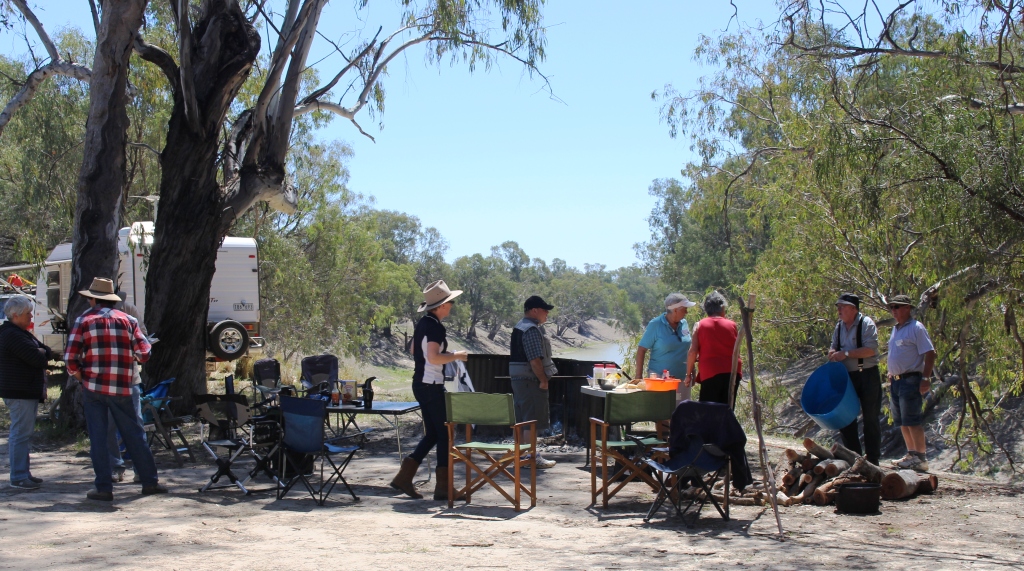
The Darling River in the background of the cooking site

The Darling River in the background of the cooking site

On Wednesday, the day between our two mud map tours, we took instruction from friends Trev and Marg in the art of damper baking. The first attempt was successful, producing an edible damper. Marg supervised, Ruth mixed and I watched. Much of the success, however, was due to Trev’s stewardship of the fire. He had prepared excellent quality red hot

The result of our cooking. Our damper is on the left

The result of our cooking. Our damper is on the left

coals and skilfully heaped them around the base and on the lid of the camp oven. I then assisted by eating my share. On a future trip, when we can light a camp fire, we will have a go on our own. We will report results – perhaps!


And the recipe?

  • Four cups of self raising flour
  • A bit of salt (to taste)
  • Water to produce suitable consistency (like scone dough)

Put it in the camp oven, add coals and keep taking a peep to make sure that it is not burning. Eat with butter and golden syrup, preferably while still warm.

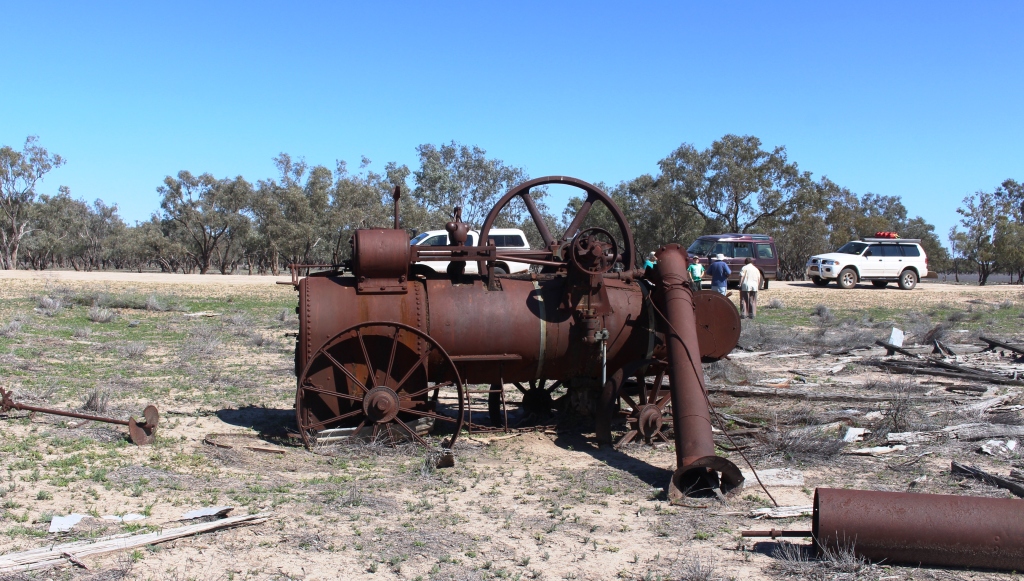
A steam traction engine lays where it was last used, about 80 years ago

A steam traction engine lays where it was last used, about 80 years ago

Fellow attendees at the gathering had indicated that the road back to Bourke was a bit rough at the southern end (it is dirt all the way) but reports on the alternative road that runs on the western side of the river were much better, so we chose that road as our departure route. We were not disappointed and had a smooth road all of the way with the exception of some corrugated areas at cattle grids.

A alrge ground tank complete with a goat trap

A alrge ground tank complete with a goat trap

We stopped for morning tea by a stream and found that it was the lower reaches of the Warrego River that flows through Charleville and Cunnamulla. This route brought us into Bourke from the north, past the site of Fort Bourke, established by Major Thomas Mitchell on his expedition through the area and past the cotton growing area that is irrigated from the Darling.

Sunset through the trees at Collarenabri

Sunset through the trees at Collarenabri

Two more nights spent along the way and we were home. Despite challenges from the rain we were able to visit most of the areas that we had planned. But the Darling River between Louth and Wentworth, where it joins the Murray River, remain as a challenge for another day.

Liz Murray has prepared a detailed history of the family, station and district,  a copy of which was part of our arrival kit. So I am indebted to Liz for the historical detail that is included in this post.


Journey to Trilby Station – Lake Mungo National Park

Our ultimate destination was Trilby Station, which is located on the Darling River, about 120 kilometres downstream from Bourke, but we went the long way around. Our “via” point was Mungo Lake National Park, which is part of the Willandra Lakes Word Heritage Area. It is located about 100 km north east of Mildura in Victoria.

I had forgotten that Melbourne and Adelaide truckies, wanting to be home by the weekend, leave Brisbane on Thursday morning. It was on Thursday morning that we set off and found ourselves jockeying with them for space on the Cunningham Highway. But that situation eased when we turned off at Warwick to follow the New England Highway to Stanthorpe, to spend the first night of the trip with Ruth’s brother David and his wife Anne, on their bush block just out of town.

There were fewer trucks again next morning as we continued on to Tamworth, where we turned right to Gunnedah to start a couple of days driving on roads less congested than the major Highways. After a pleasant and quiet night at Lake Keepit we turned south just past Gunnedah and continued on minor roads, almost to the major town of Orange, before turning right to Forbes, from which point we followed the main highways to Balranald. We spent intervening nights in Molong and Hay.

Golden canola fields

Golden canola fields

There must have been good rainfall across that area of NSW over recent weeks. Luxuriant green wheat was about knee high. The wheat fields, of which there are endless expanses, are interspersed with the brilliant yellow of canola. No matter what else is missing from the dinner

A quiet street in Molong, NSW.

A quiet street in Molong, NSW.

table in the months to come there should be no shortage of bread or margarine.

After spending a night at Molong, near Orange and then turned west to Forbes from where we followed the Newell Highway to West Wyalong.

After passing through West Wyalong, the undulating country of the Western Slopes was behind us and the flat country began. The Hay Plains has to be one of the flattest areas of Australia. For much of the drive to Hay the

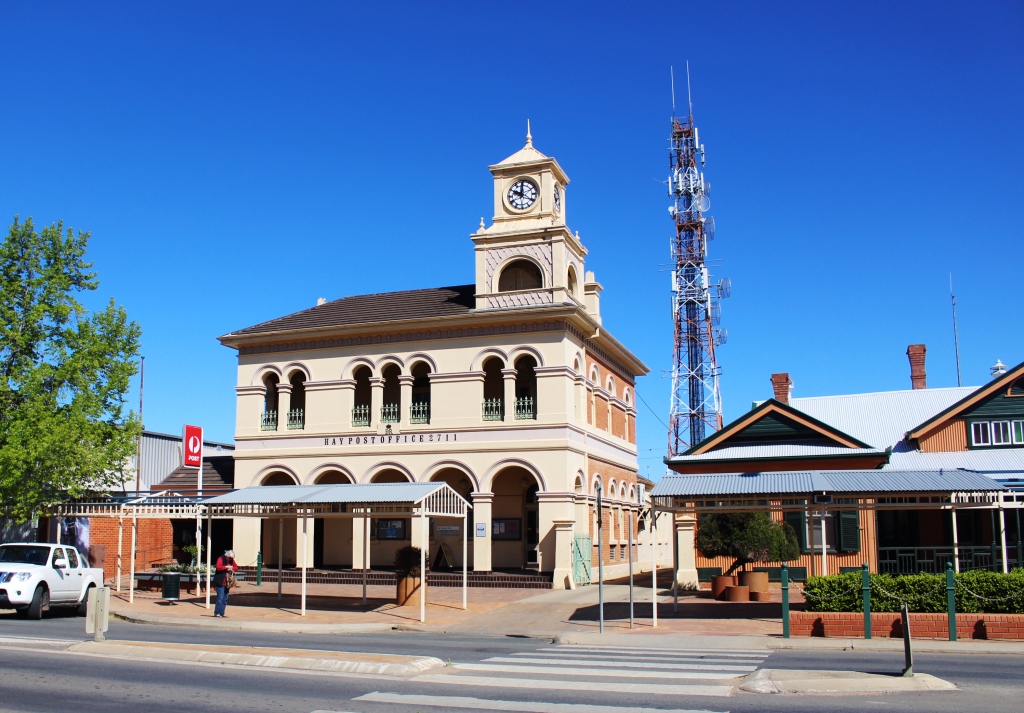
Hay, NSW Post Office

Hay, NSW Post Office

horizon is a huge circle, barely interrupted by a hump, let alone a hill. The flatness extends well past Balranald. The Murrumbidgee River flows through the middle of it all and finally strikes sufficient resistance to turn south where it joins The Murray River upstream from Robinvale.


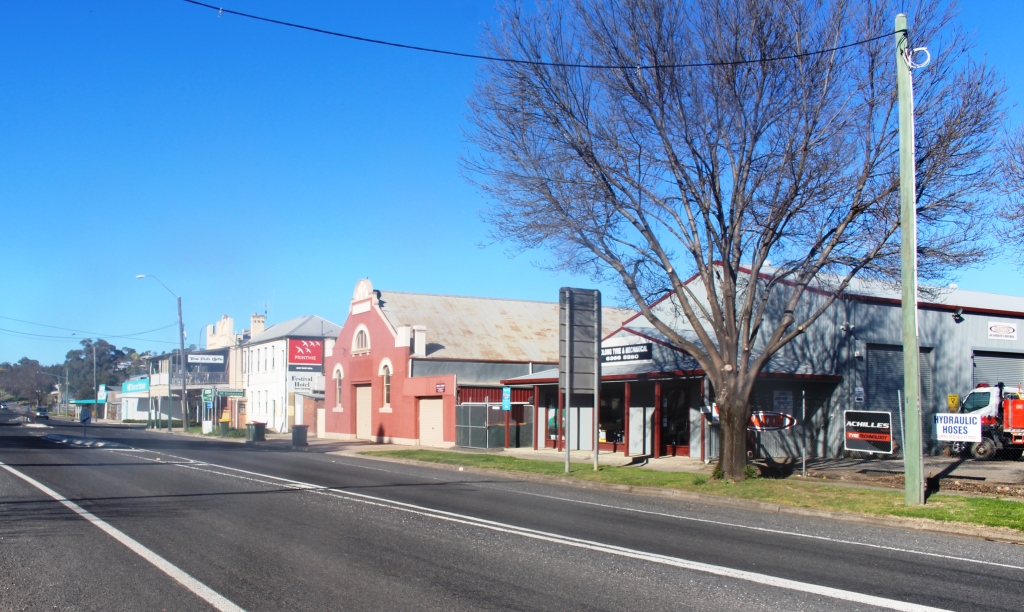
The deserted main street of Hay on a quiet Monday morning

The deserted main street of Hay on a quiet Monday morning


Hay's swimming beach on the Murrumbidgee River.

Hay’s swimming beach on the Murrumbidgee River.


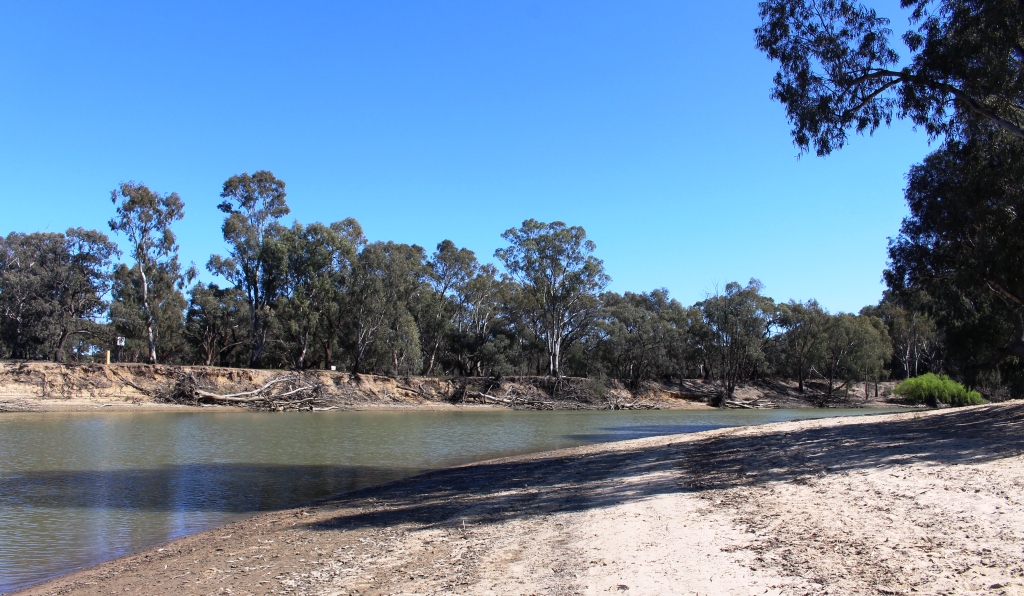
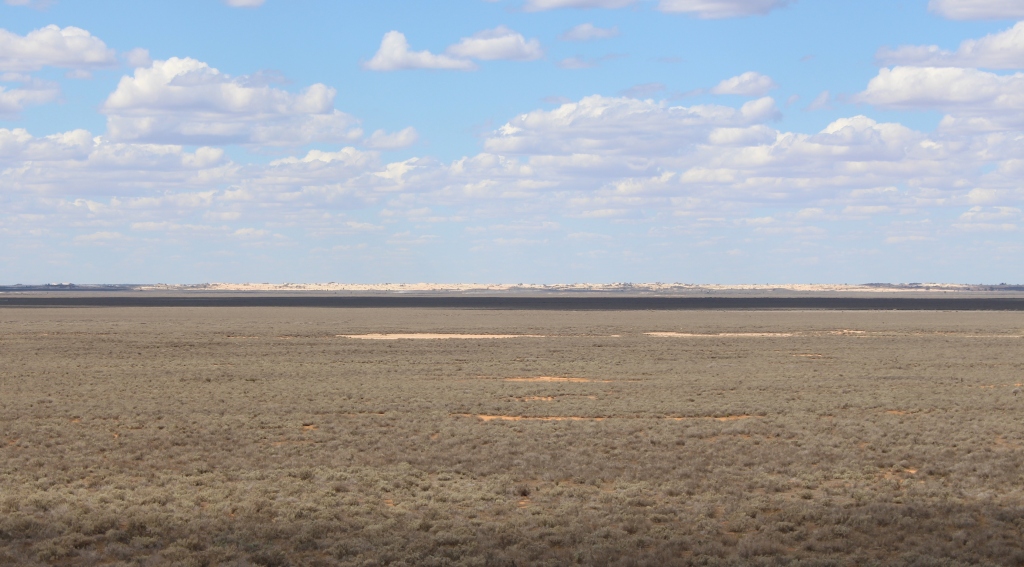
The dry lake bed at Mungo National Bank

The dry lake bed at Mungo National Bank

Mungo is a further 150 kilometres north west of Balranald. The final two thirds of the distance is unsealed, but in excellent condition. We travelled at 70 to 80 kph for much of the way.

I think it fair to say that Lake Mungo is probably different things to different people. It is regarded by those who claim traditional

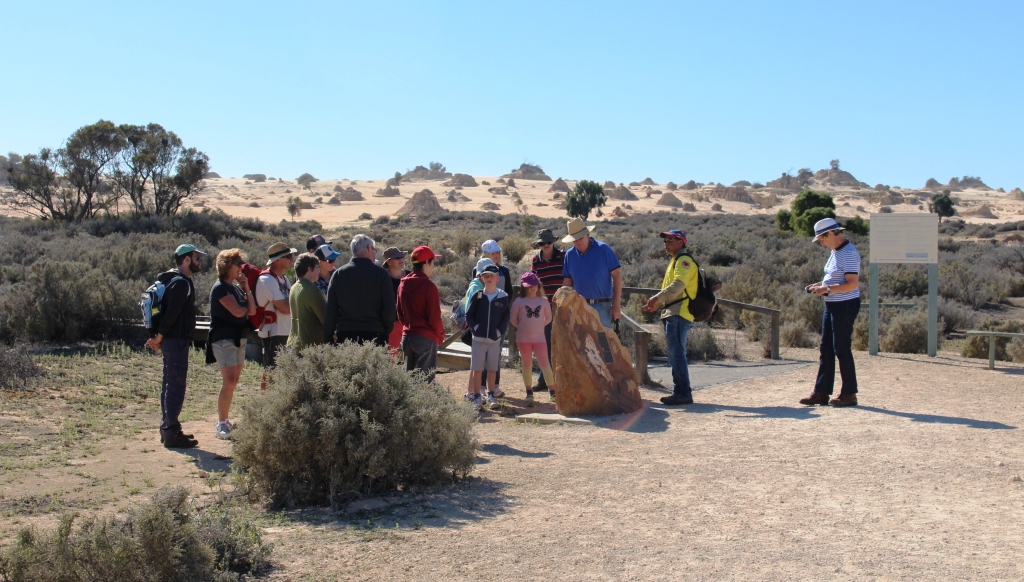
A tour group being guided by an Indigenous ranger

A tour group being guided by an Indigenous ranger

ownership and people such as anthropologists, paleontologists and natural historians as a very significant place. Those who love the outback enjoy its isolation. If you are interested in early Australian history then there is plenty there for you.

Lake Mungo is one of a series of now dry lakes that formed along a

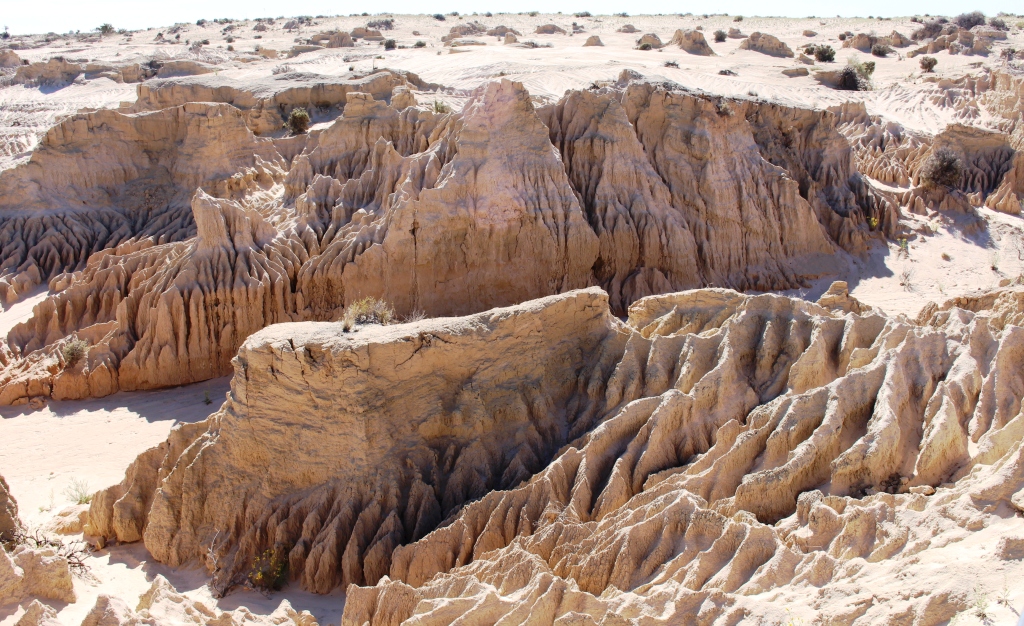
The Walls of China at Mungo

The Walls of China at Mungo

stream. Many thousands of years ago the lakes were full of water.  They are now dry, unless there is a local flood, but even then the water does not hang around for long. Prevailing winds (westerly) have created dunes on the eastern edge of the lake. But they are not ordinary sand dunes. The Mungo dunes are comprised of a

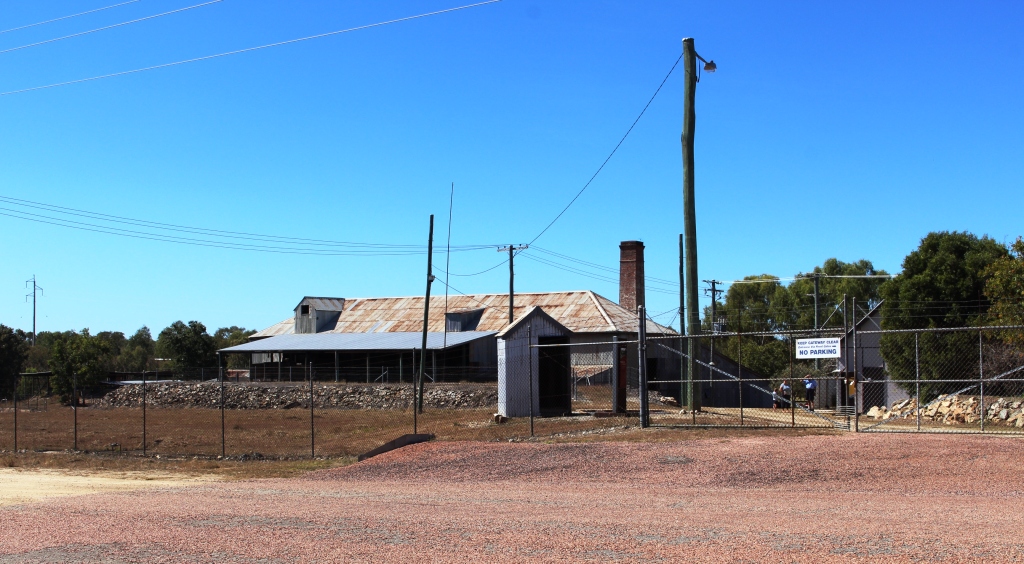
Weathering at Red Top Lookout

Weathering at Red Top Lookout

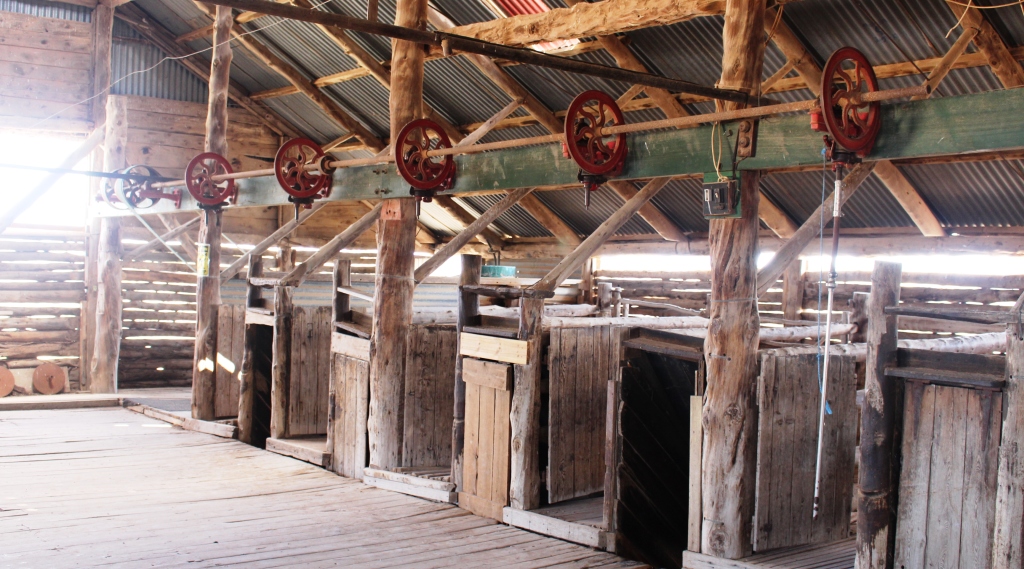
Sheering stations in the old Mungo Station woolshed

Sheering stations in the old Mungo Station wool shed

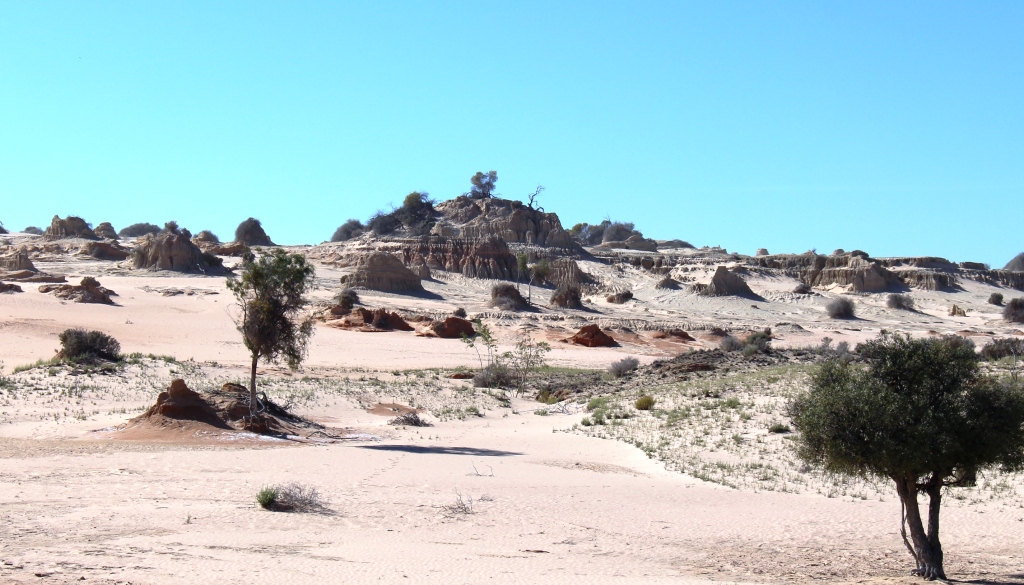
material that looks like sand but weathers selectively to form intricate geographical formations. These structures are called lunettes, because they appear like small lunar landscapes. At Lake Mungo the main lunette area is called The Walls of China but I’m not really sure why. The area looks much more like a lunar landscape that the Great Wall of China.

The National Park is managed from the old homestead area of Mungo Station. The park is comprised of Mungo and the neighboring Zanci Station.  A visitor centre, a new building near the original Mungo wool shed, tells the story of Lake Mungo and its inhabitants from the earliest times until today, in comprehensive and eloquent style. Self guided tours are available and are supplemented by Indigenous ranger lead tours that deal with the cultural aspects of the area.

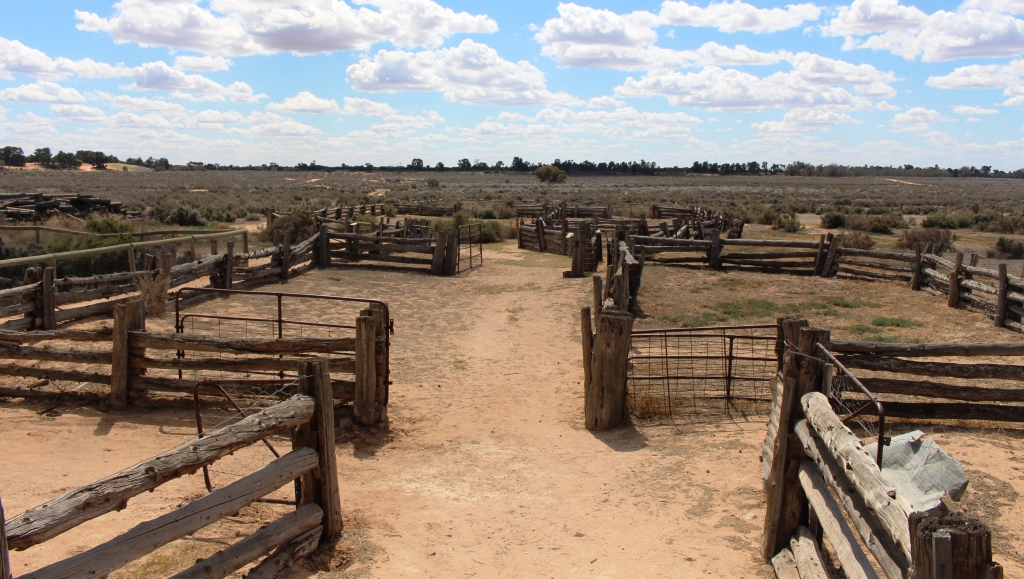
Sheep yards at Mungo were built from local timber, mostly cypress pine

Sheep yards at Mungo were built from local timber, mostly cypress pine

Because of approaching bad weather we were faced with a choice. We could do the guided tour of the Walls of China or take the 70 kilometre loop drive around the lake and surrounding areas. We could not do both and still get back to Balranald that day, which we wanted to do to avoid the approaching rain. To stay risked being trapped, as all roads leading to and from Mungo are dirt and subject to closure after rain.

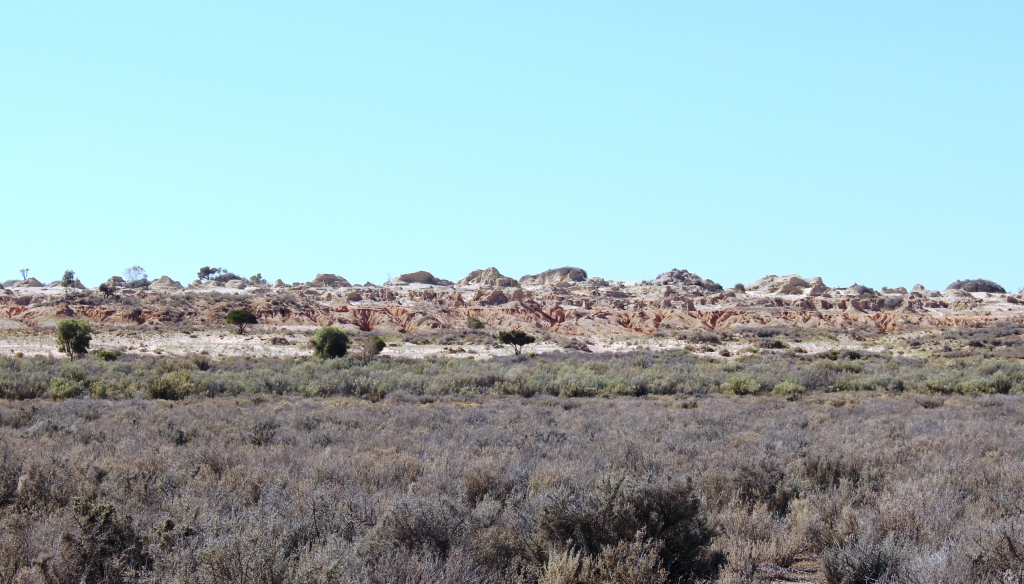
Part of the lunette area known as The Walls of China

Part of the lunette area known as The Walls of China

The mortal remains of a male and a female Aboriginal people were discovered in the area of the Walls of China at different locations in the late 1960s and early 1970s. I understand that the tour, which includes a walk through this area, covers the details of this discovery. As the guides are Indigenous park rangers, we concluded that the experience would be cultural rather than scientific, so we opted for the drive. We wanted to see the terrain and visit the two historic sheep stations that make up the Lake Mungo National Park.

Ferrell goat trap on Mungo Station

Ferrell goat trap on Mungo Station

The journey to the first point of interest is a 10 kilometre crossing of the dry lake bed which leads to a boardwalk that provides views of The Walls of China lunette. The area is set up to give a good view of the extensive dune that runs for most of the length of the eastern shore of the lake. The accompanying photos will give you a better idea than my comments. But does it look like walls, Chinese or otherwise? I don’t think so. But it does look a bit like the surface of the moon.

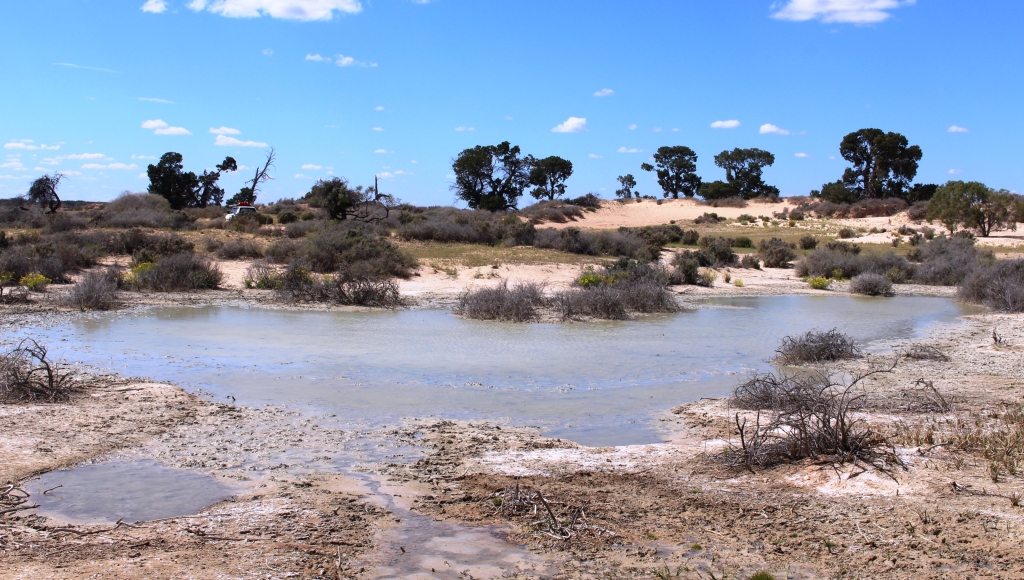
A permanent water soak near sand dunes where Cobb & Co stages used to cross the lake bed

A permanent water soak near sand dunes, where Cobb & Co stage coaches used to cross the dry lake bed.

Most of the features of the circuit drive relate to the period since Europeans arrived but Red Top Lookout, where the road swings from the lake bed and crosses the dune, provides a close up view of the fantastic erosion patterns that result from weathering in this environment. A catwalk extends to the edge of the eroded area and provides a real panorama.

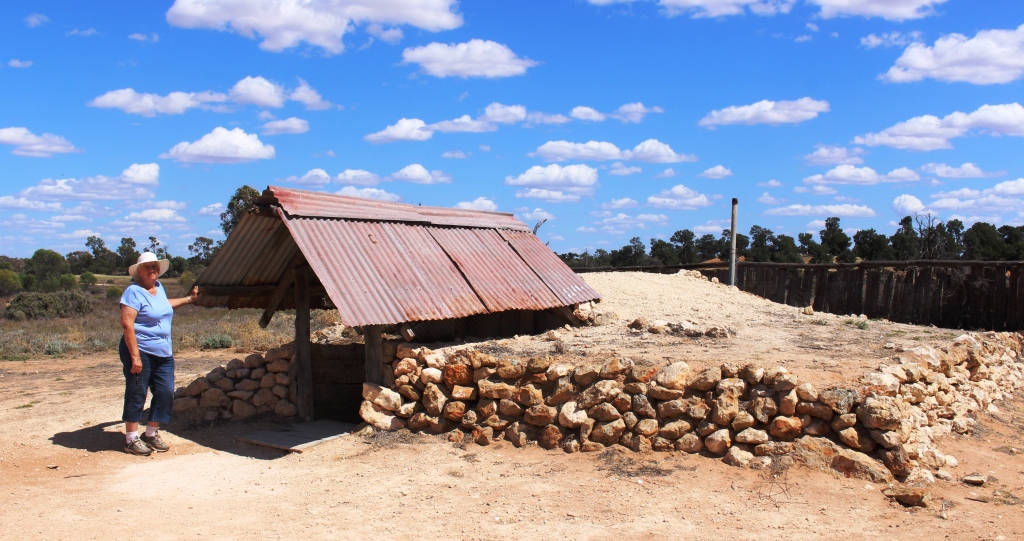
The under ground cool storage room an Zanki Station

The under ground cool storage room an Zanki Station

The explanatory signage is extensive and comprehensive. But the authors could not resist the temptation to ride their hobby horses through the text. Visitors are told repeatedly that the once abundant marine environment is now desolate because of climate change and that carbon dioxide is the villain. All this happened over a period of 100,000 years, mind you. I think Australia’s inland sea was evaporating at about the same time. Or was it draining because sea levels were falling?

Old and new tank stands

Old and new tank stands

The more likely reason for the dry lake beds is that some time during previous millenia the Lachlan River, which in earlier times had flowed through the series of lakes, changed its course to combine with the Murrumbidgee in its journey to the Murray and ultimately to the Southern Ocean. The Lachlan rises in the western foothills of the Great Dividing Range, an area of much higher rainfall than that enjoyed by the minor local stream that was left to the job of providing the lake chain with water.

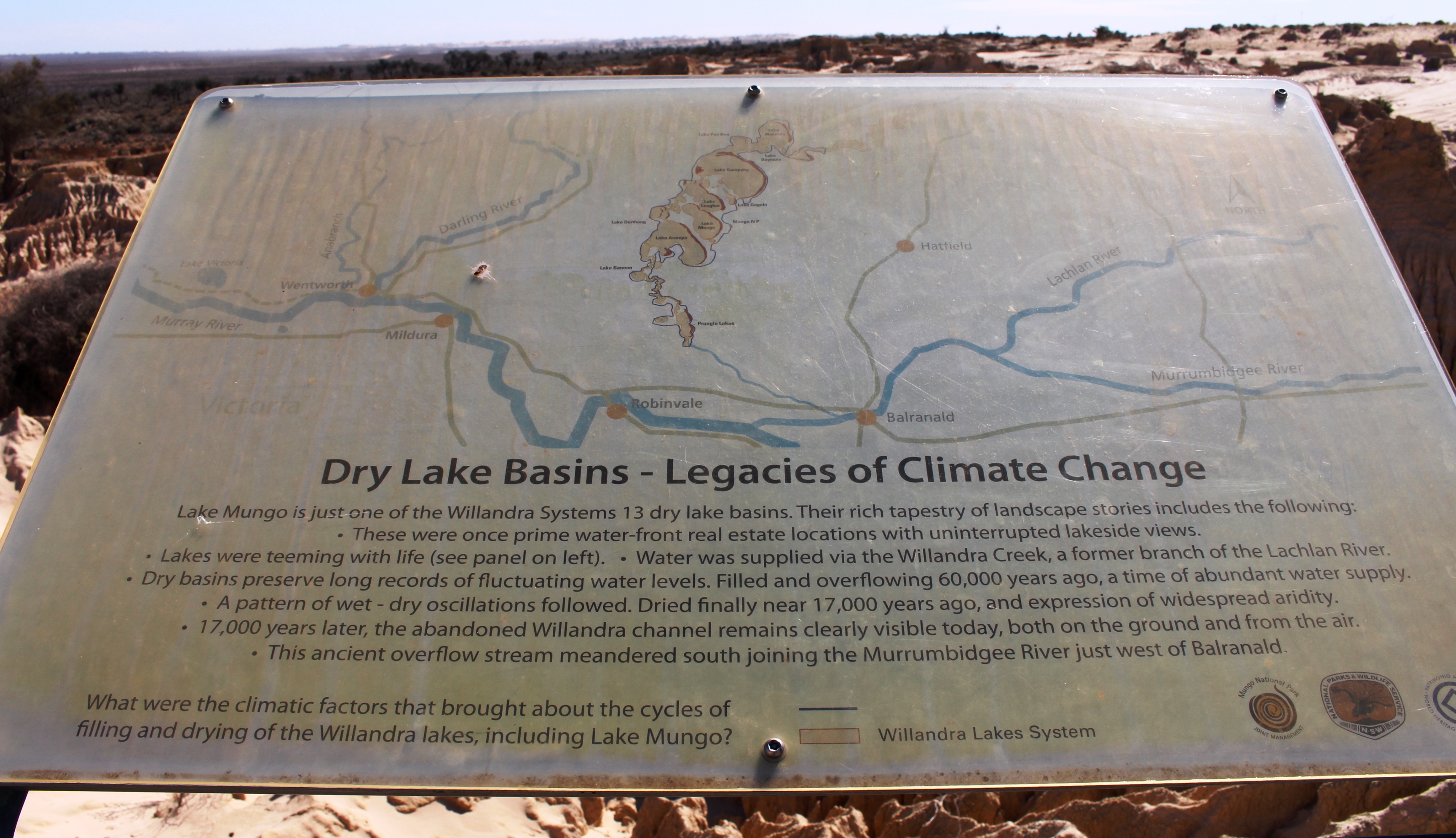
This sign is in reasonable condition

This sign is in reasonable condition

My other comment about signage is that much of it needs replacing. This is a problem that we find Australia wide. When places like Mungo are set up, the information signs are set up very professionally and tell the story very well, but then no one bothers with maintenance. Our harsh outback environment is hard on the graphic artwork of signs. They don’t last forever but the authorities don’t seem to notice.

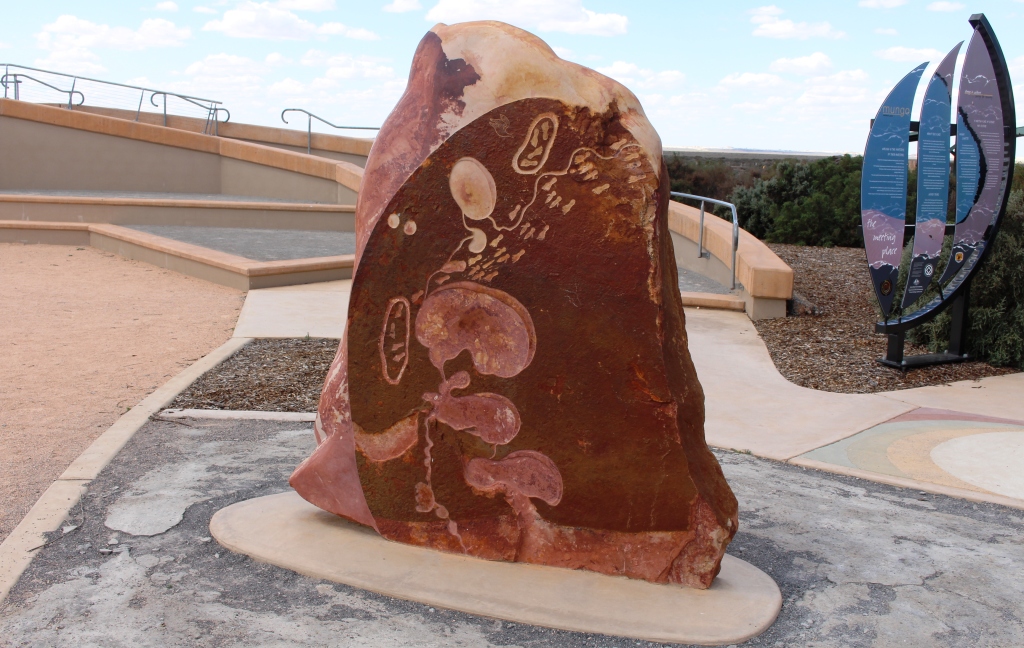
A sculpture at the Meeting Point at Mungo visitor centre

A sculpture at the Meeting Point at Mungo visitor centre

We packed up and left Mungo at about 3 pm, covering the 150 kilometres back to Balranald in just less than two hours. It rained in Balranald that night and in a lot of other places as well. A quick check of the NSW Main Roads Web site showed that all of the dirt roads on which we were to travel to Trilby Station were closed.


Final Highlights


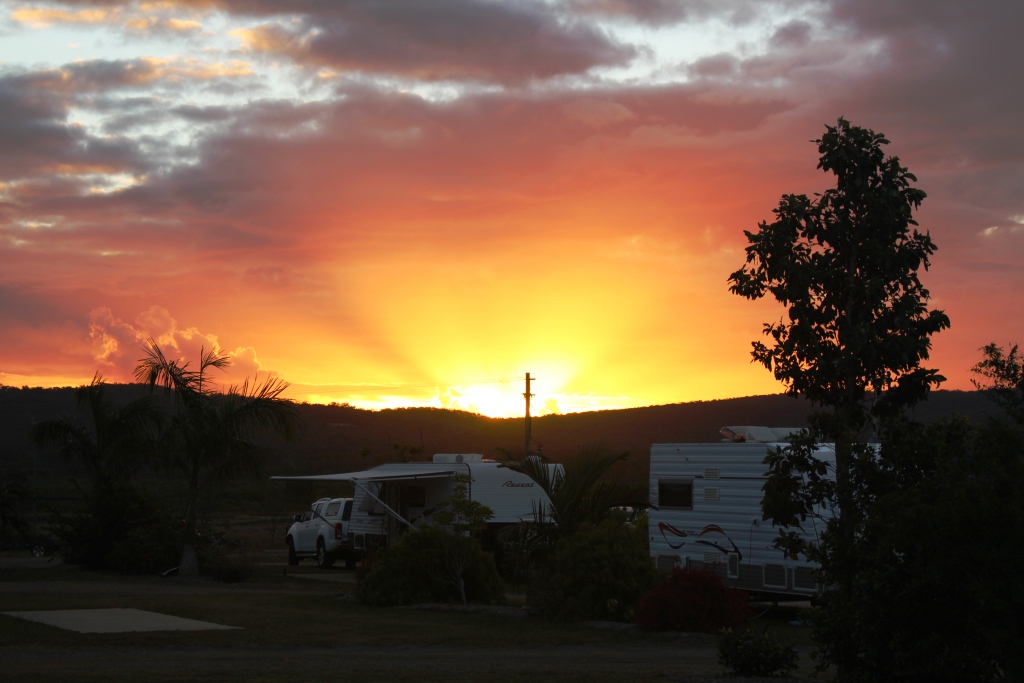
Lovely sunset. We had hardly seen a cloud in six weeks

Lovely sunset. We had hardly seen a cloud in six weeks

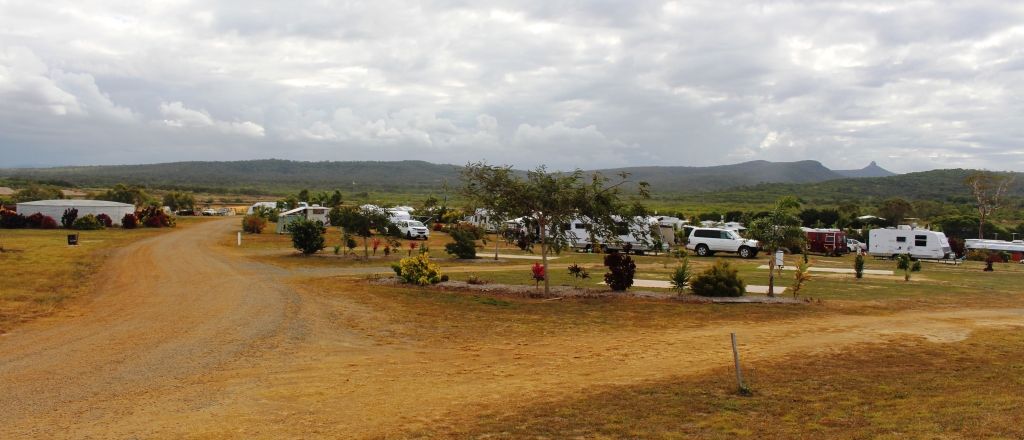
The caravan park south of Sarina, at which we stayed for four nights, is the Cape Palmerston Holiday Park. It is named for its proximity to Cape Palmerston and the Cape Palmerston National Park. The National Park is just a few kilometres to the north.

We were not the first on the beach that day

We were not the first on the beach that day

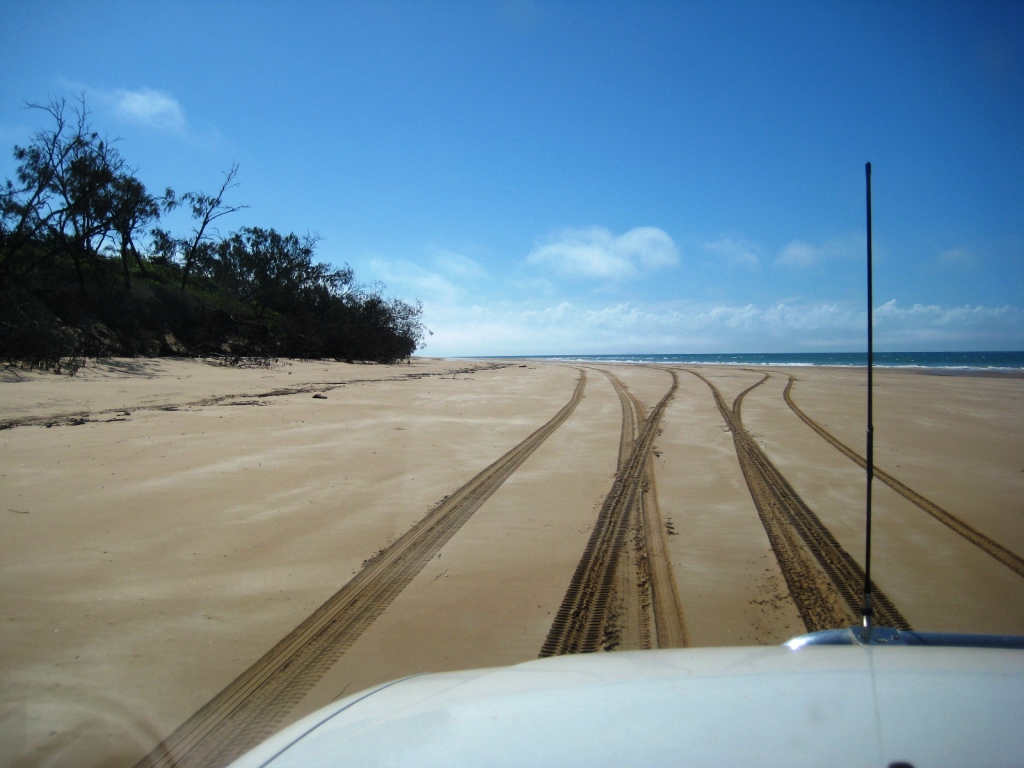
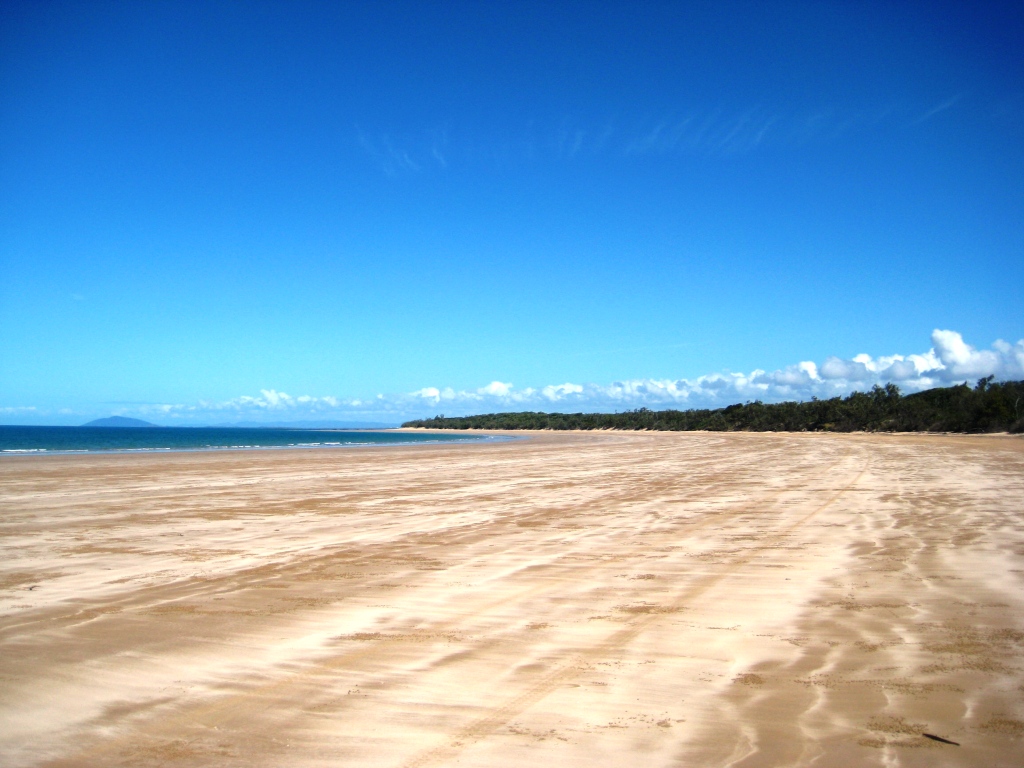
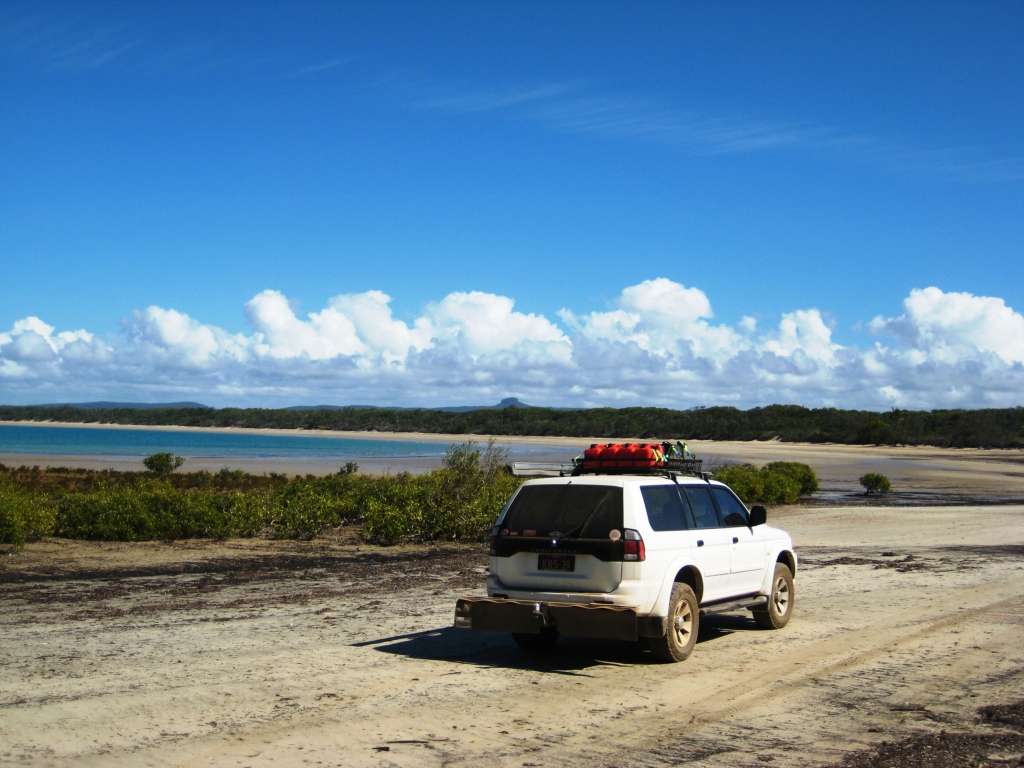
After vegetating for a day, we decided some activity was in order, so we packed a picnic lunch and headed off for the National Park. The initial road was of good quality but once past the park boundary it rapidly deteriorated. There was no improvement until we reached the beach, after which, for the next 8 km, we were on a veritable highway. The ramp to the beach was solid gravel and the beach was wide and flat with only a few soft places. The sky was near to cloudless and a slight breeze blew. And we had it all to ourselves.

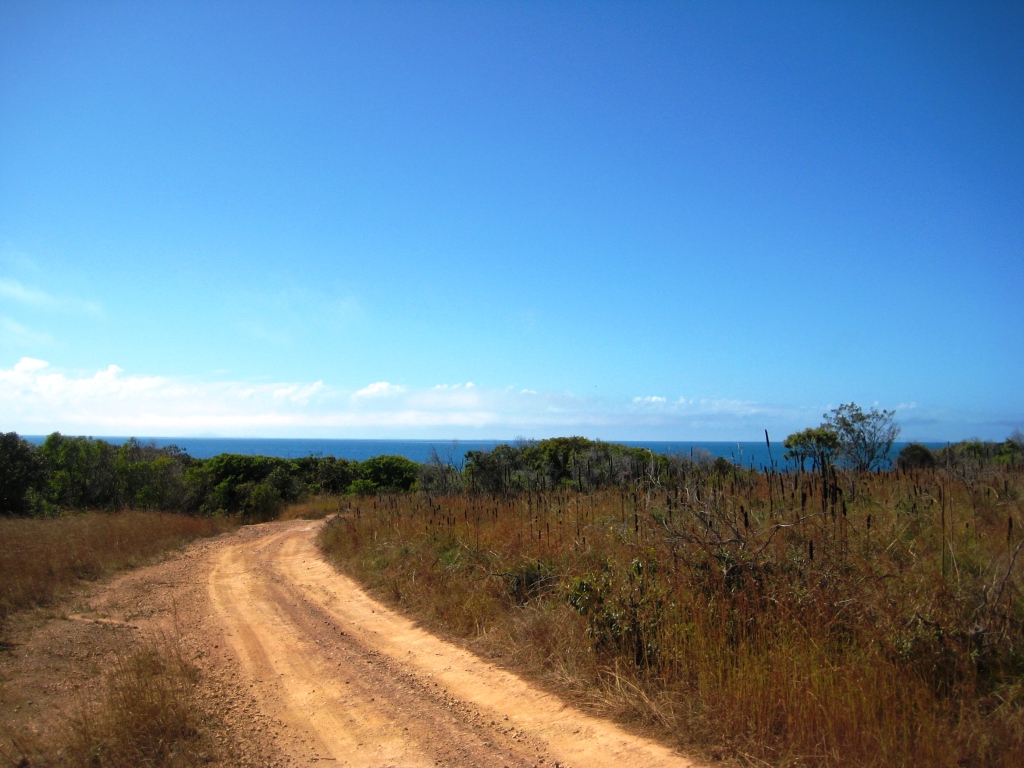
The road emerged from the bush to present this view

The road emerged from the bush to present this view

The satin ride was short lived. Another gravel ramp lead us to a 4wd track that has probably not seen a piece of maintenance equipment since the mounds were made to stop rain water washing the road away. We made our way carefully over the heavily rutted track, taking considerable pains to place the wheels so as to minimise tyre damage and to not scrape any of the components under the car on high spots on the road. There is good reason for classifying these roads as high clearance only.

Lots of space on this beach

Lots of space on this beach

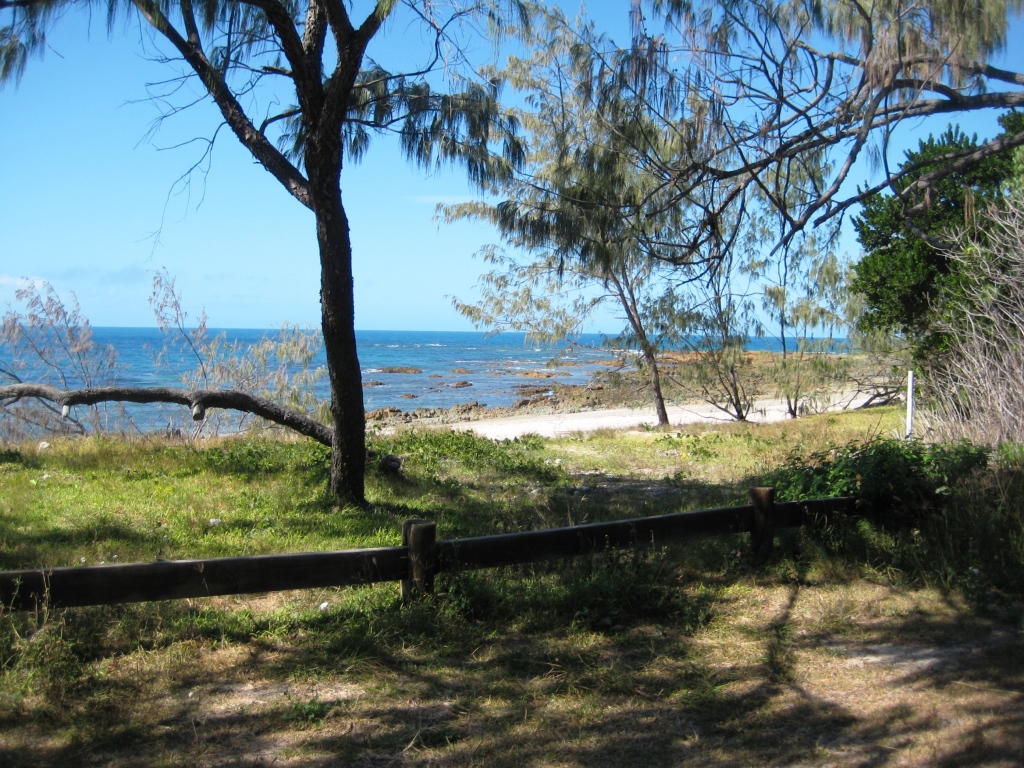
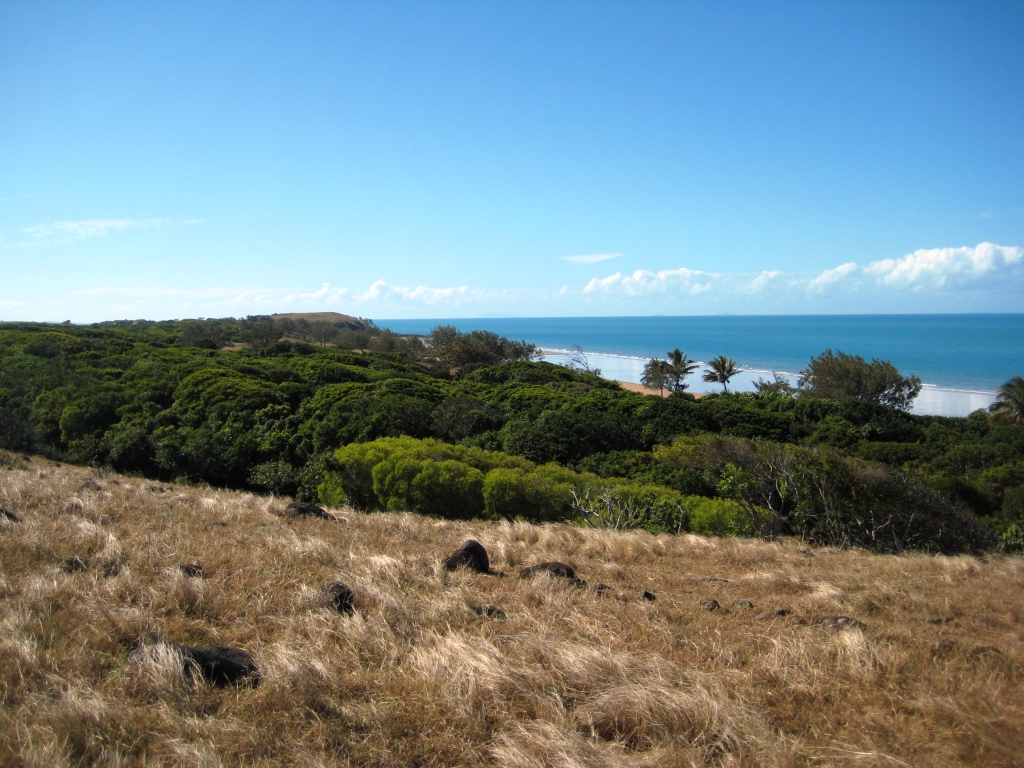
The road winds up from the beach, over higher country with broad views of ocean and islands and back to the beach again at the site of the first camping area. This idyllic spot is only a clear grassed area, its extent marked by scrub on three sides and a low single rail fence along the beach. But it has its own crescent beach and even a launching ramp over the beach, in case you brought your own boat. And it has a toilet.

There was some time to go before lunch could respectably be eaten so we decided to press on further north towards Cape Palmerston. The track did not improve and we were most conscious that every torturous meter forward meant an extra torturous meter back. After about another

Our lunch time view

Our lunch time view

kilometer we reached a fork in the road that was not on the map. Rather than chase wild geese we returned to the camping area and enjoyed our lunch of fresh prawn sandwiches with hot coffee. A prawn farm is located next door to the caravan park which enables management to offer large king prawns to their guests at attractive prices. Yum!

Ready ti drive down the beach

Ready ti drive down the beach

Lunch over, we made our way back the way we had come, down the rough track and along the beach. The tide was well down by now.  The tidal range was about 5 meters so 3 hours of ebb tide took the water’s edge a long way down the flat beach.

There was still quite a bit of the day left so we drove through the collection of sea side houses know as Greenhill to see what was there. There were only houses. There is no commercial activity at all. We then retraced our steps a little to drive to Notch Point, the northern protrusion on a promontory that forms the northern extent of a shallow sandy bay not far south of the caravan park.

I think this is called getting away from it all

I think this is called getting away from it all

We passed sugar cane fields with the harvest in full swing and some operating aquaculture ventures, probably prawns, and a new facility under construction, before making our way along a rough sandy track to a camping area, totally devoid of creature comforts, but a place of great natural beauty. And probably great fishing as well because fishing is the attraction, not the scenery.

You won't be shot here but perhaps you could be taken by a croc

You won’t be shot here but perhaps you could be taken by a croc

But dangerous territory, apparently! To the side of the road towards the water were signs warning of crocodiles and on the landward side, inside a fence that followed the road, signs warning trespassers that they would be prosecuted and their dogs shot.

The view to the south across the bay

The view to the south across the bay

Despite these warnings there were the expected tents and camper trailers and some surprisingly large caravans that would have required considerable patience to tow along such a track. On our way out we met a man on foot. We chatted and found that he was another large caravan owner determining if he could get his van in. Someone back along the road somewhere had told him that it was not a place to be missed. His car and van were blocking the road so we “went bush”, as you do under such circumstances, to get around him.

Our next move was to Gladstone to visit Beautiful Betsy. Who, I hear you say?

We had an audience for morning tea

We had an audience for morning tea

Beautiful Betsy was a USA Liberator bomber that went missing in February 1945 on a flight from Darwin to Brisbane. She was discovered 49 years later, crashed, on the western end of Kroombit Tops, south west of Gladstone. The crash site is now in the Kroombit Tops National Park in a special remembrance area dedicated to the memory of the eight crew who perished with her. She was named for the wife of her first pilot.

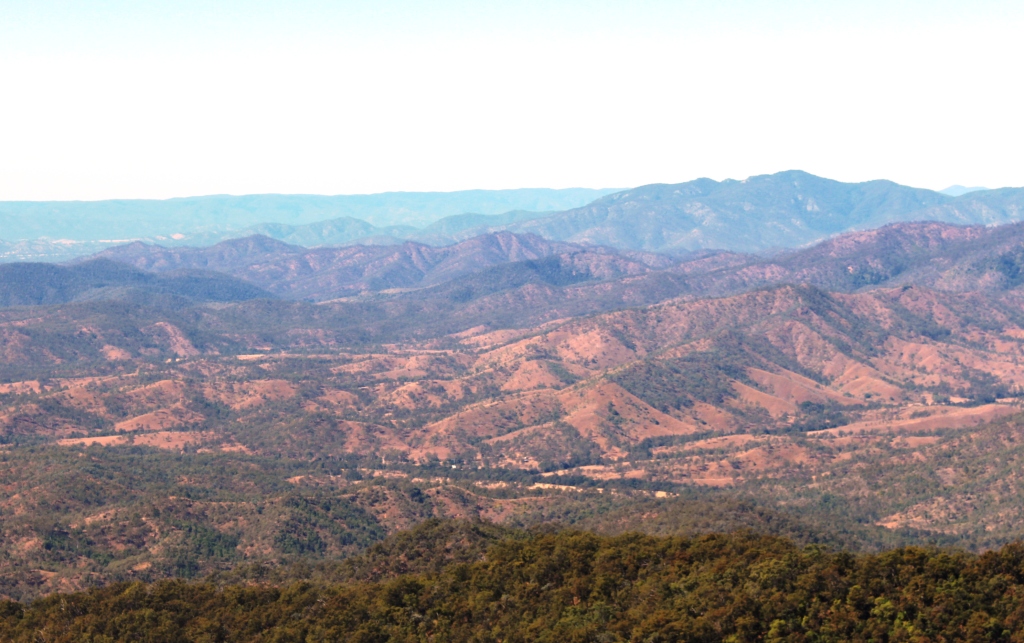
Looking over the plateau to Kroombit Tops

Looking over the plateau to Kroombit Tops

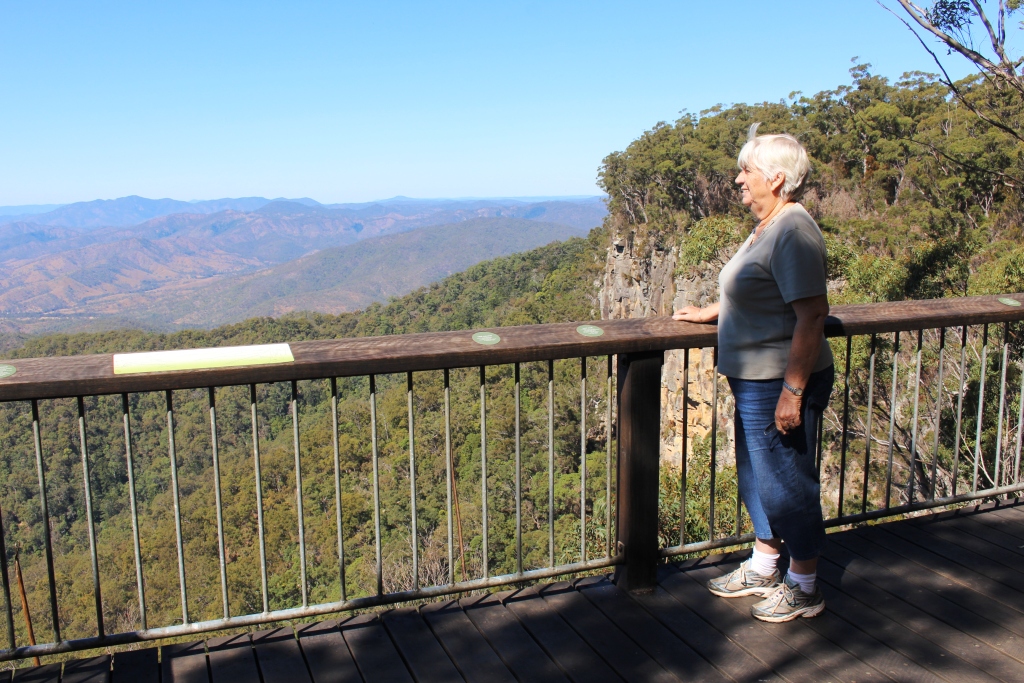
Kroombit Tops is worth a visit, even without Betsy. It rises almost one thousand metres above the coastal plain and provides great views of the coast and the Boyne Valley from the viewing platform on its eastern side. The road from Calliope is categorised as suitable for conventional vehicles. The road up the escarpment is steep and winding but it is sealed. For most of

Ruth on the viewing platform enjoying the view

Ruth on the viewing platform enjoying the view

the distance to the steep bit the road is good gravel. From the National Park boundary the surface is fair but would need care in a small vehicle.


Part of the view from the lookout

Part of the view from the lookout

The altitude makes for a different climate to that on the coast, with rain forest to the east and dry bush country to the west. Betsy came down on a moderately timbered ridge, only requiring about another

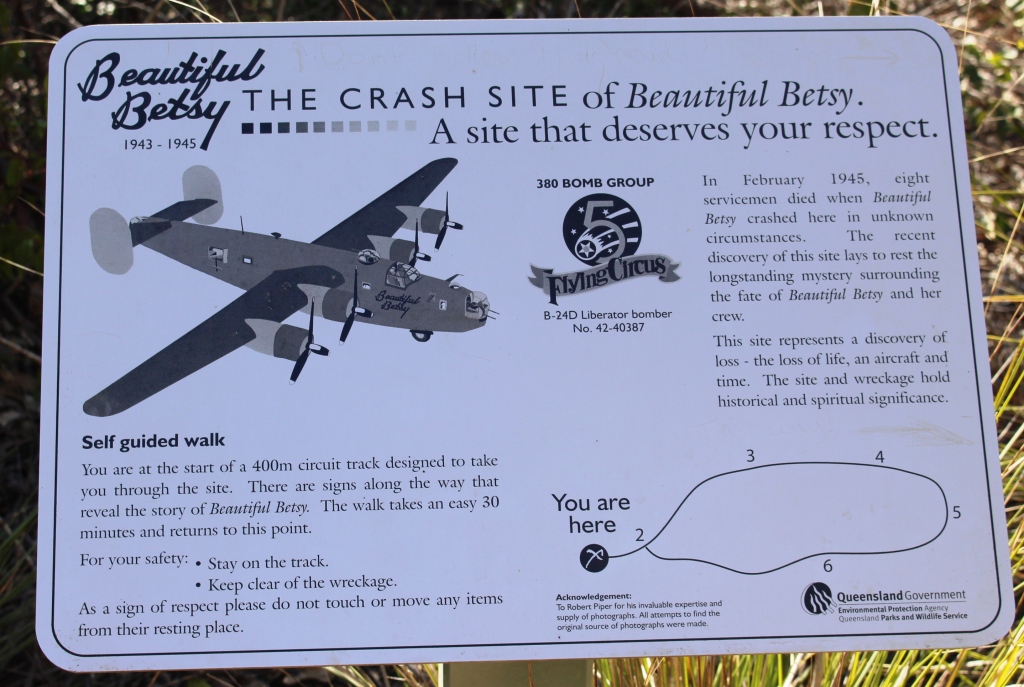
The introductory plaque at the start of the walk

The introductory plaque at the start of the walk

100 metres of altitude to clear it all together. Aviation experts believe that the aircraft was off course and too low. In the predawn light the crew saw the hills in their path, increased power and tried to climb but pancaked into the hillside due to momentum that carried the plane forward before it started to climb.

Betsy was not armed so there was no explosion nor was there a fire. The plane disintegrated on impact.

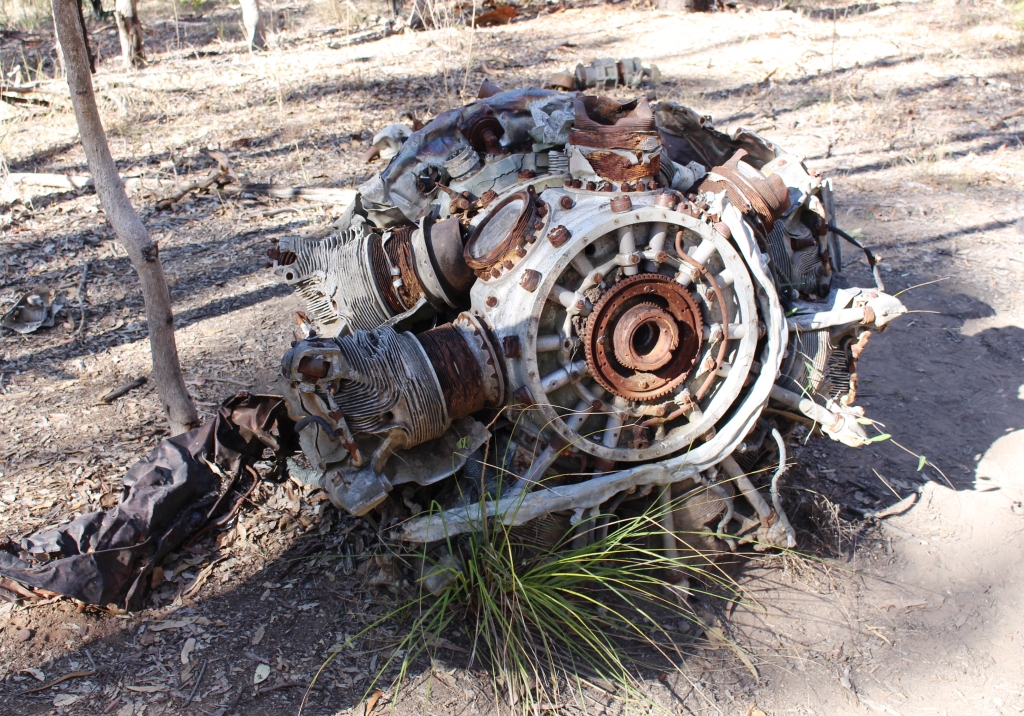
An engine where it came to rest

An engine where it came to rest

The four engines broke free and kept going, rolling up the hillside until they stopped near the top. It is thought that all crew died on impact.

Beautifully Betsy had seen service in the Pacific where, during hostilities, the air frame became stressed to the point that it was no longer reliable as a bomber. But it was suitable for lighter duties and, stripped of its armaments was used to fly in more palatable food supplies than the standard fare known to USA airmen as “the Darwin diet”. Its cargo was as diverse as fresh fruit, ice cream and live chickens.

Part of the fuselage and wing

Part of the fuselage and wing

The doomed aircraft and crew

The doomed aircraft and crew

The crash site is on a four wheel drive track that appears to have been pushed through by a bulldozer and then left to fend for itself. Parts are quite steep and rough with exposed boulders and washouts. But the crash site is well kept with a constructed path. Informative plaques have been placed by the path. This arrangement allows visitors to move through the site in an orderly way and to understand what they are seeing.

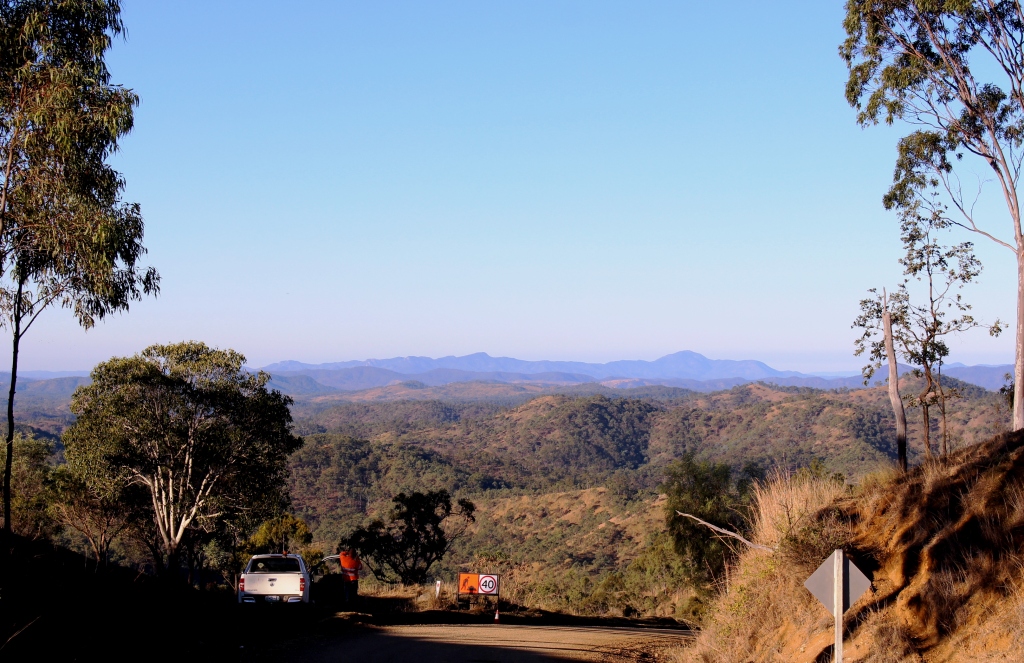
The view towards Gladstone from the top of the range

The view towards Gladstone from the top of the range

Only one other couple was there, moving through the site ahead of us. It was a somber experience, probably a bit more so following recent events involving a passenger aircraft in Europe. One passenger on the aircraft, the remnants of which we were viewing, was on his way to Brisbane to be married. Another was to have been his best man.

Our intention had been to follow the four wheel drive track through the full loop. It becomes a one way track from the turn to the crash site and we soon found out why. After about 200 metres a sign said, “Four Wheel Drive Only. Steep Rocky Decent”. And they were not joking. As far as we knew we were the last people that day in what was a remote area, so we erred on the side of caution and returned by the way we had come.

An Inland Detour

When we passed through Charters Towers on our way to Townsville we had decided to return to have a closer look at the town and then to journey down the Gregory Developmental Road to Clermont before turning east to again join the Bruce Highway to travel home.

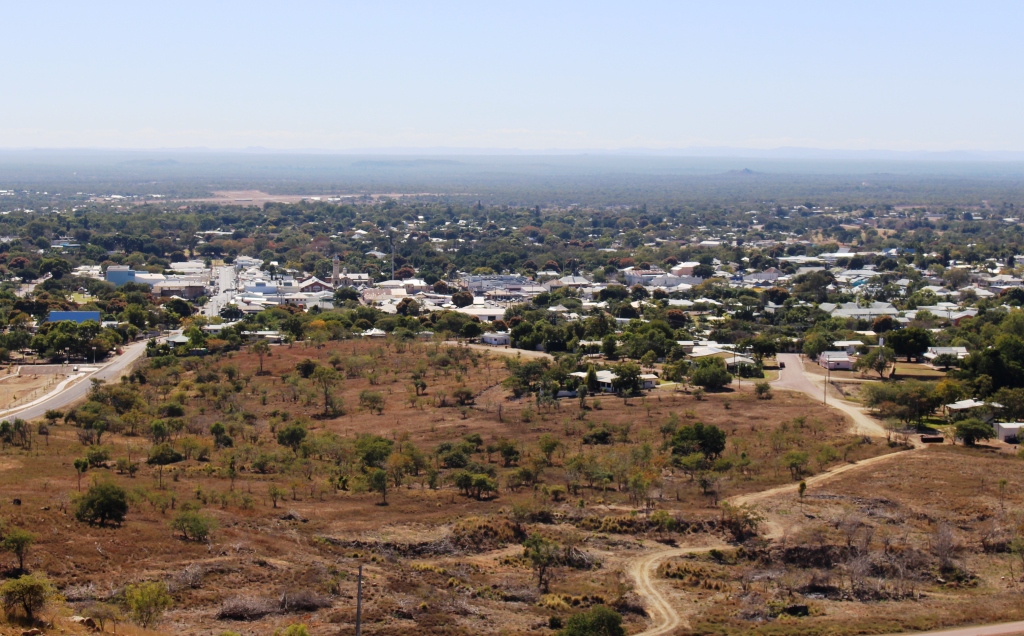
Charters Towers viewed from Tower Hill over mining scared ground

Charters Towers viewed from Tower Hill over mining scared ground

We had spent a couple of single nights in Charters Towers but had not really looked around. This visit was for two nights. The Charters Towers Tourist Park, where we stayed, allows the Charters Towers Lions Club to run fund raising dinners in the camp kitchen. Fifteen dollars buys a three course meal. We knew the format from last time, a meal and a brief talk on the area.

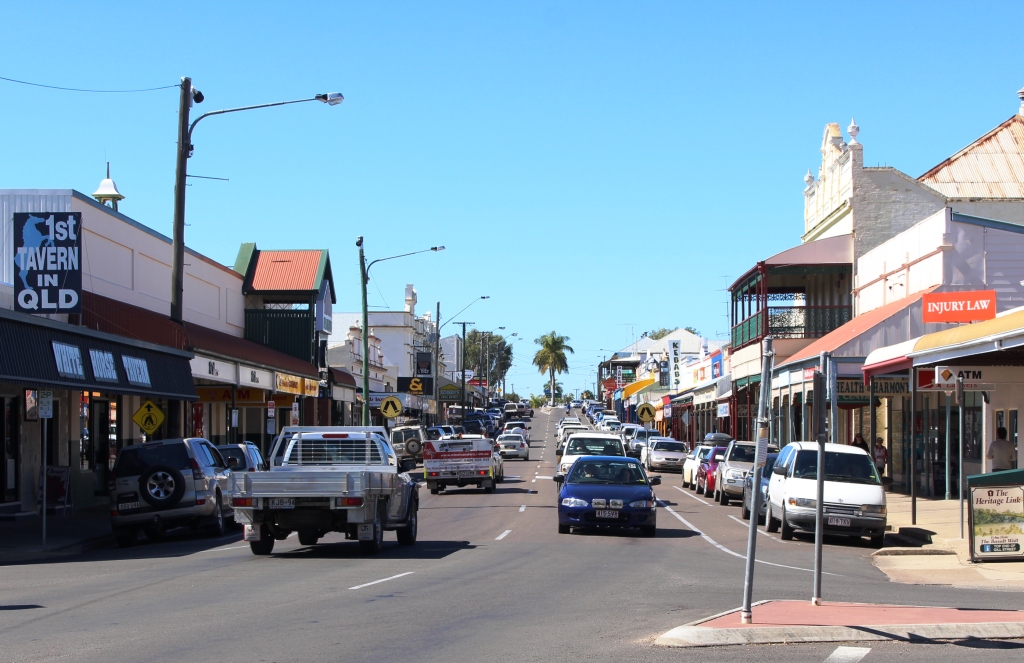
One of the main streets lined with historic buildings

One of the main streets lined with historic buildings

The talk provided a background for our sightseeing the next day. Charters Towers was already an established cattle town when gold was discovered in the 1880s. The gold was of high quality and quickly created great wealth. Mining companies sprang up in such numbers that the town opened its own stock exchange which operated in conjunction with the London stock exchange. But the gold rush ended and the town started to wind down. The current population is around 10,000. At its peak the town had 40,000 residents.

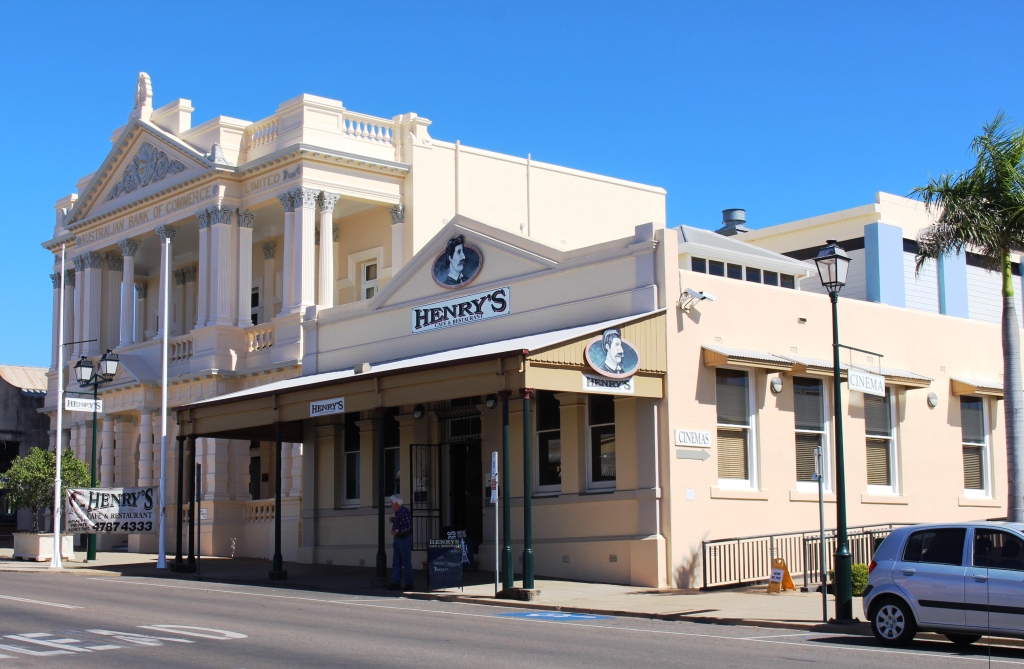
Another classic street scape

Another classic streetscape

Charters Towers also has a proud history of participation in WWII. American bombers were based there and it was one of two bases in Queensland from which bombers flew to attack Japanese war ships during the Battle of the Coral Sea. In more recent times education has added to the wealth of the town. It is the location of a number of prestigious colleges.

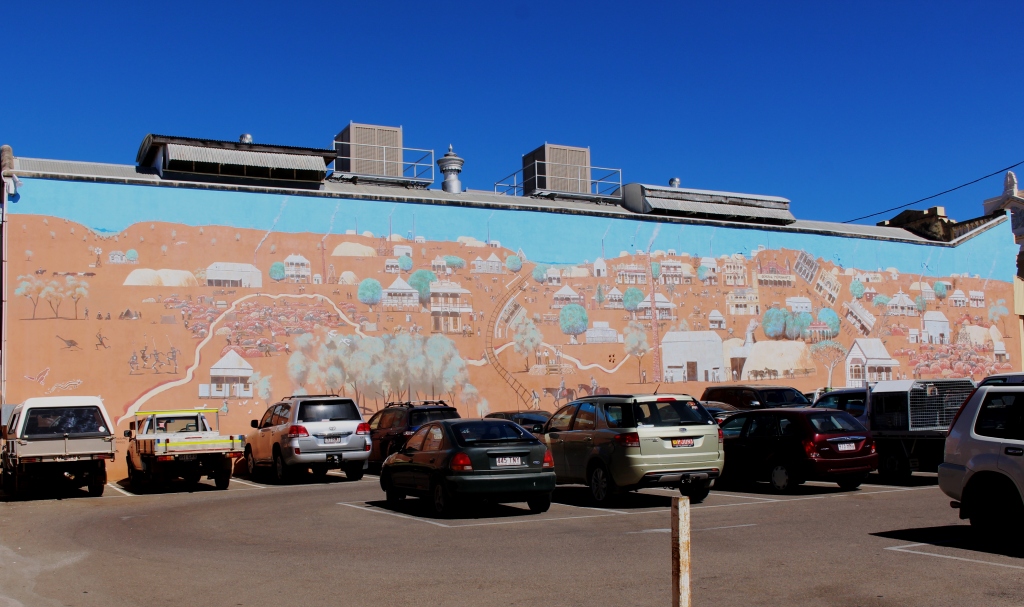
An impressive mural adorns a wall of a prominent building

An impressive mural adorns a wall of a prominent building

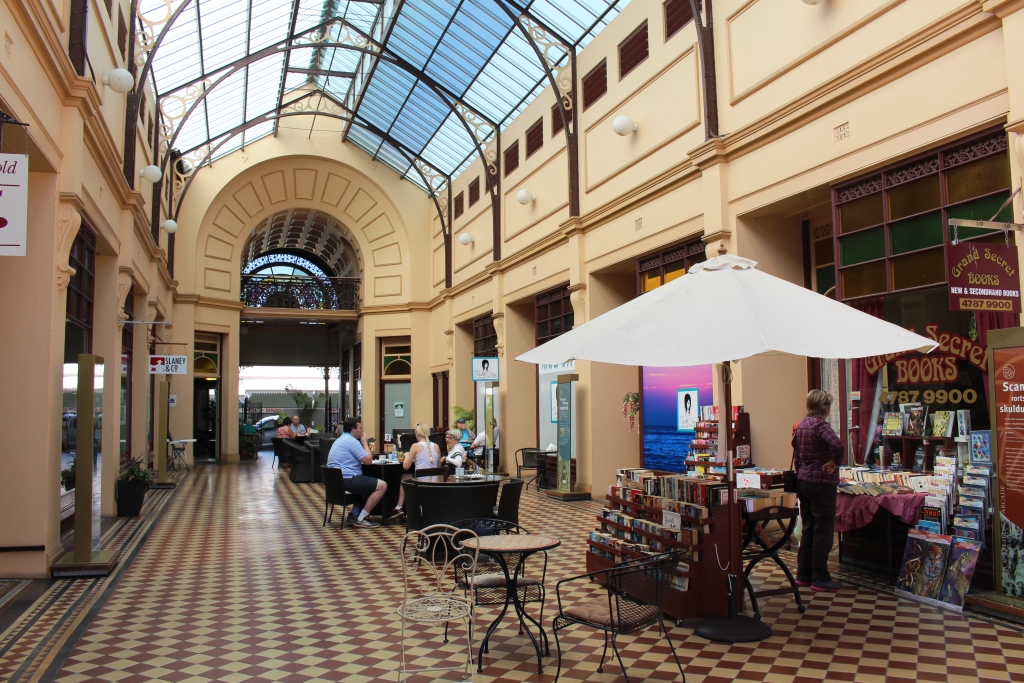
The town has always been aware of its history and has turned it to good account. Preservation of original buildings has always been important, so to walk down the street today is to experience many of the same sensations as visitors of days now long gone. We had lunch at a cafe in the arcade of the original stock exchange. Just along the street the Town Hall has an extensive display of war time photos and almost directly opposite much of the history of the town has been recorded on a huge mural on the wall of a large building.

Venus Gold Battery

Venus Gold Battery

We visited the Venus Gold Battery before driving to the summit of Towers Hill Lookout where a substantial structure has been built to commemorate and record much of the mining history. The observation point is appropriately sighted above the many shafts from which the city’s golden wealth was extracted.

We lunched at a cafe in the historic arcade of the old stock exchange building

We lunched at a cafe in the historic arcade of the old stock exchange building

Charters Towers is located at the junction of the Flinders Highway and the Gregory Developmental Road, which goes south via Clermont and Emerald to Springsure and north west to The Lynd Junction where it intersects with the Kennedy Developmental Road. We had not previously travelled this road so our journey south broke new ground.

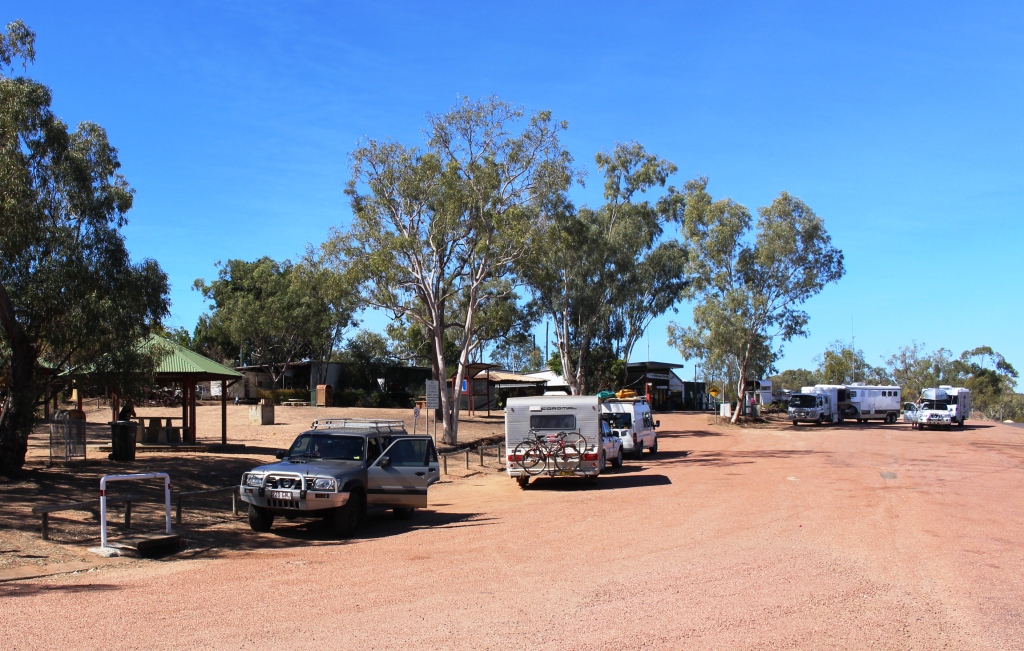
The road house at Belyando Crossing

The road house at Belyando Crossing

The distance to Clermont, our destination for that day, is about 350 km. Until you reach the coal mines near Clermont the only sign of habitation on the entire journey, apart from some cattle stations, is the roadhouse at Belyando Crossing where the highway crosses the Belyando River. It was a hive of activity. Everyone seems to stop there. The most common vehicles on the road were cars with Victorian number plates towing large caravans. Ruth stopped counting after her count reached 100 vans.

Clermont is another of those agricultural and mining towns. It is an old town, with commercial buildings dotted around its streets but with lots of mining vehicles, various makes of four wheel drives with the distinctive yellow stripe along the side.

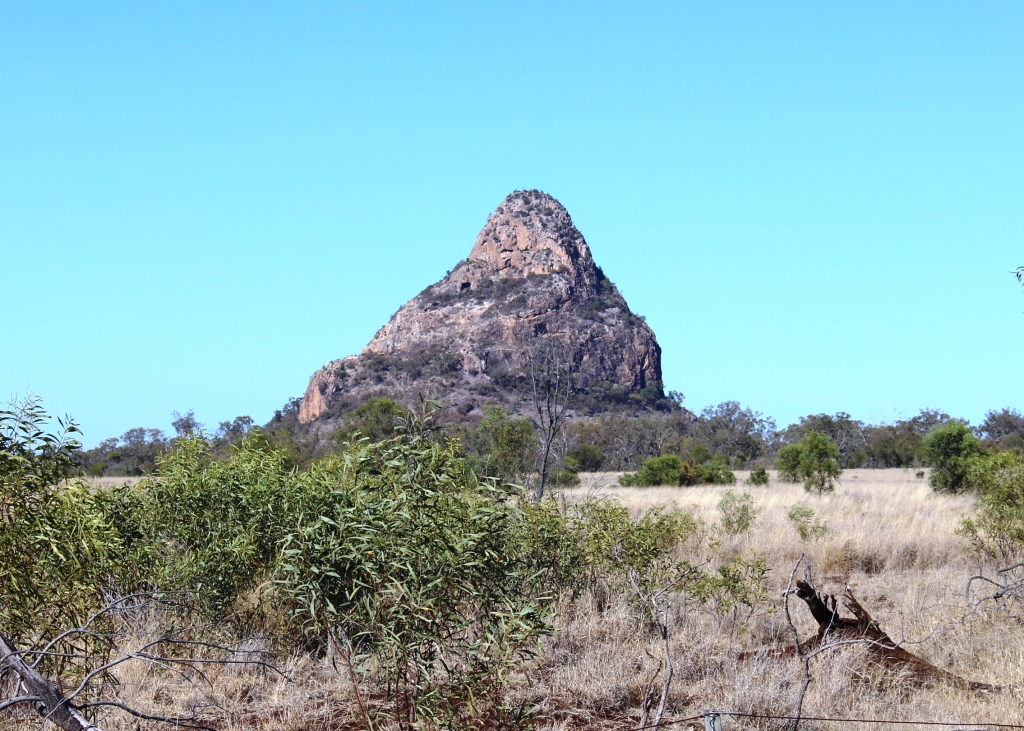
The prominent Woolfang Peak beside the Peak Downs Highway

The prominent Woolfang Peak beside the Peak Downs Highway

Out route next day took us along the Peak Downs Highway past a succession of coal mines and near to the coal mining town of Moranbah. After passing the Clermont mine there is an area of agricultural and grazing properties before the mines start again. Interest is maintained through this area by a succession of unique mountain peaks of which Woolfang Peak is the most dramatic. I wondered if the peaks had anything to do with the name of the highway.

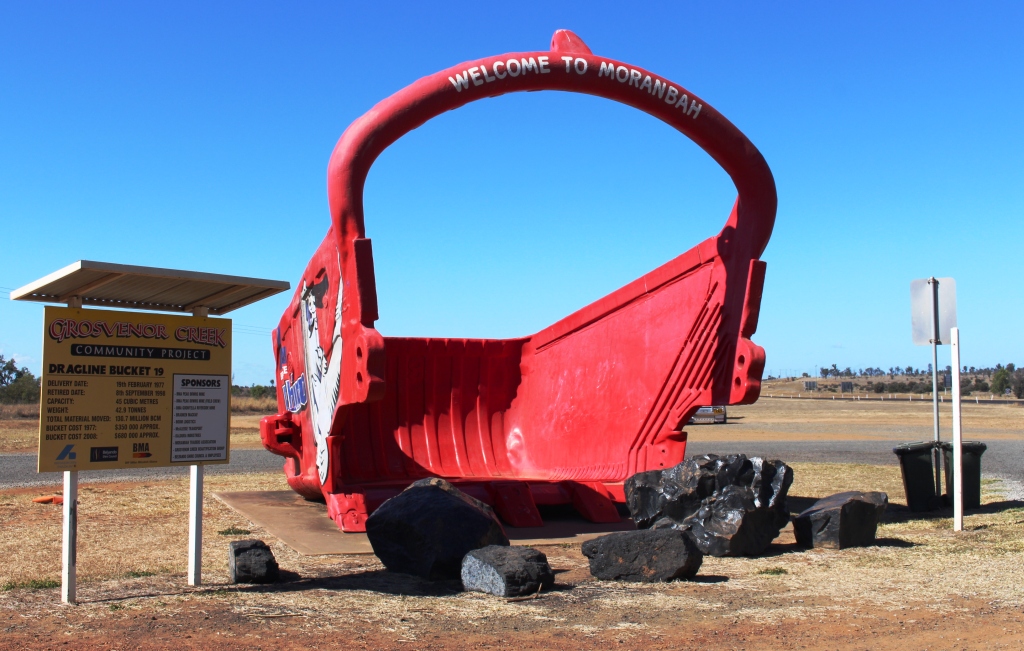
An appropriate welcome to Moranbah

An appropriate welcome to Moranbah

During my transport industry days I was a regular visitor to Moranbah as, for a time, it was part of my area of responsibility. Ruth had never been there, so we drove the 13 km in from the highway to see how things had changed. McDonald’s is there now and the town is bigger but the central business district looked substantially unchanged. The surprise was the airport. It is a much larger structure with large parking areas and signs directing users to drop off points and arrival and departure points. It was a reminder of the extent to which fly-in-fly-out staffing of coal mines has taken over.

The tranquility of the Cape Palmerston Caravan Park

The tranquility of the Cape Palmerston Caravan Park

The Peak Downs Highway goes to Mackay but we left it east of Moranbah and followed the coal railway towards Sarina where it briefly joins the main north line before diverging to the east to the bulk coal loading terminals at Hay Point and Dalrymple Bay. Our destination was a caravan park near the hamlet of Greenhill on the coast just south of Sarina.