West, Centre and Flinders – Days 5 to 8 – Filling In Time

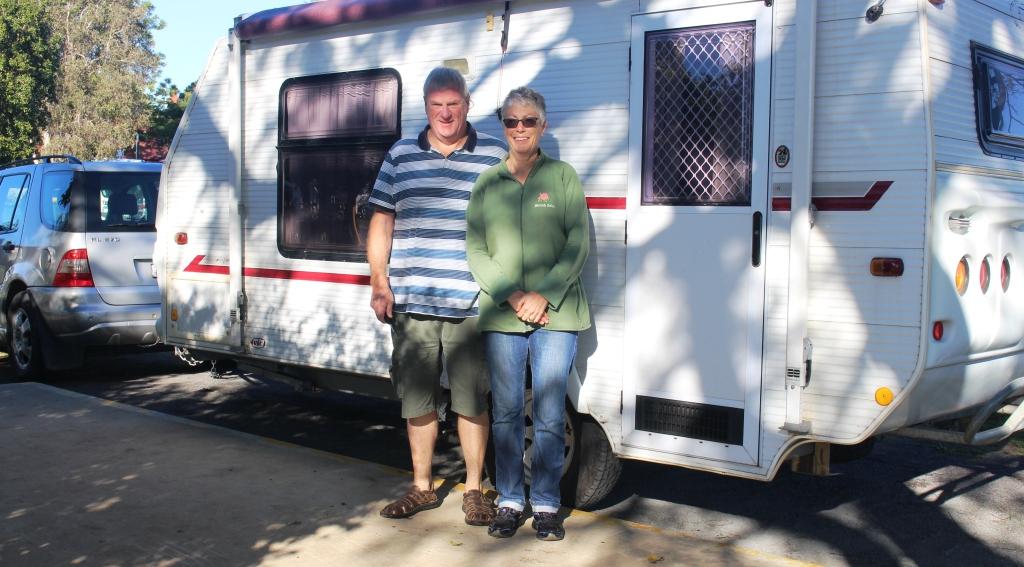
Keith and Linda. Van packed and hitched and ready to go

Keith and Linda. Van packed and hitched and ready to go

Our original plan, on which we set our departure date, had us meeting Keith and Linda (see previous post) further north, possibly as far north as Airlie Beach. But their progress down the coast was a bit faster than we had anticipated so we met them at Bundaberg, as most readers will already be aware.


Near the mouth of the Burnett River at Burnett Heads

Near the mouth of the Burnett River at Burnett Heads

When we parted with them at Burnett Heads we had five days in hand for which we had no predetermined plans. Not a problem! There are always things to look at and places to go.

Beached flood debris on Rules Beach near Baffle Creek

Beached flood debris on Rules Beach near Baffle Creek

We decided to spend a couple of days at Agnes Water/Seventeen Seventy, but a lot of other people had made the same decision. All caravan parks were fully booked. As an alternative we chose Baffle Creek Caravan Park, located about equidistant from Bundaberg and Seventeen Seventy.

If you want other residents to talk to you at Baffle Creek Caravan Park it is best to arrive with a boat on top of your car, or at least have a conspicuous fishing rod on board. This is a fishing area and people go there to fish. We used it as a base for a day trip to Agnes Water and Seventeen Seventy.
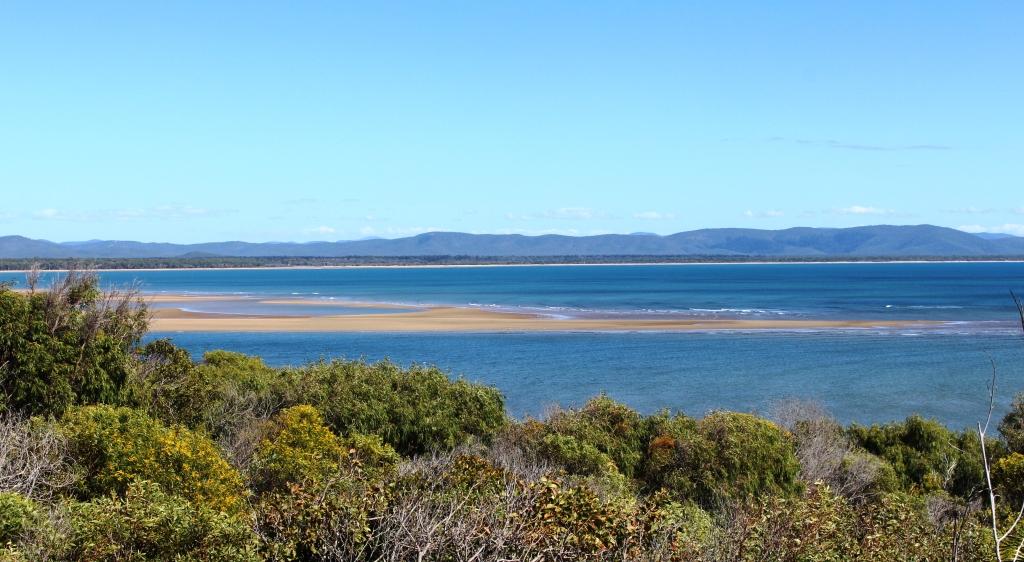
Sand banks in Round Head Creek at Seventeen Seventy

Sand banks in Round Head Creek at Seventeen Seventy

We have visited this area before and I have blogged about it. The day was near perfect. Clear skies and a gentle breeze, although up on Round Hill Head, the headland that stands above the town of Seventeen Seventy, the wind was stronger. We did a couple of walks to take in the rugged scenery and the panoramic views of the ocean provided by this vantage point, before returning to the water side park, near the Seventeen Seventy hotel, where we settled ourselves in a picnic shelter for a leisurely lunch.
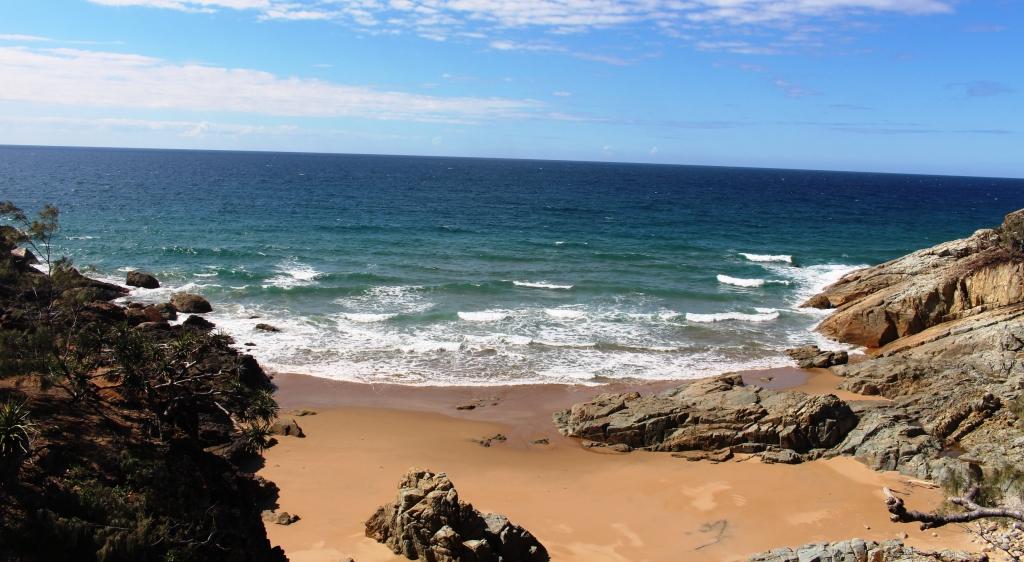
A small bay on the ocean side of Round Hill Head
A small bay on the ocean side of Round Hill Head

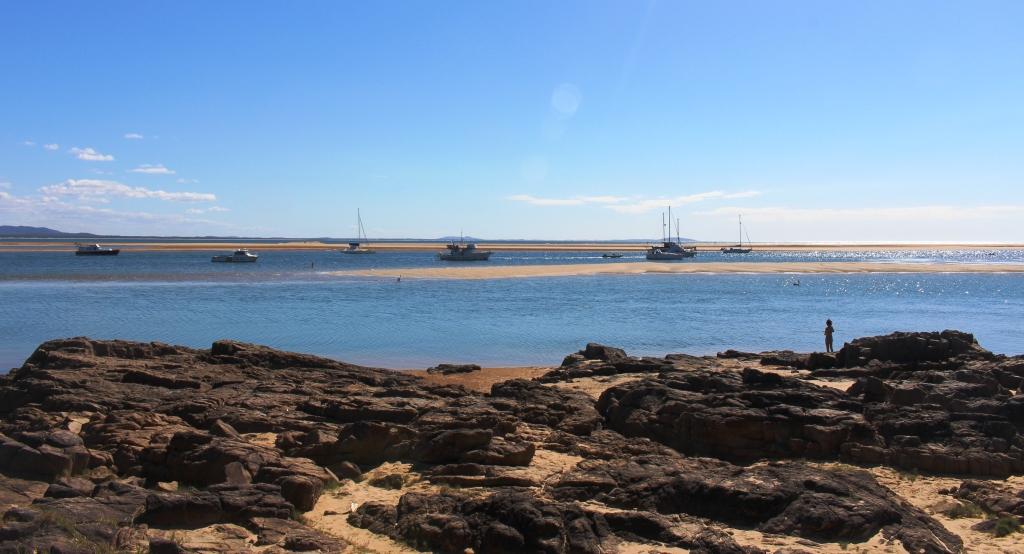
Boats at anchor in Round Hill Creek
Boats at anchor in Round Hill Creek

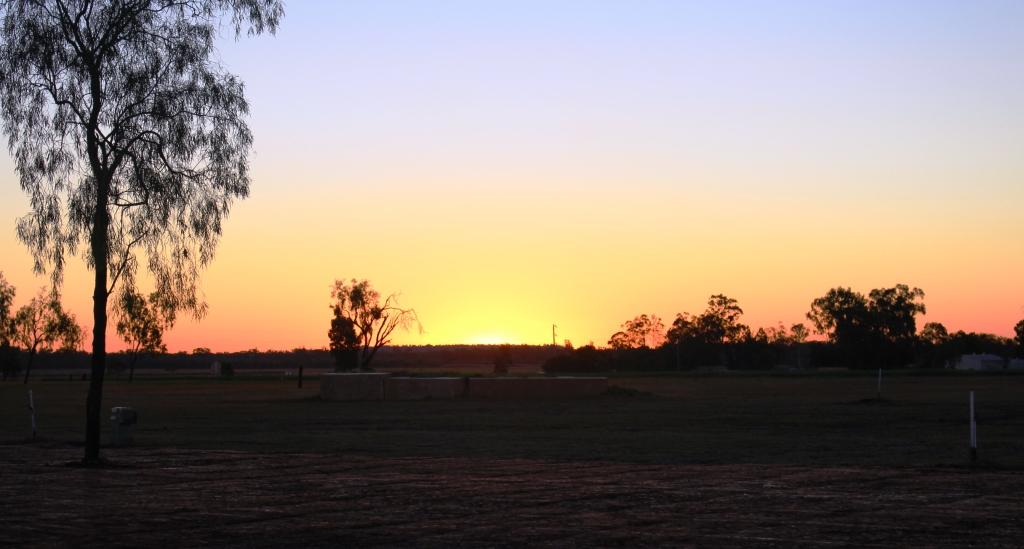
The sun sets over the agricultural fields at Biloela

The sun sets over the agricultural fields at Biloela

That took care of the first two days. For the remaining three days we decided to go inland to Biloela via Calliope and the Dawson Highway. We wanted to cross from Miriam Vale to the Boyne Valley, as an alternative road to Calliope, but tales of horrendous road conditions on the first part of that road put us off, so we stayed on the Bruce Highway.
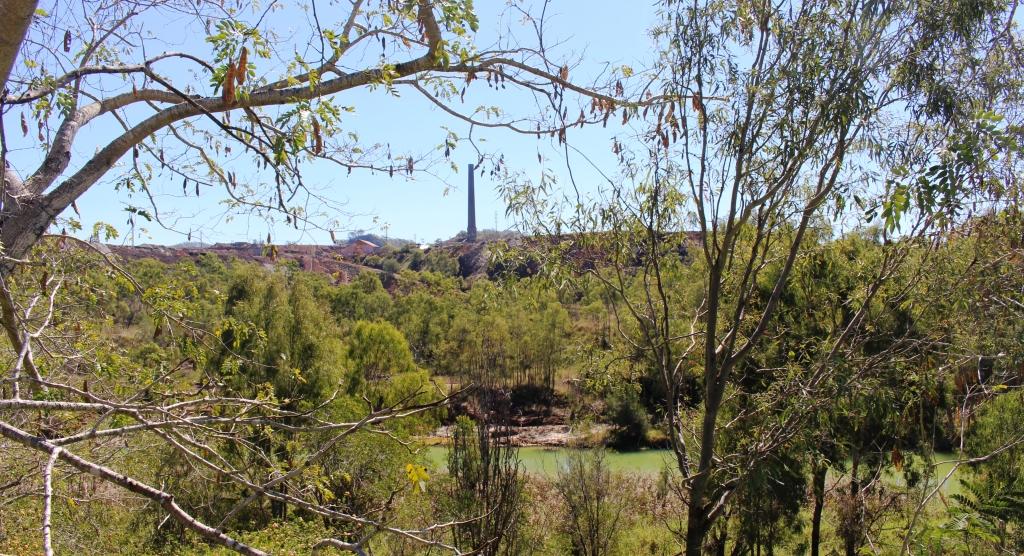
The 70 metre chimney at Mount Morgan gold mine

The 70 metre chimney at Mount Morgan gold mine

We returned to the Queensland Heritage Park at Biloela for the night. In our short trip north in June we had spent a night here so were on familiar tertiary.

The logical path to the Yepoon area from Biloela took us through Mount Morgan. I think we had only driven through this historic gold town previously but our plans for a closer look were made a bit more difficult when we found that the only decent caravan park in Mount Morgan was booked out.

Mount Morgan museum display
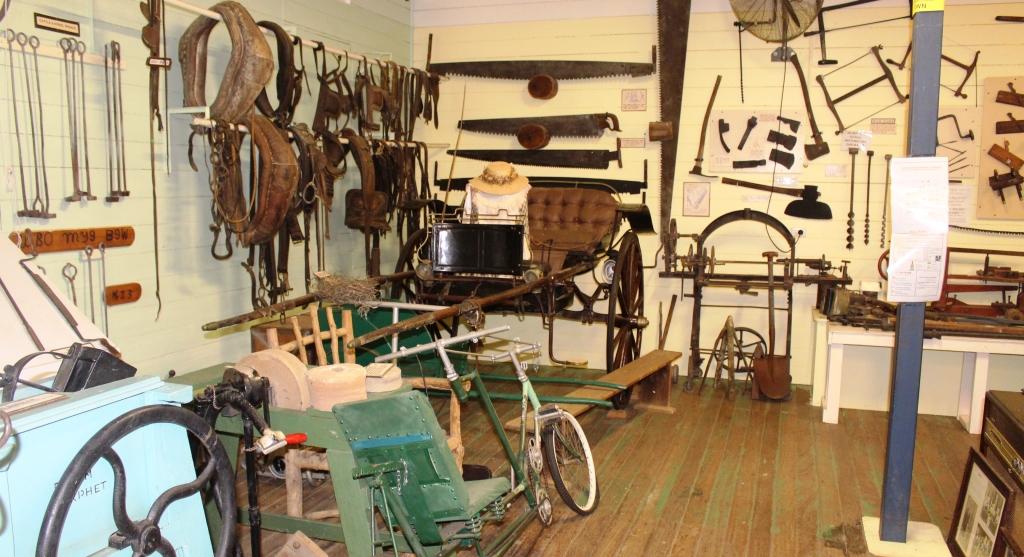
Mount Morgan museum display
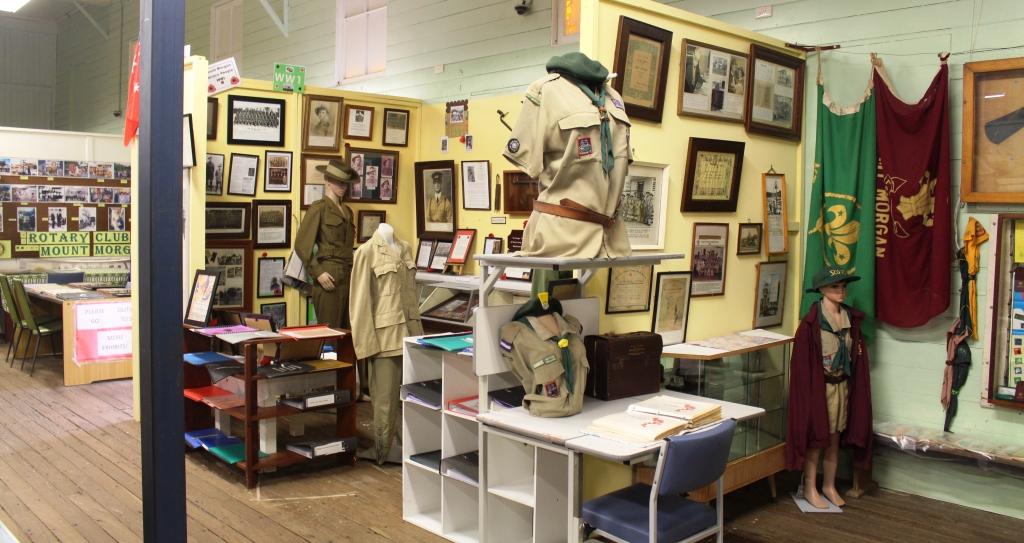
Mount Morgan museum display
Mount Morgan museum display

Mount Morgan museum display

Mount Morgan museum display

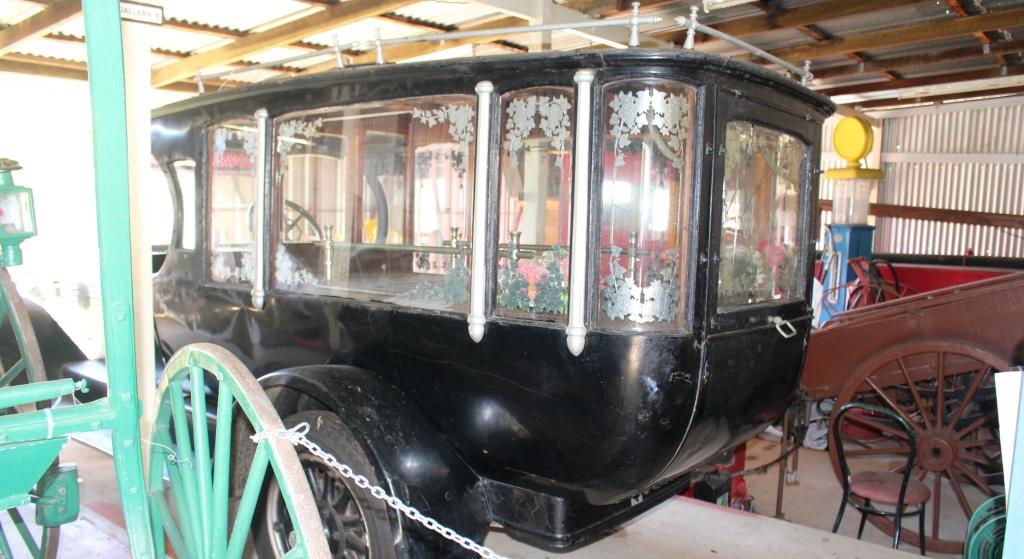
A rear view of Mount Morgan's first motor hurse

A rear view of Mount Morgan’s first motor hurse
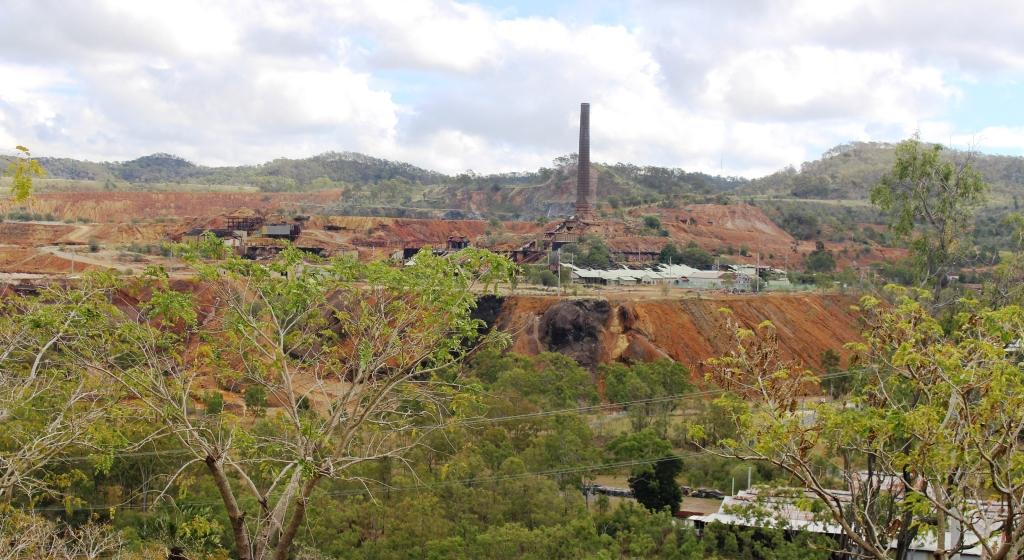
The old gold mine, viewed from a vantage point in the town

The old gold mine, viewed from a vantage point in the town

So we booked two nights at Gracemere, a town that is now almost a suburb of Rockhampton, but still close enough to Mount Morgan to make a day trip back. On our way through the town we drove around to get our bearings and to find mine viewing vantage points. We then visited the superb museum in the town. The vast collection of historical memorabilia is divided into categories and themes, with the mine dominating. But other sections contained material related to the hospital, armed forces, scouts and guides, religions, local aboriginal history and more.

We found that a tour of the mine was available on a daily basis so when we reached Gracemere we phoned to make a reservation for the next day.

The head equipment of the shaft that took miners to their work

The head equipment of the shaft that took miners to their work

Gold mining was commenced by two Morgan brothers in 1882 but the scale of operations increased in 1888 when a company was formed and more finance became available. Mining finally ceased in 1990 but there was a period in the late 1920s when the mine was closed for five years, due to flooding to extinguish a fire in the mine shafts.
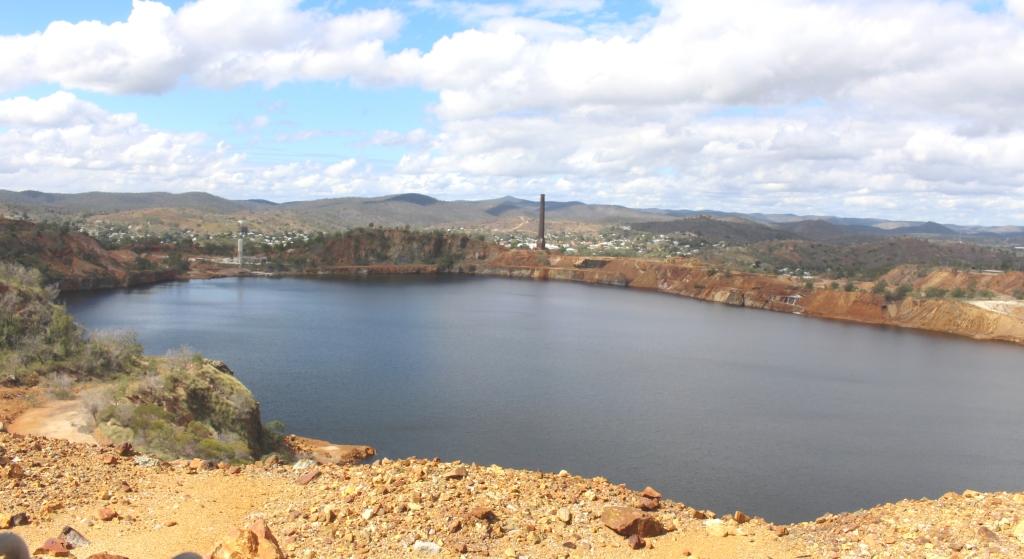
The pit, one of the largest in the Southern Hemisphere, is now almost full of water

The pit, one of the largest in the Southern Hemisphere, is now almost full of water

But it was a very successful mine for most of its one hundred year life and many fortunes were made. One example of this was Walter Hall who was an early shareholder and director. Some of his fortune was later used to found the Walter and Elisa Hall medical research foundation.  This is just another example of the extent to which gold played such a dominant role in the foundations of Australia.

A model of the Mount Morgan pit displayed in the museum section of the company office

A model of the Mount Morgan pit displayed in the museum section of the company office

Our return to the caravan at Gracemere brought to a conclusion the brief period of filling in days. The next day we travelled to Kinka Beach, south of Yepoon, for our few days with sister Aileen and brother-in-law Colin, before we head west for the main part of this trip.
Central Highlands and Mackay – 9 to 14 June – Finch Hatton to Mackey and Home

Day 8

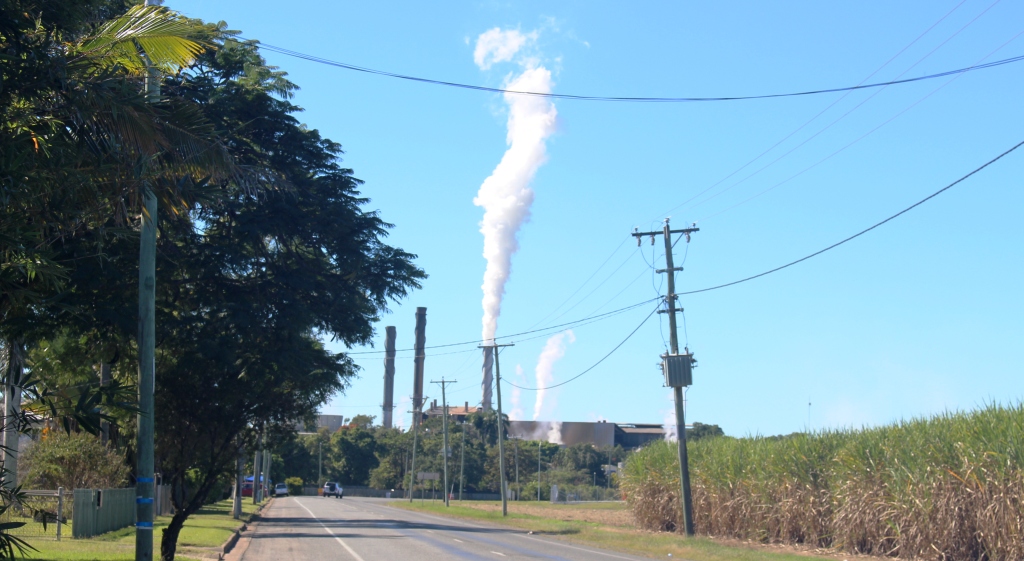
A still morning at Marian Sugarmill

Steam rising almost vertically on a still morning as we passed Marian sugar mill

Moving on to Mackay was the main item on the day’s agenda. We drove the 70 km or so to Mackay, turning north at Marian to the Bruce Highway and approaching Mackay from the north.  The morning was clear with almost no breeze. We quickly settled into the Andergrove Van Park. We have been here before so know our way around.


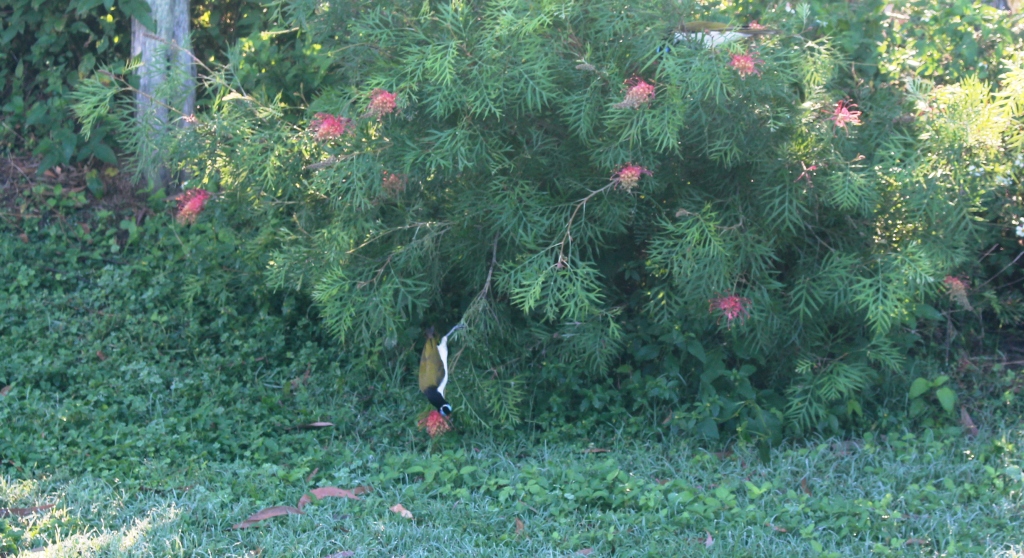
Birds feeding near our caravan

Birds feeding near our caravan

We arrived just before midday, set up the van and had lunch. But there were delays while we chatted with a West Australian couple, of about our vintage, who arrived at the neighboring site, as we were setting up.

Then to chores that needed our attention, so washing and a trip to the shops completed the day.

Day 9

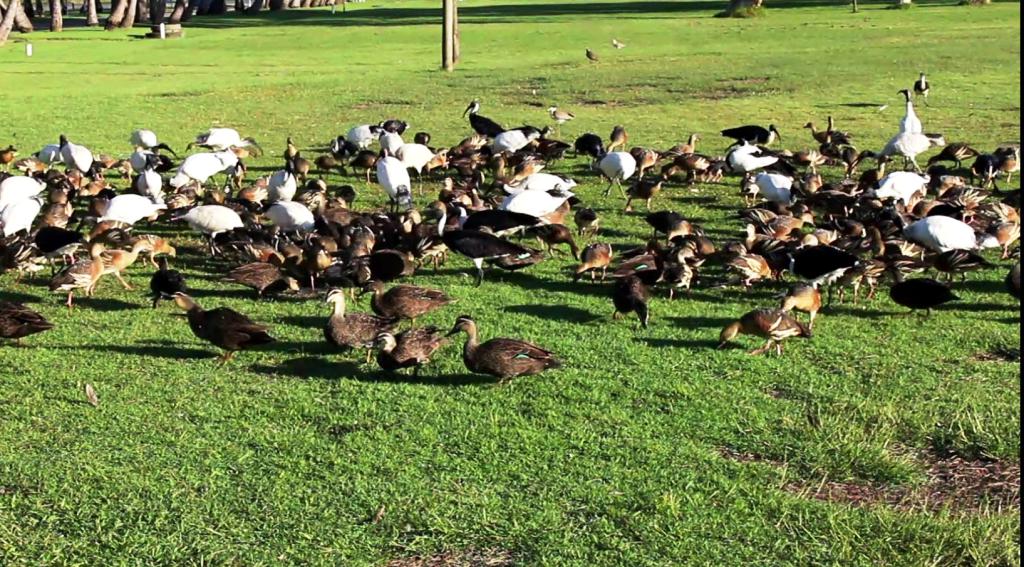
We were visited by a group of ducks

We were visited by a group of ducks

Last night Ruth encountered some problems with access to the Internet, with her computer and pad, while trying to connect to the Internet through the mobile hot spot facility of her mobile phone. So first order of the day was to get it sorted. A young technician at the nearest Telstra shop solved the problem in about two minutes, but there was a bit of a wait for his services, so we did not return to the van until lunch time.

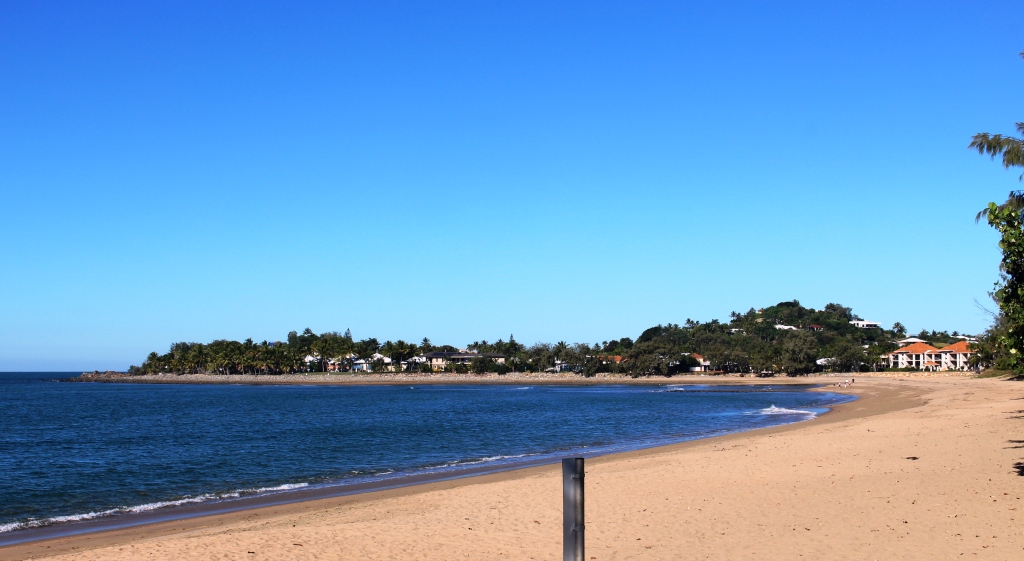
Sunset Beach at Shoal Point

Sunset Beach at Shoal Point

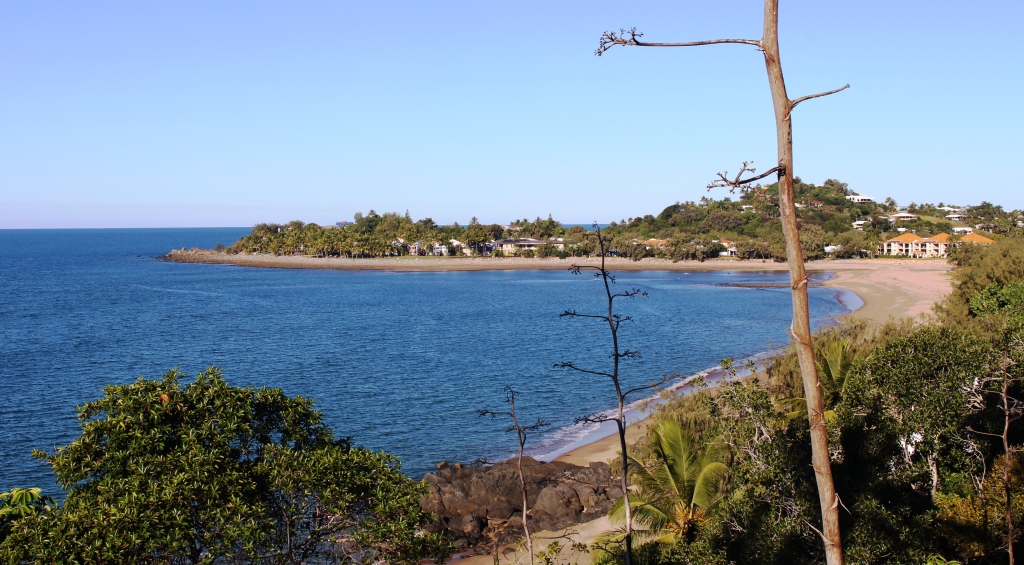
After lunch we went for a drive to the near northern beaches. I love this part of Queensland and could easily live here. Three promontories point northward into the Coral Sea, giving ocean views to the north and to a certain extent, to the west. Each has elevated terrain at their northern extremities and locals have taken full advantage of high ground when building their homes.

Dolphin Heads from the deck at the Eimeo Hotel

Dolphin Heads from the deck at the Eimeo Hotel

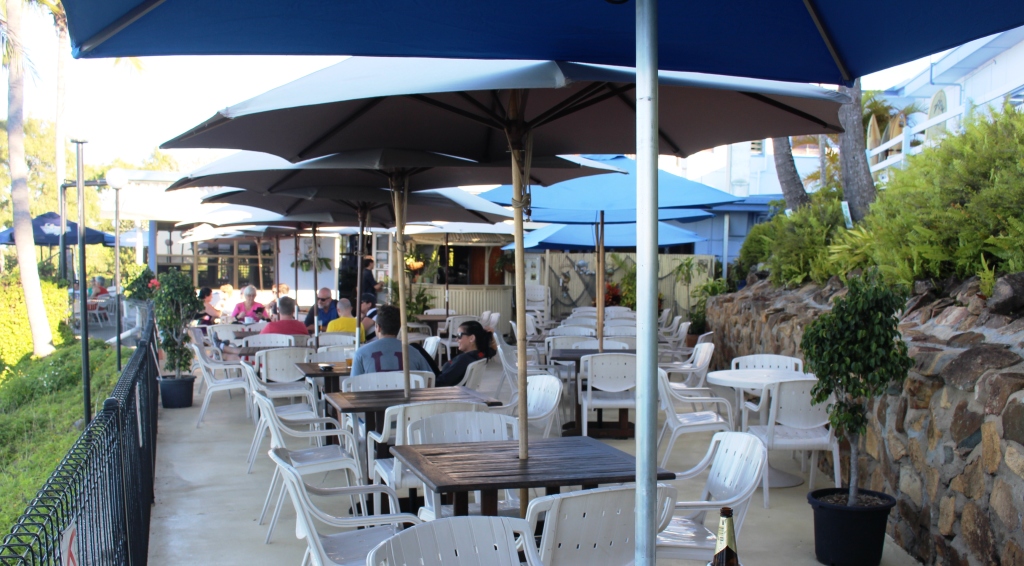
We started at Shoal Point, which is furthest from Andergrove, and returned through Bucasia, Eimeo, Dolphin Heads and Blacks Beach. We called at the Eimeo Pacific Hotel for Devonshire Tea. The hotel is a beautiful old building, situated at the top of a hill at the most northern point of the promontory. It has an extensive deck with umbrella shaded tables.  Views are over neighboring Dolphin Point including the Dolphin Point Resort and to the not very distant outlining islands, that are part of an island chain that runs all the way to the Whitsunday Islands.

Eimeo Hotel deck

Eimeo Hotel deck

Lamberts Beach and Mackay Harbor

Lamberts Beach and Mackay Harbor

We returned back south and past our caravan park to drive in the other direction to Slade Point. At the tip of the point is a car accessible observation point that provides panoramic views of Mackay Harbor and the marina with its village of high rise apartments and hotels. In the distance, to the south and east, views are to be had of the twin coal loading facilities of Hay Point and Dalrymple Bay, with their cluster of loading ships and the armada of waiting empty bulk carriers out to sea.

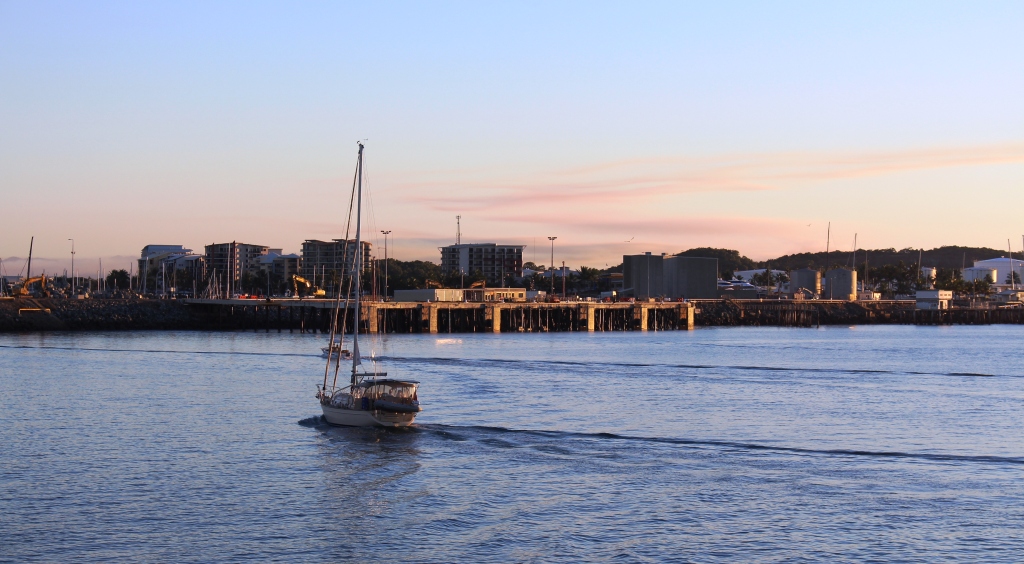
Yacht entering Mackay Harbor

A yacht entering Mackay Harbor

We finished the day by driving out to the end of the harbor breakwater. The parking area there gives another view of the coal loader and waiting ships plus a view of the harbor facilities. At that time of day they were silhouetted against the setting sun. About 25 years ago I had close commercial involvement in this part of Queensland. It was fascinating to see the development that has occurred during the last quarter of a century.

Day 10

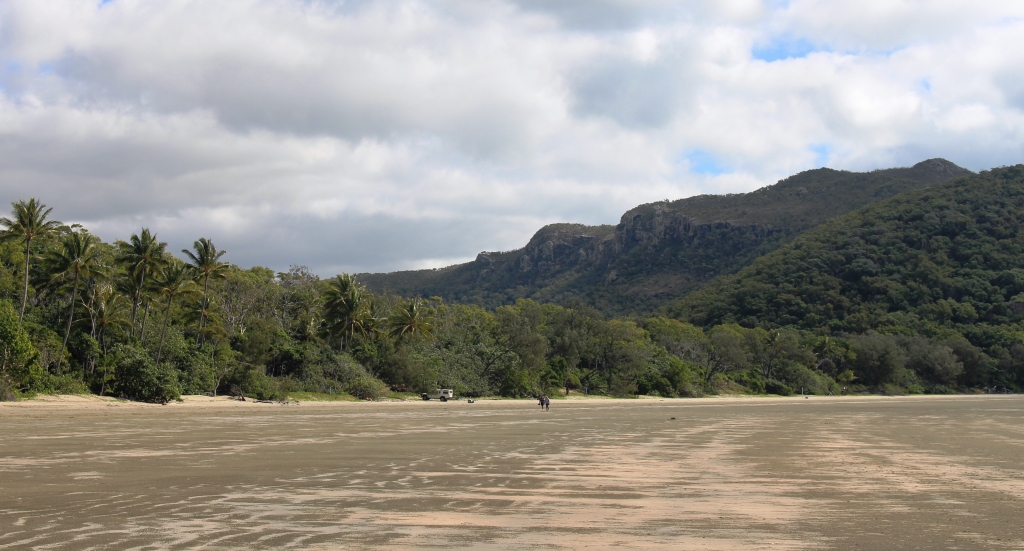
Beach at Cape Hilsborough

Beach at Cape Hillsborough

Today we did a tour of the more distant beach locations north of Mackay. We repeated the first few kilometres of yesterday’s trip but then cut across through the small town of Habana to the Cape Hillsborough road. The drive was through more cane fields in an area of undulating terrain where each hill top seemed to be crowned by a house.

Mountains behind the beach on Cape Hilsborough

Mountains behind the beach on Cape Hillsborough

Cape Hillsborough has a caravan park, where we stayed for a few days about six years ago. Today we parked at the picnic area in the national park for coffee before taking a walk on the beautiful beach. The beach is not beautiful in terms of brilliant white sand. The sand is grey in colour and muddy nearer the water, as the tide was out. It’s beauty comes from the rocks sculptured by waves, wind and rain over the ages, the steep hills that fringe the beach and the dramatic mountains that form a backdrop. And then there is the implied romance of off shore islands, partially obscured by haze.

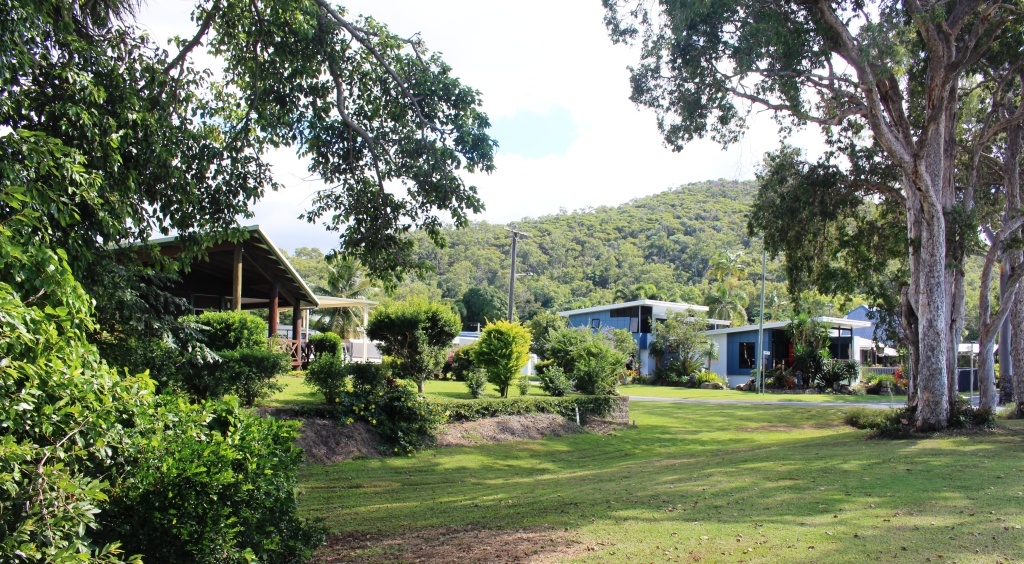
Beach side houses at Ball Bay

Beach side houses at Ball Bay

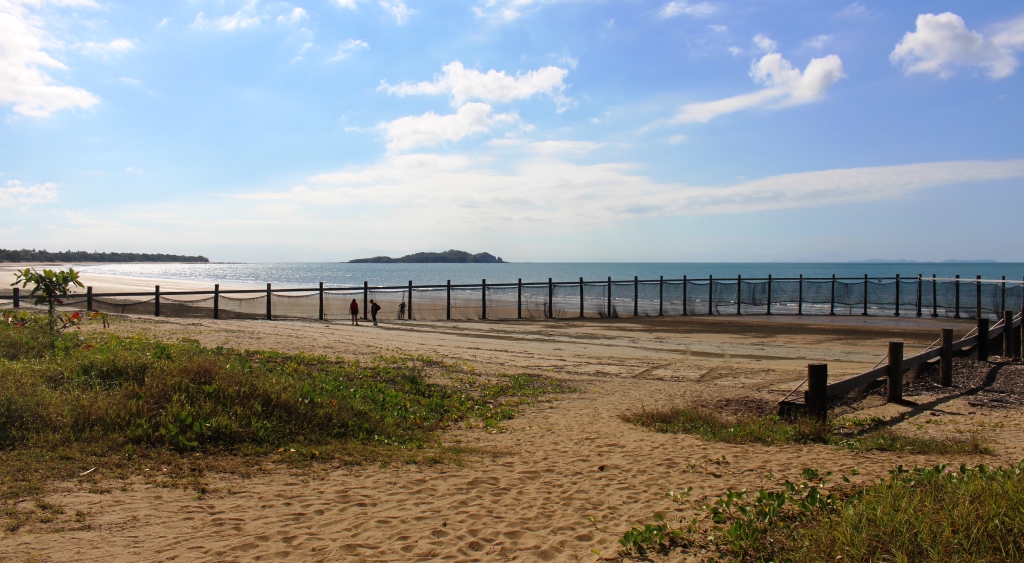
In then, in turn, visited Ball Bay, Halliday Bay and Seaforth. These towns of varying size each has its own bay , beach and a residential area of old fishermen’s hut type houses with newer residential and holiday homes built among them. Each town has an esplanade behind the beach, a park with facilities and a swimming enclosure to keep box jellyfish and crocodiles at bay.

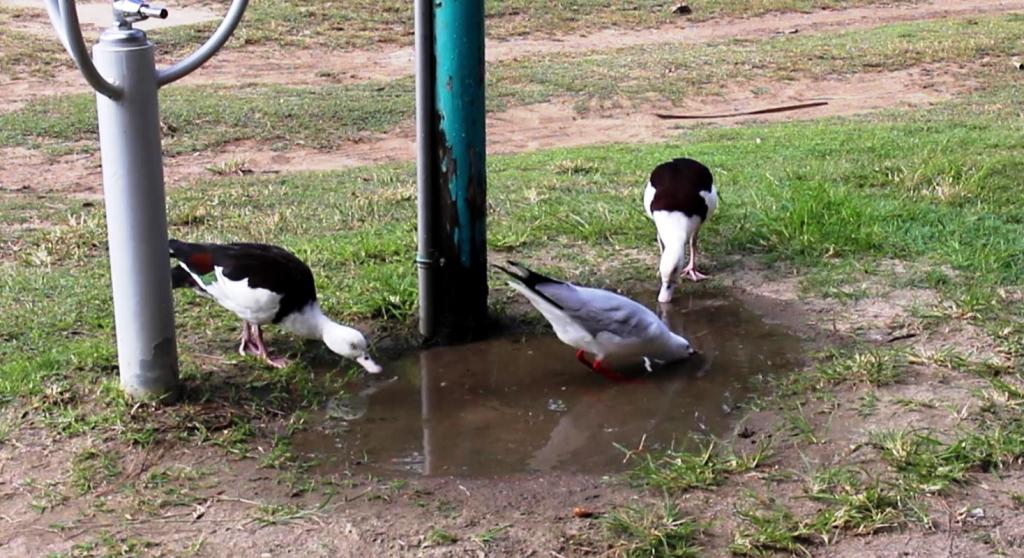
Birds feeding under a tap.

Birds feeding under a tap.

We lunched under a picnic shelter at Seaforth, the largest of the towns. A family, returning from the beach, stopped at a tap near to our table to wash sand off their feet. The resulting pool of fresh water was quickly taken over by ducks and seagulls that seemed to enjoy a long drink of fresh water. They showed no fear and provided us with entertainment as we had our lunch.

Empty swimming enclosure at Seaforth

Empty swimming enclosure at Seaforth

This latish lunch marked the end of our outing, so we headed back to the van for some preparation for our departure next day for home.


Picnic facilities at Seaforth

Picnic facilities at Seaforth

Days 11, 12 & 13

We had allowed ourselves three days to travel home. The weather was deteriorating as we came south and getting colder.

Water birds being fed at the caravan park

Water birds being fed at the caravan park

The first day brought us to the minute town of Yaamba, which is on the highway not far north of Rockhampton, for an overnight stop in a road side parking area. Once again we had heavy traffic thundering by with trains in the distance. But we are becoming immune to truck noise and enjoyed a good night’s sleep. There was heavy rain over night but we did not hear it.

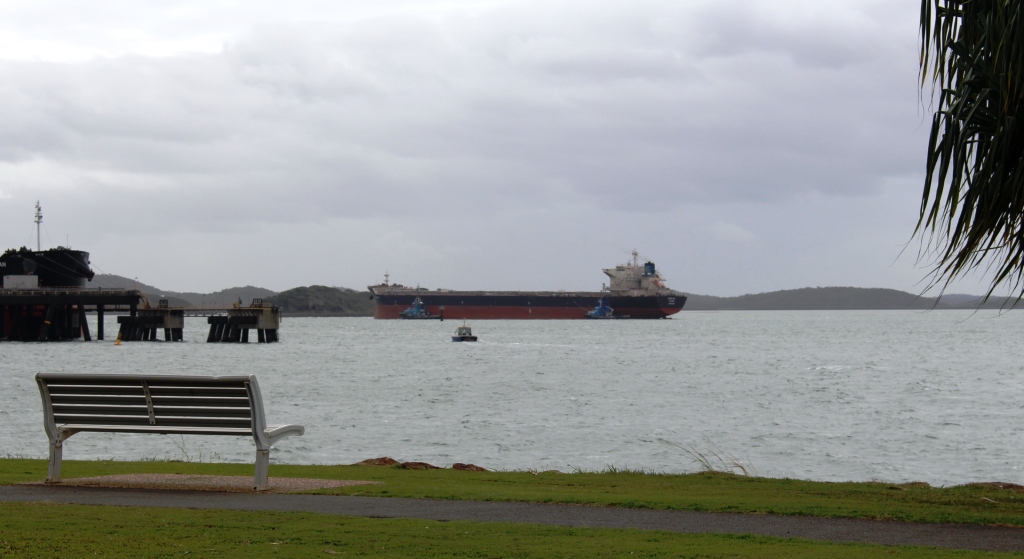
A bulk carrier on its way into the Gladstone coal terminal

A bulk carrier on its way into the Gladstone coal terminal

For the evening of day two we had arranged to call on my former secretary from Mayne Nickless days. We had some time to spare before arriving at her home so drove into Gladstone and found a parking spot with views of the harbor and shipping activity. There we relaxed and had lunch. Two empty coal carriers were escorted to their births by tugs while we watched.

Former secretary Sandy has a brand new husband who we had not met, so we accepted an invitation to dinner and to park overnight in the spacious grounds around their house, on the northern fringe of Bundaberg. They are developing the property into a wedding reception and conference centre. The attractive property has areas of forest and lush green lawns. We enjoyed their company and the meal prepared by hubby Ian and learned much about the challenges of establishing such a business.

There was a bit more rain overnight and more as we came further south, with frequent showers passing.

On our way back south we discovered the missing caravans from our trip north. They were all coming north on the Bruce Highway. The spare spaces that we had seen in caravan parks were in process of being filled.