No Rainbows but Big Holes

Our previous trip to the Center was impacted by rain. One of the casualties was Rainbow Valley, so it was a must this time. We took advantage of the weekend prior to spending a couple of business days in Alice Springs to make good this omission. For good measure we included the Henbury Meteorite Craters and a one night stay at Stuarts Well Roadhouse.

We had been warned that the access road was rough so expected the 22 km trip in to be fairly slow but the grader had been at work so instead of a rough ride we enjoyed highway comfort.
 

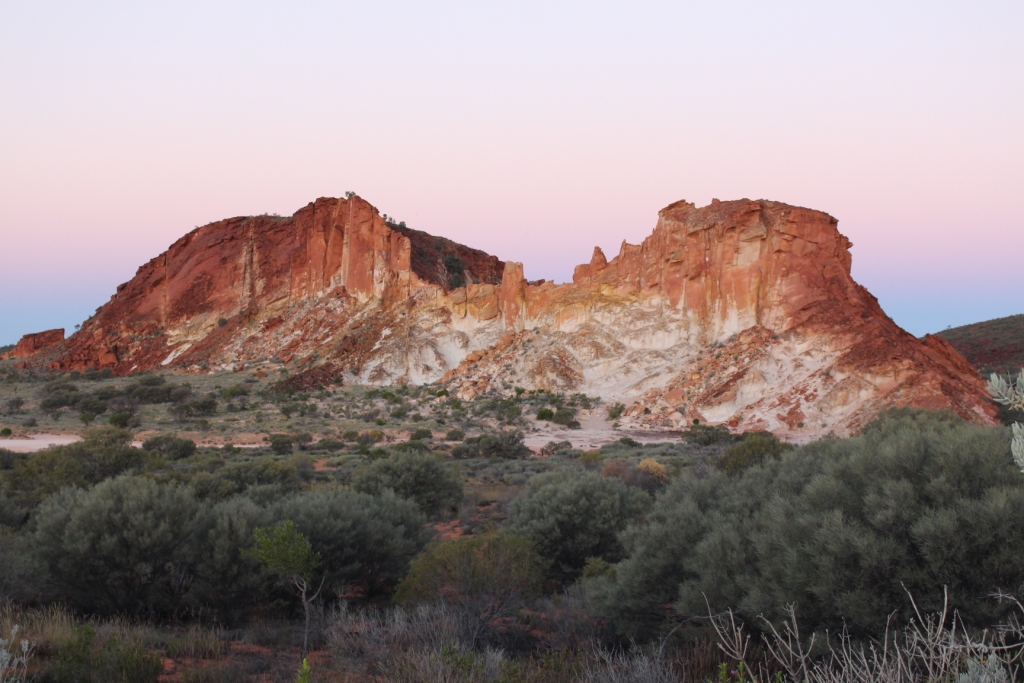
Rainbow Valley - with sunset approaching

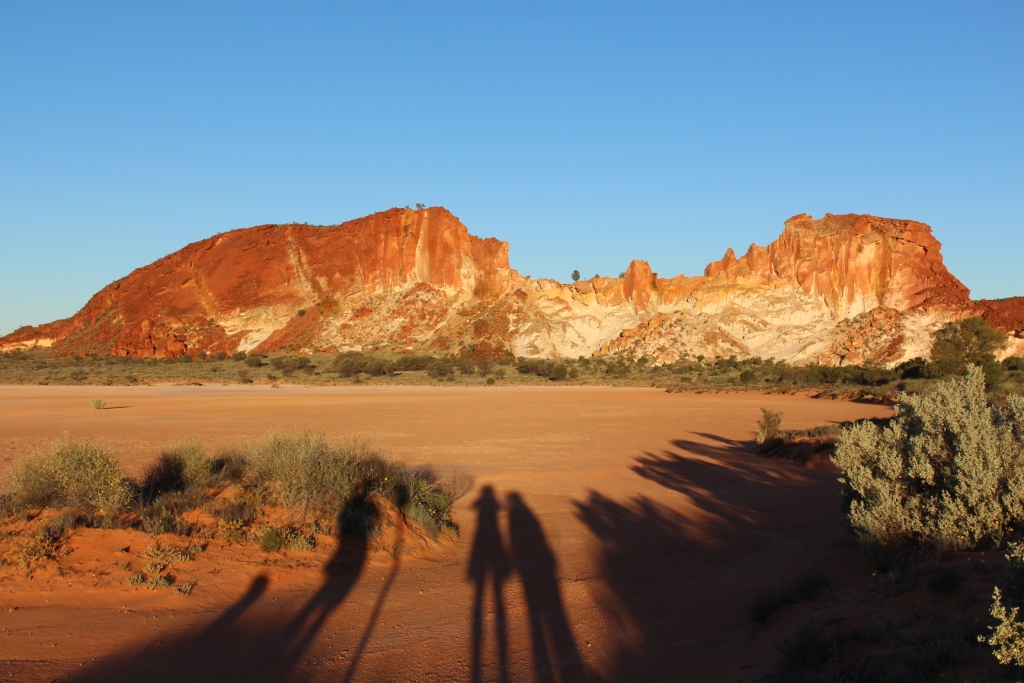
Rainbow Valley – with sunset approaching

I had envisaged Rainbow Valley as being tucked in between rocky hills of sufficient colour to resemble, in some way, a rainbow. But it isn’t. While admittedly there are valleys behind the main attraction, they are not accessible to visitors. The main attraction is, in fact, a single hill. But it is a spectacular hill.

Like Uluru (Ayers Rock), much is made of the effect of sunrise and

Mushroom Rock

Mushroom Rock

sunset light on the surface of the rock, so we spent the night in the small camping area to allow us to see both. We did the walk to Mushroom Rock, is so doing passing a clay pan and entering the only small valley accessible to us. We returned via the path that leads to the highest vantage point. We joined a group of observers, including a photographer, taking a time lapse series of photos.

Edge of main rock and neighboring mountain

Edge of main rock and neighboring mountain

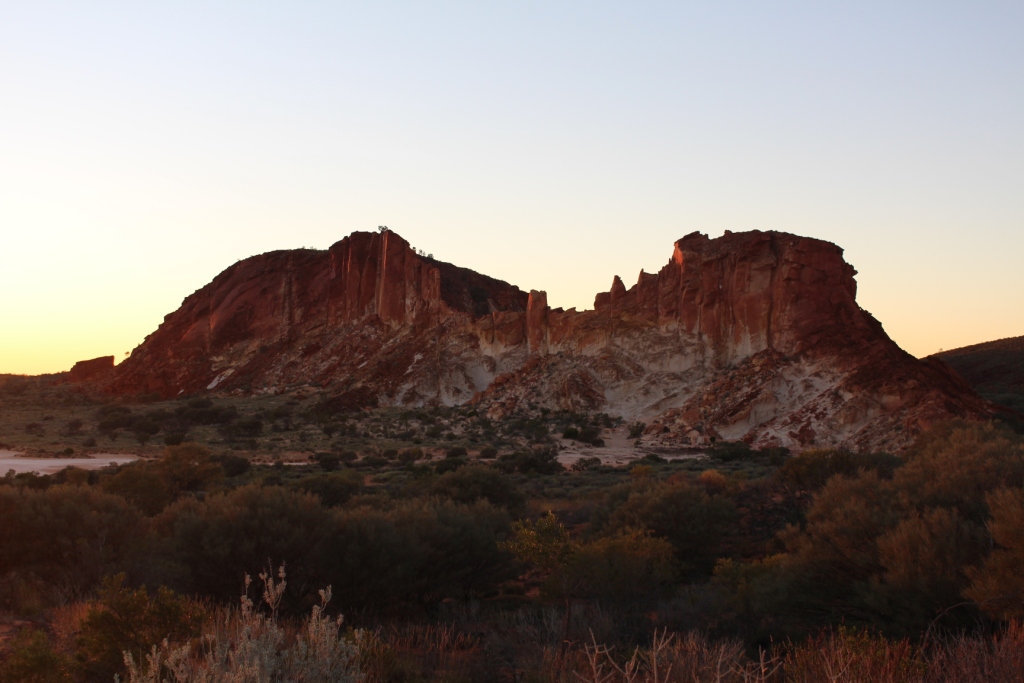
Places like Rainbow Valley require a reasonable level of imagination. Perhaps I don’t have enough because I did not see anything that remotely resembled a rainbow. The rock face is multi coloured but the shades of colour are subdued and didn’t change much as the sun set. They just got darker, as you would expect. The photographer said that the light was not particularly good and that the best light seemed to occur when conditions were very cold. Still, it was interesting to watch.
Last shot at night

Last shot at night

The rock formation faces west so at sunset is in direct light. At this time of year, from the official observation point, the sun rises a little to the north of the rock face. At first the face of the rock is in shadow, but as the sun rises it’s rays start to pick out the most prominent features until ultimately the entire edifice is bathed in morning sunlight. I found this aspect a more interesting
Before sunrise

Before sunrise

spectacle.

I am not sure how cold it needed to be to get good colours. The morning was quite cold. I dressed in my warmest woollies but it took the brisk walk to the viewing point to get some warmth into my system. But then it all quickly dissipated in the cool breeze that accompanied the sunrise.

After sunrise

After sunrise

But it was worth the effort to go there. It is a beautiful place.

We took the short drive back to the highway and a bit further south, to the Stuarts Well Roadhouse and parked the van for an overnight stop. They have power and showers. Then, as an afternoon activity, we drove a bit further south to inspect the Henbury Meteorite Craters. Many thousands of years ago a meteorite, travelling towards earth at great speed, broke into several pieces and hit the earth on what is now Henbury Station. The result was three large holes in the ground, two of which have weathered into one larger hole. There is no record of the number of dinosaurs killed.
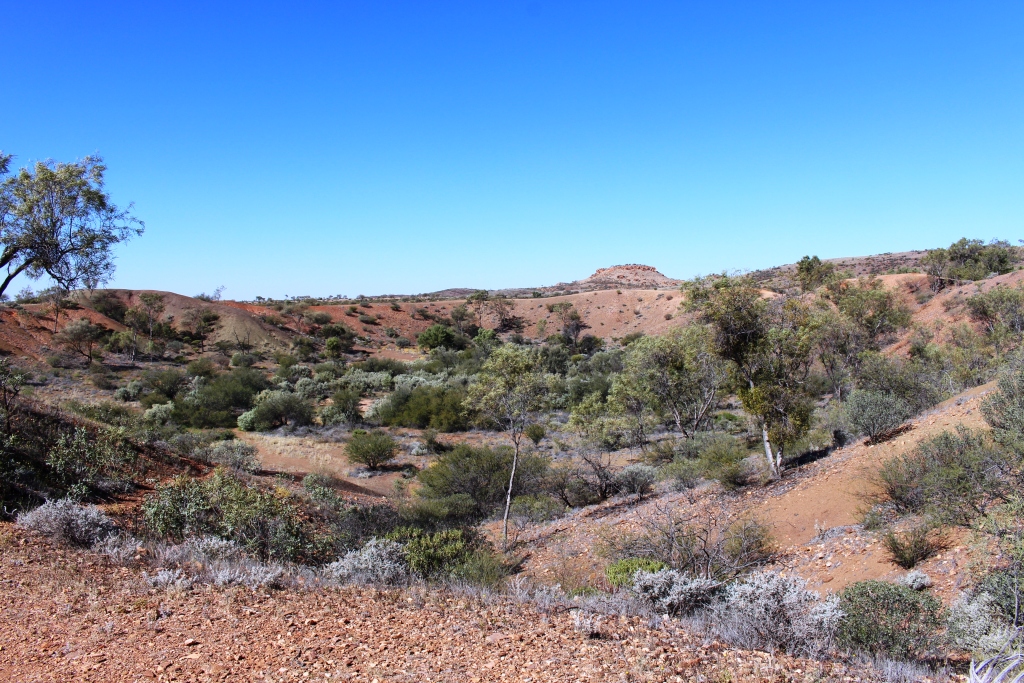
Two craters became one

Two craters became one

Over time the elements of wind and rain have softened the damage and changed jagged to round. Soil produced by erosion and seeds, probably transported on the wind and by birds, has generated trees and grass. The smaller depression has captured the flow of a small intermittent stream to produce quite lush vegetation for such an arid area.
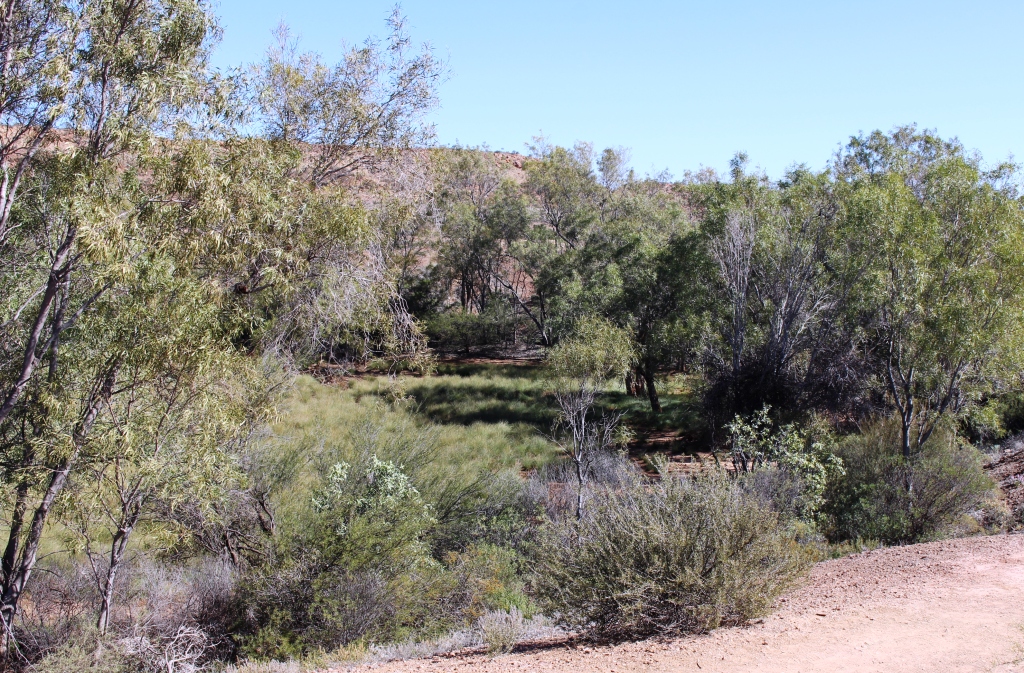
The green crater has a creek flowing into it

The green crater has a creek flowing into it

The meteorite produced some smaller fragments that lost momentum and fell short. They are far enough distant to not be part of the main exhibit, which involves a pleasant stroll of about 1.5 km. As is usual, the Northern Territory authorities have provided picnic facilities, a toilet and designated spaces for caravans and tents. But the area is exposed to the four winds and there is no shade other
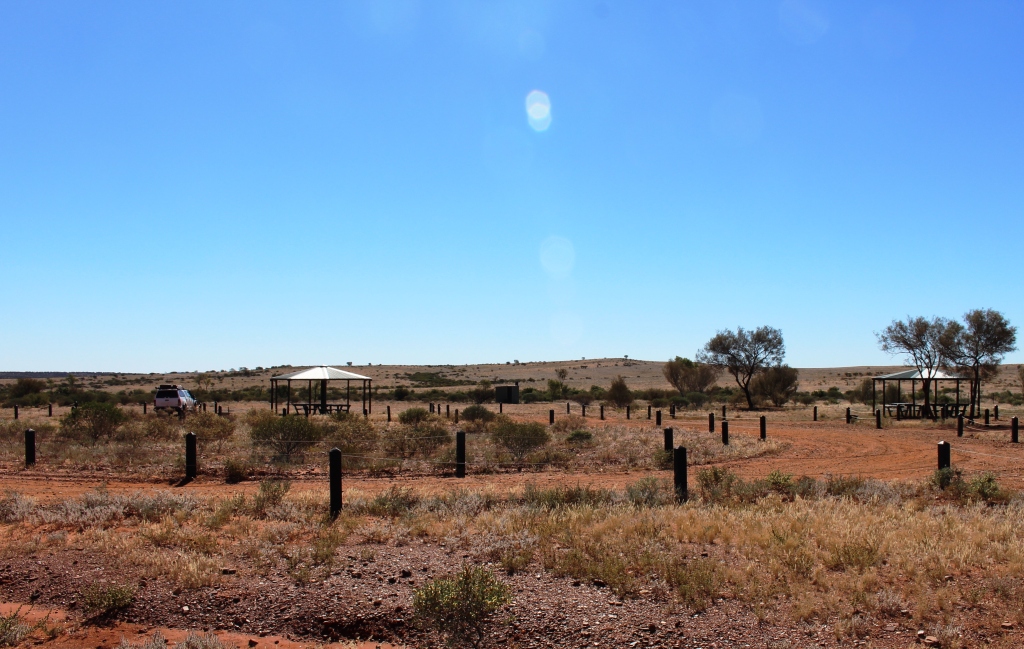
The National Parks camping area

The National Parks camping area

than in the picnic gazebos.

And there are no souvenirs in the form of meteorite fragments. They are all long gone.
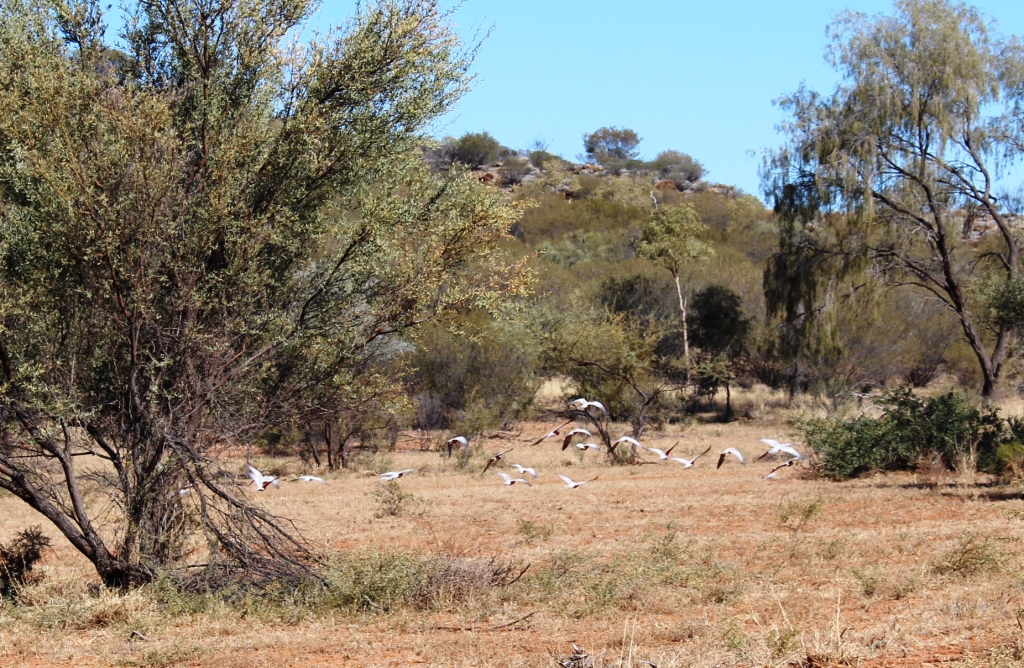
A Drive on Binns Track

Feeding galahs

A flock of feeding galahs

After spending the morning doing general maintenance on van and car, we decided on a drive. Gemtree Caravan Park provides mud maps for local drives. We were given a choice of two drives but one was a bit long for the time available so we set out on the shorter alternative. Both included part of the Bins Track, a favorite with the hairy chested 4WD set. It starts near the western side of the Simpson Desert, finally joining the Stuart Highway south of Tennant Creek. The folk who helped winch our travelling companion from the bog on our way to Windorah said they intended to use Binns Track to get as far north as possible.

Strange diggings near the fossicking area

Strange diggings near the fossicking area

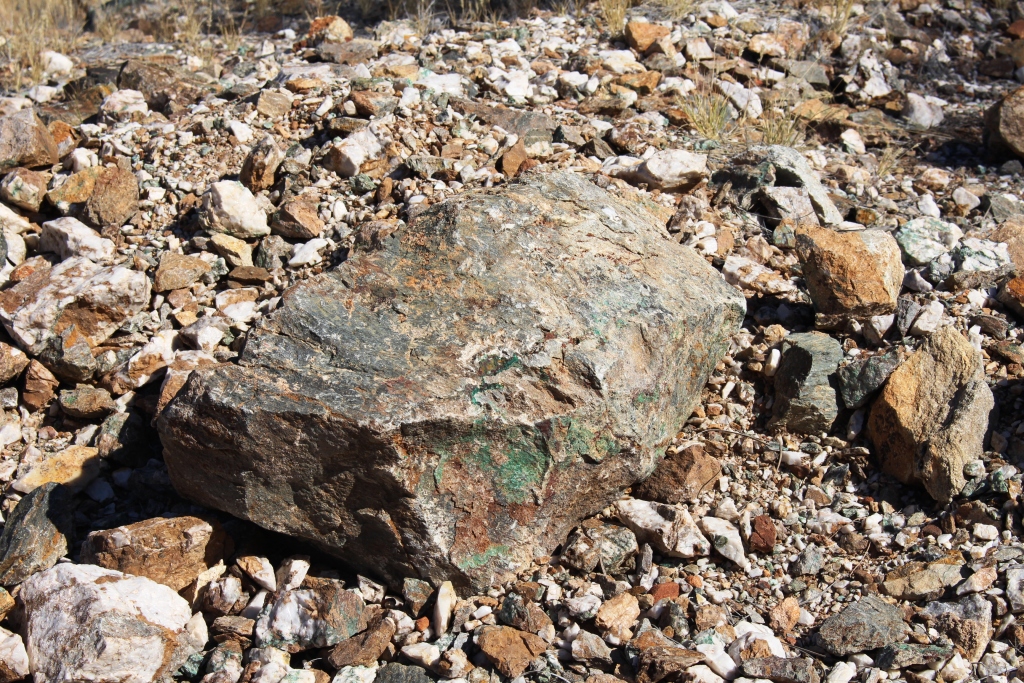
This section of Bins Track turns south just 8 km east of Gemtree and, like most gravel roads, was corrugated, but not badly so. The first thing for us to look out for was a fossicking area where garnet and zircon can be found and the bush camping area nearby. There were no obvious diggings, but the ground was littered with sparkling stones, quartz and the like. The camping area is in a lightly treed paddock with no facilities. But people come in significant numbers and stay for long periods, such is the lure of gemstones.

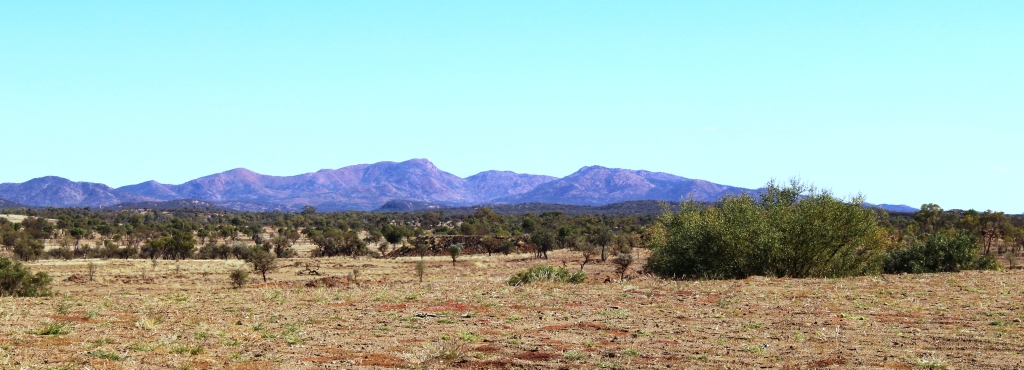
The mountains that were our destination

The mountains that were our destination

Back on the Bins Track we passed through several closed gates (that had to be closed agin after our passing through) and some Indigenous land where to leave the road required a permit. The road was basically a single lane track but that didn’t mean we had it to

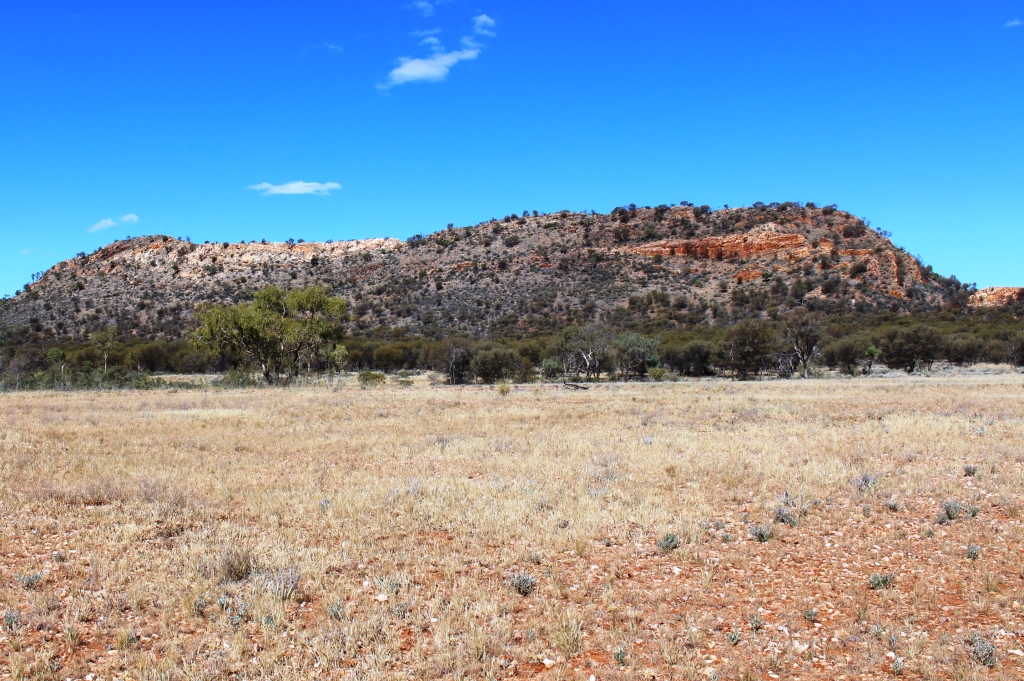
Typical hill in this area

Typical hill in this area

ourselves. As we climbed a small hill and entered bush, on a very narrow section we met a large shiny black 4WD towing an even larger black and grey off road van. It looked a bit out of place. I pulled off the single lane track to make way and wound down my window to offer a greeting, but these luxuriously equipped adventurers just passed by with barely a glance.

Old mining equipment

Old mining equipment

Tailings from the copper mine

Tailings from the copper mine

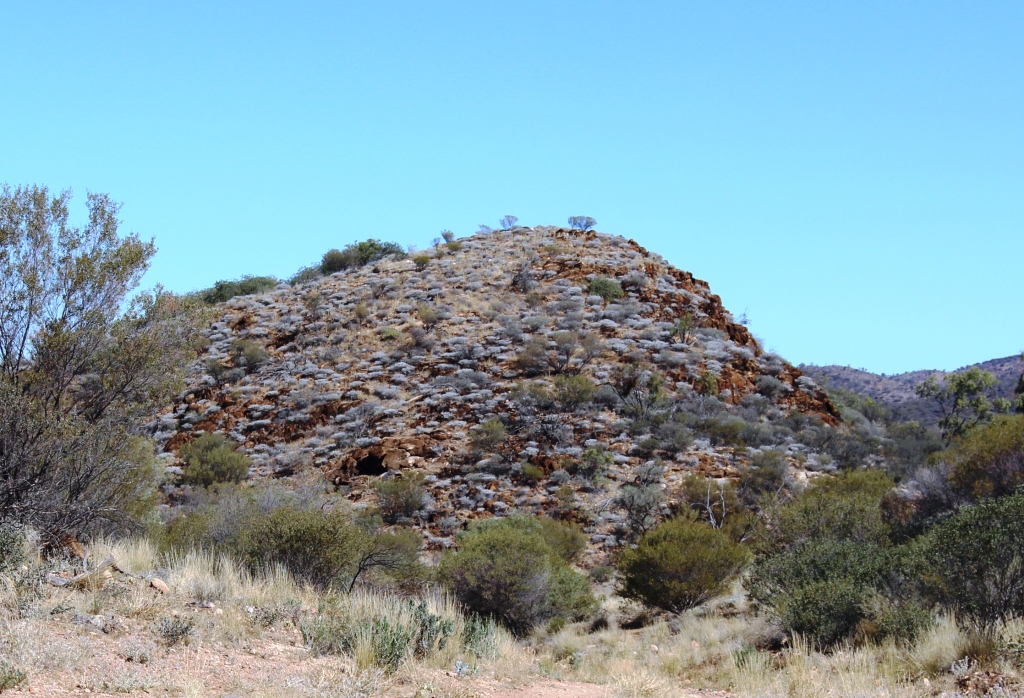
The hole in the hill was probably the old mine

The hole in the hill was probably the old mine

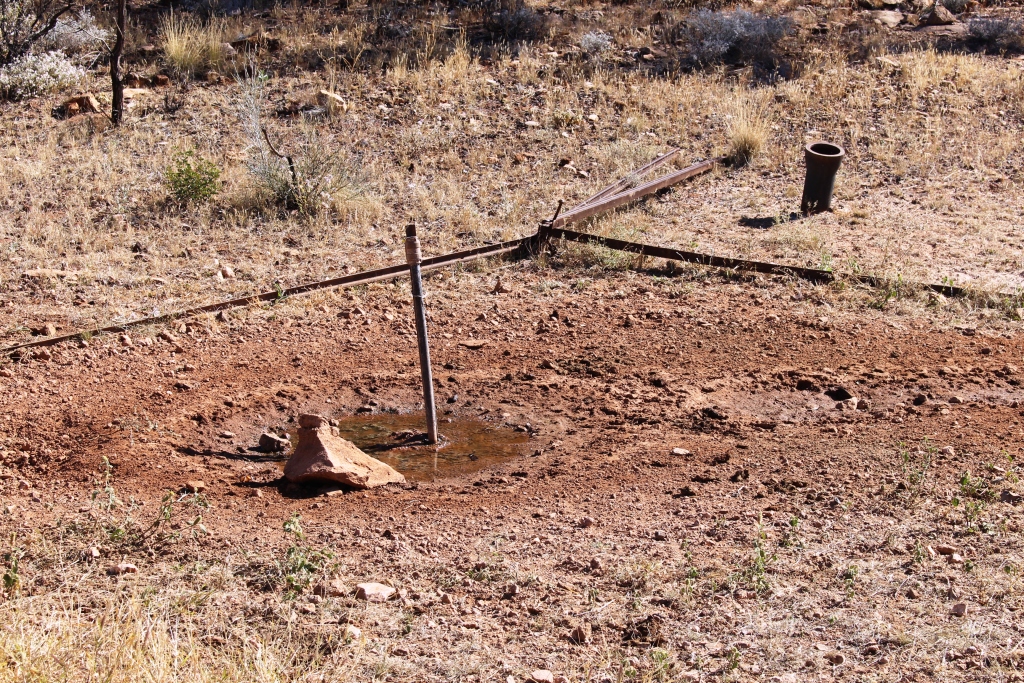
Collapsed bore head tripod

Collapsed bore head tripod

At the end of our journey we found relics of an early copper mine. The trip had a title of “The Mad German’s Mine” but that was not really the objective. We were out for a drive through sweeping semi desert lands dotted with those rocky topped mountains so typical of this part of Australia.
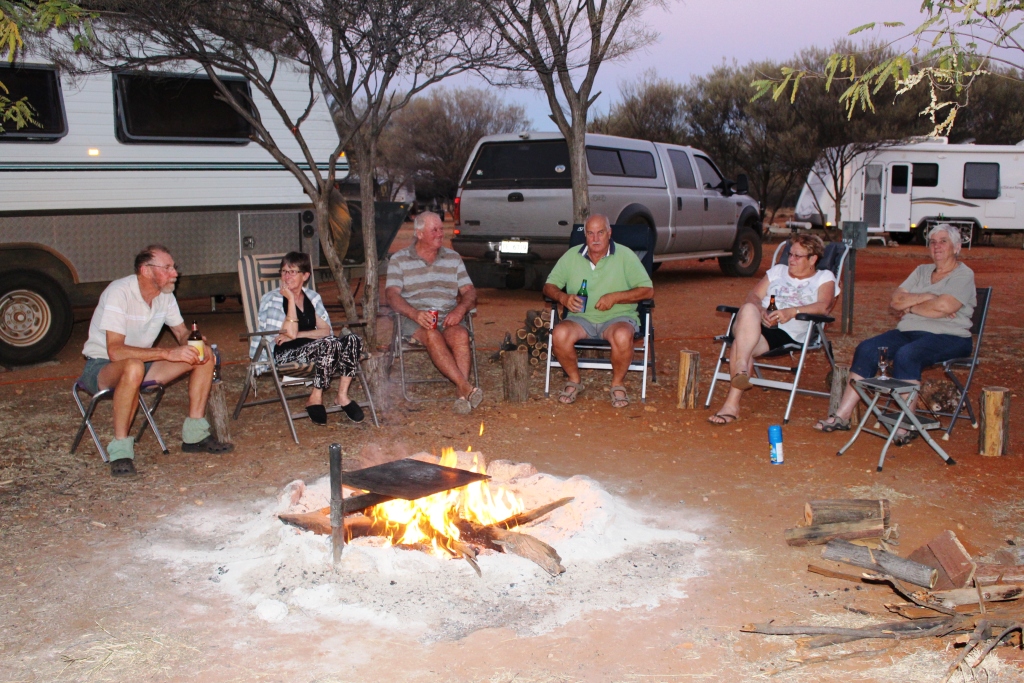
Back at camp, between four vans we provided enough fire wood for a magnificent camp fire. I don’t know about the stars, though. I was too busy cooking the steak on the Barbie plate over the fire to notice.


Keeping the camp fire warm

Keeping the camp fire warm

A Changed Itinerary – Part 2

When I walked into the office at Tobermorey, two young people were standing near the counter, but there was no vehicle outside. It turned out that the couple had stayed at Tobermorey the previous night and had left that morning bound for Alice Springs, but 53 km along the way had rolled their car. They were both uninjured but were worried about their belongings that they had been forced to leave beside the road, when they accepted a ride back to Tobermorey in a road train. Except for the lady in the office all station staff were out mustering.

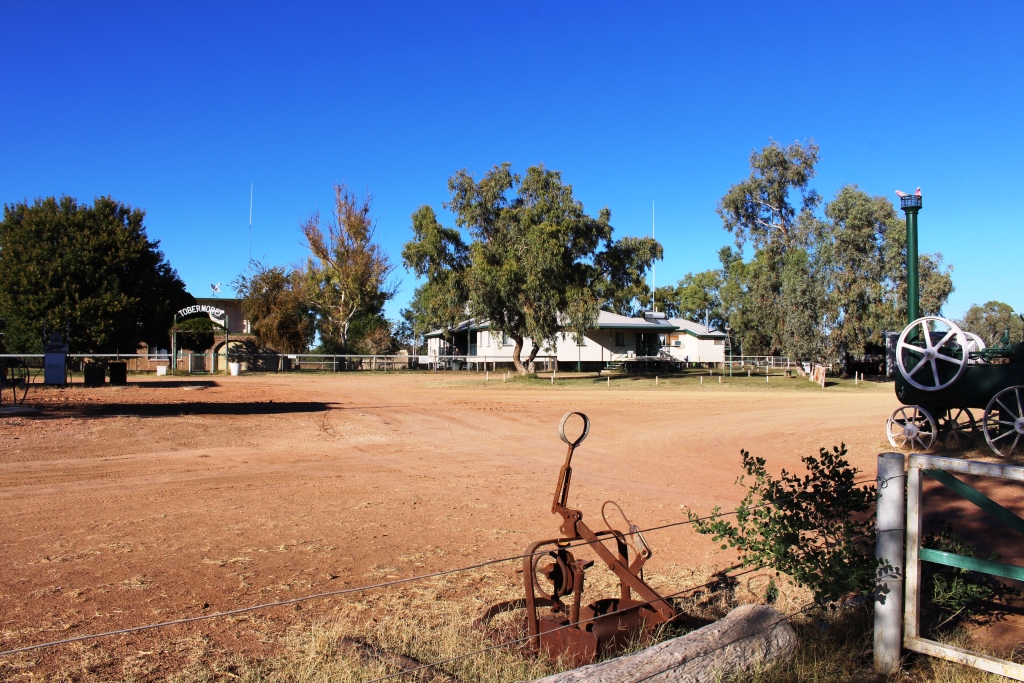
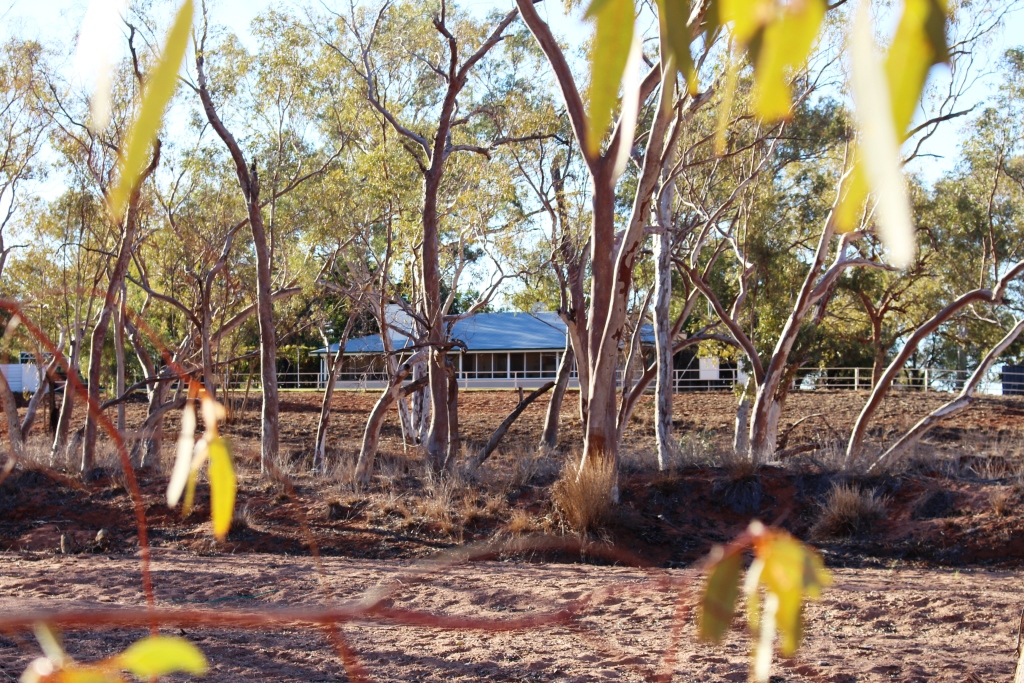
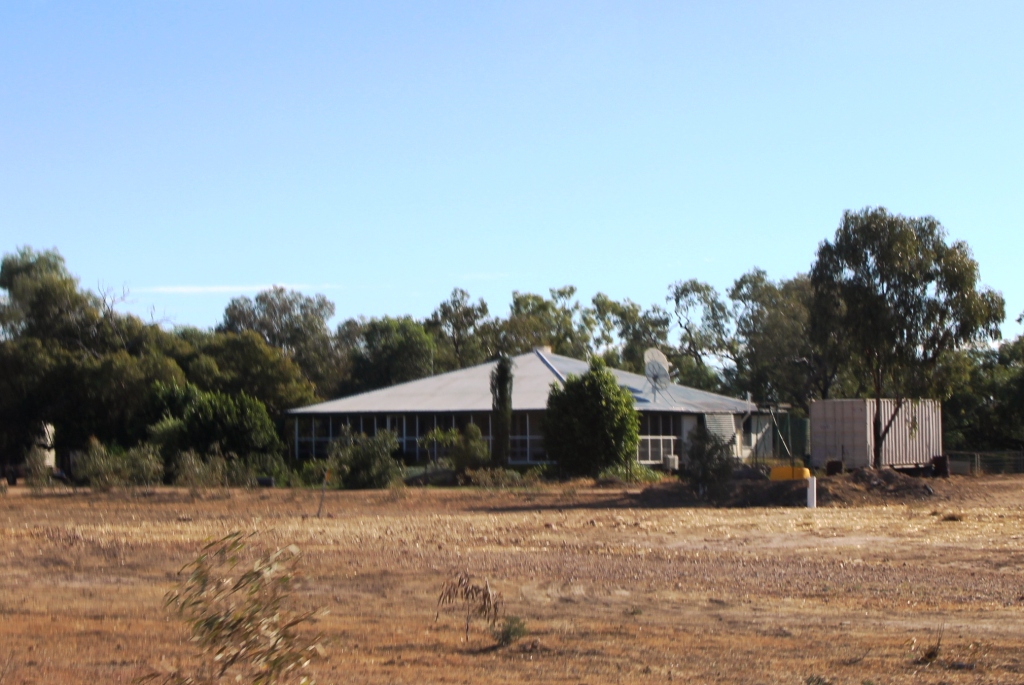
Tobermorey Homestead

Tobermorey Homestead

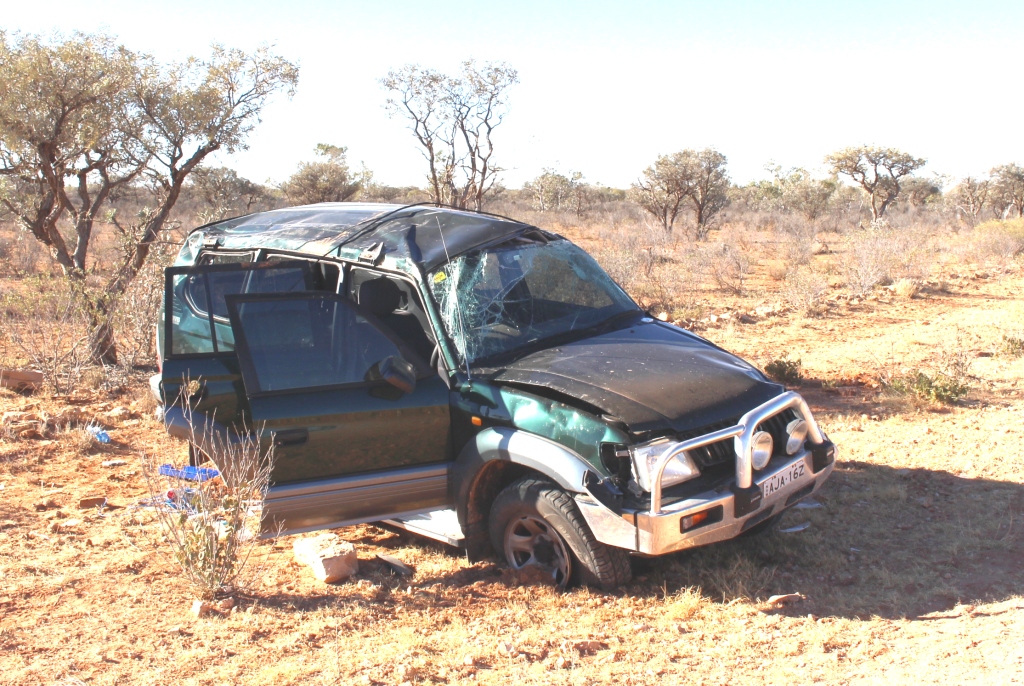
In remote Australia you expect help and you give help. So we unloaded our car to make as much room as possible and the young German student and I set off to collect their possessions. That’s how I know that the accident took place 53 km along the road. The car, an aging Toyota Prado, had rolled once and landed on its wheels. Their belongings had remained in the back and two surf boards on the roof rack were undamaged.  How does that work?

The wrecked Prado

The wrecked Prado

The young man’s English wasn’t perfect so I had not understood about the surf boards. Surf boards heading for the Red Centre? He told me later that they were going to Cairns via Darwin. Surf boards don’t make much sense in Cairns either, but he didn’t know that.

We were scratching our heads about attaching two long surfboards to my roof rack when three 4WD vehicles pulled up. They were camping road side before Tobermorey, but would be happy to drop the surfboards off the next morning. We spent the evening with the couple, Germans studying in Sydney, trying to keep our selves warm on a rather cold night by a camp fire.

If I ever accuse anyone of speaking bull dust I will now do so with greater authority. We encountered much of it on our way to Jervois Station, our destination for the second day of our off road trip. We left Tobermorey at about 9 am after saying our goodbyes to our young friends and almost immediately met the folk delivering the surfboards.

Plenty Highway Corrugations. There were plenty of them.

Plenty Highway Corrugations. There were plenty of them.

We stopped at the side of the road for morning tea. A station hand, driving a utility with all manner of equipment on the back, stopped to make sure we were OK. He was on for a chat and knew about the accident, as it happened on the station for which he worked. Roads go through and not around out here.

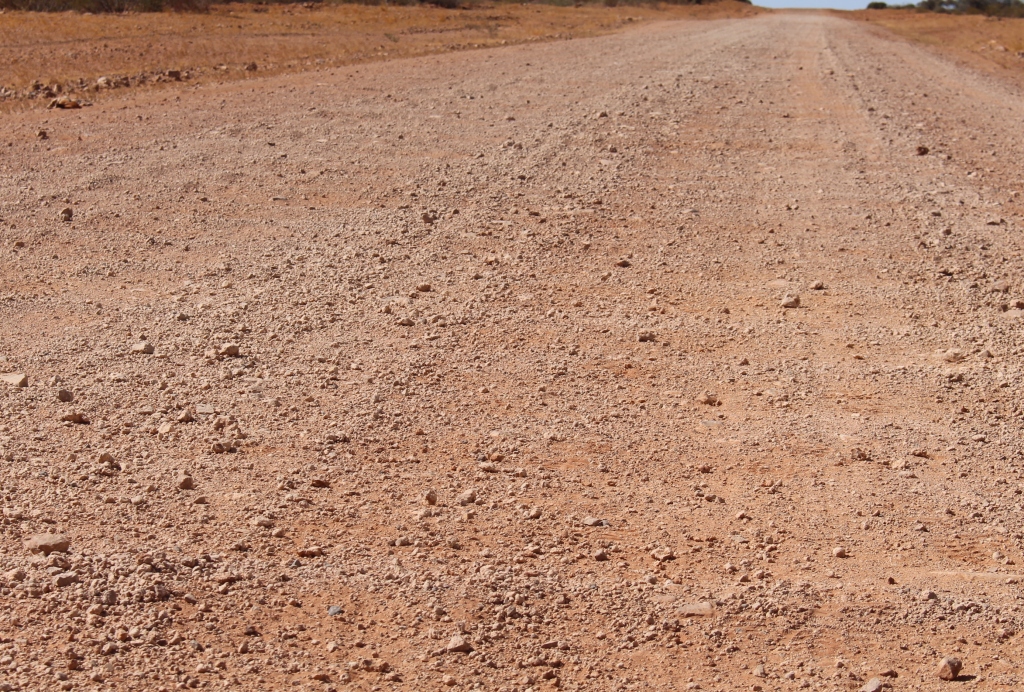
On a deteriorating road we passed the derelict Prado and soon started to come across bull dust patches. They had hardened with the rain so were not too much of a problem. For substantial distances half the road was corrugated gravel and the other half bull dust with heavy tyre marks embedded in it. Driving through it threw us around a bit but with reduced speed the bull dust gave a better ride than the corrugated gravel.

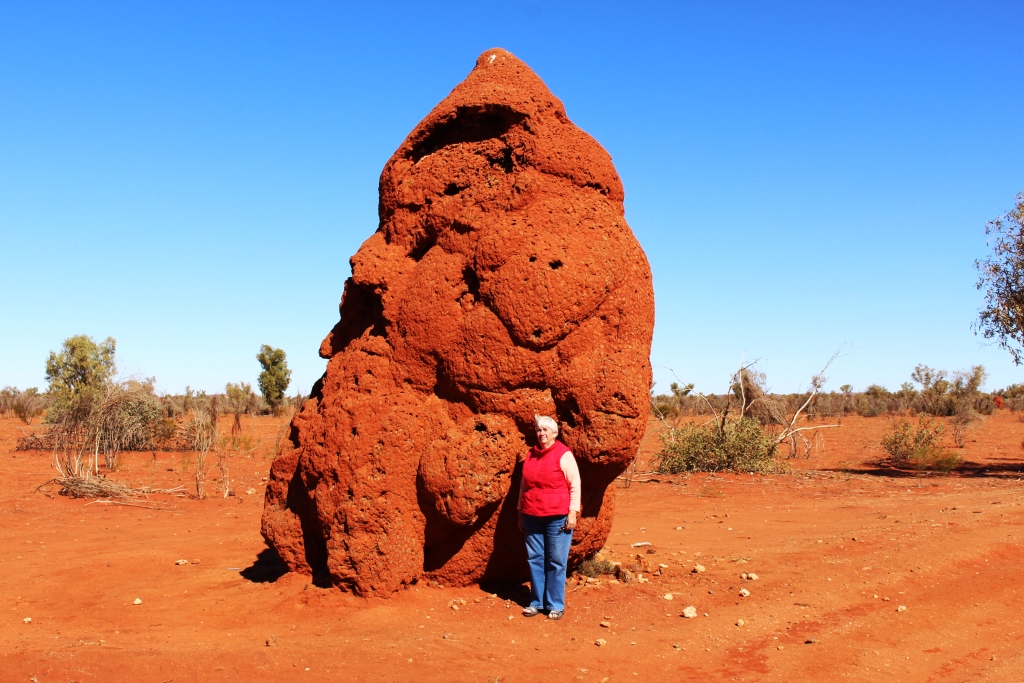
Ruth with ants nest

Ruth with ants nest

A little further on, after passing huge roadside ants’ nests, we reached the point where graders were working on a highway upgrade. Two graders, working in tandem were grading long stretches and

Jervois Station on the banks of the Marshall River

Jervois Station on the banks of the Marshall River

producing long sections of super highway. With the improved road we reached Jervois Station earlier than expected and settled in as the sole tenant in the red dirt camping area. Jervois Station takes its name from the

Our van viewed from the bed of the river

Our van viewed from the bed of the river

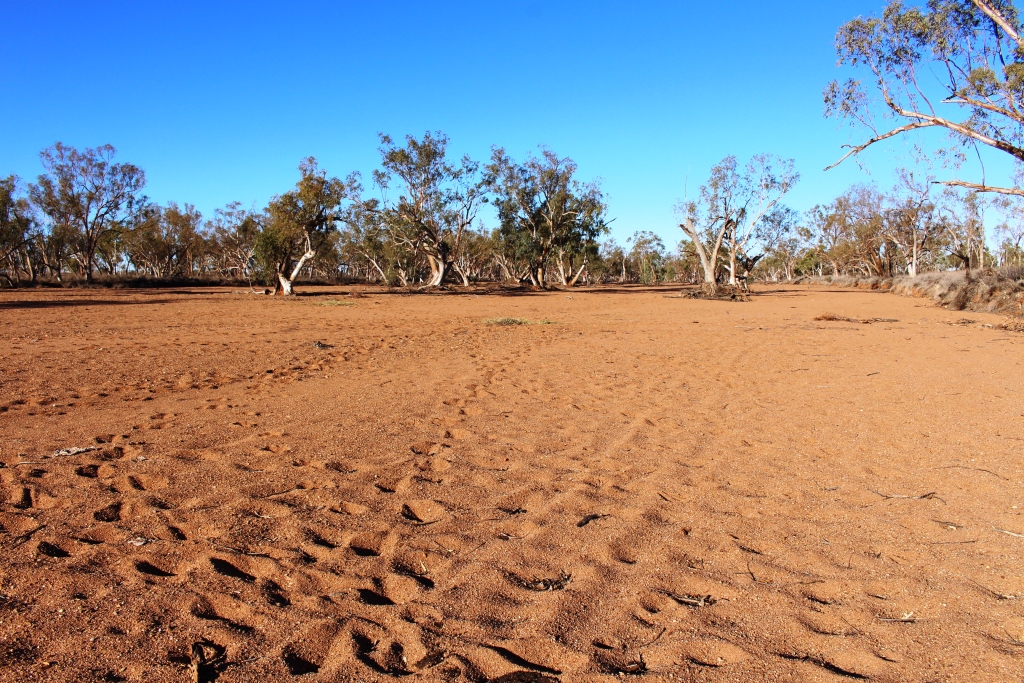
Jervois Range to its north. The camping area and homestead are on the banks of a wide, sandy and very dry Marshall River, which flows, when it contains water in sufficient volume, south to the Hay River which in turn flows into the Simpson Desert and disappears. Jervois is best known to Simpson Desertophiles who use it as a refueling point after completing a south to north crossing.

The dry sandy bed of the Plenty River

The dry sandy bed of the Marshall River

The final leg of this first long trip over unsealed roads was 220 km to Gemtree in the Harts Range. The name of our destination suggests gem stones, a commodity for which the area is world famous. Gemtree is a caravan park that specialises as a holidays location for gem hunters. But we will not be gem hunting. After five solid days of driving the time had come for a break.

The leg to Gemtree was a relatively easy drive. The early part of the trip was, like late the previous day, freshly graded, but as we progressed onto previously graded road the more previous it got the rougher it got, to the point where I was not unhappy to reach the sealed road just before Gemtree.

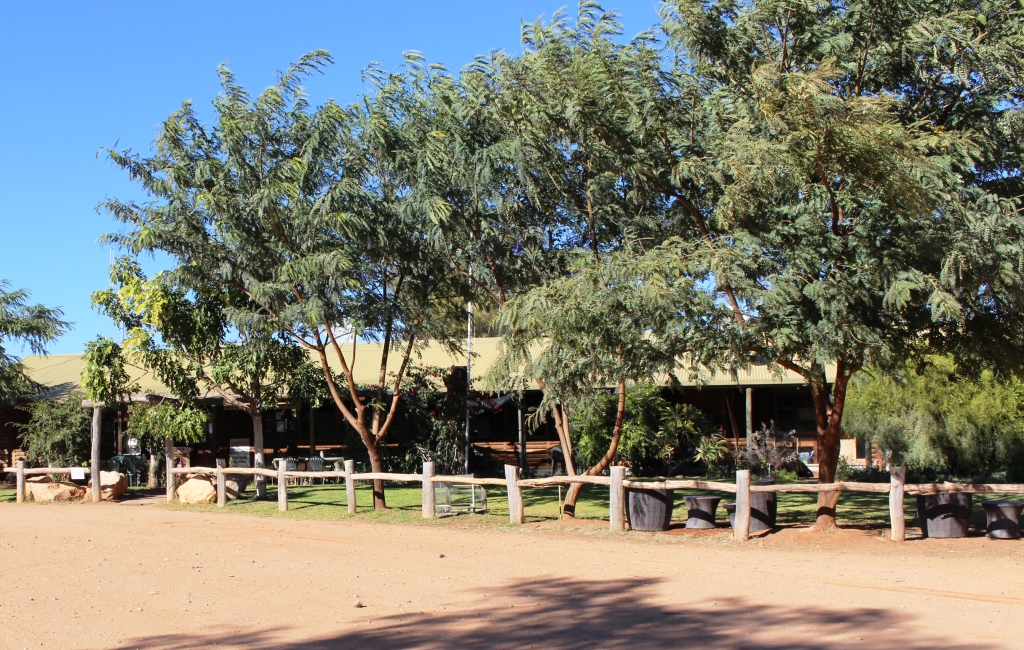
The administration building at Gemtree Caravan Park

The administration building at Gemtree Caravan Park

So tomorrow we may ask for one of the park’s mud maps and do a bit of a tour of the local area. Or perhaps not! But we probably will go out to find some wood to feed the fire place beside our site so that we can spend the last night of the Donohue /Plenty crossing under the incredible array of stars that are visable when there are few lights to interfere with the view.


We have produced a video that covers this segment of the trip and the segment that precedes it.

https://www.youtube.com/edit?o=U&video_id=czHbkrloHVc

A Changed Itinerary – Part 1

As we listened to the patter of the rain on the roof of our van, we were aware that it was washing away our immediate plans. We have been caught before by the inability of the Department of Meteorology to predict conditions west of Toowoomba. Its predicted 5 mm of rain became 25 mm a couple of years ago and we were left wallowing in the mud of the Dowling Track. History was repeating its self.

Graeme and his motor home

Graeme and his motor home

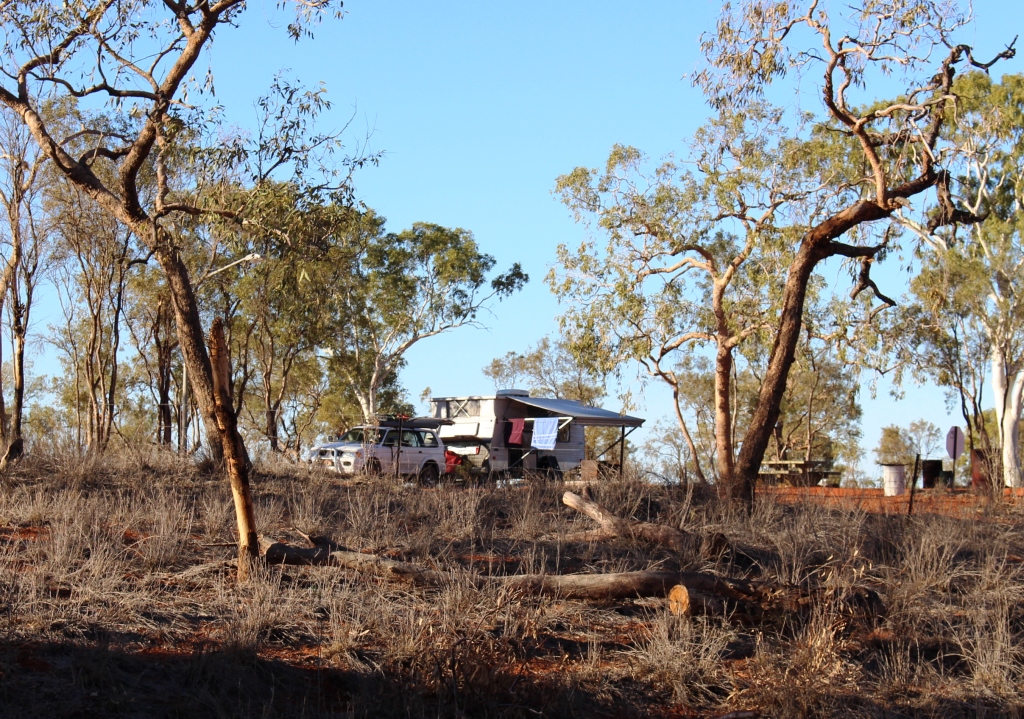
The next day, on our way to Windorah, we experienced again firsthand what an inch of rain can do in this area. We had made the acquaintance by two way radio of another traveler, this one in a Winnebago motor home and had agreed to stop for lunch at the same place so that we could have a face to face chat. I chose the site of yesterday’s afternoon tea stop, but when I turned in to the proposed stopping place our wheels started to sink in the mud that had, two days earlier, been a firm parking area. New acquaintance saw what was happening and pulled off to the other side of the road and sank to his axles in even worse mud. A quick selection of 4WD had saved us. He didn’t have that option.

But we were lucky. A couple headed for the Simpson Desert, equipped with a winch, came along, so with them winching and me in the Suzuki that he was towing, giving a push, we got the motor home back into the black top. We moved a bit further along to firm ground and discovered that Graeme is travelling alone while his wife is in England. He asked if he could tag along and he stayed behind us until our paths diverged at lunch time the following day.

From the information center at Windorah and from talking to passing motorists on the two way radio, we learned that the Birdsville Developmental Road was a mess and would not be suitable for us to drive on for several days, so we turned north, spending the night in the caravan park at the Jundah Hotel, and then on to Winton. Graeme left us at Longreach.

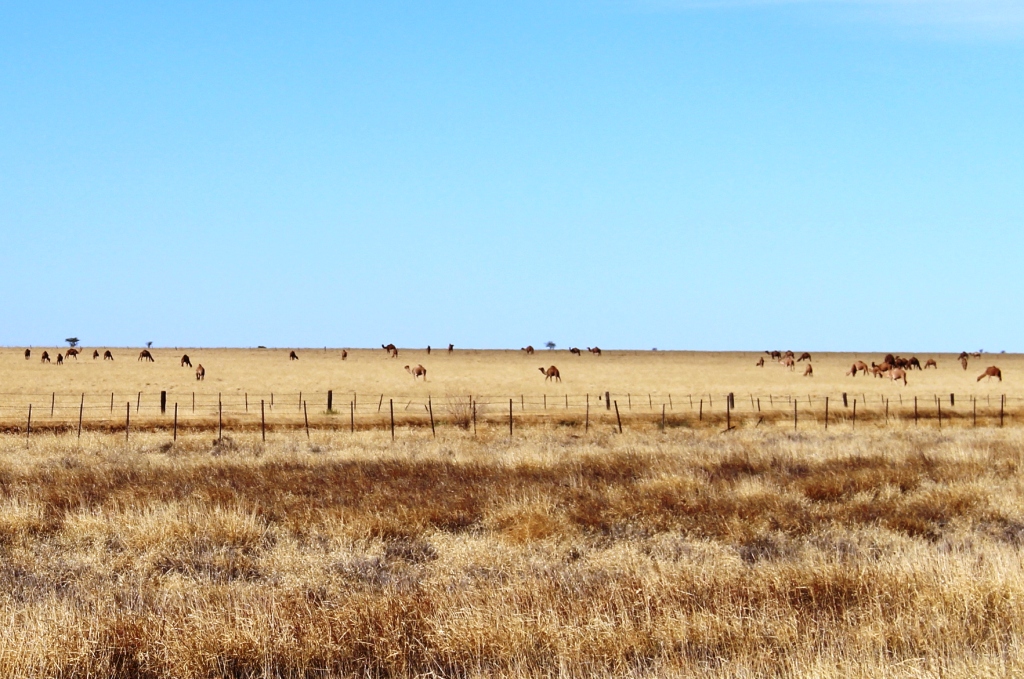
Farmed camels near Winton

Farmed camels near Winton

The drive from Winton to Boulia is along the first part of the Min Min Byway. Boulia has built a tourist industry on the phenomenon of the Min Min Lights, unexplained lights that some people claim to have seen at night as they have travelled the road. But since most people travel the road by day, reported sightings are rare.

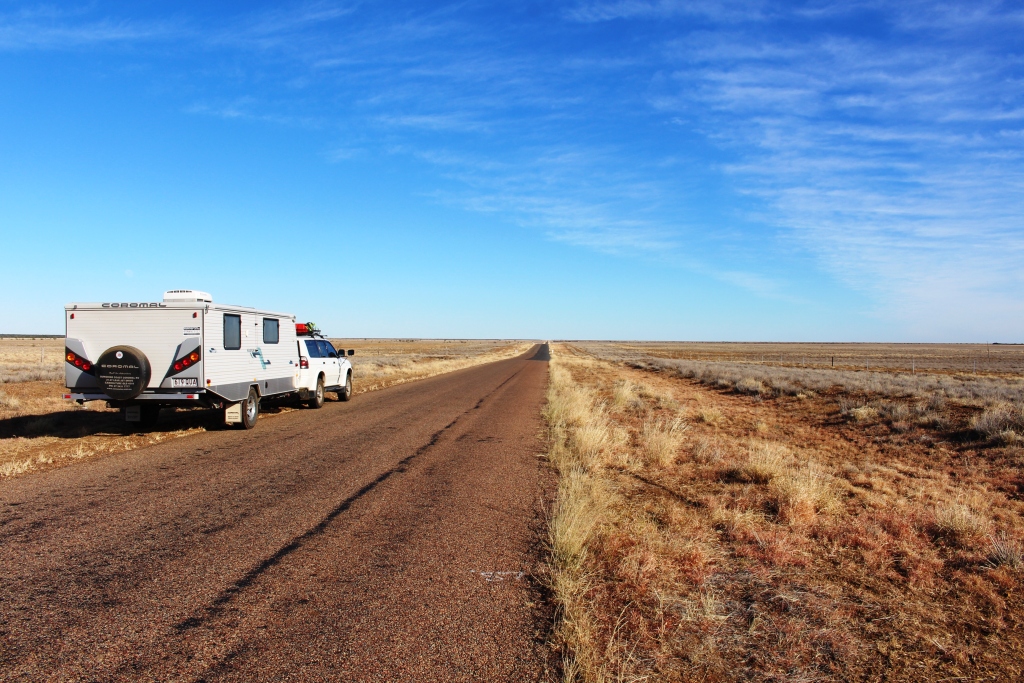
Our rig beside the long road

Our rig beside the long road just west of Winton

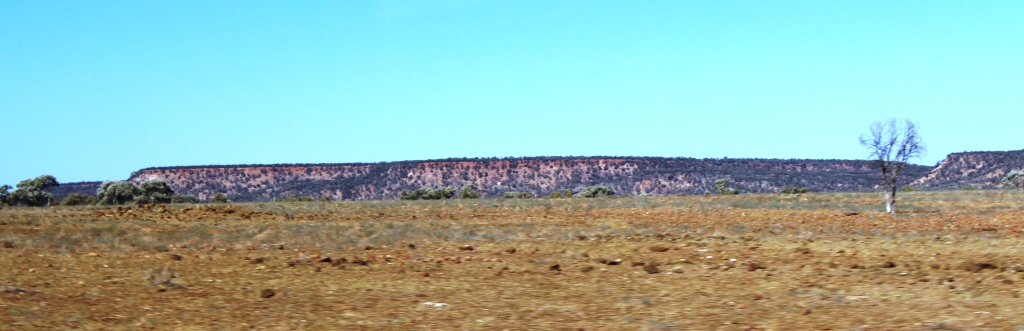
To travel this road at night would be a grave mistake as it is one of the prettiest outback drives in Australia. The first part is fairly ordinary with open grass country on the higher ground and scrubby trees in the gullies, but after crossing the extensive flood plains of the Diamantina River, the road plunges into a series of mountain ranges of the “jump up” or mesa variety.

One of the many channels of the Diamintina

One of the many channels of the Diamintina

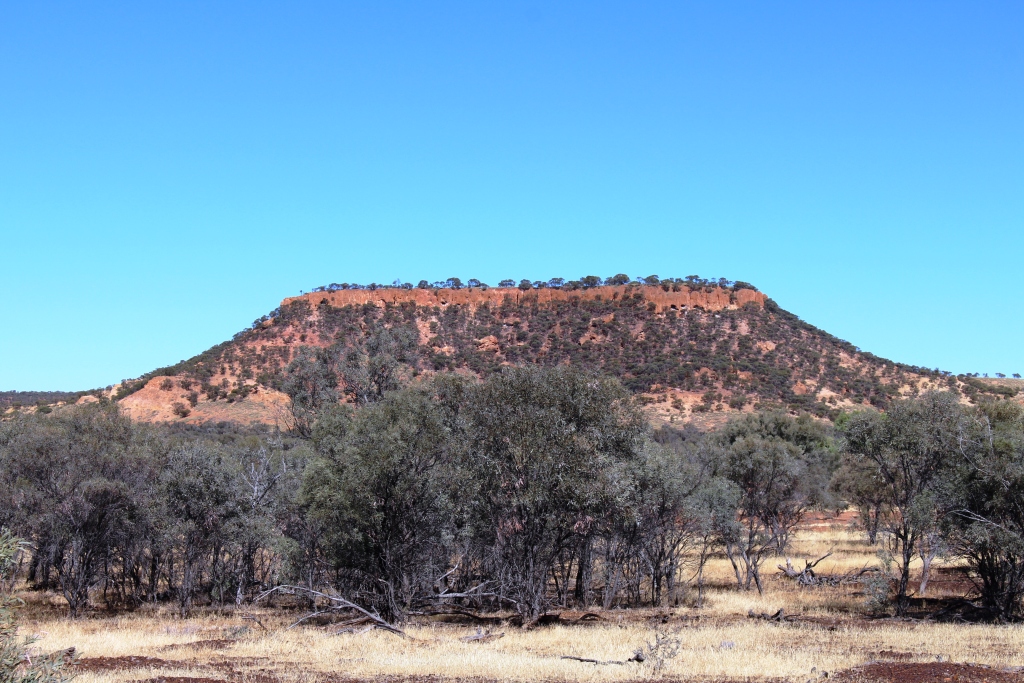
These are the hills that are capped with mini precipices of red sandstone from which the slopes covered with rough green grass or stunted vegetation, descend to tree clad lower slopes and gullies. The

A typical jump up or mesa

A typical jump up or mesa

sandstone caps weather into some interesting shapes such as the one that stands above the Castle Hill Rest Area. At the western end of the series of ranges a picnic shelter has been built on hill top that provides panoramic views along the valley through which the road passes.

The isolated Middleton Hotel

The isolated Middleton Hotel

There are other things of interest along the way.  About half way stands the Middleton Hotel, not so named because it is half way but after an explorer who passed the spot many years before this rather elderly building was built. It is a favorite lunch stop. Perhaps that explains the Min Min Lights.

Brolgas by the road

Brolgas by the road

Not far out of Boulia we stopped at a rest stop that marks the site of the long demolished Hamilton Hotel. There we received a tip to look out for brolgas at a creek beside the road. There were dozens of them in clear view. As I walked towards them for a picture they moved away, many of them performing the sort of flying dance for which they are noted.

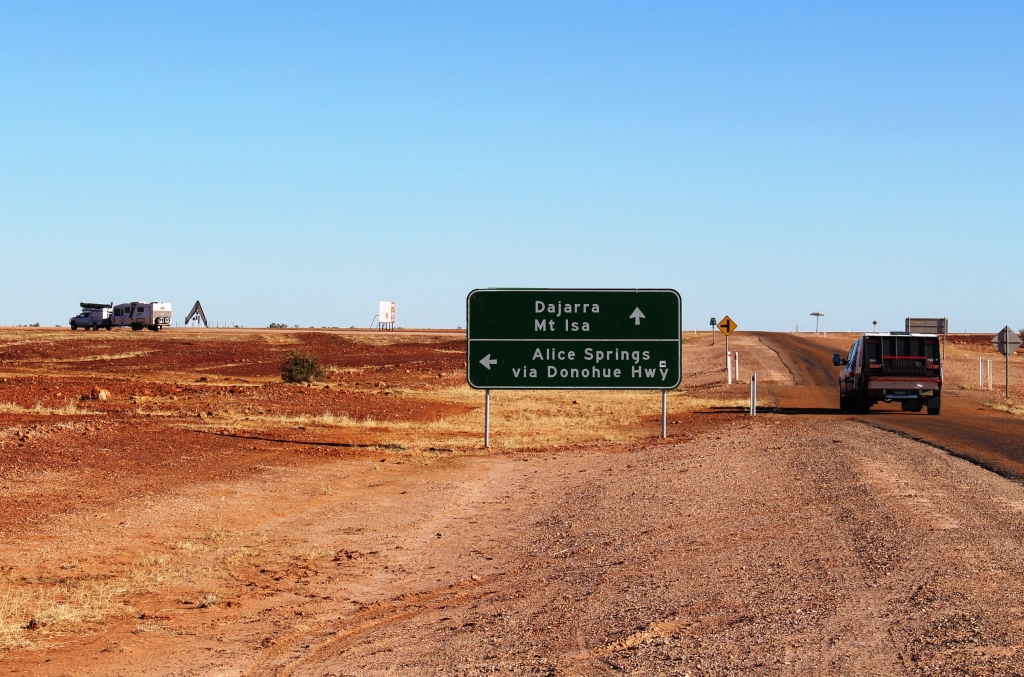
The start of the Donohue Highway

The start of the Donohue Highway

After a night in Boulia we took on the Donohue Highway that runs west to the Northern Territory border and there becomes the Plenty Highway. These highways are our first long run on dirt roads.

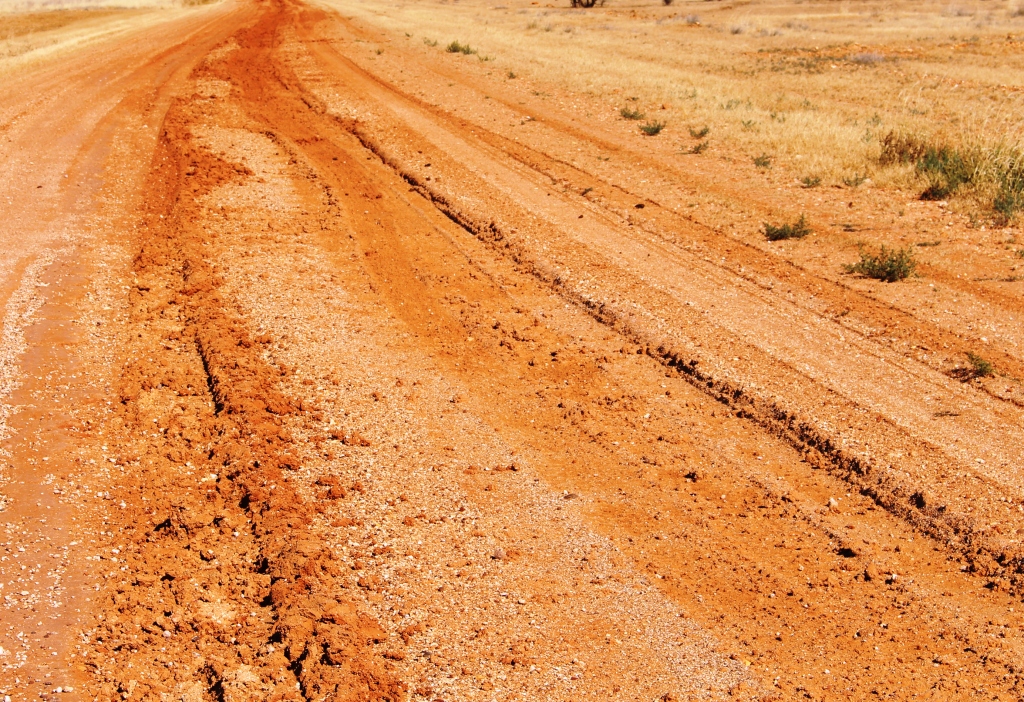
Wheel tracks from recent rain

Wheel tracks from recent rain

Combined they extend a about 750 km across the southern end of the Barkley Tableland. We knew that the road had been affected by the rain and were warned to watch for wheel tracks. The road was quite badly damaged on the west bound side but surprisingly good on the east bound side. So we pretended to be driving in the USA, returning to the correct side for approaching traffic, when we reached crests or when the consensus tracks changed sides.

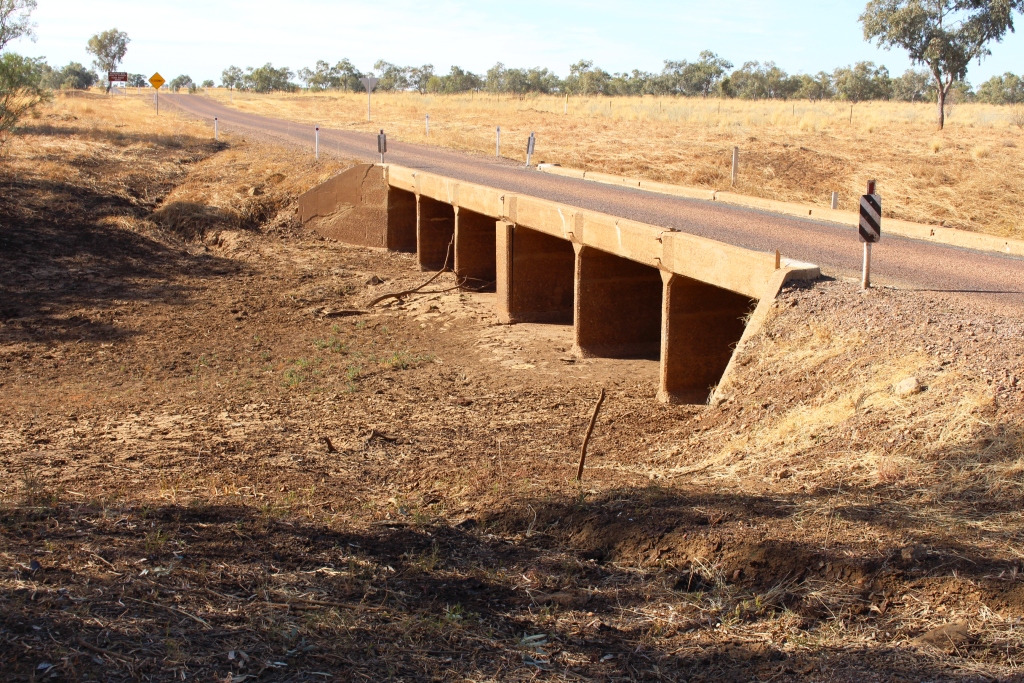
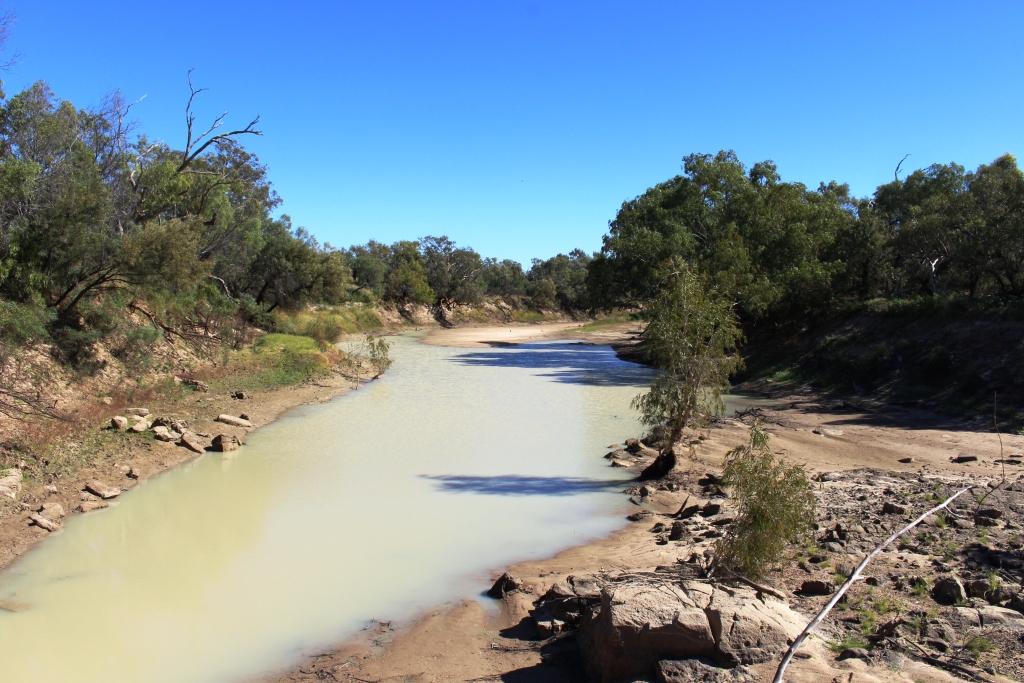
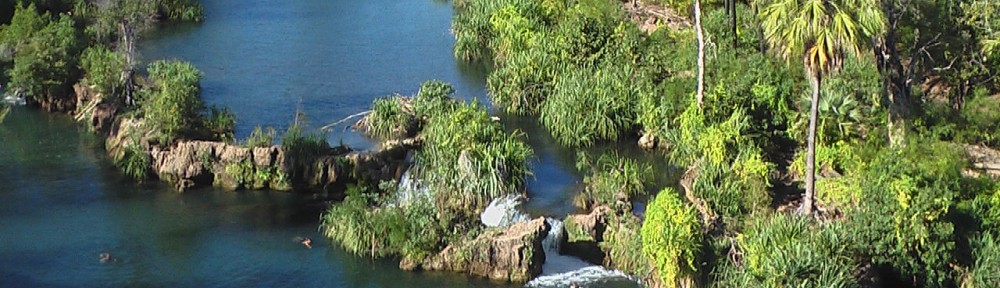
A waterhole in the Georgia River

A waterhole in the Georgia River

The main feature of this drive through far western Queensland is crossing the Georgia River. When the wet season, often augmented by a cyclone, dumps large quantities of rain south of the Gulf of Carpentaria a large proportion of the water flows down both the Georgia and Diamantina Rivers. In a wet year the flood waters reach, not directly but by various means, the vast expanse of salt pans that is Lake Eyre. The flood plains associated with these rivers are vast. It is probably not possible to visualise the sight of them in full flood without actually having seen them.

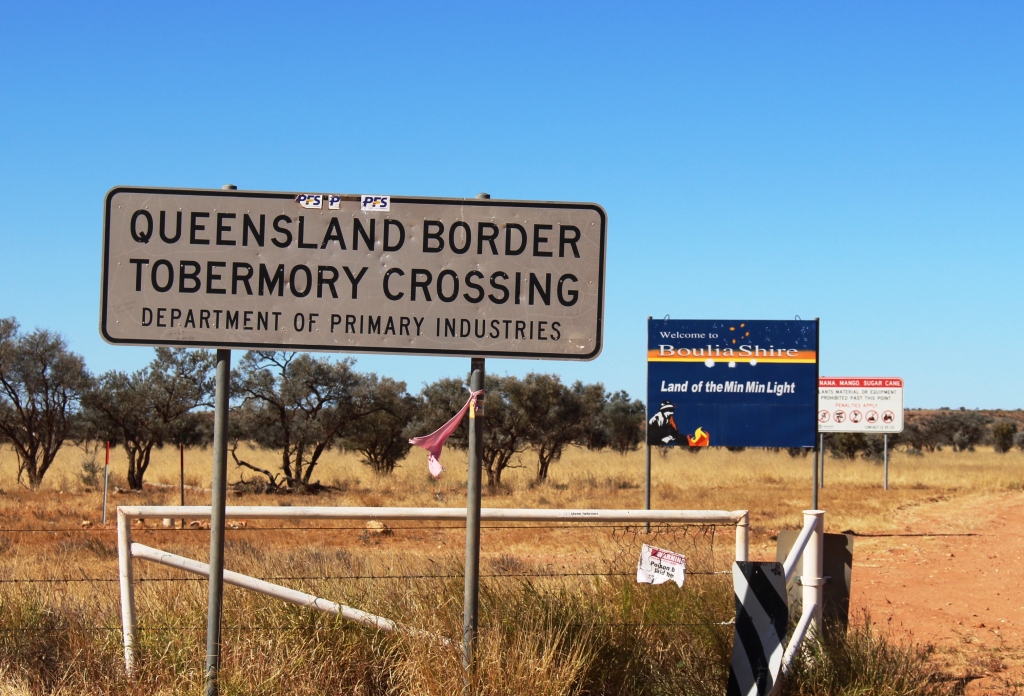
The Qld/NT border

The Qld/NT border

Our destination for the day was Tobermorey Station. It is located 250 km west of Boulia and just 4 km past the Queensland /NT border. We parked the van on grass in a camping area that we almost had to ourselves. We wound our watches back by 30 minutes and I prepared myself for a restful couple of hours, but I was wrong!


Here is the video. It covers this post and the next one too.

https://www.youtube.com/edit?o=U&video_id=czHbkrloHVc

Quilpie Number 1 Mail Route

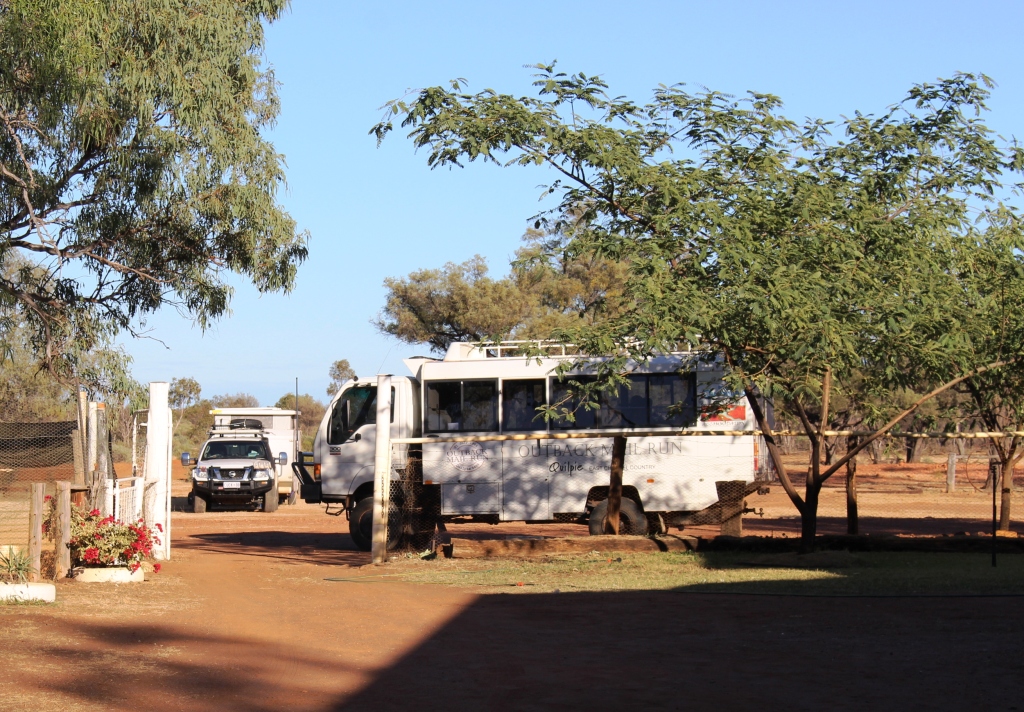
Our tour vehicle at Alaric Station

Our tour vehicle at Alaric Station

In the early 1860’s Patrick “Patsy” Durack, with his brother-in-law John Costello, travelled north in search of land to claim for a cattle station. They found a group of Aborigines camped by a water hole. Somehow they found that the water hole never dried out and chose the site to build their station. They named the water hole Thylungra from the Aboriginal word for permanent water and named their venture Thylungra Station, the name that it retains to this day. This land acquisition was the real beginning of the “Kings in Grass Castles” legend and the grazing industry in the Channel Country.

During our trip around Australia in 2009 we spent a couple of nights at the caravan park at the resort at Lake Argyle, the mega sized lake on the Ord River in Western Australia’s Kimberly Region. One of the attractions was the relocated house from the Durack property, now flooded by the dam, which has been rebuilt below the wall of the dam, as a museum and memorial to the pioneers of the Northern Australian cattle industry.

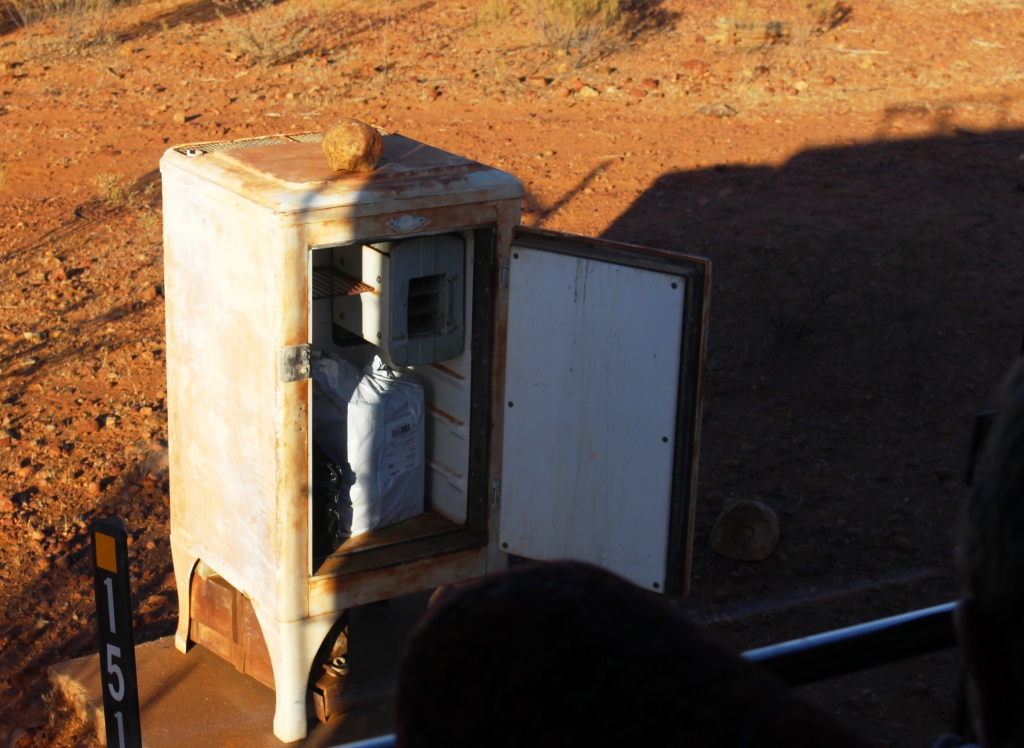
A very old fridge as a mail box

A very old fridge as a mail box

We had seen the mail run tour advertised when we were in Quilpie previously, so decided to extend our stay in the town to provide time to include it in our itinerary. The tour departs on Tuesdays and Thursdays on a 430 km mail delivery route making deliveries to 10 stations to the north of Quilpie. The delivery vehicle is a 4WD 12 seater bus with a freight compartment at the rear and a trailer in tow if needed.

Alaric Station - now a veteran's retreat

Alaric Station – now a veteran’s retreat

We were picked up at the caravan park at 6.45 am, collected the mail that had just arrived from the east and headed for the Adavale “black” road: black because it crosses the black soil pains of the Bullo River. A little to the east is the “red” road, so named for the soil that it crosses. The Red Road is less affected by rain, but today that was not a problem.

A tapestry on the wall of a room at Alaric Station

A tapestry on the wall of a room at Alaric Station

The first couple of stations were simply mail box drops, a drum and an ancient refrigerator, but the third was our morning tea stop. Alaric Station has become a sort of retreat for war veterans. The homestead was to be demolished but a request was made for the alternative use. Interested parties made renovations and they were open for business. Hospitality is available to veterans, their families and friends.

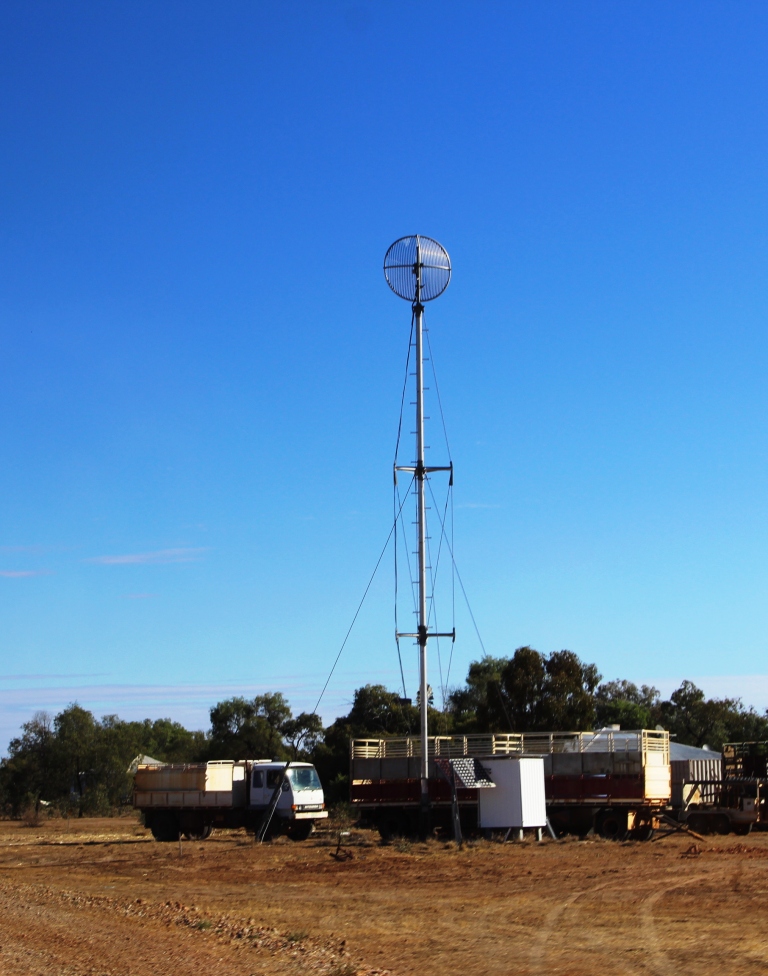
Modern station communications tower

Modern station communications tower

There are dormitory rooms at reasonable prices and provision for caravan parking. Veterans come from all over Australia, some staying for considerable periods. The house is decorated with war time memorabilia including many historic pictures. An old windmill is decorated with the names of theaters of war and crowded with the red rooster symbol from Vietnam operations. There is a thriving vegetable garden, watered from the permanent billabong onto which the home-stead faces.

We made a quick toilet stop at Trinidad Station, to be our lunch stop, but then went further north to our most northern delivery to Budgerygar Station. To

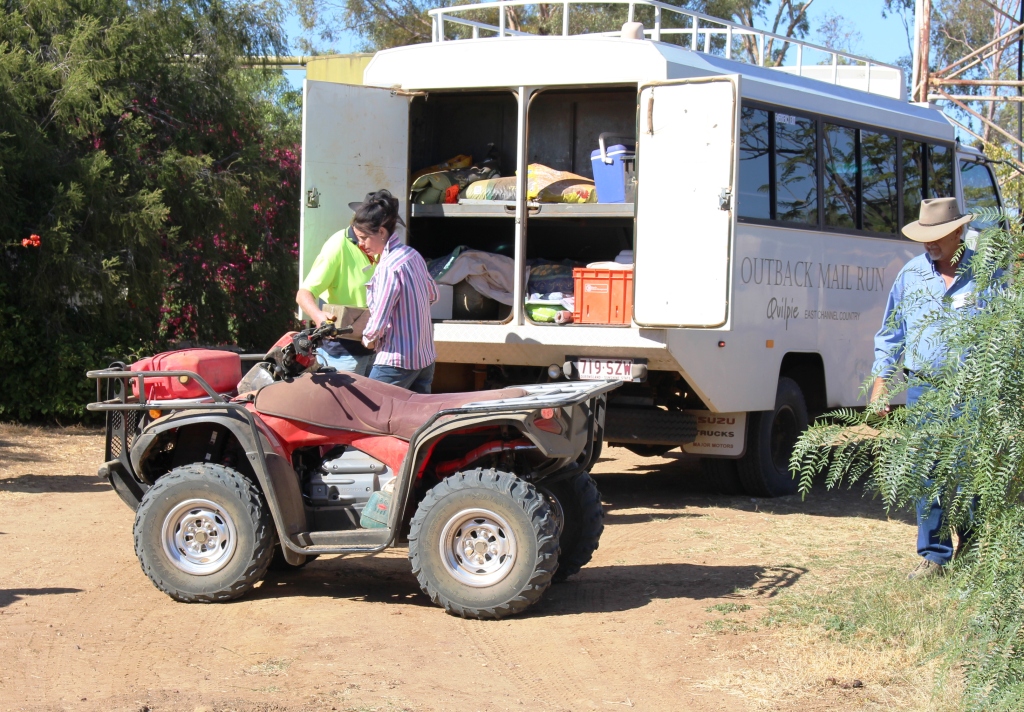
Transferring freight from bus to shed

Transferring freight from bus to shed

get there we passed through Durack Gap, a flat passage between red rock capped mountains, through which Patsy Durack drove his herd of cattle when he moved his operation to the Kimberly region.


Grazing plains with a rocky mountain backdrop

Grazing plains with a rocky mountain backdrop

Budgerygar Station (correct spelling) is very remote with its northerly border not far south of the Welford National Park near the tiny town of Jundah, where I am writing this post. But we were met by a well dressed lady of the station, probably in her early thirties, with a young family who she is home schooling. She made easy work of tossing the large bags of animal feed that we had delivered, onto a quad bike for storage in a shed.

After examining samples of bolder opal found in the area, brought out by a young daughter of the household, we returned to Trinidad Station for lunch. On the way our driver pointed out two places where extensive excavation had taken place on mountain sides in search of bolder opals.

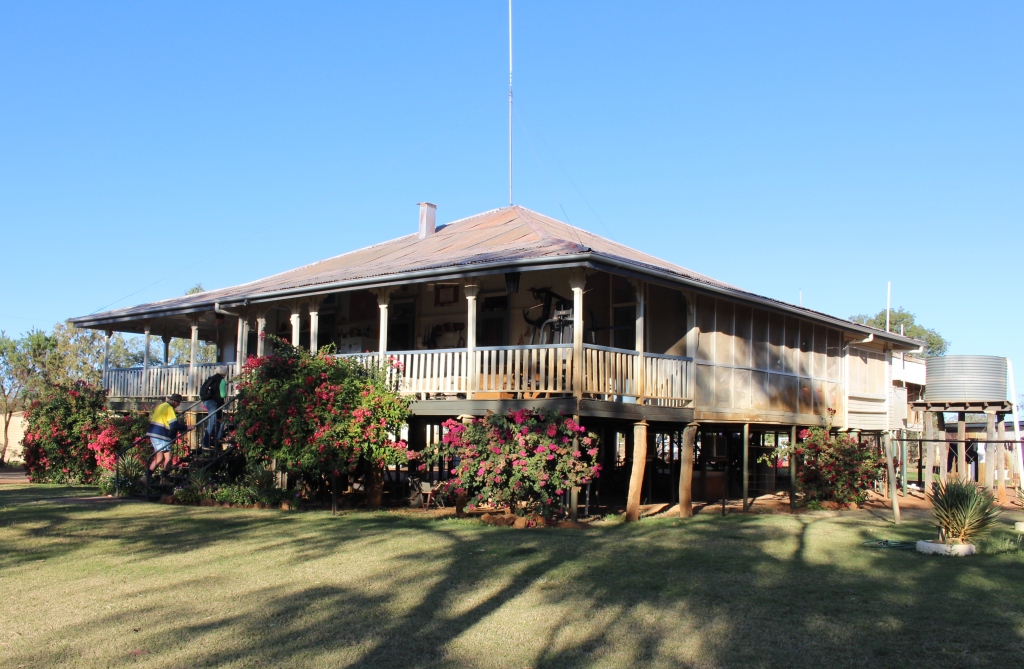
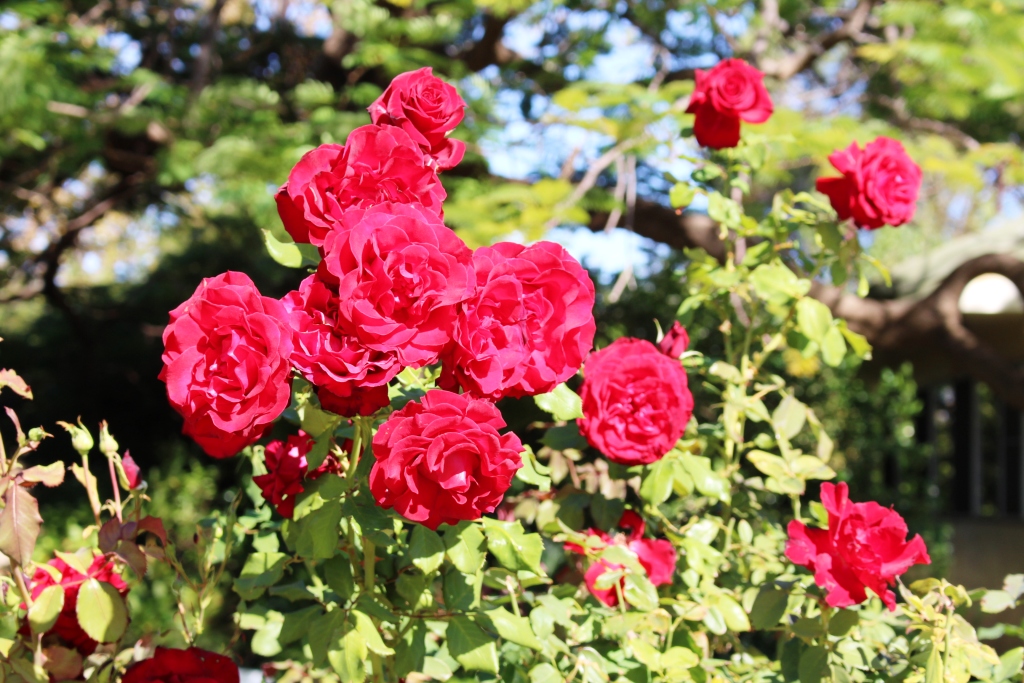
We were greeted by roses at Trinidad Station

We were greeted by roses at Trinidad Station

Trinidad Station was operated by Margaret Pegler and her now late husband. The station is now managed by children, a common situation in the rural scene. Despite the many reports of young people leaving for the cities, a great number of properties are handed on to children. Margaret was away, returning from Brisbane that day, but we were hosted by a daughter who was visiting, from Brisbane, with her husband.

Garden at Trinidad Station.

Garden at Trinidad Station.

Similar to other homesteads that we saw, Trinidad is enveloped by shady trees. Margaret is a keen gardener. We were greeted by vivid reds and yellows of perfect roses at the front gate. At the rear an extensive orchard provided evidence of the productivity of this land, when you add a little water.

And water was the common theme of much of the conversation. The drought is really hurting and the desire for relief is palpable. As we sat in our van the next day, listening to the rain on the roof, we could not help but be glad for these brave people, despite the damage that we knew the rain was doing to the dirt road to Birdsville that we had planned to travel over the next couple of days.

A home at Thylungra Station

A home at Thylungra Station

After our lunch stop we were on our way home. There were a couple of deliveries to make but we were now on the main council road that these stations use to get to Quilpie. But there were two remaining agenda items, a visit to Thylungra Station and afternoon tea beside Thylungra waterhole.

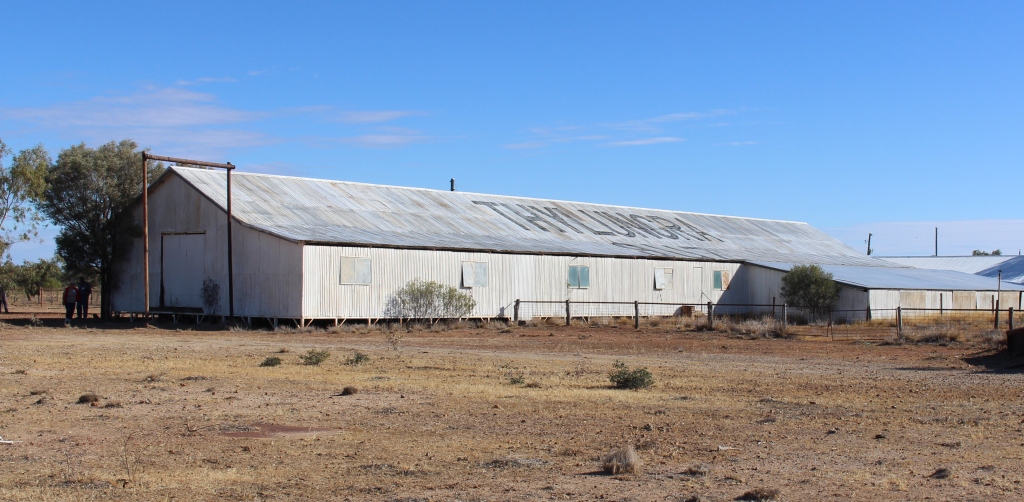
Thylungra wool shed

Thylungra wool shed

At its peak about 80 people lived on Thylungra. Now the permanent residents are much fewer but the place has a certain stateliness about it. The remaining houses, including

Sheep pens inside the wool shed

Sheep pens inside the wool shed

the homestead, are spaced along the creek. We had access to the shearing shed, which is huge, but no longer used, as this station, like so many others, now concentrates on cattle production. But the scope of past operations is obvious.

The never dry Thylungra waterhole

The never dry Thylungra waterhole

Afternoon tea was served by Dave, the mailman, in the picnic shelter of the Main Roads provided rest area by Thylungra billabong. A range of beverages were on offer plus care and biscuits. It was a fitting last activity for a very pleasant and interesting day. The final leg of the journey was on the highway that links Quilpie with Windorah, so the distance sped by bringing us back to Quilpie at just after 4.30 pm. As we walked back to our van the grey clouds of tomorrow’s rain were drifting in from the west.


Here is a link to a video of this story.

www.youtube.com/edit?o=U&video_id=pXc_cD2OFos