Sydney 2014 – Day 3 – 19th January – Ebor to Armidale

We awoke to the distant lowing of cattle, as yesterdays heard returned via the water supply to resume grazing on the road side, as they had been the previous day. It had been a doona night with the temperature down to 11C. The sun rose into an almost clear sky with the promise of warmth.

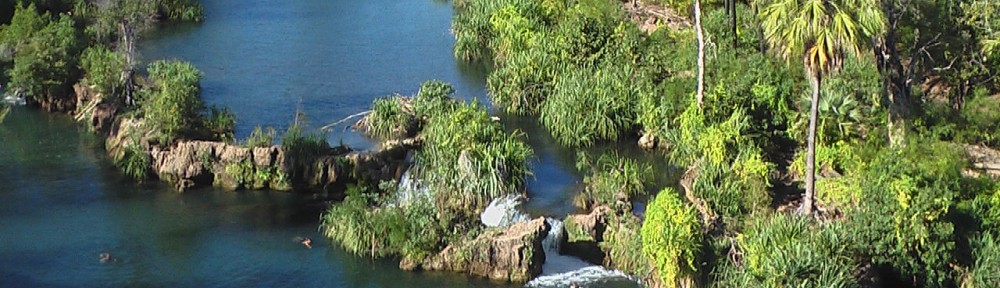
Upper Falls at Ebor Falls. Still some water in the Guy Fawkes River

Upper Falls at Ebor Falls. Still some water in the Guy Fawkes River

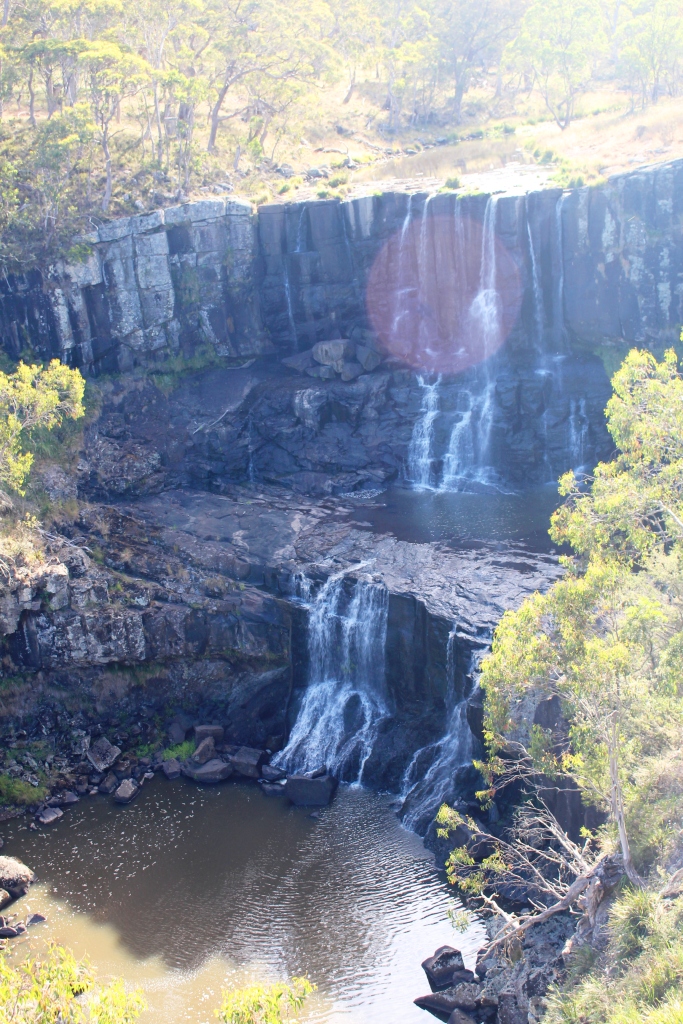
Immediately after breakfast we unhitched the car and drove across the road to the day area at Ebor Falls. We have been here a couple of times before but a waterfall is always worth looking at. Rainfall through the area has been low by normal standards but there was a fair flow of water tumbling over the upper and lower falls on the Guy Fawkes River, just as it flows into the Gay Fawkes National Park within walking distance from the small town of Ebor.

Lower falls at Ebor. Please excuse the reflection.

Lower falls at Ebor. Please excuse the reflection.


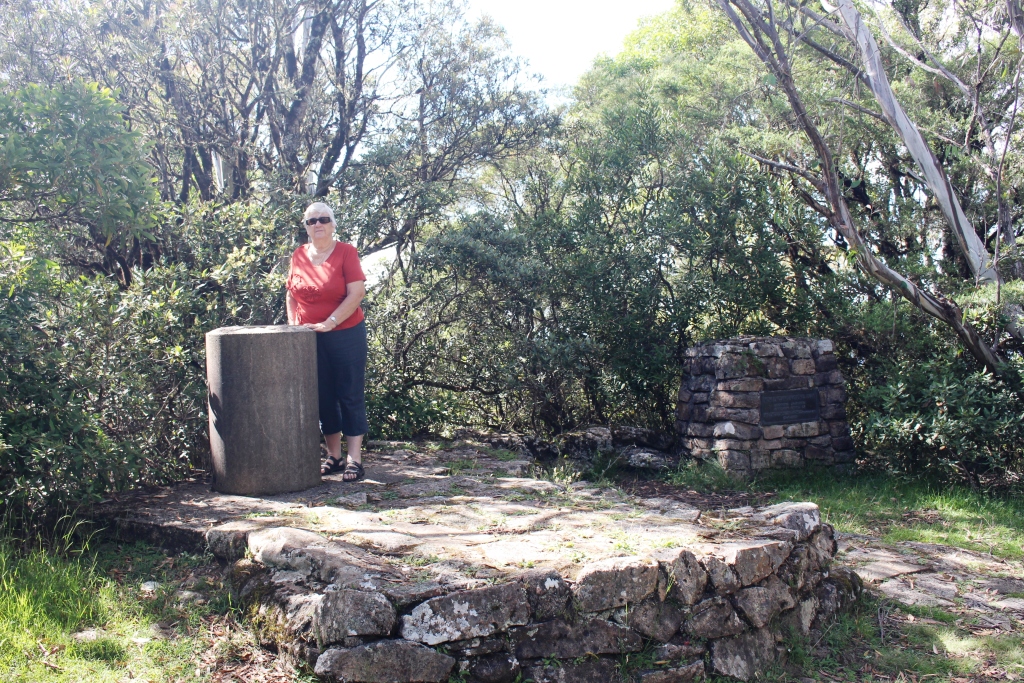
Ruth standing by the trig point at the summit

Ruth standing by the trig point at the summit


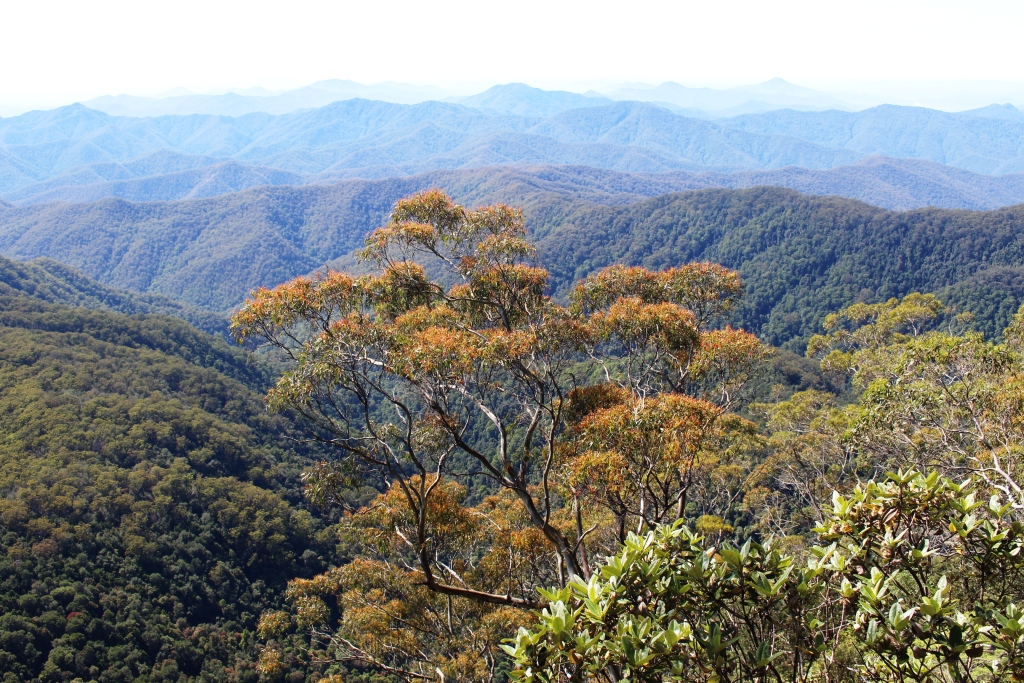
The view from the first observation point just below the summit

The view from the first observation point just below the summit

Point Lookout, a mountain peak of over 1,500 meters, is about 25 kilometres by road from Ebor. Previously, when we went there, we encountered a pea soup fog about 300 meters from the top and could see nothing. This is a common state of affairs as the lichen covered trees, scrubs and rocks attest. But today was different. We had struck a clear day. A short walk from the car park to a lookout was certainly worth the effort.

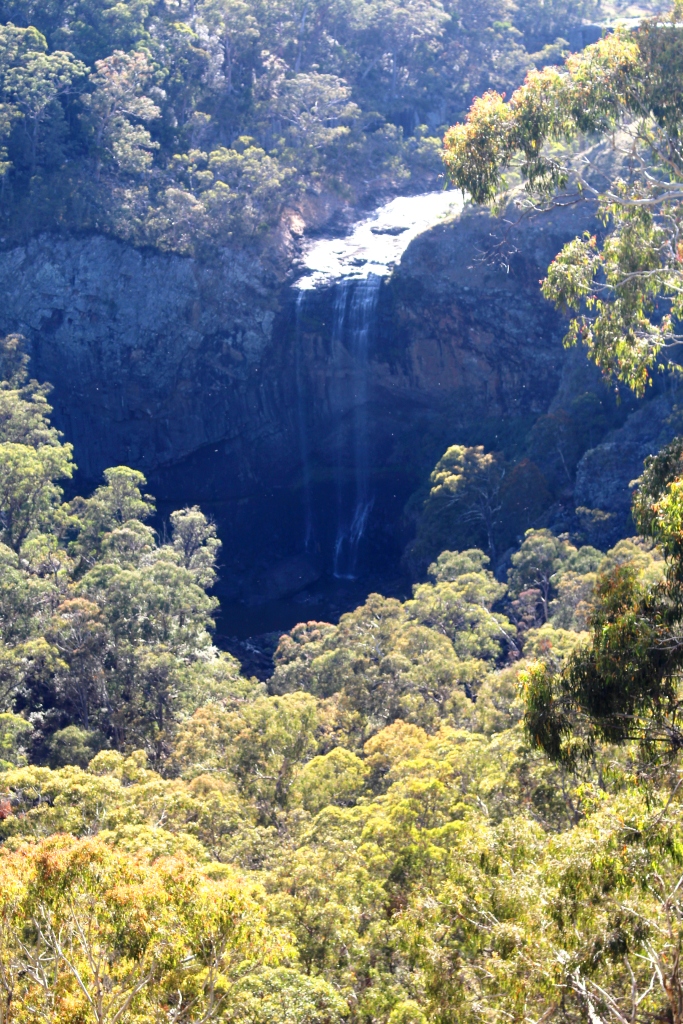
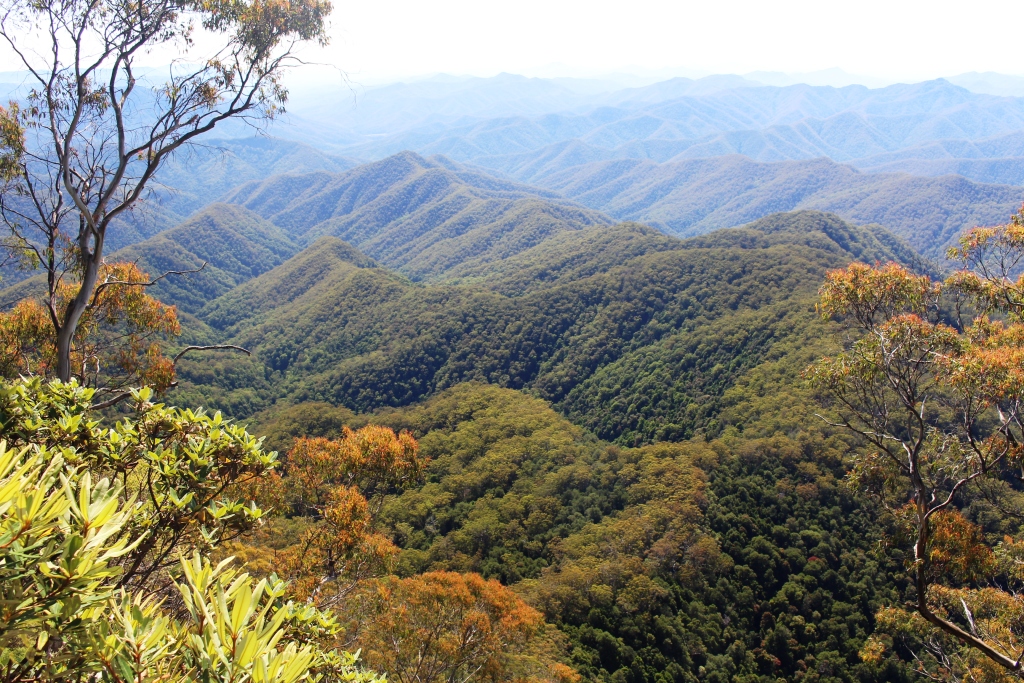
The view from the second observation point overlooking an adjoining valley

The view from the second observation point overlooking an adjoining valley

Spread before us was the most magnificent panorama of mountain scenery that we have seen in a long while. Range after range, divided by deep valleys and gorges, reached away to the distant Pacific which we could not quite see because of distant haze. Those northern NSW ranges are sure rugged!


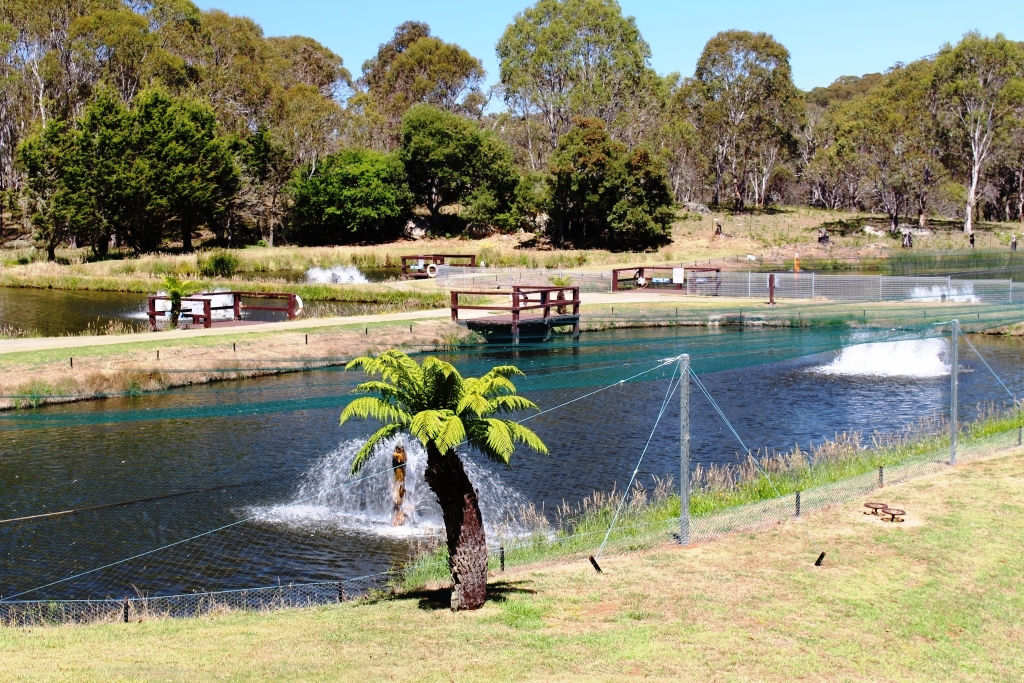
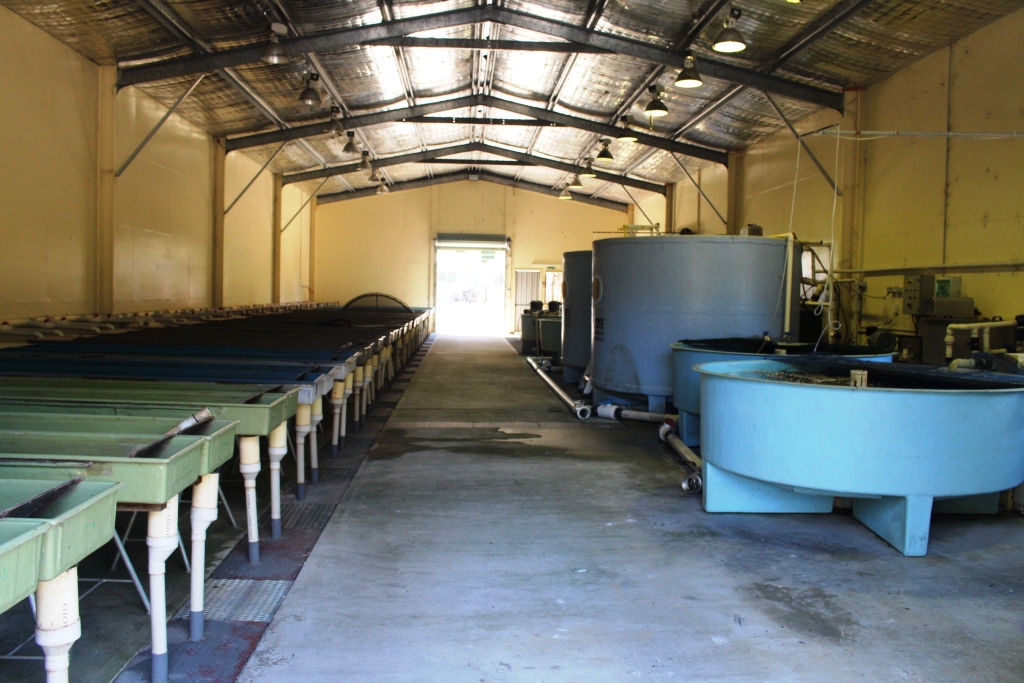
Breeding ponds at trout hatchery

Breeding ponds at trout hatchery

We had passed a trout hatchery on the way to the mountain peak and stopped in to have a look. We took the self guided tour, which started with an explanatory video and finished with a self conducted walk which included feeding the trout from a small bag of fish feed with which had been supplied.

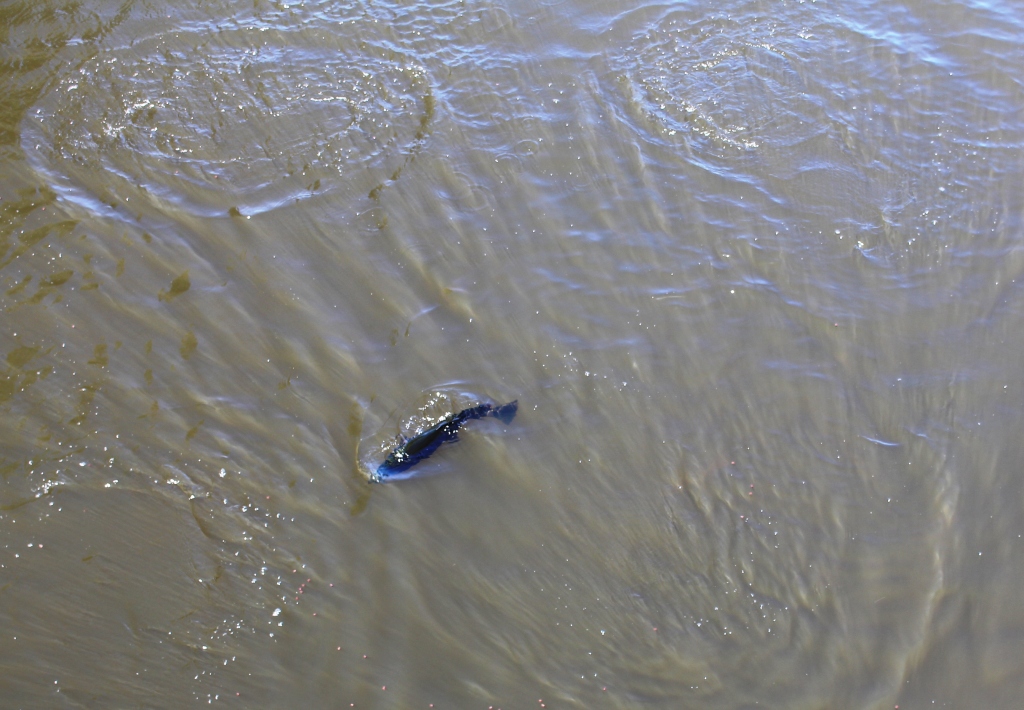
I would love to catch one this size!

I would love to catch one this size!

When I go fishing the activity can reasonably be described as feeding the fish but then I feed them without seeing them. Although warm weather makes trout a bit sluggish there was enough interest to disturb the surface as large fish lunged at the pellets. Summer is a bit off season so there was not a lot going on but we left with an understanding of the process that provides the fingerlings that are used to populate the lakes and streams for the sport of trout anglers.

Processing centre for breeding eggs but not operating at this time of the year.

Processing centre for breeding eggs but not operating at this time of the year.

While there we bought some smoked and sliced trout. Does anyone have a loaf of very fresh bread handy?

Back at the van we had lunch, hooked up and headed for Armidale. We made two short detours.


Very dry Wollomombi Falls in the Oxley Wild Rivers National Park

Very dry Wollomombi Falls in the Oxley Wild Rivers National Park

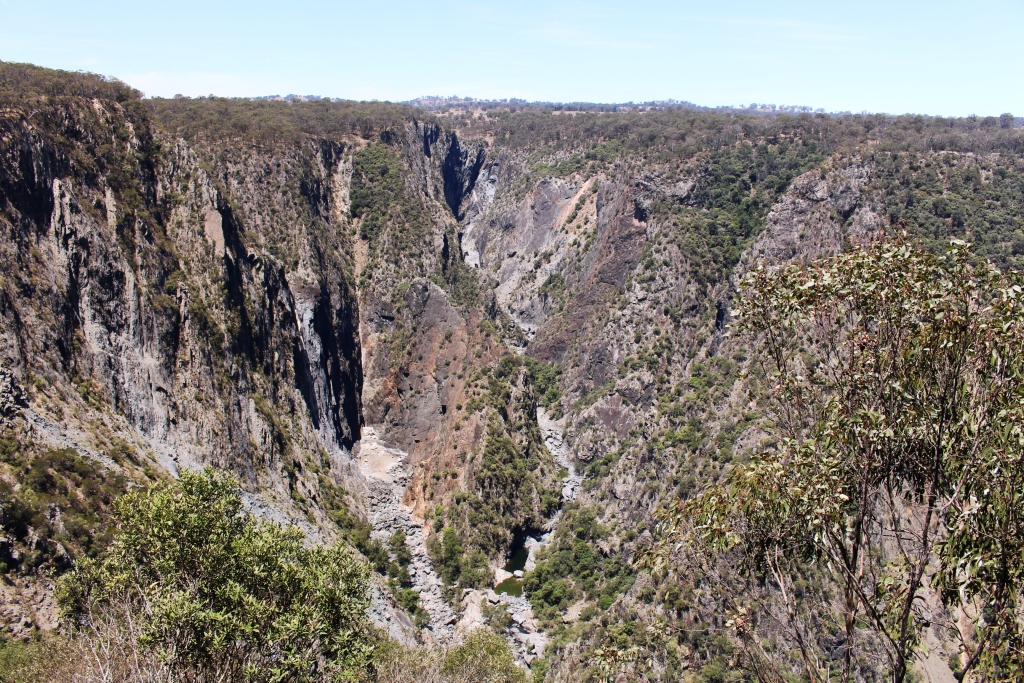
First a turn to the right to check out the tiny town of Wollomombi and a few kilometres later a turn to the left into the northern most part of the Oxley Wild Rivers National Park to check the Wollomombi Gorge. We would also have checked the Wollomombi Falls but lack of rain has left them without even a trickle. But the gorge is spectacular even without water.

The day turned out quite hot. Armidale recorded a top of 34C and it felt it. But just as we finished setting up for the night thunder sounded, to be followed by wind and rain. Storms have continued since then with another one passing as dusk settles. The overnight minimum is forecast to be 11C. Another doona night!

Sydney 2014 – Day 2 – 18th January – Grafton to Ebor via Dorrigo

Just to clarify. We did not share the facilities in Grafton with greyhound races. They had been on the night before. Instead we had a quiet night with little traffic and one train in the distance. We slept through anything else that happened.

The road from Grafton to Dorrigo runs through Coutts Crossing and then follows the Nymboida River into the mountains. The Nymboida canoe centre is on this road. On this river very game (or silly) people do heroic things in canoes and kayaks in white water.

Nymboida Canoe Centre

Nymboida Canoe Centre

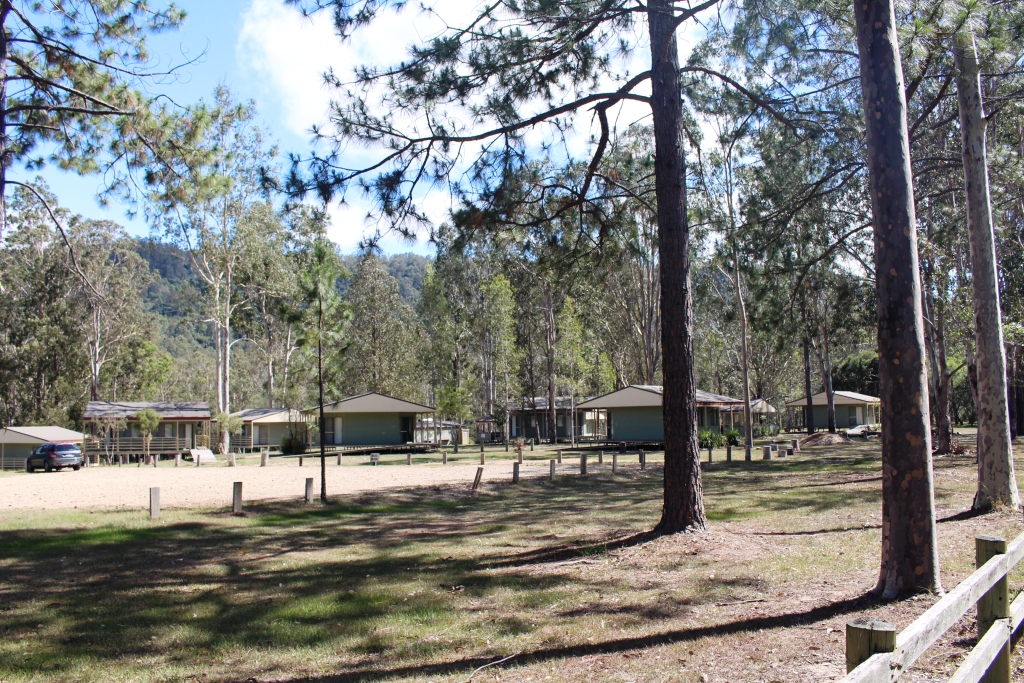
No activity there today. There is probably not enough water coming down due to dry conditions. There are extensive facilities for visitors including camping areas, cabins and caravan sites. Just past the canoe centre and on the banks of the Nymboida River stands the quite new looking Nymboida Hotel, which appears to offer all the normal facilities for travellers and those who want to linger a bit longer.

Armidale Road

Armidale Road and power lines – both going up! Roads never look as steep in photographs.

Then the climb up the mountain starts. The road is narrow and winding. It mostly runs through thick bushland with the occasional cleared rural areas. While not an ideal road to tow a caravan it is quite safe if taken slowly. This is the Armidale Road which joins the Waterfall Way about 10 km north east of Ebor. We left this road at Tyringham and took a short cut through North Dorrigo to Dorrigo itself. Again some steep climbs but by this time we were driving through cleared farming country with rolling green hills almost a far as we could see.

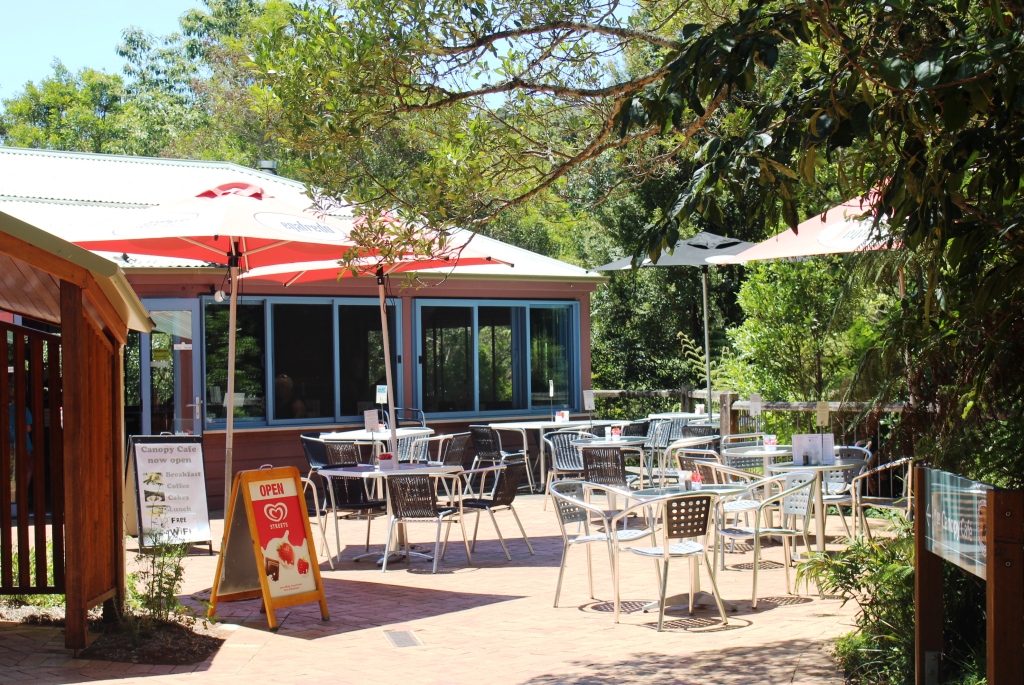
Canopy Caffe Alfresco Area

Outdoor dining area – the Canopy Café, Dorrigo National Park

Sky Walk2 Sky WalkThe National Park is the key attraction at Dorrigo but as it was lunch time when we arrived we decided to try The Canopy Cafe. An excellent meal! Ruth’s club sandwich was big enough to feed more than one club member and my chicken, mushroom and sundried tomato pasta was to die for. And the chips? Made from Dorrigo potatoes, of course.

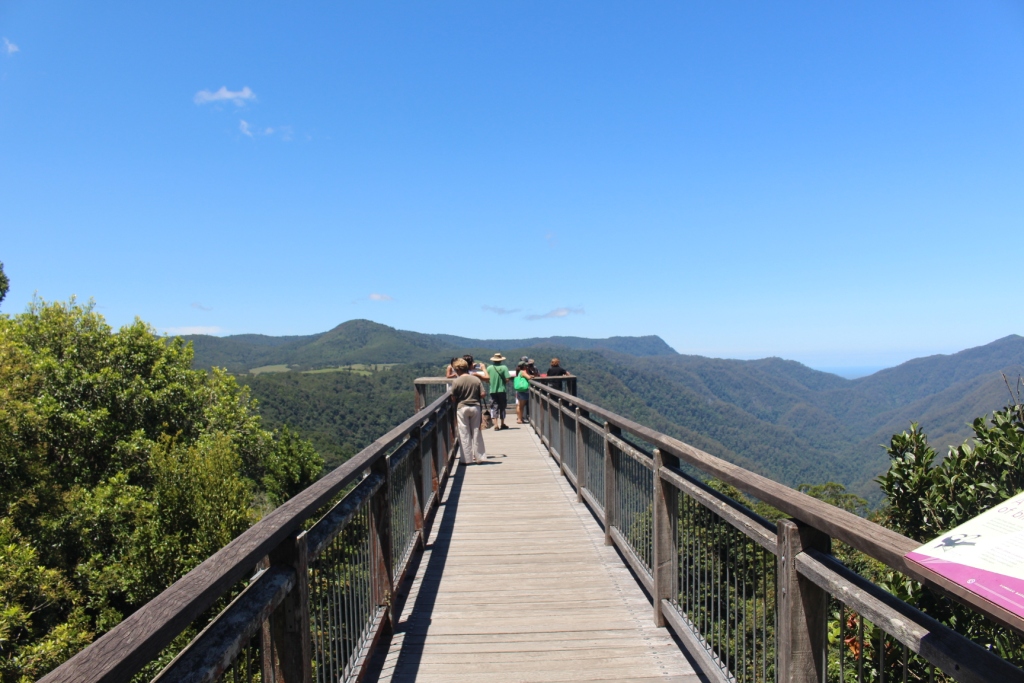
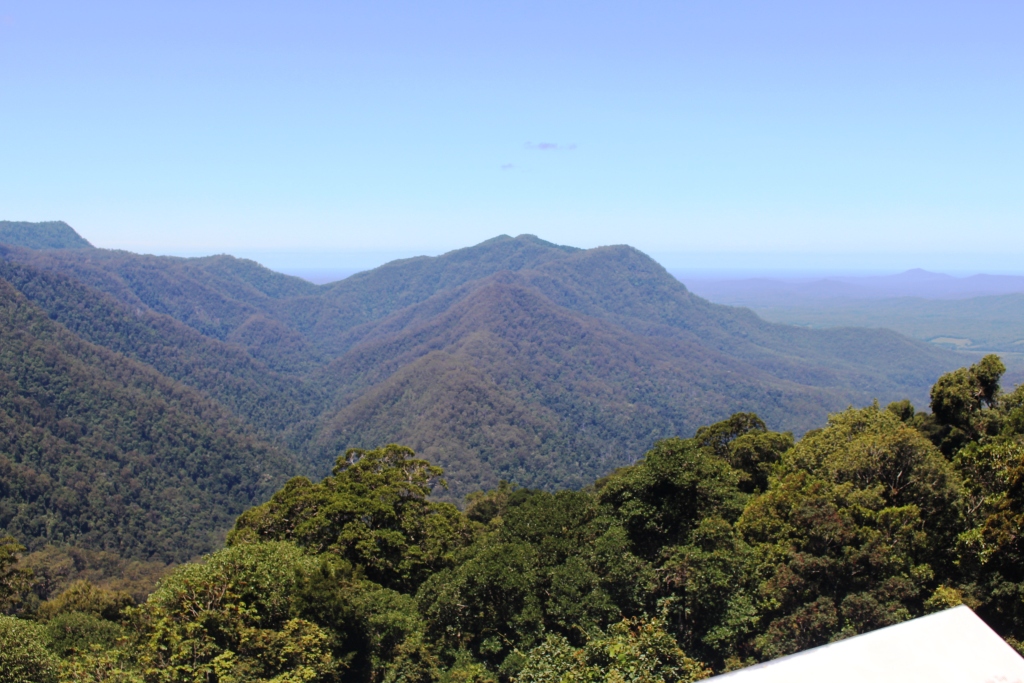
The main attraction at Dorrigo National Park is the Sky Walk, a sort of cat walk that extends out above the rain forest on the escarpment and provides stunning views over the forest, mountain ranges and down the Ballenger River valley to the Pacific Ocean.

Forest, Mountains & Sea

View from Sky Walk

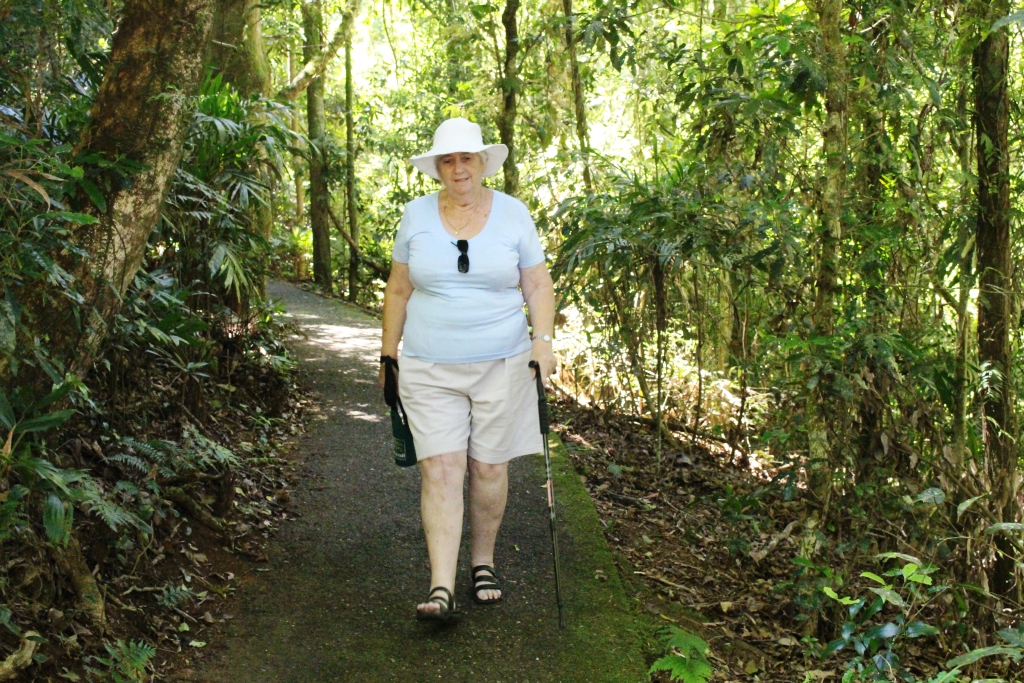
Knee Test in Progress

Knee test in progress

To give Ruth’s knee the promised workout we did an 800 meter rain forest walk with some downhill and up hull sections. The knee passed with flying colours.

Danger Falls

Danger Falls is a popular swimming spot

This is the Waterfall Way after all, so for our first waterfall we took a short drive north of Dorrigo to Dangar Falls. We had been there before but this time there was much more water in the river so it was worth the effort.

Dorrigo Main Street

Main street in Dorrigo


Another unique feature of Dorrigo is that it is the largest railway graveyard in Australia. There are hectares of rolling stock and engines standing on the lines around the rail depot which was, in its day, was the end of the line. The track is so winding that the section to Dorrigo was recognised as the slowest section in all of NSW Rail. I think there were great plans for the collection of railway equipment but there was not much sign of action as we drove past.


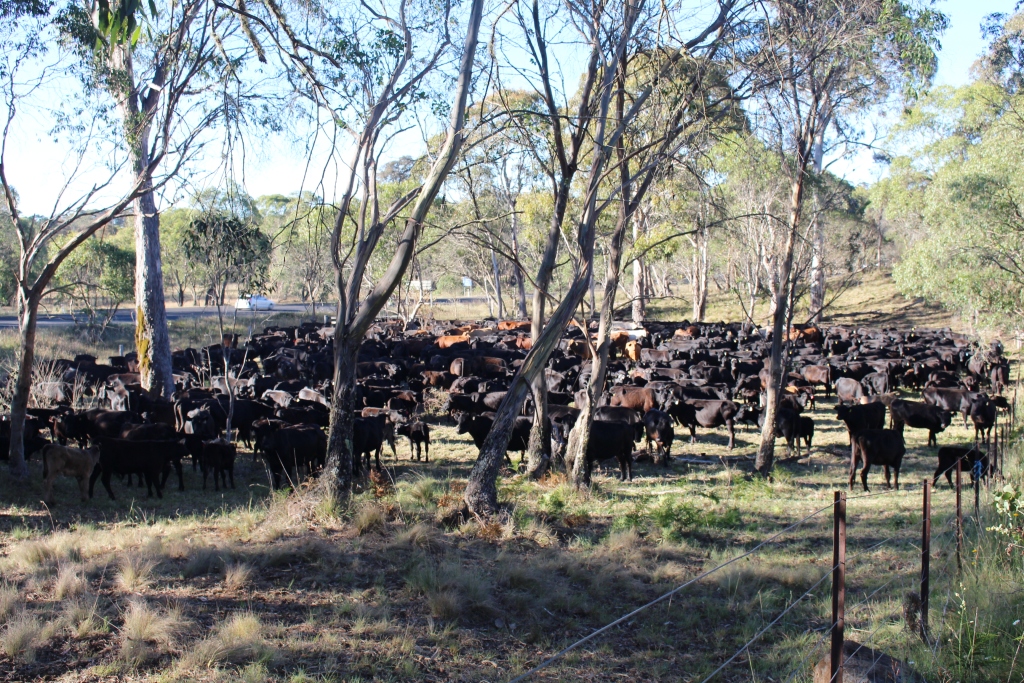
From Dorrigo we then proceeded along the Waterfall Way to Ebor. This piece of road has no flat sections. You are either ascending or descending and the grades are quite steep. But it is only about 47 kilometres so we were soon at the Ebor free camping area. We have only two caravan neighbours but for a while we had about 450 neighbours of the four legged variety. A local farmer was moving his herd between paddocks and was temporally holding them near the gate to the free camp.

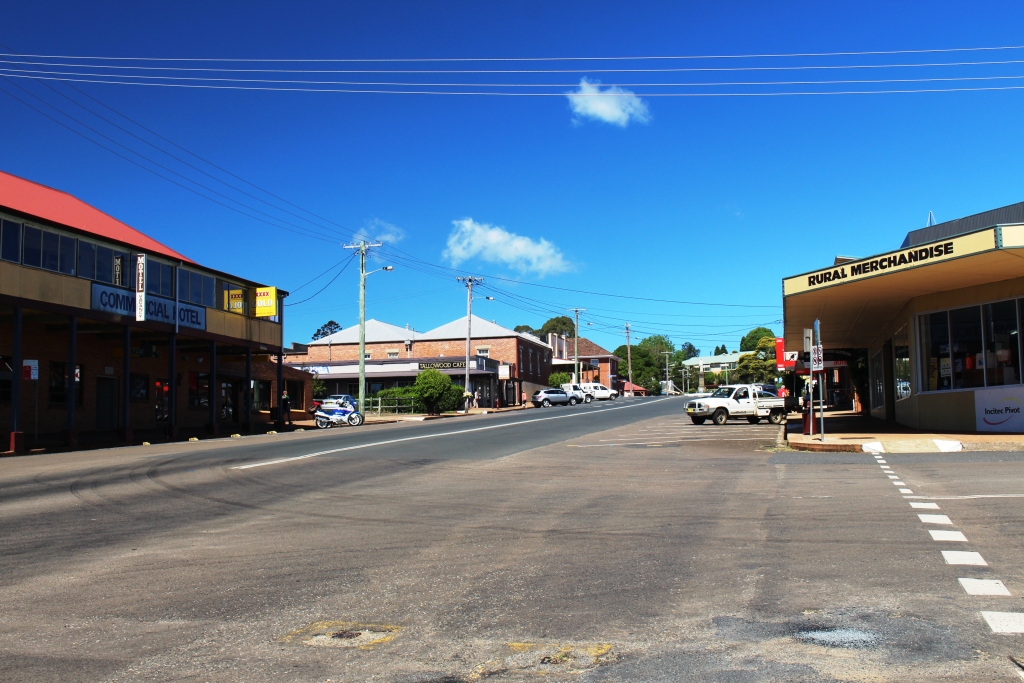
Ebor Street

The leafy main street of Ebor


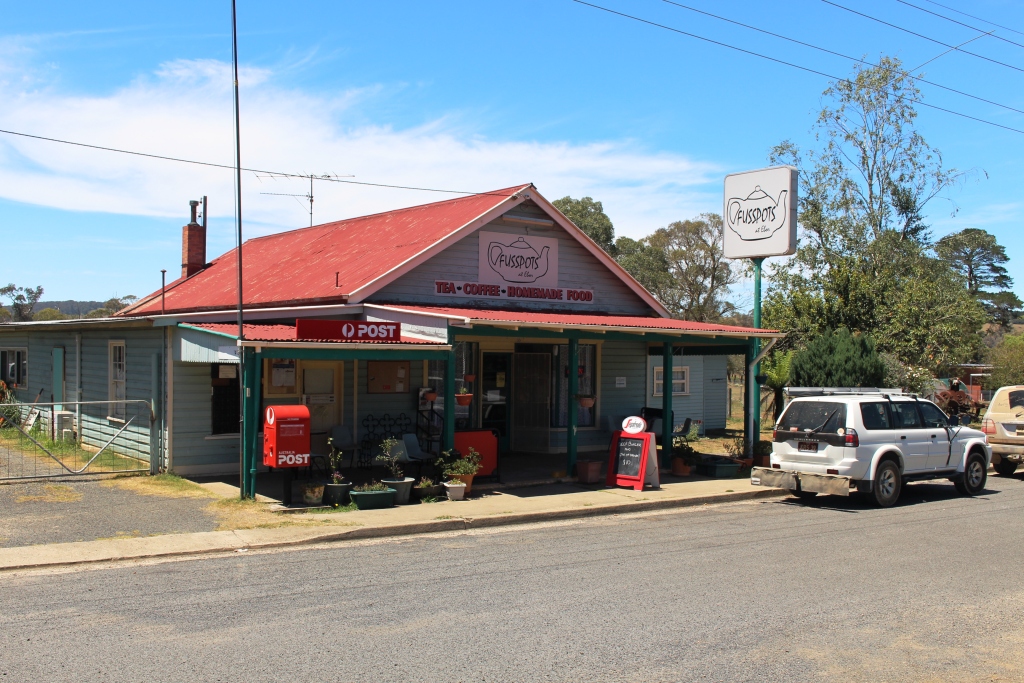
Fussypots at Ebor

Fussypots café at Ebor


Four Legged Neighbours

Four legged neighbours


Talk about noise! But he drove them via a stream for a drink and then moved them on to a paddock further away. We are fairly quick on the uptake, so two of our neighbours joined us for drink. Can’t let the cattle have all the fun!

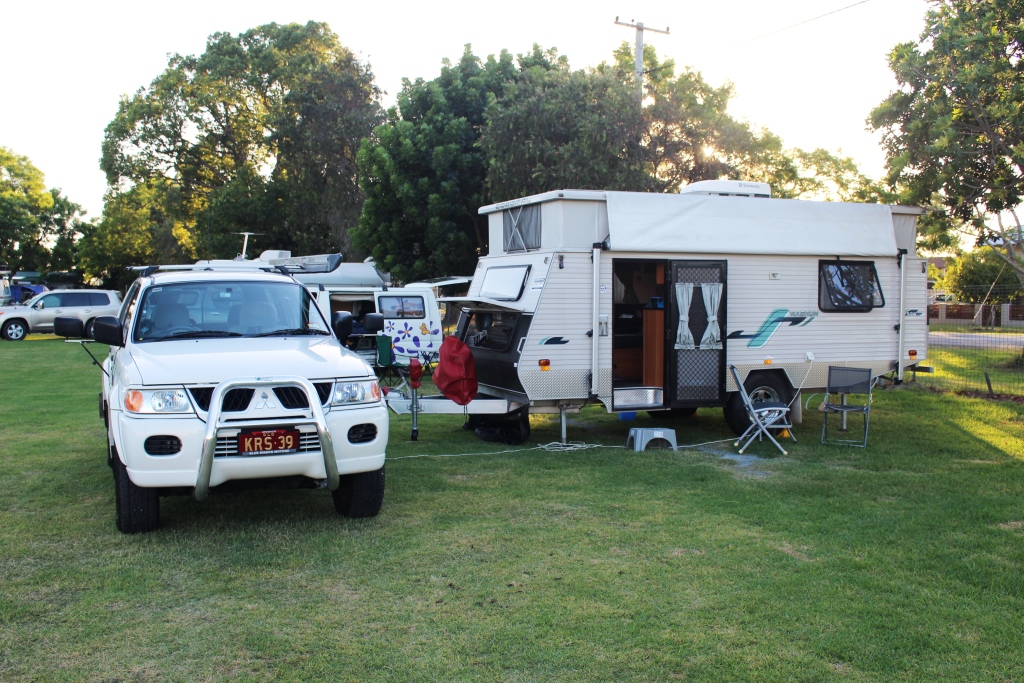
So we three caravans have been joined by the farmer’s horse for the night, while he has driven home in his 70 series Toyota utility with his three cattle dogs on the tray. We really are in the rural scene.

Sydney 2014 – Day 1 – 17th January – Home to Grafton

We are on the road again, but just for a month. It was a very familiar drive today, down the Gold Coast and Pacific Highways to Grafton, where the overnight stop is at a small caravan park at the Greyhound Racing Club. The “dish lickers” were performing last night, so all is quiet.

Just two stops along the way. Lunch by the Tweed River at Chindra and coffee at Ferry Park near Maclean. Somehow, with the time difference between Queensland and NSW at this time of the year, there is no time for morning tea. We no sooner leave home than it is lunch time.

On the green, green grass of Grafton

Chindra always has interest for us. Over 100 years ago my maternal grandfather operated the pedestrian ferry over the river. The family lived nearby and Mum’s playground was the river bank. She talked of playing with the soldier crabs on a small sandy beach. She had no siblings, so the crabs were probably her main play mates.  I think she enjoyed their stay at Chindra.

The plan for this trip is to stay as much as possible in the higher country to avoid crowded coastal caravan parks and for cooler nights. After a few days at Katoomba (where Ruth and I honeymooned over half a century ago) we will move on to Sydney where we will stay for a week. Daughter Karen is coming home from India for six weeks. She flies into Sydney on Friday 30th January. Younger daughter Briony has a birthday on 3rd February (now resident in Sydney) so we will celebrate her birthday and spend time together. A few days after we travel home, via the coast, Karen goes to Tasmania for a few days but then joins us for a month in Brisbane a couple of days after we get home. We will celebrate what Karen calls “the birthday season” while she is with us. She and Craig have birthdays only a few days apart near the end of February.

Ruth is travelling with a brand new knee. The entire process of the replacement has gone very well and eight weeks on from the big day she has almost full use of that vital joint and not much discomfort. On day 2 of our trip we will give it a bit of a work out as we travel along the Waterfall Way to Armidale.

Until then stay well.

A Short Northern Safari – Home from Windorah

On this part of the trip we were no longer in north Queensland. Windorah is only a little north of due west from Brisbane but it is 1,200 kilometres by road. It was further that that for us as we diverted further to the south due to a change of plan.
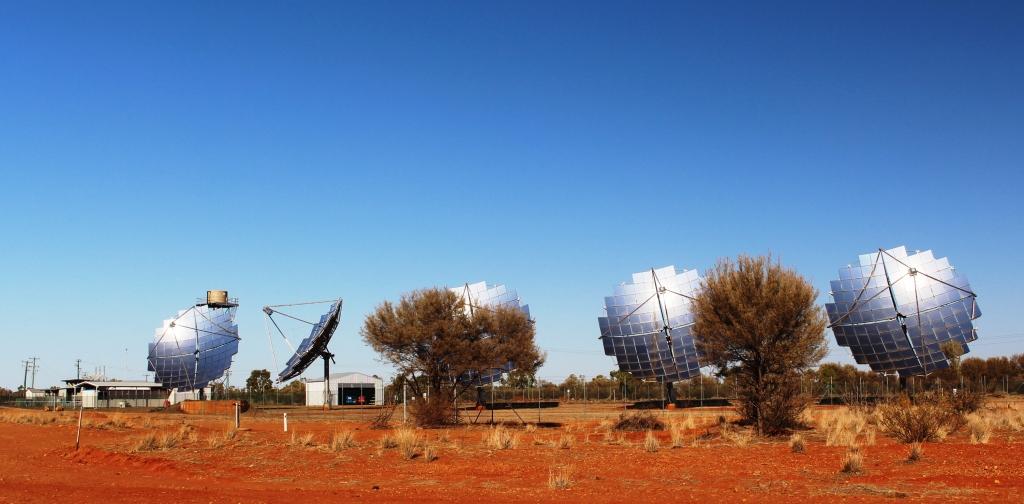
Windorah solar power station

Windorah solar power station

We left Windorah fairly early on a fine sunny day, accompanied by a
pleasant following breeze. Our first stop was on the edge of town to look at Windorah’s much photographed solar power station. These giant panels individually follow the sun, so the one facing the wrong way may have been turned off.

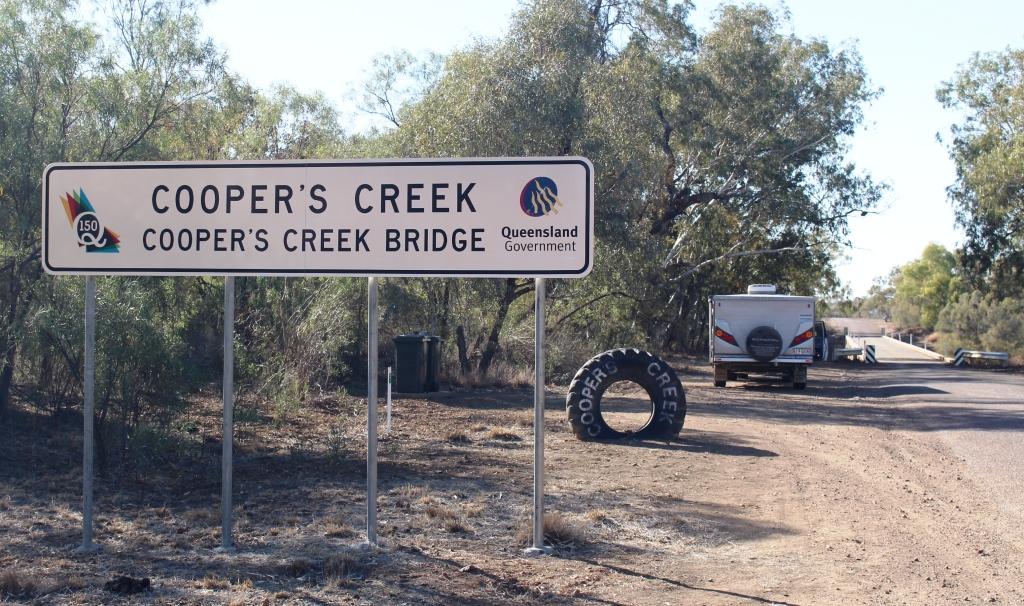
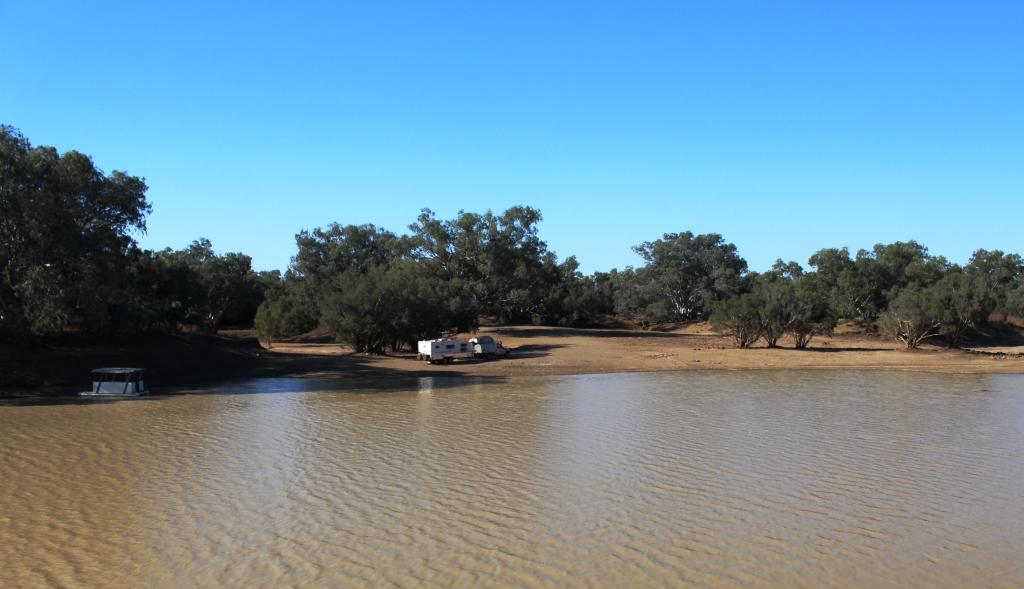
The next point of interest was the bridge on Cooper Creek, which is about 10 kilometres out of town, a bit further towards Quilpie than the road on which we had come in from Longreach. So once again we were on a road that was new to us
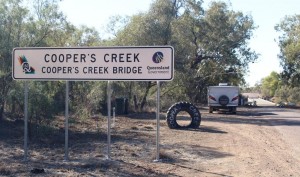
The Legendry Cooper Creek near Windorah

The Legendry Cooper Creek near Windorah

There is debate about the spelling of this legendary creek. Officialdom spells it with an apostrophe “s” but outback purists favour “Cooper Creek” or just “the Cooper”. Not far away from here the Thomson River is joined by the Barcoo River and jointly they become Cooper Creek. Hence the claim that Australia is the only country in the world where rivers flow into creeks.
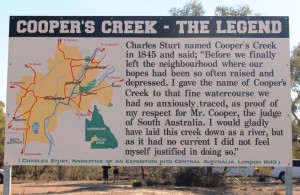
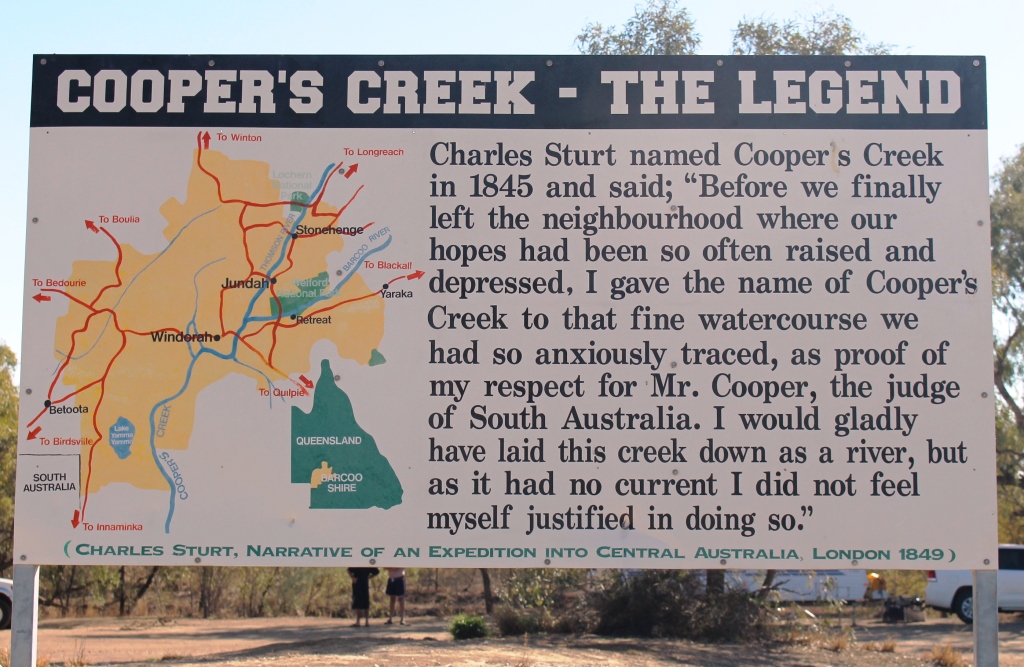
The legnd of the naming of the Cooper

The legend of the naming of the Cooper

The story about how Cooper Creek became designated a creek rather than a river is told on this sign beside the campers amenities block. The reason goes right back to explorer Charles Sturt in 1845. The banks of Cooper Creek are a well known free camping area. There is plenty of shade and normally good supplies of water with fish and yabbies to be caught. The amenities block was in good condition and clean. This is another Barcoo Shire facility. As we came past there were few campers. Those that were Birdsville bound would have been long gone.
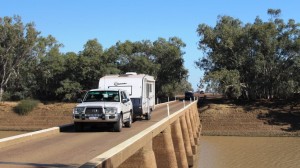
The Cooper bridge. Some vans were heading east

The Cooper Bridge. Some vans were heading east

Some travellers heading in our direction pulled out of the camping area and crossed the bridge as I stopped to take some photos. Note the single lane bridge. It is a solid structure and needs to be. Come flood time and it is well under water.
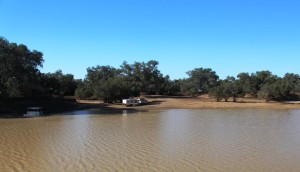
A well positioned Cooper caravaner

A well positioned Cooper caravaner

The picture opposite shows the amenity that is available to those who arrive early. No doubt these folk planned for a stay of a few days. They have chosen a great spot to spend their time.
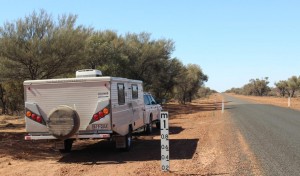
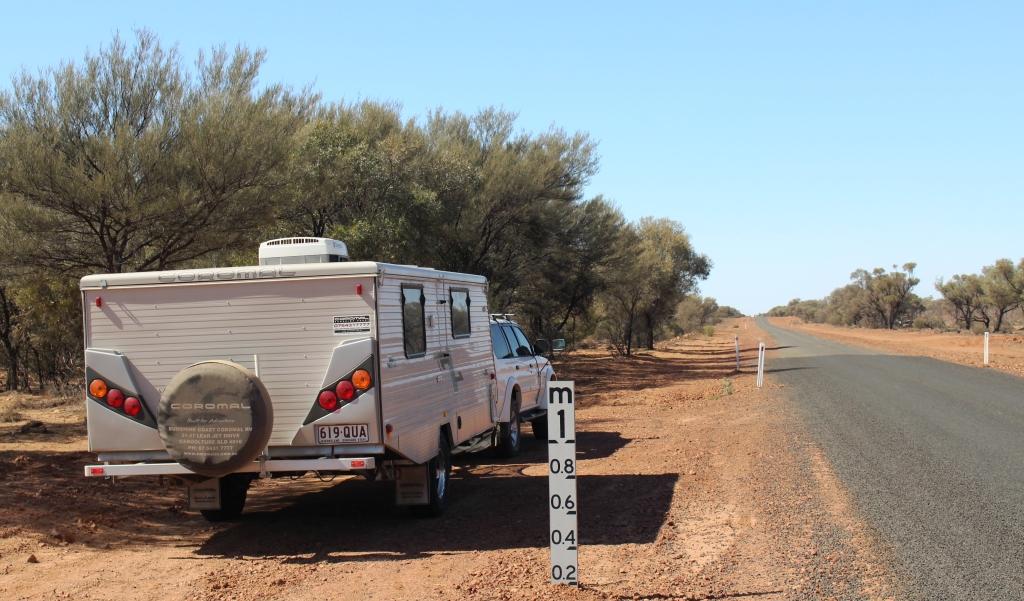
Morning tea in a dry floodway

Morning tea in a dry floodway

The drive from Windorah to Quilpie is over 246 kilometres of mostly river plains. There are no more large streams, but there are lots of floodways. We parked in one for morning tea. Cooper Creek flows to Lake Eyre. The Bulloo River at Quilpie does not, but empties out into swamps in north west NSW. The high ground between them is sufficient to create two distinct catchments but was not notiecable as we drove through.
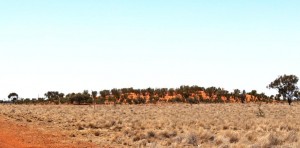
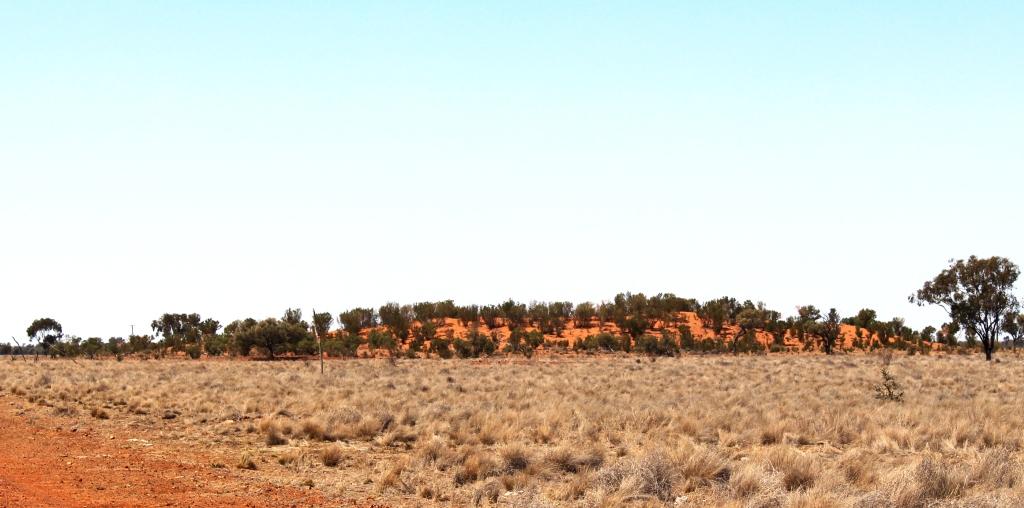
A mini sand dune near Quilpie

A mini sand dune near Quilpie

We were traversing grazing country, of course. We saw both cattle and sheep on this drive. Although we were heading into more densely populated areas we were reminded that deserts were not far away by the appearance by the road or in the distance of isolated sand dunes like this one.

We arrived in Quilpie for lunch and immediately turned the air conditioning on. The temperature was above 35 C with a warm breeze. It was the hottest day that we had experienced.

We waited for the sun to rise sufficiently to be out of our eyes when we left next morning. The road out of Quilpie heads almost due east. We continued to meet a string of Birdsville bound vehicles.

Our destination was Mitchell for an overnight stop at the Neil Turner Weir free camping area so our path took us through Charleville and Morven. We were through this area earlier in the year and covered it in our blog then.

We took our lunch break in the dining room of the Morven Road House. There we struck up a conversation with a couple, also from Brisbane, who were diverting through St. George to get home rather than face the almost continuous road works on the Warrego Highway. The Mitchell to St George Road had been in our plans for earlier in the year but the need to return to the Telstra shop in Roma forced us to take a different route. So here was our chance to fill in that gap in our journey over Australian roads.
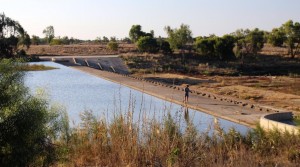
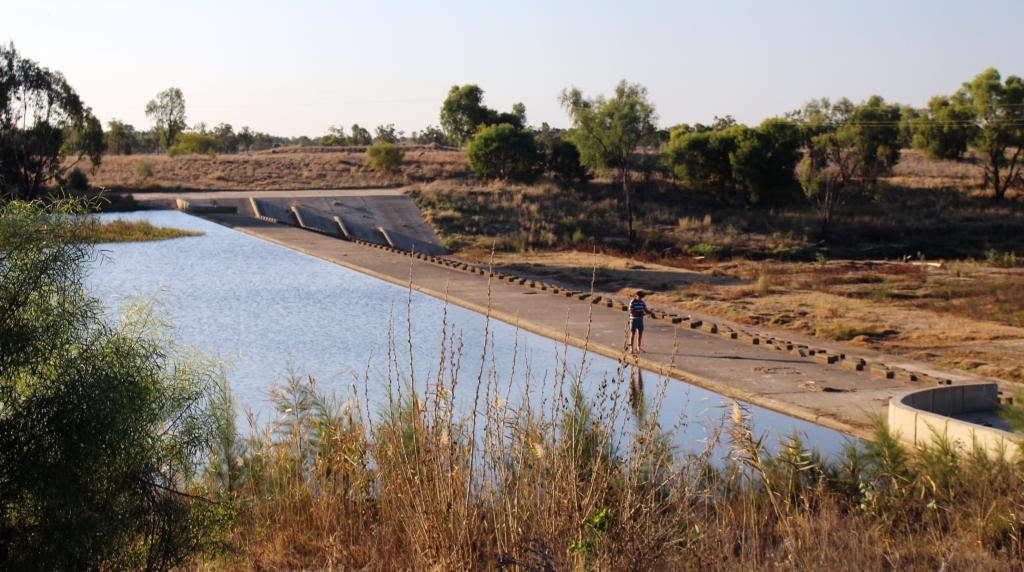
Fishing at Neil Turner Weir

Fishing person at Neil Turner Weir

We spent a pleasant and comfortable night by the weir. The area was quite crowded but most vans had lights out early. Most of them seemed to be Birdsville bound. Many had already departed by the time we emerged from the van next morning.

The Mitchell to St George Road starts as a single lane strip of asphalt with broken edges, winding over a series of low hills, but soon straightens out and widens to become a quite reasonable road. There was very little traffic sharing it so we made good time over its 209 kilometre length, arriving in St George for some quick shopping just before lunch time.

When free camping areas in southern Queensland are under discussion it is almost certain that someone will mention the Nindigully Pub on the Mooney River, south east of St George. The couple back at Morven had referred to it as a great place to stop overnight. We decided to make it a lunch stop.
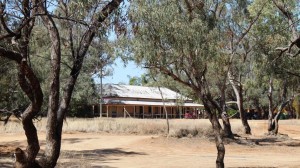
Nindigully Pub - well over 100 years old

Nindigully Pub – well over 100 years old

The pub has been in continuous operation since 1864, so I suppose it has quenched a few thirsts and dispensed a few headaches in almost 150 years of operation. Its other claim to fame is its culinary special. It serves the road train burger. I believe assistance is required to eat this burger. It is much too large for one person.

We drove past the building but we did not go in. We parked in the shade to partake of our modest lunch. A sandwich, probably! I wasn’t over impressed with the place as a camping area. It was very dusty and would be a quagmire after rain. The river was like the Yarra and was flowing upside down. (Sorry Victorian readers). But perhaps the charms of the pub eclipse these disadvantages for many thirsty travellers.
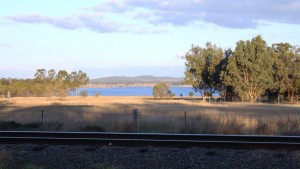
Only a fence between us and the tracks

Only a fence between us and the tracks

That day’s journey ended just past the town of Inglewood in southern Queensland at a small caravan park overlooking the waters of the Coolmunda Dam. There were two memorable events that night. Our site in the park was near a railway line. It didn’t look busy but that didn’t stop a very long grain train from passing in the wee small hours. There was no mistaking what it was. It seemed to take half the night to pass.

The other memorable event was temperature related. After 35 C two days before the morning temperature at Coolmunda was just 8 C. Yes, we did turn on the heater.
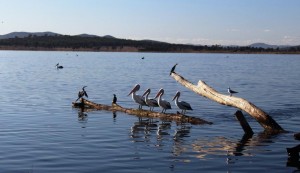
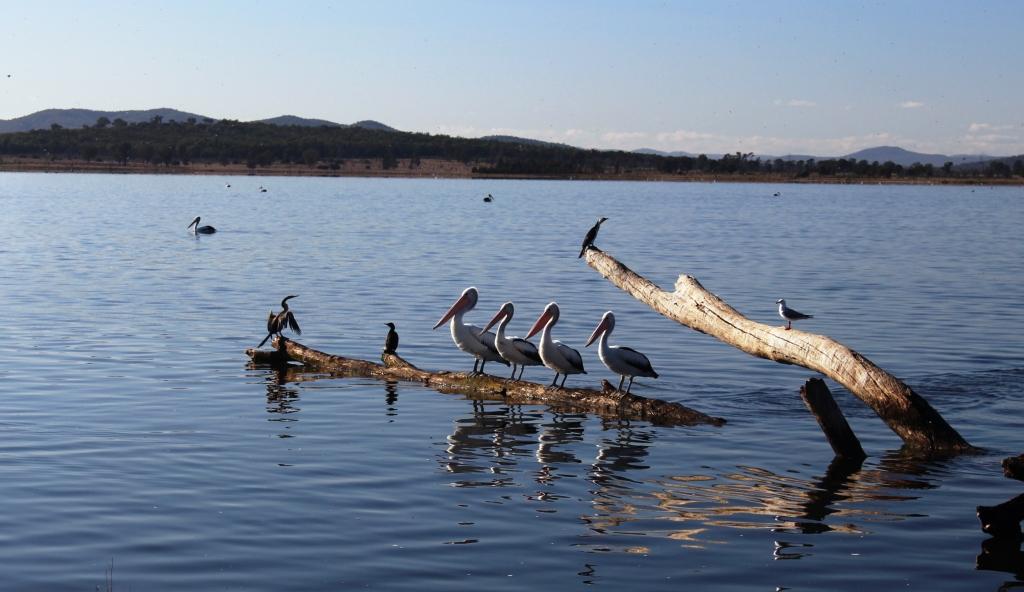
And pelicans all in a row!

And pelicans all in a row!

Before commencing the final leg of our journey we drove to the dam. This is a popular fishing lake. The caravan park gets most of its business from fishing orientated tourists. It is a pleasant spot with another free camping area on its banks. I can imagine it being crowded during summer holidays. An attractive aspect of this lake was the number and variety of water birds. There would have been more there that we had seen in total up to that point in our trip.

We returned to the Cunningham Highway for a time but left it at Karara and travelled through the fertile Condamine Valley and the towns of Leyburn and Clifton. From Clifton we followed the picturesque Clifton to Gatton Road which returned us to the coastal area through the lush vegetable farms of the Lockyer Valley. After a quick burger at Plainland the next stop was home to those delightful chores of unloading, cleaning and washing.

So there ends another trip! Where to next, you may ask? No decisions yet and there will be nothing significant until 2014 but Cape York has been mentioned. We will need to see what the wet season does before such plans can be finalised.

But of one thing you may be sure. When the time comes near we will certainly let you know.