The Big Lap Again – Part 2: Marlo to Drouin

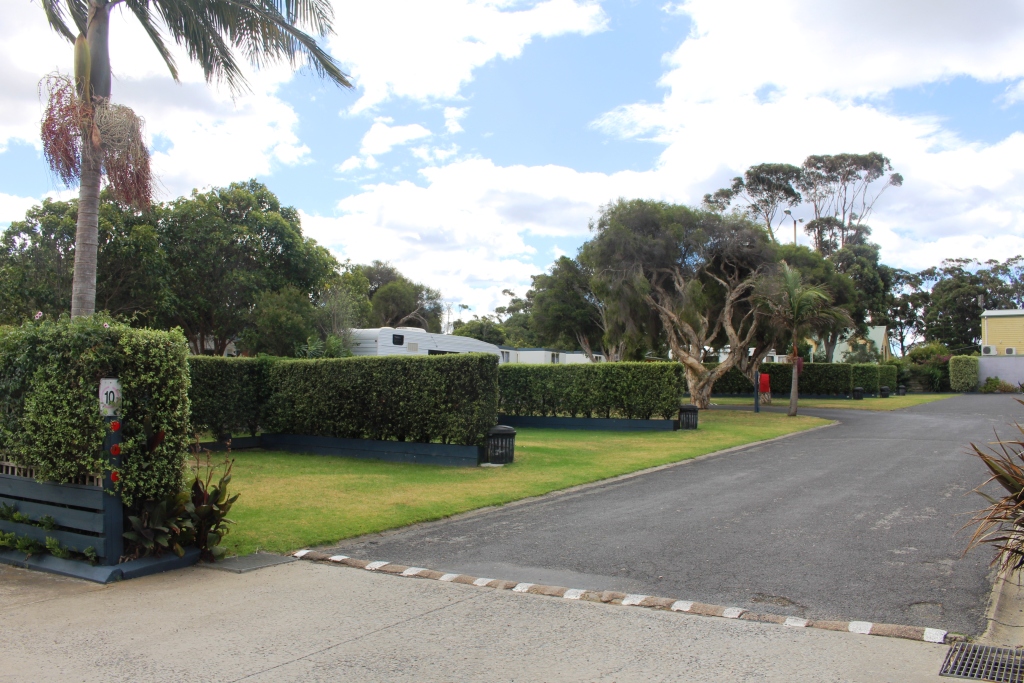
Marlo Caravan Park

Please Note: A link to a short video covering the material in this blog post can be found at the bottom of the blog.

Monday 26th March. We are coming up to our second windy night in Marlo. Last night was rather wild. We had our awning out. That proved to be a mistake. The rafters that reinforce the awning fell out at about 12.30 AM with a loud crash. That got me out of bed in a hurry. I then had to wait for the wind to ease at about 4.00 AM to take the awning in. Not much sleep until then.
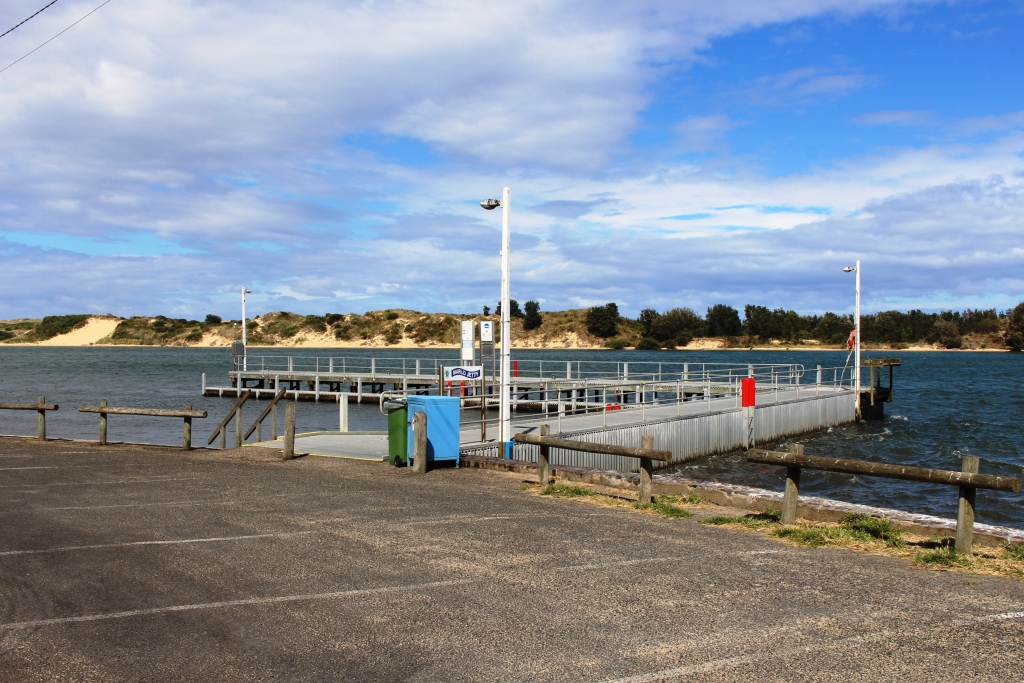
Marlo jetty in the Snowy River

We have spent a quiet day. Ruth did some washing and I completed my first blog for this trip. There is not much to see in Marlo. The town boasts a general store, pub, fishing tackle and coffee shop, a couple of caravan parks and a small motel.

The park that we are in is substantially empty. The tourist season is over. There will be a burst of activity for Easter and school holidays but that’s about it until next summer. Local businesses will be reliant on local people until tourist season comes again.

We have neighbors in the park. They are a young Swiss family. While we are rugged up and staying inside they are getting about in shorts, having their meals outside and playing with their children in the full blast of the cold wind. They don’t think that it is cold at all.

On Tuesday morning the first order of the day, as we moved on, was a call at Orbost Tyre Service to have a slow leak in one of the caravan tyres fixed. That, and a bit of grocery shopping done, we set course for Omeo. So we travelled west to Nowa Nowa, then to Bruthen for the start of the Great Alpine Road.
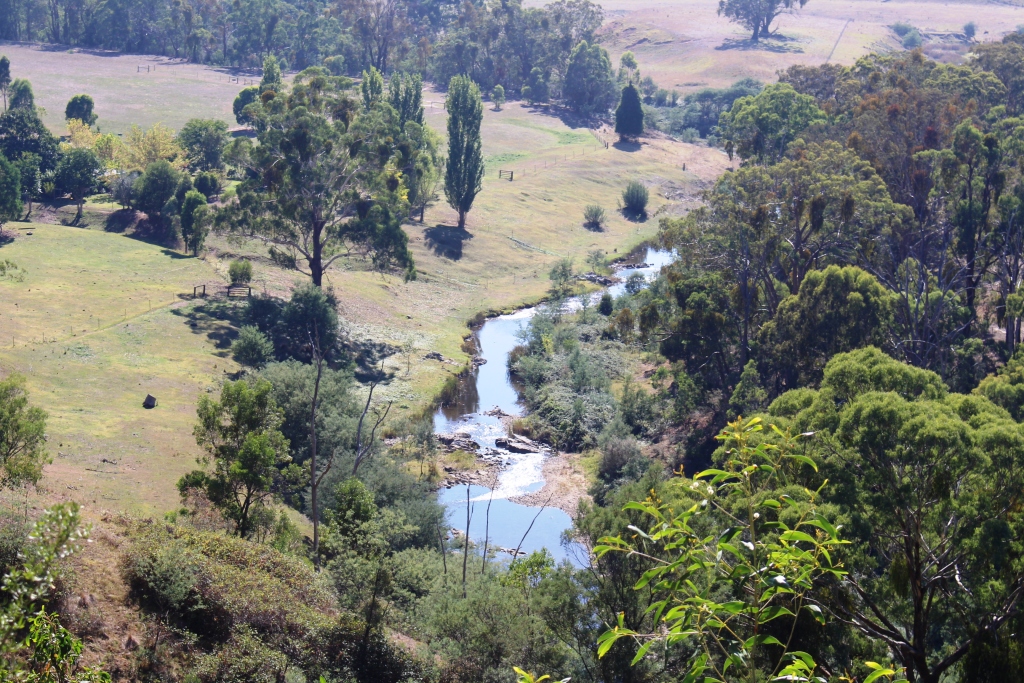
Tambo River near Tambo Crossing

Bruthen is on the Tambo River. The Great Alpine Road follows the Tambo Valley for much of the first 80 km, although the first 10 km of the drive is over a forested mountain range. The road re-joins the river after crossing the range.
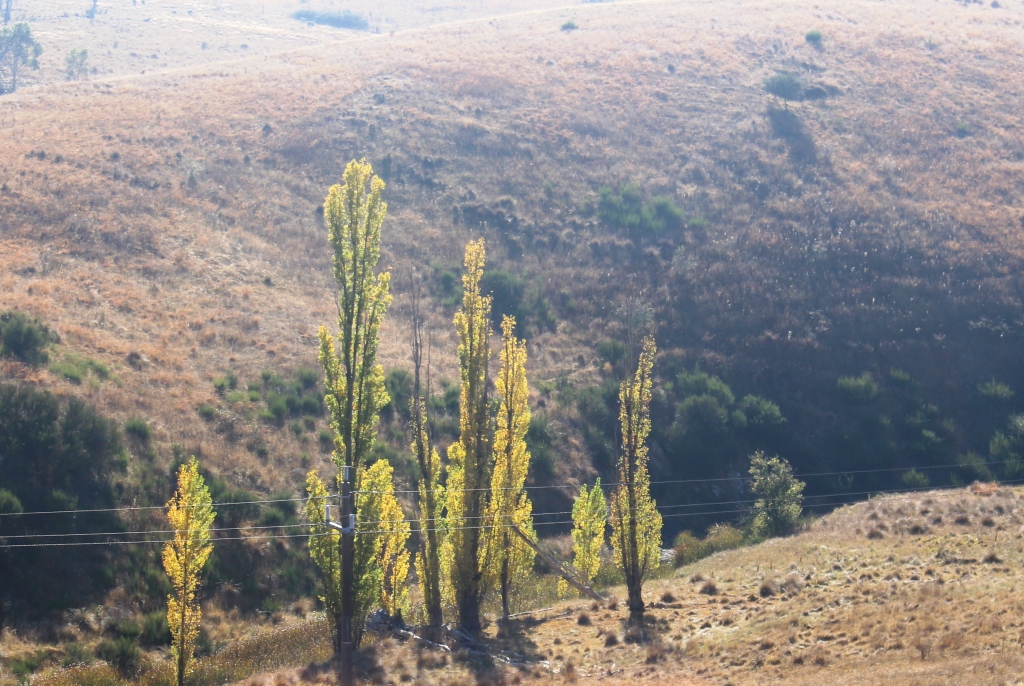
Poplars by the stream

As the trip progresses the scenery becomes more alpine. Farm land occupies the valley floor and the lower slopes, the upper slopes covered in forest. Clumps of Poplars start to appear along driveways and the banks of the streams. The grass is green but there is no sign of any recent heavy rainfall.

There are a few named localities along the road and a couple of towns, the largest of which is Swifts Creek, situated on a creek of that name that joins the Tambo at that point. Road side signs advise that Easter Picnic Races will be held on Easter Saturday.
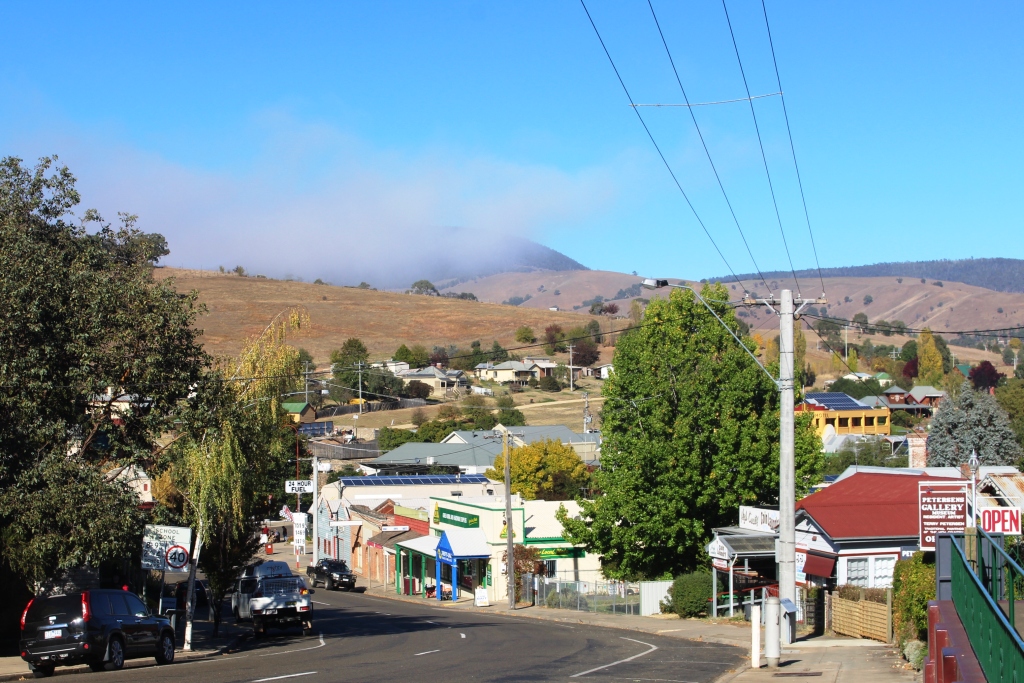
Omeo’s main street

Swifts Creek is at an altitude of about 350 metres. Just past the town the road turned out of the valley and over the next 10 km we climbed a further 400 meters to reach the tableland on which Omeo stands.
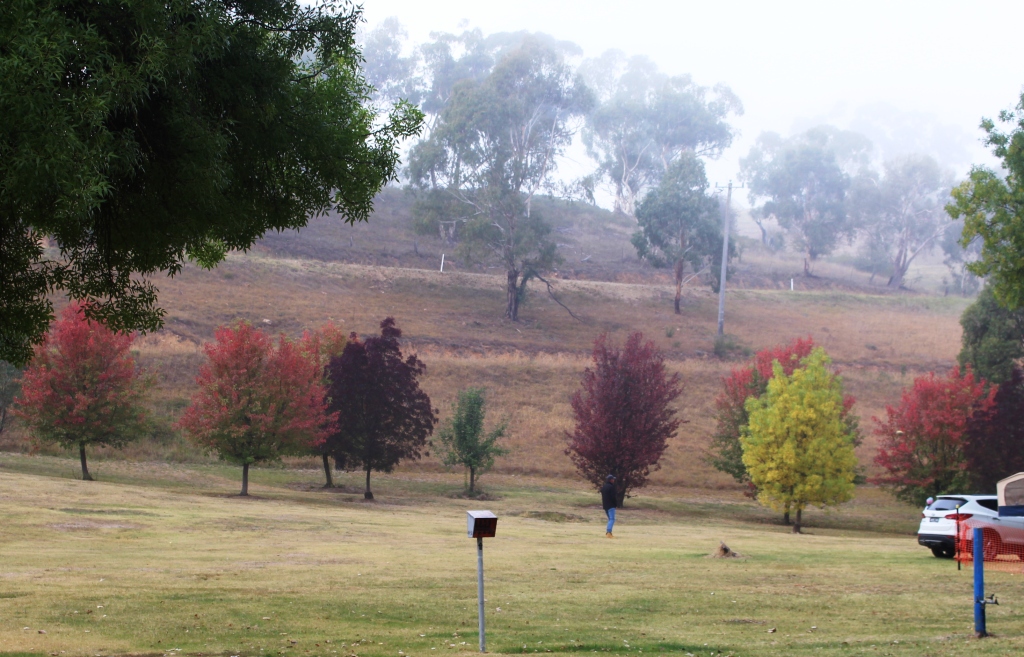
Autumn colours in the mist

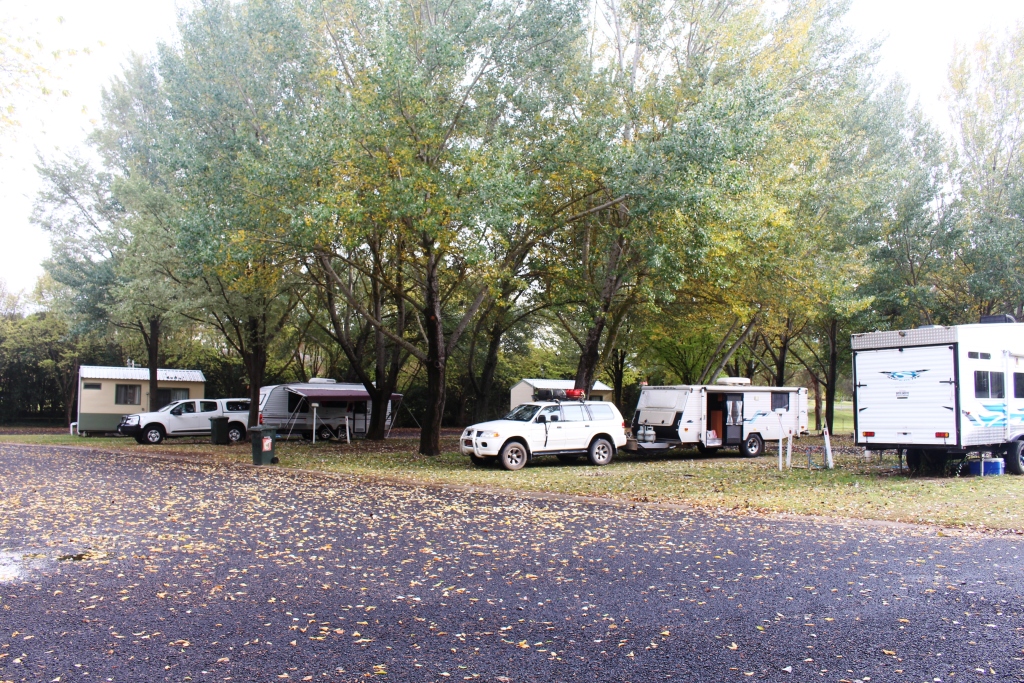
The Omeo Caravan Park is located in a narrow valley with the park facilities built beside the stream, which runs along the foothills on one side. Steep hills rise from each side of the parking area. Well established deciduous trees provide summer shade and let the sun through in winter. It was quiet when we arrived but getting crowded when we left. The High Country is popular at Easter. Numbers also increase because of the Easter Saturday rodeo in Omeo.
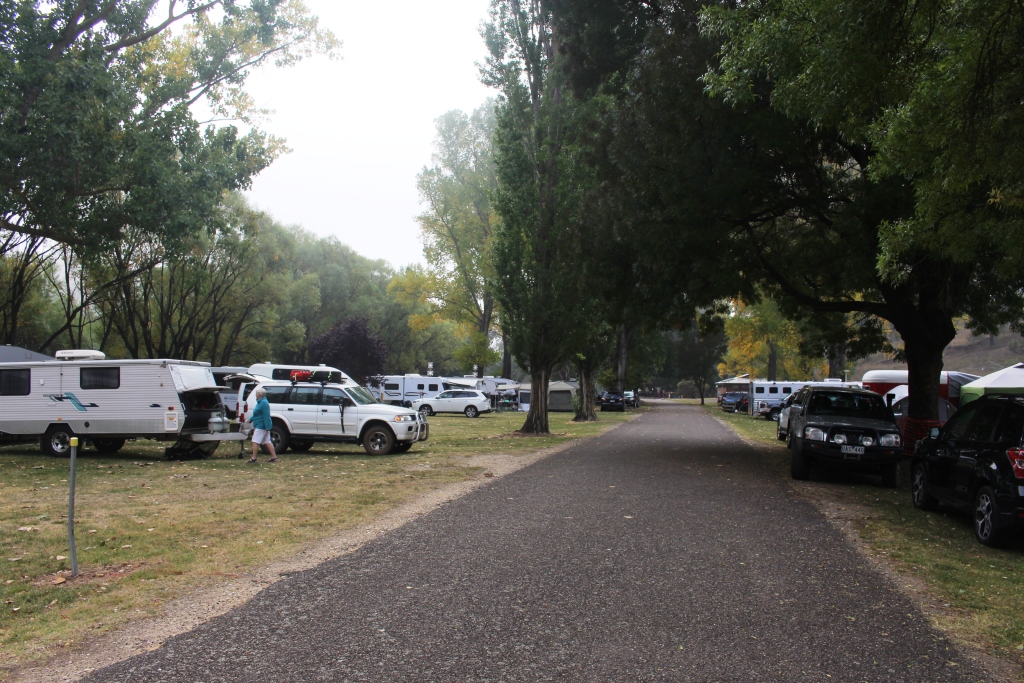
A busy caravan park

We used Omeo as a base for two mountain tours.
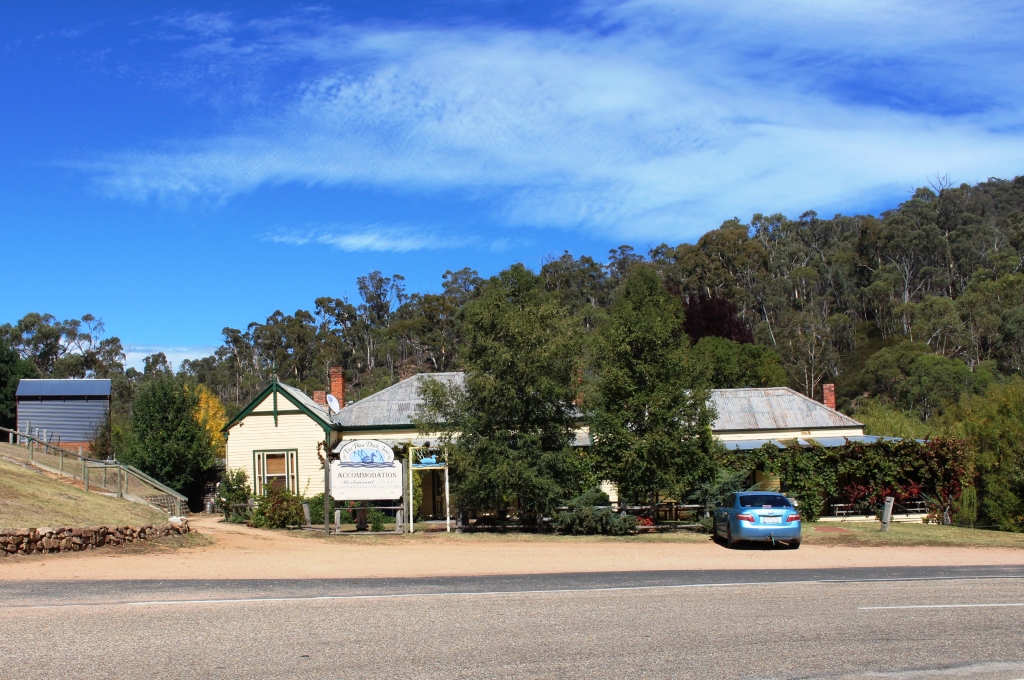
The Blue Duck Inn at Anglers Rest is near to the turn into Bogong High Plains Road

On Wednesday we headed along the southern end of the Omeo Highway and turned into the Bogong High Plains Road, where a serious climb commenced. The winding road was lined in bright yellow paint with yellow snow posts marking the outside edge. The altimeter on our navigator showed 1,740 metres at the highest point.
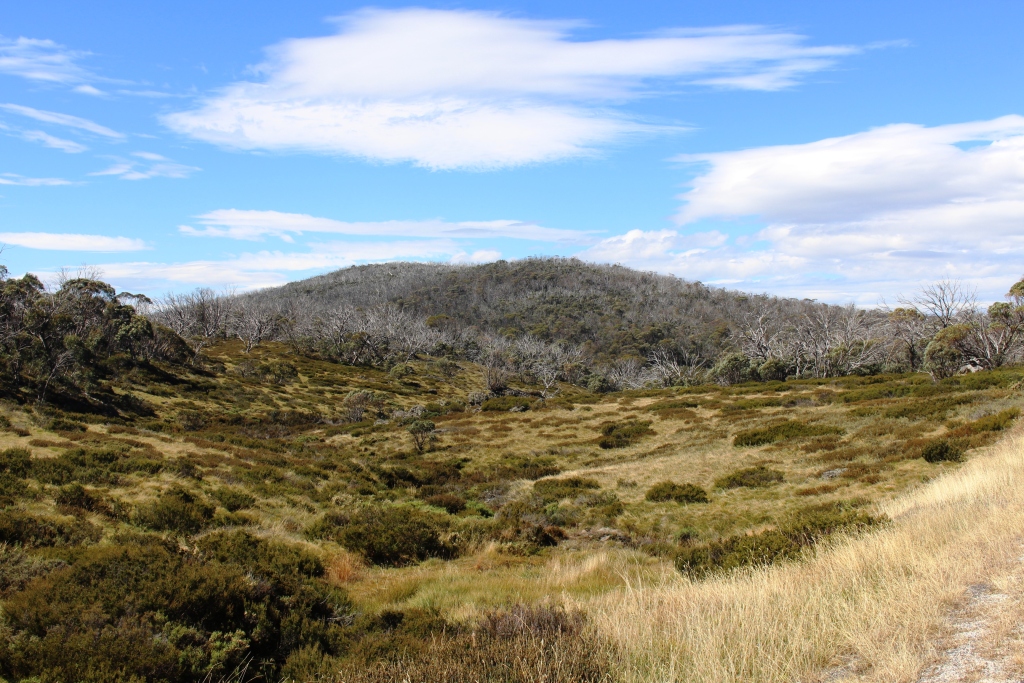
Typical Bogong High Plains scenery

One of the features of alpine areas is dead trees standing above the green vegetation, looking at a distance something grey stubble on a green face. The impact of bush fires lasts for decades. Strangely, the dead standing above the living adds to the grandeur of the scenery.

At that altitude the weather was crisp and clear with some cloud cover. The wind was strong and cold and quite invigorating. Pity there was not time for a walk.
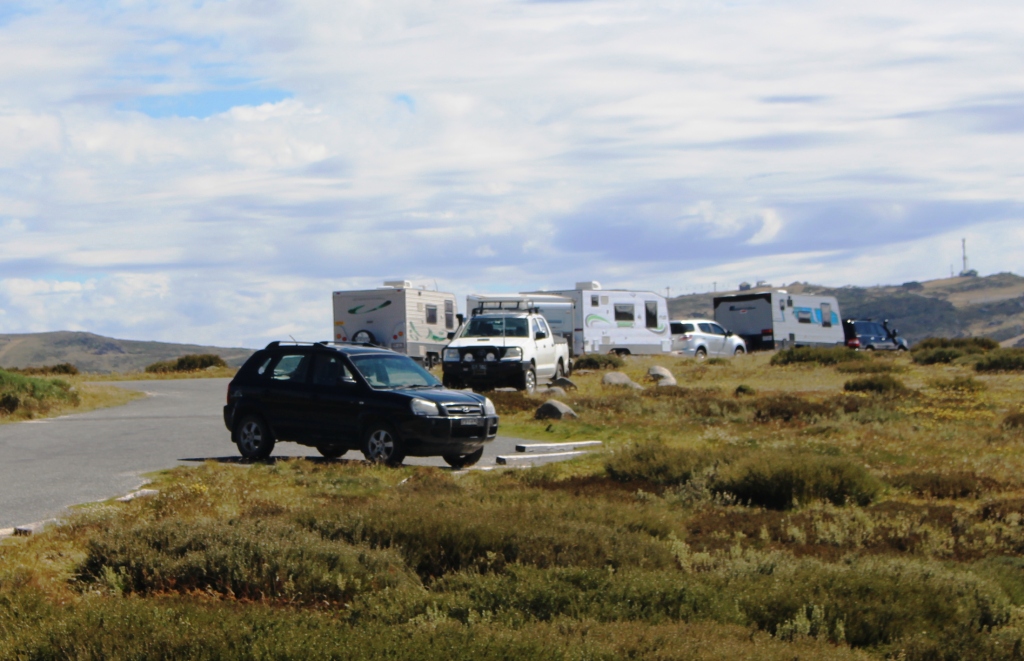
Caravans on the Bogong High Plains Road

The ski runs of Falls Creek were soon in view at a distance, becoming clearer as we approached. At one point four large caravans stood by the roadside. This is not easy caravan country. I’m glad it was them and not us.
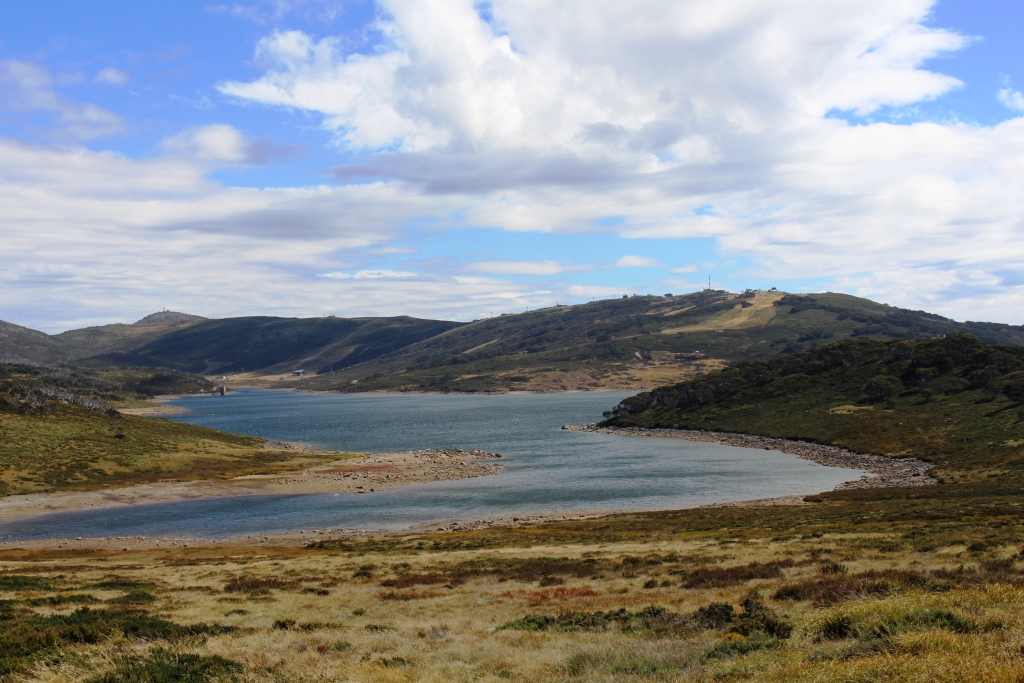
Rocky Creek Dam and Falls Creek ski runs
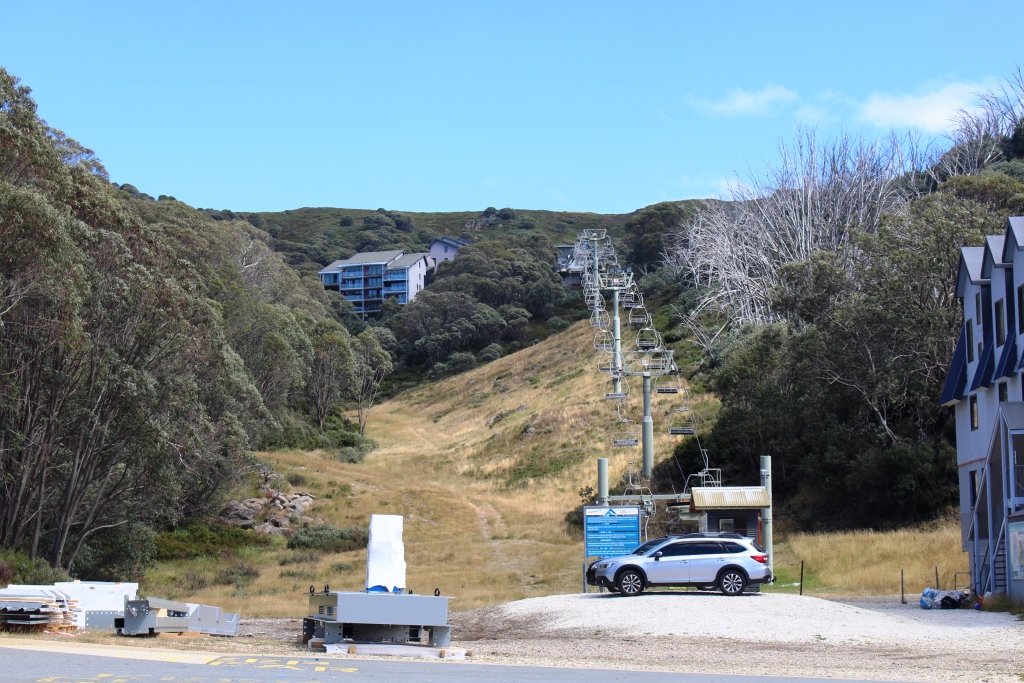
An idle chair lift at Falls Creek
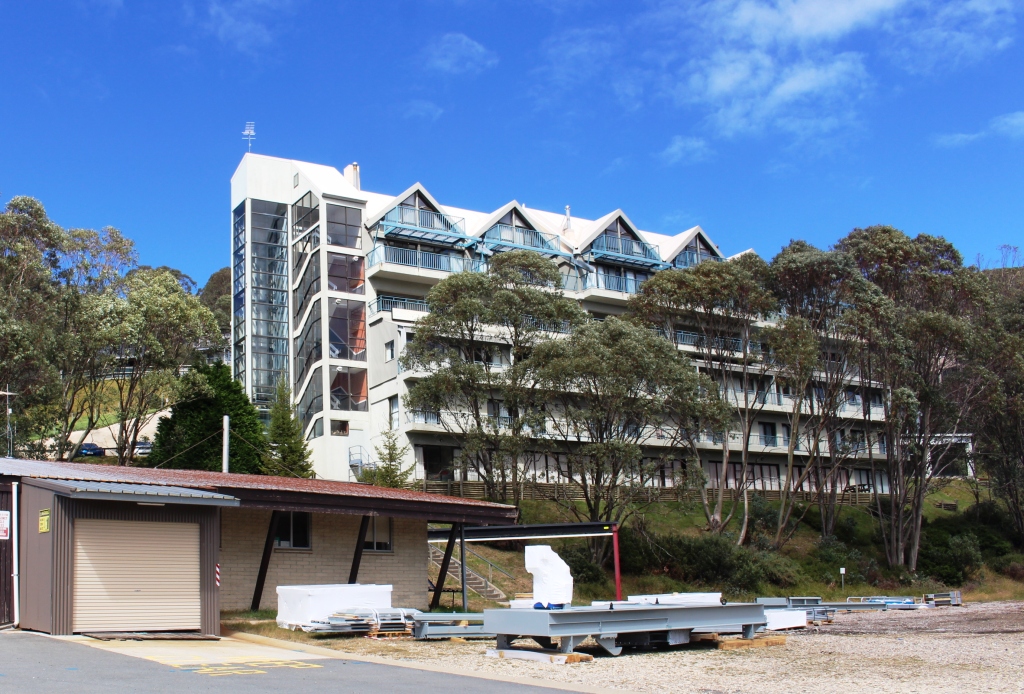
Visitor accommodation at Falls Creek. There is much more than this.

Mount Bogong from the Mount Beauty to Bright road

We had intended to have lunch at Falls Creek, but there was nothing open that we could see. Work was under way in preparation for the ski season. We continued down the mountain to Mount Beauty where we found a cafe attached to a bicycle shop.  Many businesses in that town seemed to still be closed from the summer season.

From Mount Beauty we crossed the range to Bright, famous for its
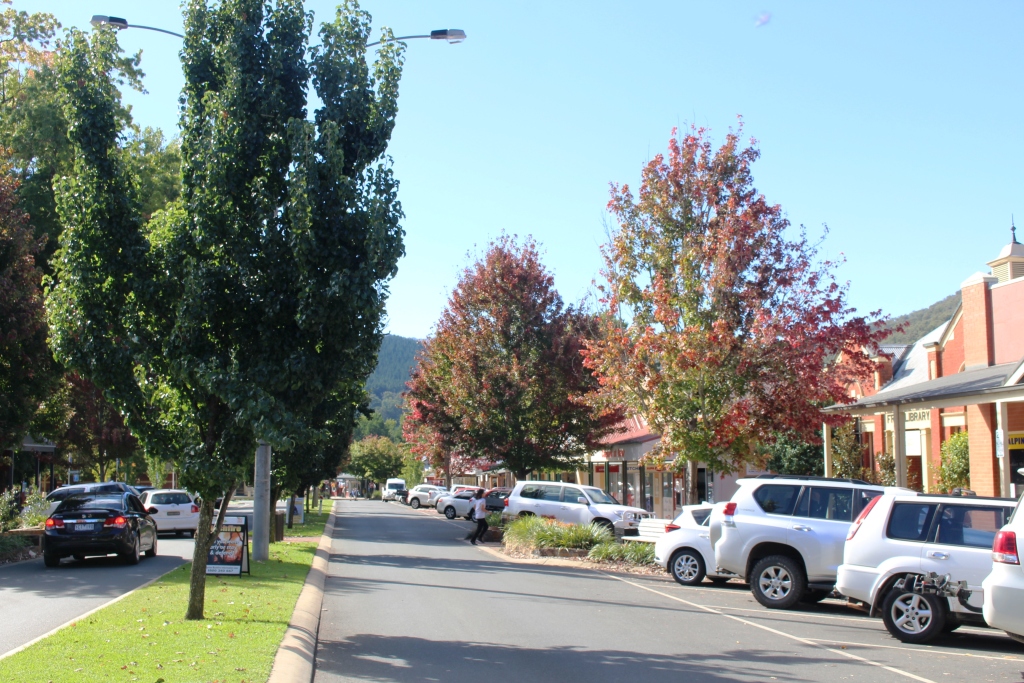
A tree lined street in Bright

autumn colours. We knew that we were too early in the season for the full Autumnal glory of the trees, but it is an attractive town at any time. We have not spent much time there. It is worth a longer visit.
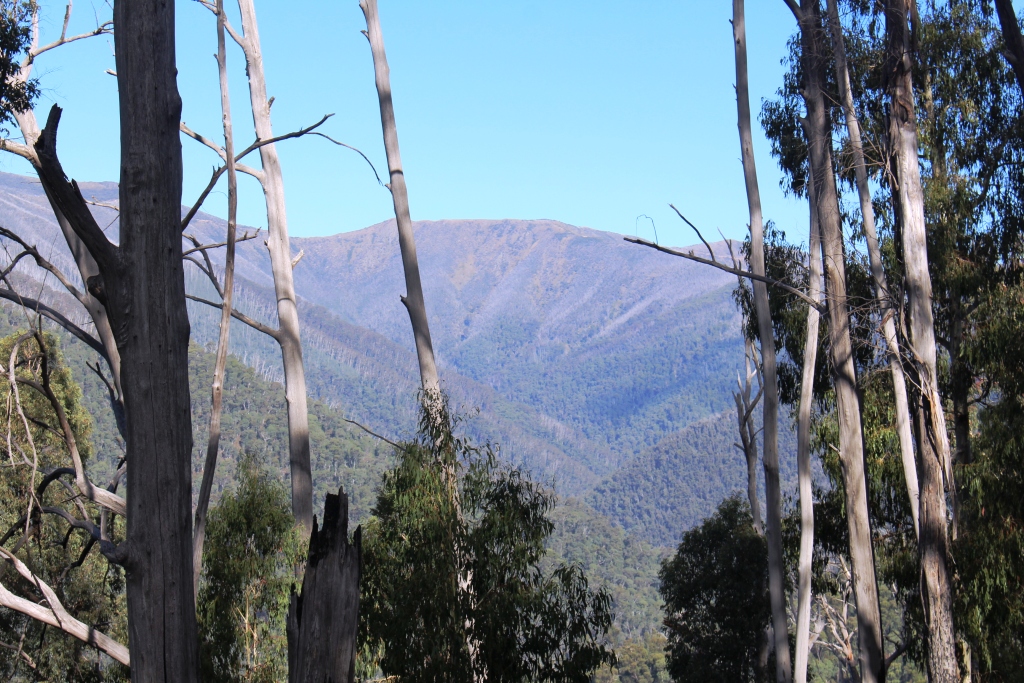
A mountain view on the climb to Hotham Heights

With daylight hours reducing, we pressed on. The climb starts just past Harrietville and is steep, winding, narrow and about 30 km. Travelling east, as we were, we were on the outside of the road. I must confess, when safe to do so, I drove straddling the bright yellow centre line, staying left on approach to right and bends, of which there are many. I had much time to ponder the placement and scarcity of Armco protective barrier.
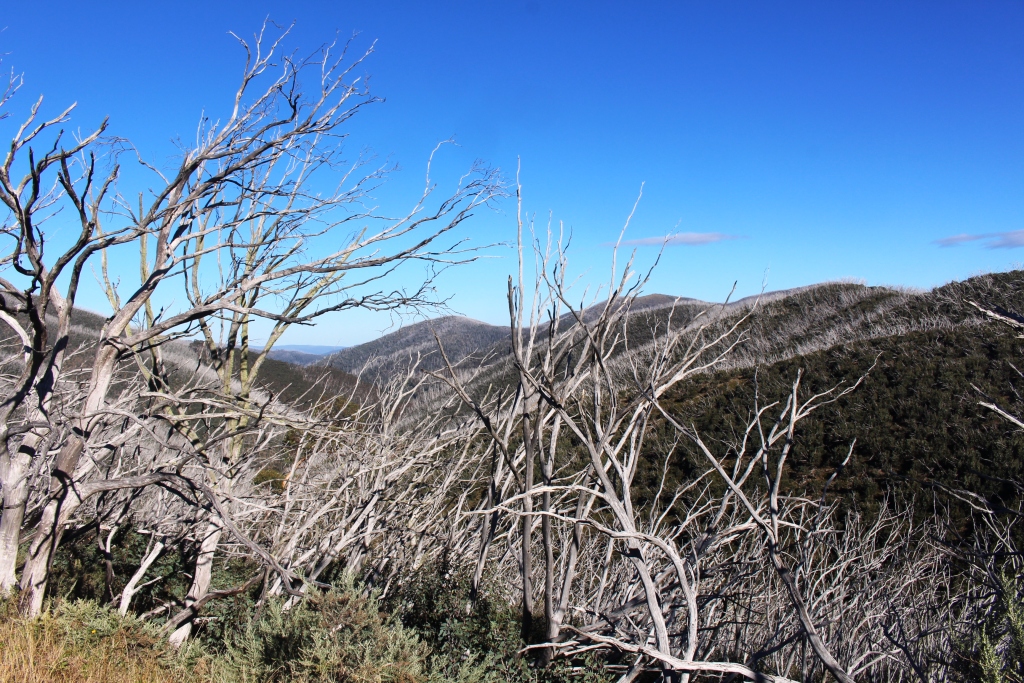
More mountain scenery

As you approach the 1,830 metre summit, the last few kilometres of road stretches above you, clinging to the scrub covered mountain side like a sloping shelf. Pre-winter road works added to the entertainment.
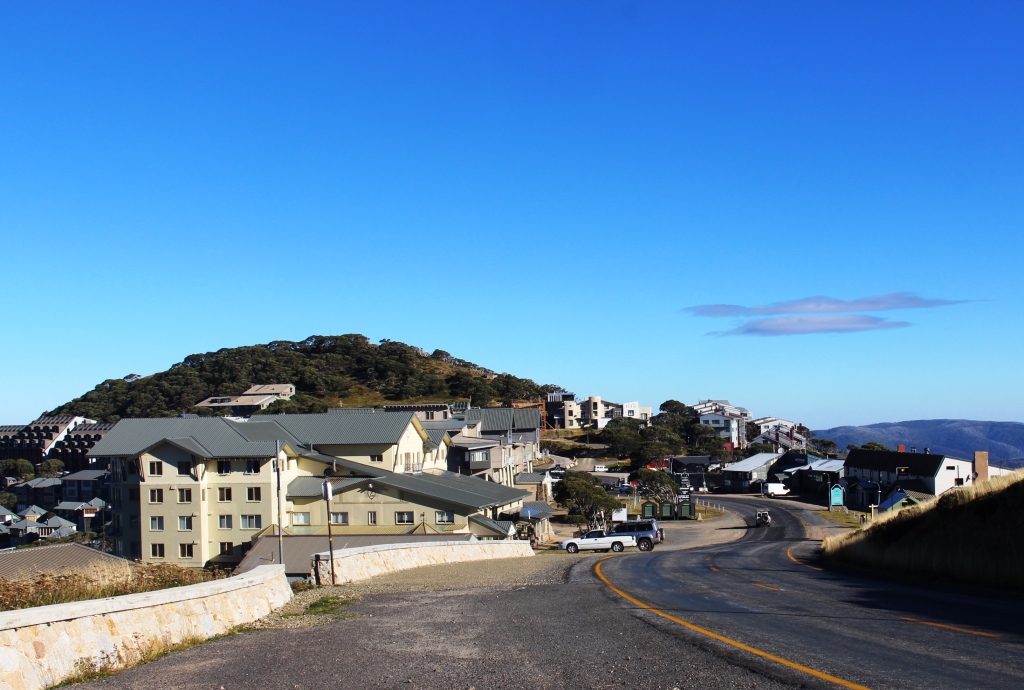
The western approach to Hotham Heights

But the mountain scenery makes it all worthwhile. As you round the final turn at the top, the first buildings of the Hotham resort comes into view, the remainder unfolding as you proceed along its main street. It has, unsurprisingly, substantially increased in size since we drive through many years ago.

Kosciuszko View near Omeo. Mount Kosciuzzko is the peak second from the left.

Another 100 km brought us back down the mountain to our caravan at Omeo.

Omeo from Kosciuszko View
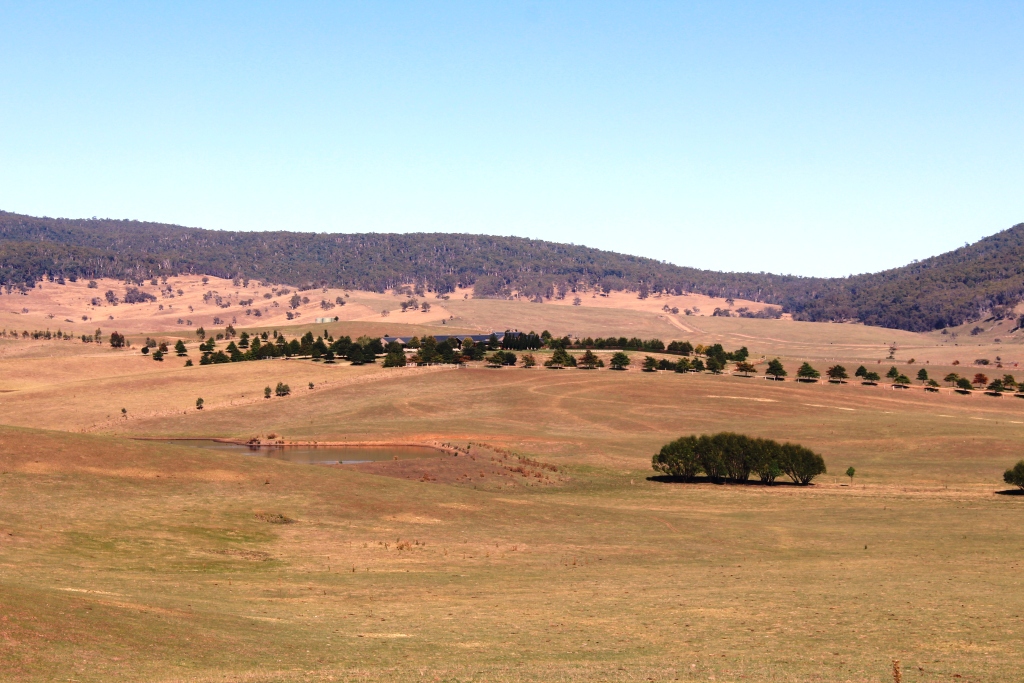
A farm on the way to Hotham

The second tour, on Easter eave, fulfilled a long standing desire to drive over the Dargo Hugh Plains, from Hotham to Dargo. To do this, we returned up the mountain to Hotham Heights, making a short detour into the alpine village of Dinner Plain. This quintessential ski village is 11 km from Hotham, so provides access to the ski fields there as well as its own skiing areas. A number of businesses were open with signs of activity.
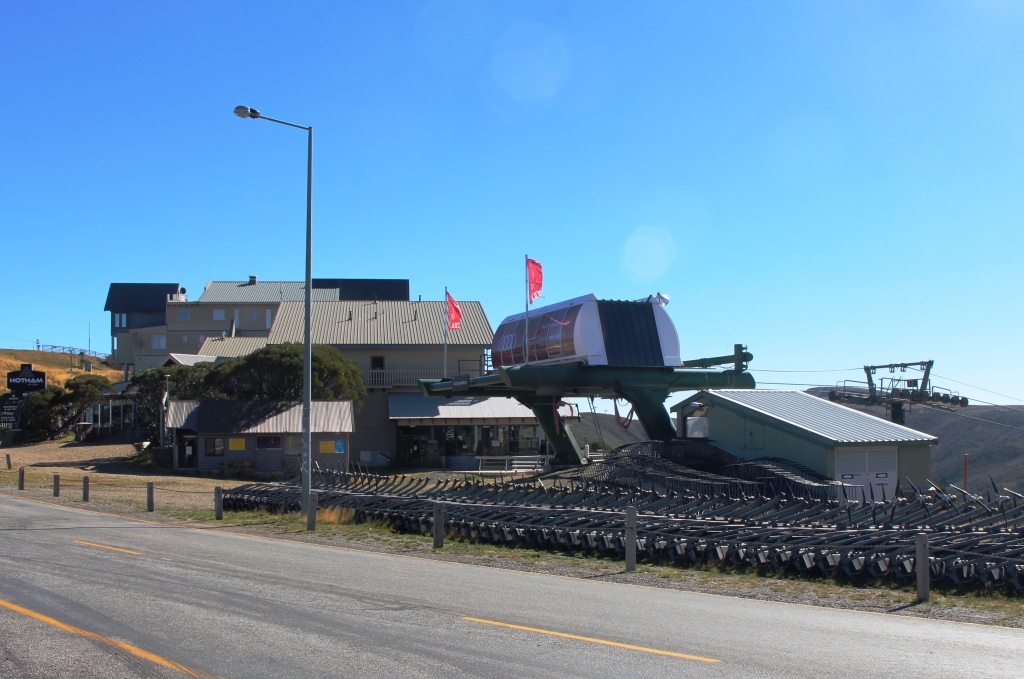
An idle ski lift at Hotham Heights.

We paused at Hotham, in a partially protected spot right under the summit, for the most elevated coffee ever, except for coffee in an aircraft. But airline coffee is not really coffee, is it, so it doesn’t count.
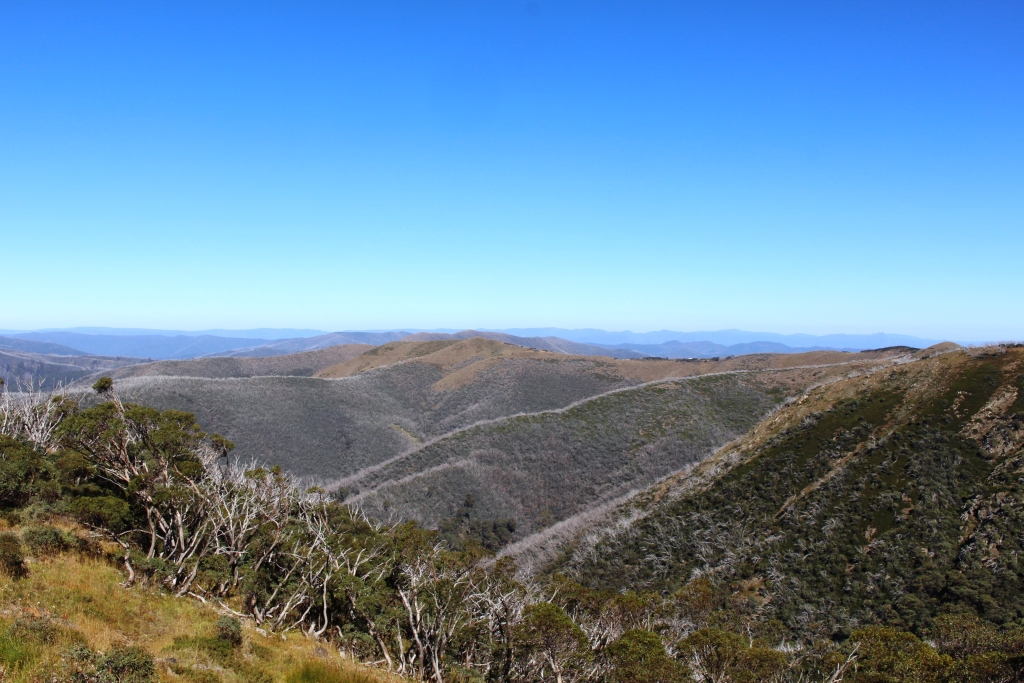
A view from our morning coffee stop
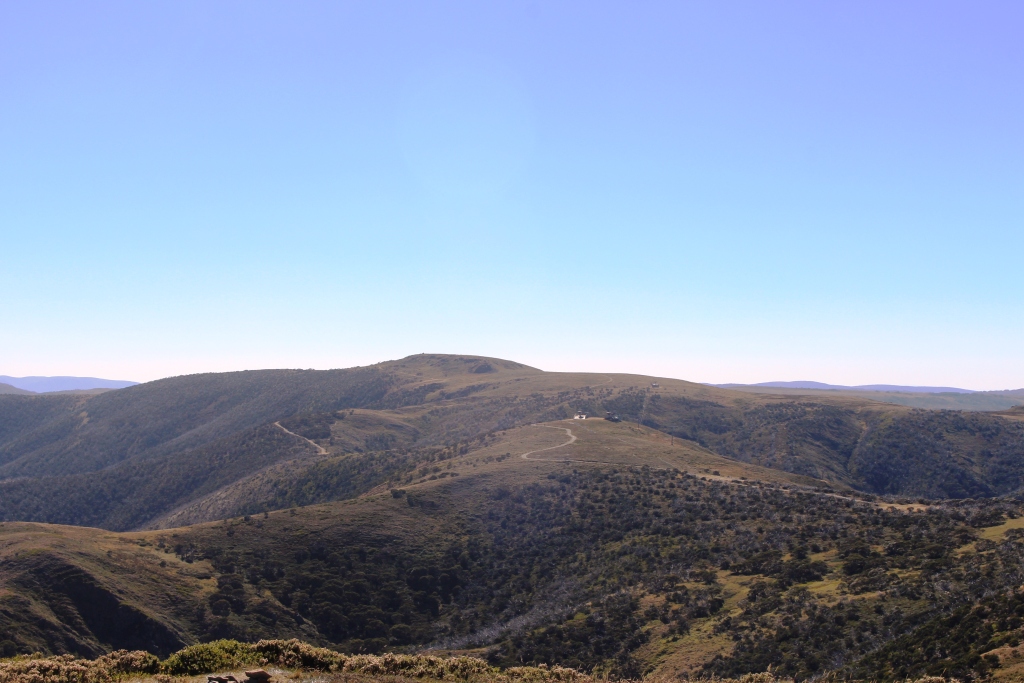
Part of the Hotham ski runs
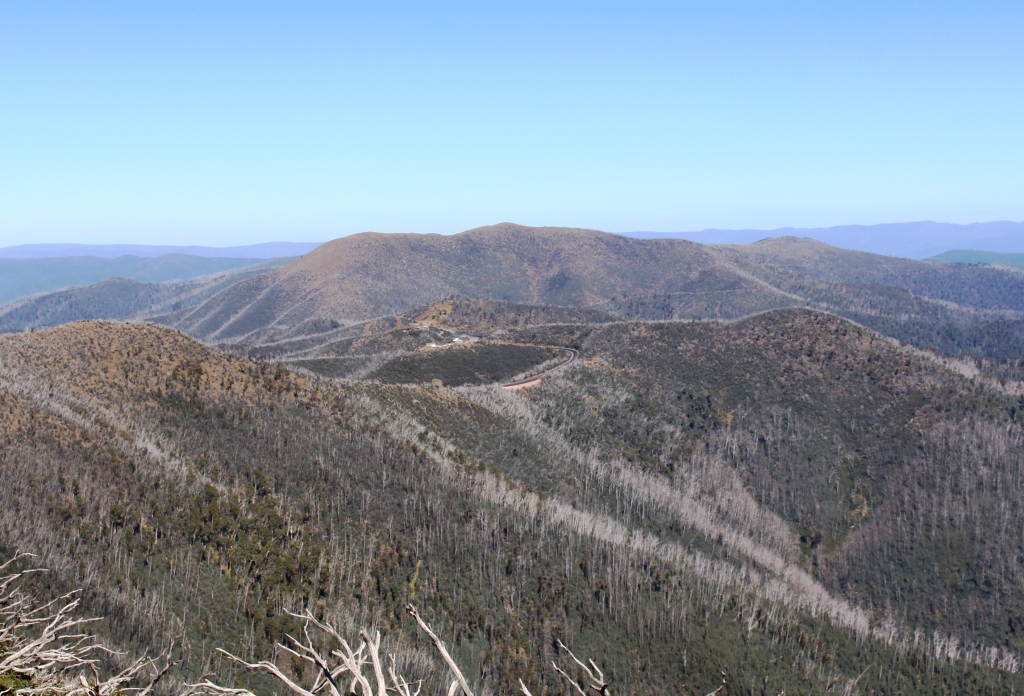
Mount Feathertop viewed from Hotham Heights
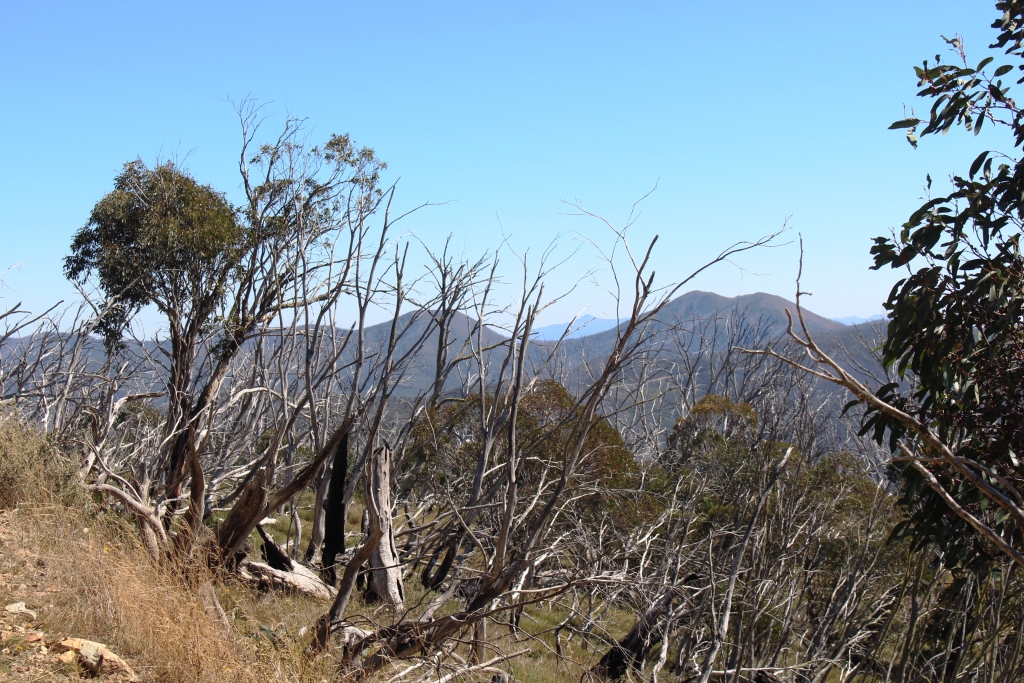
View towards Hotham from the Dargo High Plains Road

The turn into the Dargo High Plains Road is 4 km past the summit on the western side. It commences with a short sharp and narrow sealed decline but soon becomes a gravel road, narrow on mountainous sections but quite wide in flatter areas. We stopped at the appropriately named Mount Freezout rest stop to reduce tyre pressures.
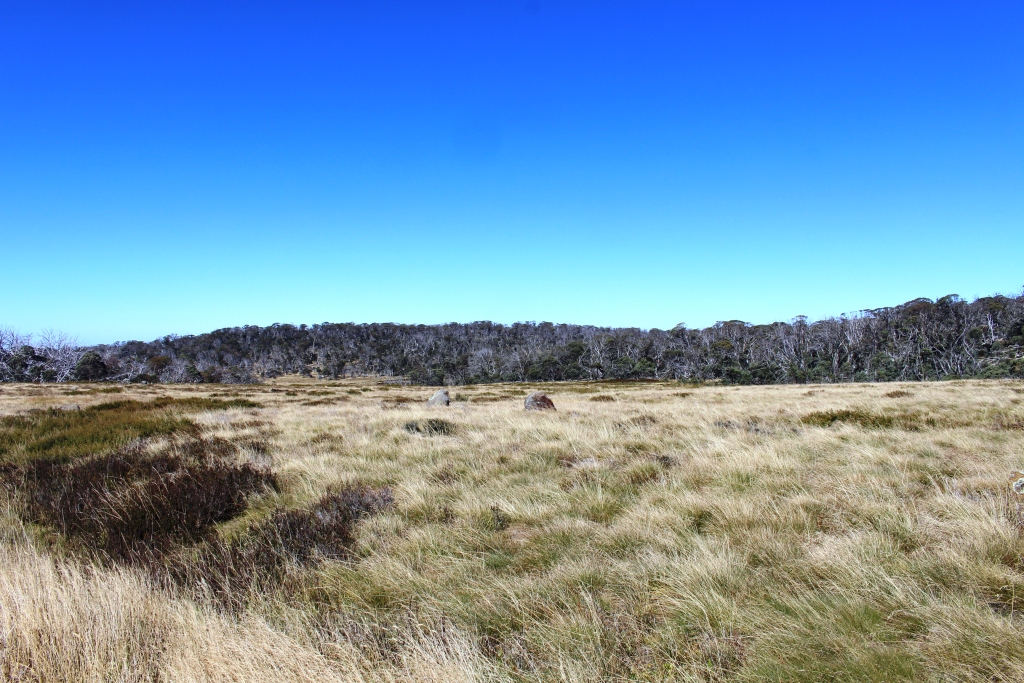
Dargo High Plains pasture land

The Dargo High Plains are more timbered than their Bogong counterpart. I have the feeling that driving over them does not reveal their extent. We initially wondered as we drove when we would find them, but suddenly we were driving through undulating pasture lands that reached to the fringing forest. There is evidence that grazing activity continues but it may be on privately owned land. Grazing in National Parks is a live political issue and tends to change with governments.

The road was in good condition generally, with speeds of 60 to 70 kph easily achievable, but some sections were pot holed and there were areas of exposed stone, particularly at the crowns of rises. The sealed road reaches 20 km north of Dargo, so the descent into the valley is on good sealed, if somewhat steep, winding road.
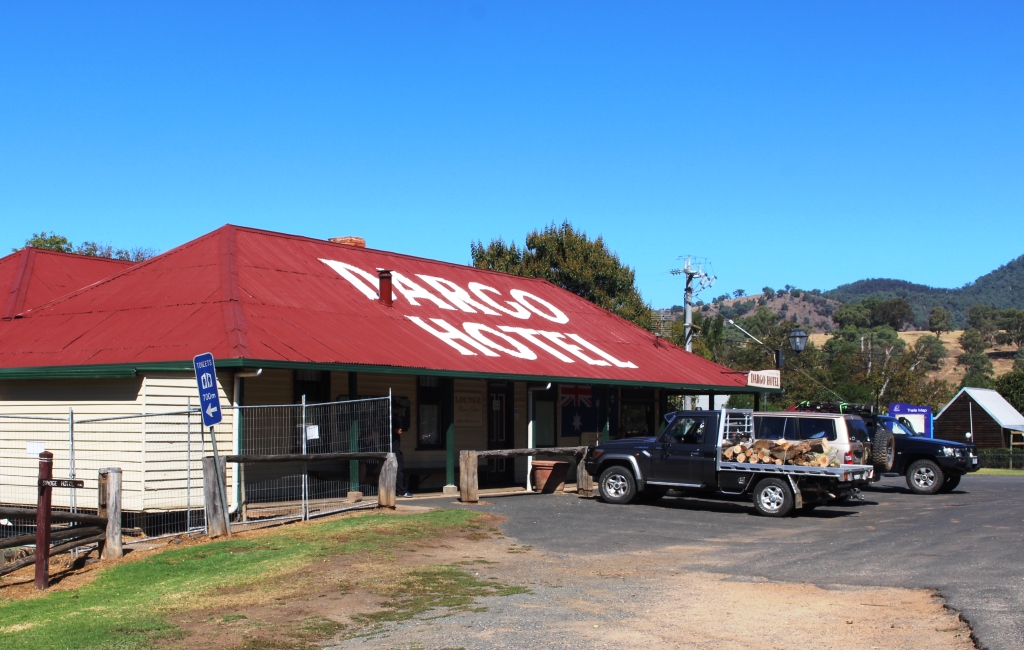
Historic Dargo Pub

Because of the number of people coming into the area for Easter the Dargo pub was doing a roaring trade. We satisfied ourselves with a picnic lunch in the park and an ice-cream from the general store, before starting our return journey to Omeo.

The plan was to take the Upper Dargo, Jones and Berrigan Roads directly back to base. We were about 16 km into the trip, on Jones Road, when we decided that we had not chosen well. The Parks Victoria officer has assured us that the road was good. Two wheel drive road, he said. The reality was a narrow ever ascending track, badly washed out and comfortable at no more than about 20 kph. That meant that we would still be on the track late in the day.
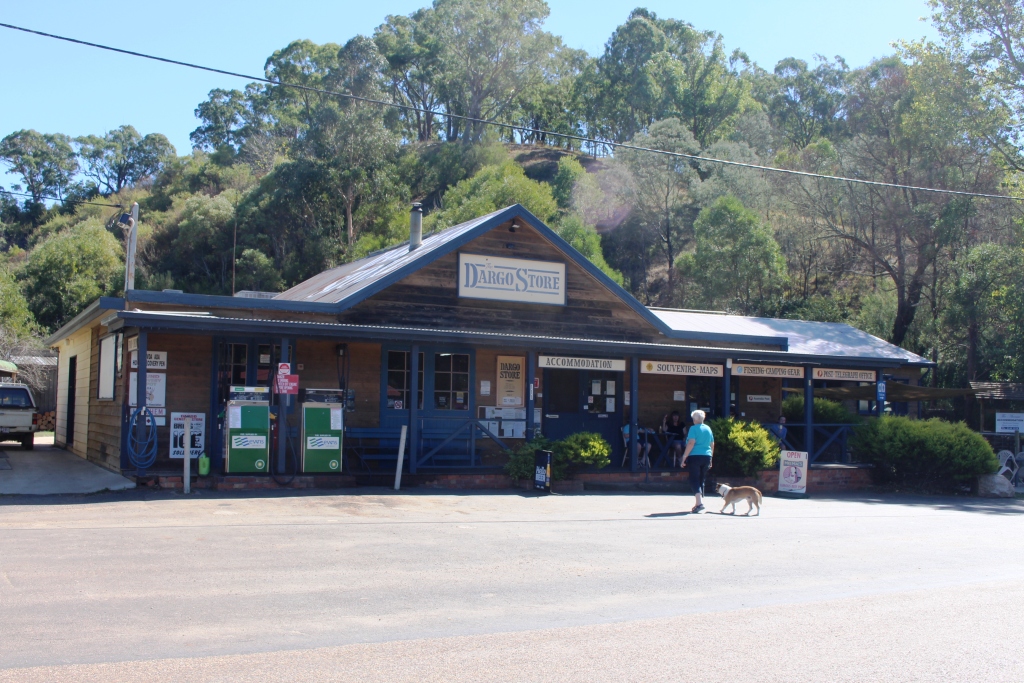
Dargo General Store – ice cream time

We continued until we found a piece of track wide enough to turn and made our way back to Dargo. We had two choices. Either to return over the High Plains to Hotham or go south via Bairnsdale and the Great Alpine Road. The latter is sealed all the way, so much the quicker route, and only about 20 km longer. It was no contest. Via Bairnsdale it was. We arrived back at the van at about 7.30.

Good Friday dawned cool and foggy. A heavy mist hung over the valley and lay in dense banks along the face of the mountains. We met many vehicles making their way into the high country for Easter and school holidays. There were a good number of caravans, more camper trailers and hosts of four wheel drives, pack racks piled high with camping gear. By the time they all arrived there would scarcely be a vacant camp site to be had.

But it was back at Bruthen, on the Princes Highway, that we really met traffic. You could almost have believed that Melbourne was being evacuated. The combination of Easter and school holidays sure had Victorians on the move. The continual strings of traffic, moving at near the speed limit, did not abate until we were approaching our destination at Drouin, quite late in the day.

We are taking a four day break here for some family visiting. Then two days in Melbourne with friends, so activities will not become bloggable again until we head out of Melbourne.
The Big Lap Again – Part 1: Home to Marlo, Vic

Please Note: A link to a short video covering the material in this blog post is located at the bottom of this post.

You may recall that last year we set out on a second circumnavigation of the Australian continent, but our plans were disrupted by medical imperatives. Expert medical intervention has either fixed or deferred the problem. Time alone will tell.

So on Monday last, 19th March, we set out again. Our initial objectives are Sydney and West Gippsland, albeit in an indirect manner, but the detail will be the substance of the story. Hopefully the track will lead to South Australia, Western Australia and those parts of Northern Territory through which we must pass to come home.

We have travelled, and blogged, the East Coast sufficiently to render another journey along it as no more than a commute, so comments about this early part of the trip will be restricted to the highlights.

We reached Grafton on the first day and pulled into the basic caravan park associated with the Grafton Greyhound Club. Monday night was a race night, so we arrived as part of a procession of greyhound trailers and vehicles with dog carrying capabilities.

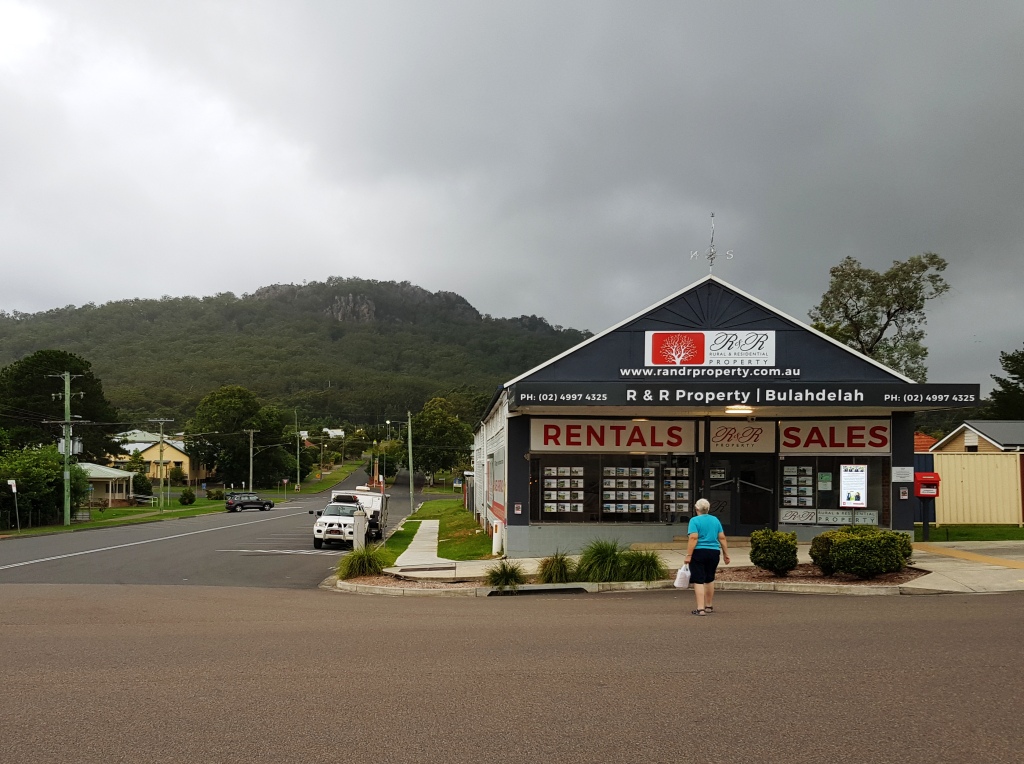
The main street of Bulahdelah. I remember it differently.

Payment of camping fees entitled us to watch the races and use the bar and canteen facilities. Instead we went to bed. After spending Sunday packing the van and then finalising everything and driving about 350 kilometres today, we were bushed. Lights out was before the last race. We slept through the race calls over the PA and the departing traffic, much of which drove right past our camp spot.

Wade’s grocery store is now a real estate agent. Bulahdelah Mountain in the background.

We spent the next night at my old home town of Bulahdelah. We intended to stay at the free camp by the river but when we arrived it was packed out, so we moved on to the caravan park. Our arrival had coincided with the annual run to the top of the Bulahdelah Mountain. This is an annual event, apparently. It was only Tuesday but folk were already there for the weekend run. I always knew the mountain as the Alum Mountain, as deposits of alum were mined there long before my time in the town. We were always

told that it was the only alum mountain in the world, but I have no proof of that claim.

The weather forecast was ominous with heavy rain predicted. We experienced a couple of showers but the real rain started as we moved on towards Newcastle for a call for morning coffee with brother Ivan and his good wife. The sky opened and at times we almost needed to stop. The deluge paused for our social call but returned as we drove on to Sydney. But again it ceased as we arrived at our caravan park to set up for the night. Arriving and departing caravan parks in the rain can be a very miserable business.

Well satisfied after a sumptuous meal

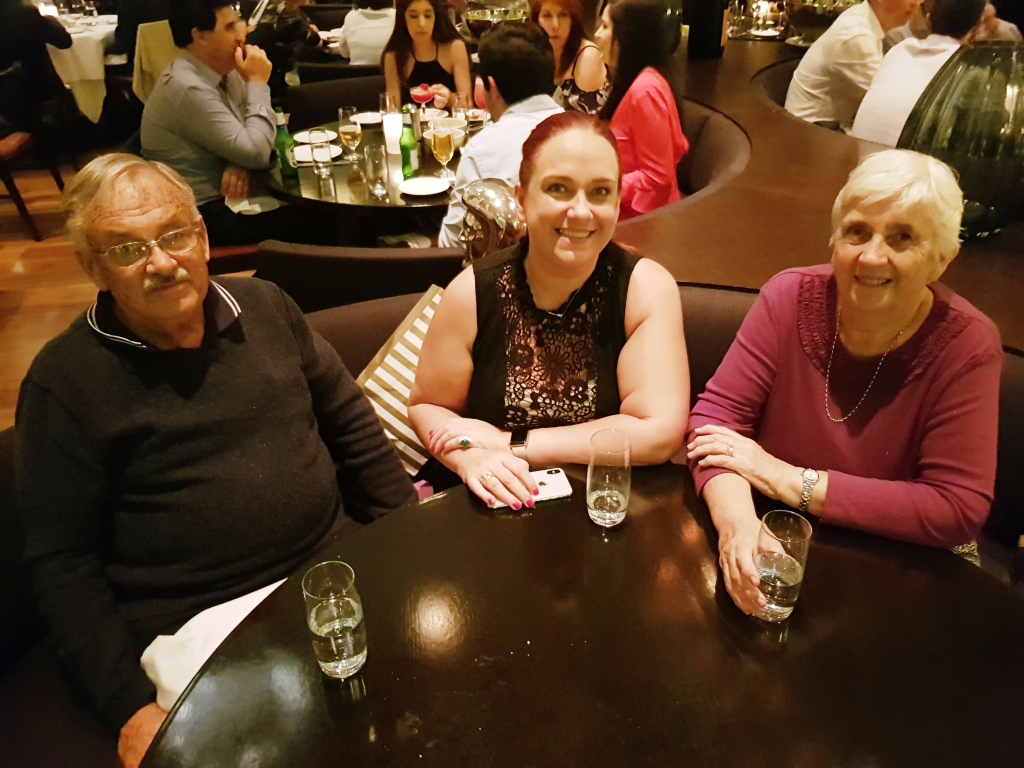
Visits to Briony in Sydney usually involve a memorable dining experience and this time was no exception. We only stayed over night so met her in the City for dinner. She booked us into the Glass Brasserie at the Hilton Hotel in George Street, for 6.00 PM, because she knows that old people eat early. But the decision was influenced by the policy that bookings before 6.00 PM get half price.  And that helps, because it is one expensive eatery.

Despite the substantial discount, no short cuts were taken by staff. We were treated in the same manner as all the diners who arrived later and presumably paid full price. The service was superb and the food exquisite. My King fish sashimi entre and lamb loin main was beyond description. Ruth and Briony shared my opinion in respect of their meals. A cheese platter to finish ensured that we didn’t go home hungry.

Again, fine weather to pack up in Sydney but more heavy rain as we made our way to Wollongong. Briony has a school and current friend who runs a coffee shop in a suburb

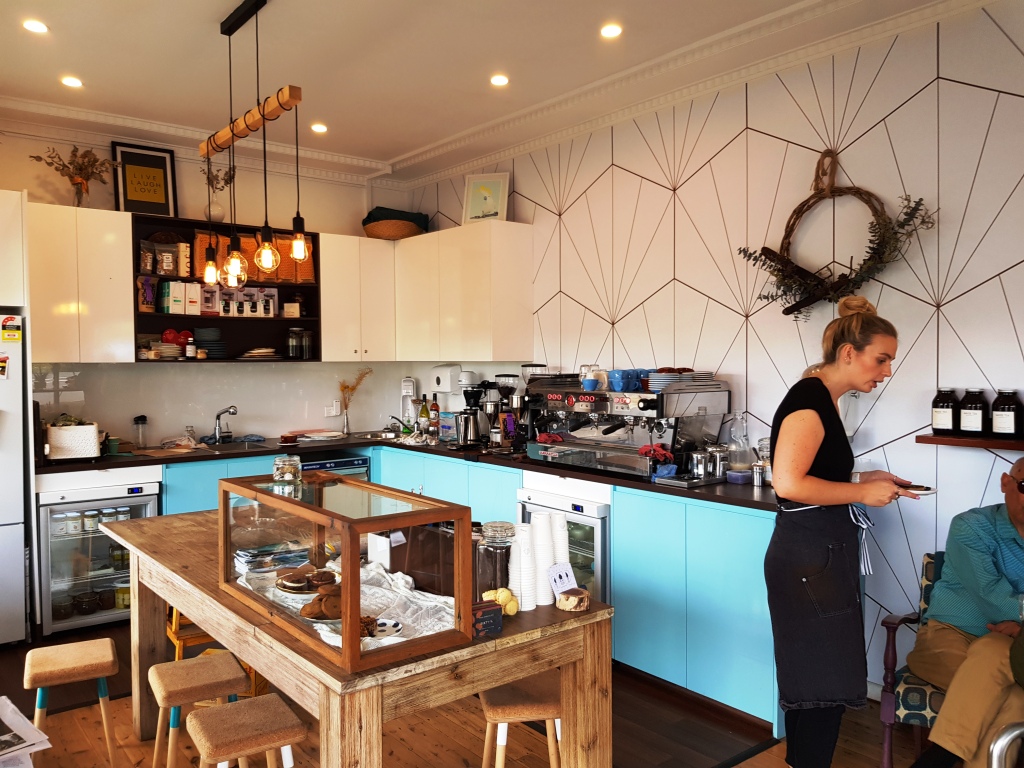
Brown Sugar Espresso, featuring the barista

of Wollongong near the highway. We have been there once before and enjoyed the experience so much that a repeat visit was almost mandatory. The concept on which the place is based is “come into my kitchen for coffee”. The shop is one room with the coffee and serving facilities along one wall, the food is displayed in a display case on a table in the centre, with the clients seated around the walls or at part of the table. The locals love it. By the time we arrived at about 11.30 AM most of the food was gone, but what remained was of the normal high standard. The cakes are mostly sourced from home bakers.

We have known Lucy for almost as

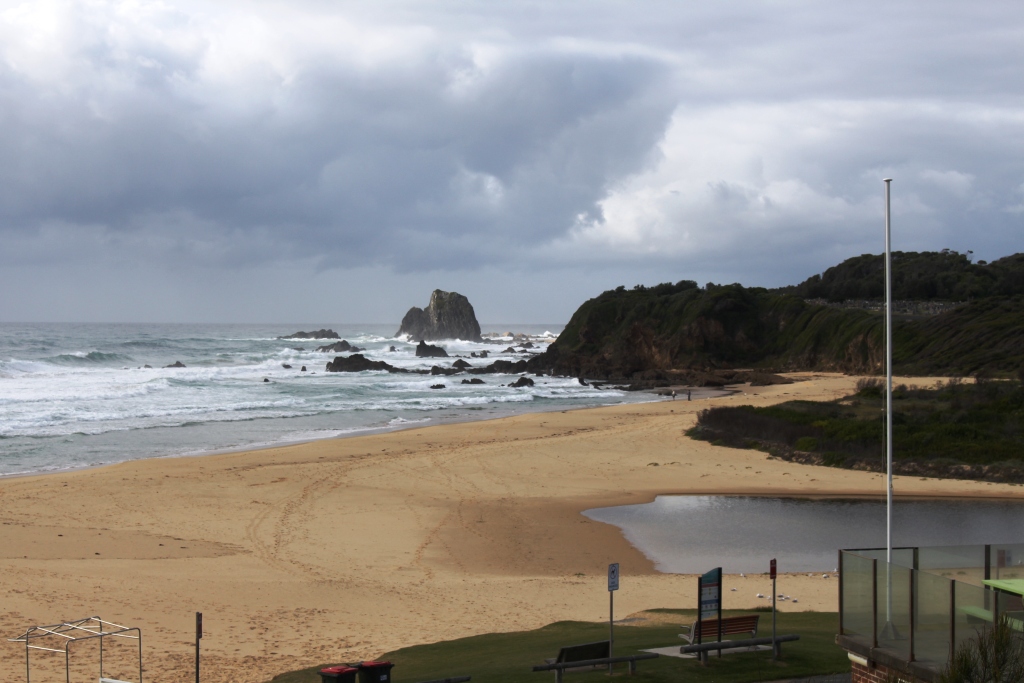
Ocean view from the caravan park

long as Briony has so we did enjoy the visit.

More rain as we drove through the lush green countryside of the Illawarra area towards our still undecided destination for the day. At about 5.30 PM we rolled into Narooma and chose a caravan park with quite lovely views over the ocean. But it was a bit grey.

A view of Bega and the Bega Valley. The home of Bega cheese.

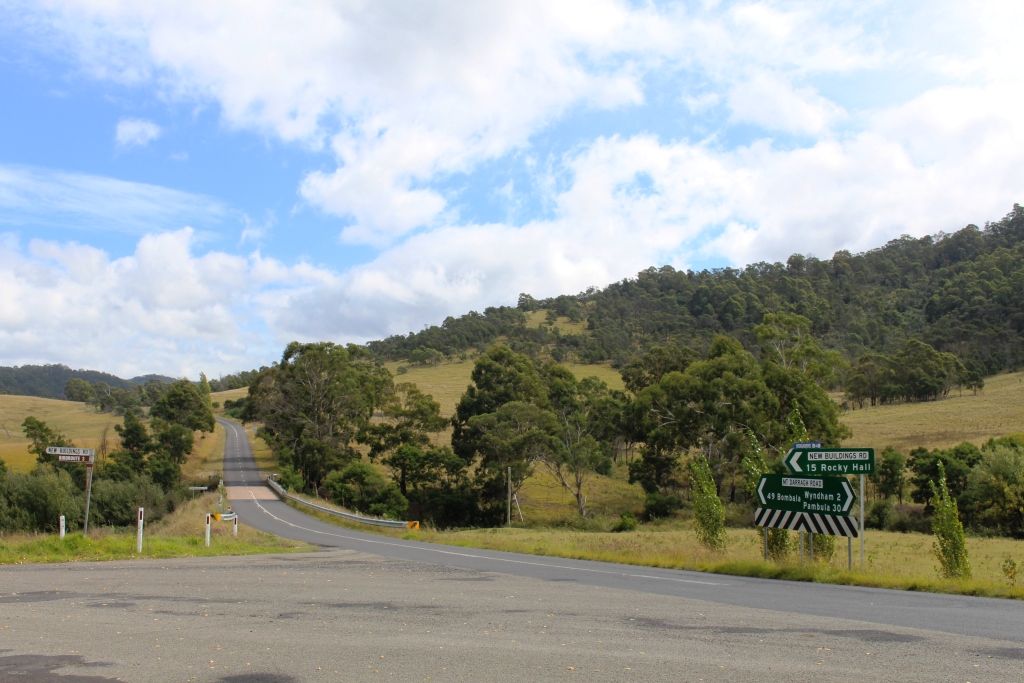
Day 5, 23rd March. We made a late start, fuelled up and headed on south. Our destination today was Bombala on the south east corner of the Monaro tableland. The shortest route would have been to turn onto the Snowy Mountains Highway just north of Bega, but instead we continued south to the coastal town of Pambula where we turned west into Mount Darragh Road. This alternative route provides a much gentler ascent of the Great Dividing Range and

Mount Darragh Road

delivered us to the very doorstep of Bombala. We selected a snug site under leafy trees beside the Bombala River. Lots of leaves also on the ground were testament to the season and relative to the predicted overnight temperature of 10 Celsius.

We have a planned activity for Saturday but it is rather weather dependent.

A quaint bridge near Bombala

The early morning sky was mainly blue with a rising sun reflecting on the edges of some scattered clouds. Mist drifted up from the river and lay in low areas.

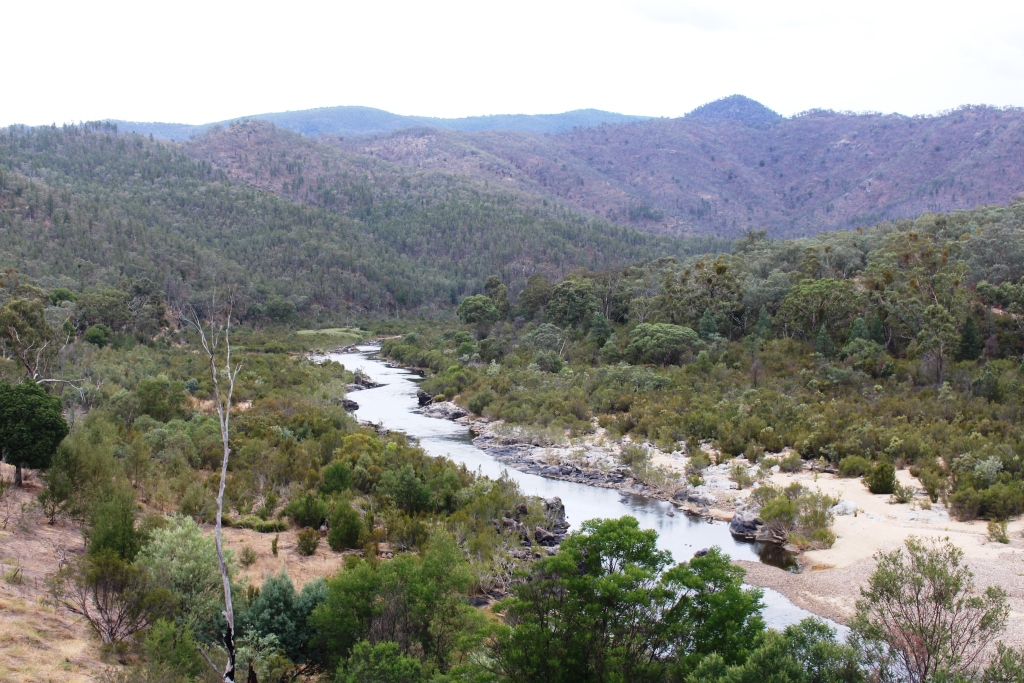
The Deddick River joins the Snowy just upstream of McKillops Bridge

The forecast was for some rain but, with sunny periods and a top of 24C. So after a leisurely start we set off for McKillops Bridge, a drive of about 125 km to the upper waters of the Snowy River. The drive took us briefly into Victoria. Today’s trip is another in the “Things Kevin Did In His Youth” series. I last saw McKillops Bridge about 57 years ago. The trip took place before Ruth and I were married, while I was working in Morwell.

Part of the narrow Bonang Gelantipy Road

A work mate and I set off after work on a Friday afternoon, mounted on our step through Vespa motor scooters and loaded with food and sleeping gear for a long weekend. We camped late at night near Nowa Nowa and rode on to Buchan next morning. After looking through one of the caves we continued north on the road that leads to Jindabyne, but turned east before

reaching the NSW border, towards

Part of the narrow Bonang Gelantipy Road

Delegate and Bombala. It was on that road we discovered McKillops Bridge. We were amazed to find such a structure in the middle of the bush. A very substantial bridge was needed to span and withstand the Snowy River’s floods, to provide an all weather road. It remains a tourist attraction to this day.

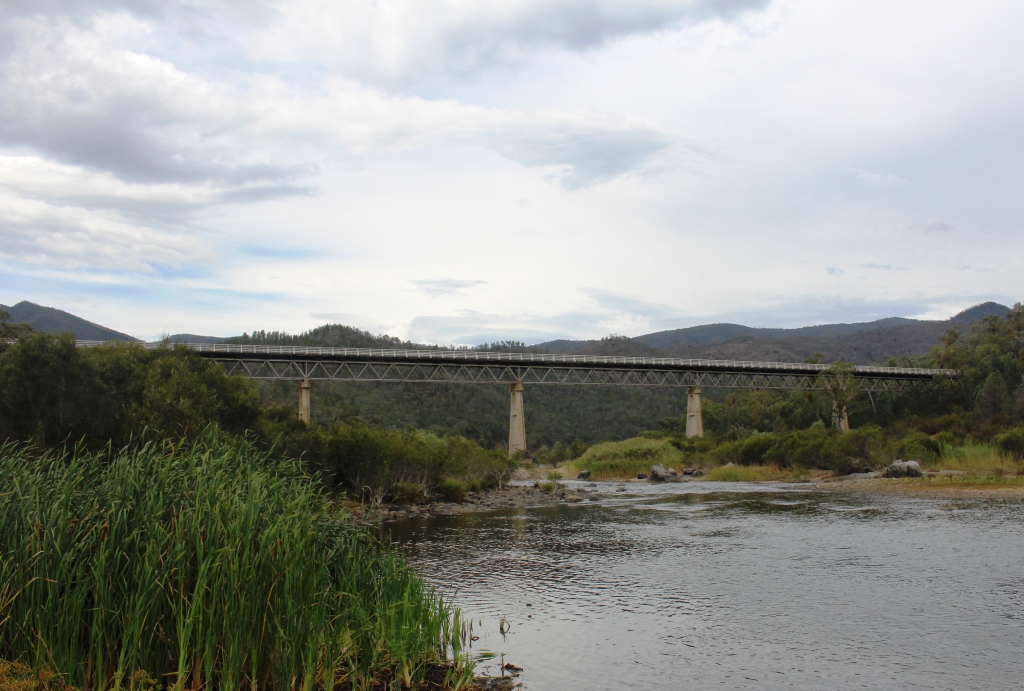
McKillops Bridge from the banks of the Snowythis day.

Pioneer squatter George McKillop, crossed the Snowy River at the place where the bridge now stands, in 1835. He pioneered a cattle route that was used to stock new grazing properties in the Snowy Mountains. Cattle to stock other parts of the Colony of Victoria also travelled via that route. Construction of the bridge was commenced in 1931 and was completed by January 1934, in time to be washed away in record floods, before its official opening.

So back to the old drawing board!

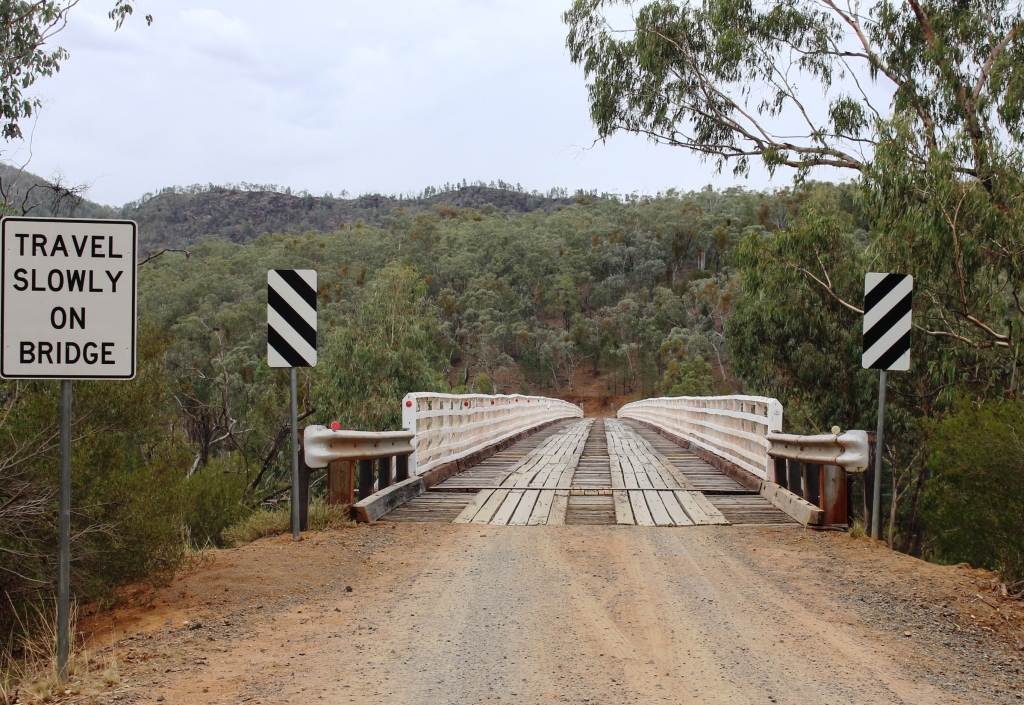
About to cross the bridge

The concrete pylons were made higher and a new deck constructed. The rebuild was completed in 1936. The road and bridge were important links between Victoria

Down stream view of the Snowy from the bridge deck

and New South Wales.

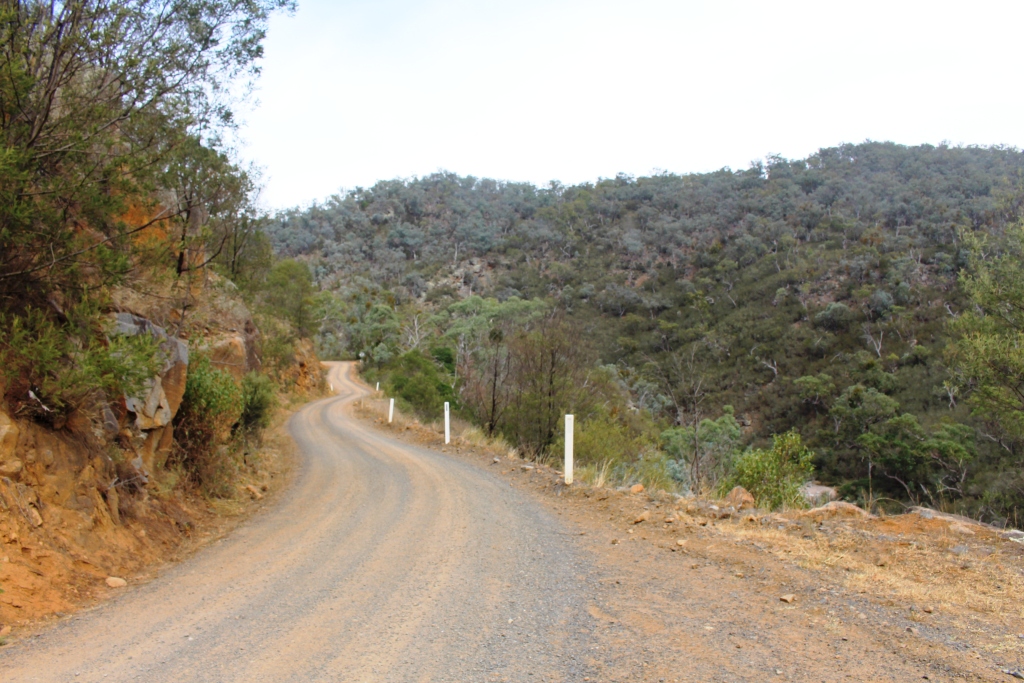
The road that we took today is the same one that we travelled that day, as we continued our journey. It is the Bonang Gelantipy Road and intersects with the Bonang Highway about 58 km south west of Bombala. The road is in very good condition and a good width most of the way but has some narrow mountain side sections. On the way in we only met one vehicle in the 65 km of mostly gravel winding road. There was a bit more activity at the bridge, including four motorbikes that we had seen roadside on our way in. We met a few vehicles on our way out, but this is lonely country.

The photos will tell the rest of the story.

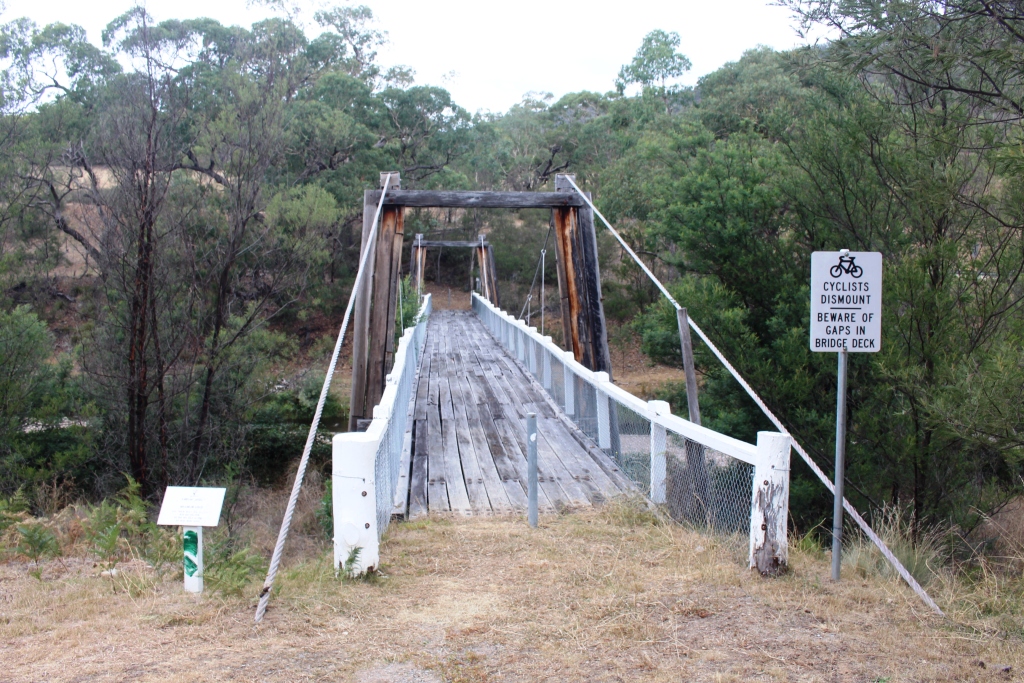
The Ambyne suspension bridge

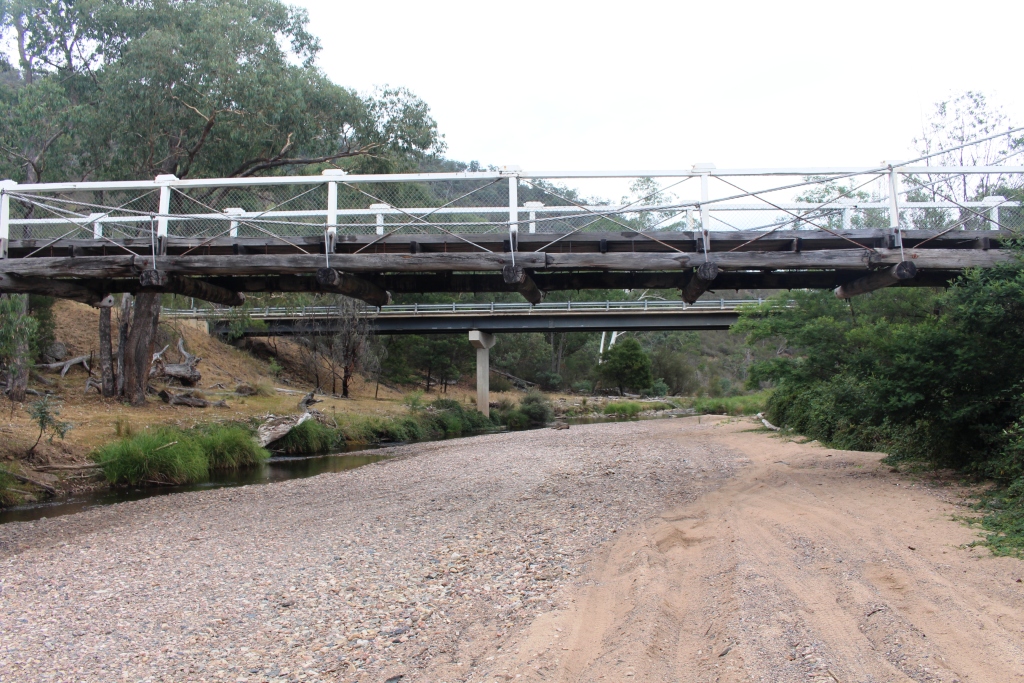
We found another bridge of historical significance. The Ambyne Suspension Bridge was built in 1935, partly from material salvaged from the flood stricken first McKillops Bridge. It is now, after restoration, for pedestrian use only, but more importantly, to preserve an example of the construction method developed by the Victorian Country Roads Board for use in that state. The bridge was closed to vehicular traffic in the late 1970s.

The suspension bridge and newer road bridge from the near dry bed of the Deddick River

On our arrival back at the caravan, it was evident that a decent shower had gone through in our absence. Rain started again at dusk.

It rained overnight but again was fine for us to pack up. But our run of luck ended when we arrived at Marlo, the small town at the mouth of the Snowy River. As we drove onto our site at just after midday a squall blew through with strong wind and heavy rain. We took refuge in the van and had lunch while we waited for it to blow through. We are here for two nights. Cold wind and rain are predicted. But it is cold everywhere.

Main street, Bombala

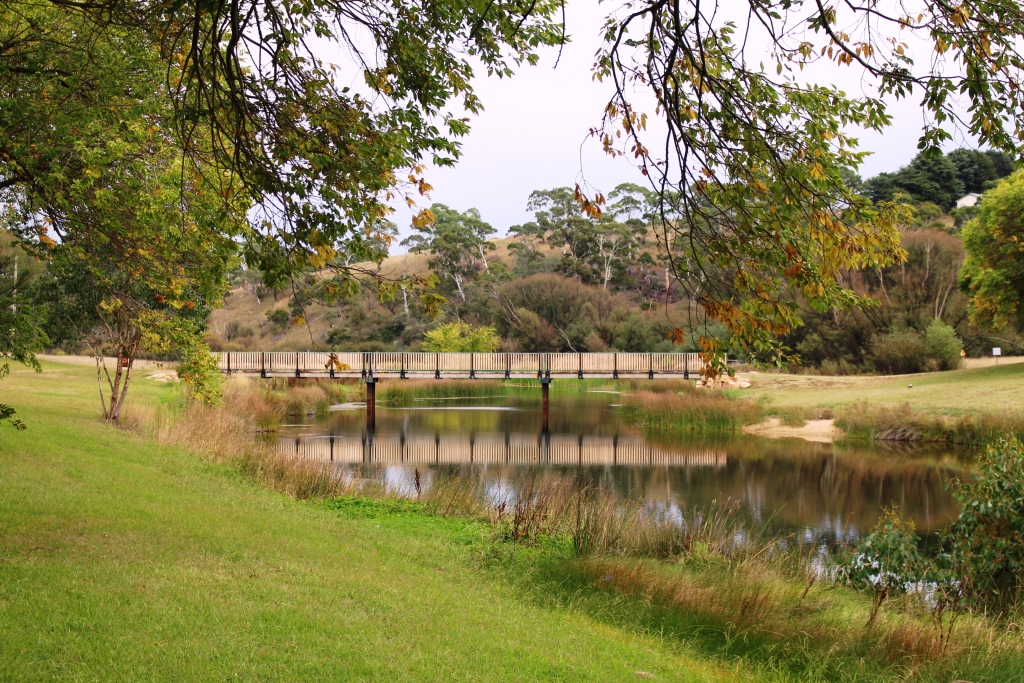
Footbridge over the Bombala River in the bicentennial gardens

Hitched up and ready to roll at Bombala caravan park

Which is why we are here and not at Adaminaby, as planned. Overnight temperatures on the coast will be down to 10C for the next couple of mornings. On the other side of the range they are forecast to be much lower. And that raises the prospect of icy roads, not something that you want when towing a caravan. But we are not yet finished with the mountains. After a lay day here we will turn back inland for a couple of days. Temperatures are forecast to be on the rise. Possibly Up to 26C on Thursday.

Sydney 2017 and the “Big Birthday Bash”

We have just returned from a 20 day excursion to Sydney. A visit to Sydney for daughter Briony’s birthday celebrations (she likes to refer to it as her “f” birthday) had been intended as the first part of a rather longer trip, but circumstance necessitated a return to Brisbane for a few days. We hope to set off again around the middle of March, unless something else happens to derail the plan.

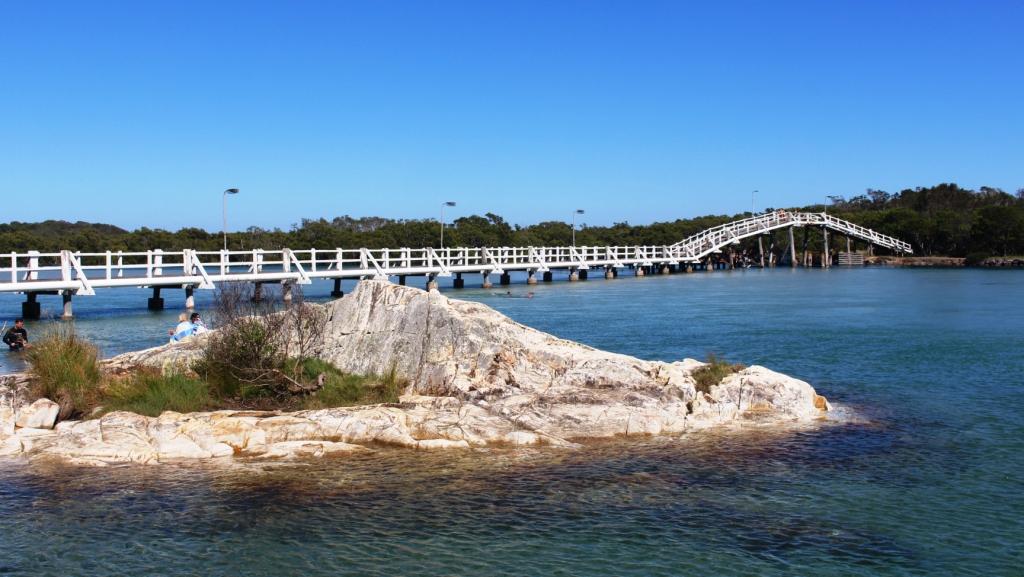
The foot bridge near the mouth of South West Rocks Creek

We left Brisbane on 27th January for Maclean, on the Clarence River, where we paused for a night to call on Ruth’s youngest sister Kathy and her husband Barry, who live in the area. We then had a couple of days set aside for the Gloucester and Barrington area but high inland temperatures persuaded us that it was much smarter to stay on the coast.

The result was two nights at South

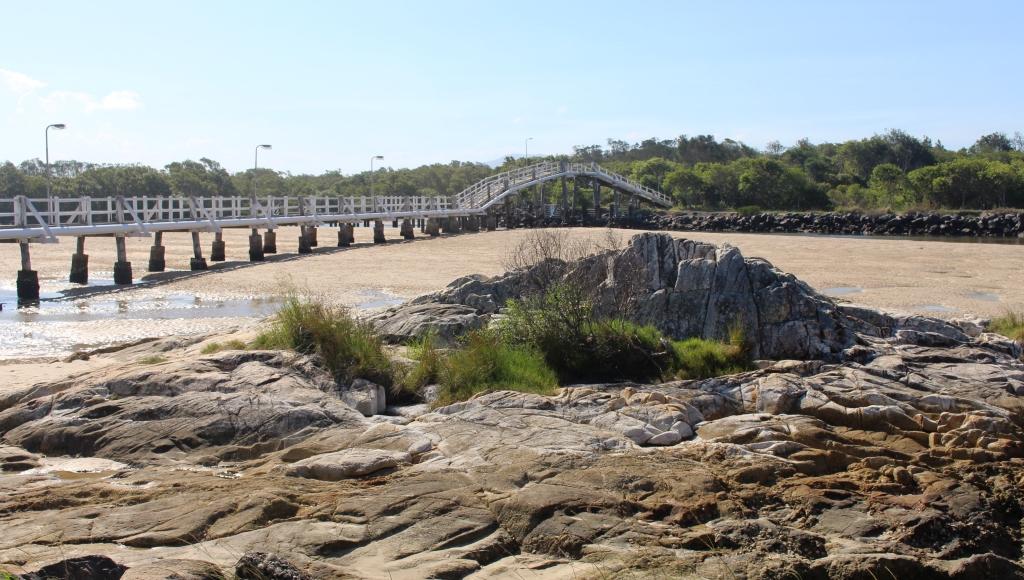
The same bridge with the tide out

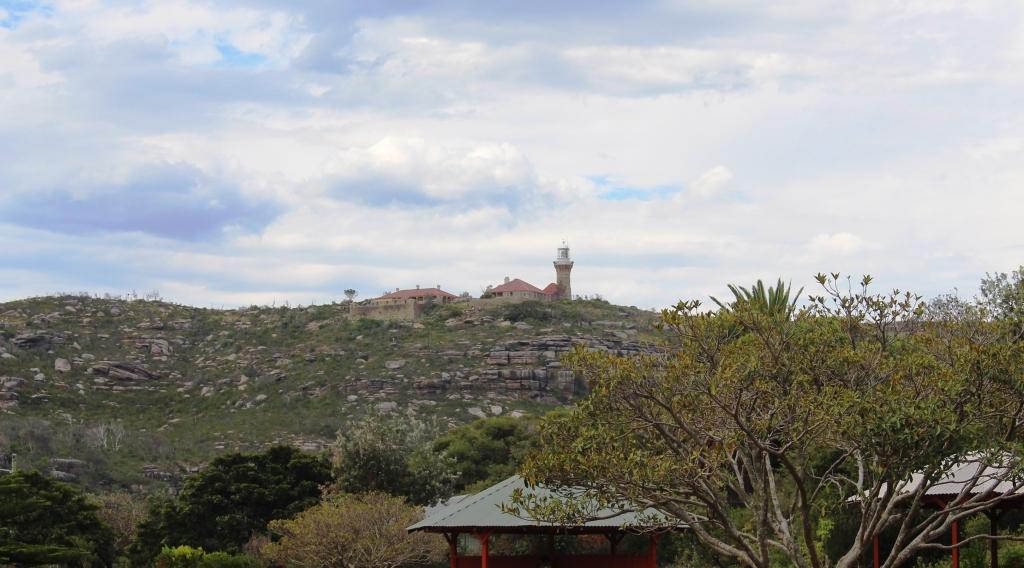
West Rocks, which increased to four nights when we saw how hot it was to be at our intended next destination, just to the north of Newcastle. So we opted for temperatures in the low 30s instead of the low 40s. We used the time to enjoy sea breezes, check out South West Rocks and the adjacent area of Trial Bay. We drove out to Smokey Cape where I climbed up to the lighthouse to take in and photograph the 360 degree views.

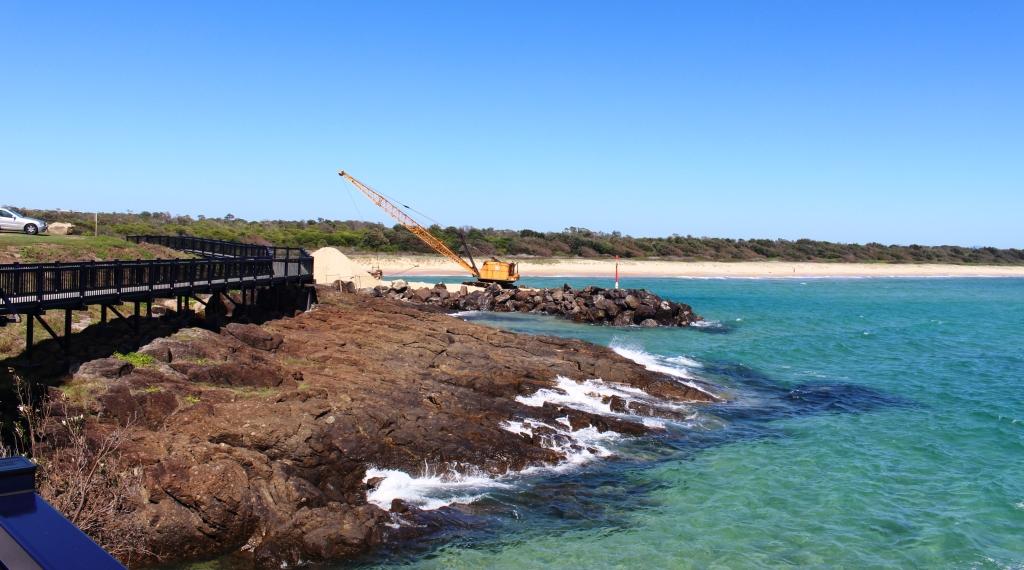
Dredging at the mouth of South West Rocks Creek

The actual South West Rocks at South West Rocks. The town’s name was derived from the instruction giver to early ships captains to “Anchor with the rocks to the south west”.

View over Trial Bay to the old prison on the point

The beach side caravan park. We were at a different park.

The old Trial Bay Goal, formally the home of convicts.

Smokey Cape lighthouse

Secluded bays to the north of the lighthouse are accessed mostly by walking tracks.

The view to the south of the lighthouse towards Hat Head

We spent the next evening parked in my Brother Ivan’s driveway at Woodberry while we enjoyed hospitality provided by Ivan and Marjorie, his wife. Next day, a lunch stop at West Wallsend allowed us to spend time with Ruth’s Sister Judy and husband Alan and one of Ruth’s cousins and husband. Then it was on to Sydney to our space at the Lane Cove River Tourist Park on the edge of the Lane Cove National Park, at suburban Macquarie Park.

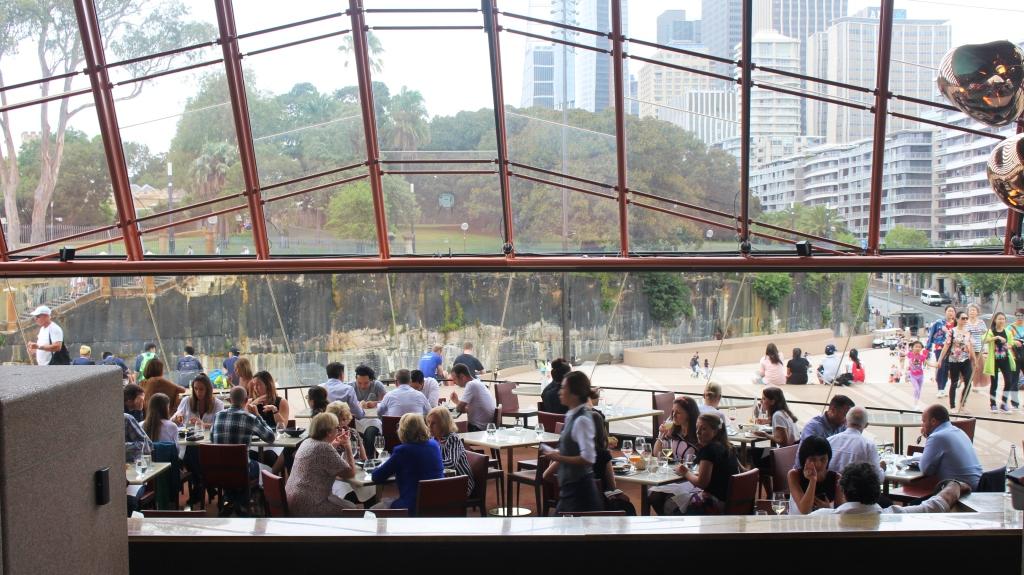
Bennelong Restaurant at the Sydney Opera House

All this brought us to the day. February 3rd is Briony’s birthday. Don’t tell her that I told you, but counting this one, she has had 40 of them. This was a BIG one.

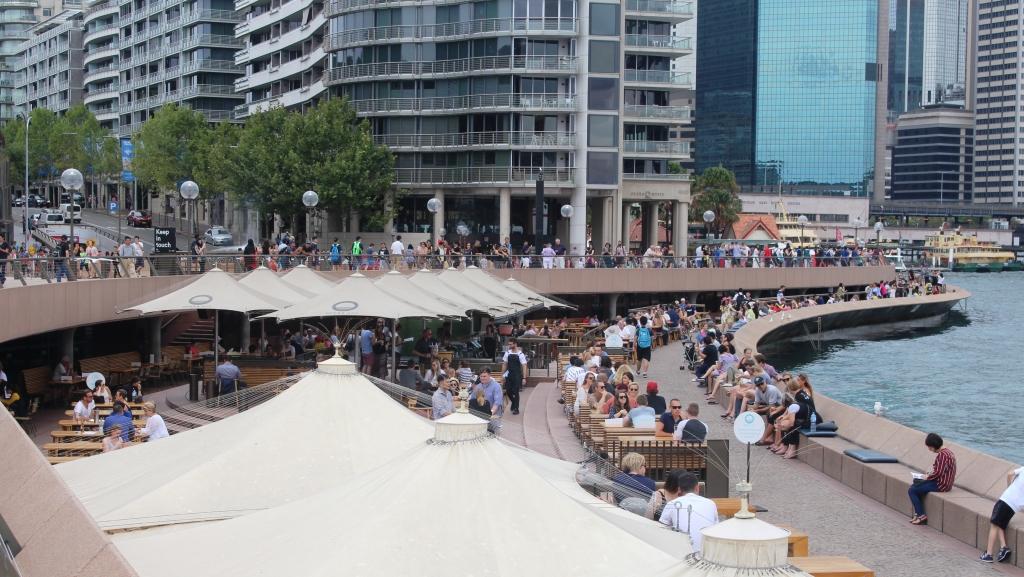
We made our way to Briony’s Erskineville unit, arriving just before lunch. With Briony and her house guest Tiani, over from Perth for the celebrations, we made our way into Sydney for a delightful lunch at the Bennelong Restaurant at the Sydney Opera House. Excellent food and service, outstanding views and the reason that we were there, made it an event to remember.

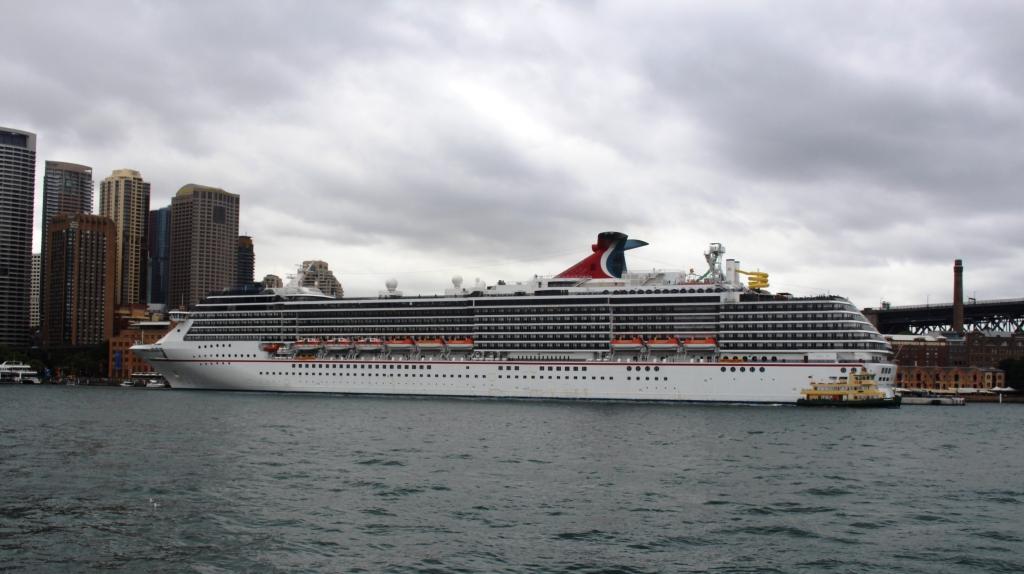
We had great views of a cruise liner from the restaurant.

Time then for a bit of a rest while the guest of honor visited the hair dresser and then it was time for the main event. Briony had booked an upstairs room at the Rose of Australia Hotel at Erskineville. The event was a cocktail party with finger food. The 75 guests, about 20 of whom travelled from Brisbane for the occasion, were adequately provided with both food and drink. For us it was an evening of meeting friends whose names we knew from Briony’s interaction with them on Facebook and renewing some old acquaintances. We met some of Briony’s Sydney friends for the first time.

The general restaurant and bar area at the Opera House.

The following day Briony had arranged for bare foot bowls and lunch at the Erskineville Bowls Club but the day was hot and only the hardy saw the game to its conclusion. I retired to the shade and a long cool drink after bowling only two ends. Ruth had opted to be a spectator.


The lighthouse on Barrenjoey Headland at the northern end of Palm Beach.

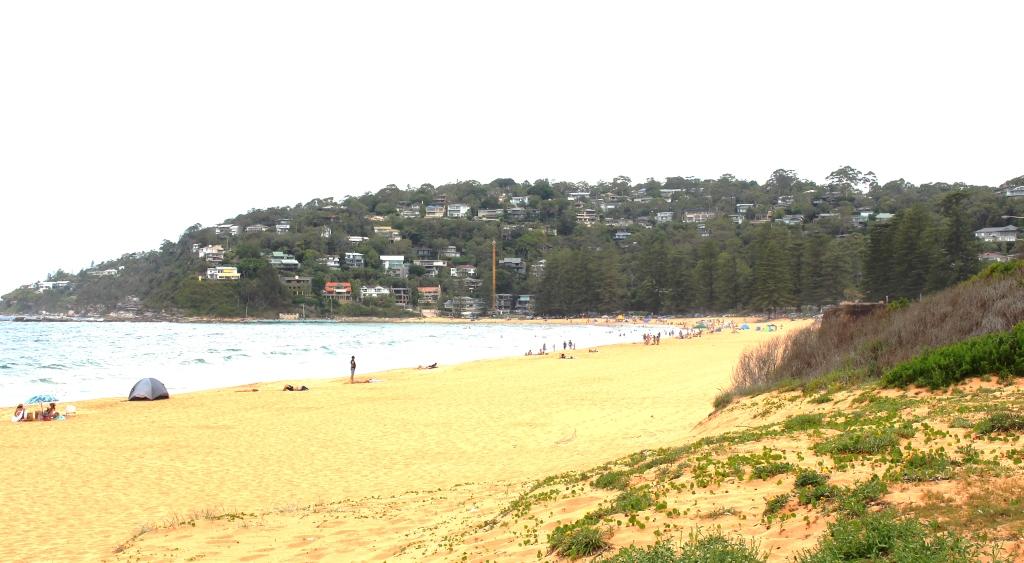
We then had two quite hot days to get through before we left Sydney to go further south. The first we split between lunch at a local shopping mall and a drive to Palm Beach. The air-conditioning in the car was almost as good as the cool of the shopping mall but had the additional advantage of the fantastic views of and from Sydney’s northern beaches.

Luxury homes overlooking Palm Beach

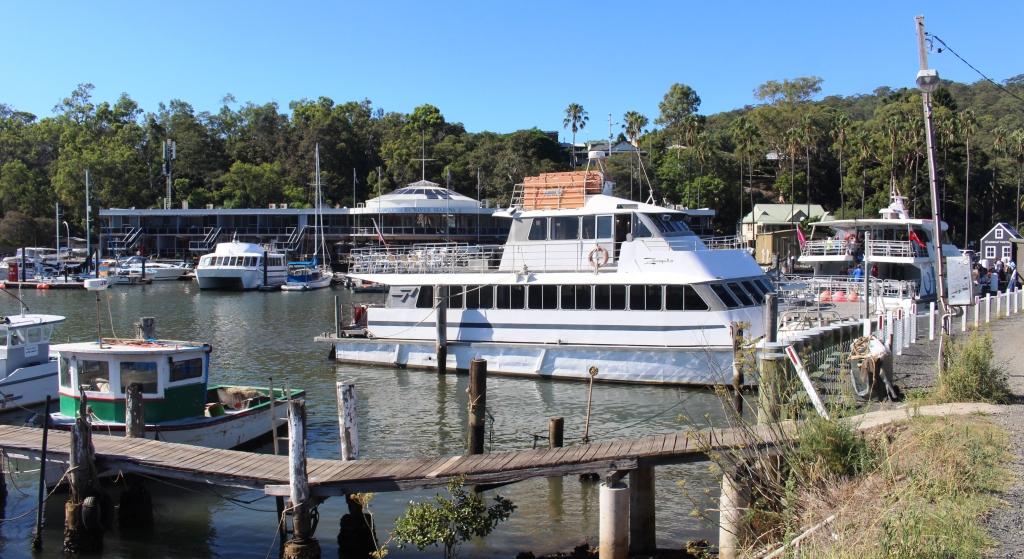
Our ferry at the Brooklyn ferry terminal.

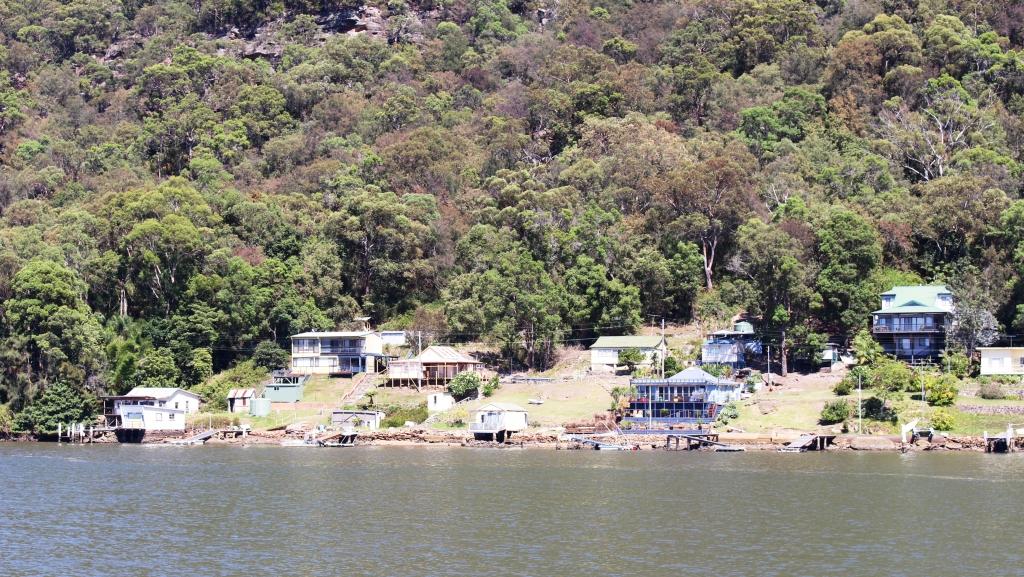
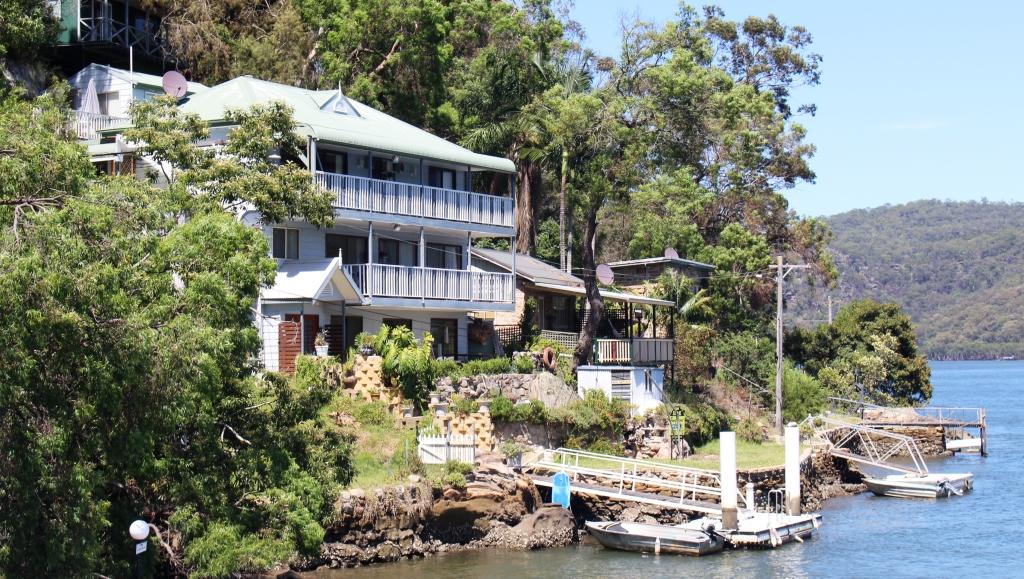
On the second hot day, the Monday, we had booked a cruise with the Riverboat Mailman on the Hawkesbury River. An air-conditioned passenger catamaran fulfils the twin functions of providing an informative and scenic tour of part of the river north of Brooklyn and delivering the mail to a number of small riverside communities.

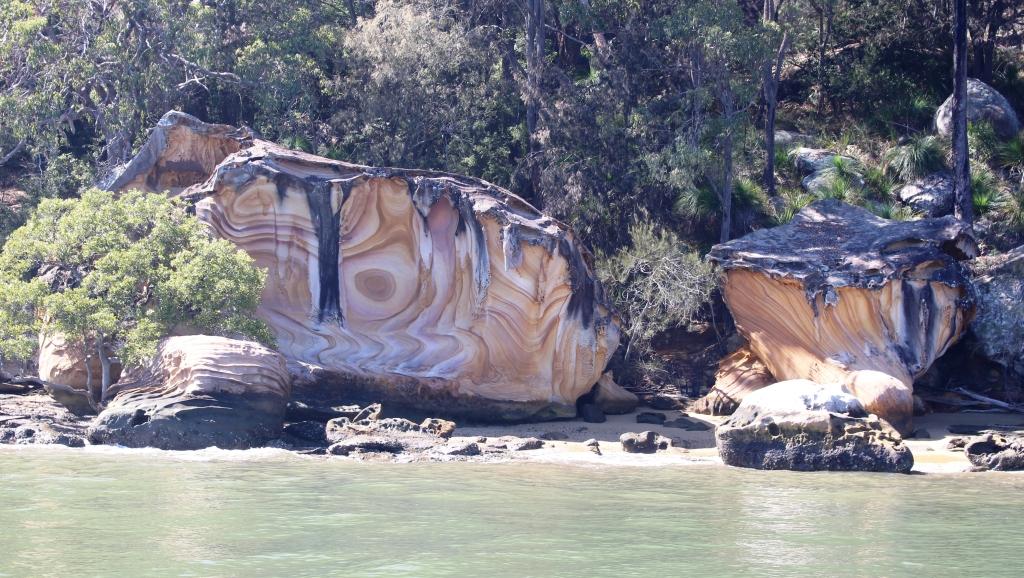
Naturally decorative rocks on the shore of Long Island Nature Reserve near Brooklyn

The tour lasts for three hours, includes morning tea and lunch and includes delivery and collection of mail to the small river communities whose only access to the outside world is by the river. Mario, the skipper, provided an interesting and at times humorous commentary about the history of the river and life upon its banks. The passage of the boat provided cooling breezes that supplemented the AC and made life on the upper deck tolerable, but only for short periods. The mercury was at around 38 Celsius.

The road bridges over the Hawkesbury near Brooklyn. The new highway bridge is on the left.

A small community on the river

A real estate investment opportunity at Marlow, the most distant mail drop of the day.

A derelict oyster wharf near the site of the former Sheather’s Wharf.

When the cruise finished at 1.00 pm we still had half of a hot day to deal with, so we went in search of Sheather’s Wharf. We had seen a photo in our local pharmacy’s calendar of this jetty. Not everyone has a wharf in the family. Naturally we wanted to see it. Alas, it is no more but appears to have been demolished relatively recently to make way for a marina and restaurant. I photographed its poor relation near by to give you the idea. If you want to see the real thing simply Google “Sheather’s Wharf” and you will see it in all its splendour. If I were to reproduce the photo here I would probably be breaching someones copyright.

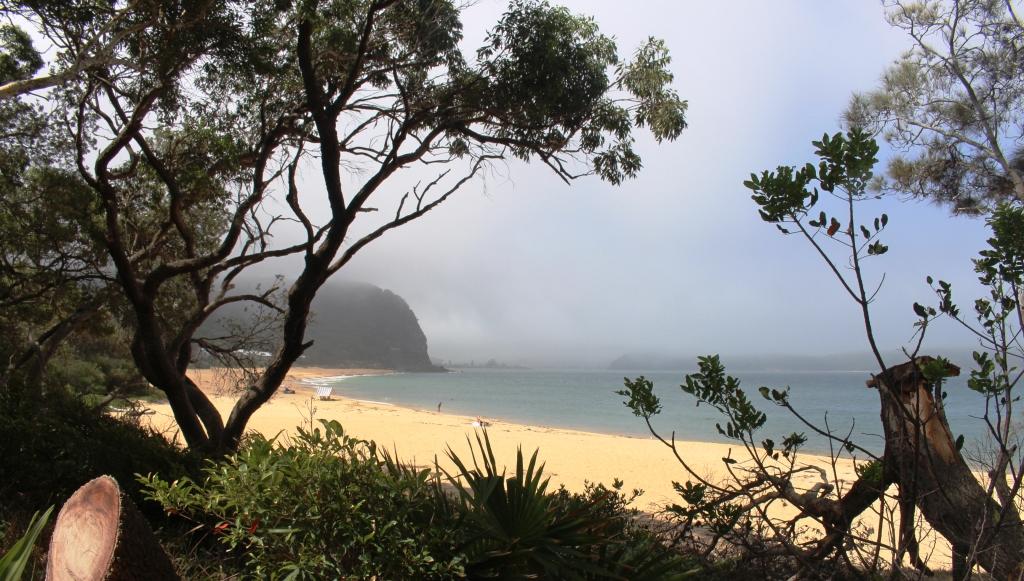
Fog obscuring the view near Patonga.

Because I had never been there before, we drove on to Patonga. This small hamlet is located on a beach on the northern shore of the Hawkesbury. Glimpses of Barrenjoey Headland are to be had from the right spot. A passenger ferry service links the town to Palm Beach.

The surprise to me of the area was the thick banks of fog rolling in on such a hot day. There was not much wind so the fog was rolling in slowly, obscuring the scenery as it rolled.

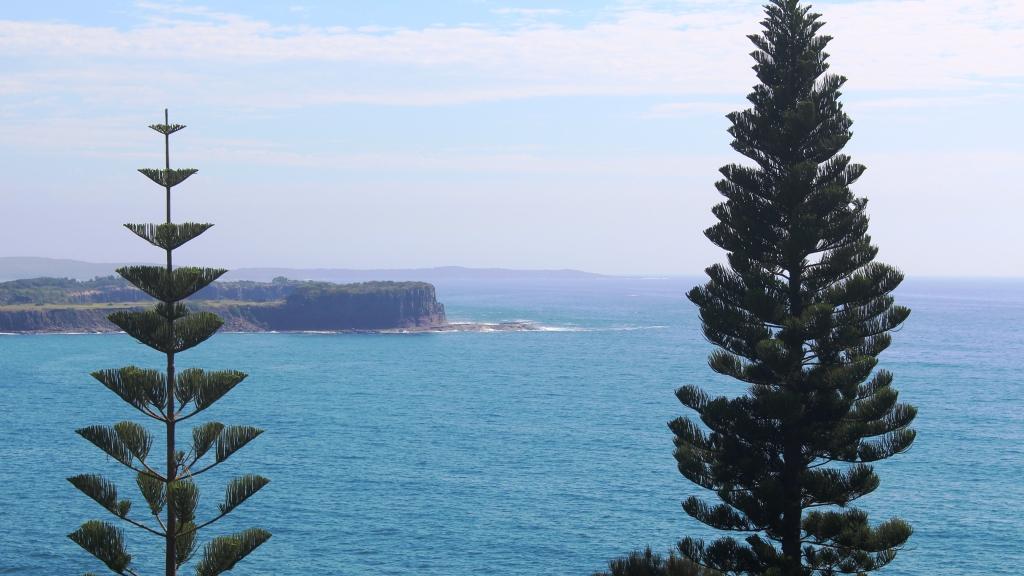
Point Perpendicular would you believe? It is located just north of Kiama.

The plan had been to move on to Camden for three nights before heading home, but the weather intervened again. Temperatures in the low 40s were predicted for the days that we were to head back north so, as a compromise, we decided to stay on the coast and booked six nights at Shellharbour, just south of Wollongong.


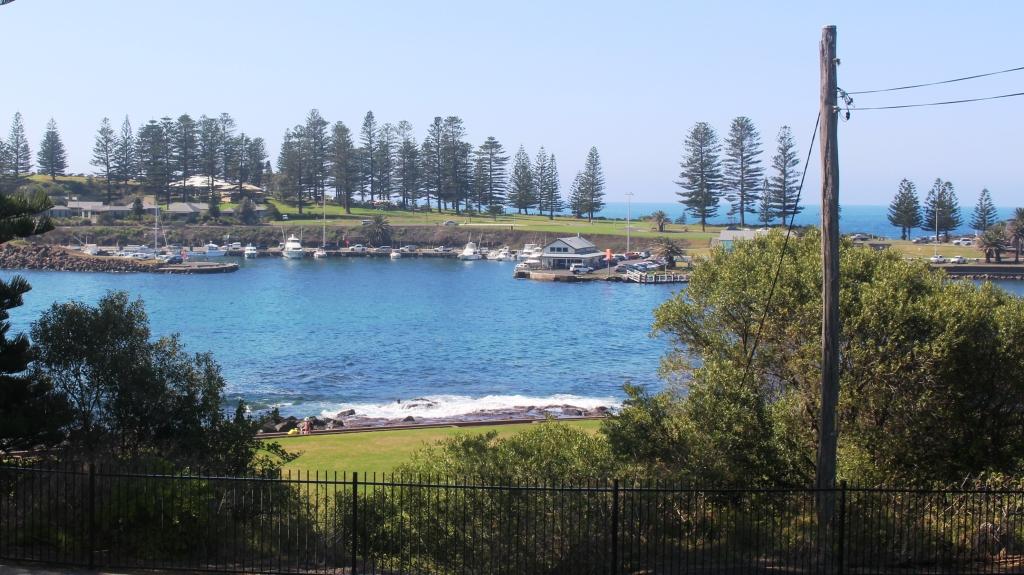
Kiama harbour and headland

So on Tuesday we drove to Shellharbour. After packing up in drizzling rain we drove through a thunder storm as we crossed Sydney’s near western suburbs and then, at the top of the range before descending to Wollongong, we struck fog so thick that the road side warning signs instructed us to turn on our hazard lights. That has never happened to us before. It was a bit spooky driving down a very steep gradient with no visibility and have sets of flashing lights coming out of the fog behind us and disappearing again into it ahead of us. Thankfully we were on a divided highway.

The view from the Shellharbour Caravan Park.

The caravan park at Shellharbour is on a headland and rather exposed. On Tuesday evening a rain cell made its way up the coast from the south and tipped torrents of rain onto us for about three hours. There were reports of flash flooding next morning but we didn’t see any excess water as we made our way to Bowral.

Ruth’s youngest brother Wallace and his wife Ginny have been residents of Bowral for many years. We have visited them many times before but never via the Macquarie Pass. Bowral has an altitude of 680 metres while Shellharbour is at about 10 meters, so it is a sharp ascent. Part way up, the rain started again and the fog came down. No divided highway today but the winding road was mercifully quiet.

We spent a pleasant day with Wall and Ginny and many mutual experiences were relived. We than took ourselves off to visit Ruth’s younger half-sister Dorothy and her husband Peter, where we enjoyed dinner and the company of their two daughters and one boyfriend and spent the night in a comfortable air-conditioned room.

The Brackens are a working family so it was an early start to be out of their way as they commenced their day. Our next call was with retired friends who live in a retirement complex on the northern beaches of Wollongong. Marion is a friend from Ruth’s childhood. I have known her and Cliff, her husband, since their marriage. They stayed with us on their honeymoon trip to Tasmania all those years ago, when we lived in suburban Melbourne. Again much reminiscing! How good those old times were! That’s how we remember them, anyway.
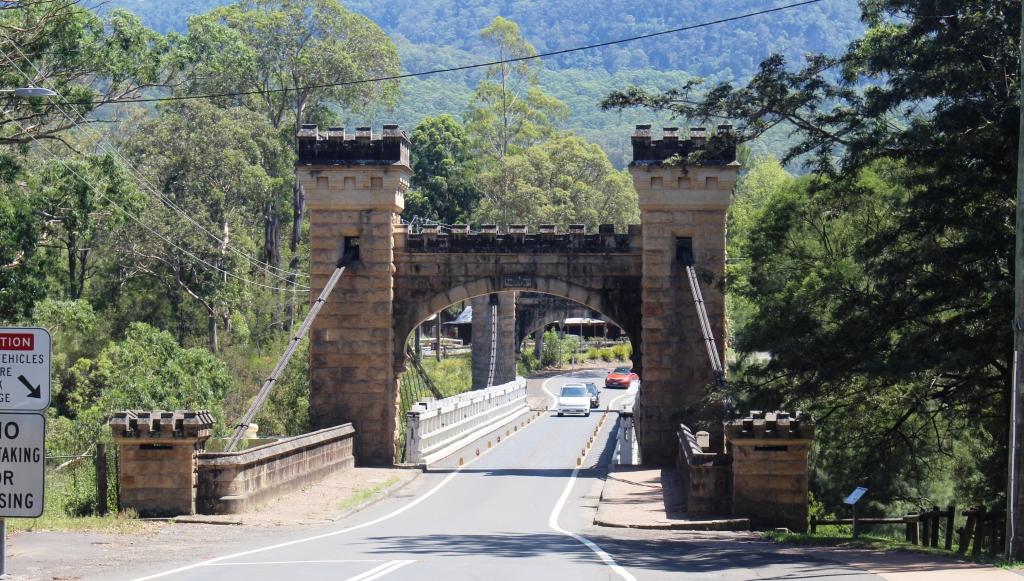
Hampden Bridge in the Kangaroo Valley, inland from Kiama.

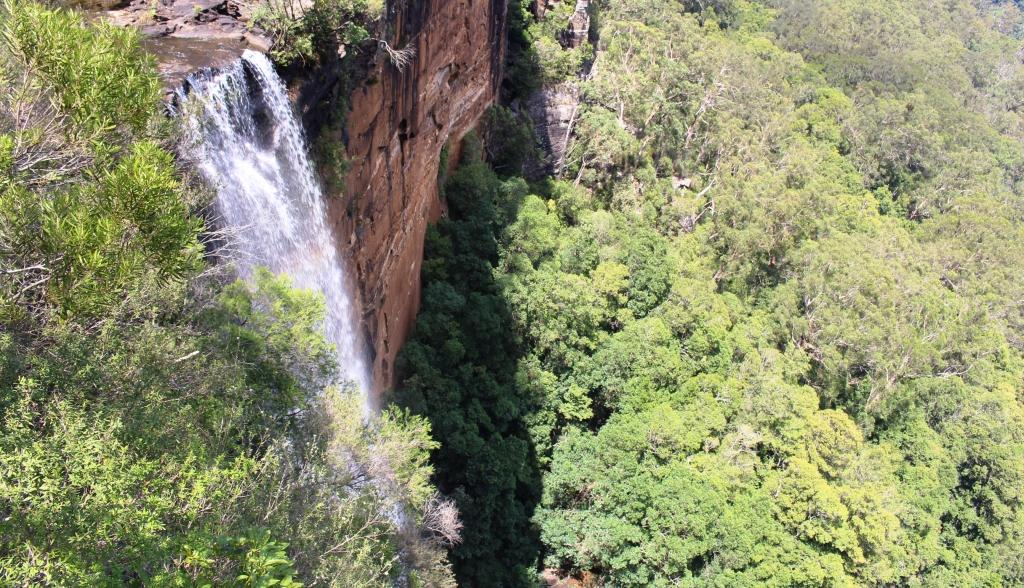
We now were faced with a hot Friday and weekend, before we made our way home. Friday was spent partly shopping, partly sitting in the sea breeze and the rest in the relative comfort of the caravan. On Sunday we opted for the AC in the car again and went for a drive. First to Kiama and then inland, over the coastal range to Kangaroo Valley and then up the escarpment to Fitzroy Falls. The walk to the falls, although short was warm, with the temperature around 38. I walked on another 800 meters to another

Fitzroy Falls up close …

viewing point for the falls and wondered part way if that was a wise move, but I made it back without harm.

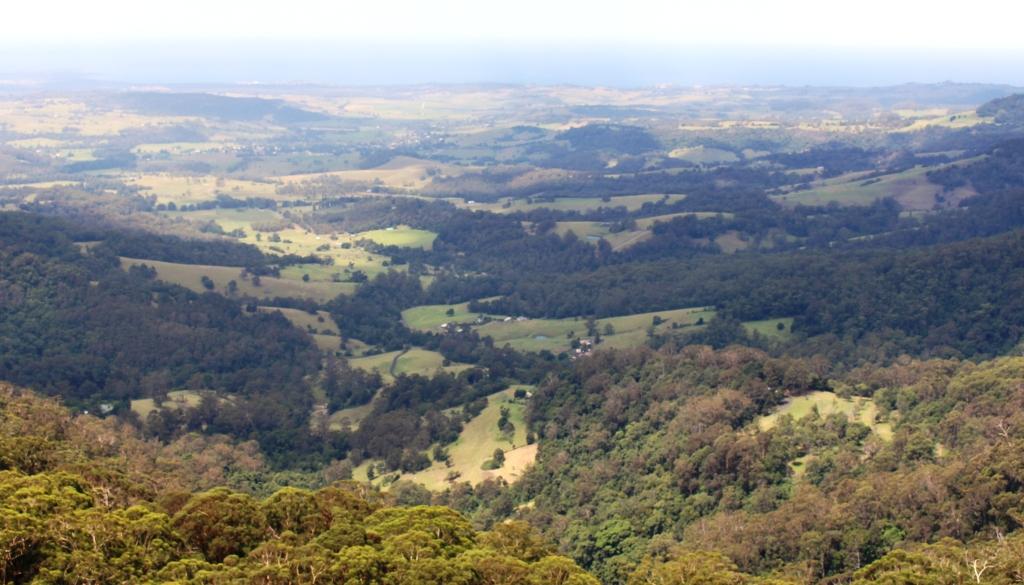
We lunched and then returned down the mountain by a different road, calling in to an excellent lookout that provided views over the coastal plain around Kiama before returning to the van via the rather attractive rural town of

… and from a vantage point gained by a hot 500 meter walk in 38 degrees.

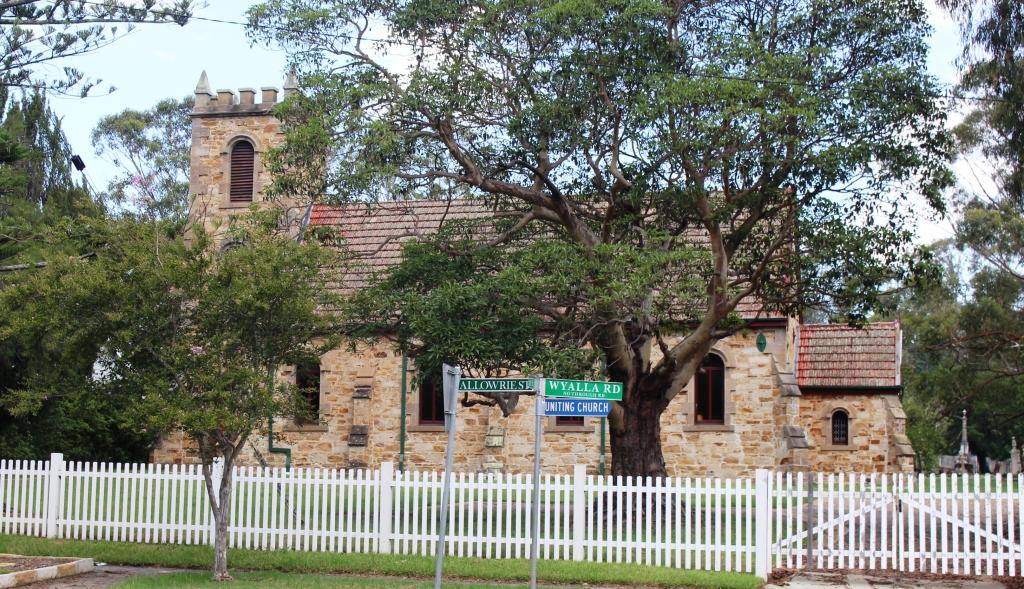
Jamberoo, with its streets lined with flowering trees and its quaint brick churches complete with square battlement topped steeples.


A view over the coastal plane near Kiama.

Formally a church, this historic building is now a restaurant.

This cliff foot Sea Cliff Bridge spans the breakers beneath.

The weather cooled on Sunday and was much more pleasant. Initially we drove north along the coast to Stanwell Park, past the many historic coal mining towns and over that stretch of highway built out over the ocean around the foot of the cliffs. We did that drive from both directions with the action video camera in operation. The results are attached for you to see.

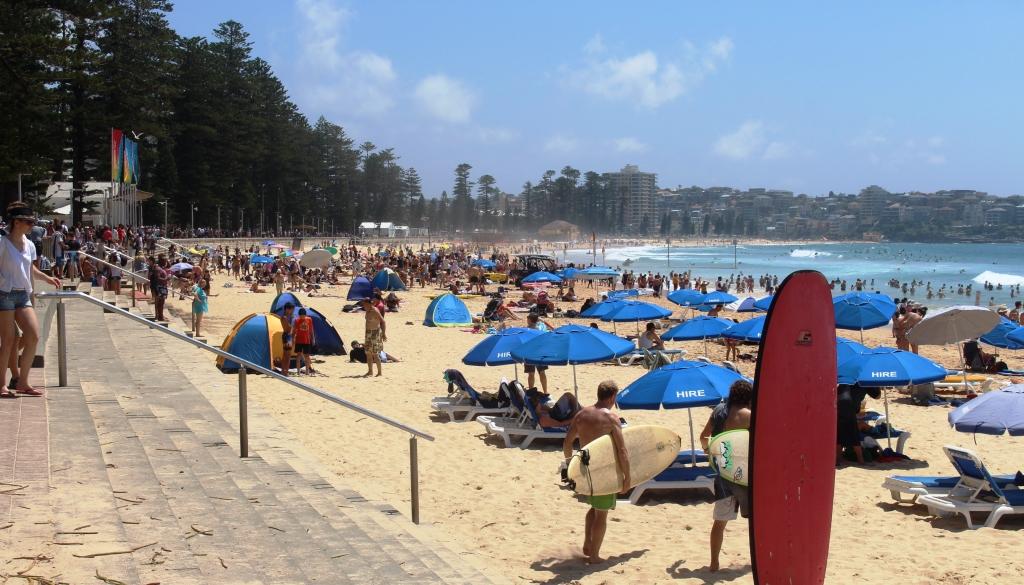
Busy Manly Beach

From Stanwell Park we drove up to Helensburgh, parked the car and caught the train to Sydney. Circumstance had prevented us from going afloat on Sydney Harbour and we had never before travelled into the city from the south by train. The tip took an hour to Circular Quay where we caught the ferry to Manly.

Manly was a popular place that day. The crowd on the ferry was reminiscent of a morning commute. But the sun was out and so were the pleasure craft. Having sailed my own yacht on Sydney Harbour I derive much pleasure from watching the variety of craft on its waters.

Another cruise liner at the Circular Quay passenger terminal.

The beach was busy with a couple of surf related activities under way which partly explained the crowds. We found a vacant table on the footpath at a restaurant within view of the beach and within reach of the sea breeze, where we dined on good old Sydney sea food.

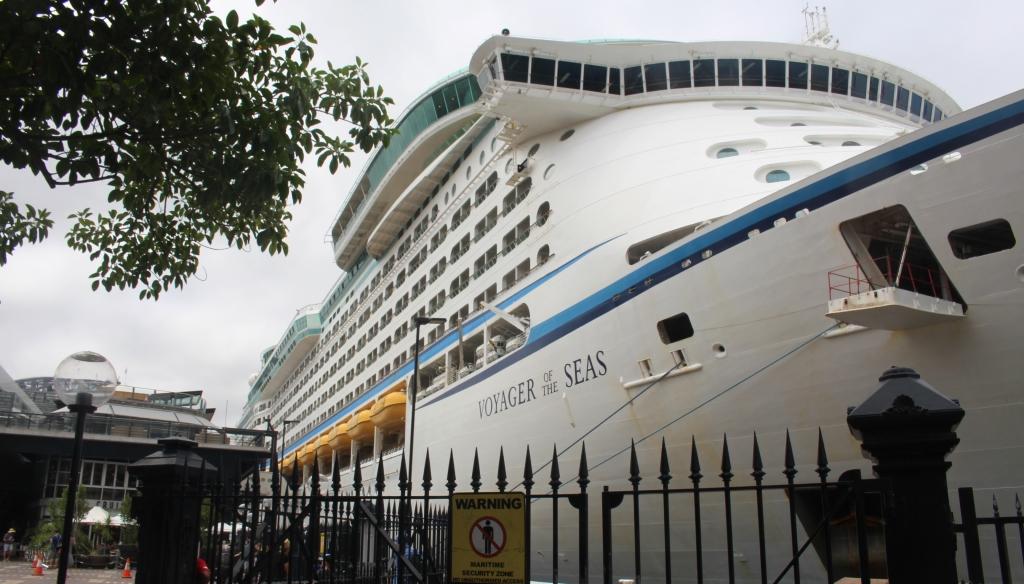
Lunch over, we made our way back by ferry and  at Circular Quay, took a walk to see the cruise ship “Voyager of the Seas” that was in at the adjacent cruise liner birth. Then we were back on the train to Helensburgh.

The south coast of NSW near Wollongong as viewed from Sublime Point.

On the way back to Shellharbour we called in at Sublime Point for that stunning view of Wollongong and travelled down Bulli Pass to remind ourselves why we do not use that road when towing the caravan.

On Monday morning we were homeward bound! We spent Monday night with my Brother near Newcastle to make up for the night that we had missed on the way south.

Although I had lived in the area in my early years I had never been on what was the Old Pacific Highway that ran through Gloucester and Krambach to Taree. These days, it is called The Buckets Way. So this time we did the detour. Much of the road needs maintenance but parts have been rebuilt. It is quite a pretty drive.

Two more nights spent one each at Old Bar, near Taree, and Ballina and we were home again, just before lunch on Thursday.

Here is the video of the drive along the Sea Cliff Bridge near Wollongong.

A Drive Along the Sea Cliff Bridge

West, Centre & Flinders – Video Page

I have started the process of turning our photographs and video clips into videos. The first is a compilation of the wild flowers that we photographed during the trip. The first shots were taken near Blackall in Western Queensland and the last between St. George and Dalby.

We loved the extensive blankets of blooms over so much of the country side so broad expenses dominate, rather than individual blooms. We hope you enjoy the beauty.

West, Centre & Flinders – Days 61 to 68 – Homeward Bound


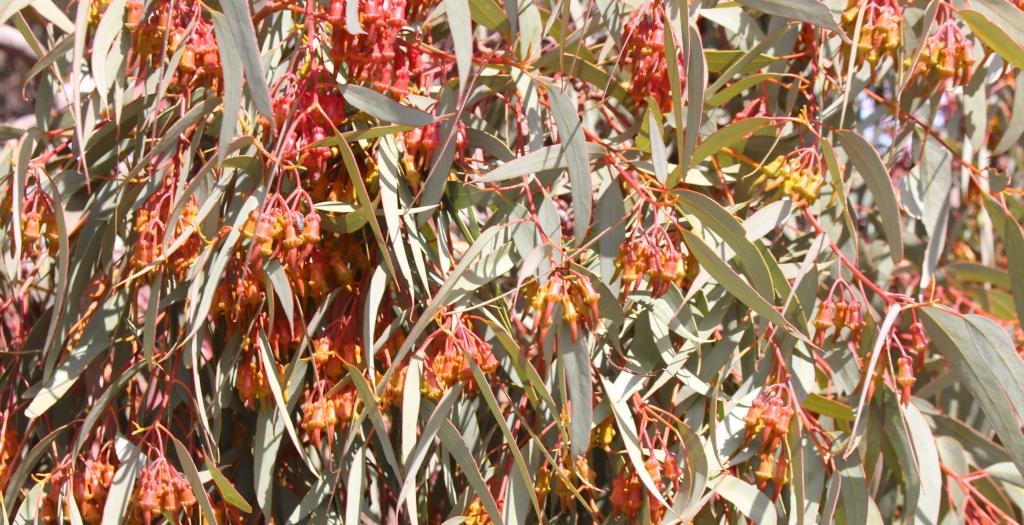
We stopped for lunch near a flowering gum tree

We stopped for lunch near a flowering gum treeWe gave ourselves an easy day on Saturday with only 137 kilometres to the steam museum town of Peterborough. This reasonably substantial town is on the main Sydney to Adelaide railway line, which is also the line on which ore mined in Broken Hill makes its way to the smelter at Port Pirie. Peterborough was a major rail town during the days of steam. It now uses its heritage as a tourist attraction.

The day had improved by the time we had booked into the Peterborough Caravan Park but a chilly night followed. Sunday morning was overcast, but as we made our way to Broken Hill the clouds made way for real warmth from the sun.

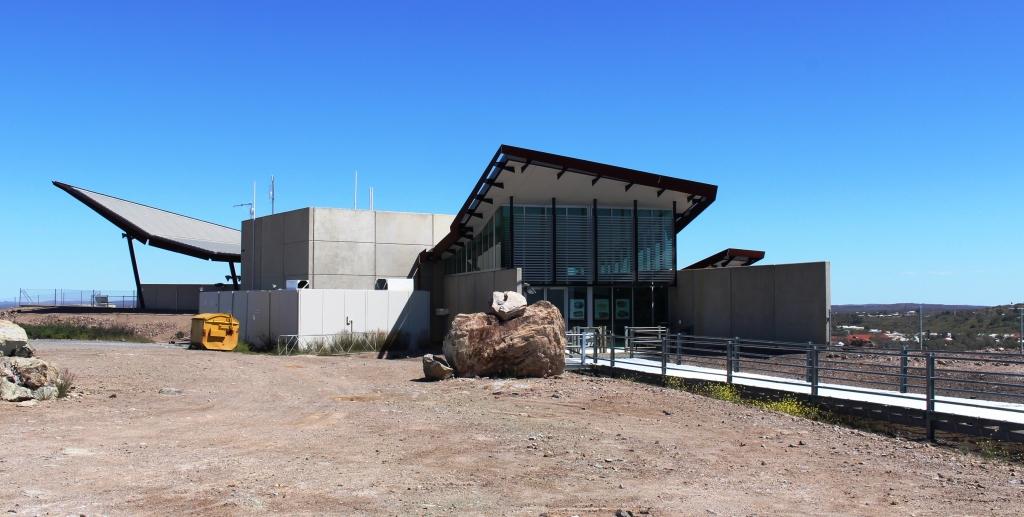
The restaurant building at the Miners' Memorial.

The restaurant building at the Miners’ Memorial.

We booked two nights at Broken Hill to allow for shopping for the final days to home but also to allow us to do the tourist thing. We drove to the Miners’ Memorial at the top of the huge mullock heap that separates the town from the mining area. We were disappointed to find the memorial buildings closed. The restaurant and adjoining gift shop that was so “in” when we were last there, seemed completely closed and the actual memorial building was closed for renovations as well.

Roadside flowers on the road to Silverton

Roadside flowers on the road to Silverton

After lunch we drove the 24 kilometres to the historic silver mining town of Silverton. Not much remains of the original town but most remaining buildings have been restored and “reading desk” type information signs provide details of restored buildings and some other features. The amount of vacant space between the remaining buildings and relics

With new owners the Silverton Coffee Shop may reopen.

With new owners the Silverton Coffee Shop may reopen.

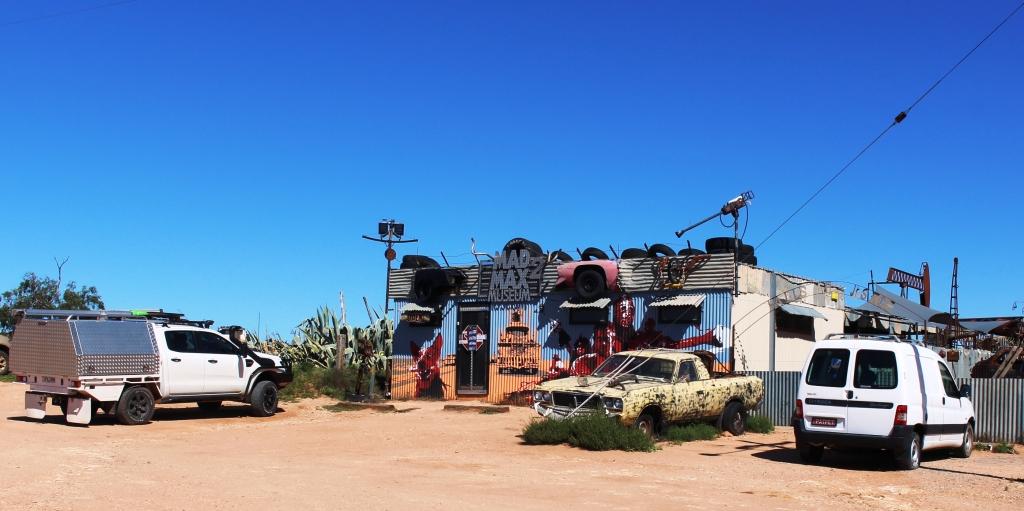
indicate that it was a substantial town. A coffee shop, still operating on our last visit, is now closed, although the building has been sold. The pub seems to do a good trade and the Mad Max Museum continues to pull in devotees. There are also two or three artists who work from galleries in the town.


Silverton's Mad Max Museum

Silverton’s Mad Max Museum

The approach to the Day Dream Silver Mine passes the old smelter flue on the hilltop

The approach to the Day Dream Silver Mine passes the old smelter flue on the hilltop

This visit we did the side trip to the Day Dream Silver Mine, where I did the underground tour. The mine is about 15 kilometres off the Silverton Road. In its day the mine was a rich source of silver with its own smelter sighted on a neighboring hill top to take advantage of gravity to assist the smelting process. The tour visited points of interest on the surface before we donned hard hats with miner’s lights for the underground portion of the tour.

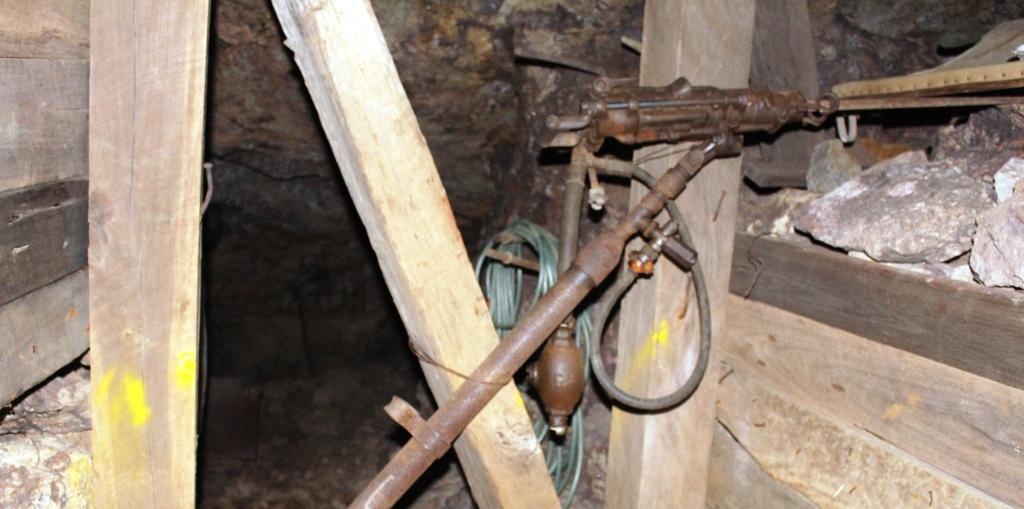
Mining equipment under ground. Visitors can stand at the drill and gain some idea of what it was like to work in the mine.
Mining equipment under ground. Visitors can stand at the drill and gain some idea of what it was like to work in the mine.
The mine was quite deep, descending four levels. There were only a few steps, as the tour followed the sloping shaft that had itself followed the ore body into the bowls of the earth. The irregularities of the floor provided for secure footing and stout hand rails had been installed.


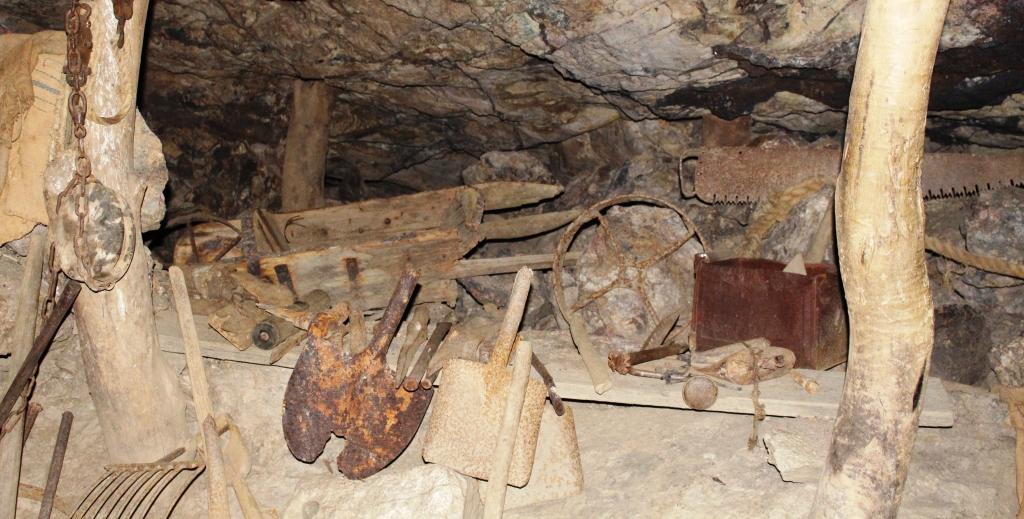
A display of mining tools in an area where the roof is supported by local timber.

A display of mining tools in an area where the roof is supported by local timber.

Mining tools, both manual and mechanical, were on display in appropriate locations throughout the mine. The guide was an experienced miner with a real gift for telling the mining story. To hear it all right where the underground activity occurred made it all very real. We finished the visit with a mug of tea and fresh scones, baked on the premises.

This photo was taken from the moving vehicle. There were no shoulders on the road to pull over.

This photo was taken from the moving vehicle. There were no shoulders on the road to pull over.

Tuesday was about making distance in an attempt to avoid rain and strong head winds. Cobar, yet another mining town, was our stopover destination for Tuesday evening. The only town between Broken Hill and Cobar is Wilcannia, where we stopped for fuel. After leaving Wilcannia the elevated roadway runs for several kilometres over Darling River flood plains, before entering low hills.

Massed floral displays between Bourke & Cunnamulla

Massed floral displays between Bourke & Cunnamulla

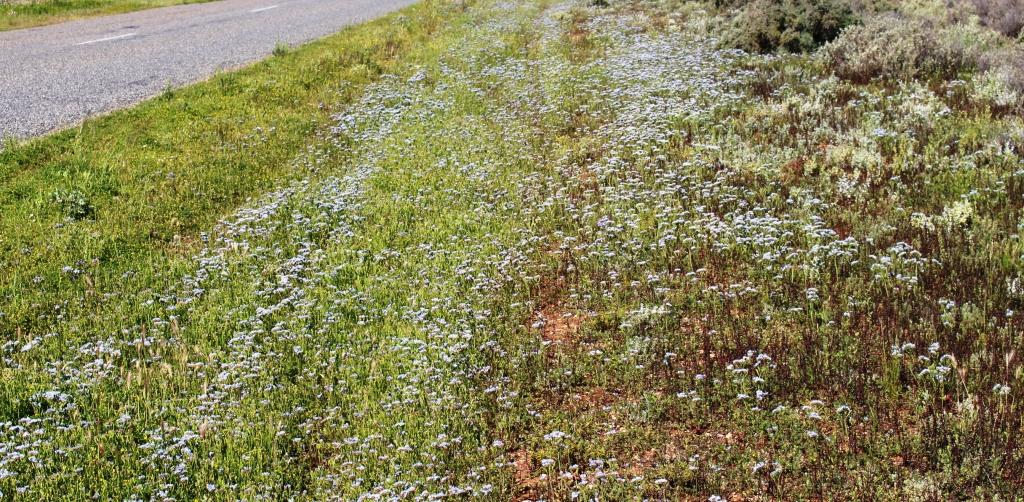
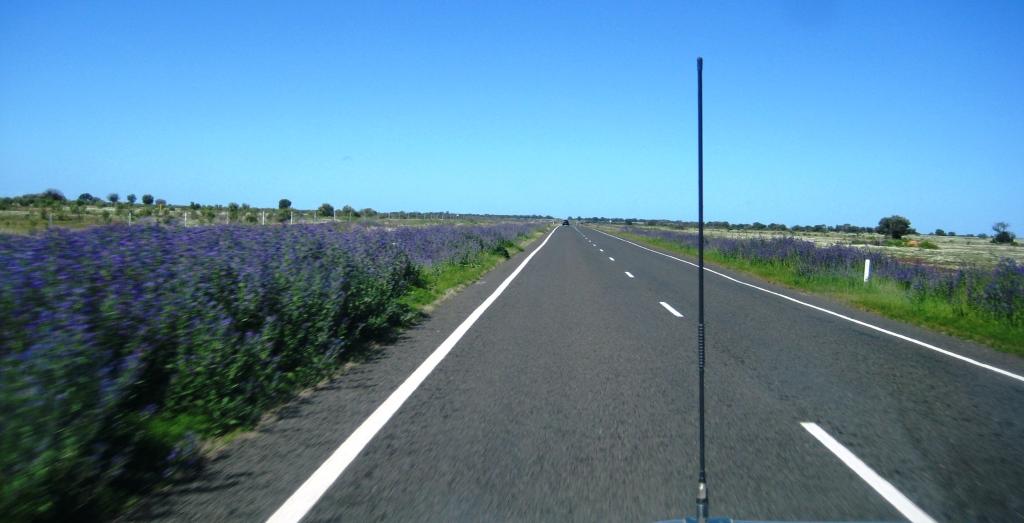
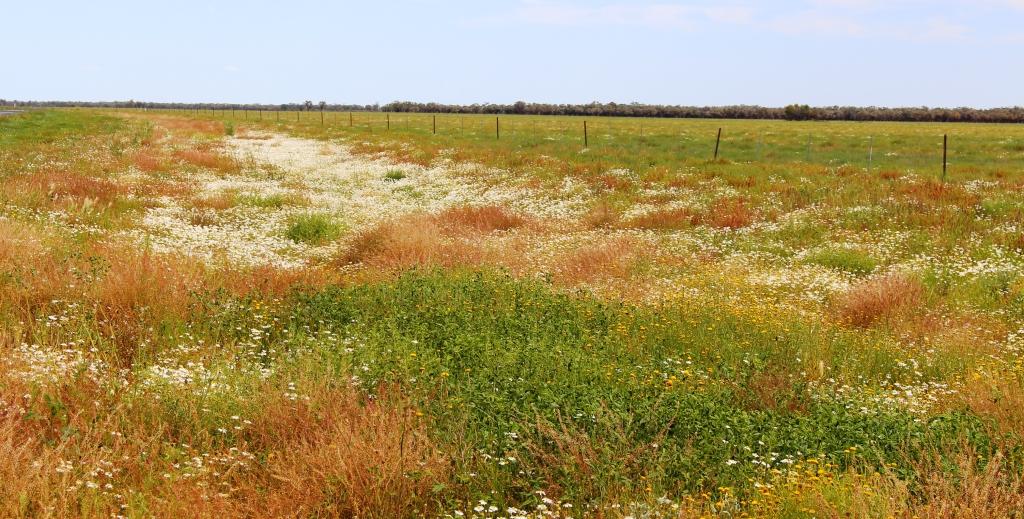
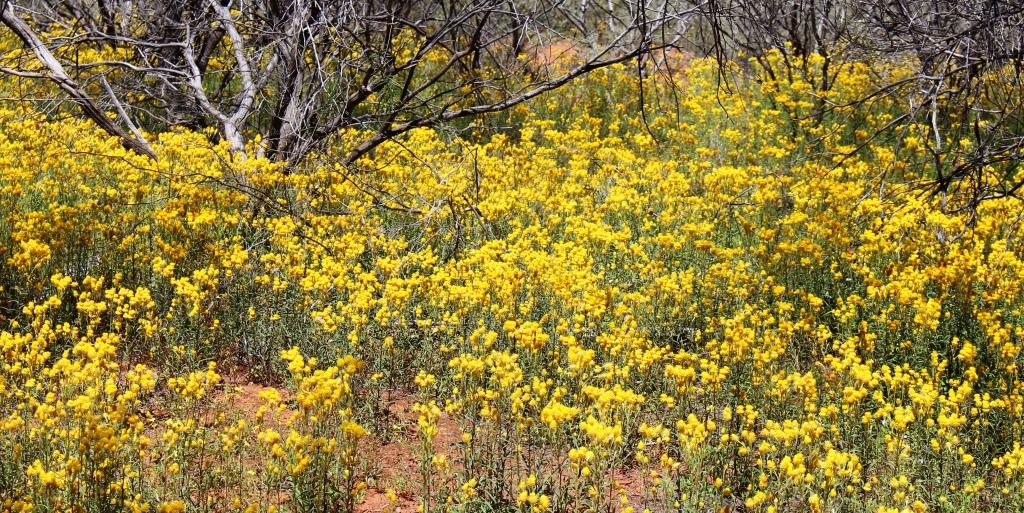
Generally the terrain is flat with only modest hills to provide some variety. Recent rain is evident from water lying beside the road and the abundance of greenery. And wild flower! The sides of the road were covered in masses of purple blooms. The purple is frequently interspersed with a variety of smaller flowers. Periodically the pastures are covered with masses of yellow and white. While watching such natural beauty, the kilometres and hours passed relatively quickly.

More roadside floral displays

More roadside floral displays

For the second day in succession we have driven past endless kilometres of road side gardens. Colours of white, blue, yellow, orange and shades of red have appeared like a planted garden against a background of the greens of grass, shrubs and trees. Periodically patches of white, yellow and red have run out of sight, between road side trees or reached in masses towards the horizon of the open fields.

The drive was between Cobar and Cunnamulla with a brief refueling stop at Bourke, a distance of around 415 kilometres. We saw the first evidence of the amount of rain that has fallen through the area. Up to now all we have seen, besides the rain, has been abundant grass and wild flowers.

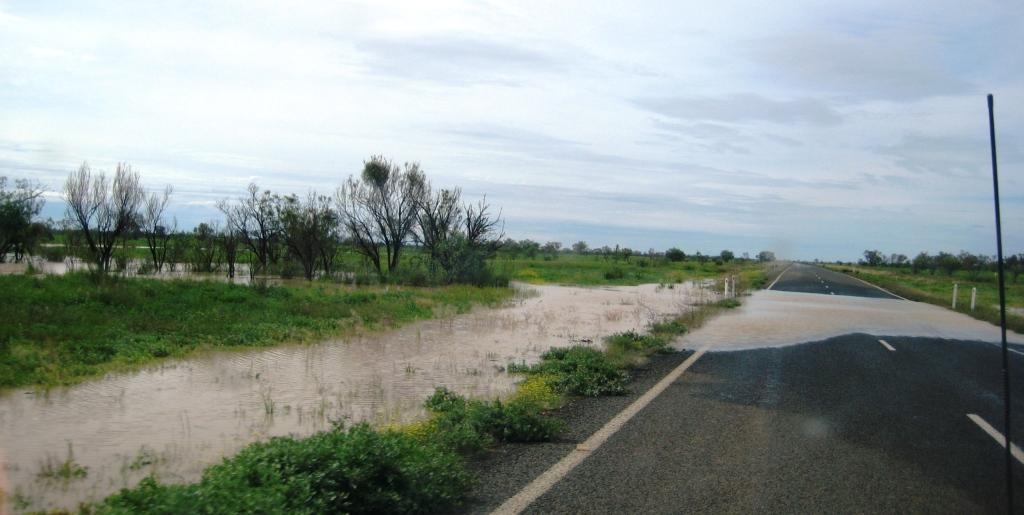
Several streams had broken their banks.

Several streams had broken their banks.

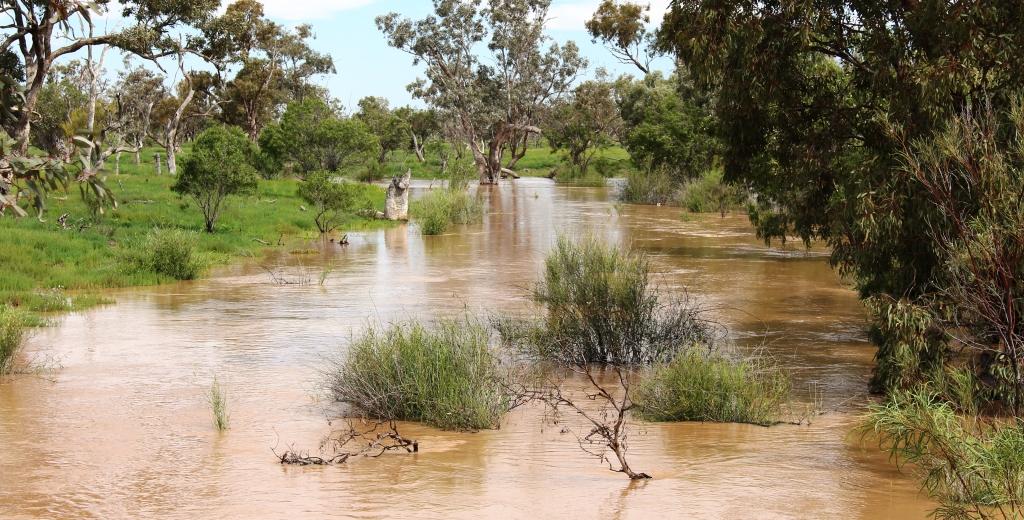
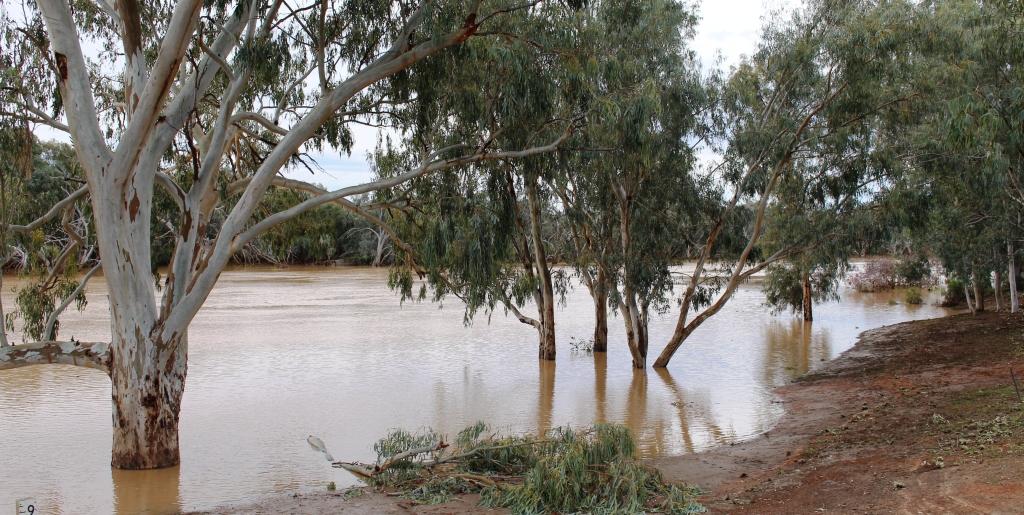
The level of water in the Darling at Bourke was the highest that I have seen in several visits. North of Bourke, drainage channels beside the road were full of water. North of the Queensland /NSW border several streams had broken their banks and a few centimeters of water were running across the pavement in two places.

The remaining water over the road was shallow but had obviously been deeper.

The remaining water over the road was shallow but had obviously been deeper.

From Cobar to Burke we were on the final section of the Kidman Way. From Burke we had joined the Mitchell Highway that terminates where it joins the Landsborough Highway at Augathella. But it all seems to be part of the Matilda Way, but I’m not sure where the Matilda Way starts and finishes. But it is a busy road being a link between Southern capitals and both Northern Territory and Queensland and carries a lot of heavy traffic. We met several over dimensional loads, one requiring us to move right off the road.

The weather had been warmer, but the forecast is for rain and reduced temperatures over night and for the next few days. Fairly strong winds were forecast. When they eventuated they were behind us, pushing us along.

The swollen Warrego River at Cunnamulla. Water heading for the Darling River

The swollen Warrego River at Cunnamulla. Water heading for the Darling River

Before we booked into the caravan park at Cunnamulla we drove through town to check the water level in the Warrego River. The water level was well below the bridge but much higher than we had ever seen it before.

The forecast rain caught us at Cunnamulla but the greater part of it fell to the north of us. The rain had passed through by morning but we caught up with the last of it on the way to St George.

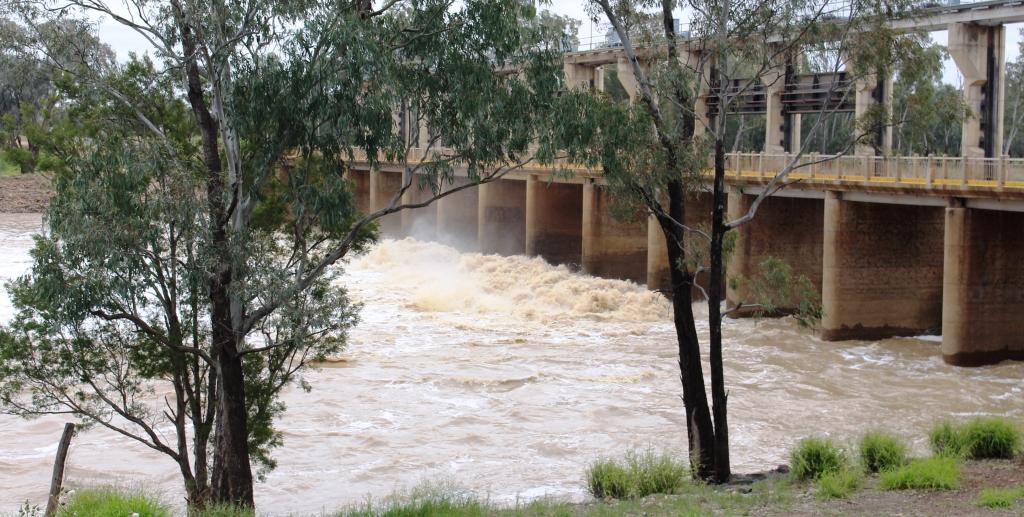
Water flooding over the weir on the Bolonne River at St. George

Water flooding over the weir on the Balonne River at St. George

Another 300 kilometres of flat road, some of it a bit narrow but most quite rough, due to periodic flooding, I suspect. The Weir on Wallam Creek, beside the road at Bollon, was overflowing as was the major weir on the Balonne River at St George. All of the excess water is heading for the Darling and the Murray Rivers.

The only disturbance to a peaceful night at the Pelicans Rest Caravan Park was the yapping of two dogs in the caravan next to us, whenever something disturbed them.

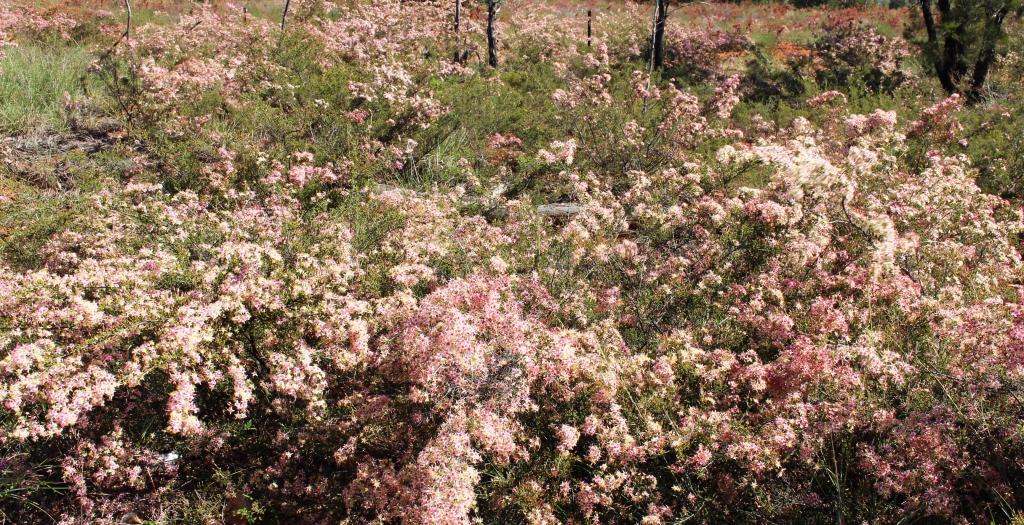
Flowering shrubs between St George and Dalby.

Flowering shrubs between St George and Dalby.

Dalby was our destination on Friday, which would have been another 300 kilometre day. But we were there by lunch time so decided to go on a further 100 kilometres to Yarraman. This very pleasant town sits almost at the foot of Bunya Mountains and has a caravan park atop a hill. We had been travelling in sunshine all that day, pushed along by a stiff but a cool westerly, that moderated by evening. But we still needed the heater that night.

On Saturday morning the easterly aspect of our overnight position gave us a brilliant sunrise and a promise of a day with temperatures in the mid twenties.  Saturday was the first day of a long weekend so the road was busy, particularly the lanes leading away from Brisbane. Traffic accumulating behind us made it necessary to keep the rig moving and to pull over occasionally to let our “tail” go by.

We arrived home just before lunch, to start the tasks of unpacking and cleaning and to deal with two months accumulation of dead gum leaves, blown down by winter winds while we have been away.

The promised temperature eventuated. I am back in shorts and all is right with the World.

So ends another trip, shorter in duration than originally intended but not much shorter in distance. We lost about two weeks to wet weather but the days that it did not rain were mostly sunny although sometimes kept rather cool by persistent winds. But we had a good time, saw some new places, met new friends and learned new things.

We can’t ask for much more, can we?