West, Centre & Flinders – Days 61 to 68 – Homeward Bound


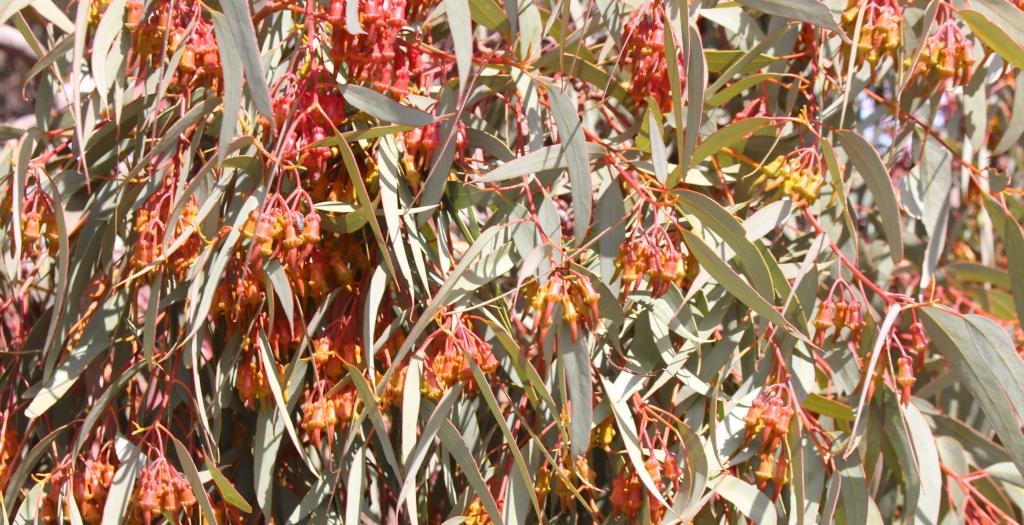
We stopped for lunch near a flowering gum tree

We stopped for lunch near a flowering gum treeWe gave ourselves an easy day on Saturday with only 137 kilometres to the steam museum town of Peterborough. This reasonably substantial town is on the main Sydney to Adelaide railway line, which is also the line on which ore mined in Broken Hill makes its way to the smelter at Port Pirie. Peterborough was a major rail town during the days of steam. It now uses its heritage as a tourist attraction.

The day had improved by the time we had booked into the Peterborough Caravan Park but a chilly night followed. Sunday morning was overcast, but as we made our way to Broken Hill the clouds made way for real warmth from the sun.
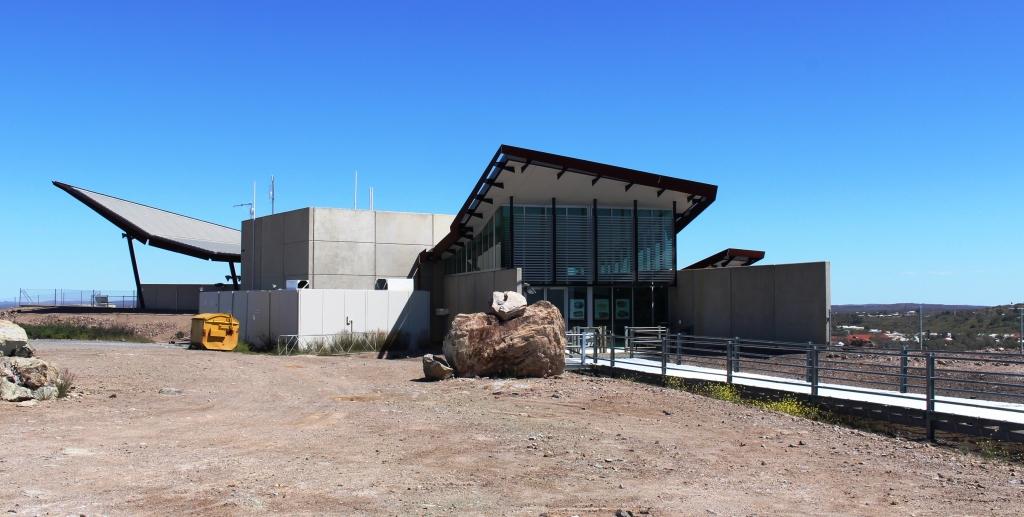
The restaurant building at the Miners' Memorial.

The restaurant building at the Miners’ Memorial.

We booked two nights at Broken Hill to allow for shopping for the final days to home but also to allow us to do the tourist thing. We drove to the Miners’ Memorial at the top of the huge mullock heap that separates the town from the mining area. We were disappointed to find the memorial buildings closed. The restaurant and adjoining gift shop that was so “in” when we were last there, seemed completely closed and the actual memorial building was closed for renovations as well.
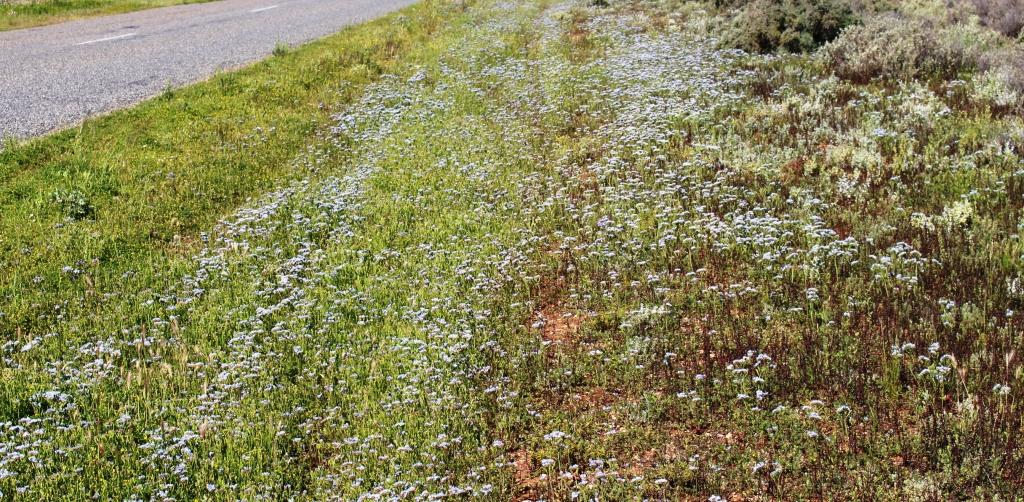
Roadside flowers on the road to Silverton

Roadside flowers on the road to Silverton

After lunch we drove the 24 kilometres to the historic silver mining town of Silverton. Not much remains of the original town but most remaining buildings have been restored and “reading desk” type information signs provide details of restored buildings and some other features. The amount of vacant space between the remaining buildings and relics

With new owners the Silverton Coffee Shop may reopen.

With new owners the Silverton Coffee Shop may reopen.

indicate that it was a substantial town. A coffee shop, still operating on our last visit, is now closed, although the building has been sold. The pub seems to do a good trade and the Mad Max Museum continues to pull in devotees. There are also two or three artists who work from galleries in the town.
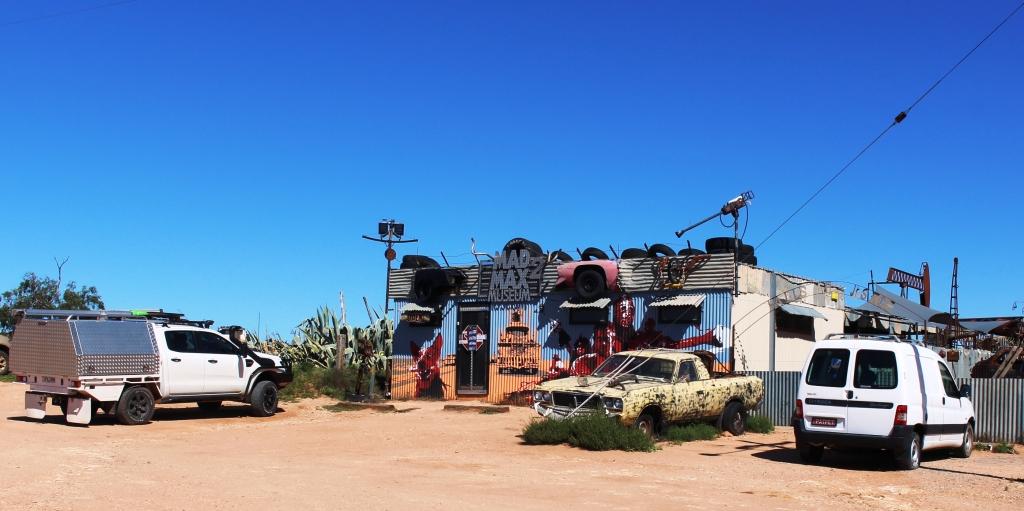
 

Silverton's Mad Max Museum

Silverton’s Mad Max Museum

The approach to the Day Dream Silver Mine passes the old smelter flue on the hilltop

The approach to the Day Dream Silver Mine passes the old smelter flue on the hilltop

This visit we did the side trip to the Day Dream Silver Mine, where I did the underground tour. The mine is about 15 kilometres off the Silverton Road. In its day the mine was a rich source of silver with its own smelter sighted on a neighboring hill top to take advantage of gravity to assist the smelting process. The tour visited points of interest on the surface before we donned hard hats with miner’s lights for the underground portion of the tour.
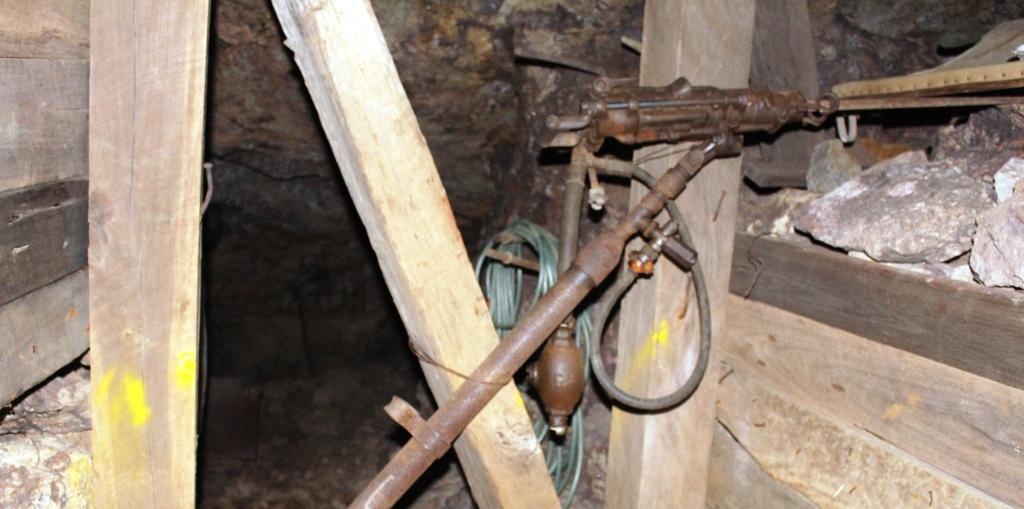
Mining equipment under ground. Visitors can stand at the drill and gain some idea of what it was like to work in the mine.

Mining equipment under ground. Visitors can stand at the drill and gain some idea of what it was like to work in the mine.

The mine was quite deep, descending four levels. There were only a few steps, as the tour followed the sloping shaft that had itself followed the ore body into the bowls of the earth. The irregularities of the floor provided for secure footing and stout hand rails had been installed.
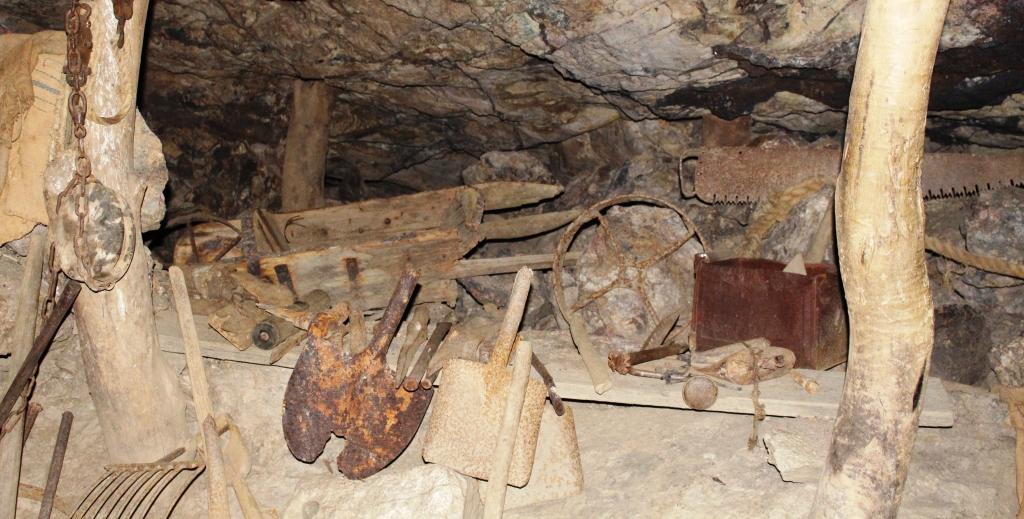


A display of mining tools in an area where the roof is supported by local timber.

A display of mining tools in an area where the roof is supported by local timber.

Mining tools, both manual and mechanical, were on display in appropriate locations throughout the mine. The guide was an experienced miner with a real gift for telling the mining story. To hear it all right where the underground activity occurred made it all very real. We finished the visit with a mug of tea and fresh scones, baked on the premises.
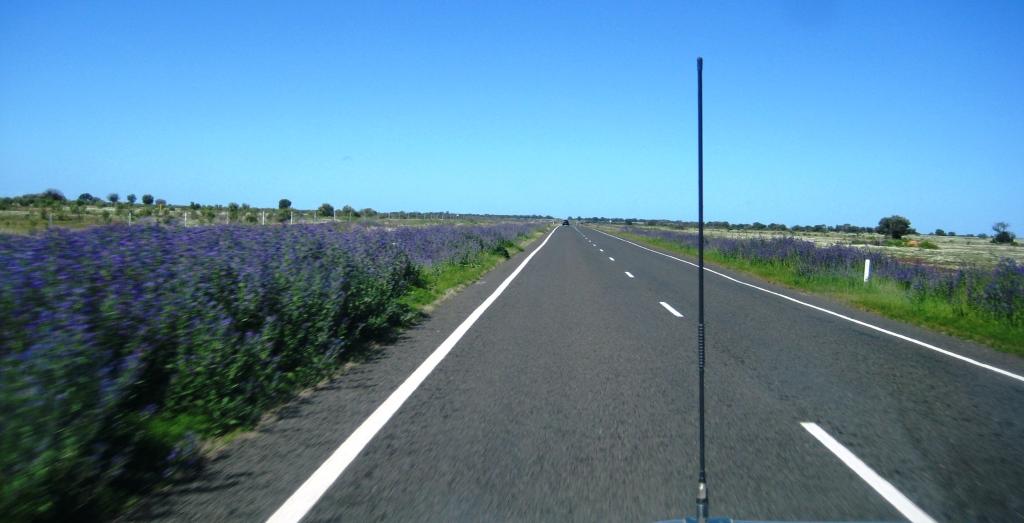
This photo was taken from the moving vehicle. There were no shoulders on the road to pull over.

This photo was taken from the moving vehicle. There were no shoulders on the road to pull over.

Tuesday was about making distance in an attempt to avoid rain and strong head winds. Cobar, yet another mining town, was our stopover destination for Tuesday evening. The only town between Broken Hill and Cobar is Wilcannia, where we stopped for fuel. After leaving Wilcannia the elevated roadway runs for several kilometres over Darling River flood plains, before entering low hills.
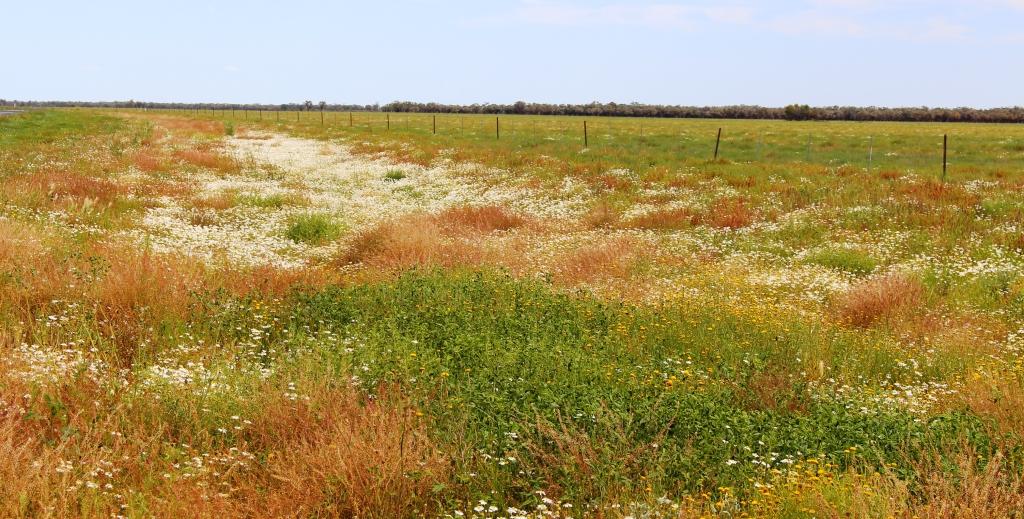
Massed floral displays between Bourke & Cunnamulla

Massed floral displays between Bourke & Cunnamulla

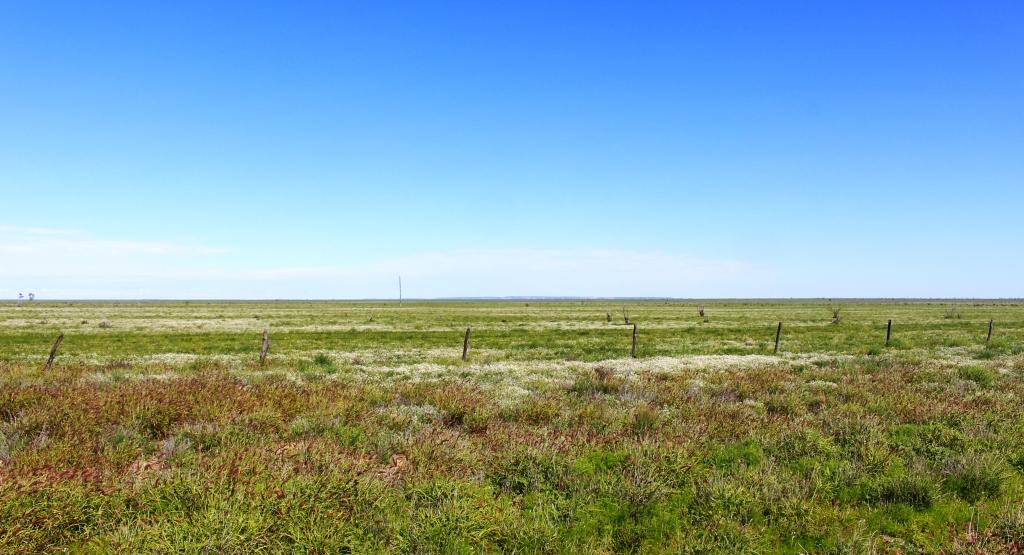
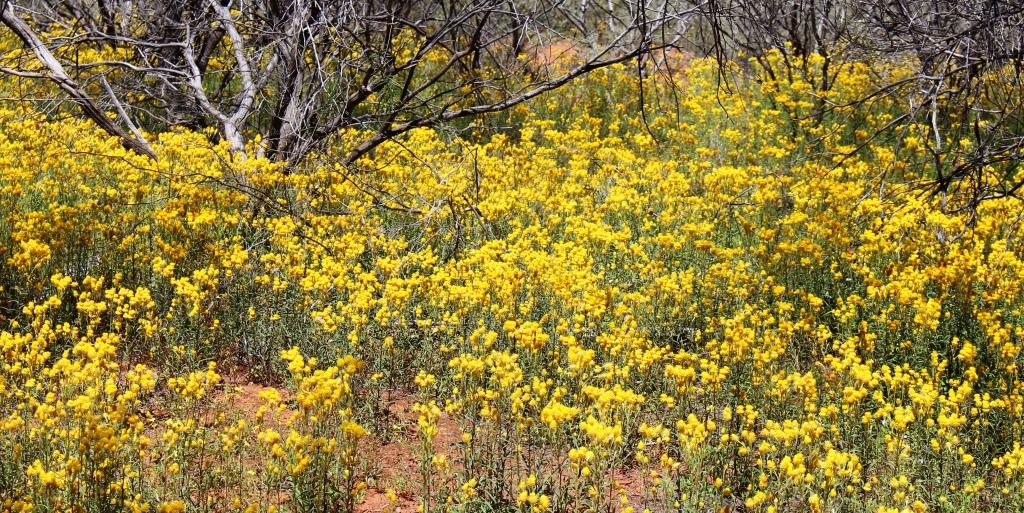
Generally the terrain is flat with only modest hills to provide some variety. Recent rain is evident from water lying beside the road and the abundance of greenery. And wild flower! The sides of the road were covered in masses of purple blooms. The purple is frequently interspersed with a variety of smaller flowers. Periodically the pastures are covered with masses of yellow and white. While watching such natural beauty, the kilometres and hours passed relatively quickly.
More roadside floral displays

More roadside floral displays

For the second day in succession we have driven past endless kilometres of road side gardens. Colours of white, blue, yellow, orange and shades of red have appeared like a planted garden against a background of the greens of grass, shrubs and trees. Periodically patches of white, yellow and red have run out of sight, between road side trees or reached in masses towards the horizon of the open fields.

The drive was between Cobar and Cunnamulla with a brief refueling stop at Bourke, a distance of around 415 kilometres. We saw the first evidence of the amount of rain that has fallen through the area. Up to now all we have seen, besides the rain, has been abundant grass and wild flowers.
Several streams had broken their banks.

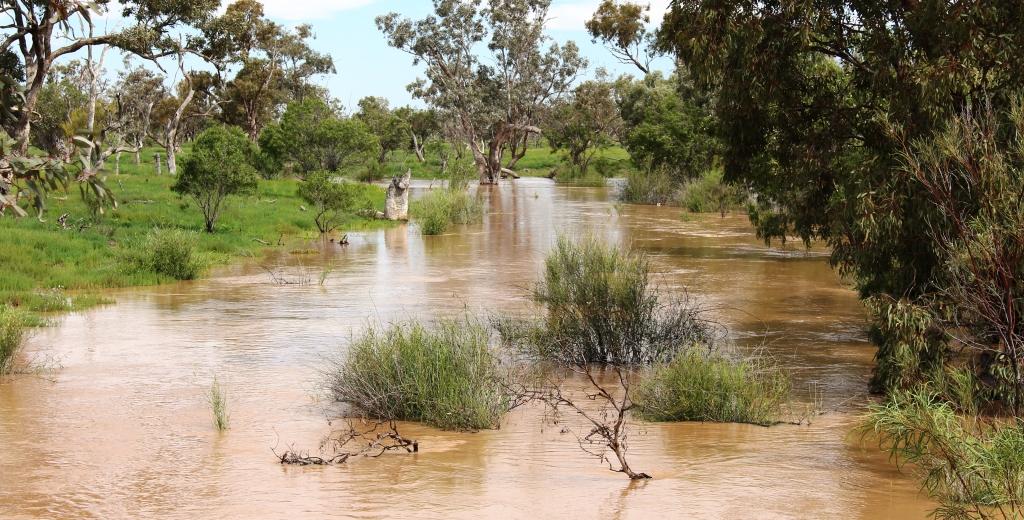
Several streams had broken their banks.

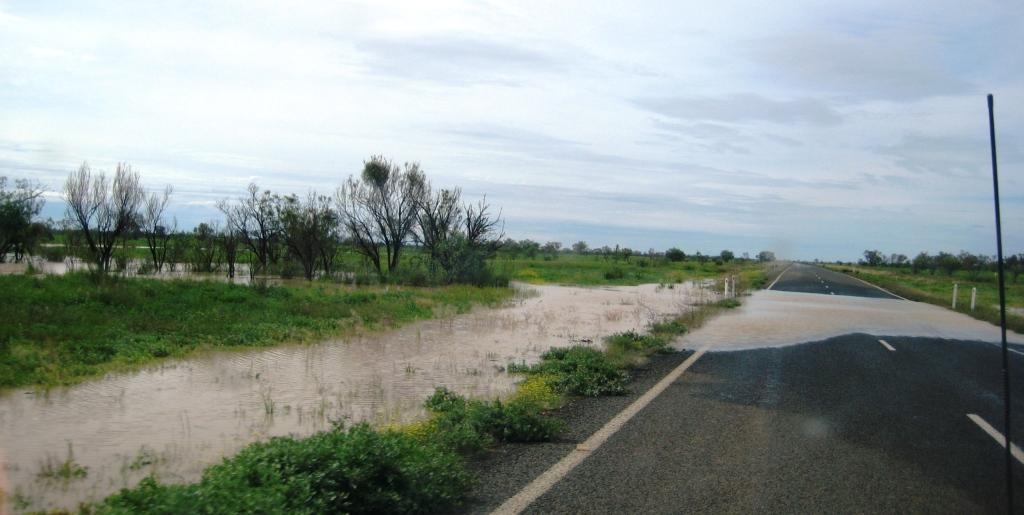
The level of water in the Darling at Bourke was the highest that I have seen in several visits. North of Bourke, drainage channels beside the road were full of water. North of the Queensland /NSW border several streams had broken their banks and a few centimeters of water were running across the pavement in two places.
The remaining water over the road was shallow but had obviously been deeper.

The remaining water over the road was shallow but had obviously been deeper.

From Cobar to Burke we were on the final section of the Kidman Way. From Burke we had joined the Mitchell Highway that terminates where it joins the Landsborough Highway at Augathella. But it all seems to be part of the Matilda Way, but I’m not sure where the Matilda Way starts and finishes. But it is a busy road being a link between Southern capitals and both Northern Territory and Queensland and carries a lot of heavy traffic. We met several over dimensional loads, one requiring us to move right off the road.

The weather had been warmer, but the forecast is for rain and reduced temperatures over night and for the next few days. Fairly strong winds were forecast. When they eventuated they were behind us, pushing us along.
The swollen Warrego River at Cunnamulla. Water heading for the Darling River

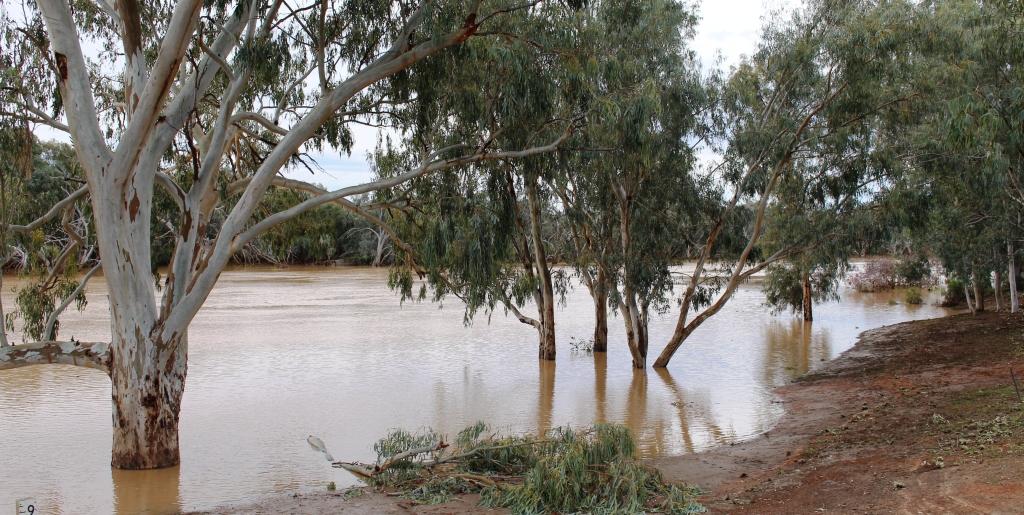
The swollen Warrego River at Cunnamulla. Water heading for the Darling River

Before we booked into the caravan park at Cunnamulla we drove through town to check the water level in the Warrego River. The water level was well below the bridge but much higher than we had ever seen it before.

The forecast rain caught us at Cunnamulla but the greater part of it fell to the north of us. The rain had passed through by morning but we caught up with the last of it on the way to St George.
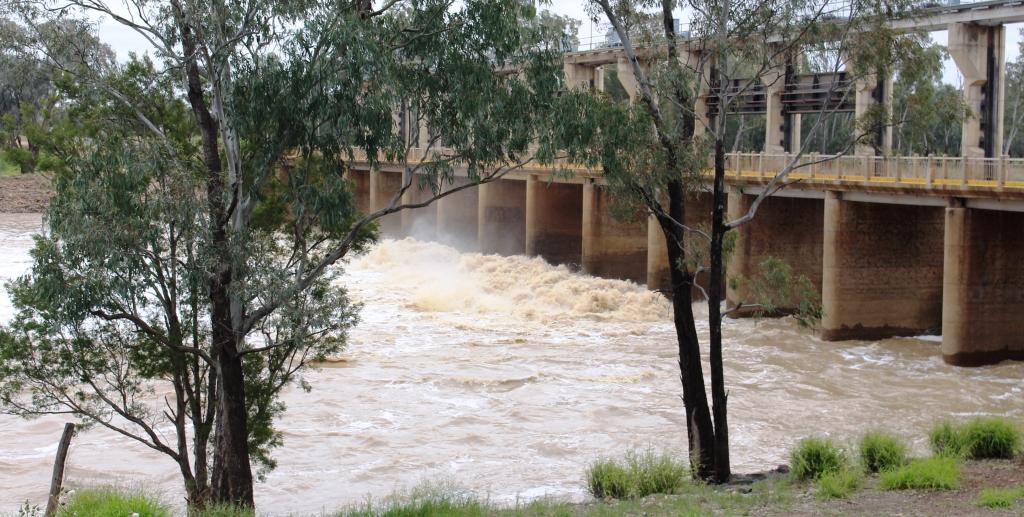
Water flooding over the weir on the Bolonne River at St. George

Water flooding over the weir on the Balonne River at St. George

Another 300 kilometres of flat road, some of it a bit narrow but most quite rough, due to periodic flooding, I suspect. The Weir on Wallam Creek, beside the road at Bollon, was overflowing as was the major weir on the Balonne River at St George. All of the excess water is heading for the Darling and the Murray Rivers.

The only disturbance to a peaceful night at the Pelicans Rest Caravan Park was the yapping of two dogs in the caravan next to us, whenever something disturbed them.
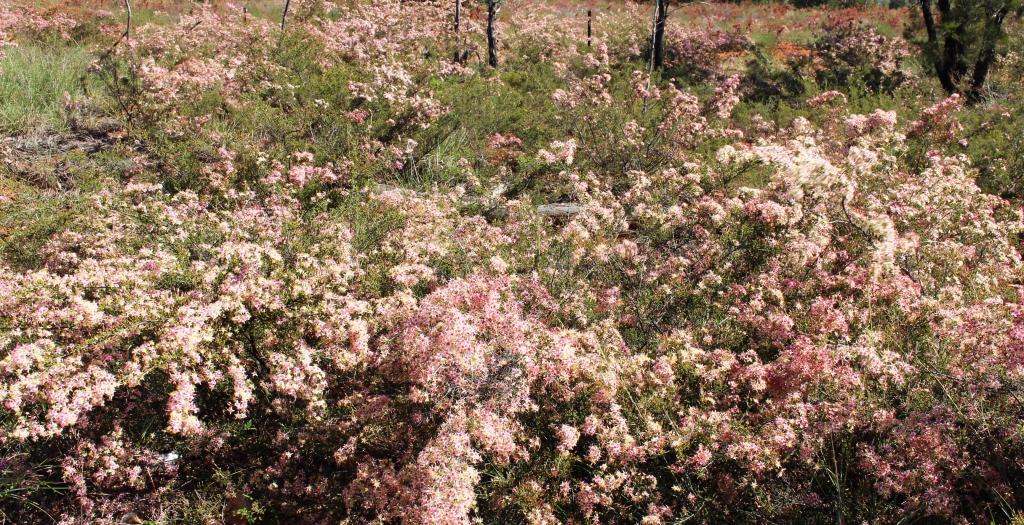
Flowering shrubs between St George and Dalby.

Flowering shrubs between St George and Dalby.

Dalby was our destination on Friday, which would have been another 300 kilometre day. But we were there by lunch time so decided to go on a further 100 kilometres to Yarraman. This very pleasant town sits almost at the foot of Bunya Mountains and has a caravan park atop a hill. We had been travelling in sunshine all that day, pushed along by a stiff but a cool westerly, that moderated by evening. But we still needed the heater that night.

On Saturday morning the easterly aspect of our overnight position gave us a brilliant sunrise and a promise of a day with temperatures in the mid twenties.  Saturday was the first day of a long weekend so the road was busy, particularly the lanes leading away from Brisbane. Traffic accumulating behind us made it necessary to keep the rig moving and to pull over occasionally to let our “tail” go by.

We arrived home just before lunch, to start the tasks of unpacking and cleaning and to deal with two months accumulation of dead gum leaves, blown down by winter winds while we have been away.

The promised temperature eventuated. I am back in shorts and all is right with the World.

So ends another trip, shorter in duration than originally intended but not much shorter in distance. We lost about two weeks to wet weather but the days that it did not rain were mostly sunny although sometimes kept rather cool by persistent winds. But we had a good time, saw some new places, met new friends and learned new things.

We can’t ask for much more, can we?
West, Centre & Flinders – Days 33 to 35 – Alice Springs & Rain

Our intention has been to spend just one night at Alice Springs. Now it seems that we are to be here for a week. The main issue has been the uncertainty of weather predictions. We abandoned plans to take the van into the ranges to the east and west of the town in favour of setting up in a central location and doing day trips. Saturday was to have been very windy and it was to start raining on Sunday, continuing into Monday. The strong winds did not eventuate and the rain has been deferred until Tuesday and Thursday. Patience is called for!

And to demonstrate meteorological variability we had a minimum of 3 C on Saturday and a maximum of about 32 C yesterday.

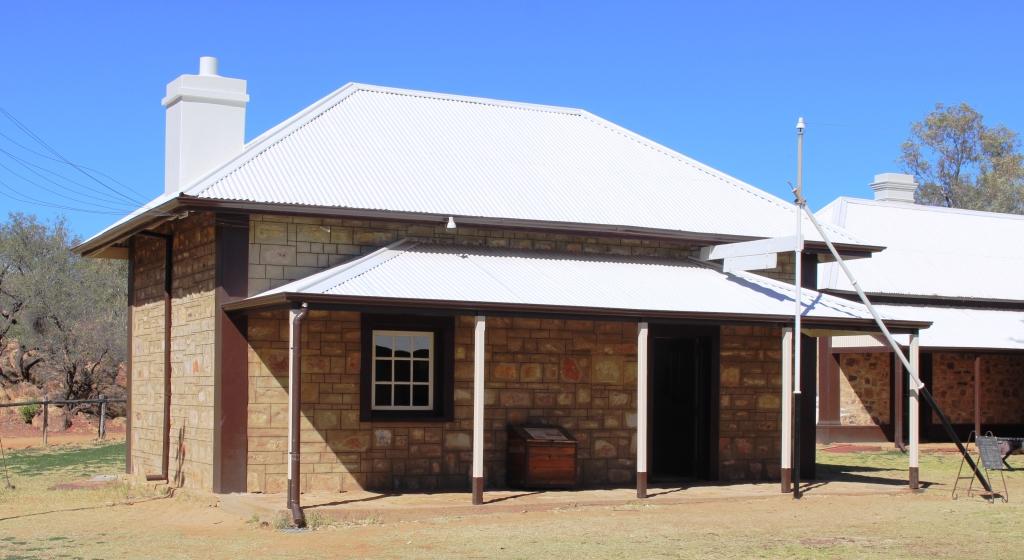
The original telegraph and post office in Alice Springs

The original telegraph station and post office in Alice Springs

Having passed two historic telegraph stations on the way south, we thought we should take a closer look at the restored station at Alice. The buildings were initially well built and have been carefully restored. A restoration of the original office environment, in the original office, has been well done, including sound effects of messages being transmitted by Morse code. Residential buildings have been fitted with furniture of the period and a school room is functional. School children are able to stay overnight, playing the roles of original characters.

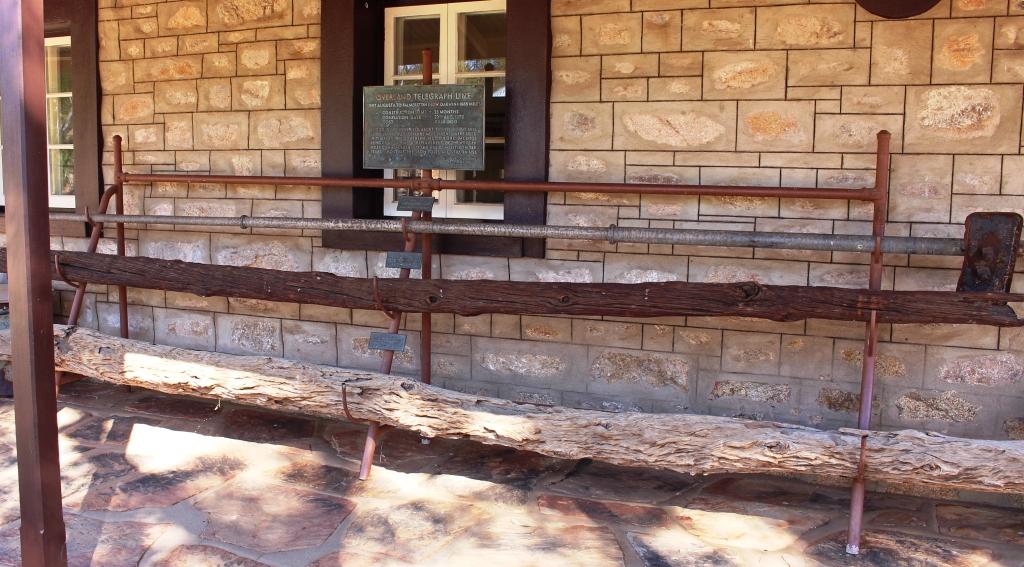
Samples of original and replacement telegraph poles

Samples of original and replacement telegraph poles

The tour guide’s spiel covered the explorations of John McDowell Stuart, who made no less than six trips into the area. The telegraph line was built along the route of his final exploration, under the supervision of Charles Todd. The line was built with poles cut locally as they progressed, but termites proved the folly of that option, so the timber posts were soon replaced with telescopic tubular steel posts.

Where I got my warm inner glow

Where I got my warm inner glow

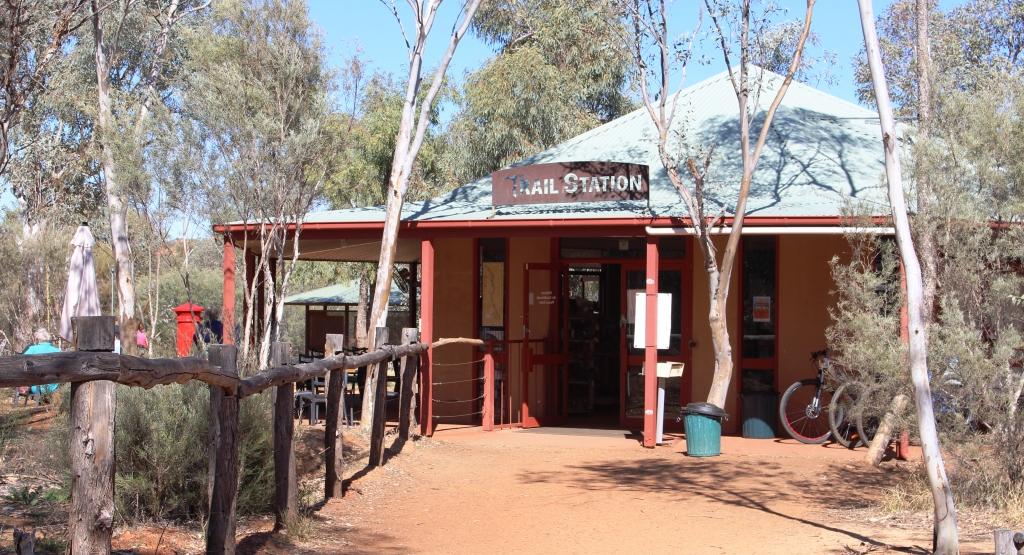
The spiel also included a section on the “Stolen Generation” and included several highly contestable claims. One of the buildings has been used to set up a display on the subject. I guess it gives some visitors a warm inner glow. I achieved my warm inner glow from a cup of coffee and an excellent vanilla slice at the Trail Station coffee shop that also acts as the gateway to the Telegraph Station.

The telegraph line was an important step in Australia’s development as it linked to the newly laid cable under the Timor Sea and ended our communication isolation from the world, particularly from England.

The grave of Rev John Flynn outside Alice Springs. The stone came from The Devils Marbles near Tennant Creek

The grave of Rev John Flynn outside Alice Springs. The stone came from The Devils Marbles near Tennant Creek

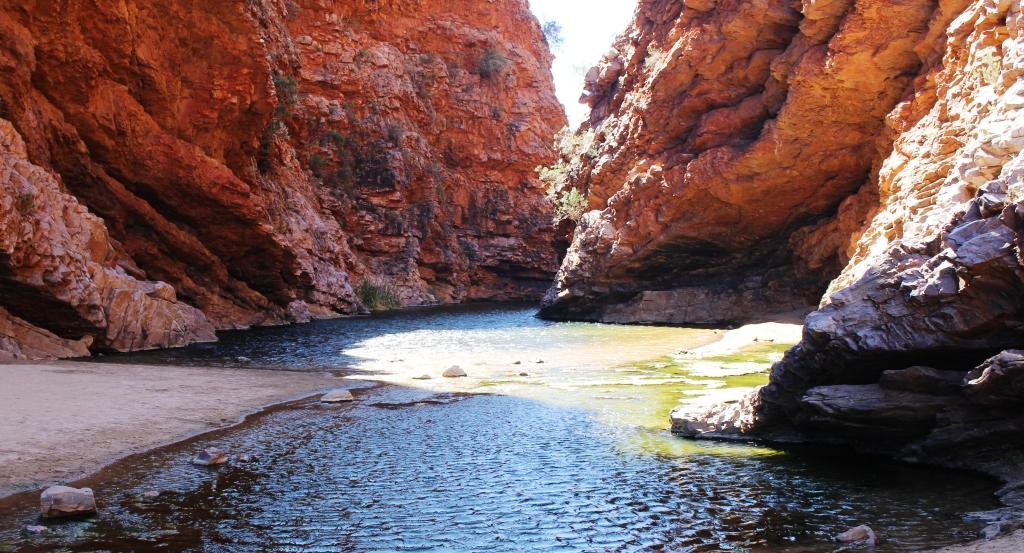
In the afternoon we drove out to the near west McDonnell Ranges, pausing at the grave of Rev. John Flynn, and then took another look at Simpsons Gap. There was water in the gap, as usual, and a cool breeze was blowing through.


Simpsons Gap

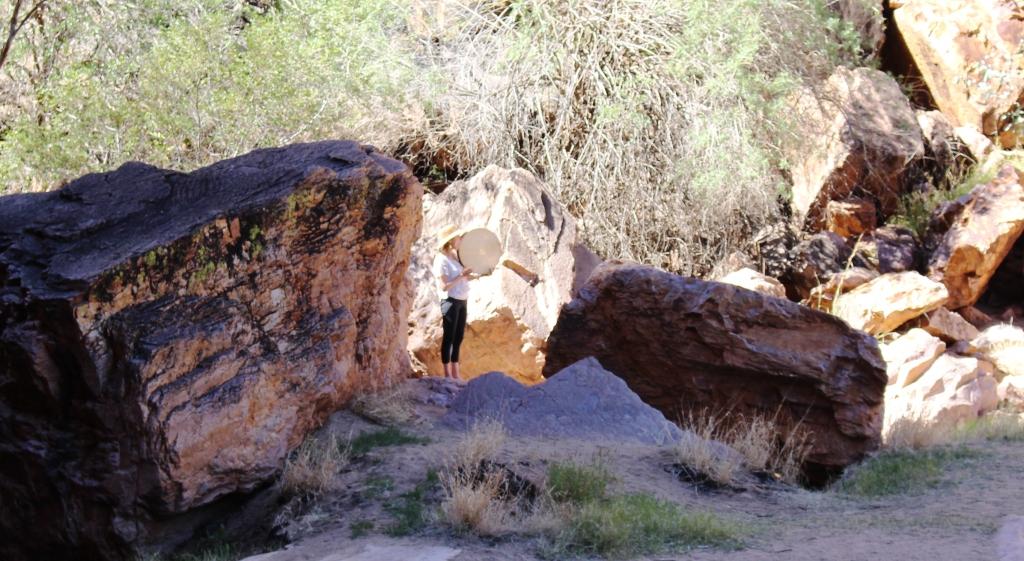
The performer in the Gap

We could hear an pleasant vocal sound, not words but a musical tone, from a pure clear female voice, accompanied by a slow drum beat, coming from the gap. As we walked in we could see a young woman, positioned to gain the advantage of the acoustics of the gap. It was a pleasant accompaniment to viewing such spectacular scenery


Simpsons Gap

Simpsons Gap

We then headed further out Larapinta Drive and drove the northern section of the Owen Springs Track that leads through historical relics and geographical features to the Stuart Highway. The first cattle station in the Northern Territory was established at Owen Springs. Ruins of station buildings remain. It was getting late in the day so we turned back sooner that we had hoped, so didn’t get to see them. The consolation was that we drove back beside the long stone capped mountain ranges, displayed to advantage in the light of the afternoon sun.

The Bluff at the foot of Trephina Gorge

The Bluff at the foot of Trephina Gorge

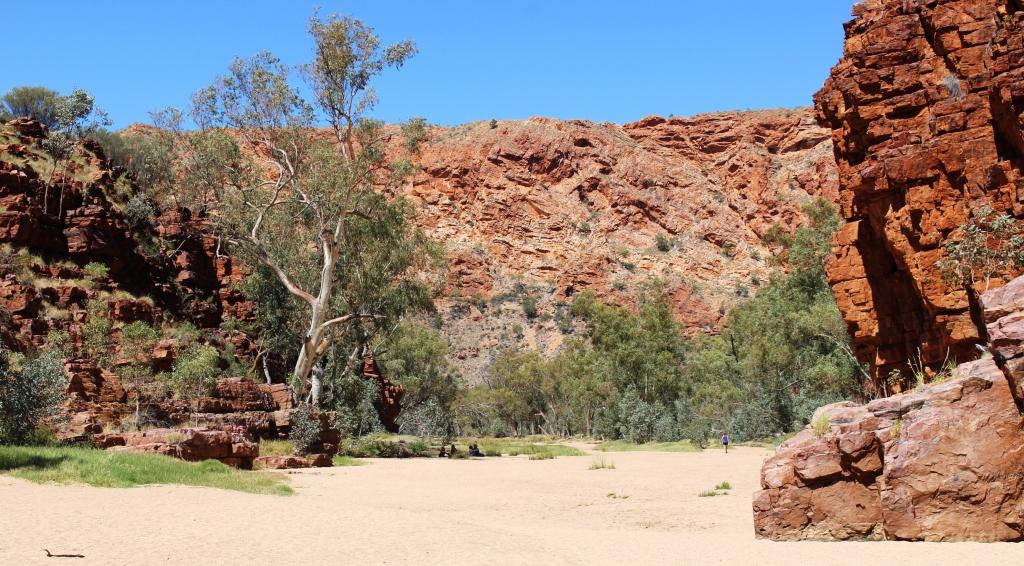
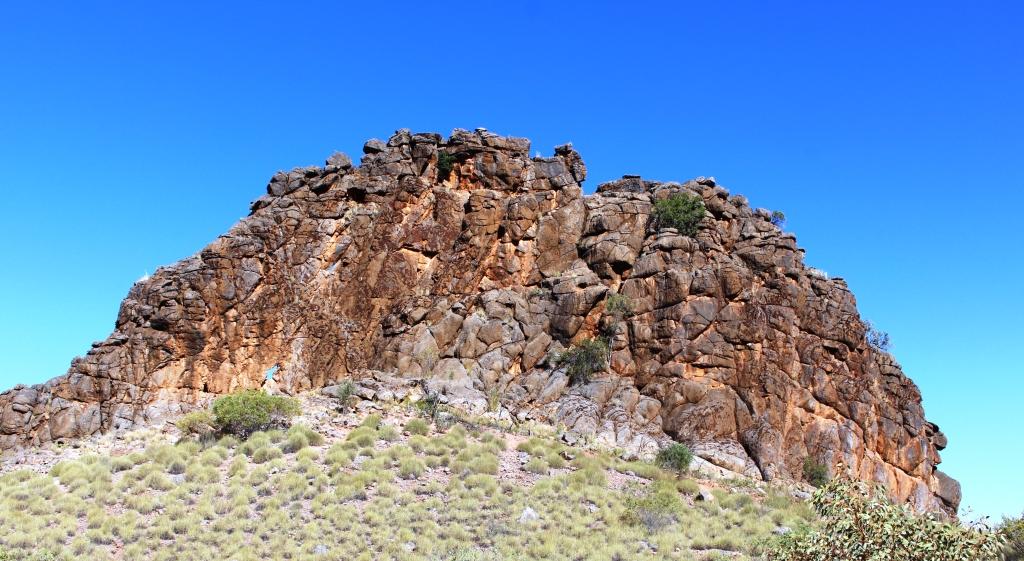
We returned, yesterday, to one of our favourite places on the East MacDonnell ranges. Trephina Gorge is yet another gap in the range through which a stream passes, on its way to the desert. The Ross Highway runs between red stone capped mountains and passes at least three other gaps through which streams flow when there is rain. The best known of the gaps are Emily and Jessie Gaps. The other main feature of interest is Corroboree Rock, a striking rock formation where, you guessed it, corroborees were held.

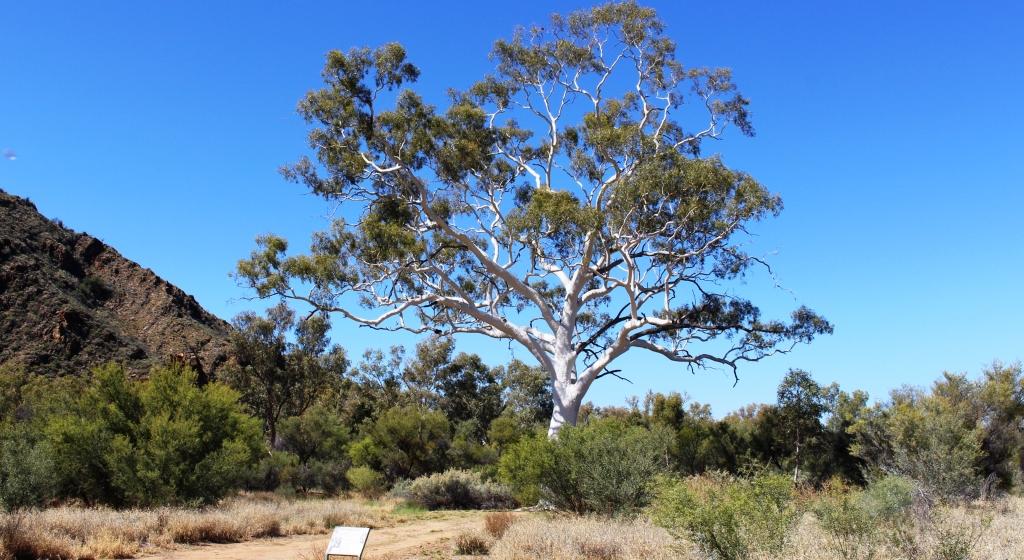
The tallest Ghost gum

The tallest Ghost gum

Trephina Gorge has been cut by the passage of water through red rock that now direct its flow. At least that is the case when it is flowing, which it was not doing yesterday. After exiting the gorge the stream passes at the foot of a huge mound of red stone named The Bluff. From there it makes its way out of the mountains to join those other streams that dissipate into the desert. The gorge also contains the largest Ghost gum in Australia.

Corroboree Rock

Corroboree Rock

There was a final touch of drama as we travelled home. While driving on the gravel road out of the gorge we noticed a continuous trail of fluid. So we were not surprised, just after rejoining the Ross Highway, to see a vehicle stopped part way off the road, with a couple of other vehicles nearby. The fluid trail on the road was transmission fluid. They had damaged something important.

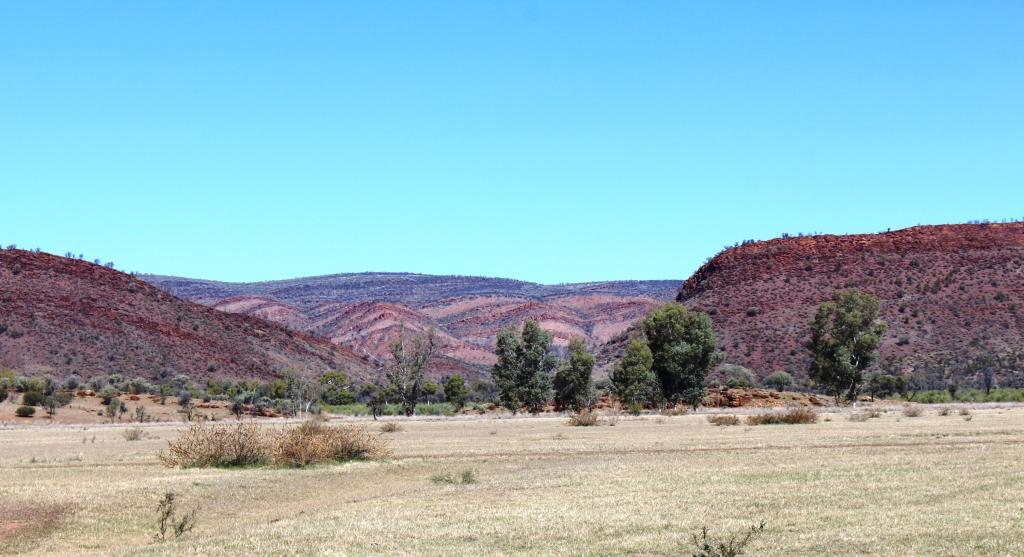
The beauty of the East McDonnell Ranges

The beauty of the East McDonnell Ranges

The vehicle was an aged Ford Maverick and its occupants were a couple of French back packers whose English was inadequate, to say the least. Neither we nor the other vehicles that stopped were able to agree any assistance with them as they preferred to wait for some folk who they had met in the Gorge who were travelling a distance behind them. We can only hope that it worked out for them.

We have been into town on two or three occasions. It is unchanged from last time. Out of town locals wander the streets and seem to be the taxi companies best customers. Security is everywhere, particularly where there are liquor stores. But the commercial centre seems busy and a parking space can be hard to find.

At the caravan park there is an endless procession of arrivals and departures. One night stopovers are common, as visitors restock and head for the scenic areas to the east and west. Much as we had intended. It is hard to detect the colour of some vehicles through the coating of mud that they carry. I suspect that they have come in off the Tanami Track that has had rain in recent days.

So now we wait on the weather. I will deal with that in the next post.

West, Centre & Flinders – Days 18 to 19 – Further West

It is not easy to predict the movements of the travelling public. On our first night at the Longreach Tourist Park the place was near to full. After we arrived, about mid-afternoon, the vans flooded in and flooded out again next morning. But on the second night

Sweeping plains near Winton

Sweeping plains near Winton

occupancy would have been no more than 40%. Perhaps folk had been in to complete the census. Forms were available at the office. We opted to complete it on line and couldn’t even log in. Perhaps we will try again at Alice Springs.

We left Longreach at the start of Day 18 driving towards Winton, about 180 kilometres to the North West.

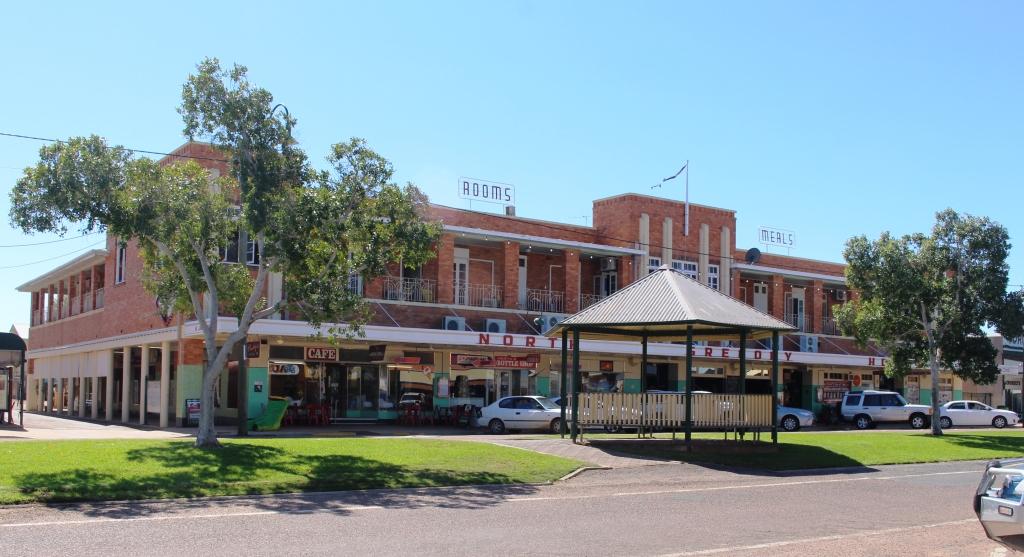
North Gregory Hotel where legend has it Waltzing Matilda was first performed

North Gregory Hotel where legend has it Waltzing Matilda was first performed

Winton has always been a prosperous place but the drought has taken its toll. There are several empty shops in the main street. But the pubs continue to thrive. The Tattersals’  hotel that occupies a corner had about 20 tables set up for lunch on the pavement and more inside. Many caravans and their towing vehicles were parked in the street. Winton must be a favored lunch stop among grey nomads.

The vacant space was once occupied by The Waltzing Matilda Centre

The vacant space was once occupied by The Waltzing Matilda Centre

As some of you will know, Winton lost its famous Waltzing Matilda Centre to fire a year or so ago. That was a serious blow to the town. But they have bounced back with a new museum called the Qantilda Museum. It is much smaller, as a great deal of history was lost in the fire, but deals with Winton’s two main claims to fame. Winton  is the birth place of Qantas Airways and Waltzing Matilda was written by Banjo Patterson at Dagworth Station to the north of Winton and was first performed in public at Winton’s North Gregory Hotel.

Self explanatory!

Self explanatory!

The “sweeping plains” continue to Winton and beyond. Green as far as the eye can see.  But in most of the pasture there are no cattle eating the lush grass. Drought plays havoc with stocking density and it takes a long time to rebuild a production herd.


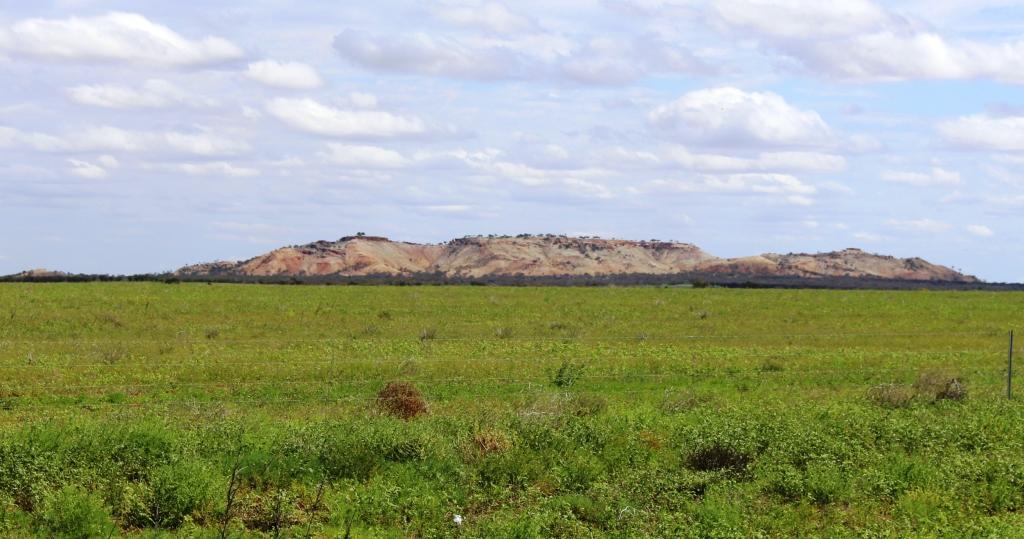
The first real jump up on the way to Middleton

The first real jump up on the way to Middleton

When we came this way last year on our way to The Centre, I said that the road from Winton to Boulia was one of the most attractive outback drives in Queensland and having done it a second time I have not changed my mind. Along the first section, until just past the multiple channels of the Diamantina River, the terrain is fairly flat. Some areas are so green with lush growth that they look like a planted crop. Then  Mount  Booka Booka appears to the left of the road. From there, for the next hundred kilometres or so, the road passes through the Sword Range which is mostly a series of jump ups, or mesas, with their defining crowns of red rock and slopes clad with small bushy vegetation of brilliant green.

A main channel of the Diamantina River almost full of water

A main channel of the Diamantina River almost full of water

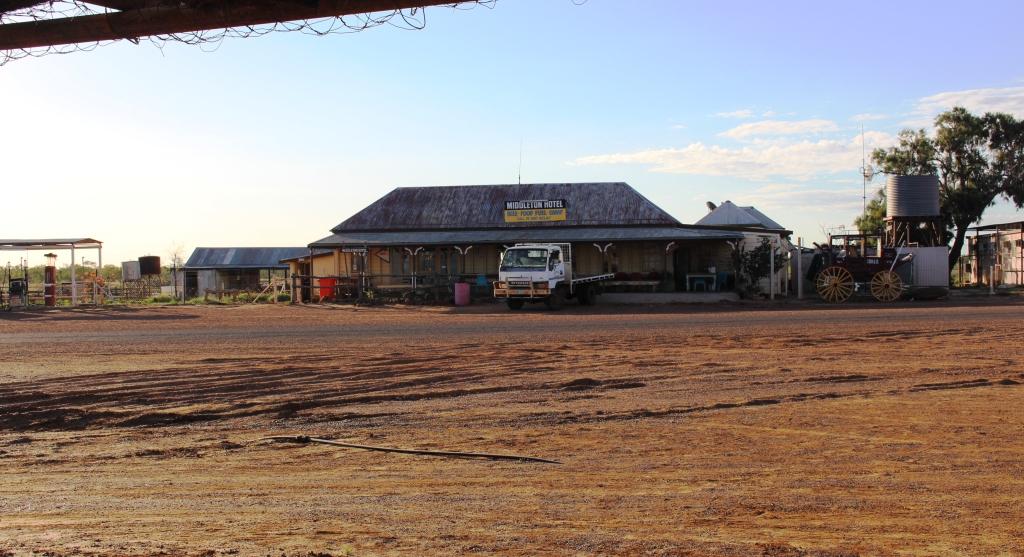
Last time through we did Winton to Boulia, a distance of 360 kilometres, in a day. This time, having started the day at Longreach we have broken our journey at the lonely road side pub at Middleton. There was a town of Middleton but it is long gone and only the 130 year old hotel remains. Free camping is available over the road. Most who use the area express their appreciation by patronising the hotel.

Middleton Hotel

Middleton Hotel

We went over for a drink after setting up and then later, went back for dinner. Dinner guests included a couple from Taroom in Queensland on their way to Camooweal to help run the annual drovers festival. An other couple have just travelled the Birdsville Track and were able to give us some good information on road conditions.

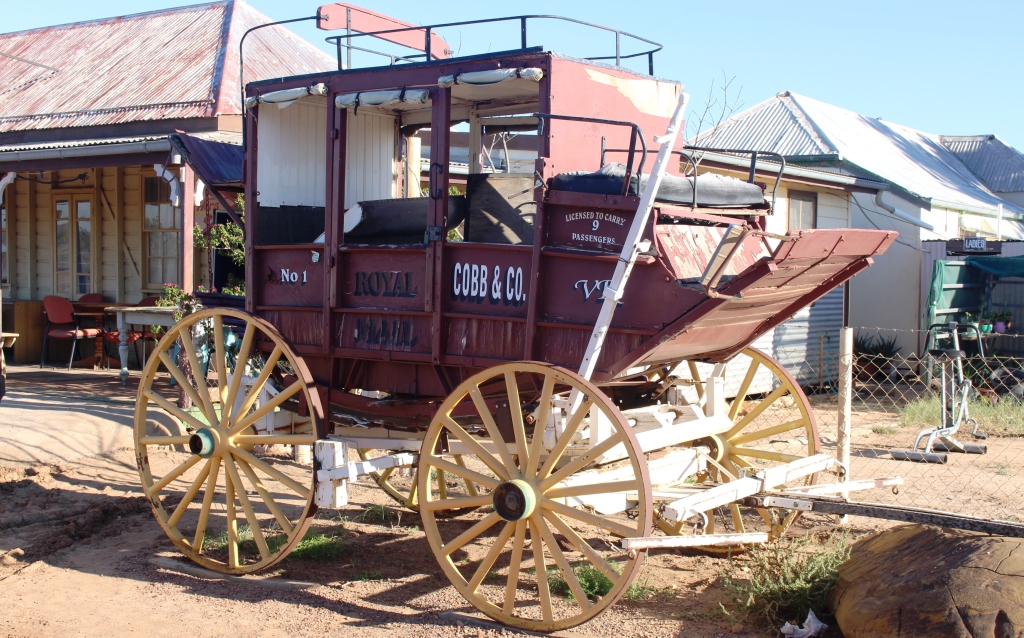
An old Cobb & Co coach stands outside the Middleton Hotel

An old Cobb & Co coach stands outside the Middleton Hotel

The Middleton Pub is over 130 years old. The area was first explored by John McKinley who was leading a group searching for lost explorers Bourke and Wills. W Middleton was second in command. The area when opened shortly afterwards was named Middleton in his honour.

The publican and his wife are elderly but are assisted by younger family members. They were most welcoming. The menu was surprisingly extensive but we chose the “house” meal of corned beef with potato, cabbage and white sauce. The serving was generous. The facilities were basic with outside toilets and showers constructed of corrugated iron. The plumbing for the shower looked like a plumber’s nightmare but the rusty shower head was large and hot water cascaded out.

We went to sleep to the gentle lowing of cattle in a yard behind the hotel, probably waiting for a truck to take them to market.

Approaching Cawnapore Lookout

Approaching Cawnapore Lookout

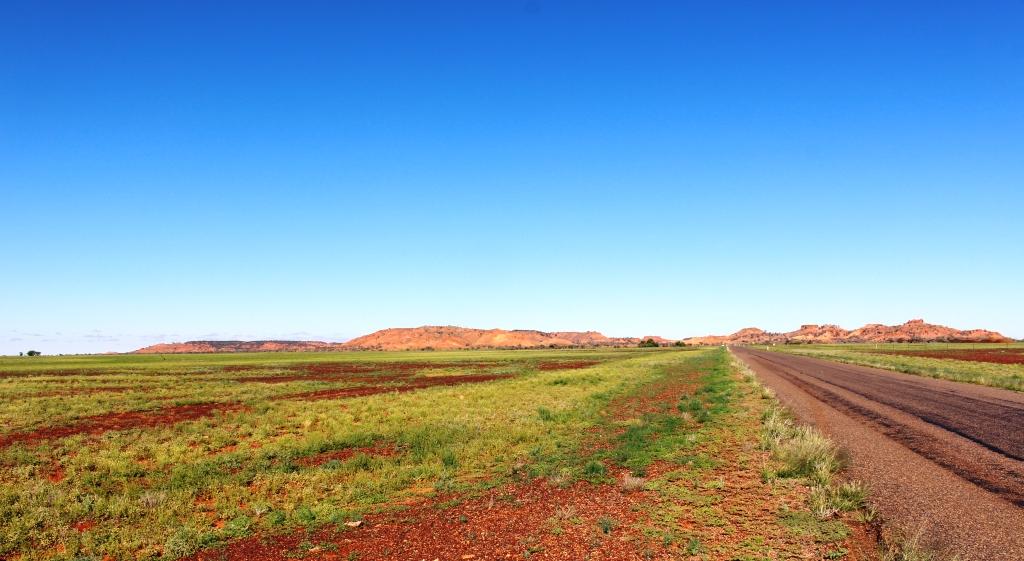
The overnight stay at Middleton produced an unexpected bonus. Soon after leaving Middleton, jump ups start to appear on the horizon. The road turned towards them and as we drew closer the morning sun illuminated the red stone caps and eroded upper reaches turning them to shades of deep red. The green vegetation that clings to the slopes takes on a brilliancy that makes it look painted on.

A path for the fitter leads to the summit if the Cawnpore jumpup

A path for the fitter leads to the summit if the Cawnpore jump up

A picnic shelter marks Cawnpore Lookout, a vantage point that stands above a cutting through the hills. To reach it you must scramble up a steep gravel path but the effort is well worth while. The views through 360 degrees are stunning. Those fitter than I can follow a path that leads to the very top of the jump up for even better views, I imagine.  Accompanying photos illustrate.

A view from the lookout

A view from the lookout

From here the dramatic hills reduce in frequency. The final 80 kilometres or so into Boulia returns to endless green planes with scattered trees. The only dense vegetation lines the many water ways, most of which retain some of the recent rain.


Car and van from the lookout and hills to the west

Car and van from the lookout and hills to the west

The Min Min Centre in Boulia

The Min Min Centre in Boulia

We have reached Boulia and are in the caravan park, with the Bourke River only a few metres from the back of our van. Boulia is a small service town at the junction of Kennedy and Diamantina Developmental Roads. The Donohue Highway that leads to Alice Springs via the Plenty Highway branches off just out of town. The town has museum displays of dinosaur fossils and other items relating to the past when where Boulia stands was part of an inland sea. It also has the Min Min Experience, an animated show that tells of the mysterious Min Min Lights.

A full Bourke River at Boulia.

A full Bourke River at Boulia.

Weather has been brilliant. Morning temperatures have been around 10 C with day temperatures in the mid twenties. We experienced some cloud and a few spots of rain on the windscreen as we approached Middleton, but by evening the stars shone from a cloudless sky. But we have had some chilly breezes from east to south west, but they are easy to avoid or you put on something warmer.

Tomorrow we head south for Bedourie and Birdsville.


West, Centre and Flinders – Days 5 to 8 – Filling In Time

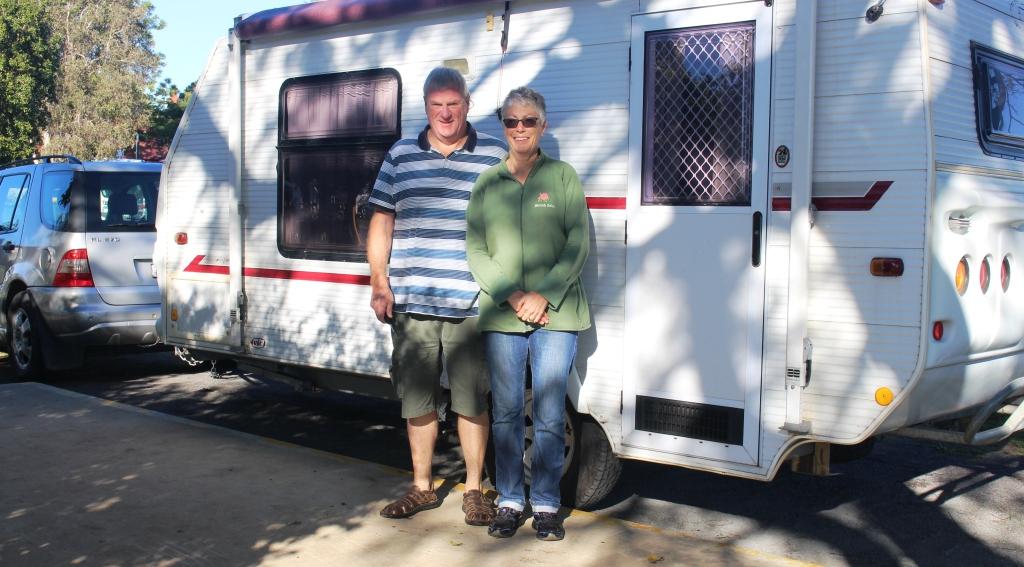
Keith and Linda. Van packed and hitched and ready to go

Keith and Linda. Van packed and hitched and ready to go

Our original plan, on which we set our departure date, had us meeting Keith and Linda (see previous post) further north, possibly as far north as Airlie Beach. But their progress down the coast was a bit faster than we had anticipated so we met them at Bundaberg, as most readers will already be aware.


Near the mouth of the Burnett River at Burnett Heads

Near the mouth of the Burnett River at Burnett Heads

When we parted with them at Burnett Heads we had five days in hand for which we had no predetermined plans. Not a problem! There are always things to look at and places to go.

Beached flood debris on Rules Beach near Baffle Creek

Beached flood debris on Rules Beach near Baffle Creek

We decided to spend a couple of days at Agnes Water/Seventeen Seventy, but a lot of other people had made the same decision. All caravan parks were fully booked. As an alternative we chose Baffle Creek Caravan Park, located about equidistant from Bundaberg and Seventeen Seventy.

If you want other residents to talk to you at Baffle Creek Caravan Park it is best to arrive with a boat on top of your car, or at least have a conspicuous fishing rod on board. This is a fishing area and people go there to fish. We used it as a base for a day trip to Agnes Water and Seventeen Seventy.

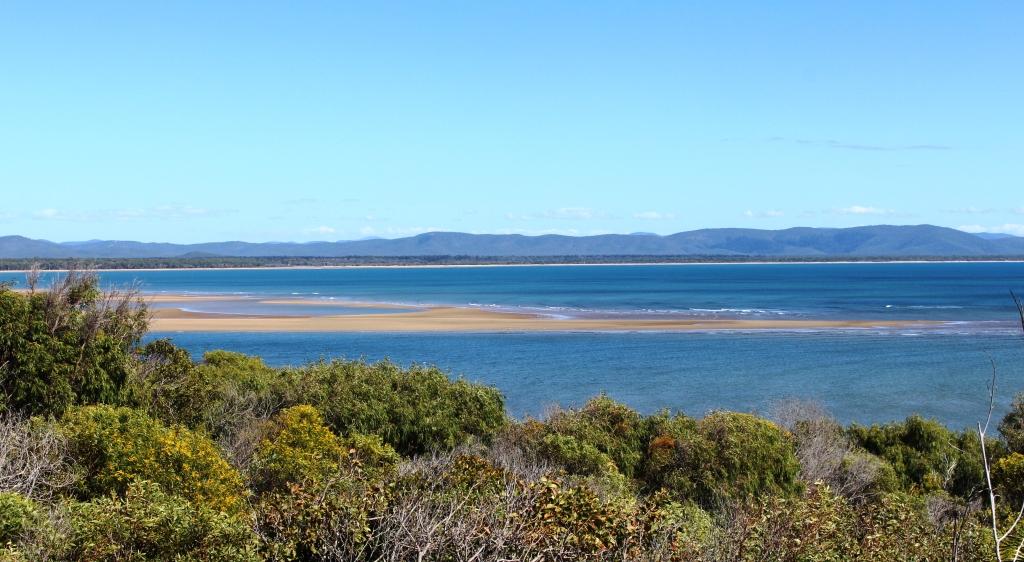
Sand banks in Round Head Creek at Seventeen Seventy

Sand banks in Round Head Creek at Seventeen Seventy

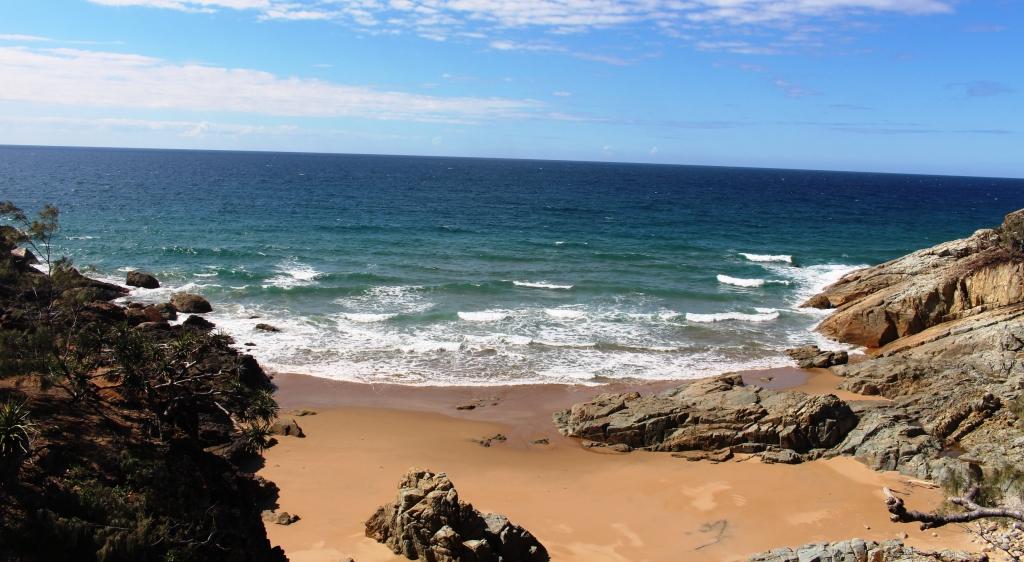
We have visited this area before and I have blogged about it. The day was near perfect. Clear skies and a gentle breeze, although up on Round Hill Head, the headland that stands above the town of Seventeen Seventy, the wind was stronger. We did a couple of walks to take in the rugged scenery and the panoramic views of the ocean provided by this vantage point, before returning to the water side park, near the Seventeen Seventy hotel, where we settled ourselves in a picnic shelter for a leisurely lunch.

A small bay on the ocean side of Round Hill Head

A small bay on the ocean side of Round Hill Head

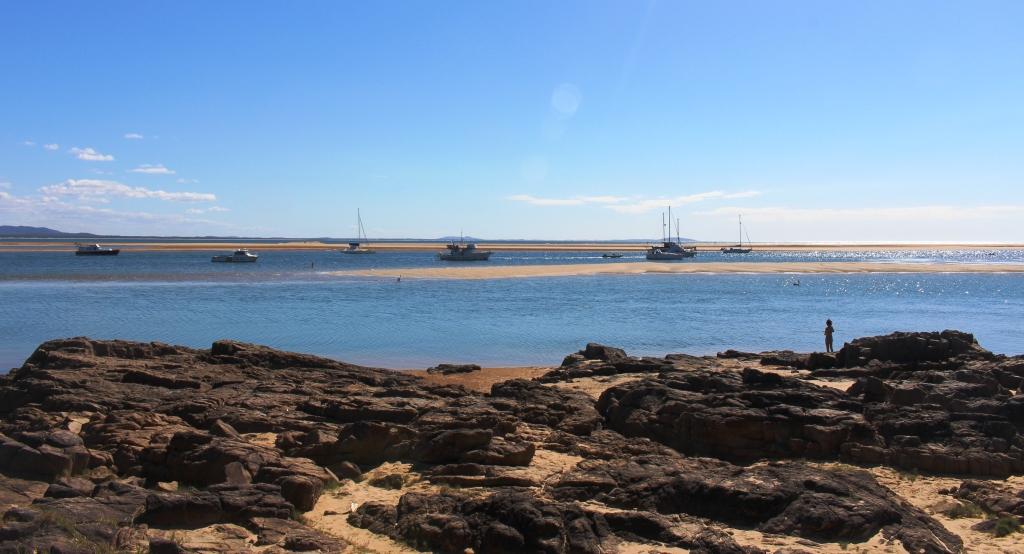
Boats at anchor in Round Hill Creek

Boats at anchor in Round Hill Creek

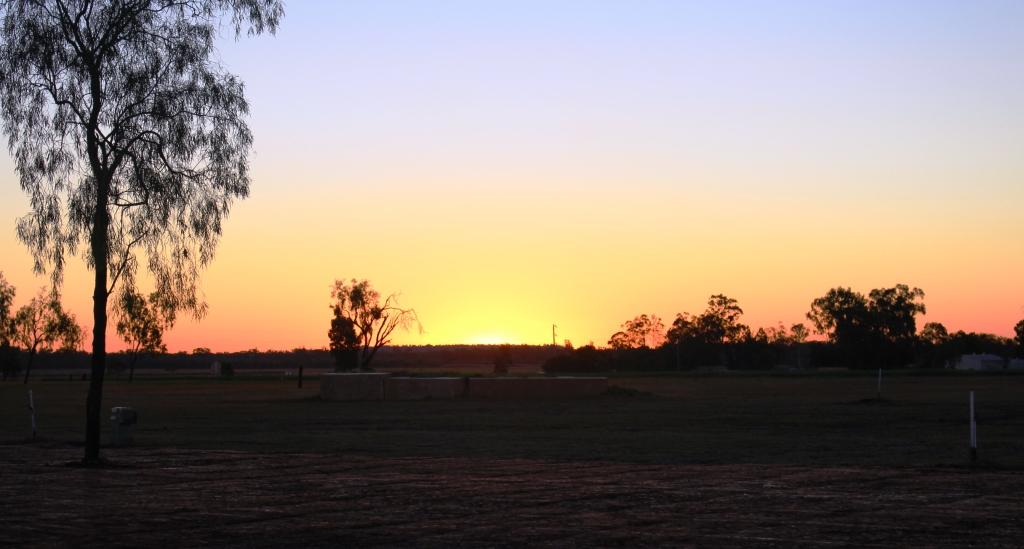
The sun sets over the agricultural fields at Biloela

The sun sets over the agricultural fields at Biloela

That took care of the first two days. For the remaining three days we decided to go inland to Biloela via Calliope and the Dawson Highway. We wanted to cross from Miriam Vale to the Boyne Valley, as an alternative road to Calliope, but tales of horrendous road conditions on the first part of that road put us off, so we stayed on the Bruce Highway.

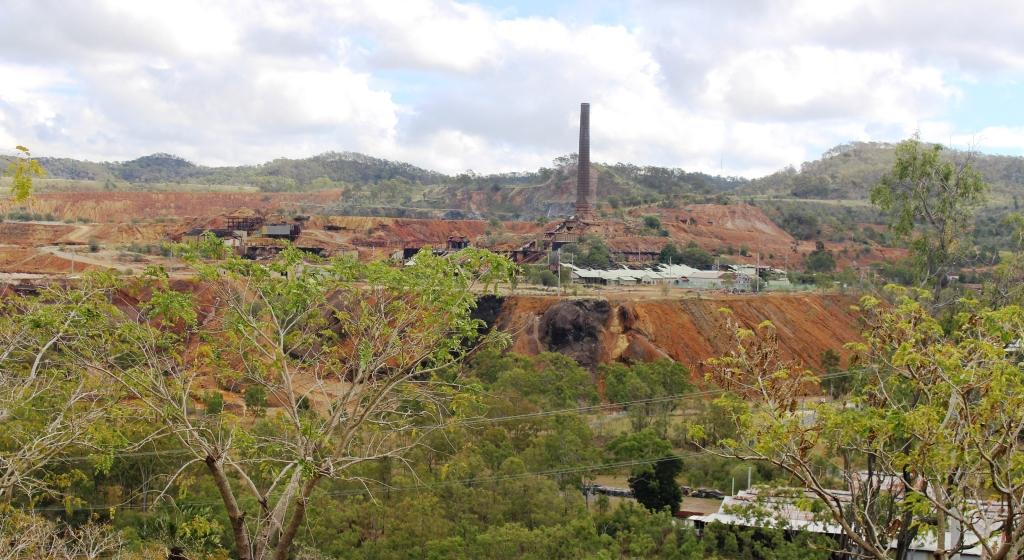
The 70 metre chimney at Mount Morgan gold mine

The 70 metre chimney at Mount Morgan gold mine

We returned to the Queensland Heritage Park at Biloela for the night. In our short trip north in June we had spent a night here so were on familiar tertiary.

The logical path to the Yepoon area from Biloela took us through Mount Morgan. I think we had only driven through this historic gold town previously but our plans for a closer look were made a bit more difficult when we found that the only decent caravan park in Mount Morgan was booked out.

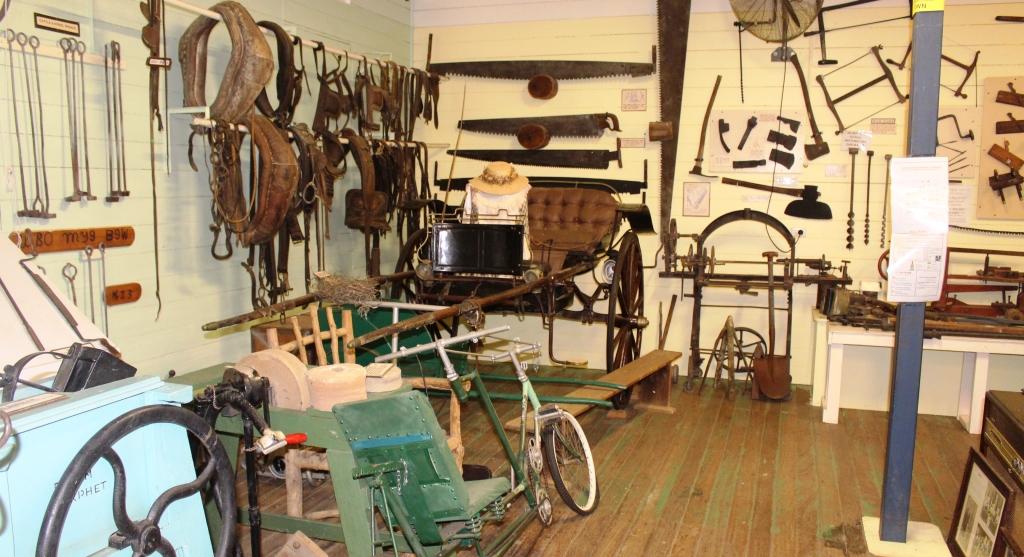
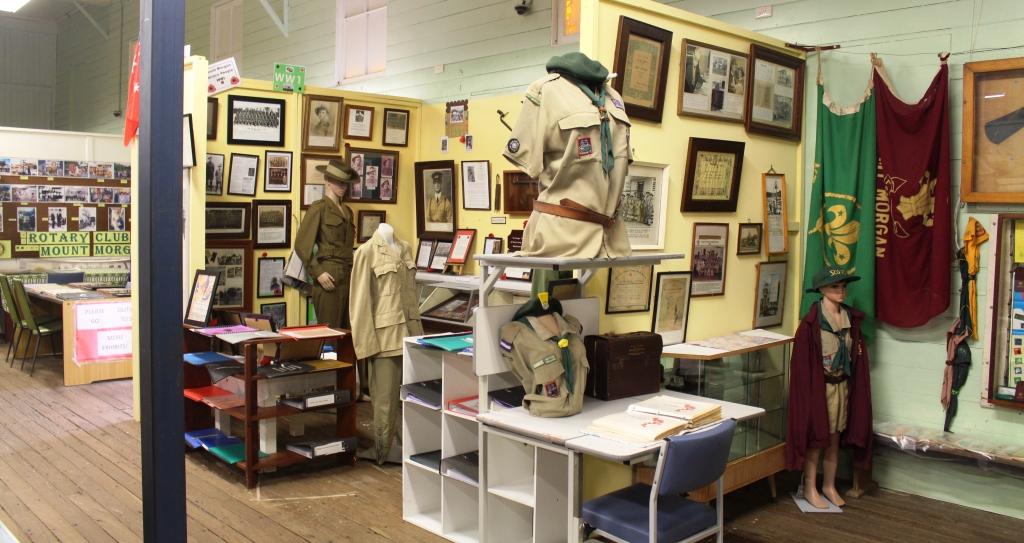
Mount Morgan museum display

Mount Morgan museum display

Mount Morgan museum display

Mount Morgan museum display

Mount Morgan museum display

Mount Morgan museum display

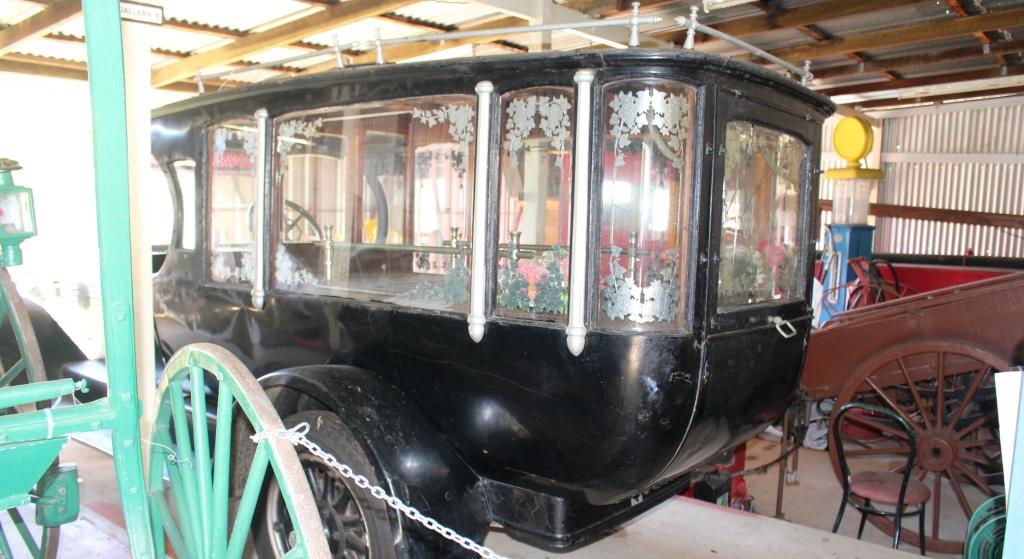
A rear view of Mount Morgan's first motor hurse

A rear view of Mount Morgan’s first motor hurse

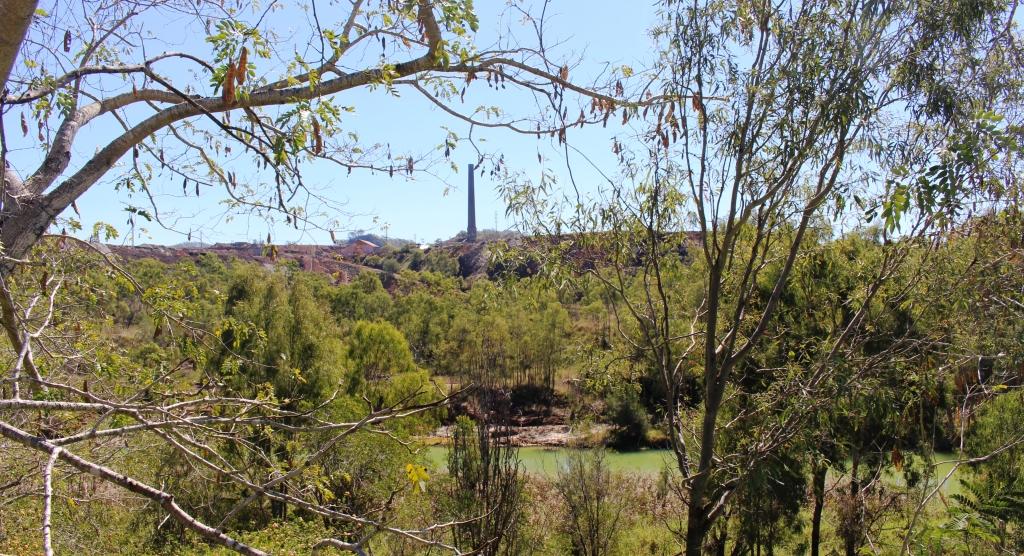
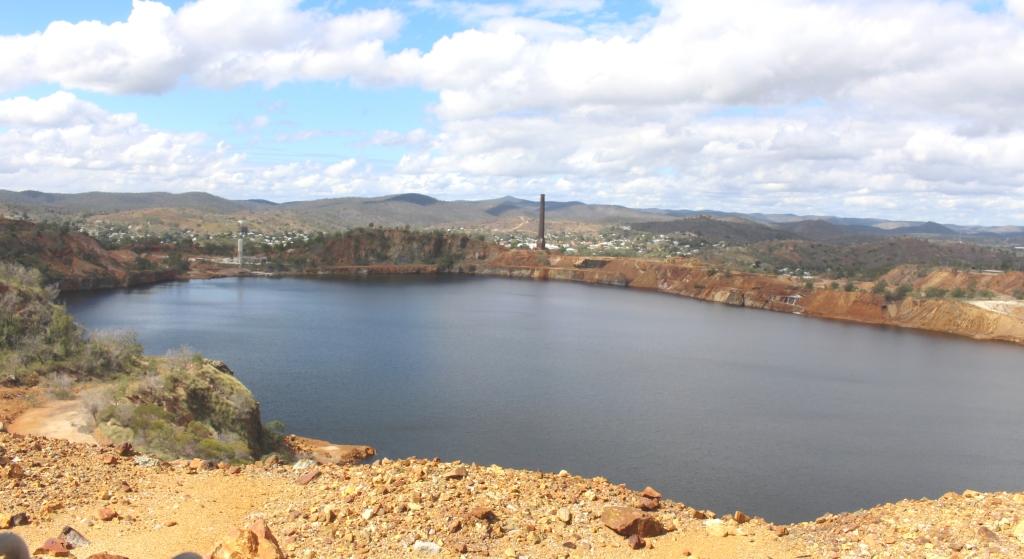
The old gold mine, viewed from a vantage point in the town

The old gold mine, viewed from a vantage point in the town

So we booked two nights at Gracemere, a town that is now almost a suburb of Rockhampton, but still close enough to Mount Morgan to make a day trip back. On our way through the town we drove around to get our bearings and to find mine viewing vantage points. We then visited the superb museum in the town. The vast collection of historical memorabilia is divided into categories and themes, with the mine dominating. But other sections contained material related to the hospital, armed forces, scouts and guides, religions, local aboriginal history and more.

We found that a tour of the mine was available on a daily basis so when we reached Gracemere we phoned to make a reservation for the next day.

The head equipment of the shaft that took miners to their work

The head equipment of the shaft that took miners to their work

Gold mining was commenced by two Morgan brothers in 1882 but the scale of operations increased in 1888 when a company was formed and more finance became available. Mining finally ceased in 1990 but there was a period in the late 1920s when the mine was closed for five years, due to flooding to extinguish a fire in the mine shafts.

The pit, one of the largest in the Southern Hemisphere, is now almost full of water

The pit, one of the largest in the Southern Hemisphere, is now almost full of water

But it was a very successful mine for most of its one hundred year life and many fortunes were made. One example of this was Walter Hall who was an early shareholder and director. Some of his fortune was later used to found the Walter and Elisa Hall medical research foundation.  This is just another example of the extent to which gold played such a dominant role in the foundations of Australia.

A model of the Mount Morgan pit displayed in the museum section of the company office

A model of the Mount Morgan pit displayed in the museum section of the company office

Our return to the caravan at Gracemere brought to a conclusion the brief period of filling in days. The next day we travelled to Kinka Beach, south of Yepoon, for our few days with sister Aileen and brother-in-law Colin, before we head west for the main part of this trip.

Preparing for the Cape

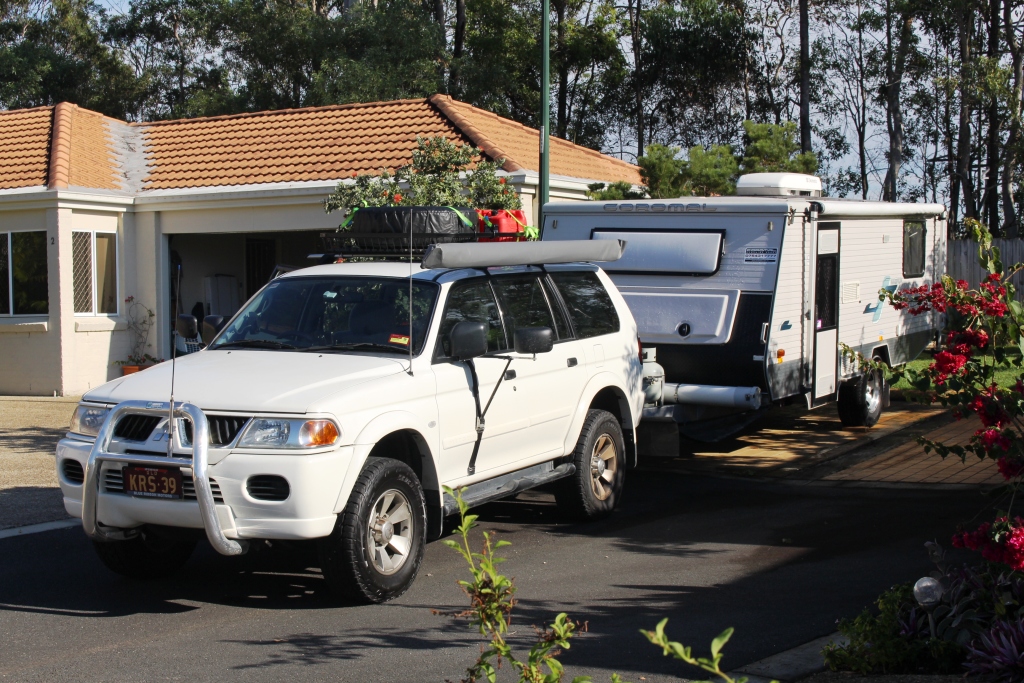
All set up for last year's trip to the Centre

All set up for last years trip to the Center

The car went in for a pre- trip service on Monday so I walked down to a local McDonald’s to spend the waiting time reading and drinking their coffee. But I found myself in a construction zone. They are rebuilding the place around the customers. I hid in an outside corner. Thankfully it was a bit warmer than previous days.

To get us started, here is a rough outline of our itinerary as it currently stands.
Days 1 to 3 – Along the road on the way to Airlie Beach. 1000 km in 3 days. Why hurry?
Days 4 to 6 –  Airlie Beach including a half day trip to Whitehaven Beach. We are spending my 75th birthday present Red Balloon voucher. Thanks family.
Days 7 to 10 – Various stops along the way to Weipa
Days 11 to 14 – at Weipa
Days 15 to 16 – Merluna cattle station
Day 17 –  Bramwell Station Stay – an over night stop to break the final run to the top into two days.
Days 18 to 21 –  Punsand Bay. This is as for north as you will find a caravan park with all facilities. The Cape is just a few km away to the east. While here we will do a day trip to Thursday Island and Horne Island.
Day 22 – Bramwell Station again
Days 23 to 25 – Traveling back to the southern Cape area
Days 26 to 40 marking our way home by a still to be finalised route. But we may extended our time on the Cape.

So that is the initial plan. We will keep you updated as we travel.