Destination Tasmania – Part 7 – Huon Valley & Bruny Island

19th & 20th February 2020

Please Note: Videos covering the material in this blog post can be found at the bottom of the post.

The objective that day was to travel to the furthest point south on our trip and the furthest south ever, in a lifetime of travelling. To better the day’s effort we will need to go to New Zealand, South America or to the Antarctic.
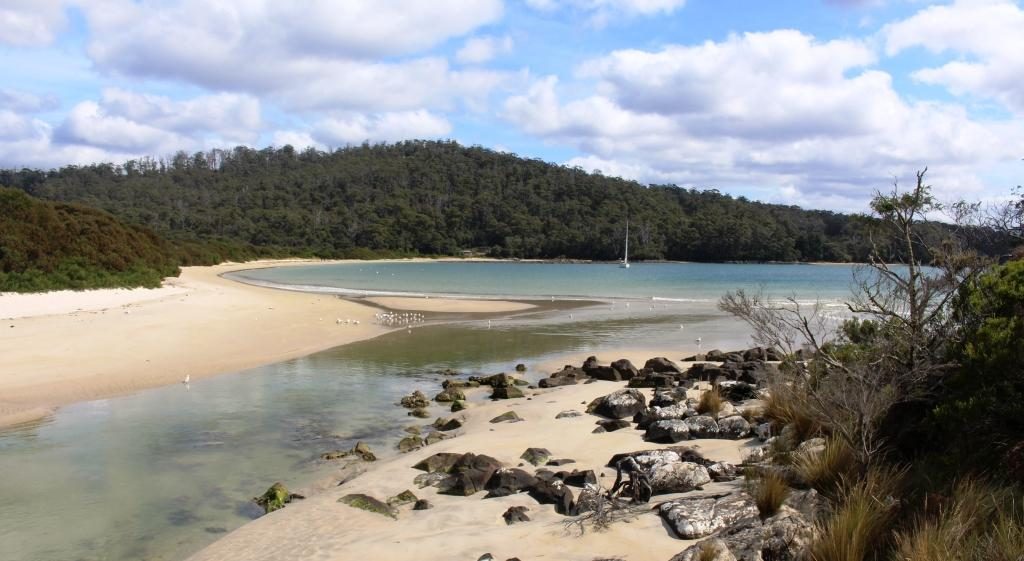
Cockle Creek flows into Recherche Bay near the southern tip of Tasmania.

Go to Google Maps or I maps and enter Cockle Creek, Tasmania. That’s where we were headed, as far south as we could drive in Tasmania. There is not much of Tasmania south of Cockle Creek, is there?

We had rain overnight, both while we were out to dinner and while we were sleeping. It was drizzling as we loaded the car and a brisk 13C. It dropped to 11C as we drove south, drove inland and climbed a bit, but the day improved and was sunny by lunch time. The mercury probably struggled to about 16C by mid afternoon, depressed by a cold breeze from the ocean.
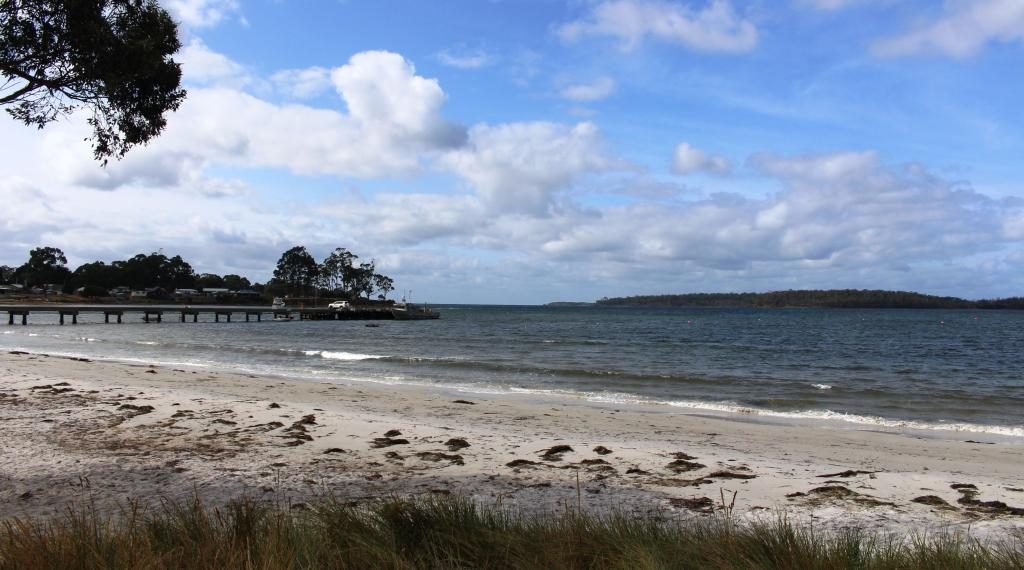
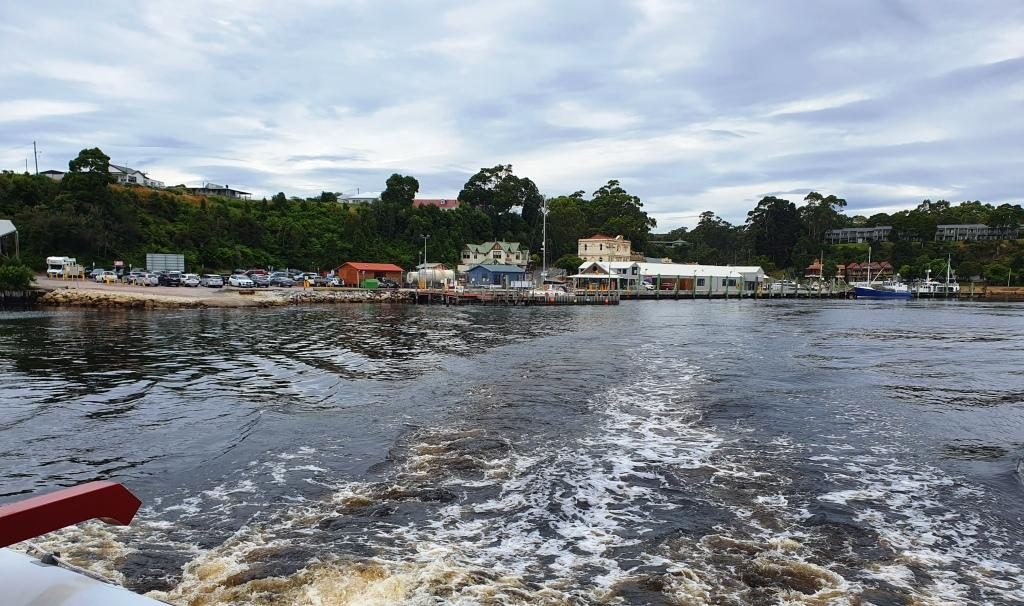
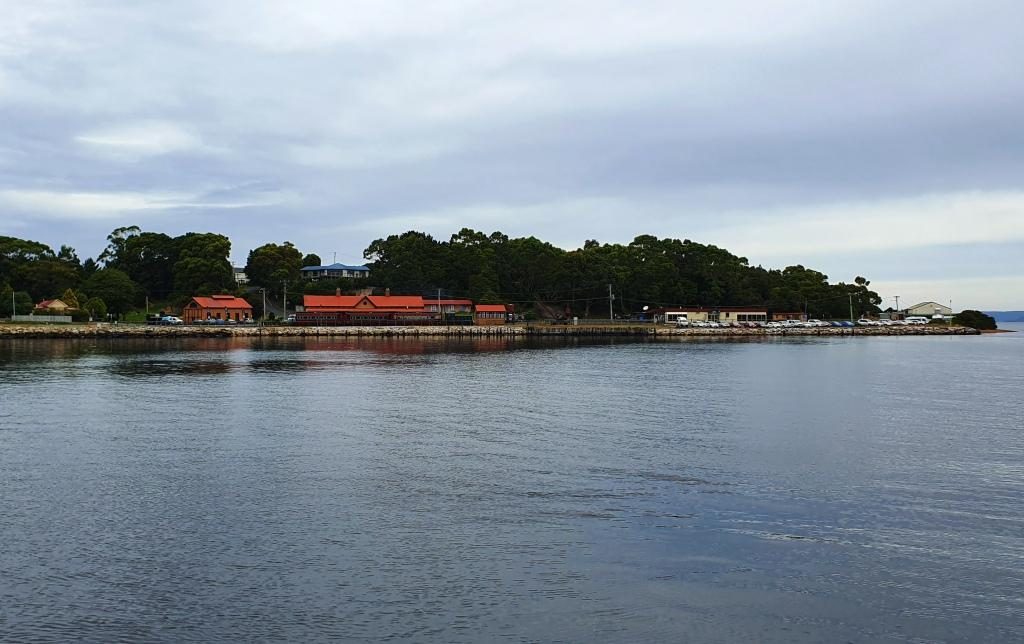
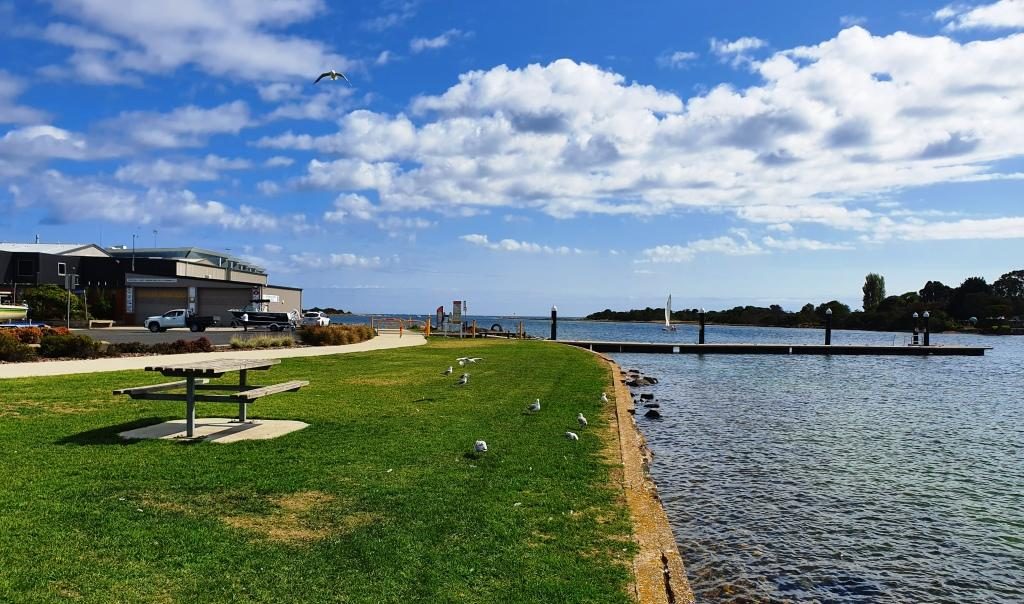
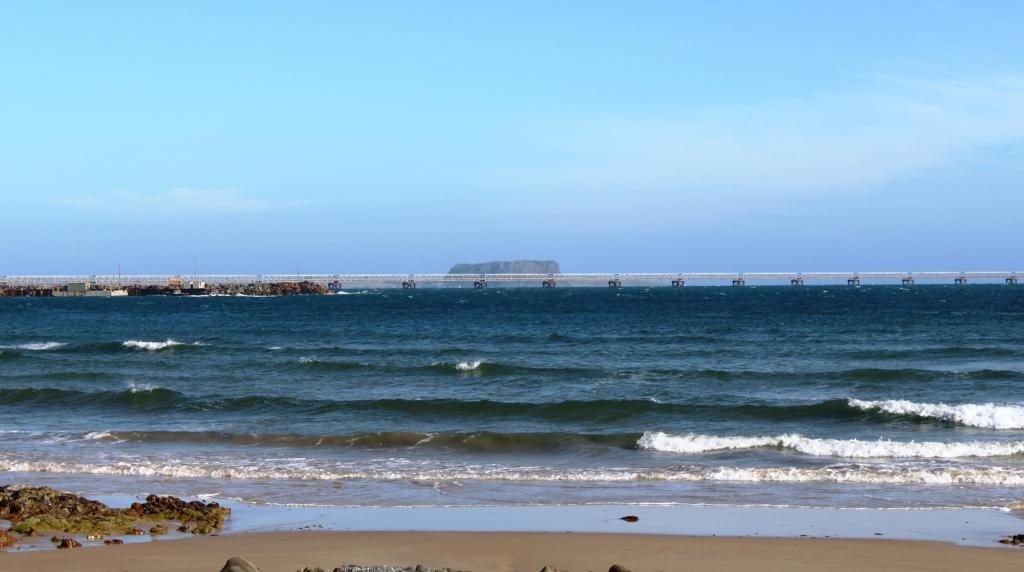
Southport bay and jetty. It was as cold as it looks.

We left Sandy Bay and used the Southern Outlet to Kingston and then went inland on the Huon Highway. Once we reached Huonville and crossed the bridge, the Huon River was to our left and remained there until we turned inland again. We returned to the water at Southport.
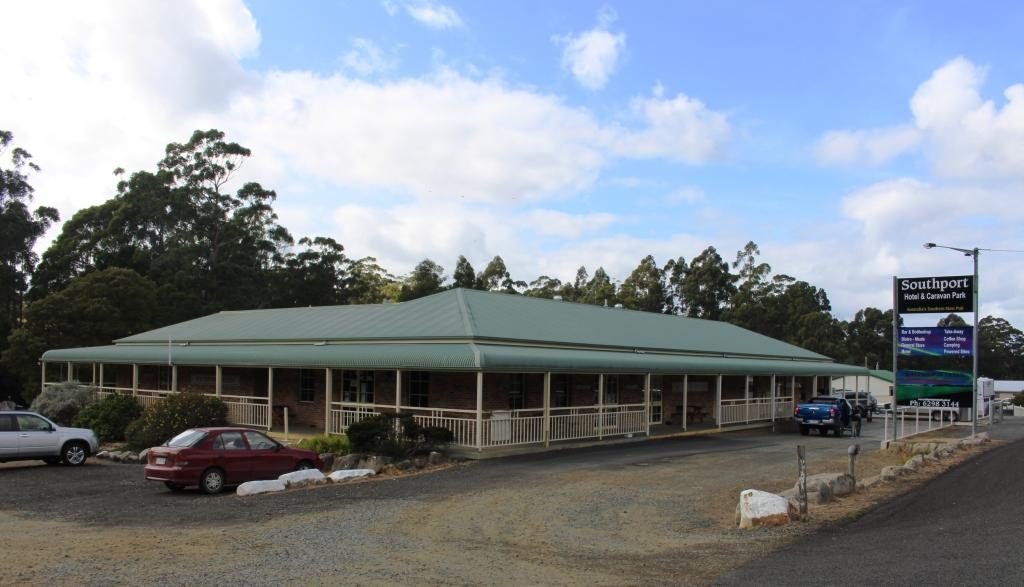
Southport Hotel has a caravan park at the rear.

Southport is a short detour from the main road. It has only a tavern with a caravan park attached by way of commercial facilities. The houses in the area mostly occupy high ground with water views, so are probably mostly holiday homes. We sat in the warmth of the car for coffee, which I made on the top of a post. Picnic facilities are scarce in Tasmania.
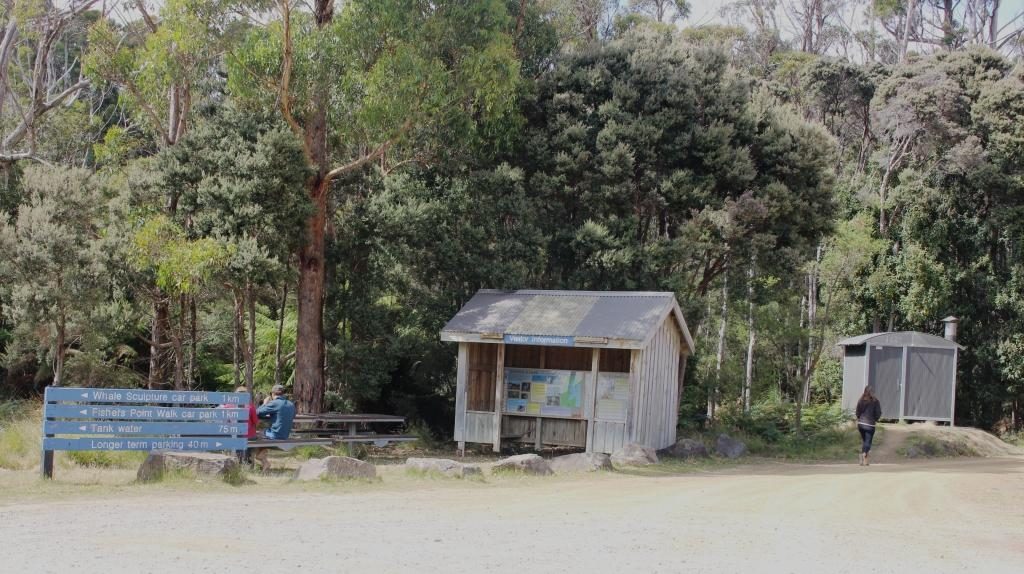
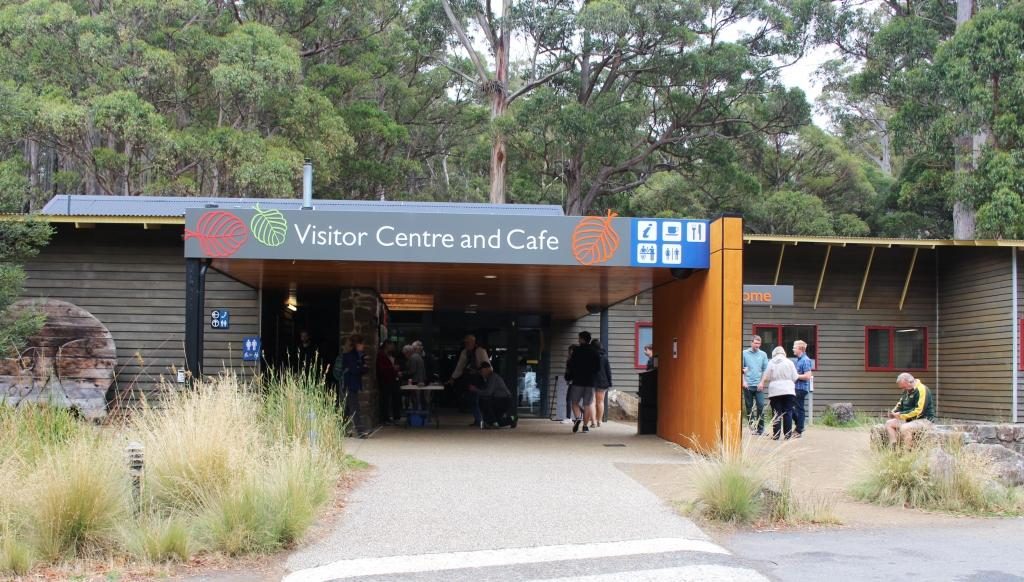
Day visitor facilities at Cockle Creek

Southport to Cockle Creek is about 30 km, 20 km of which is fair quality gravel. The rest is sealed. There are a couple of small hamlets overlooking Recherché Bay and then a succession of free camping areas, each with at least one toilet. At the end of the road is a more substantial area with a volunteer caretaker and individual camping spaces. It is a very attractive location. Had we still been caravaning we probably would have stopped there for a day or so.
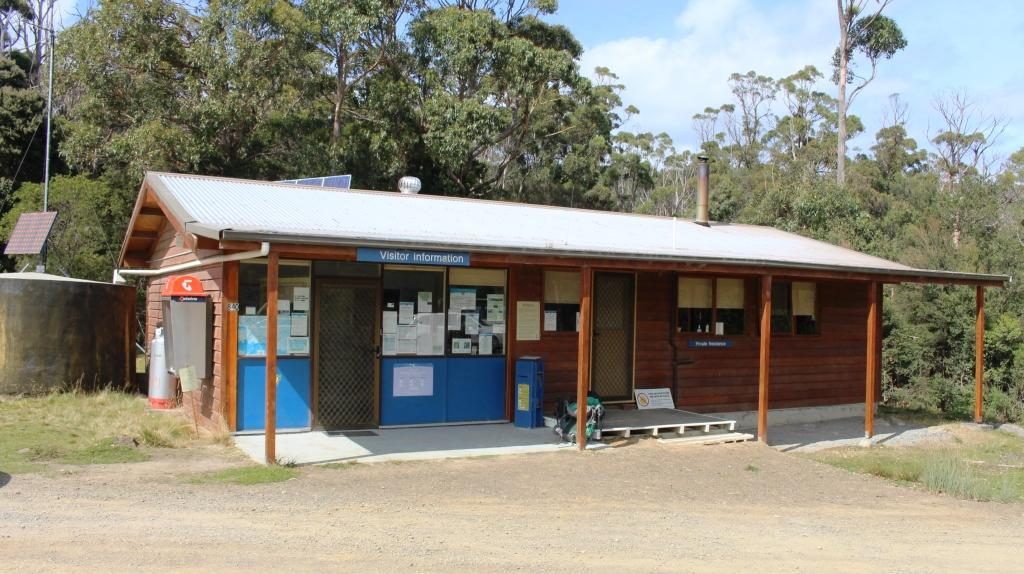
Cockle Creek visitor centre has a resident volunteer caretaker during the tourist season.

We drove as far as we reasonably could without a 4WD vehicle. In turning to find a spot to park so that we could look around, I forgot about the whale lookout and its bronze whale sculpture, produced by the sculpturer mentioned in our post of the Central Highlands. Bother! Now we will have to go back one day. We would be happy to do that, actually.

On the return journey, we paid more attention to the towns that we had passed through on our outward journey. Of these the most significant are Dover, Geeveston, Port Huon, Franklin and Huonville.
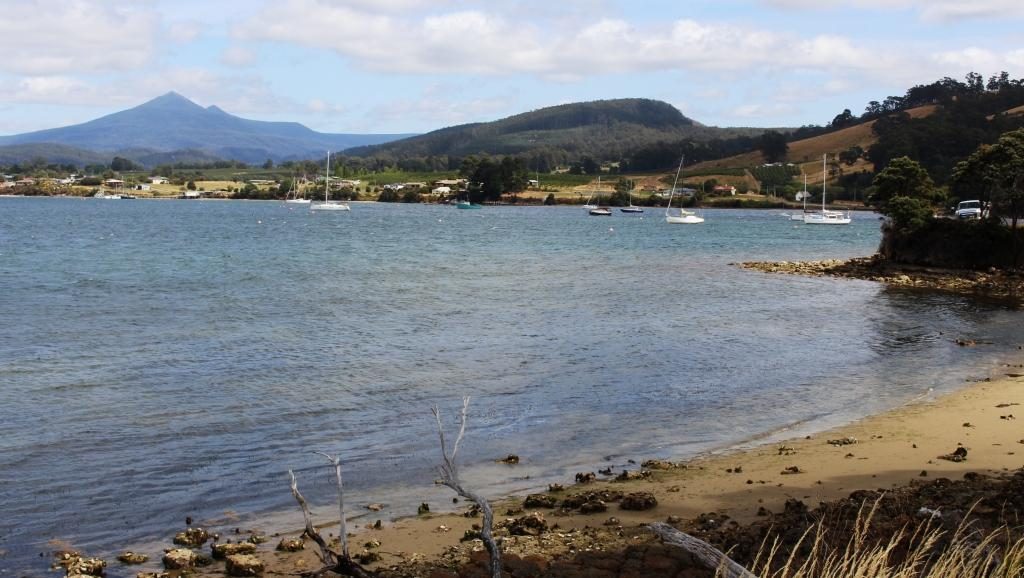
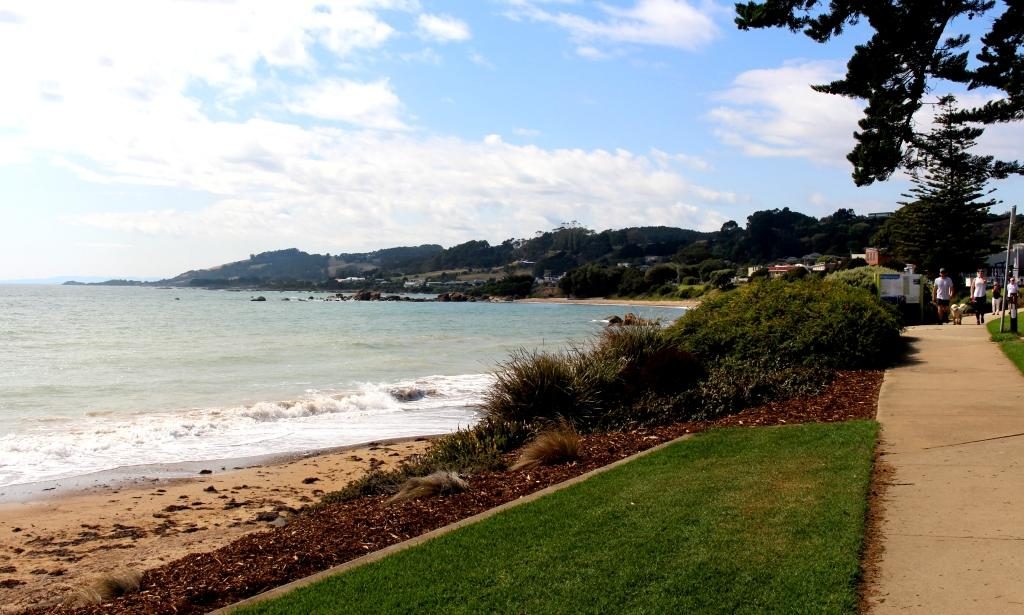
The residential coastal strip at Dover.

Dover is an oyster port. Geeveston calls itself the “Timber Town” and seemed to be a busy centre. We stopped there for lunch. There is a timber themed park not far away but it has been closed since it was damaged by bush fires last year. There are also national parks and caves in the area.
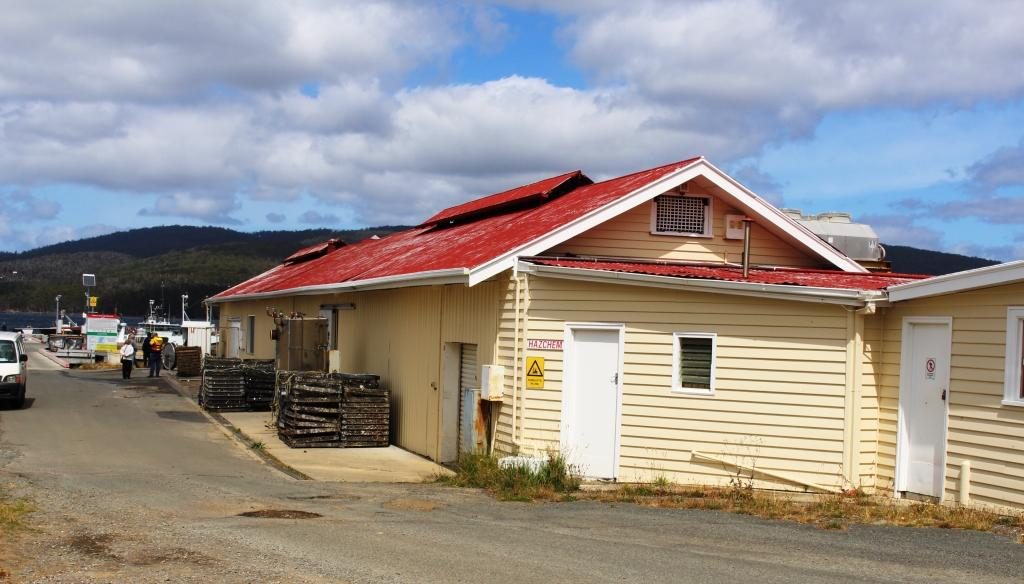
Oyster sheds and wharf at Dover.

Port Huon has a substantial wharf which is now a service area for the numerous salmon and trout farms in the Huon estuary. A salmon industry support boat that we had seen in Hobart on Monday, was at the wharf as we passed.
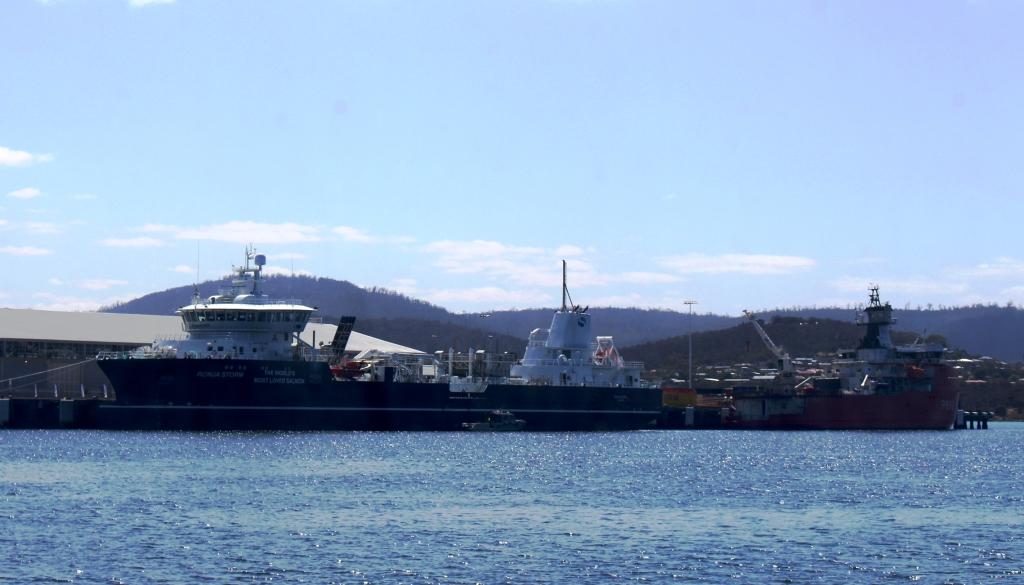
The vessel on the left is the Tuna support vessel berthed at Hobart. The ship on the right is a French Antarctic expedition vessel.

Franklin appears to have been the major river port in the days before road, when supplies came from Hobart by boat. The town is host to the Wooden Boat Information Centre. The Centre is just what its name suggests but also conducts a school of wooden boat building. Visitors can look through glass partitions to watch ship wrights in action.
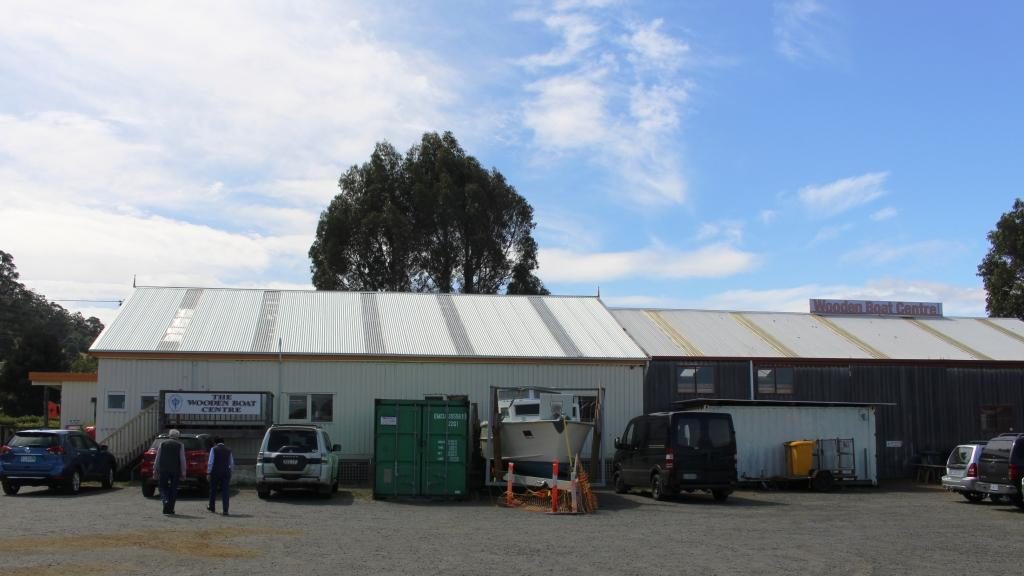
The Wooden Boat Centre at Franklin.

Tasmania conducts a wooden boat festival every other year, based at Franklin. This was an off year. If the festival had been on this year we would have tried to fit it into our itinerary.

Day sailing sail boat at Franklin wharf. The Huon River is wide at this point.

Huonville is the major town in the Huon Valley and is by far the largest. The Huon River is a broad stream where the road crosses it south of the town and broadens further into a substantial inlet, as it nears the sea.
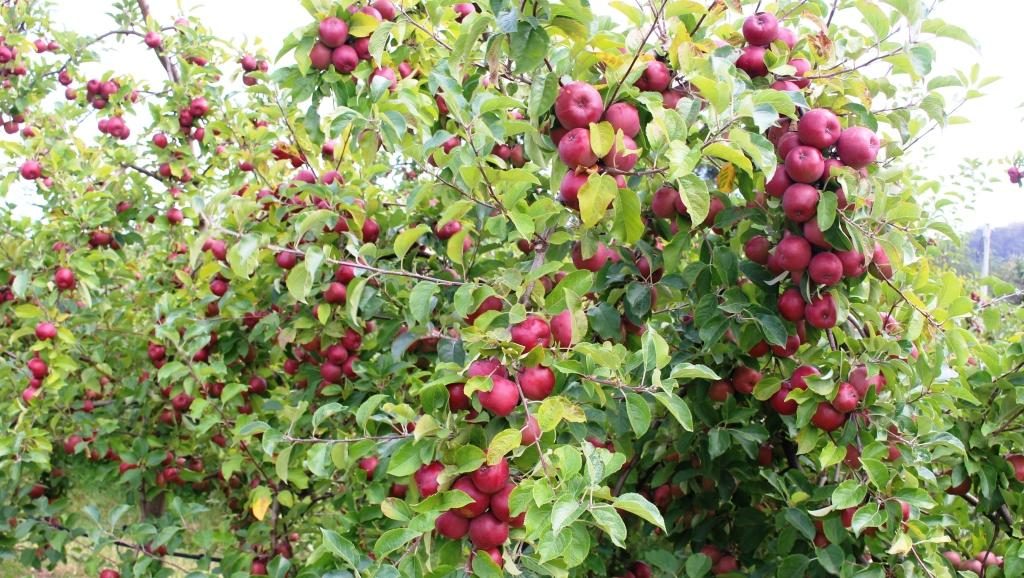
Apples almost ready to pick. I resisted the temptation to sample one.

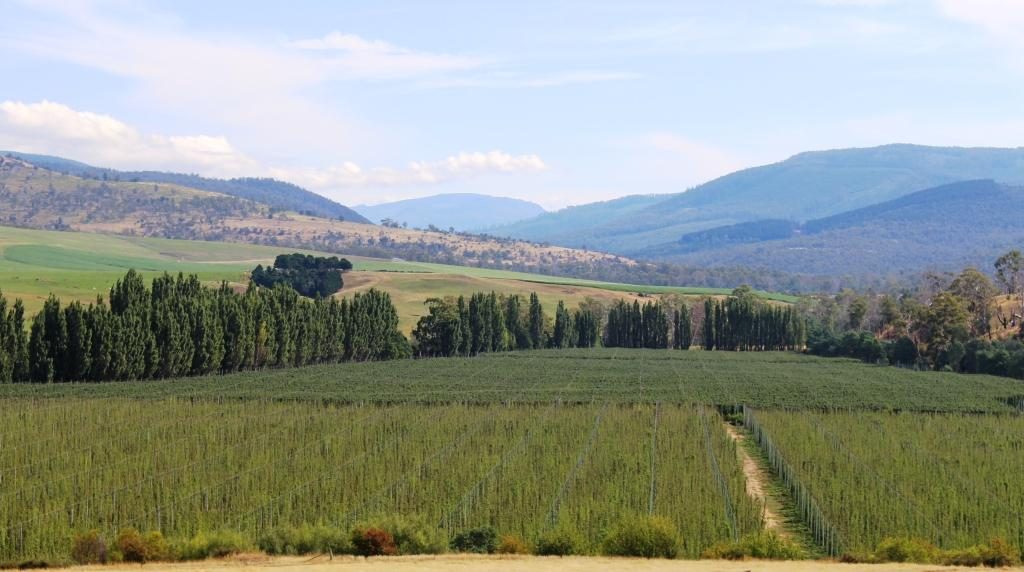
The Huon Valley is still a major fruit producing area although it produces nothing like the volumes export fruit of the days before Great Briton joined the European Economic Community.  Apple production remains substantial. Pears and stone fruit, berries and of course grapes, are also grown in the area.
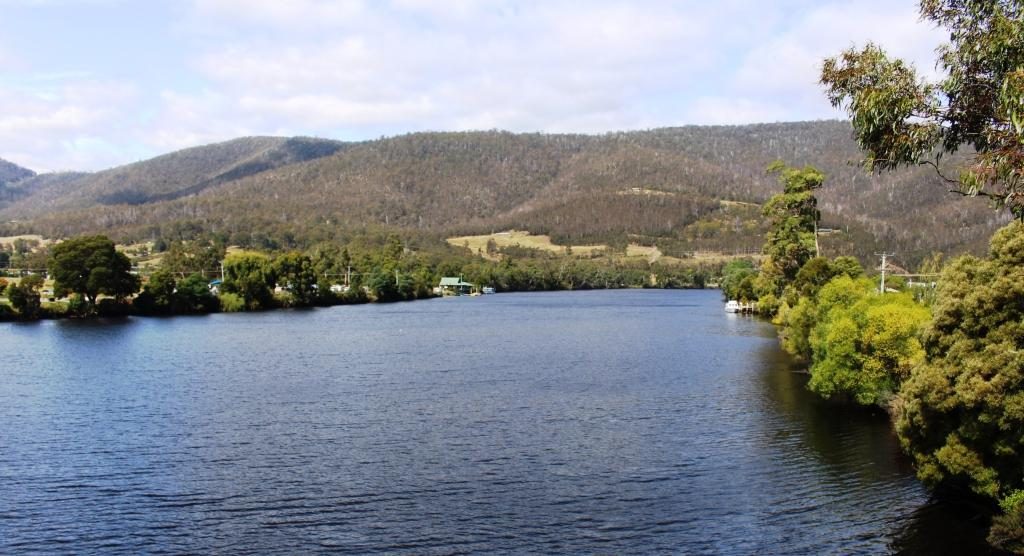
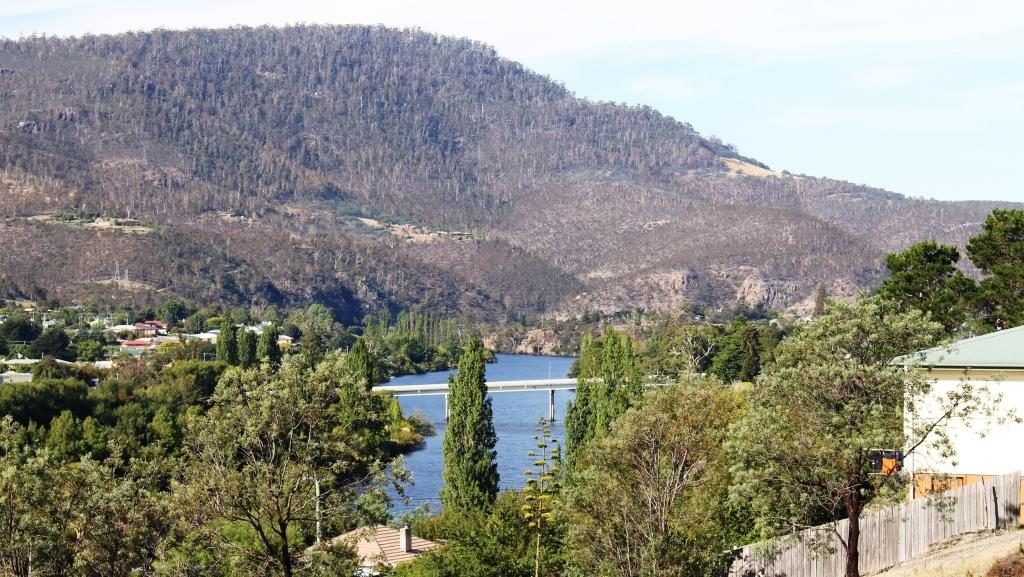
THe Huon River at the bridge at the south of the town.

We turned off at Huonville to pass through Cygnet, itself a town of reasonable size, before cutting across to the small town of Snug where we planned to snuggling for the next two nights. The heater supplied in the cabin was most welcome.
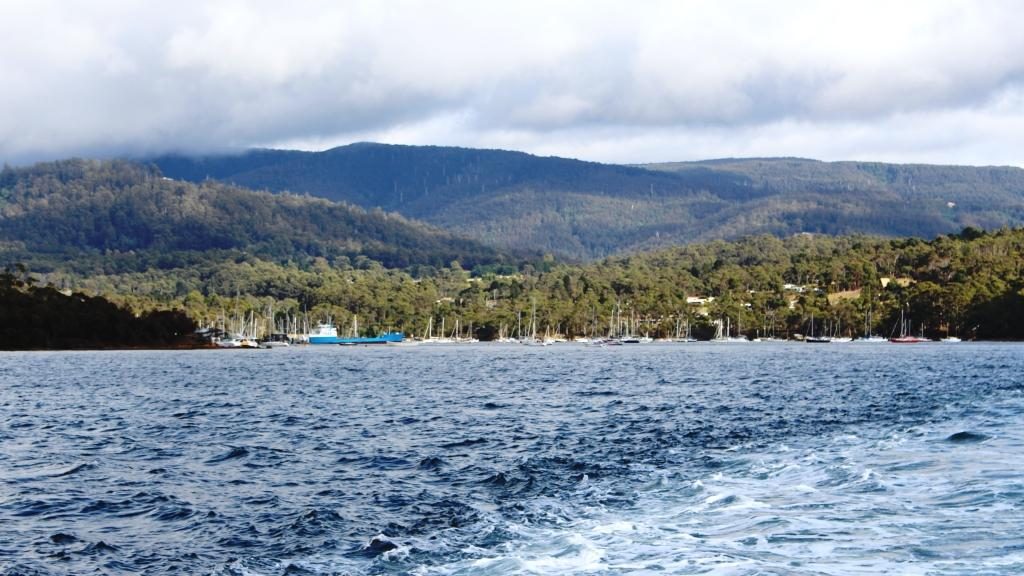
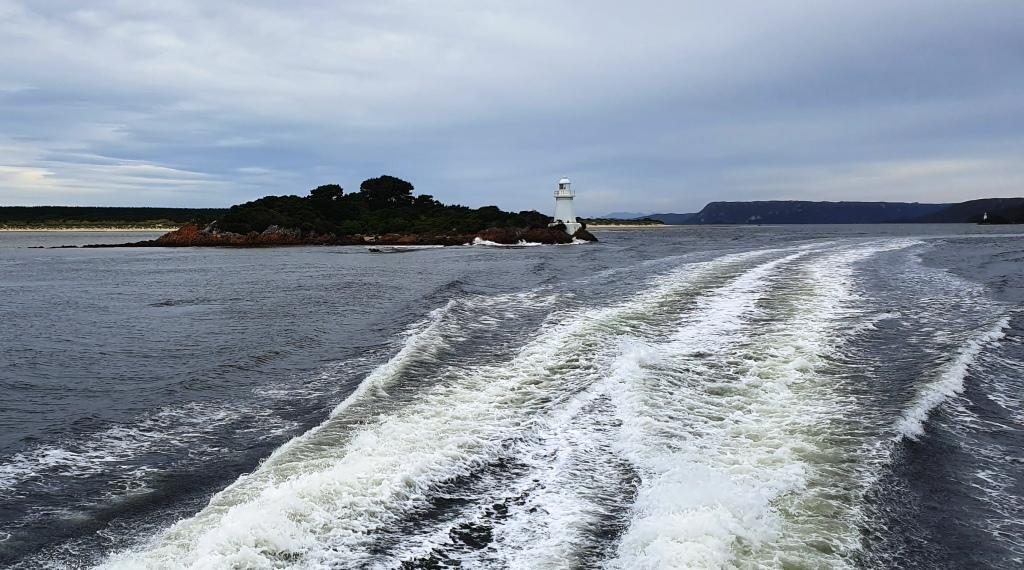
Kettering receding in our wake as we head for Bruny Island.

Snug is near Kettering, the small town from which the ferry sails to Bruny Island. Its proximity was why we stayed there.  A drive of about 6 km brought us to Kettering and to a ramp facility designed for its purpose. A similar facility on North Bruny only has a snack bar in addition to the ramp.
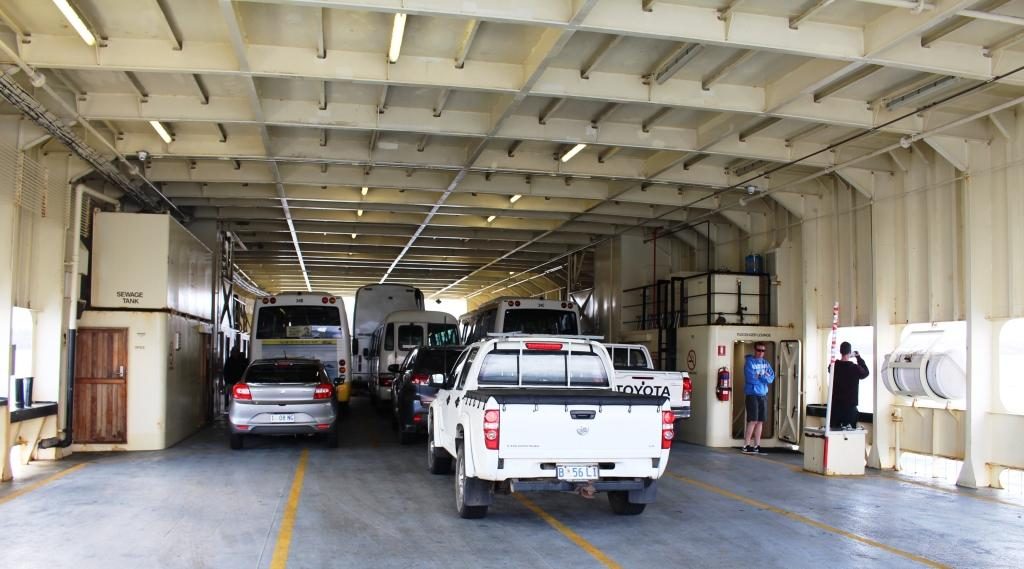
We travelled on the lower deck. More cars above.

Bruny Island is a piece of rural southern Tasmania that remained detached from the rest, so needs a 15 minute ferry journey to get there. That costs $38 return unless you catch an early ferry. That will save you about $6.
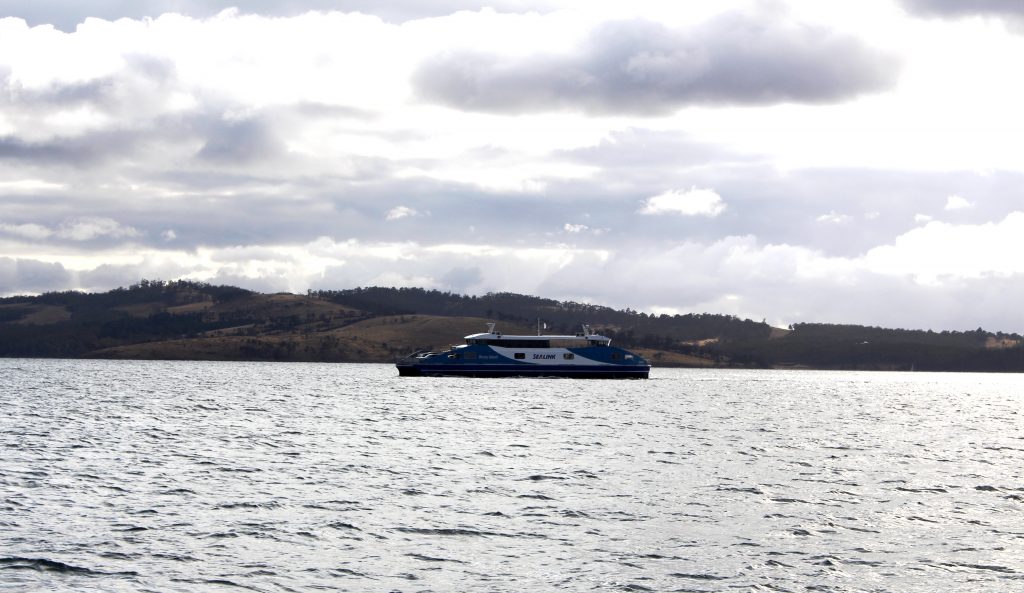
A sister ferry returning from Bruny Island.
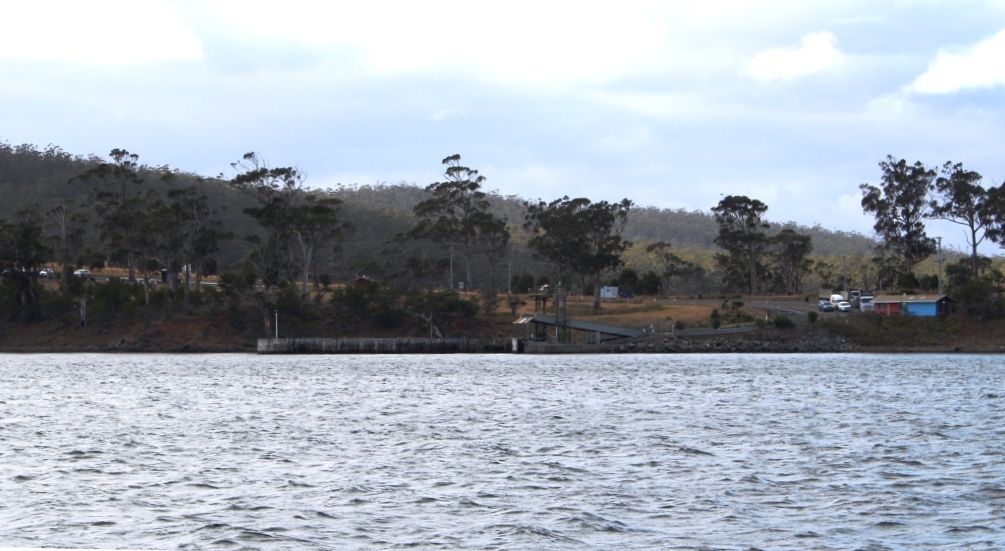
Arrival and departure ramp at Bruny Island. There is no town there. Only a snack bay for long queue days.

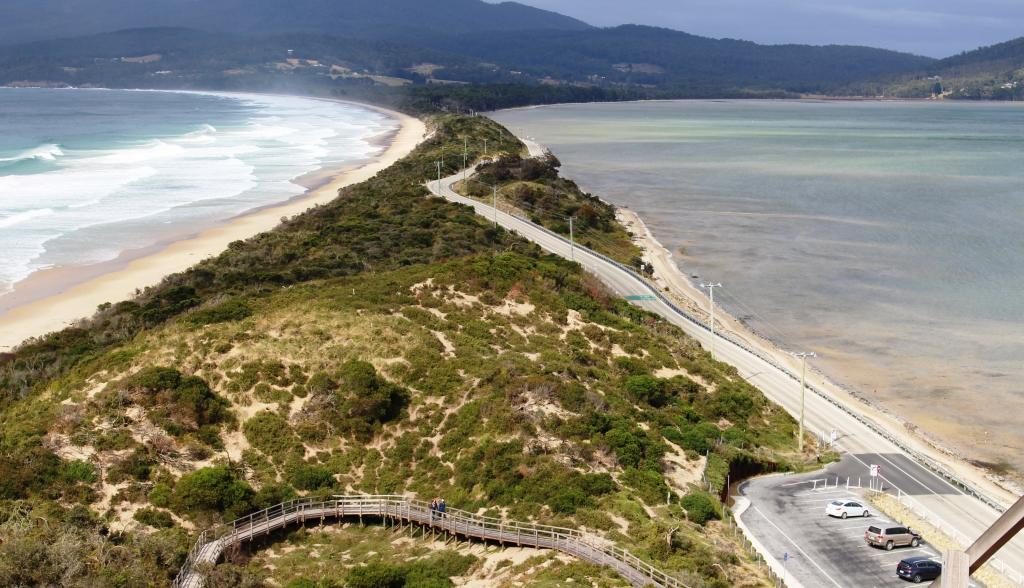
North and South Bruny Island are joined by a long narrow isthmus named The Neck. It is mostly composed of sand, with beaches on both sides and a prominent hill (probably a sand dune) at the northern end. Stairs and boardwalks lead to the top of the hill for views and to the beach. Views are 360 degrees and sweeping, particularly to the south . Toilet facilities are located here. Tourist busses stop for the view.  A Penguin rookery is located on the ocean beach.
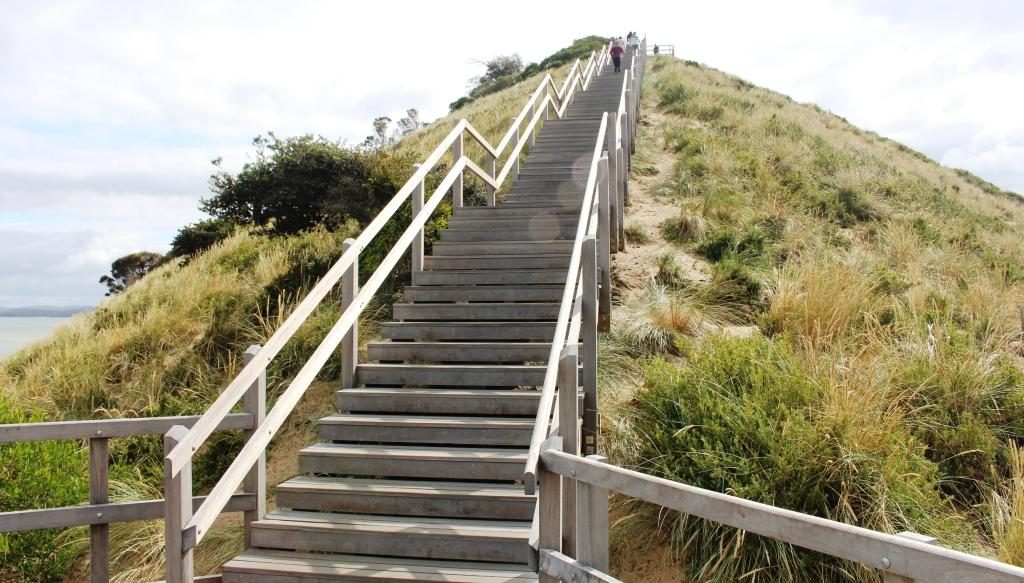
Stairs to the lookout at The Neck.
The Neck stretches south to South Bruny Island.

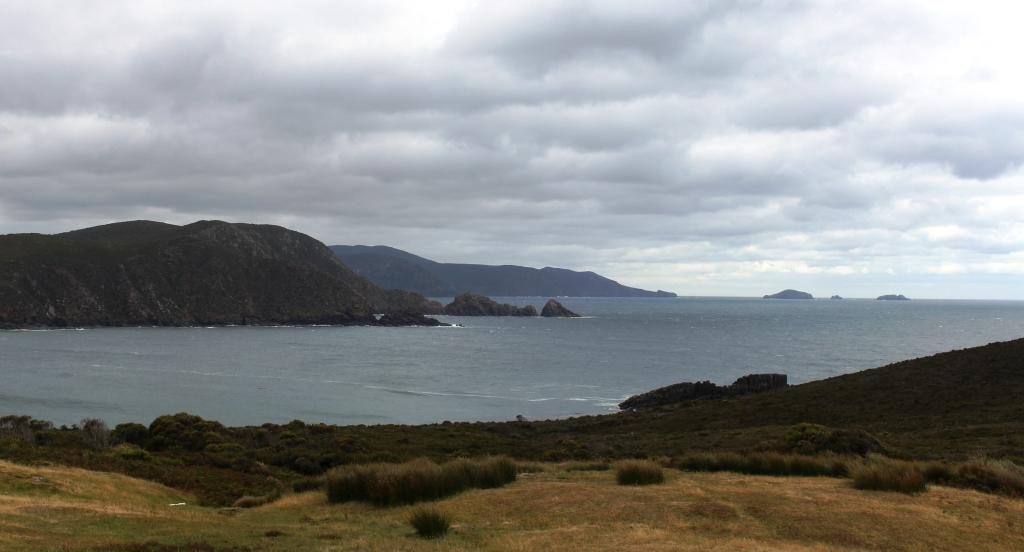
Like most places where mountains meet the sea there is spectacular scenery, particularly at the southern tip around the Cape Bruny Lighthouse and at Adventure Bay to the south east.
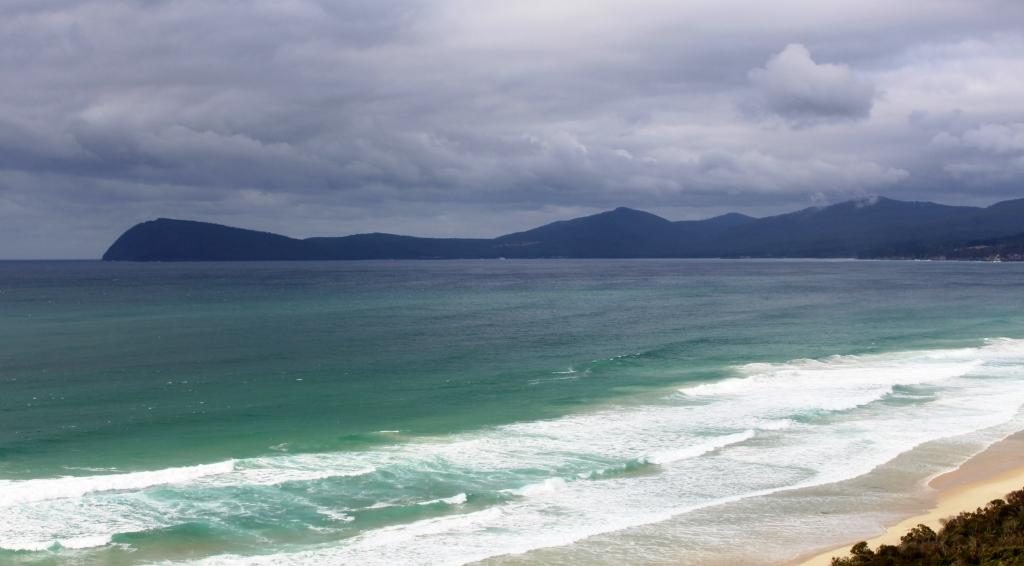
To the south east Grass Point marks the eastern land point. Adventure Bay is located to the left of Grass Point.

You get to the Lighthouse and its scenery under your own steam on a typical national park road with a very rough section inside the lighthouse grounds. Excellent scenery along the road with plenty of places to pull over and look.
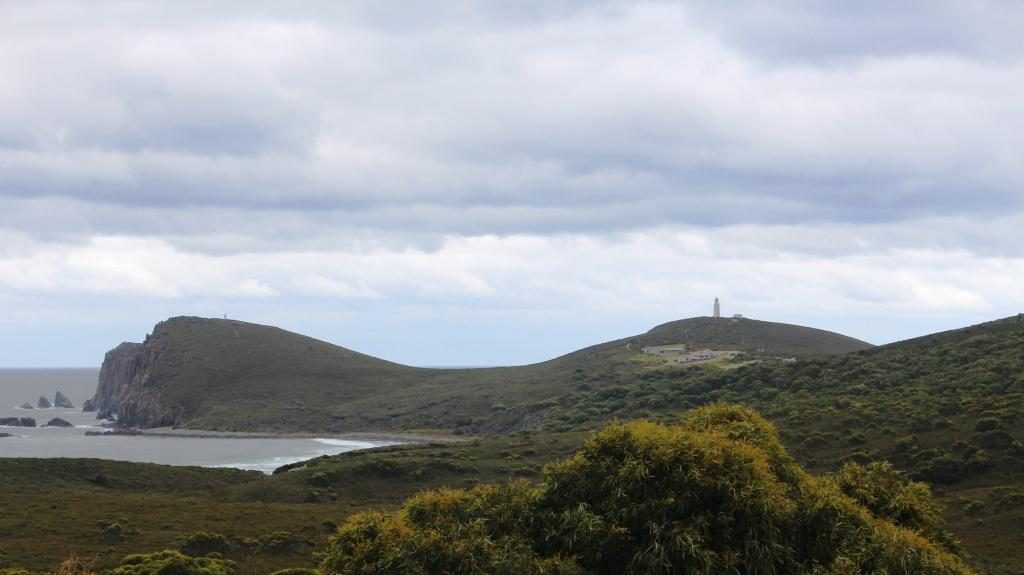
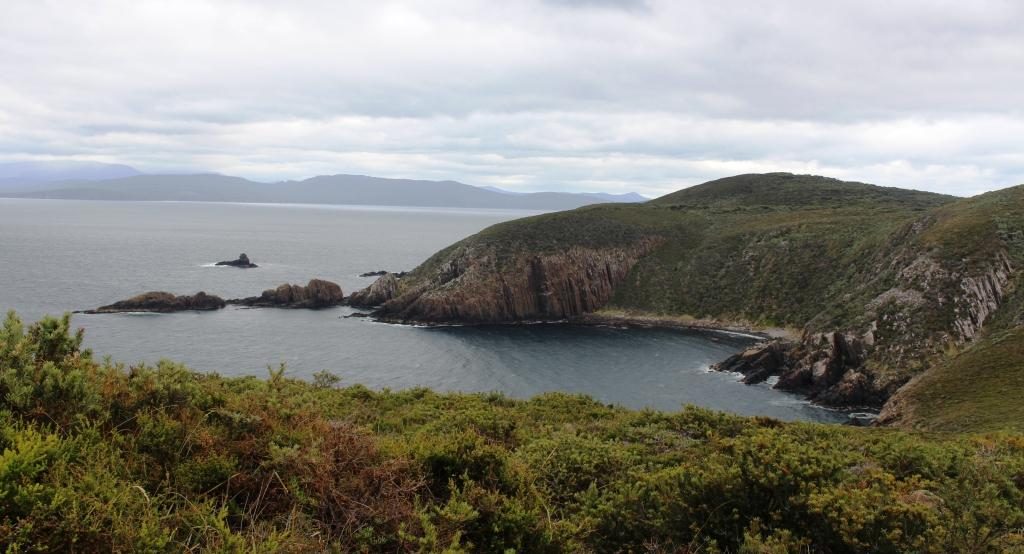
Cape Bruny and the original lighthouse. The new light is on the hill to the left. If you look closely you can see it.
From the lighthouse looking north west towards Southport.

I didn’t get to see the interior of the lighthouse or climb to its observation deck. It was fully booked to bus tour groups. But I was able to walk to the original and now unused lighthouse and enjoy the magnificent views of the coast. A new automatic lighthouse has been built on an adjoining headland, to the east.
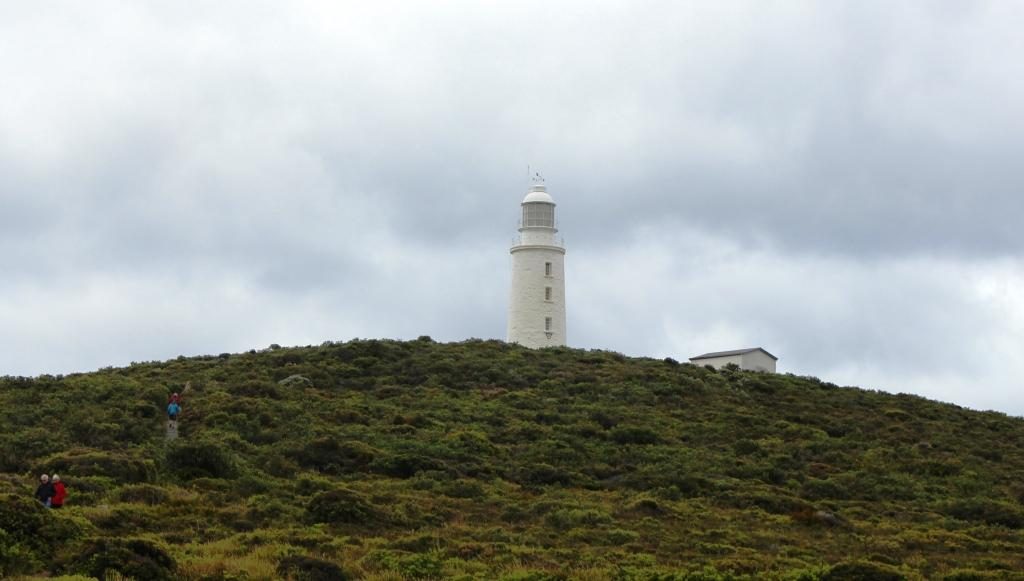
The original lighthouse is reached by a short walk from the car park.
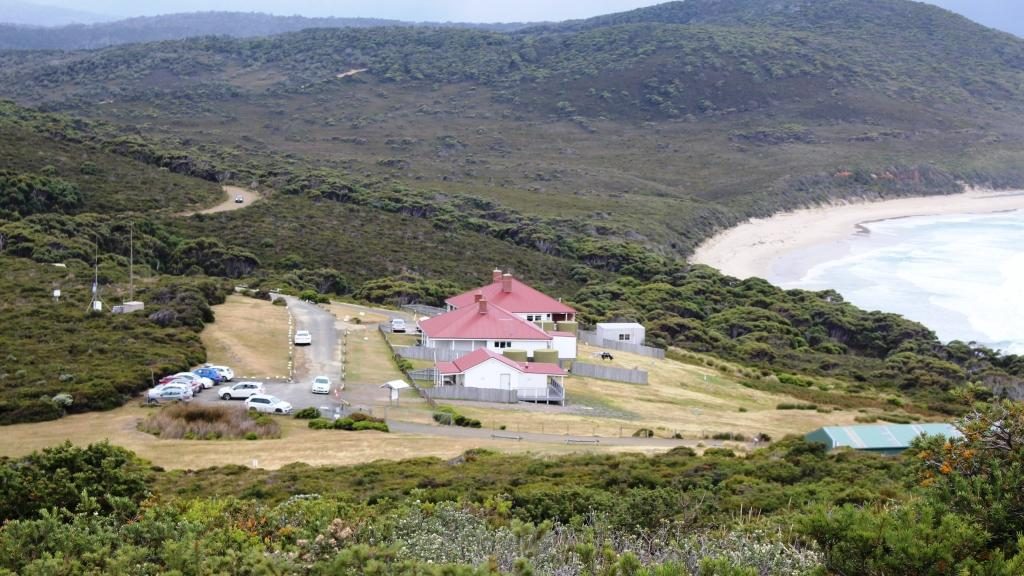
Lighthouse keeper cottages. Nearest is a museum and visitor facility. The others are available for holiday rental.
View from the car park towards the north east and the south eastern tip of South Bruny Island.

Adventure Bay is reached by a drive of 40 km, if you choose the best road. You head back to the southern end of The Neck and then turn south for about 10 km.
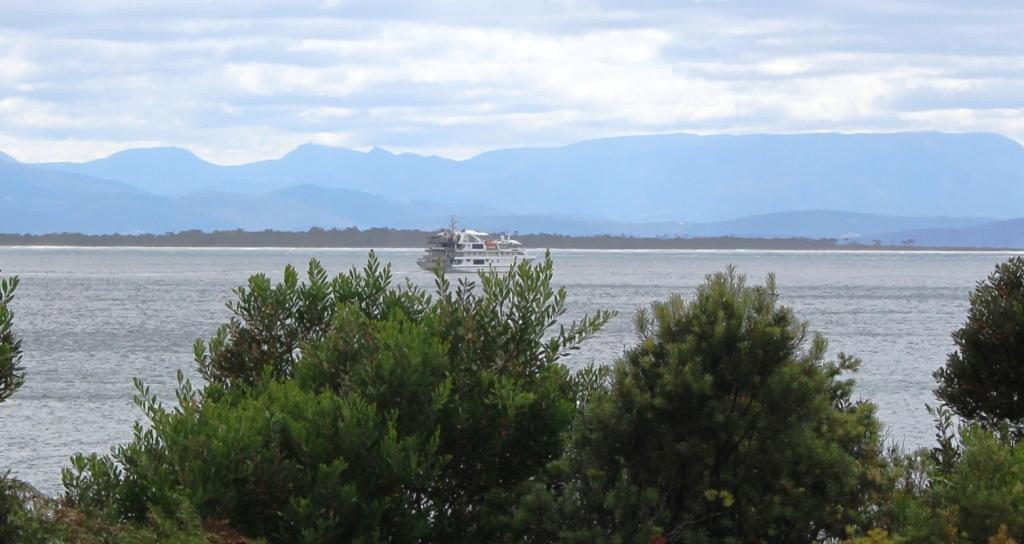
A smaller Tasmanian cruise boat that does tours around the south coast. It was in Adventure Bay.

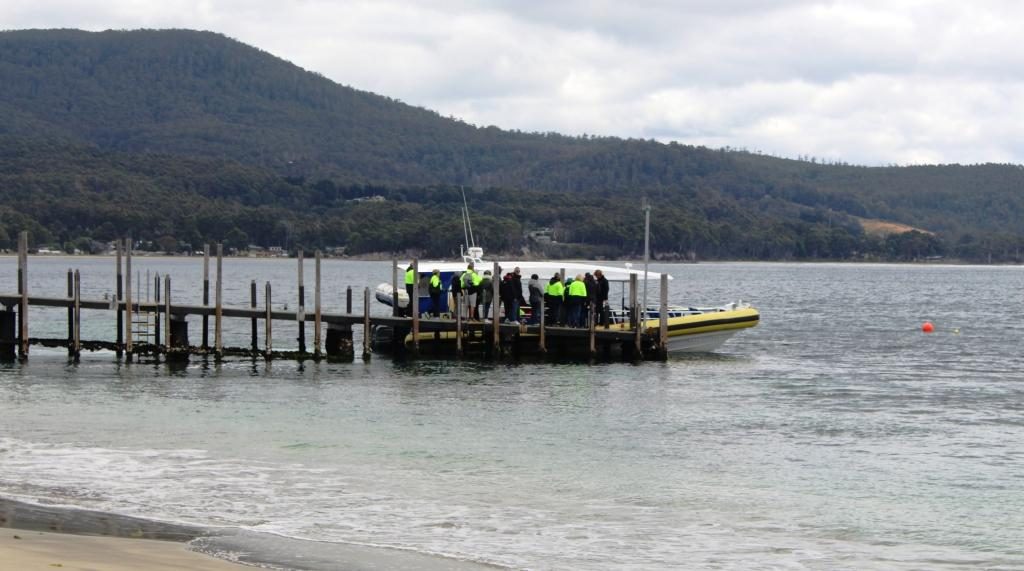
Pennicott Wilderness Journeys have a base at the end of the road where they will put you into a small boat to show the wonders that are out of sight around Grass Point. On that tour you get to see Fluted Cape and Penguin Island plus wild life, including seals. That costs about $125 and you could get cold and wet. But that is adventure for you. On the day of our visit the seas were smooth and there was no rain, so the experience would have been quite pleasant. Bookings are normally necessary. The tours were fully booked several days in advance of our visit.
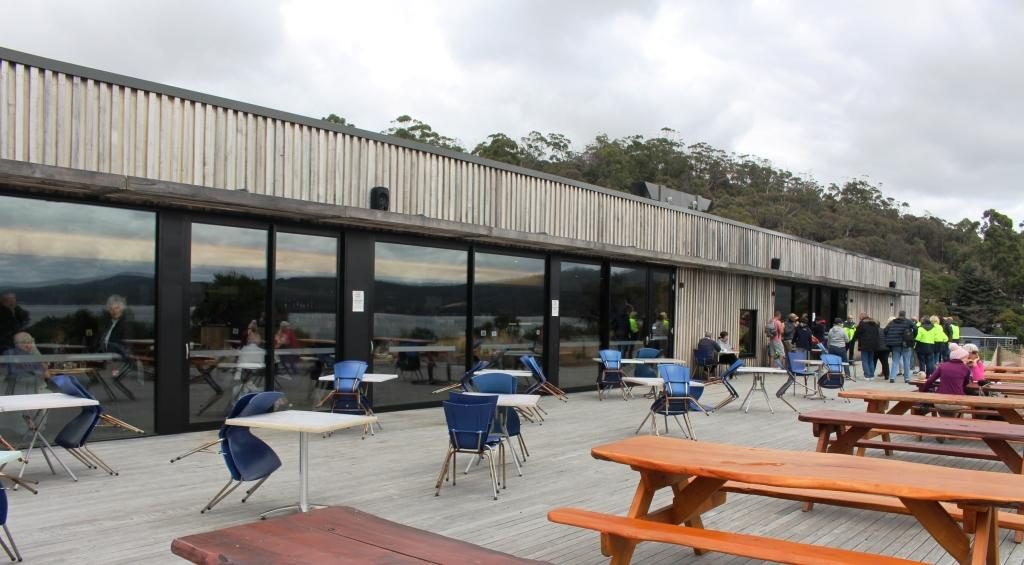
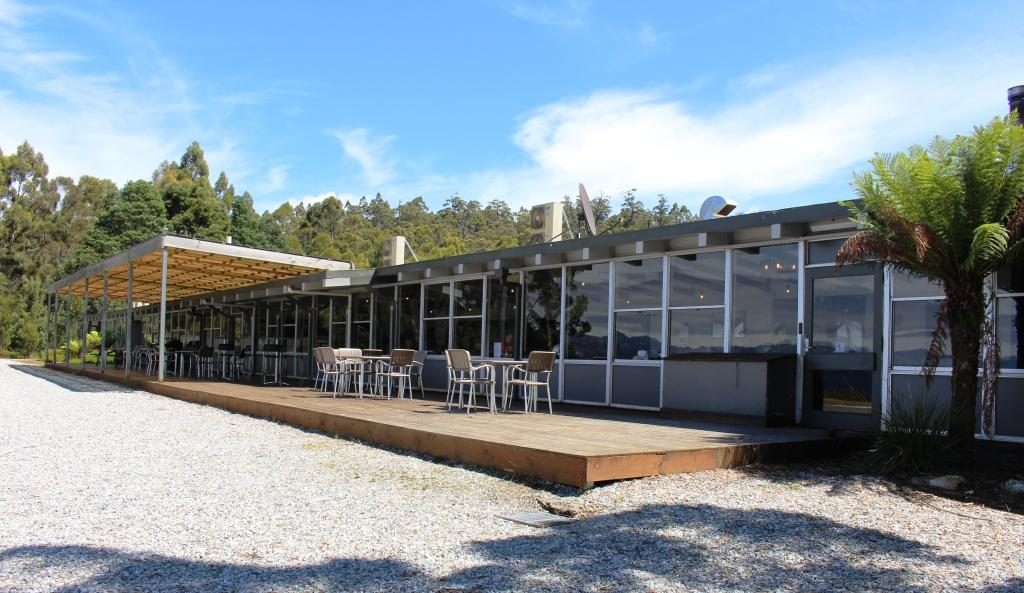
The deck at the Pennicott tour base at Adventure Bay. The restaurant is behind the glass doors.
A tour boat preparing to depart on the Fluted Cape tour.

We knew that the tour base has a great restaurant, so it was on our list as a lunch spot. The building is on the back of a sand dune. The restaurant overlooks a broad deck and has a view to the north east over Adventure Bay. We were not disappointing with our choices from the extensive menu. See below.
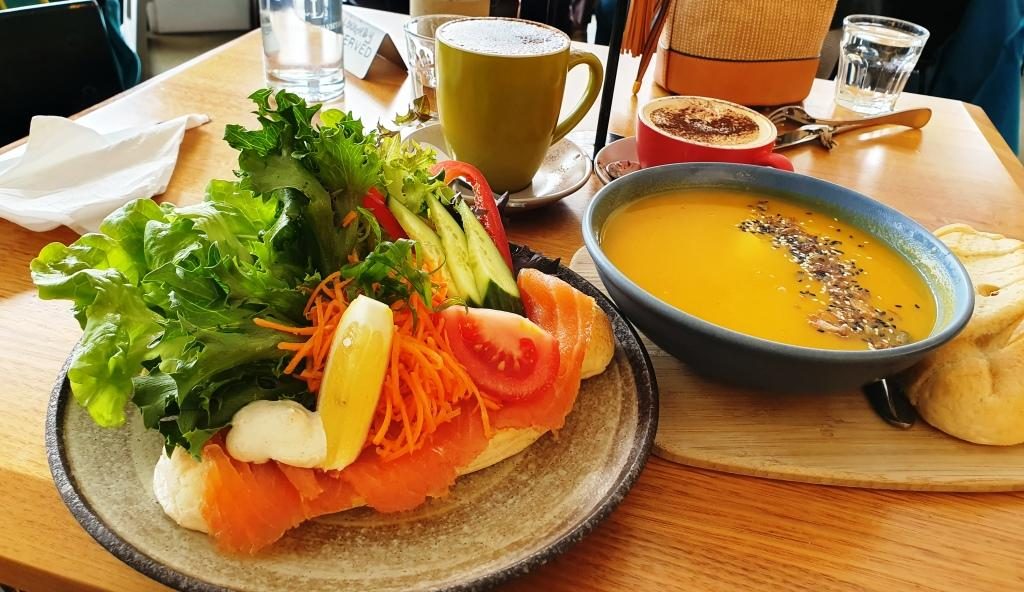
Adventure Bay lunch. Soup was good on a cool day and I love fresh smoked salmon.
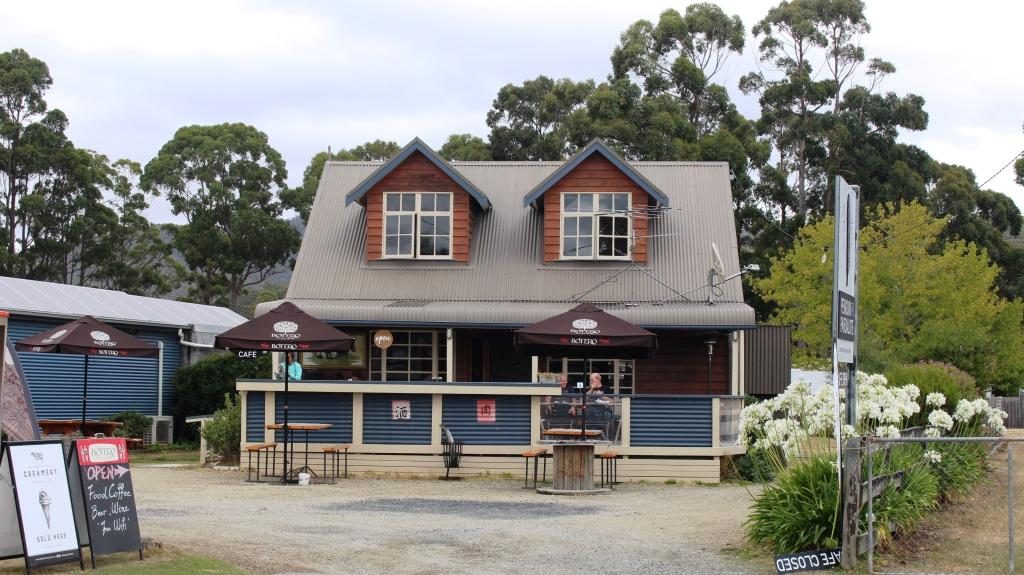
The cafe/coffee shop at Adventure Bay township. Bruny Island’s main caravan aprk is just down the road.

That part of the island has historical significance in that Captain James Cook landed there during his third exploration in 1777. A monument has been erected at the landing site. Also former Captain, but by then Governor William Bligh, visited and planted some of the first fruit trees to be grown in Tasmania.
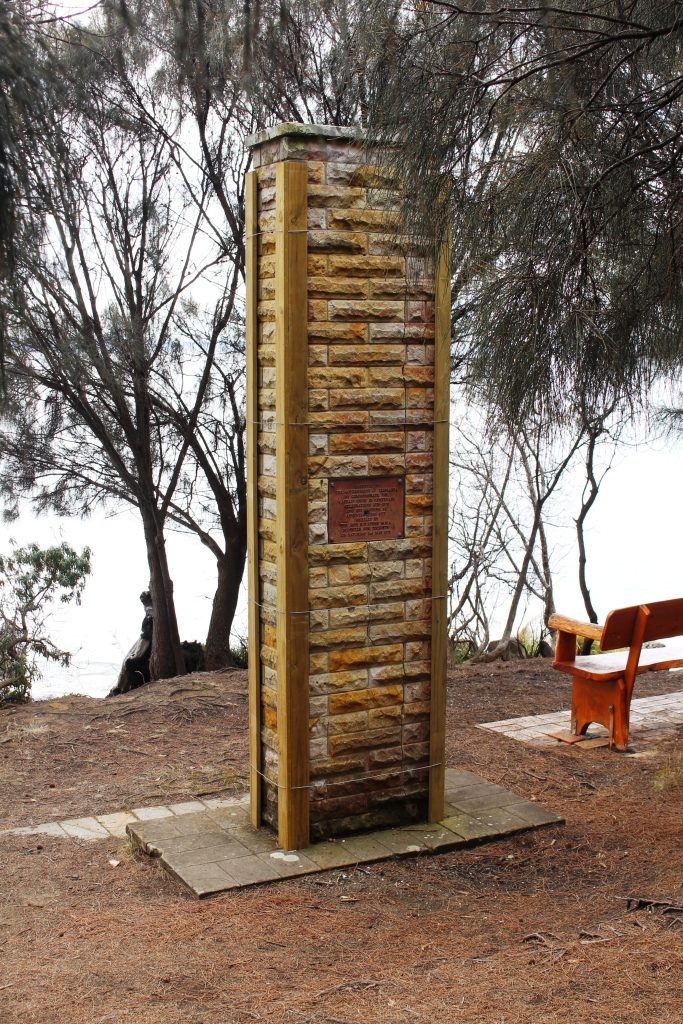
The monument to the 1777 visit of Lt (Captain) James Cook.

Antoine Raymond Joseph de Bruni, chevalier d’Entrecasteaux  (1737 – 1793) was a French mariner who explored part of the east coast of Australia in 1792, including this part of Tasmania, during his search for the missing exploration party of La Perouse. The channel between Bruny Island and the Tasmanian main land is named after him and the island clearly took its name from a misspelled portion of his name. The d’Entrecasteaux Channel is pronounced “Doncastro”, or something similar.

The previous day, near Cockle Creek, we had seen a sign marking the place where
d’Entrecasteaux came ashore for water in a sheltered cove. A fresh water stream runs nearby.
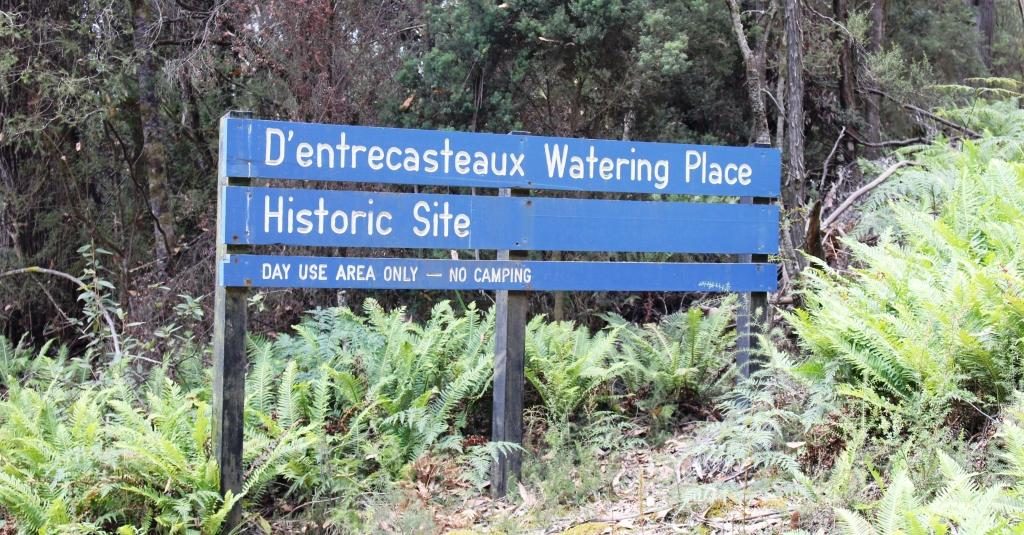
The sign marking the visit of d’Entrecasteaux . A fresh water stream is nearby.

On the drive down to Cape Bruny we had passed through Aloonah, the “capital” of Bruny Island and drove back through the town again on the way back, as the turn to Adventure Bay is about a further 5 km to the north. So, as our return drive to the ferry took is within 5 km of Aloonah, we decided to drive back to take a closer look at this small town.
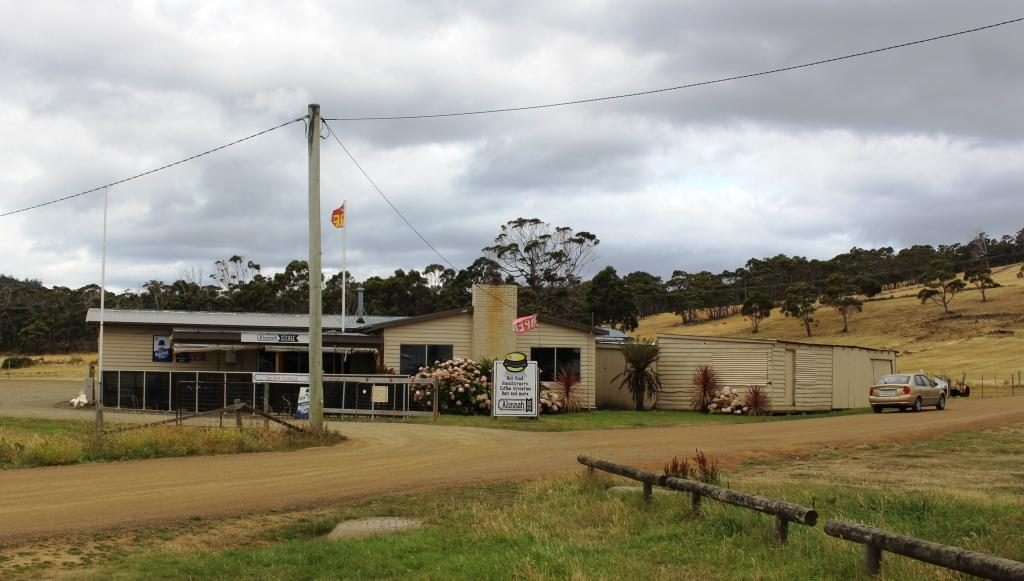
The general store and cafe at Aloonah.

I walked over to the shore line to photograph the island’s only hotel. As I looked, prior to taking the photo, I saw a couple who I thought looked like neighbors from our days at Murrumba Downs, but then thought probably not! But as I walked back to the car they were walking right in front of me as they returned to their tour bus from their lunch stop. Absolutely no doubt now!
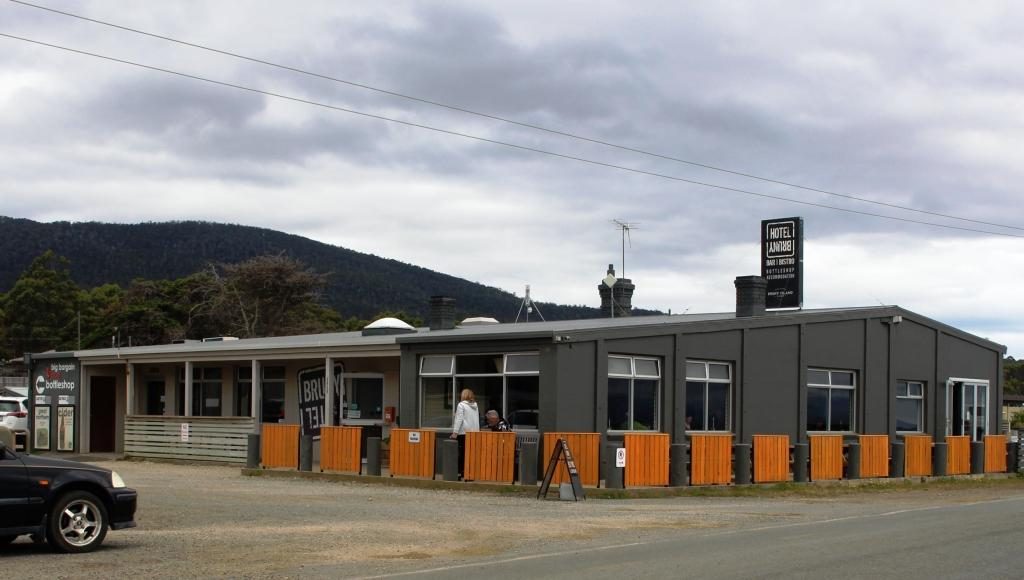
Bruny Island Hotel at Aloonah. Our former neighbours are the couple in the outdoor area.

They told us that they had seen us in the street at Geeveston the day before, as we walked past where they were having lunch. They planned to intercept us on our return but we stopped for lunch further down the street. It truly is a small world.
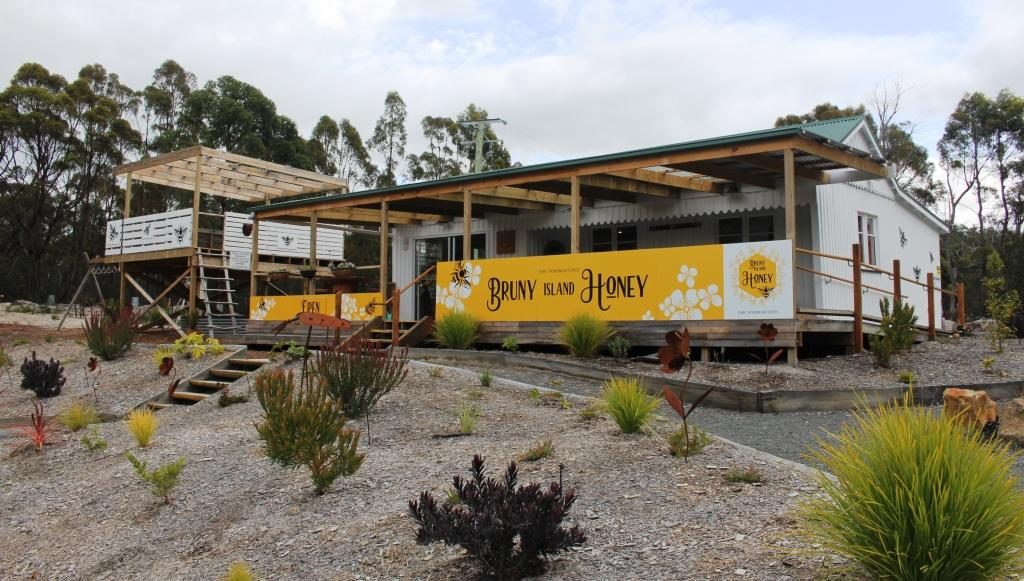
The honey shop without bee boxes. But we say many areas with bee boxes all over Tasmania, particularly in the National Parks.

The other tourist attractions on Bruny Island are man made and while legitimate activities for Tasmania, lack authenticity because they have so obviously been put there to be tourist attractions. Things like an oyster shop well away from the sea, a honey shop without a bee box in sight and a place selling cheese with only two types available for tasting and a clear emphasis on selling on line.
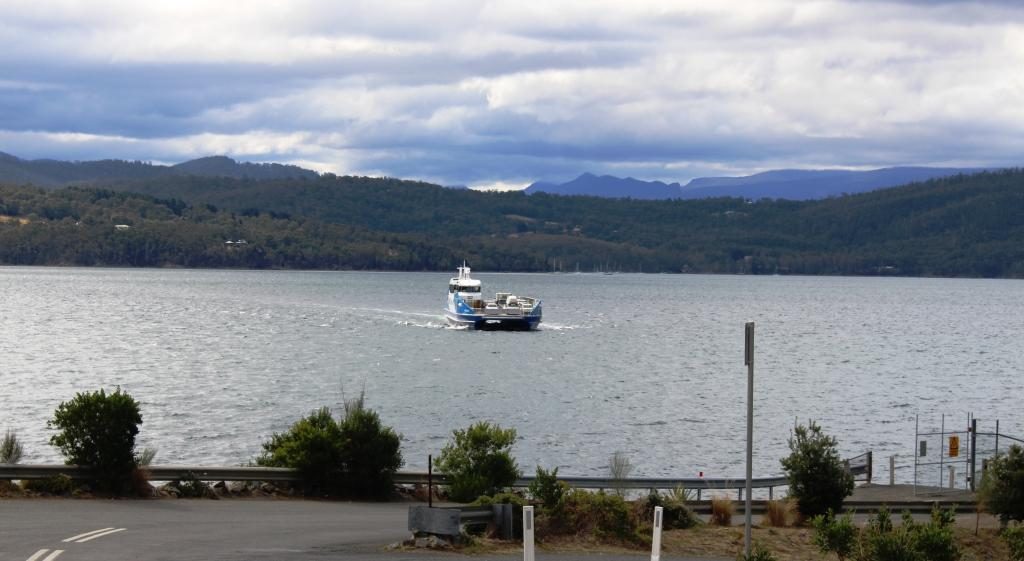
We returned from Bruny Island on the smallest of their ferries.

But the visit made for a pleasant day. The roads are narrow and winding but mostly sealed. Gravel roads, of which there are a few, are mostly well maintained and smoother often than the sealed roads. The worst were within the grounds of the lighthouse.

Most tourist activities are to the south of the ferry landing. The largest settlement is Dennes Point in the extreme north. This town is reached by a good gravel road that provides sweeping views of the ocean and bays on both sides of the island. It is well worth the effort, if you have time

Visitors with more time would find a lot more to see and do on the island. There are lots of walks to suit all levels of ability in the most scenic parts of the island.

In summary, we are glad that we visited Bruny, but much was not as I expected. And after calling at a whiskey outlet (enquiring for a friend), I will never again complain of cellar door prices for wine.
Destination Tasmania – Part 6 – Hobart

15th to 18th February 2020

Please Note: Videos covering the material in this blog post can be found at the bottom of the post.

Saturday morning and we awoke to pools of water on the balcony and driveway. The first real rain since we had arrived in Tasmania had fallen over night. Patchy cloud in the morning cleared to a sunny day with a cold south easterly breeze.

We left New Norfolk, heading for Hobart, but we needed to fill in time to check in. So we drove down river, crossed to the east side and made our way to the Tasman Highway that passes the airport and ultimately leads to Port Arthur and the East Coast. We wanted to see what the suburbs over the river from Hobart were like and to view the city from the eastern shore.

The western end of Seven Mile Beach

We made a quick call into Seven Mile Beach. Craig and Anne Sheather and the girls spent a few days there as their Hobart base in December. The beach was bleak, as the cloud cover had intensified and the wind was coming in over the bay. We quickly made thermos coffee and returned to the car to drink it.

Hobart’s southern most west side suburbs

After retracing our steps back towards Hobart, we turned left and drove down the South Arm Peninsula to the southern end of the bay that is encompassed by the sweep of the peninsula as it turns back to the north. By this time we realised that we were too far south to see Hobart so we turned back north, keeping as close to the western shore of the Derwent as possible.

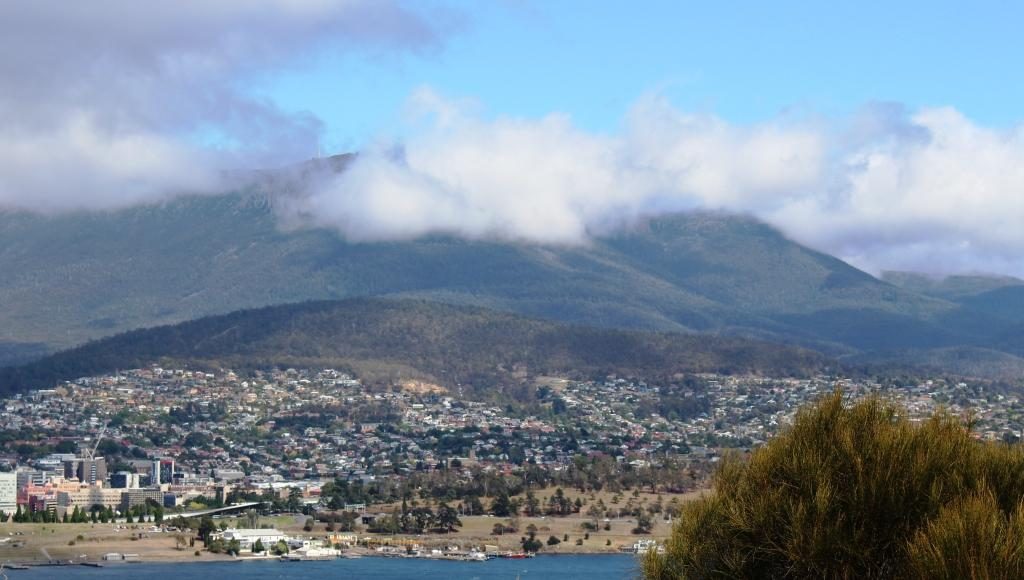
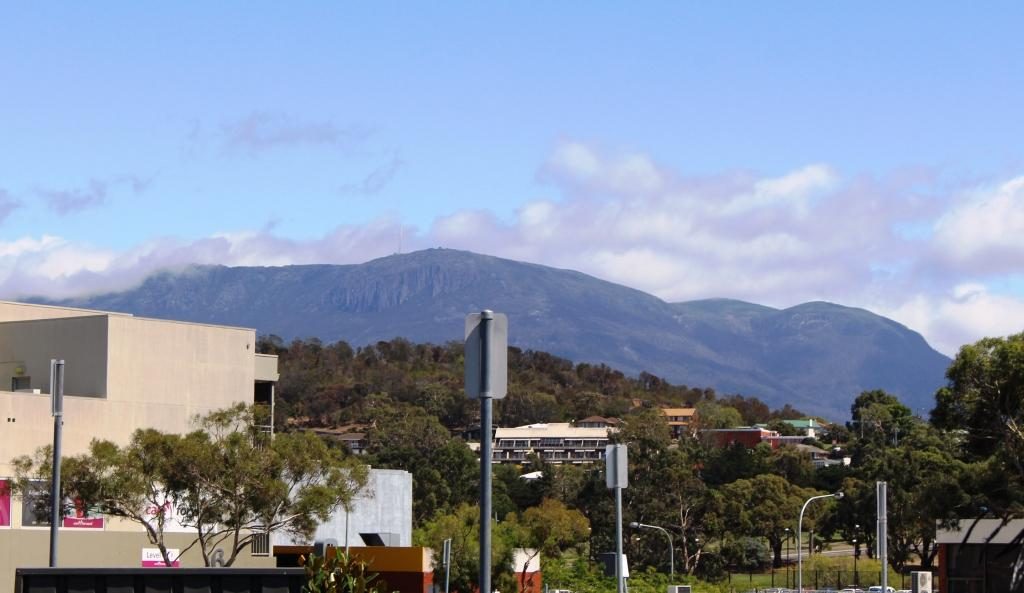
Cloud covered Mount Wellington
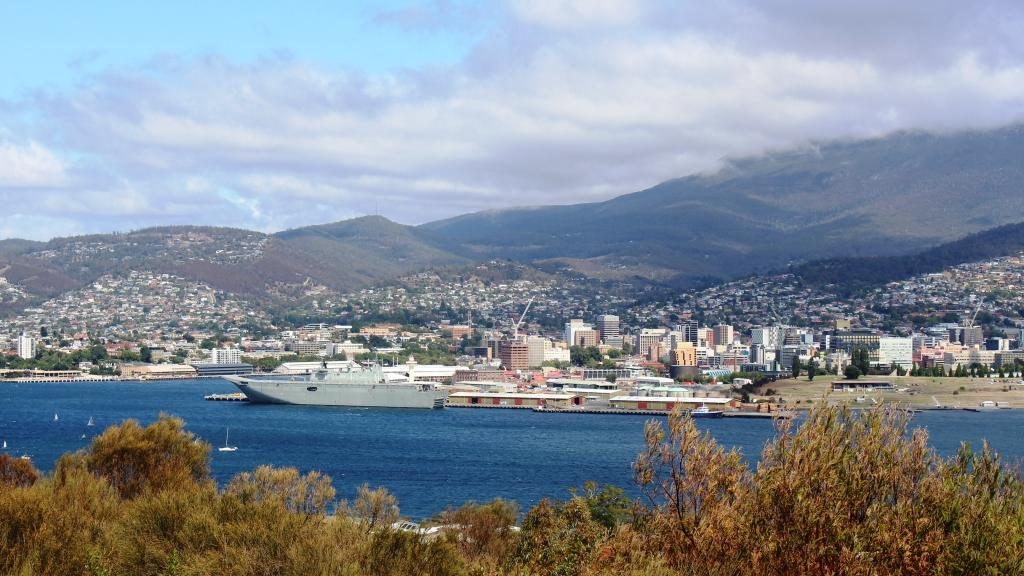
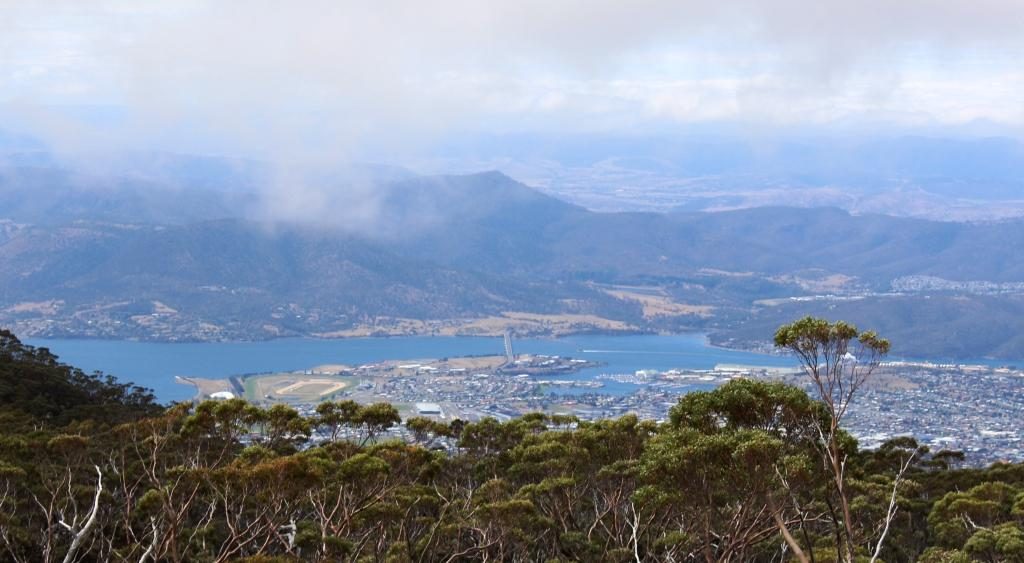
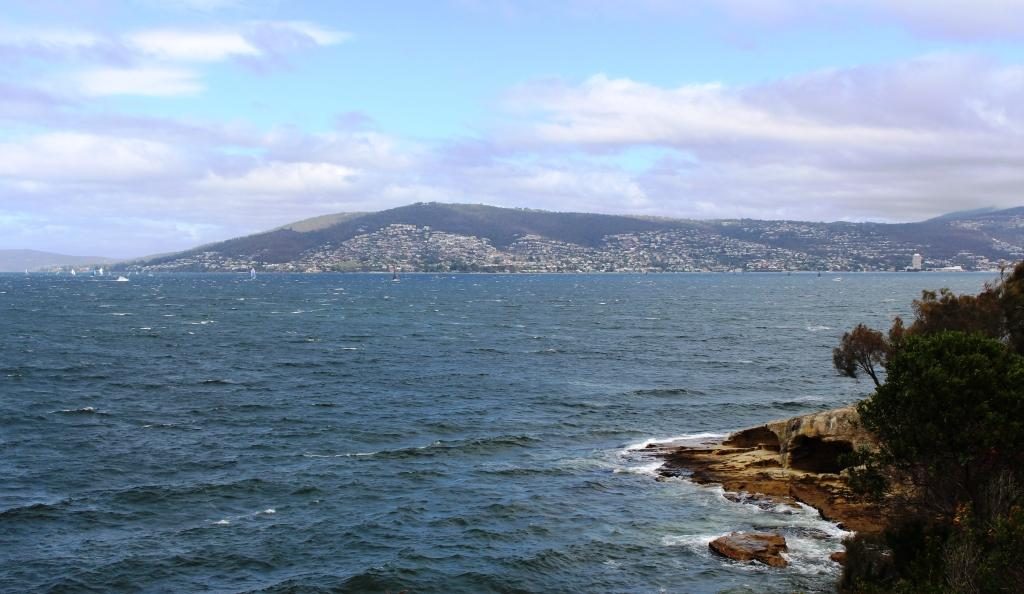
Port and City of Hobart from Rosney Hill Lookout

We drove past what used to be the Tasmania cricket ground, now their major sports stadium, and then turned back to the shore at Bellerieve. Then, quite by chance, because we turned left instead or going ahead, we came upon Rosney Hill Lookout near the eastern end of the Tasman Bridge. This elevated lookout gives splendid views of Hobart and it’s immediate suburbs on the west side of the Derwent, as well as of the Tasman Bridge. Mount Wellington provided a backdrop for the city. It’s summit was covered in cloud. Not the day to drive the road to the summit, we decided.

Those western shore suburbs again

It was now lunch time, so we returned to the Rosney Park Mall in search of food. When we returned to the car Mount Wellington was clear of cloud, so with an hour to go to check in time we decided to drive to Mount Wellington prior to going to Sandy Bay to check in.

Mount Wellington summit is clear. Let’s go!

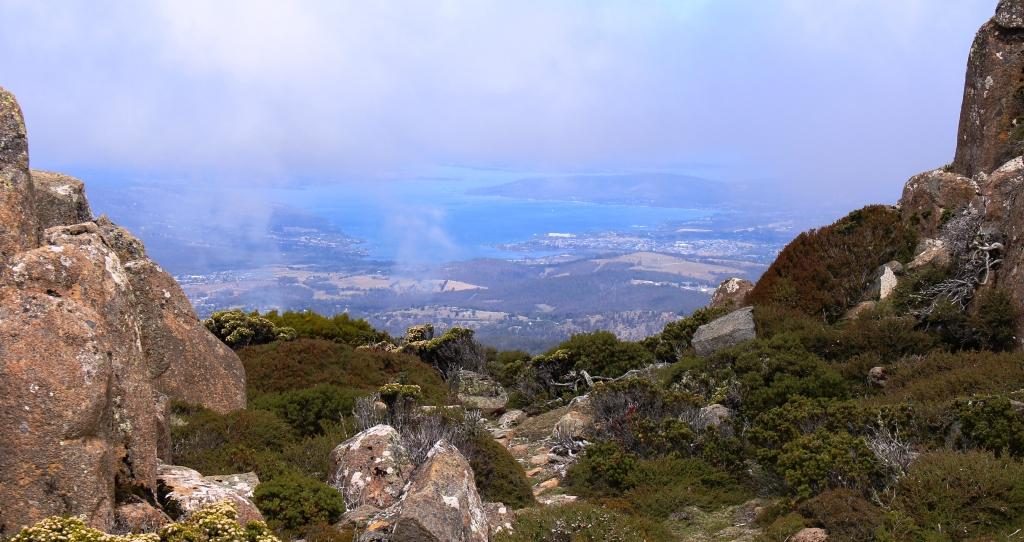
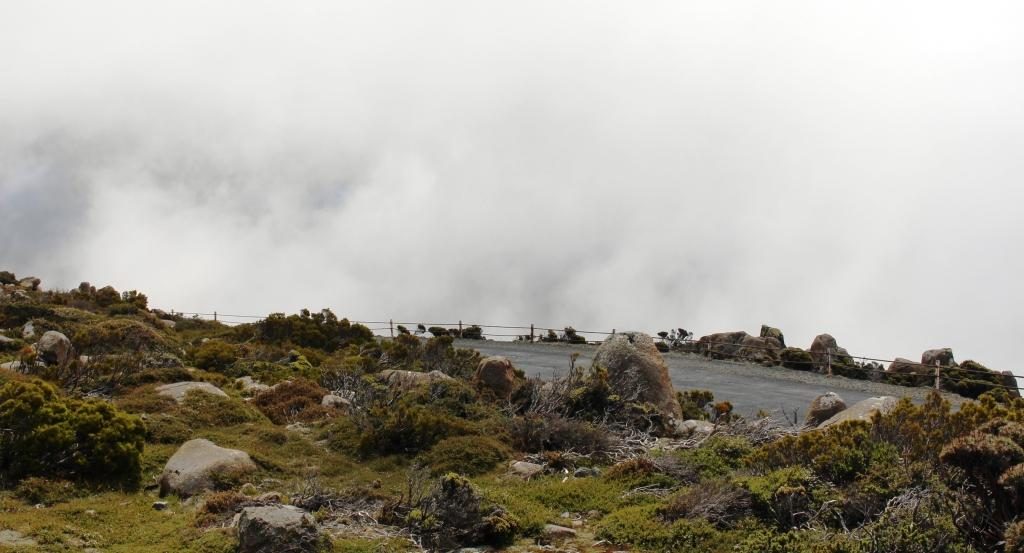
Mountain weather is not to be trusted, particularly as far south as Hobart. As we approached the summit we could see cloud drifting over. By the time that we had parked at the summit only glimpses of the views were to be had through gaps in the cloud. The wind over the summit was strong and cold. Ruth sheltered in the car while I dashed around getting the photos that I could.

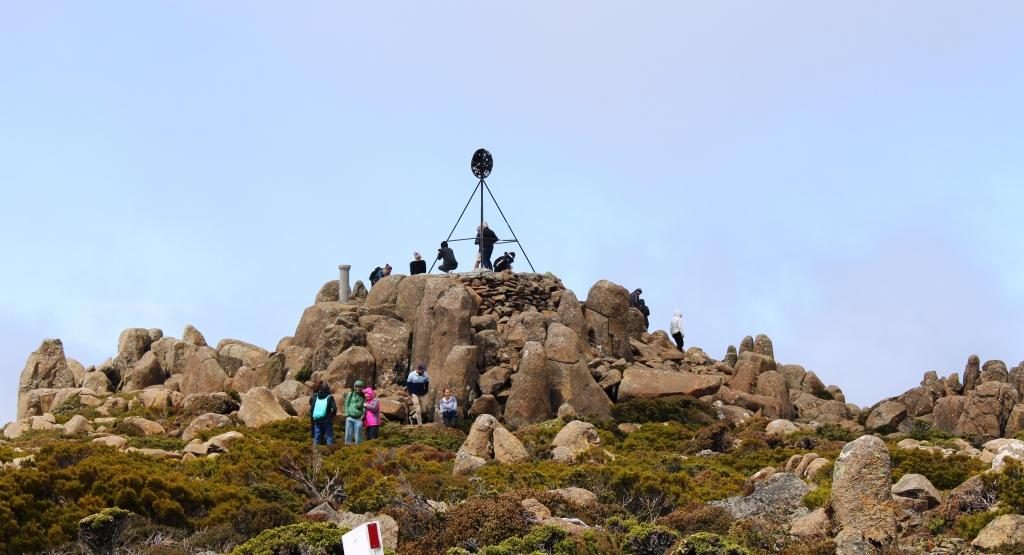
The trig point at the summit of Mount Wellington.
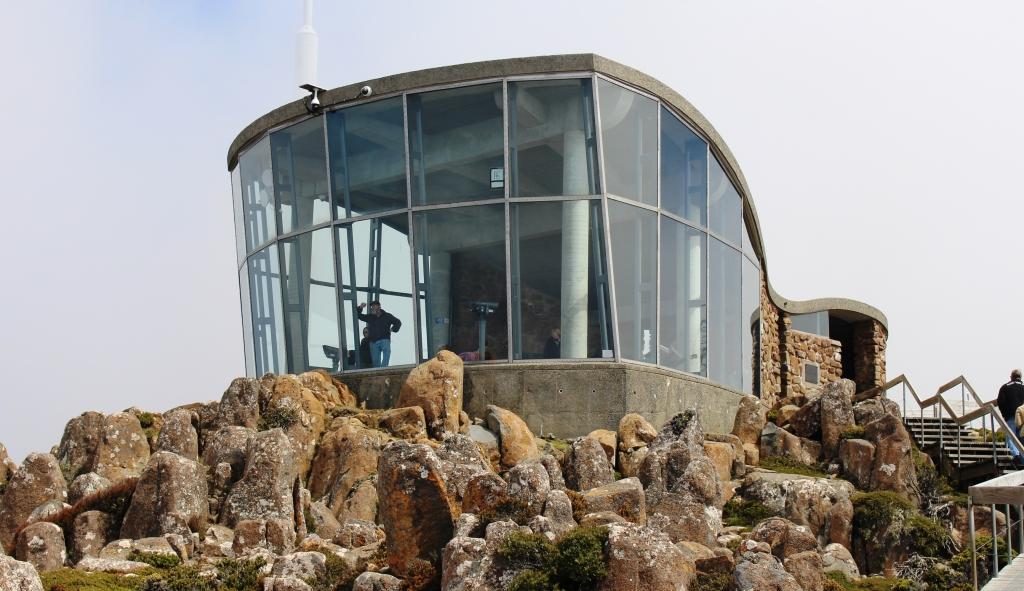
Mount Wellington viewing shelter gives good views of the city, provided that there are no clouds.
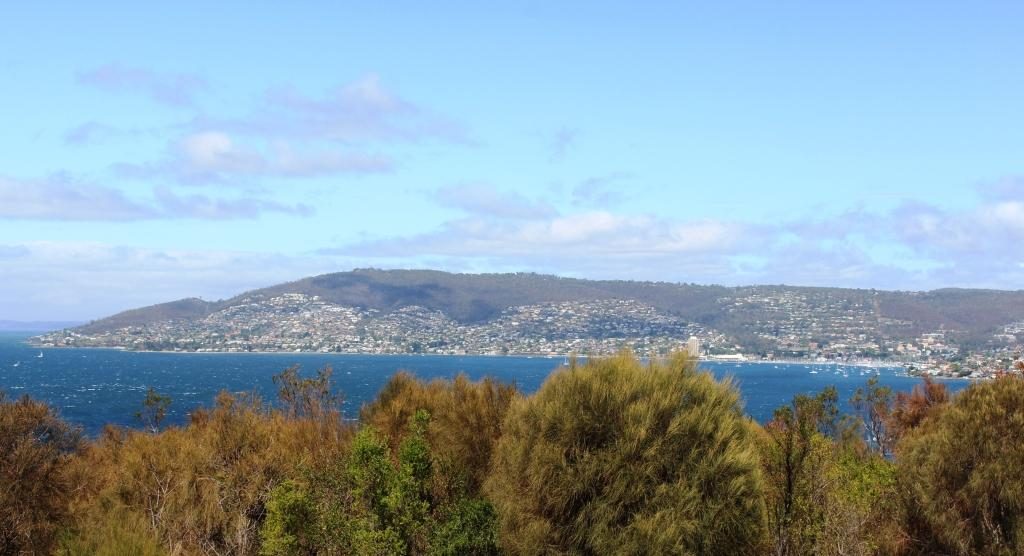
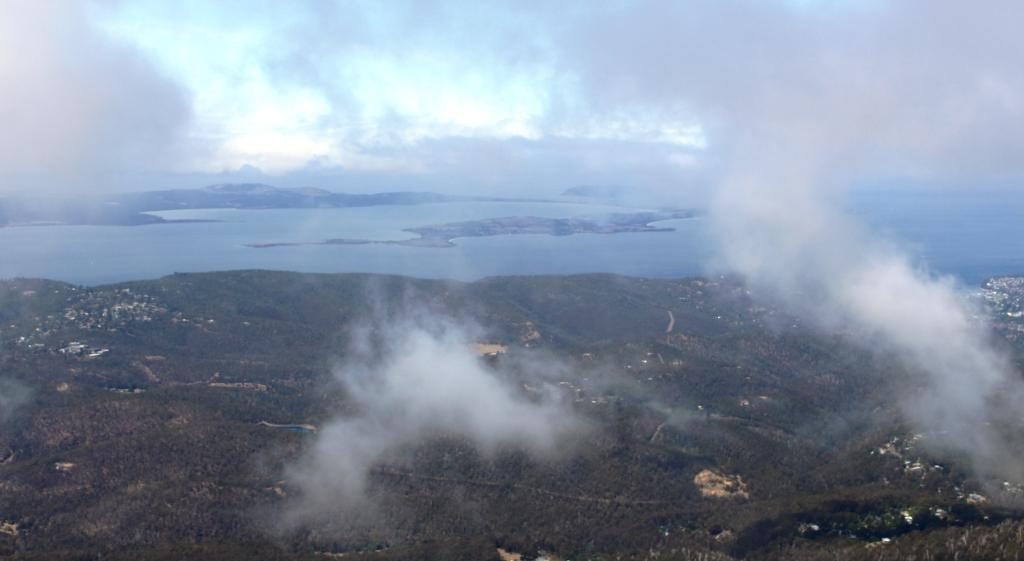
Bruny Island through the clouds
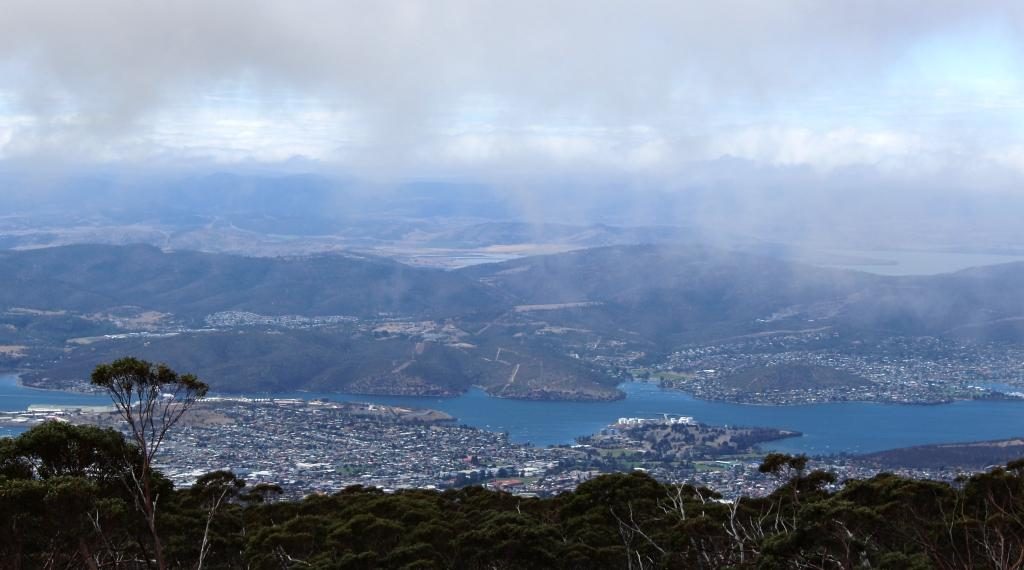
City and the Derwent River
The cloud cover is complete but below the summit

There were better photo opportunities down the mountain, but not with the same panorama as that available from the summit, but with less cloud. We stopped while I took a few more shots.

The Derwent upstream of the city
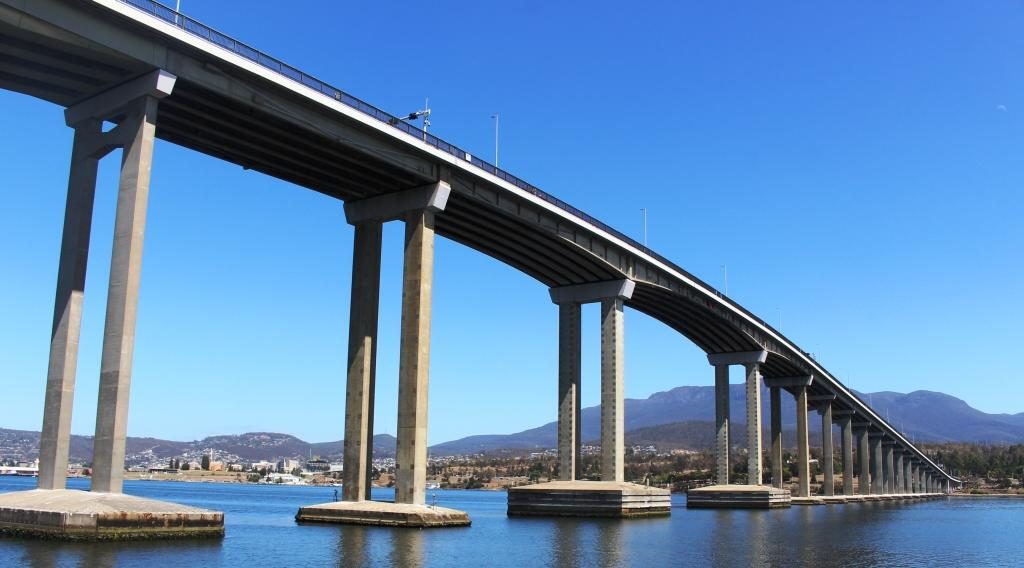
North of Hobart and the Tasman Bridge

Our Hobart accommodation was the Bay Hotel Apartments at Sandy Bay, just a short drive from the City. The units are old but have been renovated to provide comfortable accommodation. We stayed for four nights, giving us three days in Hobart.

Our first day in Hobart was Sunday. We opted for a restful morning, so stayed in doors. After lunch we set off to check out the city, particularly the waterfront area. We found a parking station in the City. Street parking was near to impossible.

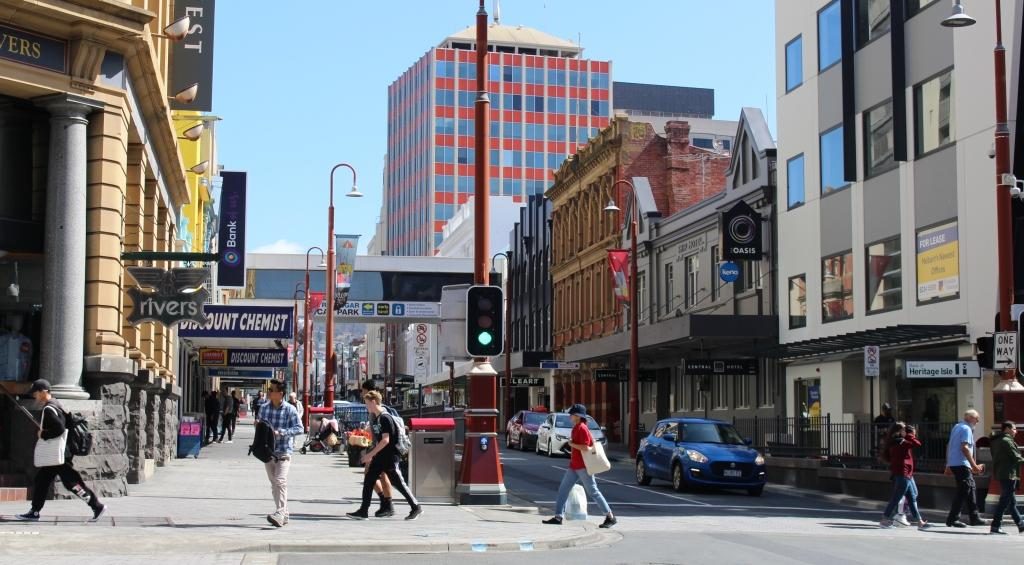
Elizabeth Street, Hobart
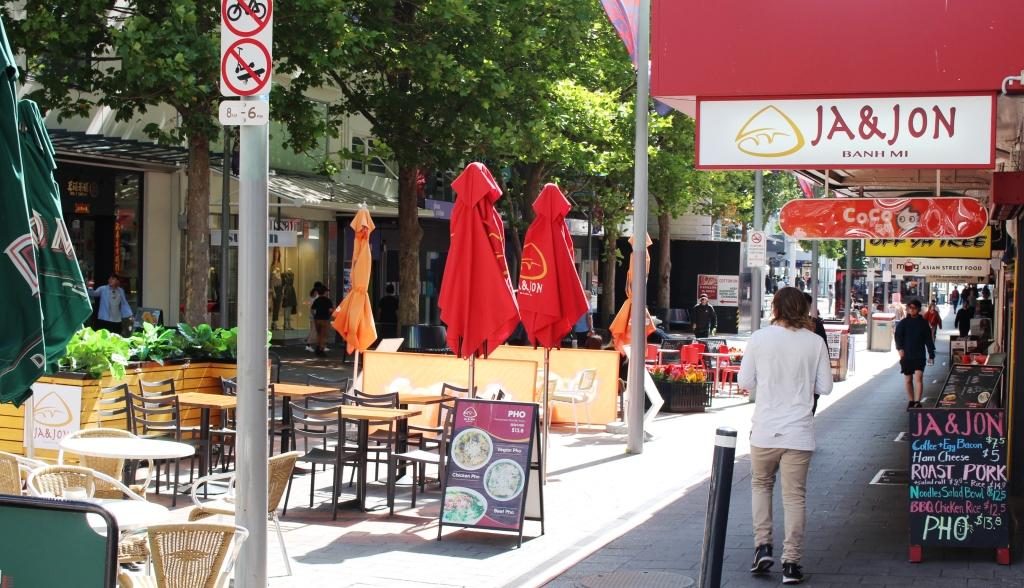
Part of the City Mall

Our first port of call was the Information Centre where we loaded up with brochures. We then went dockside, just a short walk away.

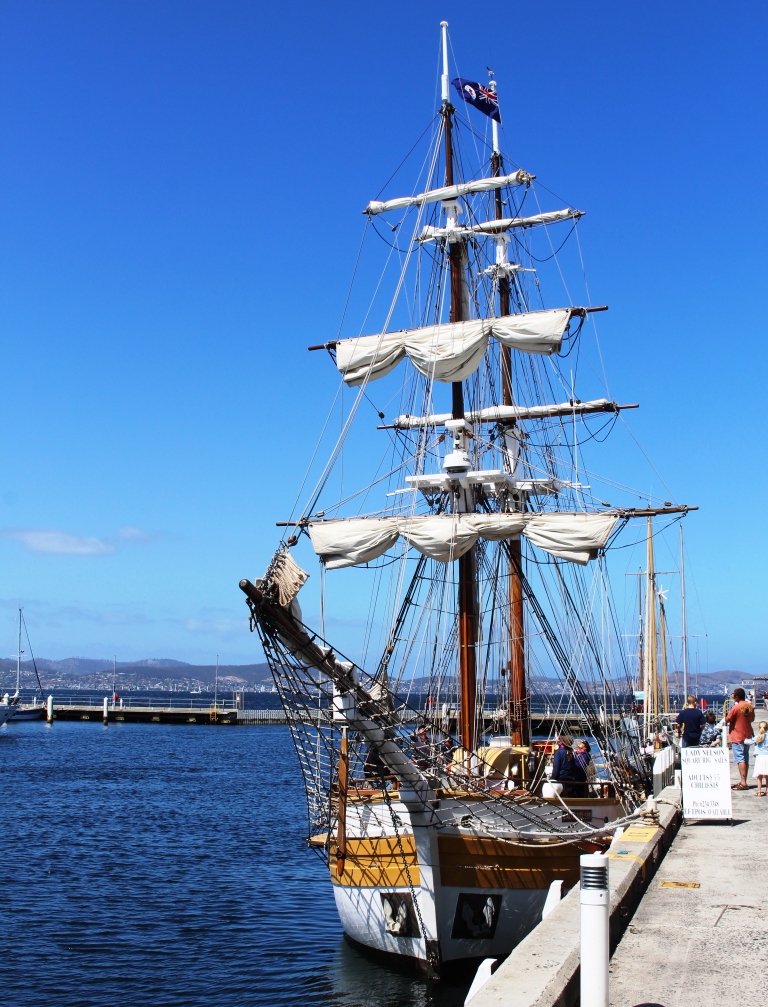
Full size replica of the Lady Nelson. In 1800 the original was the first ship to sail west to east through Bass Strait, shortening the voyage from England to Port Jackson. During the following years Lady Nelson was closely involved with exploring and settlement of Australia, particularly in the establishing of settlements at Hobart, Launceston and Port Philip Bay.
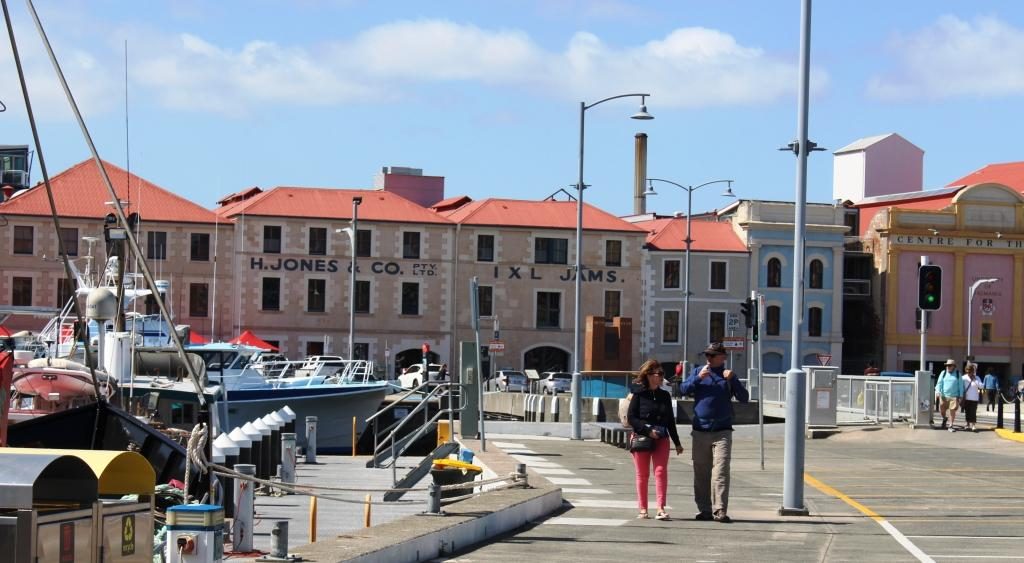
The old Henry Jones IXL building is now a the up market Henry Jones Art Hotel

The day was cool but sunny in the afternoon. Despite car parking spaces being full there did not seem to be many people about. The dock area has many eating establishment, plus museums, boat cruises and shopping.

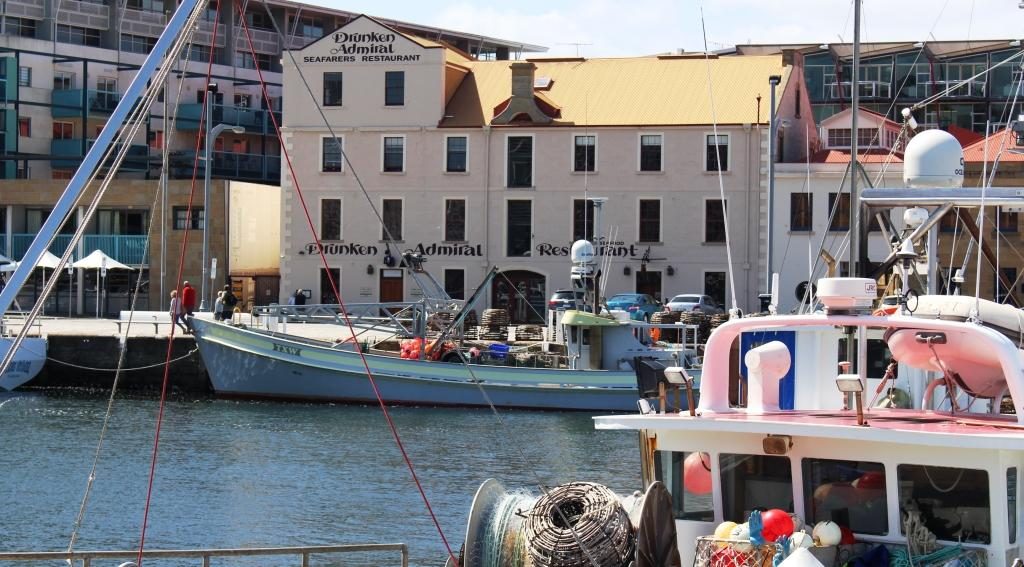
The Drunken Admiral Restaurant behind boats of the Hobart fishing fleet
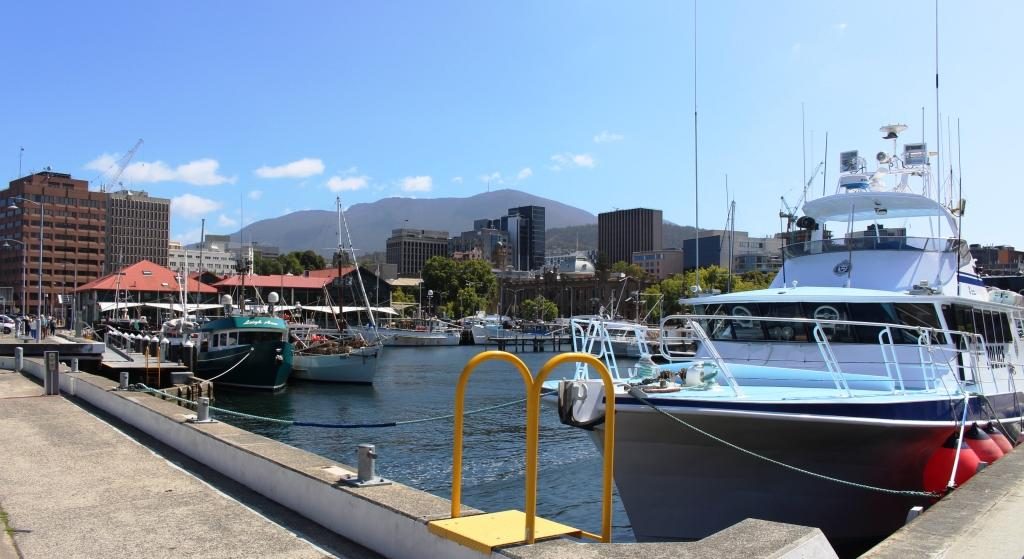
Dock, city and mountain

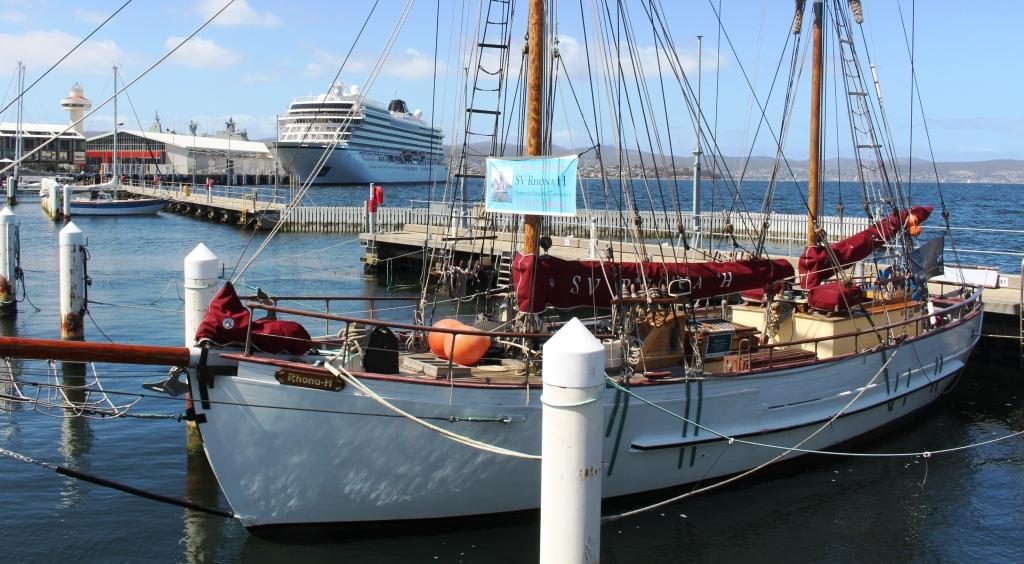
The cruise ship Viking Queen was in port but any resulting increase to the pedestrian traffic was not noticeable.  We alternatively wandered and sat, snapping photos all the while.

The cruise ship Viking Queen viewed through the rigging of the sail training vessel Rhona H

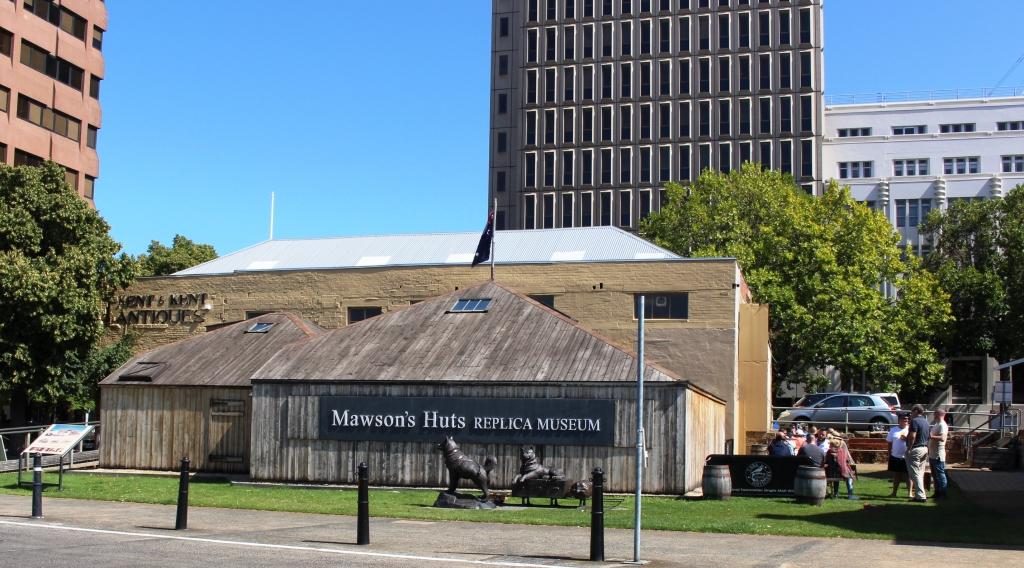
Situated directly behind the Constitution Dock area is a replica of the hut built by Sir Douglas Mawson and his group of polar explorers during the voyage to Antarctica during the period 1911 to 1914. We didn’t tour it, but it is an exact replica and houses a display of artifacks relating to Antarctica and the expedition. Hobart is the port from which services to Australia’s Antarctic bases are provided.

Hobart replica of the hut that Sir Douglas Mawson built during his 1911 to 1914 expedition to Antarctica

Ruth’s sister Judy had suggested we visit the old signal station on Mount Nelson, so we decided to go home that way. The observation point provides excellent views of the maritime approaches to Hobart. Judy also mentioned Devonshire teas at the cafe at the the car park. We can recommend them as well. There are excellent views from the observation area and the cafe.

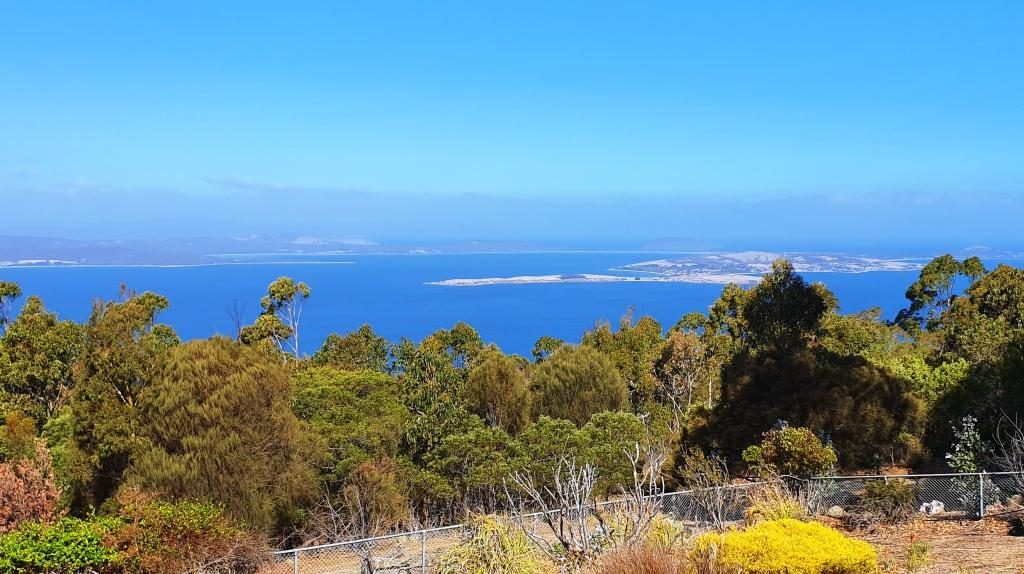
Bruny Island in the foreground and the South Arm Peninsula, in the background. The mouth of the Derwent River lies between. The d’Entrecasteaux Chanel separates Bruny Island from the main island of Tasmania

We then dropped down to the coast road at Wrest Point (literally, the road was very steep) and drove down the coast to Taroona. We didn’t realise that we were almost down to the historic shot tower, but a visit to the tower was on the list of things to do coming back through Hobart, after we had been south to the Huon Valley and Bruny Island.

We then returned to the unit for a quiet evening.

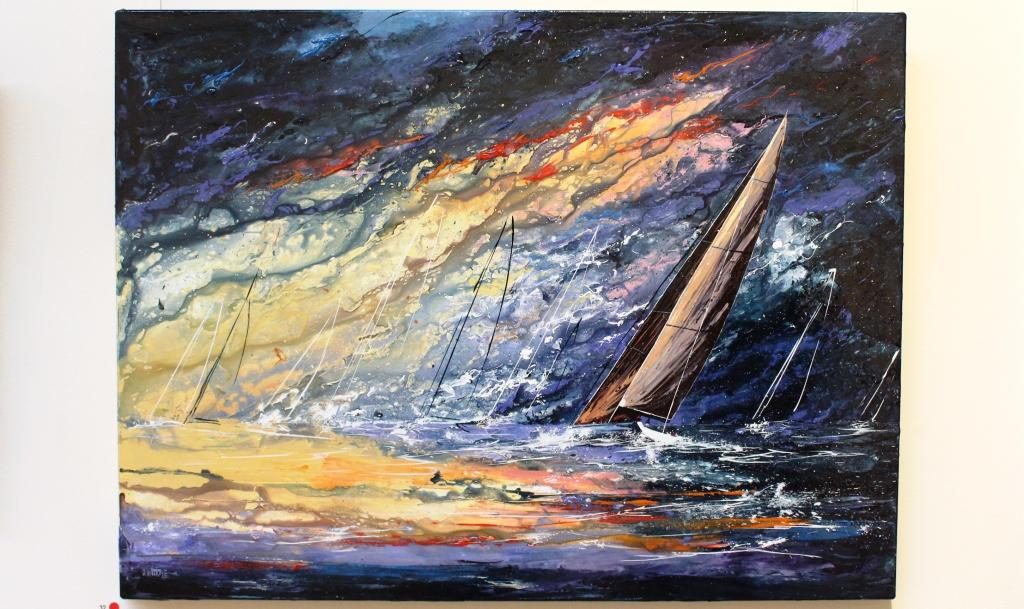
A painting of racing yachts in the Maritime Museum

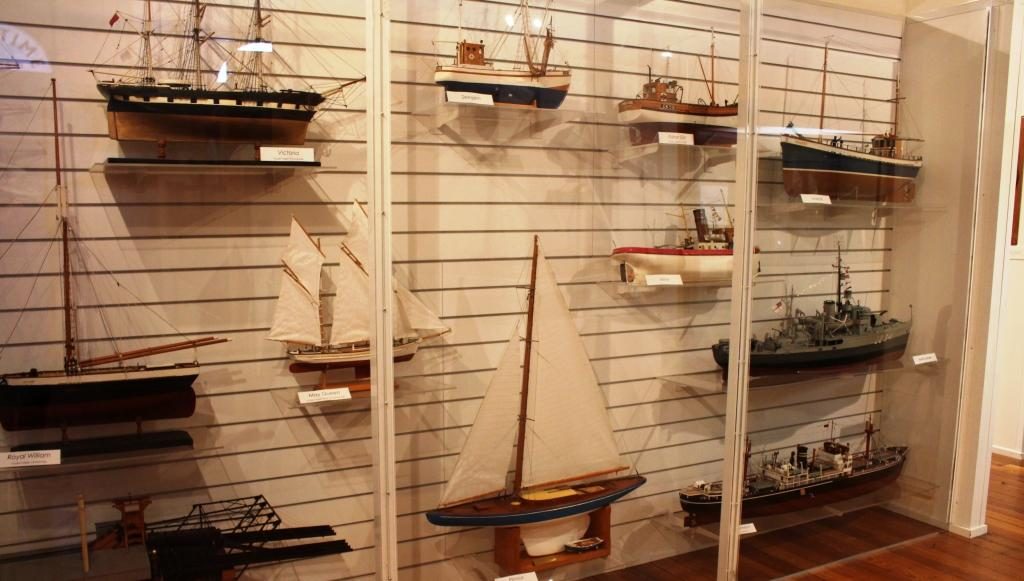
We returned to the city on Monday morning, found a long term parking space and made our way to the Tasmania Maritime Museum. This interesting place is conveniently located over the street from the Information Centre. There is a huge amount of nautical material to absorb, much of it historical. Some was familiar, some new. But it took up the early part of the morning.

Models of boats in the Museum
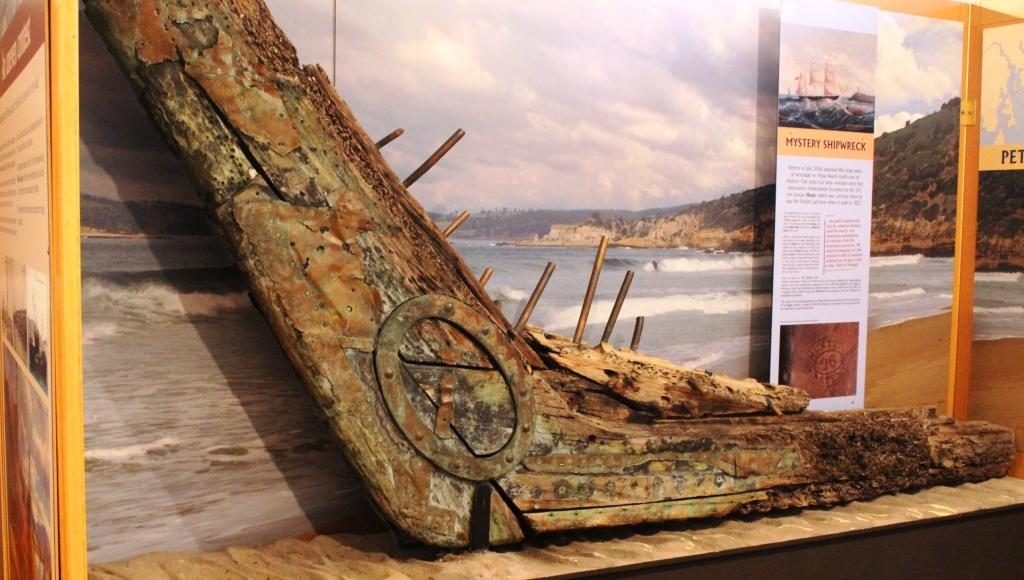
This is part of bow and keel from an unidentified wreck in Tasmanian waters

We had a late coffee and a walk before boarding the Spirit of Hobart for a 90 minute luncheon cruise. The route took us over the Derwent estuary area, both upstream and downstream of the harbour, being informed as we dined about a huge range of historical, political and social happenings. Part of the trip crossed the finishing line of the Sydney Hobart Yacht Race, but going the opposite direction to competing yachts. The lunch was excellent. The trip was really good value.

The saloon area of the Spirit of Hobart
The judges box at the finishing line for the Sydney Hobart Yacht Race
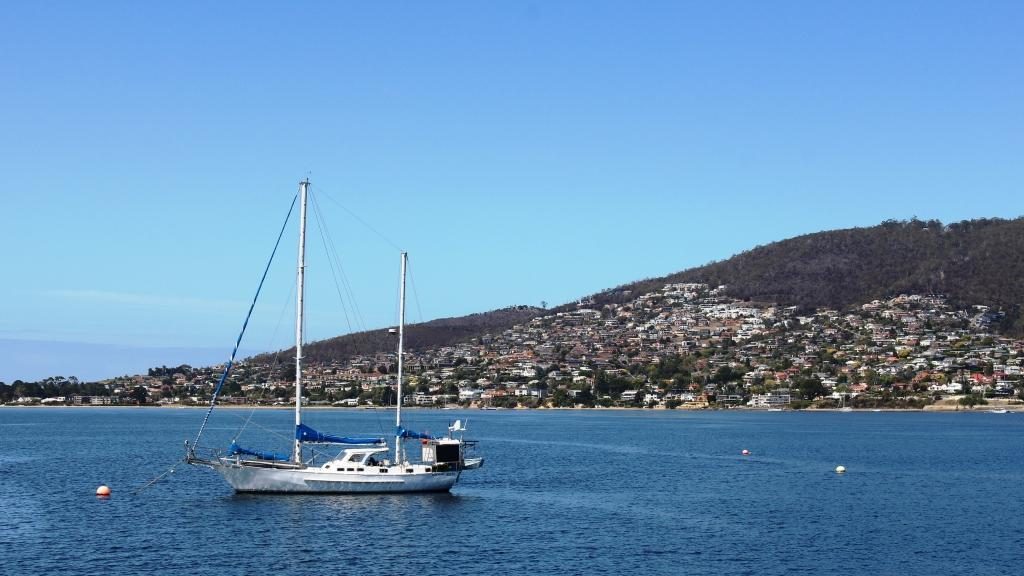
A moored yacht with some of Hobart’s southern suburbs in the background. They would get a great view of finishing Sydney Hobart yachts from those homes.
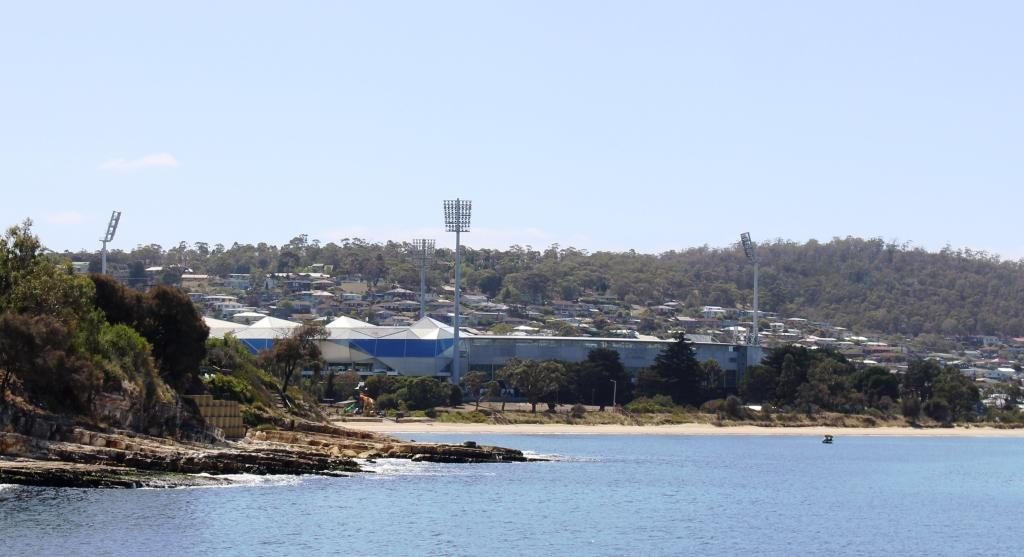
The former Hobart Cricket ground at Bellerieve is now an all purpose stadium
Passing under the Tasman Bridge

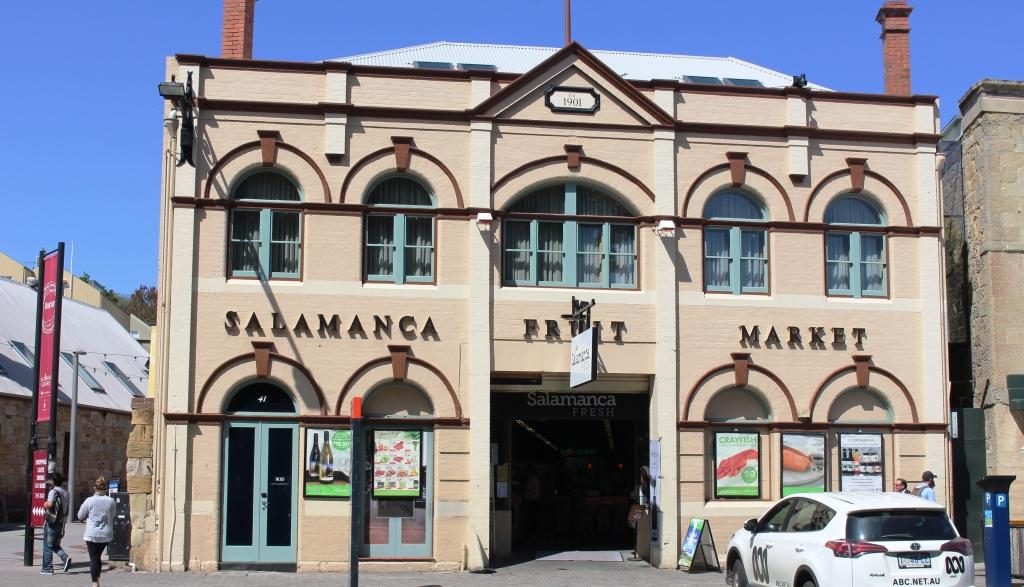
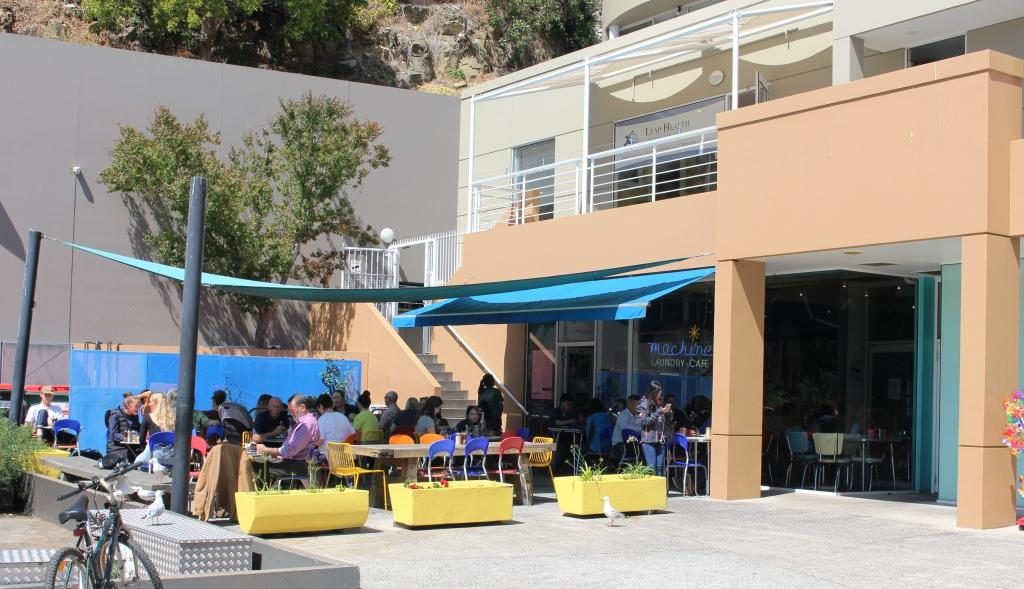
Back on shore, we took the short walk to the Salamanca precinct where old warehouse buildings have been converted to up stairs apartments and to commercial premises down stairs. Many of the businesses are food related. One interesting place is a laundry cafe. Lunch or snacks while the washing machine and the dryer churn seemed to be popular.

Salamanca Fruit Market
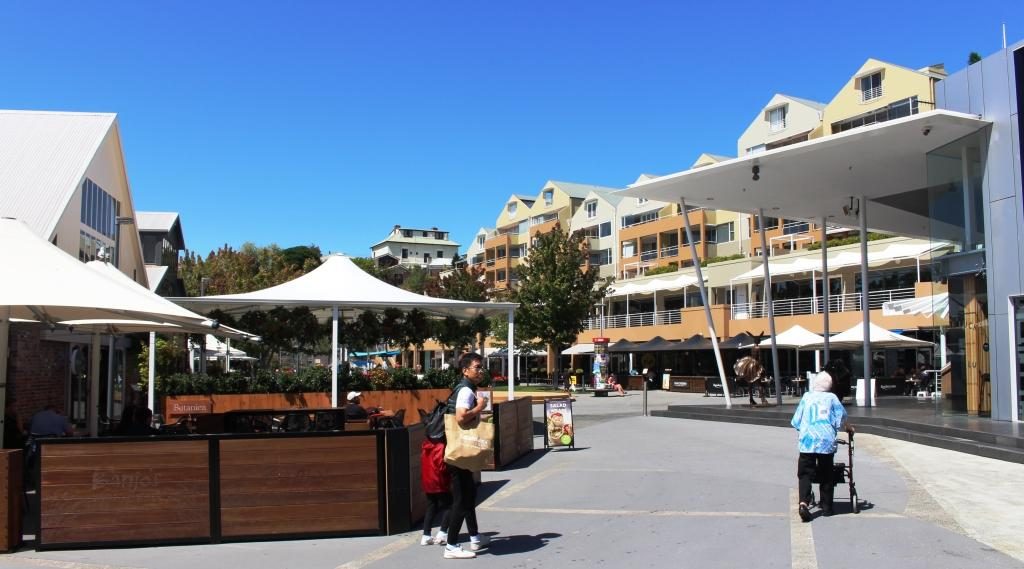
Courtyard area at Salamanca Markets.
The Salamanca laundry cafe

With some time still left to the afternoon, we drove out to the convict women’s prison at Cascade. Traffic was thick on near city streets because of an accident, so by the time we arrived there was only 20 minutes till closing time. The place is heritage listed and looked interesting so we decided to return the next day. About 10,000 female convicts were sent to Hobart.

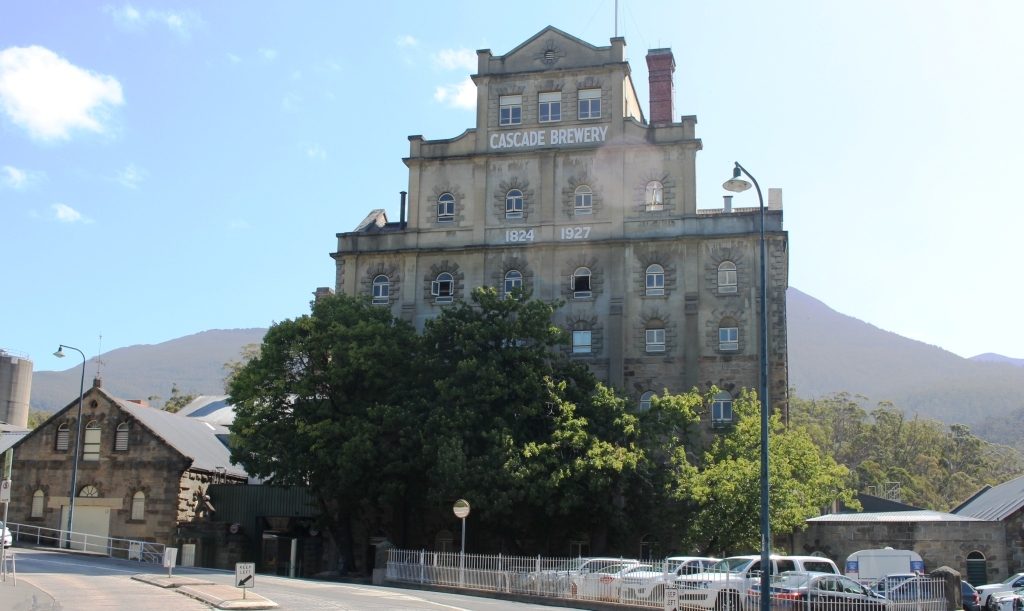
Original buildings at Cascade Brewery

Since we were in Cascade we went another 500 metres or so to take a look at Cascade Brewery. It proved to be a quite substantial establishment. Judging by the size of a tour group that we saw the tours are popular. No doubt a sample of the product is included.

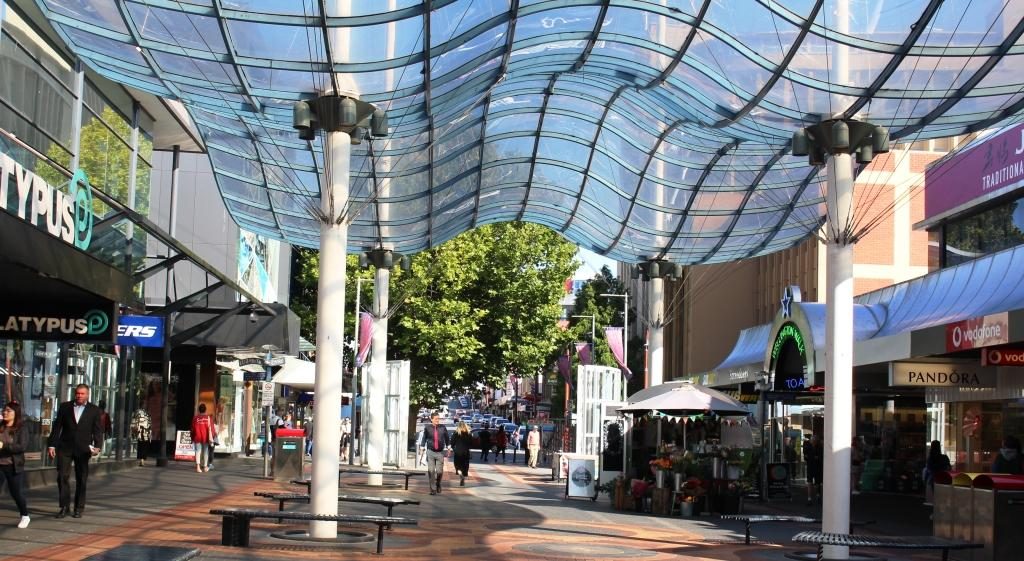
Covered portion of the Hobart city mall

Tuesday was our last day in Hobart, so we started in the city centre, checking shops for a couple of things that we needed. But a city centre is a city centre and they are all similar. From those many years ago when we toured Tasmania I recalled the Cat and Fiddle arcade as a sort of quirky kind of place. We found it again but it is now quite bland. Just a mall with shops.

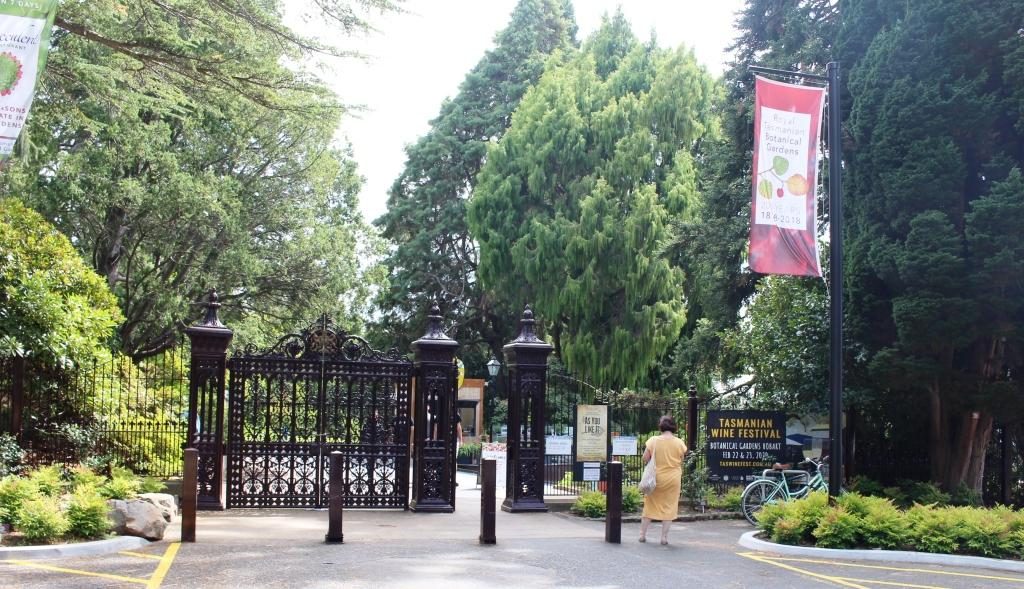
The main gate of the Hobart Botanical Gardens

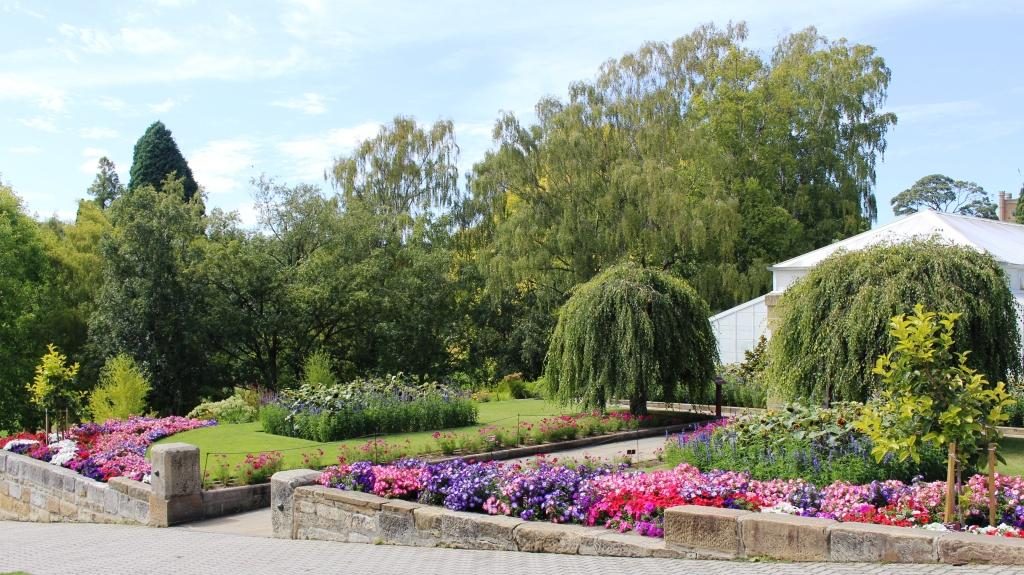
Next stop was the Botanical Gardens. They are located a short drive from the City and parking was not an issue. We walked through sufficient of the area in a couple of hours to get a good feel for the place. Botanical gardens, particularly those in capital cities, rarely disappoint and Hobart’s effort is no exception.

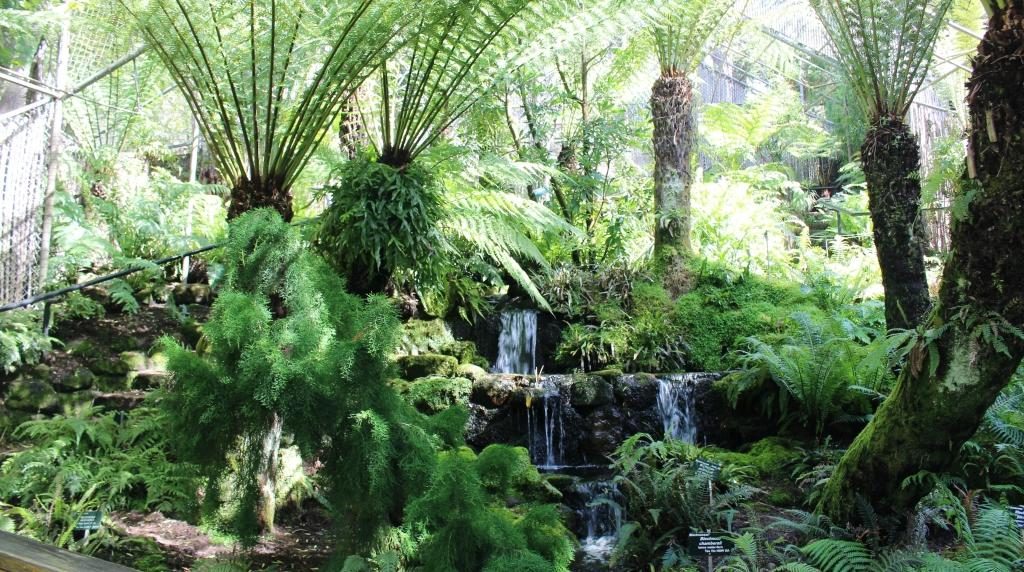
Fern covered waterfall on the hill side
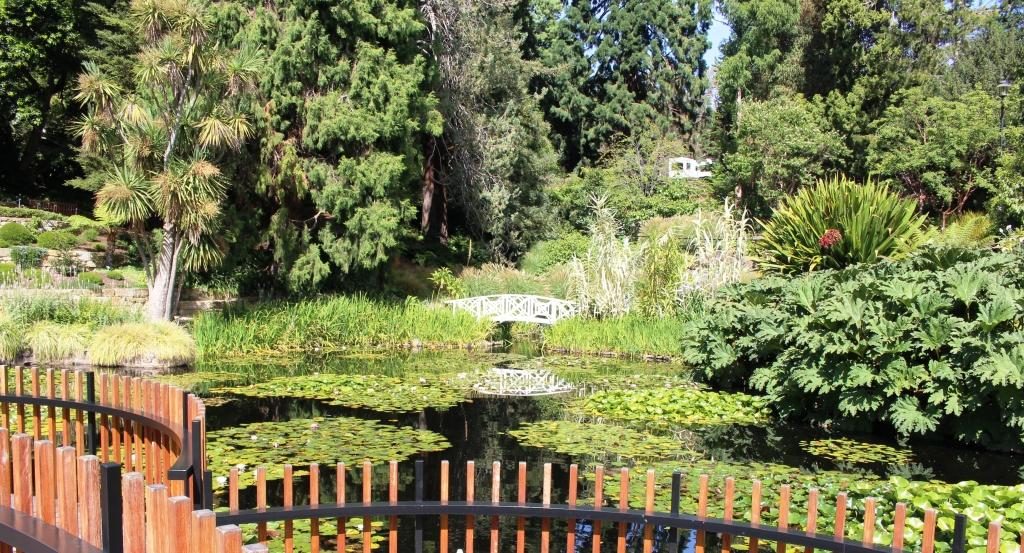
Water Lilly ponds and deck
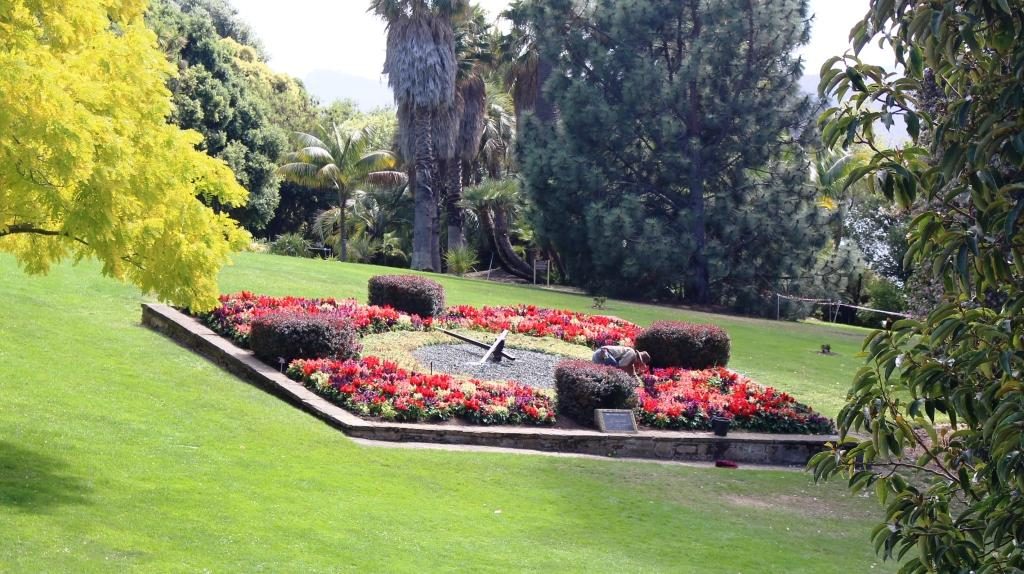
The floral clock. Sorry about the gardener in the photo.
Gardens at the entrance if the conservatory in the gardens

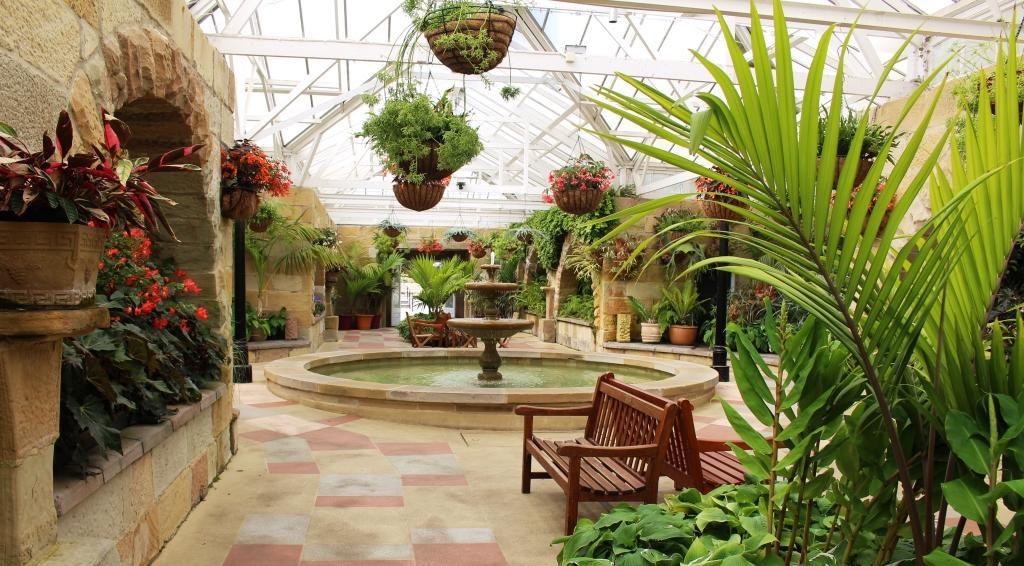
Inside, the conservatory is spacious with seating for those who want to sit for a while.
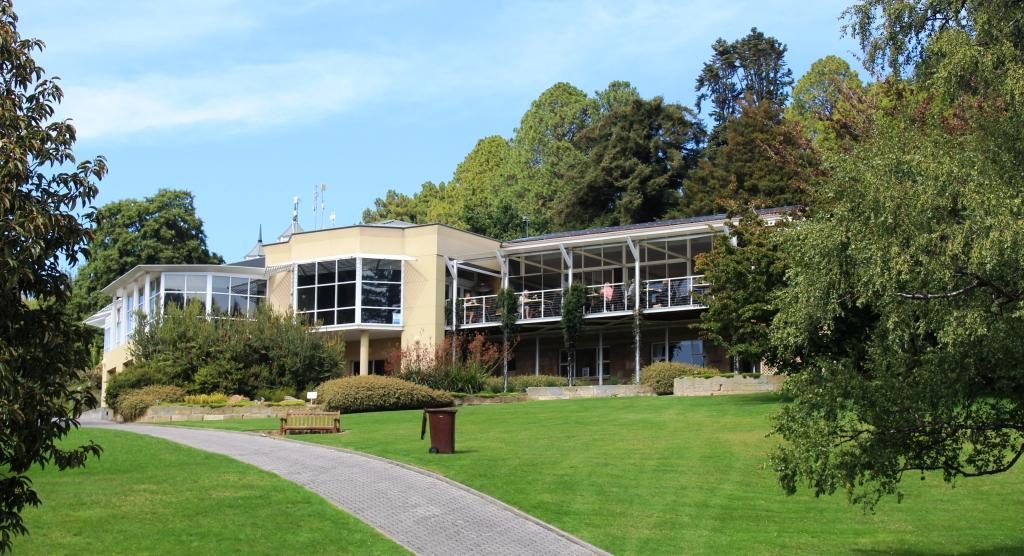
Administration offices, gift shop and cafe
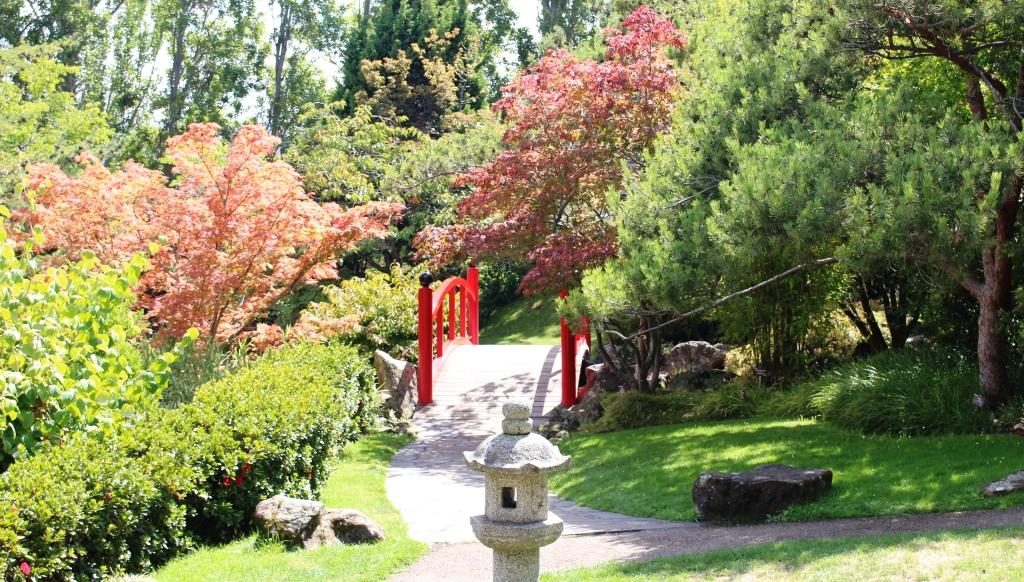
Entrance to the Japanese garden
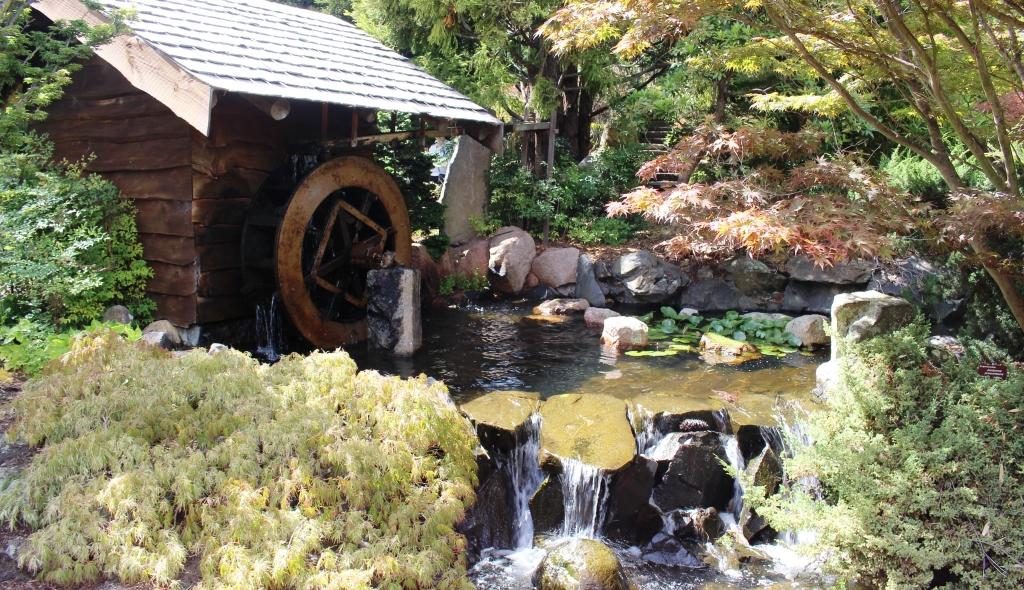
Water wheel and water fall in the Japanese garden

A drive to the northern suburbs followed. We stopped in Glenorchy for some lunch and then came back for a second try at the female convict penitentiary. Back in the day the female convict establishment was called a factory. Placing female convicts into service with Hobart households was part of the transportation plan. To have worked in a factory did not have the stigma of having been an inmate of a prison.

This was the layout of a supervisor’s cottage
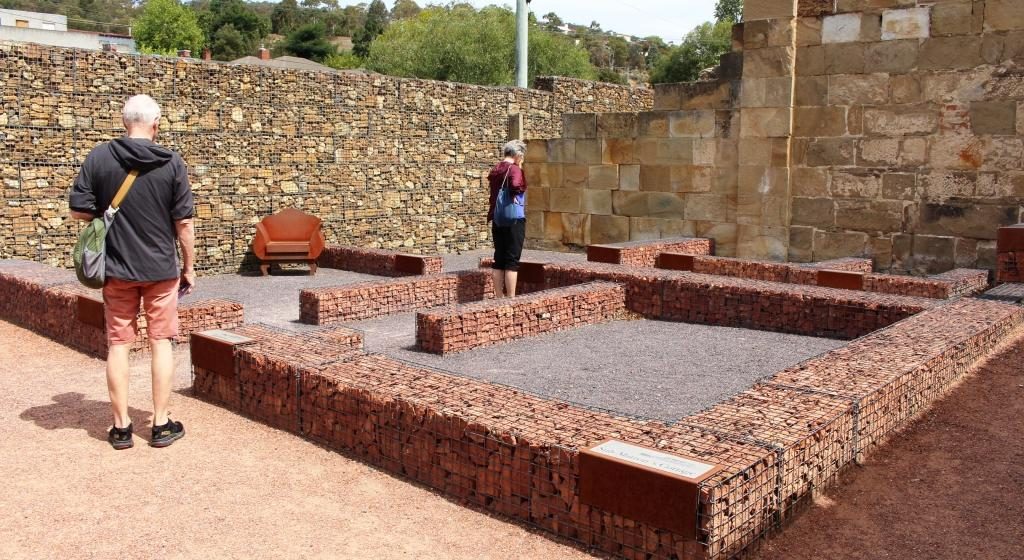
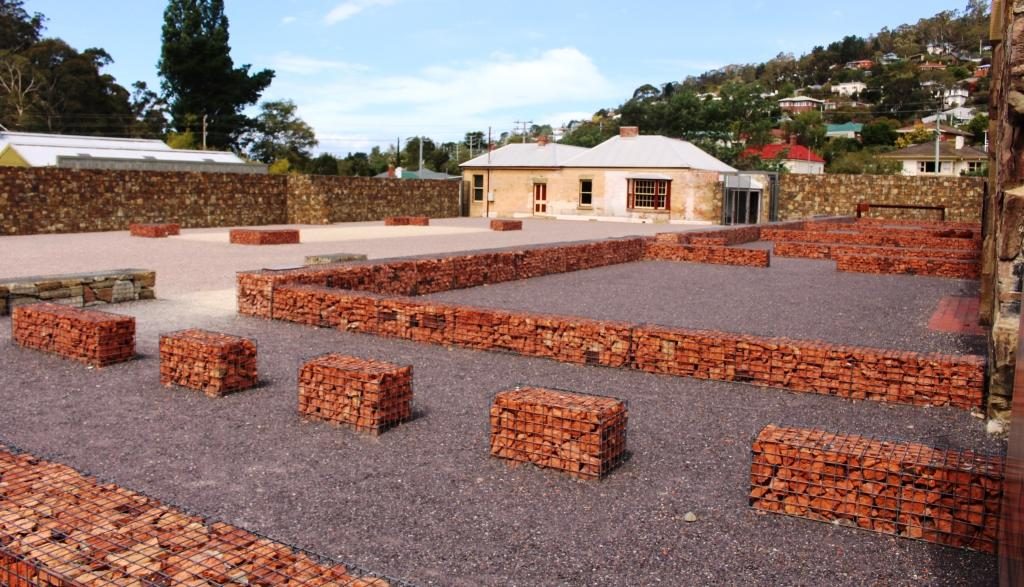
The layout of prisoner accommodation buildings with original buildings in the background.
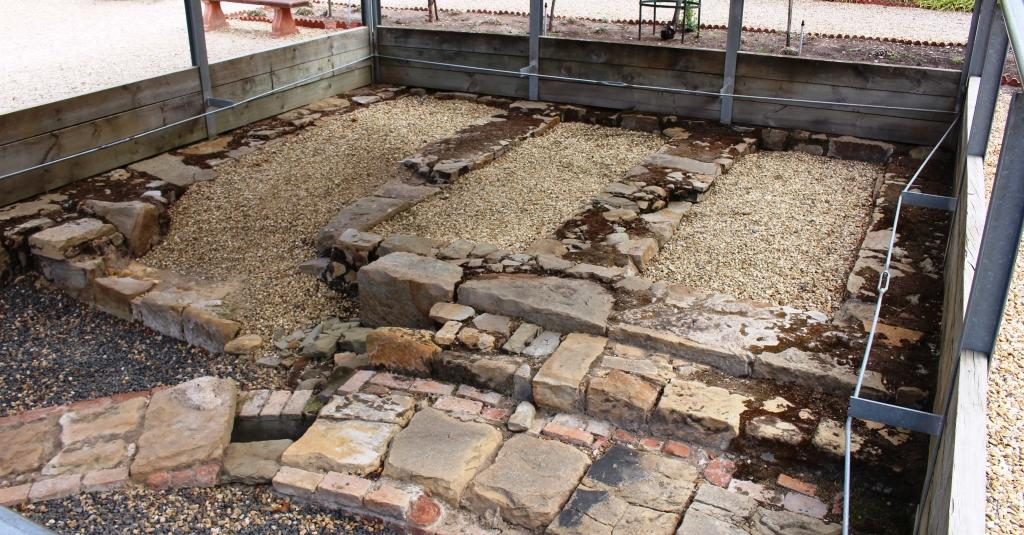
An area of original convict workmanship

But jails they were, with sentences to be served behind stone walls. A couple of buildings still stand but in most of the area the lay outs of buildings are marked by wire crated stones. Information plaques are widely used to explain it all. It is well worth a visit. Conducted tours are lead by theatre folk, so for a added cost you can have the story told by an actress who will provide a full costumed performance.

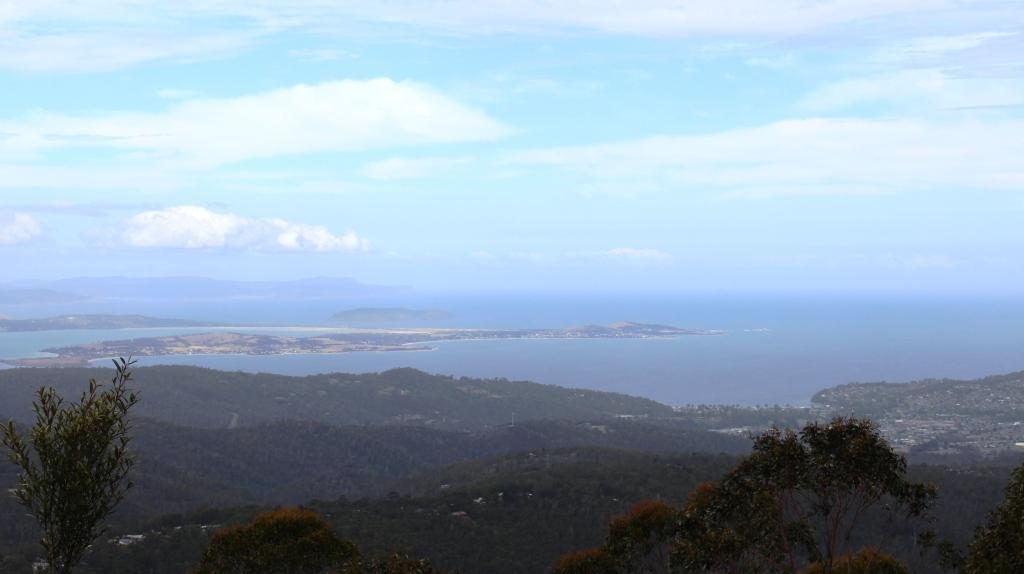
South Arm Peninsula over the Derwent, viewed from part way up Mount Wellington

We looked up at Mount Wellington again but its summit was playing tag with cloud. So we drove about half way up to where we were well below the cloud base but there are lookout points provided at the end of a short walk. The views were worth the effort.

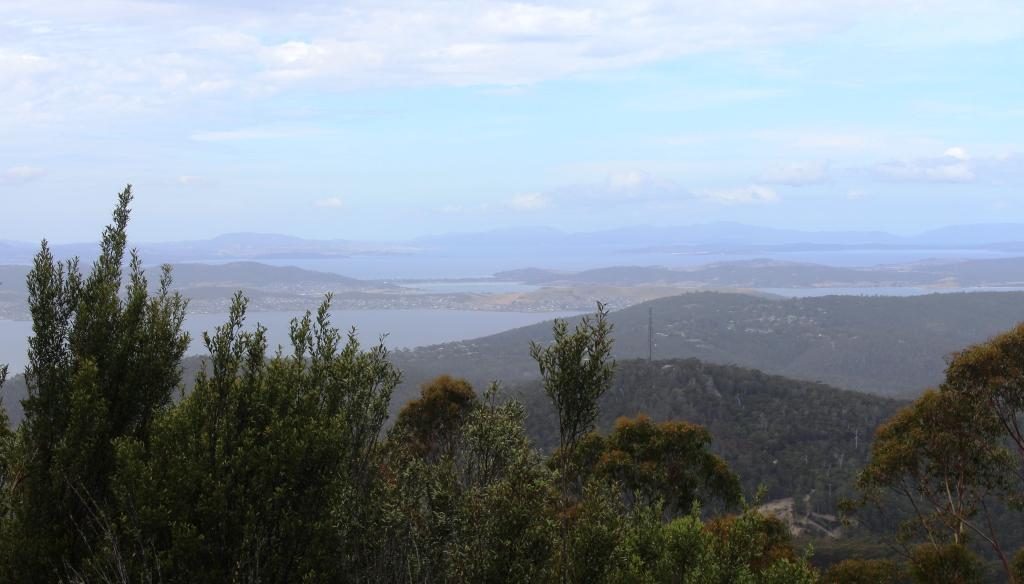
View beyond Hobart and the Derwent over the airport area, Seven Mile Beach and the Tasman Peninsula

We concluded our stay in Hobart by dining out in the evening at The Drunken Admiral Restaurant. Located in one of the wharf side buildings, this well known eatery has been in continuous operation for over forty years. I had dined there when in Hobart on business early in its life, so decided to take Ruth there. I chose the same dish as on the previous visit, the signature dish of seafood chowder. It was as I remembered. The waitress assured me that the recipe had not changed.

Neighbouring tables at The Drunken Admiral where we went to dinner.
https://youtu.be/dCds8NTvSPU

Destination Tasmania – Part 5 – Mountain Roads and Highland Lakes

12th to 14th February 2020

Please Note: Videos covering the material in this blog post can be found at the bottom of the post.

Clouds against mountains approaching Queenstown from Strahan

There was a suspicion of drizzle as we packed the car to leave Strahan.  In several areas, as we drove to Queenstown, our way was partly obscured by cloud cover that sat atop the mountains like a blanket. The point from which we viewed the mountains behind Queenstown the previous morning was a totally clouded, with no view at all.  As we approached Queenstown, banks of cloud hung in front of the mountain range, but all of the cloud vanished as we drove up the range towards the east to give us an almost cloudless sky.

Queenstown from the Lyell Highway heading east
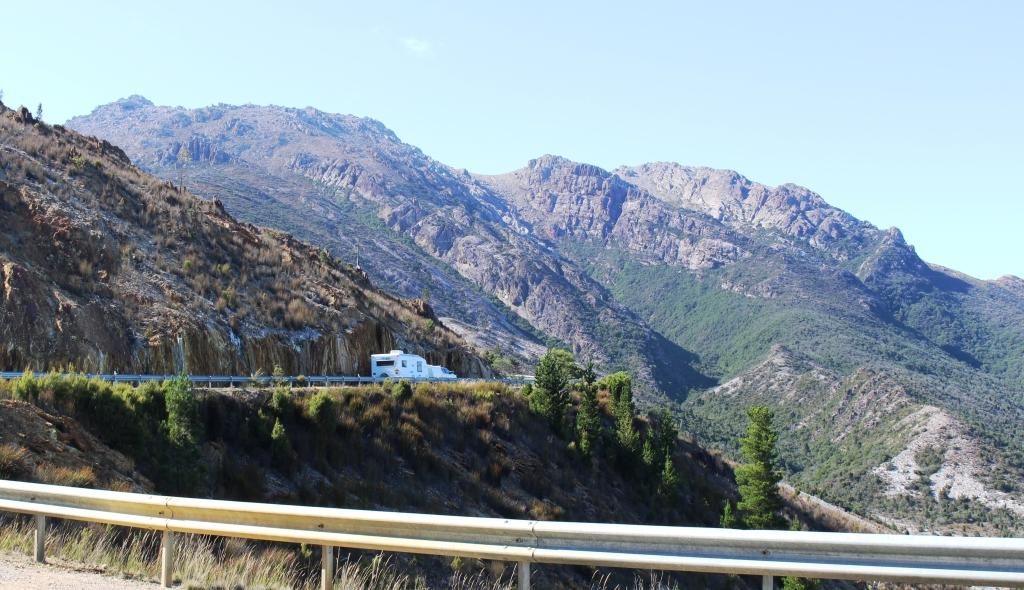
Queenstown in the valley and the road east clinging to the side of the mountain
A caravan making its way up the mountain from Queenstown

We paused at Queenstown for fuel and stopped again at the observation point part way up the baron slopes for that final view of the town.

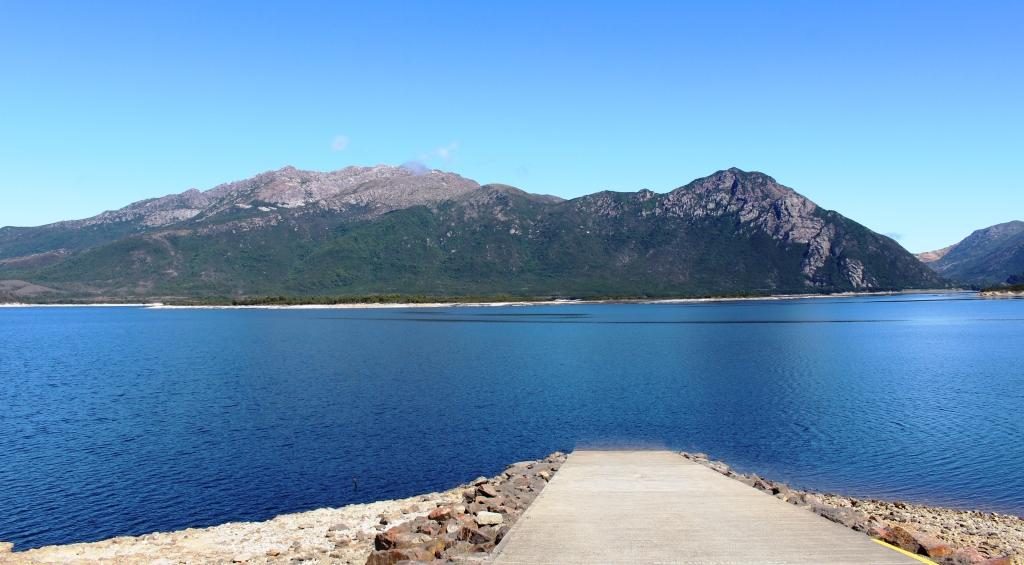
Lake Burberry is one of Tasmania’s newer dams. The Lyell Highway crosses it by bridge at its narrowest point.  A National Parks camping area on the east bank provides picnic facilities, so we stopped there for morning coffee.

Lake Burberry has a good boat launching ramp

The road from the dam to Derwent Bridge runs through endless national park, and is lined with an infinite variety of vegetation as it passes over mountain ranges and through rain forest filled valleys.

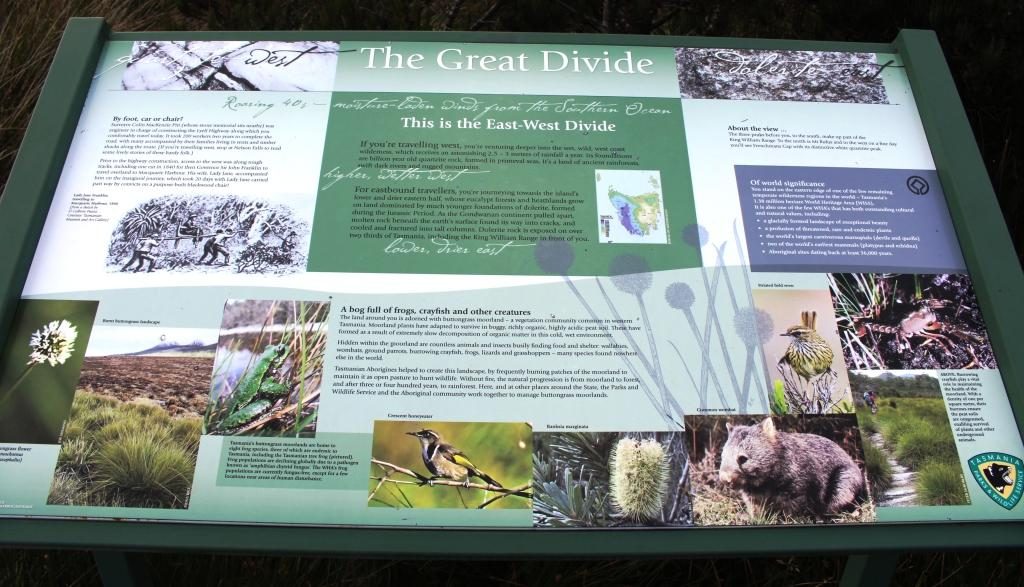
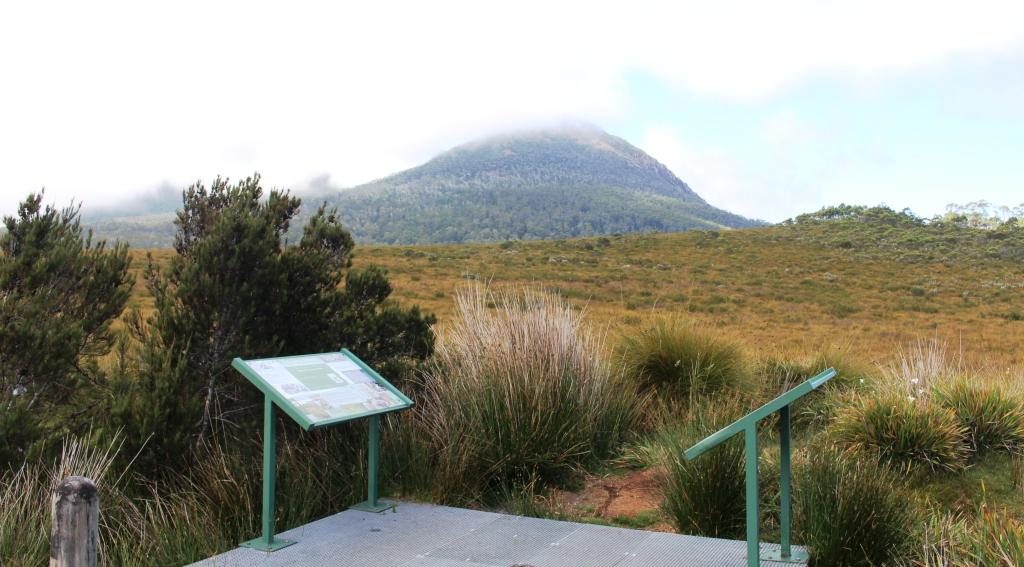
Information at the highest point on the Lyell Highway between Queenstown and Derwent Bridge
A view into misty mountains at the geographic high point

At a number of places along this road there are parking areas giving access to short to medium walks to features such as lookouts and waterfalls.  One parking area is the starting point for longer walks that extend to several days in the area of the Frenchman’s Cap range.  Another stop marks the highest point in the range that divides east from west. Interestingly, we could see Frenchman’s Cap from the boat on Macquarie Harbour.  At 1,446 metres it is quite prominent.

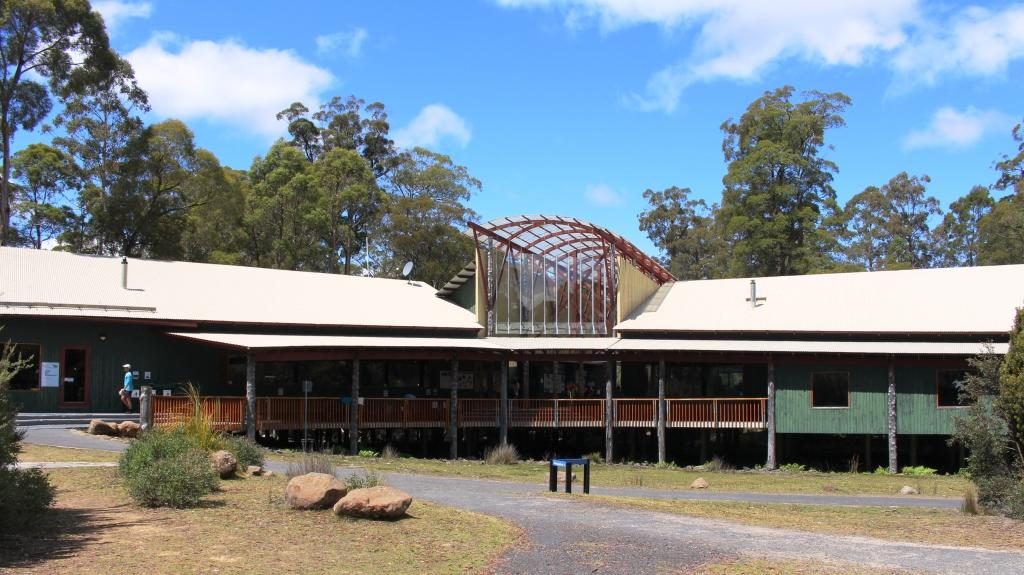
National Park visitor centre at Lake St. Clair

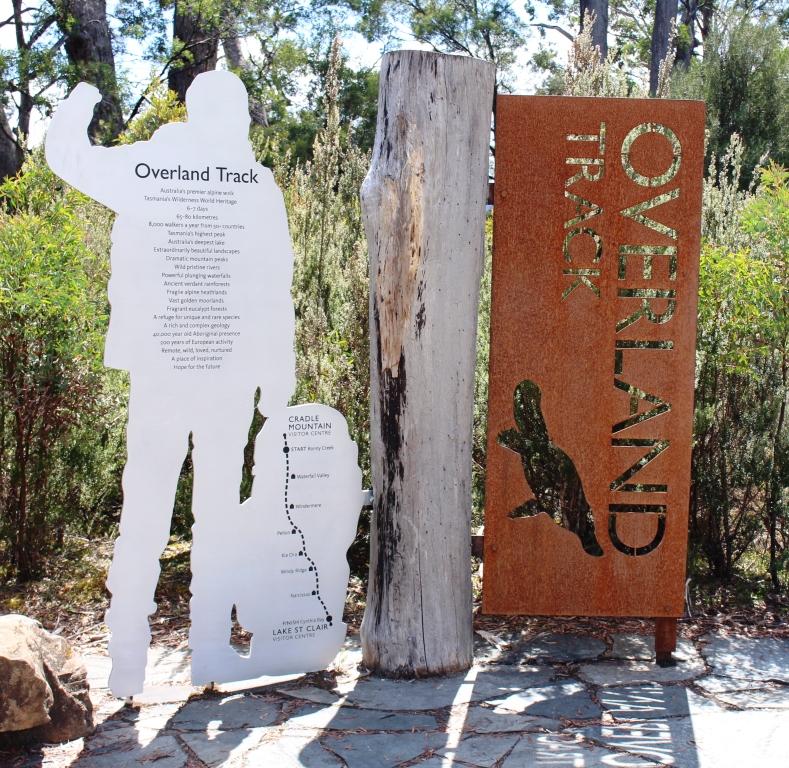
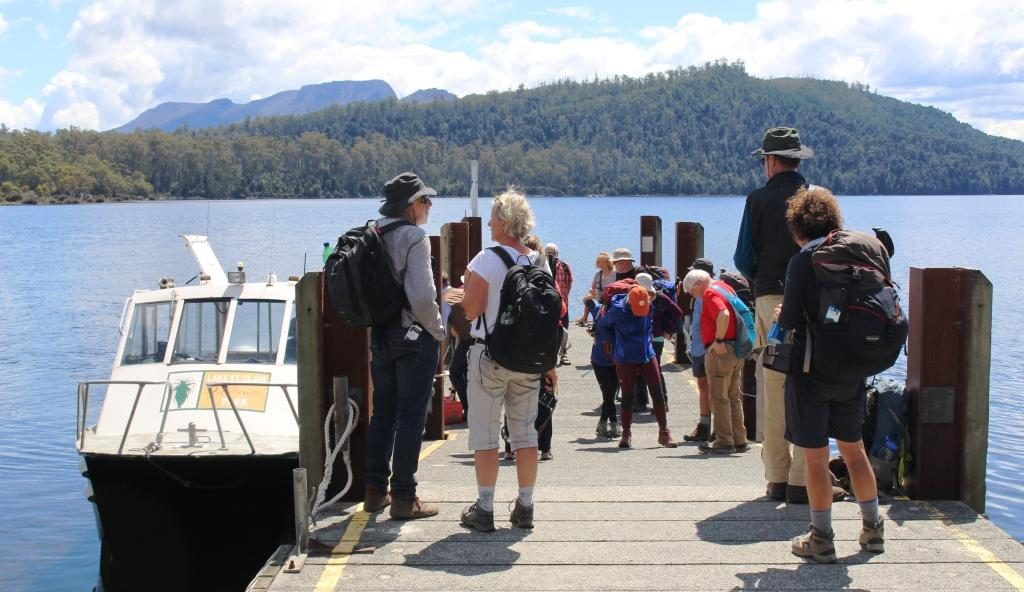
We turned at the small town of Derwent Bridge for the short drive to the Lake St Clair National Park Visitor Centre.  As well as being a worthwhile place to call, it is the southern end of the Cradle Mountain to Lake St Clair 6 to 7 day walk.  Many hikers, carrying back packs, were either arriving from the walk or waiting to leave to walk north.  A ferry service links the southern end of the walk with the visitor centre at Lake St Clair.

The official end of the Overland Trail from Cradle Mountain to Lake St Clair

We had intended to have a picnic lunch at Lake St Clair, but we were attacked by a swarm of March flies. Tasmania seems to have a March fly plague but today was the worst that we had encountered.  So the picnic went back in the car and we took refuge in the restaurant.

Arriving and departing hikers at Lake St Clair ferry

It is about 140 km from Derwent Bridge, mostly down the Derwent Valley, to New Norfolk. Most of the journey is through mountainous timbered country. The road passes a number of dams used for hydro electricity generation.  In the Tarraleah area, we saw a couple of sets of huge water supply pipes descending steeply into power stations.

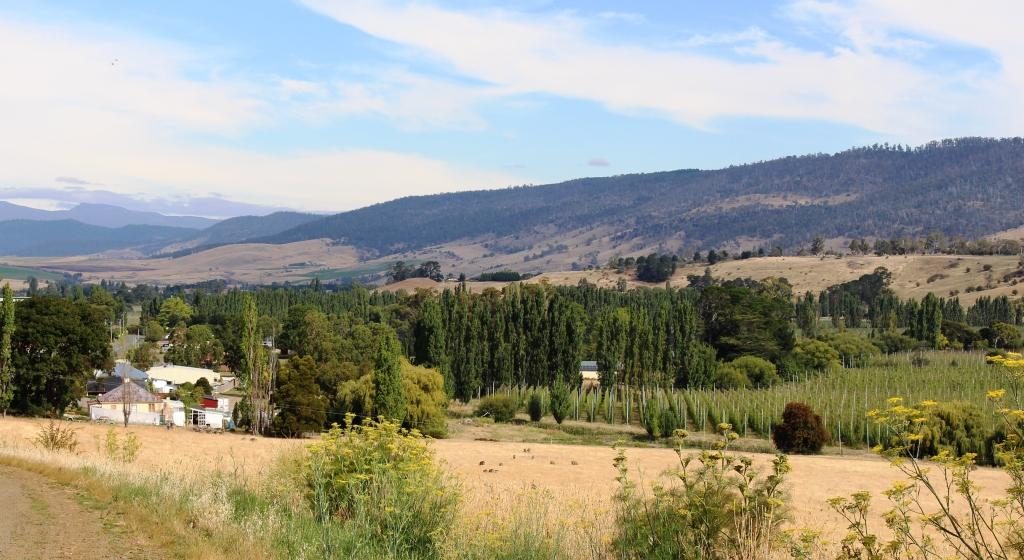
Derwent Valley near New Norfolk
Hop fields, Derwent Valley

The forests finally give way to farm country with grazing cattle beside the road.  Just before New Norfolk, orchards appear along the banks of the Derwent, which is quite a substantial river at this point.

Our apartment was on a hillside overlooking the Derwent River, with views over the town on the eastern bank and the mountains beyond. We were there for three nights. New Norfolk was our first encounter with a digital reception. A sign on the door gave a phone number to call, A code was then sent, by text message. The code was our door key.

New Norfolk and the Derwent River from our balcony at New Norfolk
Lyell Highway bridge over the Derwent at New Norfolk

If someone tells you that more trees should be planted, tell them to visit Tasmania. We spent yet another day driving through trees, trees and more trees. Tasmania’s south and south west have an abundance of trees.

We started the day with some medical maintenance at a New Norfolk pharmacy and then headed for the trees and the mountains. In Tasmania trees and mountains seem to go together.

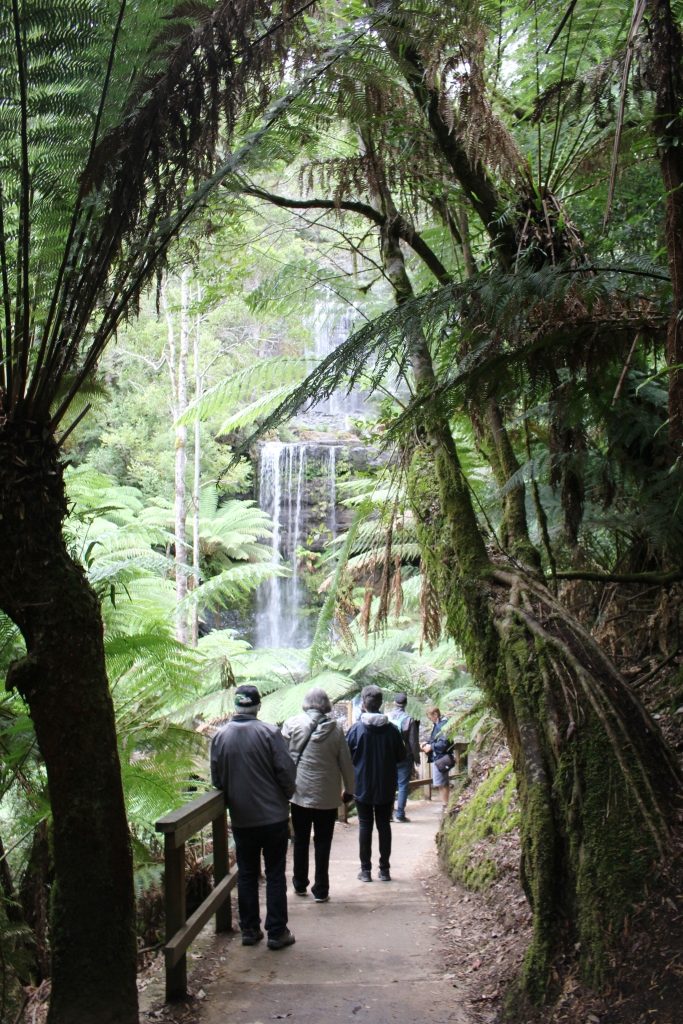
The road on the west side of the Derwent is a shorter route to Mount Field National Park. There is quite a lot to do in this extensive park but time limited us to the short walk to Russell Falls. Like many falls walks the path leads along the ravine that carry the waters of the host stream. The view of the tiered cascade is all the reward needed for the easy 30 minute walk.

Russell Falls, Mount Field National Park
Russell Falls are popular. It was hard to get photos without strangers in them.

Like Lake St Clair, the visitor centre here was busy. There are a number of walks and other attractions and it is only about 80 km from Hobart. Some walks lead to elevations that provide views back along the Derwent Valley to Hobart. Given an absence of cloud, of course.

Mount Field National Park Visitor Centre.

We then drove on a further 95 km along the Gordon River Road to reach the Gordon Dam and Lake Gordon. It is a lonely road passing through a handful of small locations, the last and most substantial of which is Maydena, followed by 70 km of sealed mountain forest road.

Misty mountain on the road to Gordon Dam

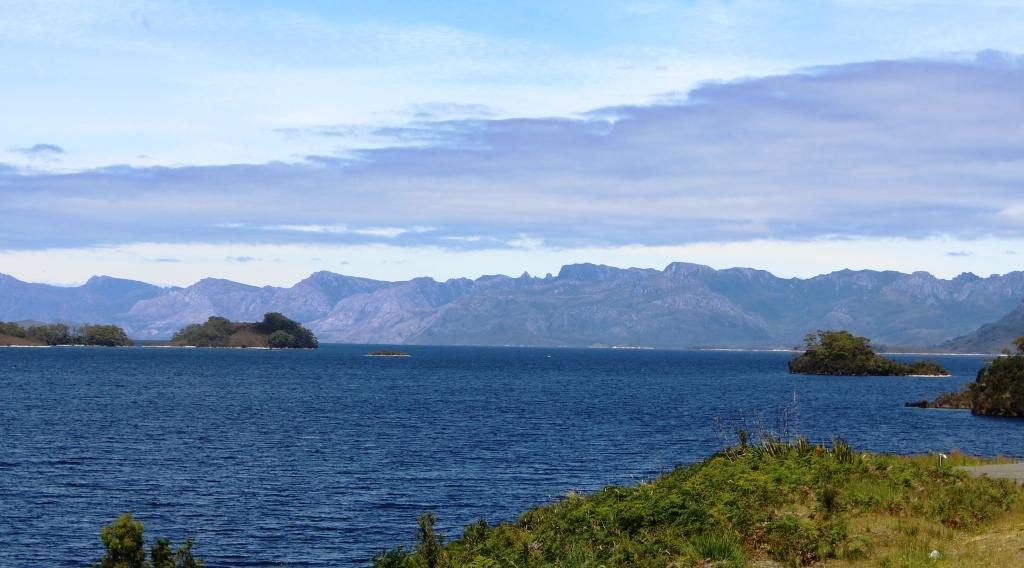
Lake Gordon and its neighbour, the better known Lake Pedder, are just over a ridge from each other at Strathgordon. There was a huge environmental fight over Lake Pedder that the Hydro Commission eventually won, which helped achieve its icon status.

The Sentinel Range near Lake Pedder

Strathgordon was only ever a dam construction town. Nothing much has changed, with administration and some worker accommodation still there. What was, I think, the single worker facility, is now a wilderness lodge that provides accommodation as well as the facilities of a pub, cafe, restaurant and coffee shop.  Fuel is available as well.

Lake Pedder Wilderness Lodge
View of Lake Pedder from the Lodge

These huge water storages look fantastic as they lie among the mountain ranges, some of which are densely forested and others massive piles of almost bare rock. A clear sky produced striking reflected blue water.

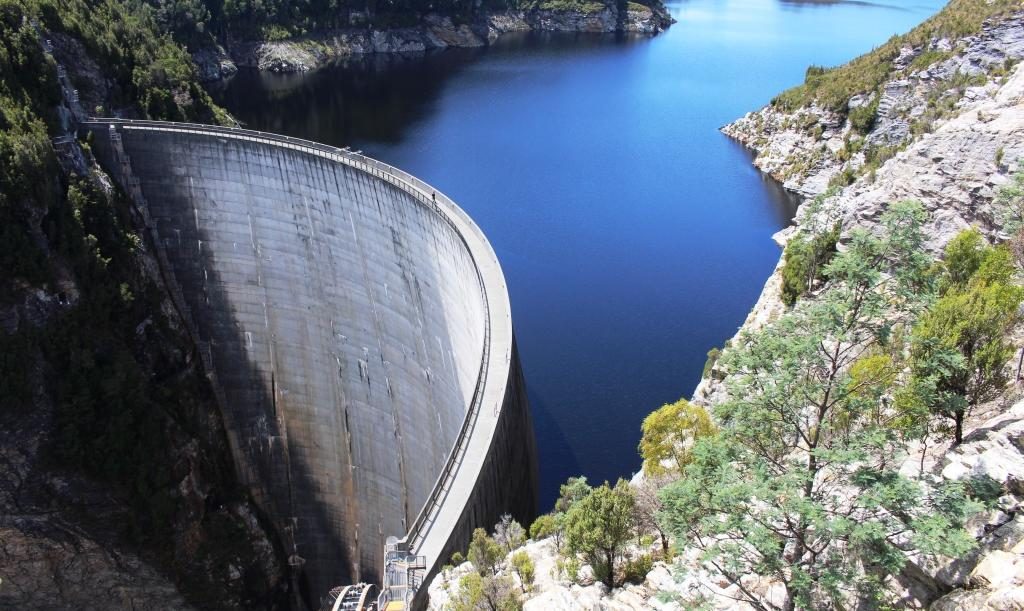
Gordon dam is 140 metres high

The dam that holds back the waters of Lake Gordon is quite a sight at 140 metres high with a pronounced curve in the wall to cope with extreme pressure. Both lakes cover more than 500 square kilometres and hold the equivalent of 37 Sydney harbours.

The bottom of the wall of Gordon Dam is accessible by these stairs. It is a long way down.
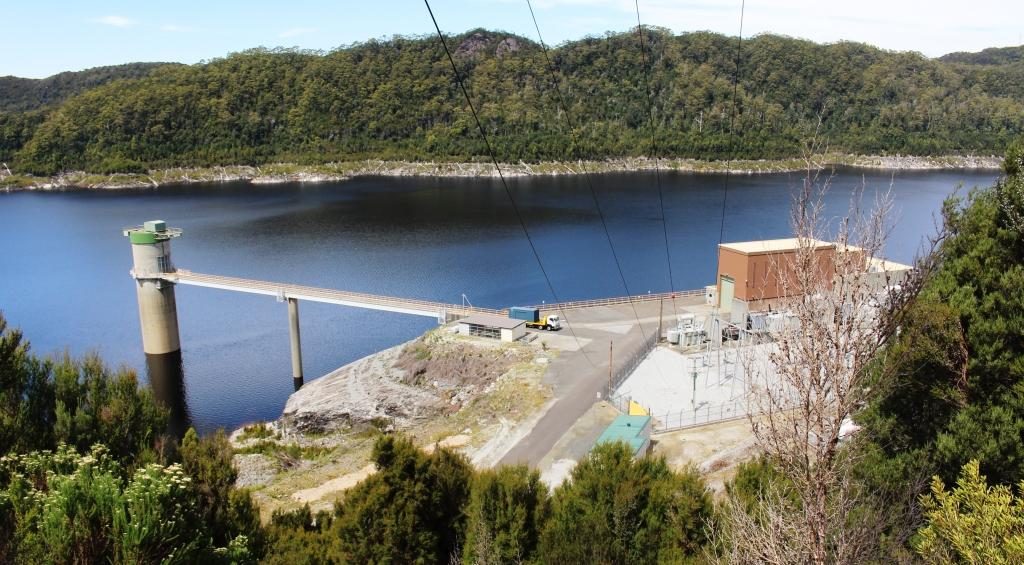
Outlet and part of the power station at Lake Gordon
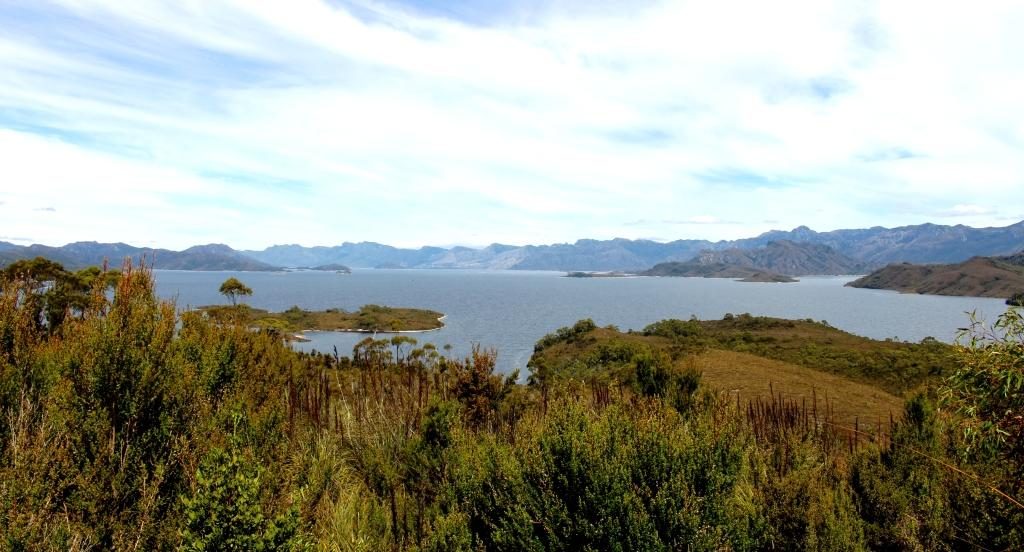
Lake Pedder from the road to Gordon Dam
This channel carries water from Lake Pedder to Lake Gordon

Gordon and Pedder dams are connected by a narrow channel that carries water from Lake Pedder to Lake Gordon. Lake Pedder appears not to have its own hydro power generator. Its water is directed through the Lake Gordon.

The return journey is over the same road as we travelled outward bound. We used Maydena as an ice-cream stop, pleasantly absorbing the warmth of the afternoon sun as we enjoyed the treats. And so, back to our comfortable unit, which was easily the best accommodation that we had so far occupied in Tasmania.

The next day, Friday, dawned overcast with a chill breeze. Just the day to drive through areas where snow regularly falls during winter. We were bound for The Great Lake in the Central Highlands of Tasmania but by an indirect route.

We drove down the east bank of the Derwent River to Bridgewater and joined Highway One, heading north. Downstream from New Norfolk, the river is not as confined by its banks and sprawls into wider expenses of water, some of which are shallow and marshy. The bridge at Bridgewater is at one this wider area so the bridge is rather long with a causeway and a lift section for taller boats.

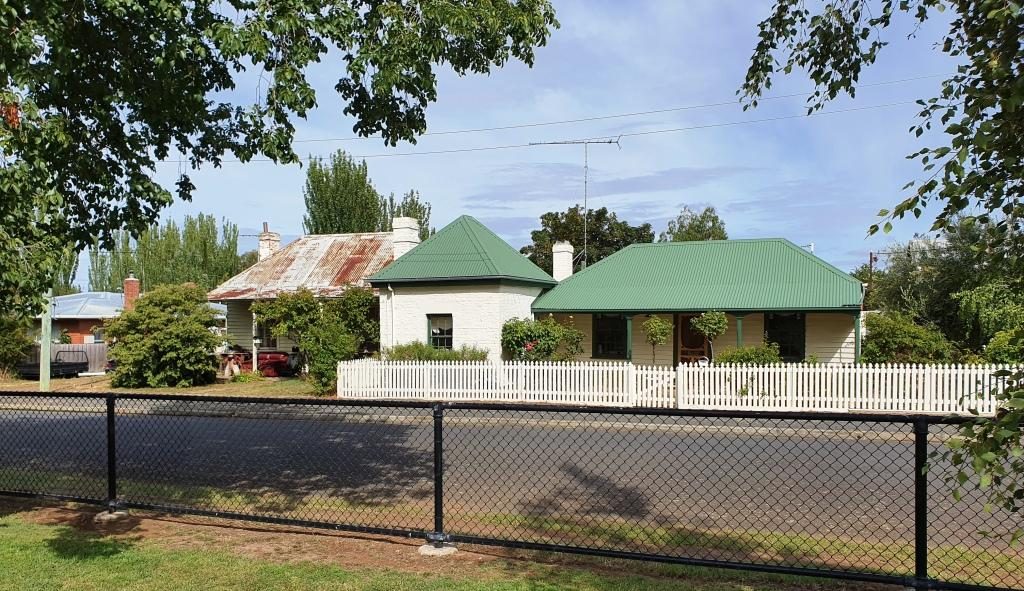
Historic houses at Bothwell are still in use

Highway One, the Midland Highway is the main road link between Launceston and Hobart. After about 50 km we turned left for Bothwell, a small rural town, full of historical buildings. A sheltered corner in the park provided a morning coffee stop and a pause while we looked at history dating back to early settlement in Tasmania. The area was settled by farmers in the 1820s.

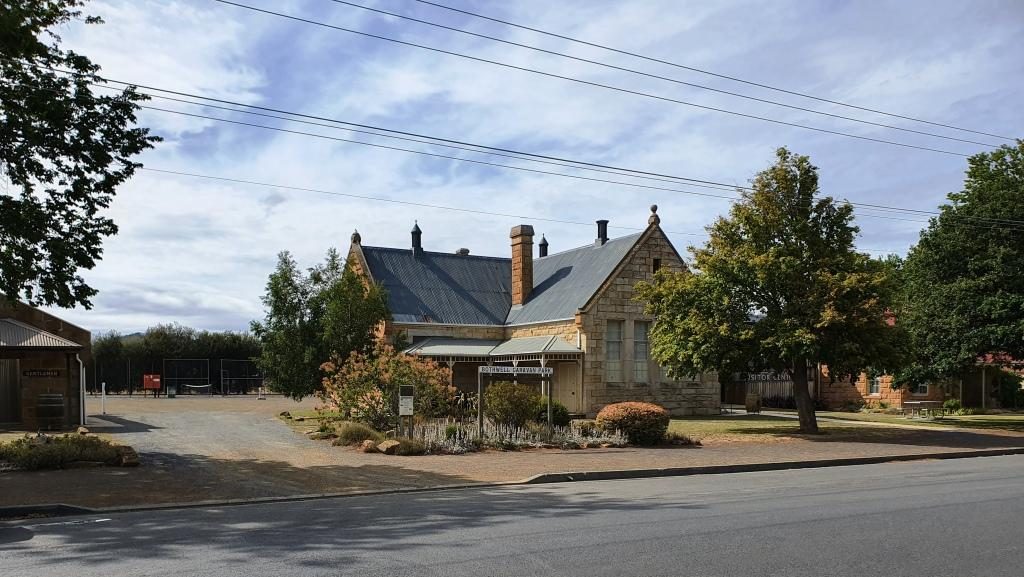
The visitor information centre at Bothwell
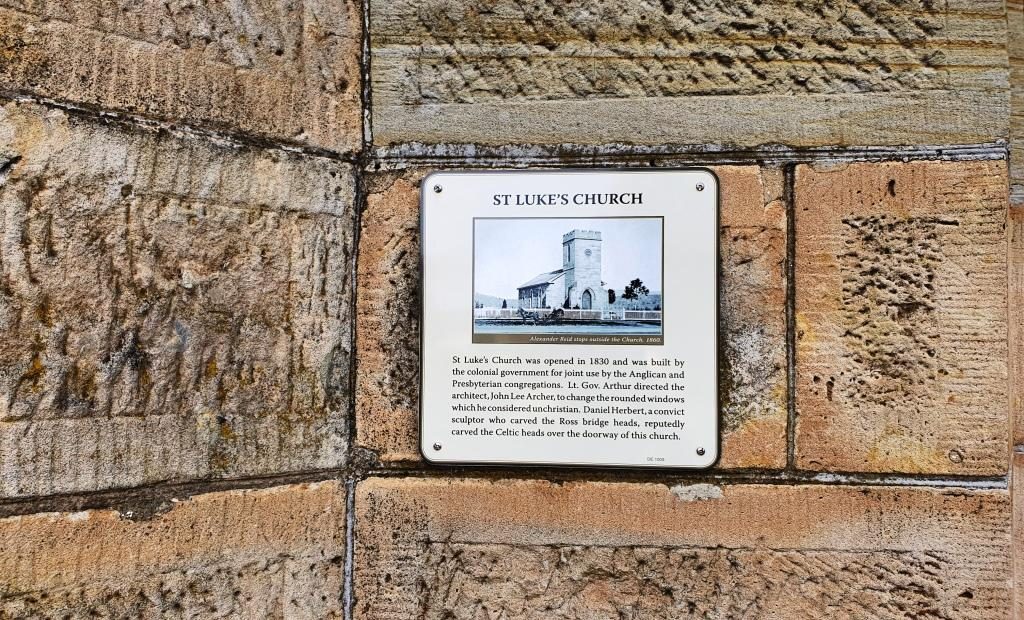
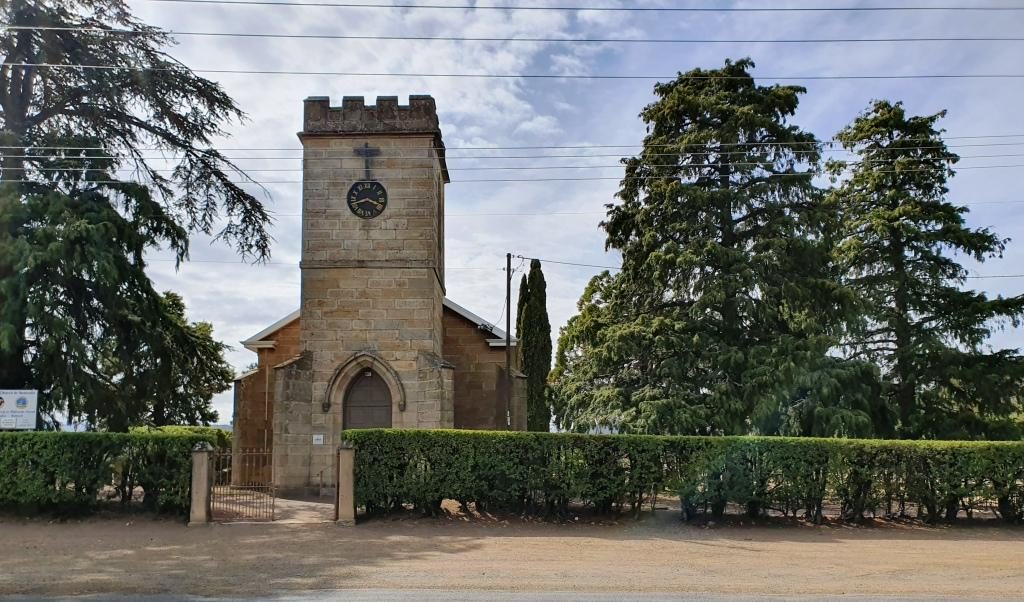
Historic plaque on St Lukes church in Bothwell, The plaque dates the building at 1830.
St Lukes church was built in 1830
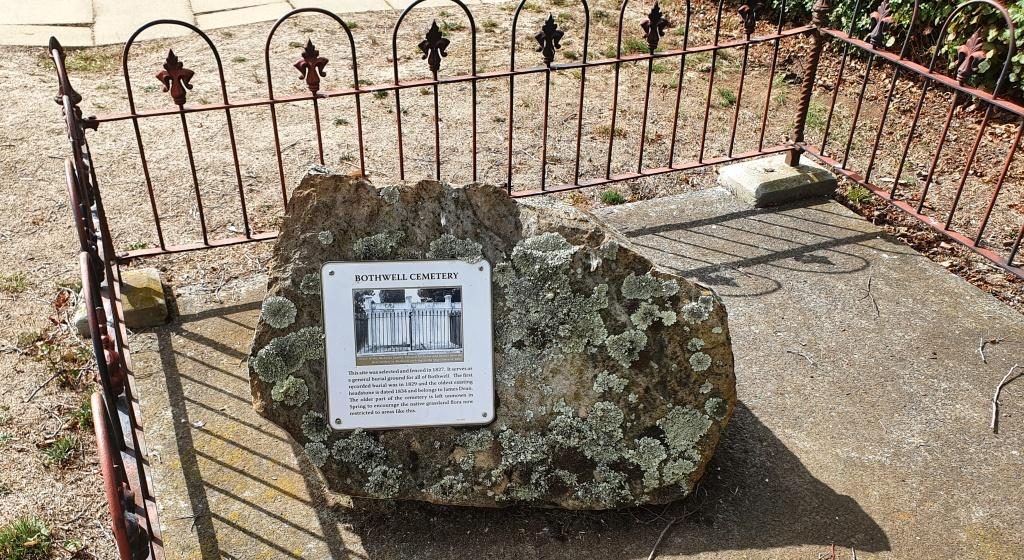
Part of St Lukes’ cemetery

After Bothwell, the road continues to the North West until Miena is reached. Miena is a spread out town of highland holiday houses and well housed permanent residents. A couple of small hills provide lots of water view opportunities over the southern end of the Great Lake.

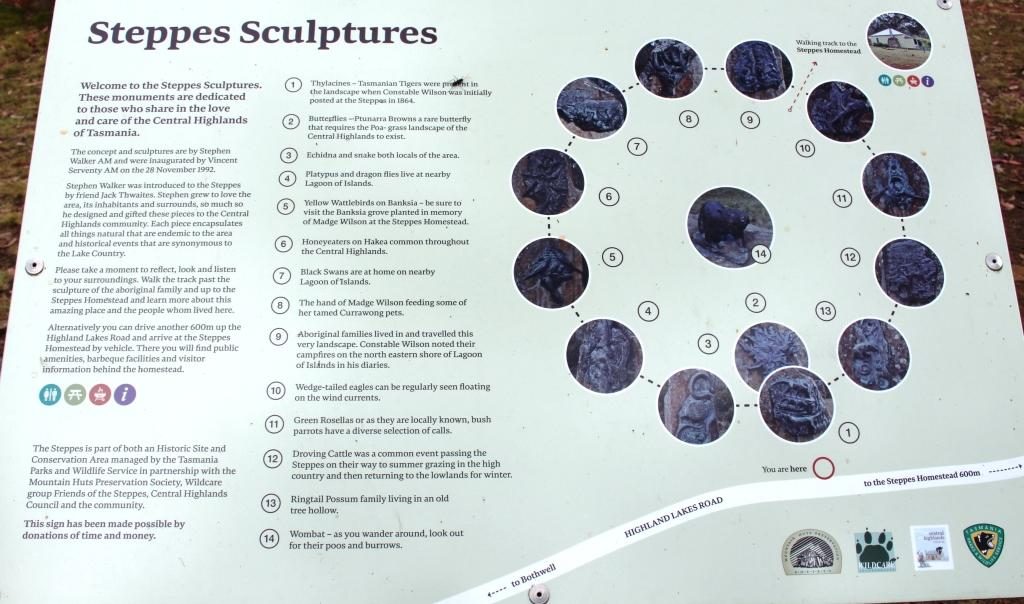
The Steppes Sculptures information board

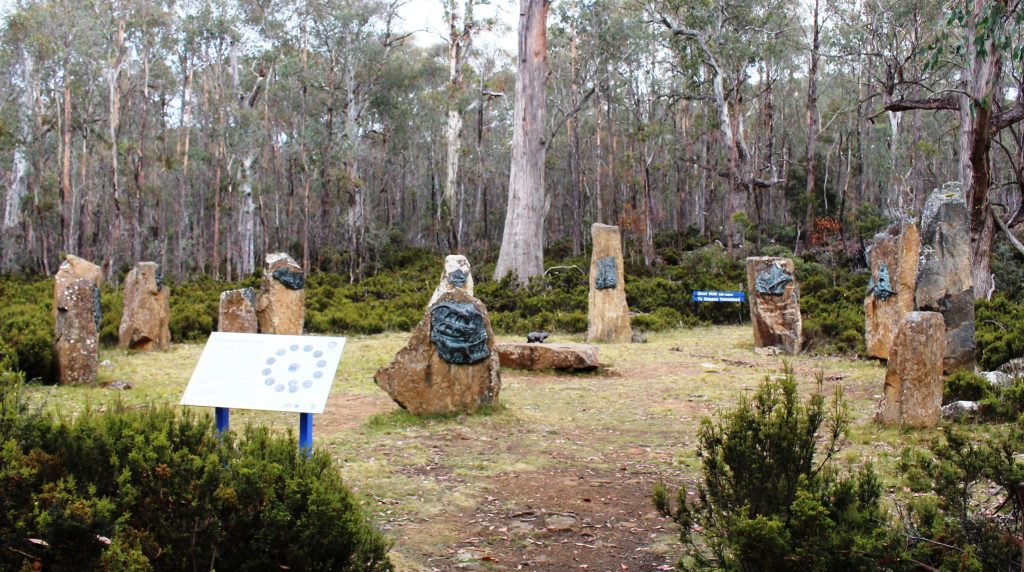
The only real point of interest along the road to Miena, about half way, is a collection of sculptures, in the bush just off the road. They are at the end of a short dirt road with a small parking area. The road is marked by a simple sign that announces the “Steppes Sculptures”.

Plinths holding animal sculptures form a circle

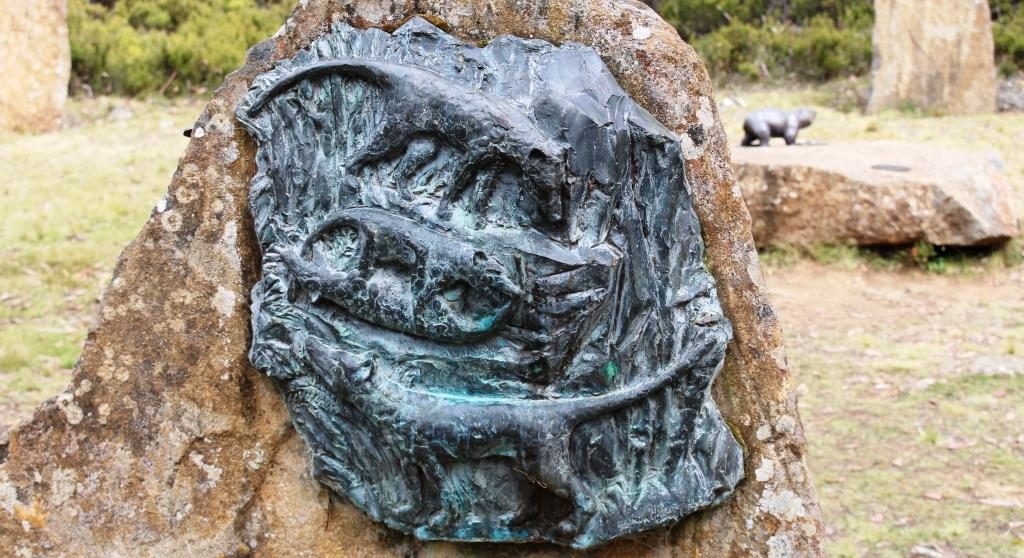
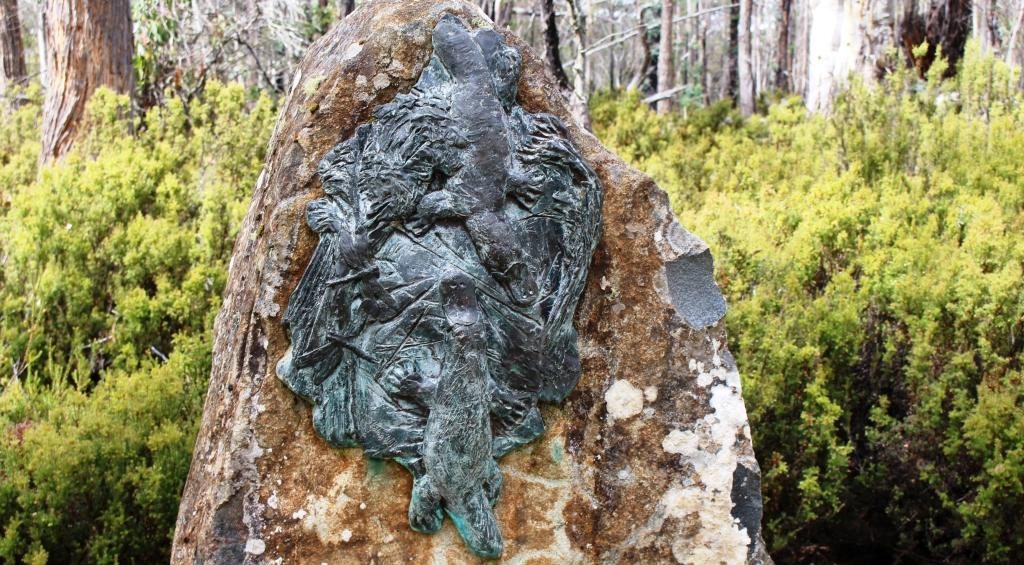
A short walk away a circle of twelve stone plinths each hold a bronze sculpture with a thirteenth in the centre. They are the work of Stephen Walker, a well known sculpture who has work that decorates the Hobart waterfront and who sculpted the whale memorial at Cockle Creek. More of Cockle Creek in a future post.

This appears to be a Tasmanian Devil
Sculpture of Platypus

The area is known as The Steppes, presumably because it is part of the area that “steps” up to the highlands. A historic farm house on the property can be visited either by a short walk or a short drive. We passed up on the house as it is not often open and it was not a day to be out of the car for too long without being rugged up.

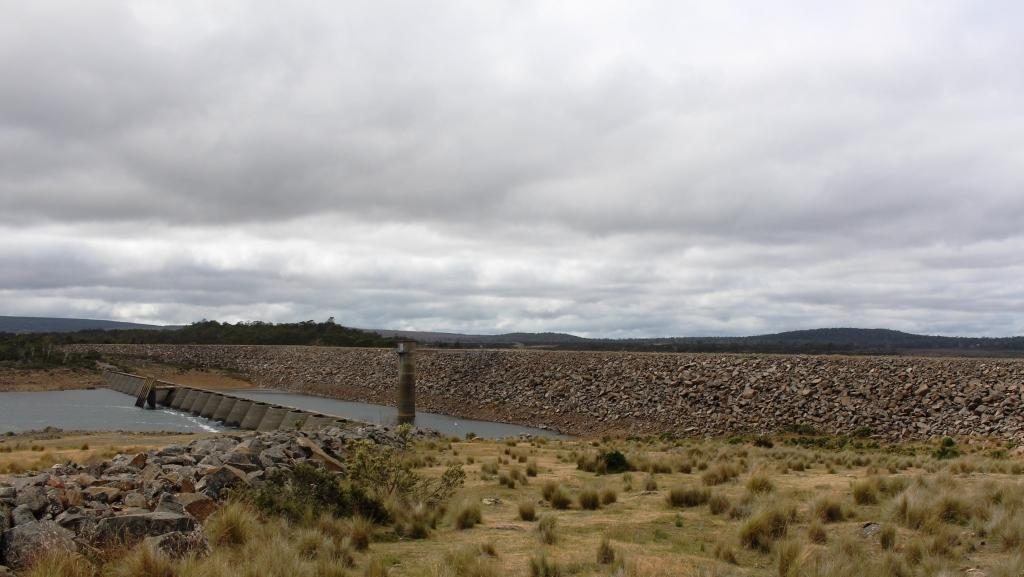
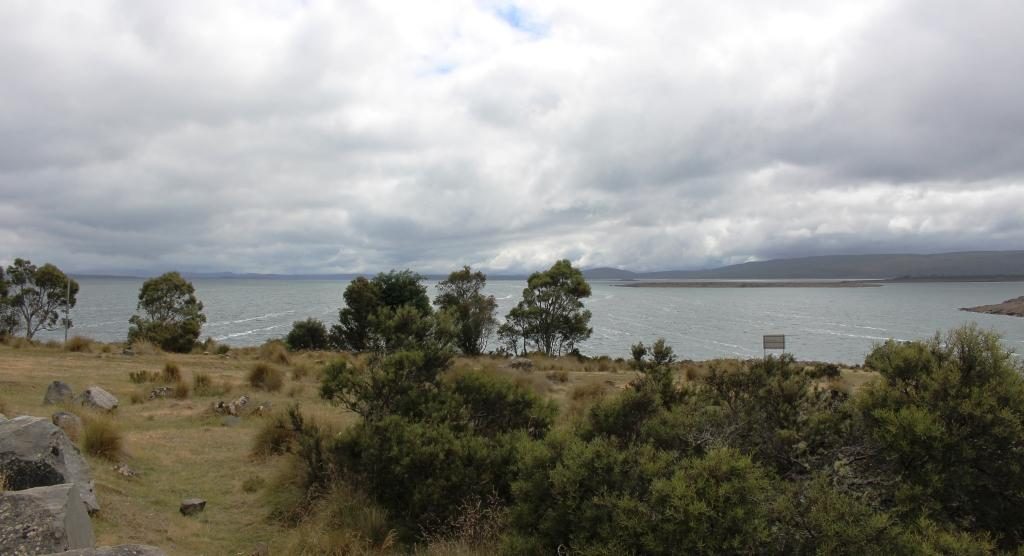
Just before Miena we pulled off the road to look at the Miena Rockfill Dam the construction of which created The Great Lake by backing up the Shannon River and caused two smaller lakes to become one much larger lake. A lookout provides excellent views of the retaining wall and the lake that backs up to the north, way out of sight. On the south side of the lake is Shannon Lagoon. But more of that shortly.

Mienna Rockfil Dam holds back the waters of The Great Lake
The Great Lake viewed from the South

We drove further into this very spread out town and found the Central Highlands Lodge, a sort of guesthouse hotel of the kind that you find in these kinds of places. We were served a good hot meal suitable for the day and, of course, coffee. We then drove on through the town and along the road to the west of the lake that would have taken us to the Bass Highway, but the clouds were below the tops of the distant mountains and showers of rain were moving over the surrounding planes and across the lake. Frankly, it was quite uninviting, so we turned around and headed back into town.

Central Highlands Lodge provided a lunch suitable for a cold day
Part of the town of Miena

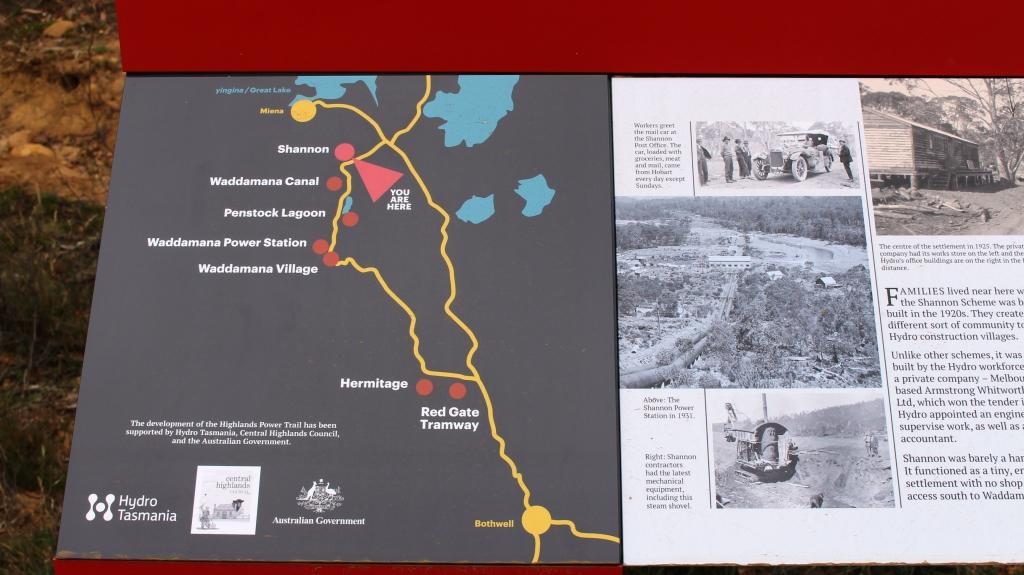
When I was learning about Mount Bischoff tin and Mount Lyell copper at school I was also learning about the Tasmanian hydro electric generation industry and particularly Tarraleah and Waddamana. I remembered Tarraleah because we had spent a night there 45 years ago and it had snowed. We had driven through this town two days before and noted its steeply sloping water pipes feeding the generators. But where was Waddamana? That question was answered on the drive earlier in the day when we had seen a sign pointing to Waddamana and the historic hydro electric trail. The turn was about 15 km back towards Bothwell.

The Historic Hydra Trail had information signs at regular intervals describing the project
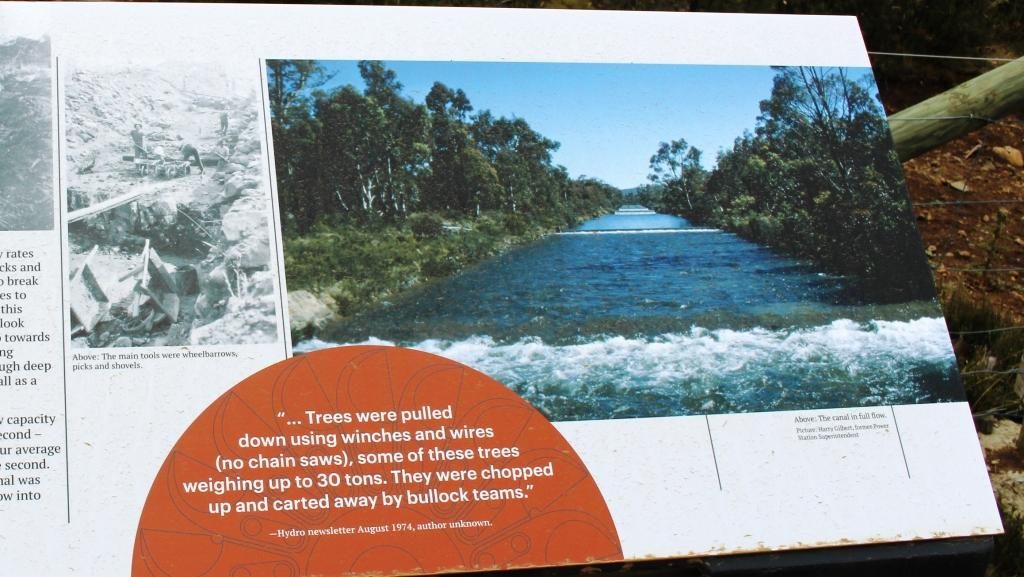
The water supply channel as pictured on the information sign
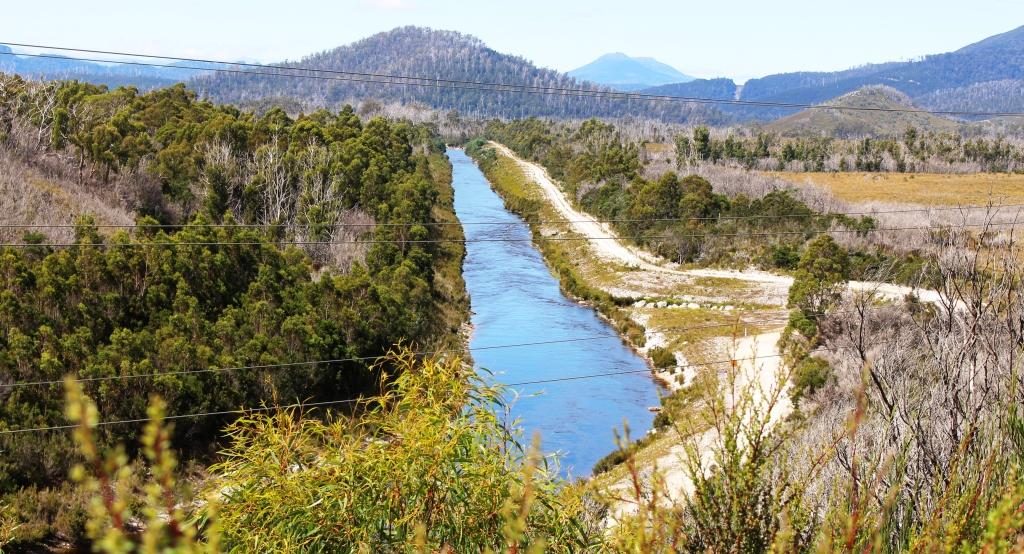
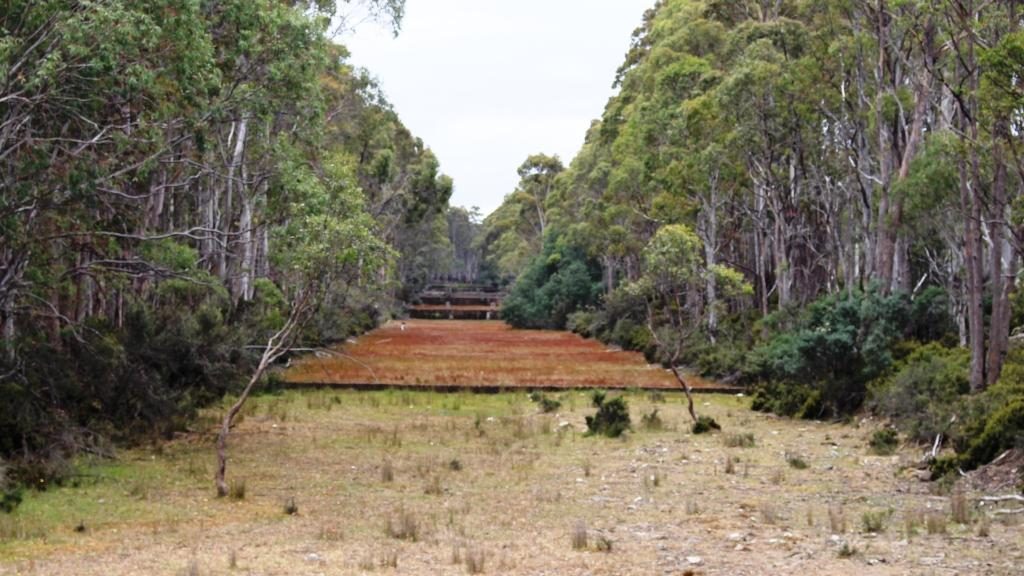
Water supply channel as it is now

The great lake is the birthplace of serious hydro electricity generation in Australia. It all started in about 1910 when a dam was built at the bottom of The Great Lake which channelled water through pondages and canals to the top of a steep slope and shot it down the slope to Waddamana A power station. The scheme was commissioned in 1916, held up by bad weather and the start of WWI.

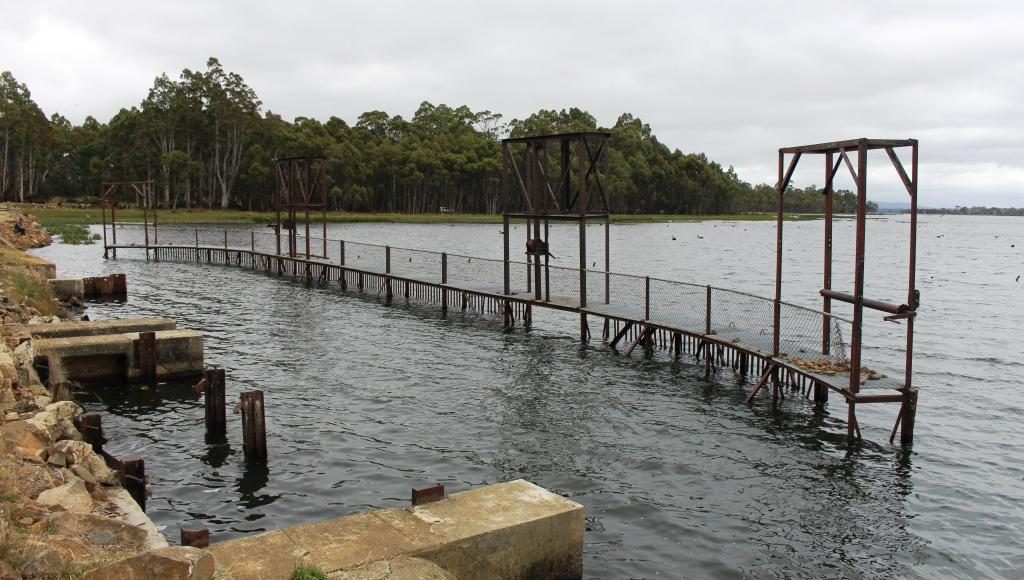
Penstock Lagoon was the final holding basin before the water was released into the channel and pipes that fed the turbines
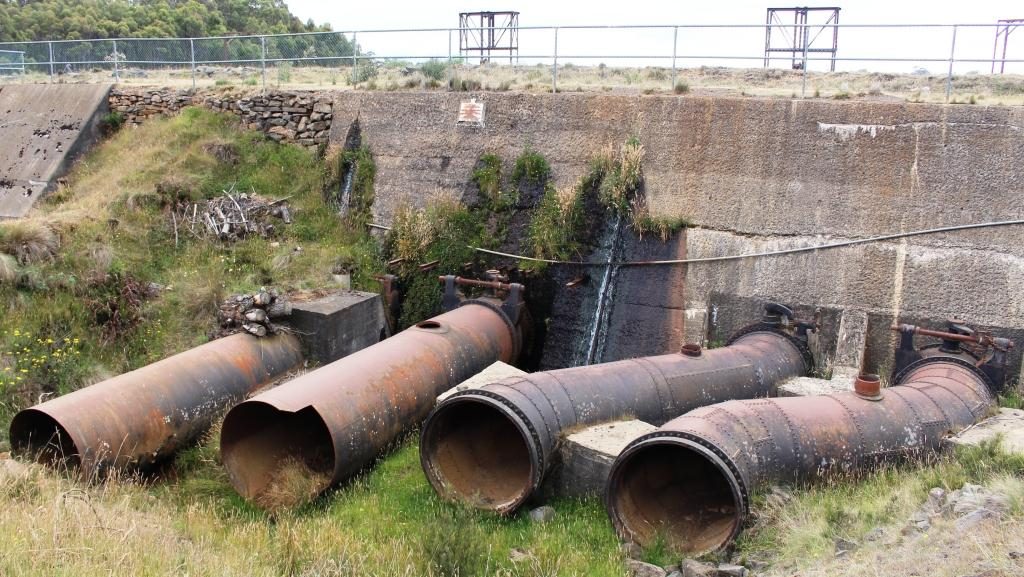
Old water supply pipes protruding from the retaining wall at Penstock Lagoon
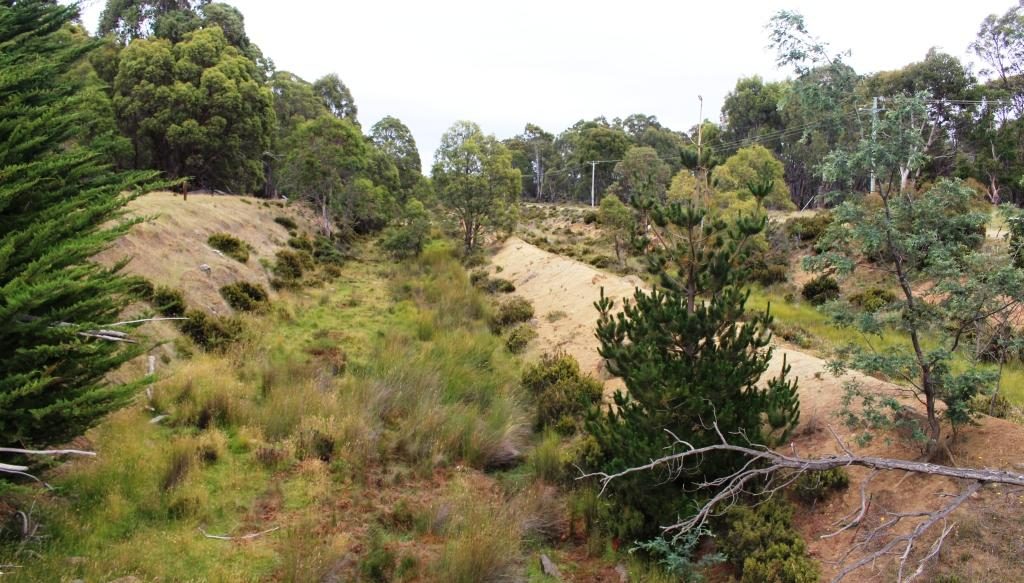
This channel leads to the point where the water enters the large pipes for the final plunge to the turbines

Shannon Lagoon was a balancing pondage which fed water into a manmade channel that carried water to Penstock Lagoon. From this temporary storage water was released into another man made channel and then down the precipitous mountain side to Waddamana A. There was a construction town named Shannon but it ceased to exist many years ago.

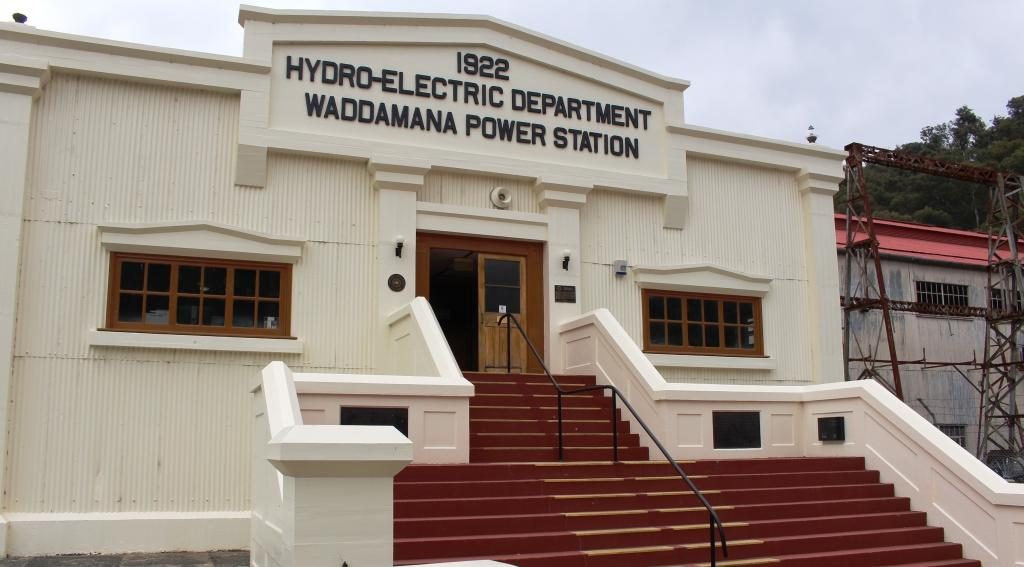
Entrance to Waddamana power station
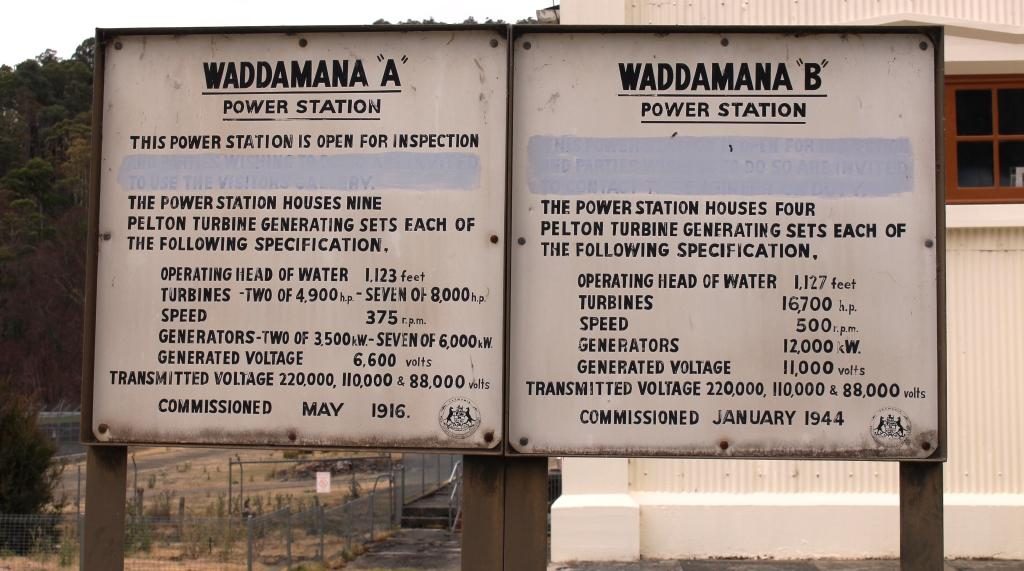
Information boards for stations A and B at Waddamana

Waddamana B was commissioned 1946 so was slowed, in its turn, by WWII. This expansion of generation capacity greatly increased the output of Waddamana and helped to set the paten for future power generation.

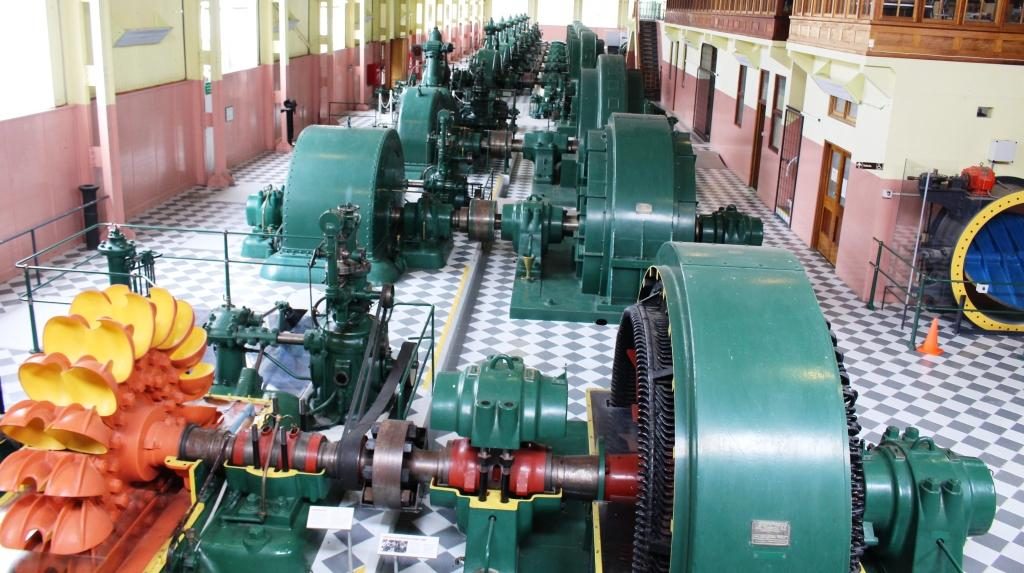
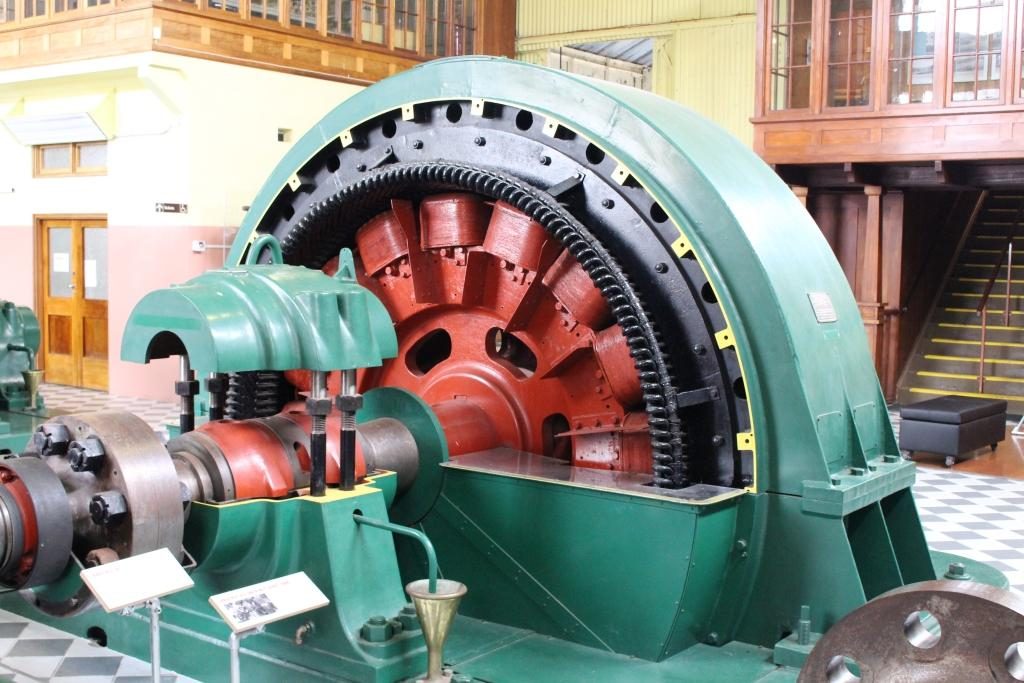
Turbines in Station A. The water was used several times as it flowed through the line of turbines. This photo shows a turbine with its protective cover removed.

Waddamana A is now a museum with most of its turbines still in place with some cut away to show what really makes the system work. I was able to walk through among the equipment and gained a good understanding of it. Most of the pipes that fed water to the turbines are still in place although truncated and often incomplete.

A partly stripped view of the electricity generator
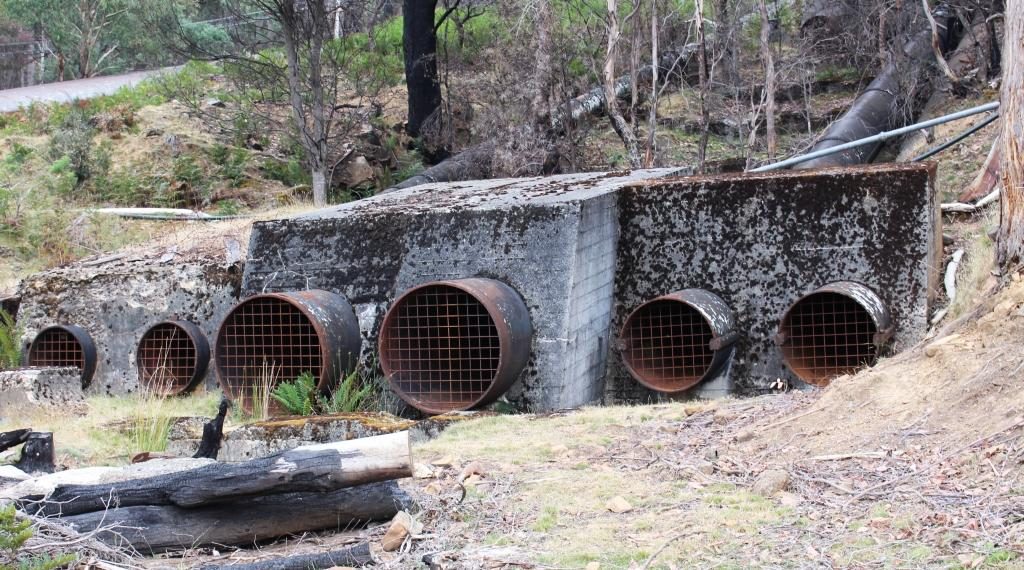
Truncated pipes at the bottom of the hill behind the power stations.

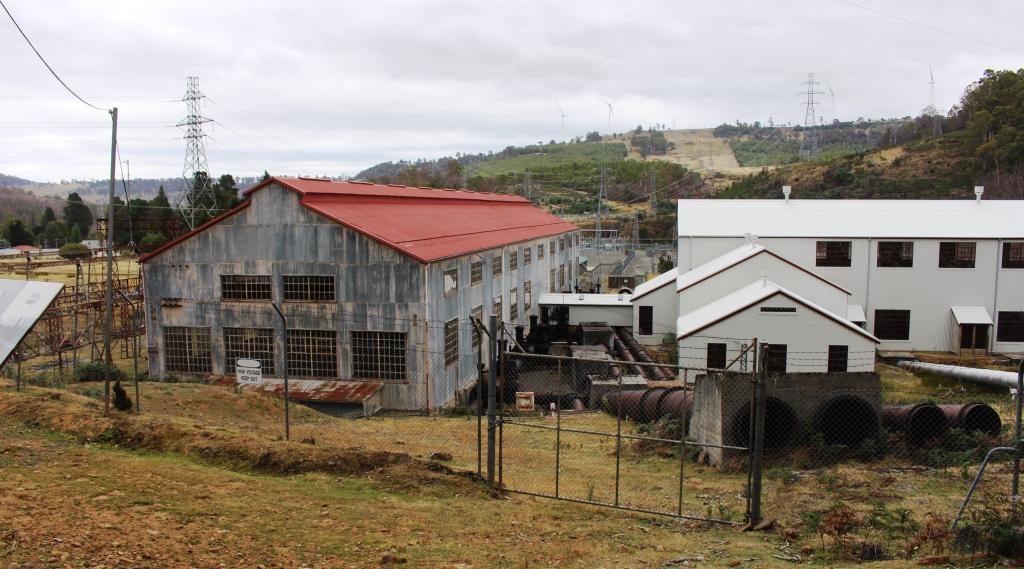
There was a small town at Waddamana back then which is still there but not used for power station workers any more. Some of the houses appeared to be occupied. On a hill above the town and power station a new and substantial wind farm has been built. The wind vanes were still against the afternoon sky but we heard on the news a few days later that is had been officially commissioned and was in production.

Waddamana A on the left and B on the right,.

We made our way home on an alternative road that was sealed so long ago that it was like driving on gravel but it was in surprisingly good condition. It brought us back to the Lyell Highway at the town of Ouse which is on the Ouse River, a tributary of the Derwent. The final part of our drive was again through the vinyards, orchards and hop fields of the Derwent Valley.

https://youtu.be/QPqo67G5Srg

Destination Tasmania – Part 4 – Strahan, Queenstown and Zeehan

10th & 11th February, 2020

Please Note: Videos covering the material in this blog post can be found at the bottom of the post.

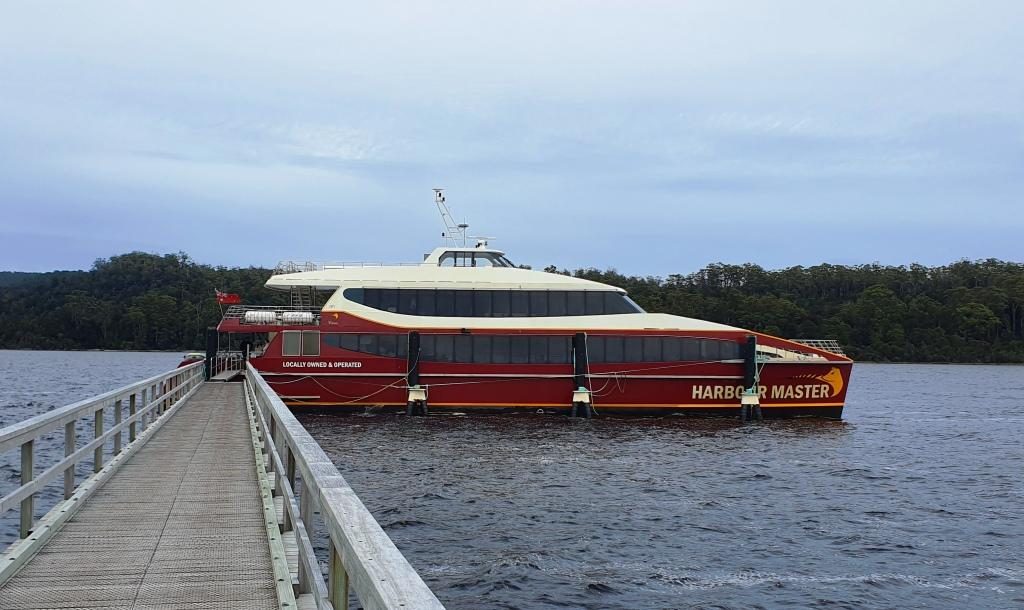
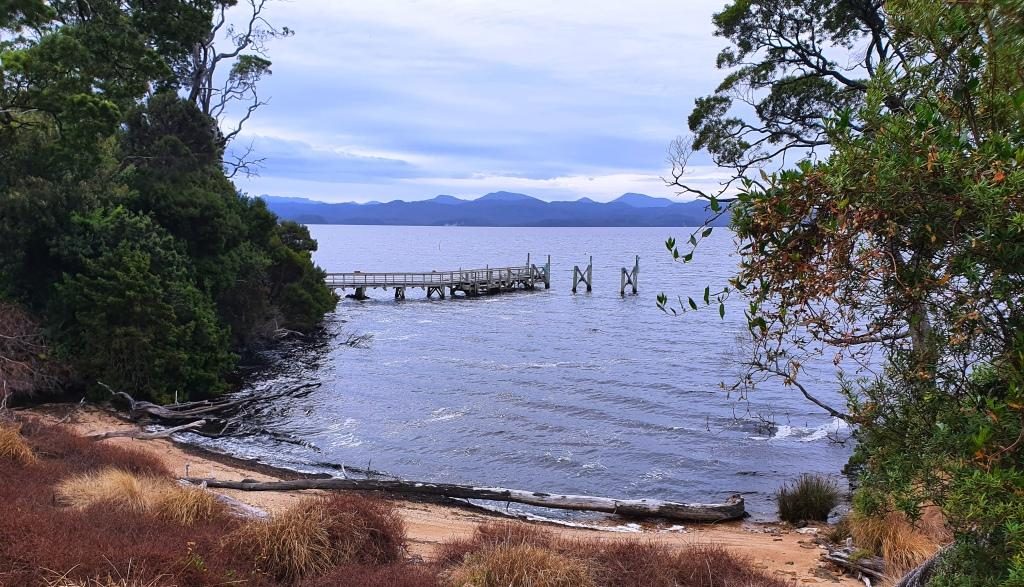
Heritage Tours boat “Harbour Master” at Sarah Island jetty

I suppose tours of Macquarie Harbour and The Gordon River were operating 45 years ago when we were last at Strahan, but I have no recollection of them. But that was well before the issue of the Franklin Dam and all of the disputes over Lake Pedder gave this area such prominence. We had become aware that the cruise was one of the attractions that draw tourists to Strahan. We booked in advance to make sure that we had a good seat.

The day started overcast and cool but improved to produce sunshine by mid afternoon. We were not affected by the morning chill as we were on board the “Harbour Master” our Heritage Tours cruise boat, protected by its broad glass windows.

Departing Strahan cruise terminal
Strahan Railway Station at Regatta Point

The cruise boat headed directly to Hells Gates, the entrance through which ships had to pass to reach the convict settlement on Sarah Island. The entrance is narrow and dangerous, particularly when a sea is running. In the days of sail, ships would anchor outside of the harbour, wait for slack tide and be towed through by sailors rowing the ship’s longboat.

Old Macquarie Heads Signal Station
Coloured rocks at Hell’s Gate
Hell’s Gate passage from the ocean side

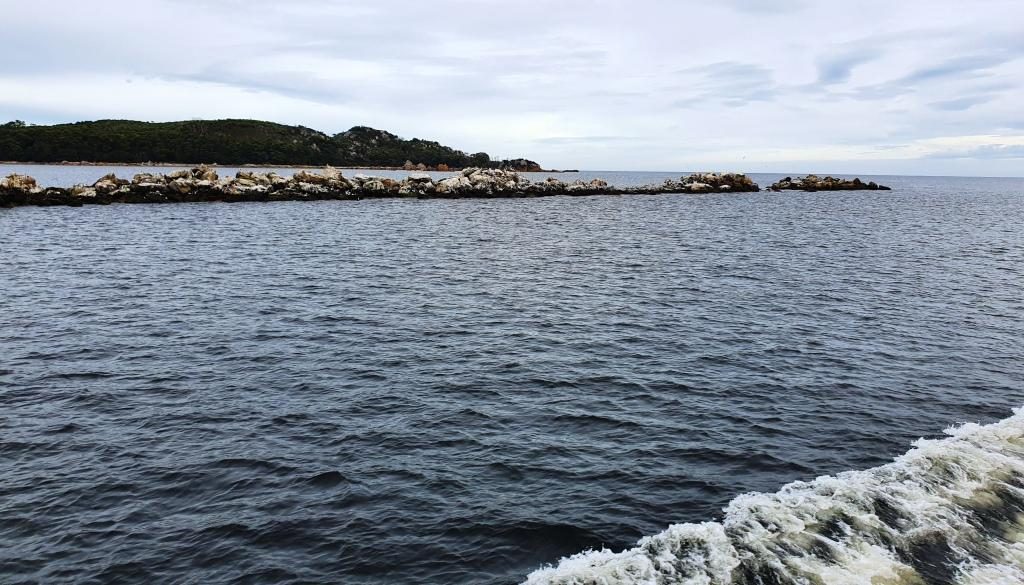
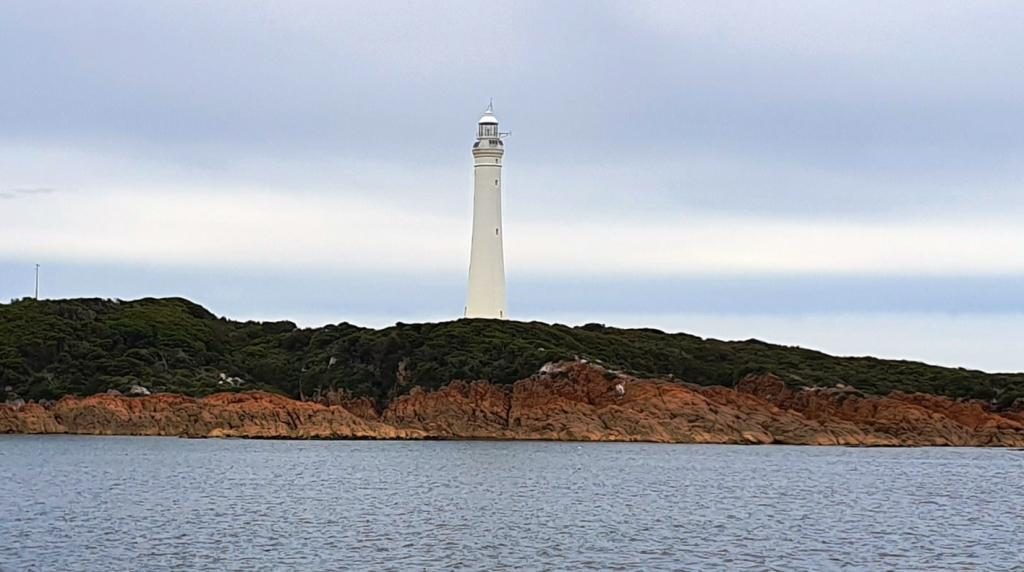
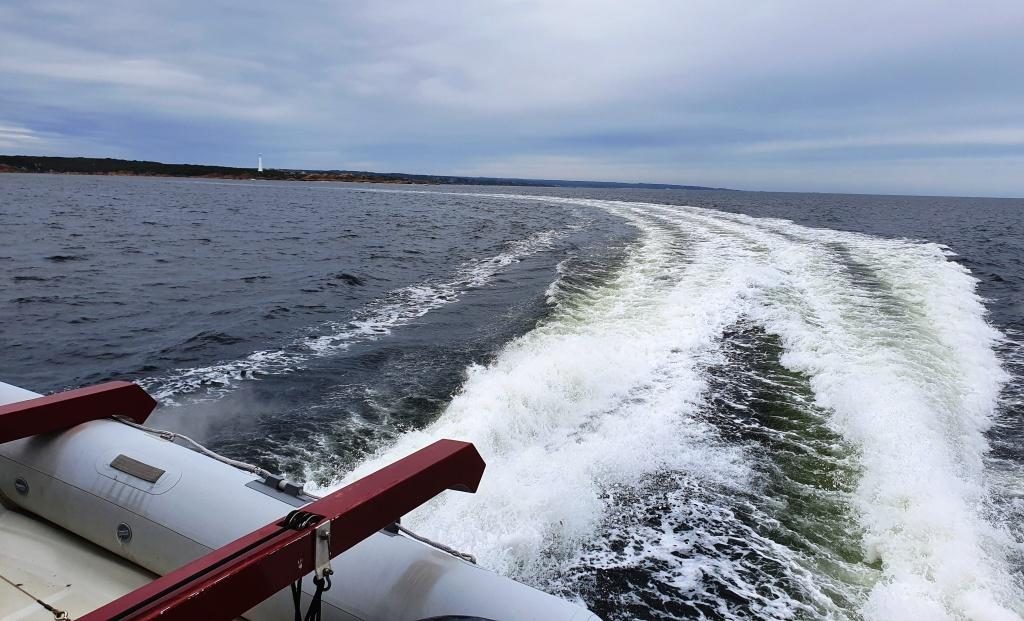
There was no sign of Hell at the gates. The sea was like a mill pond. Not only did we proceed through the heads at full speed but continued out past the Cape Sorrel lighthouse into the Indian Ocean for a look both ways along the coast. Such conditions only occur about five times per year, we were told.

A breakwater and the coast outside Macquarie Harbour heads
Cape Sorrel Lighthouse at the south of Macquarie Harbour entrance
In the open sea. View south past Cape Sorrel Light
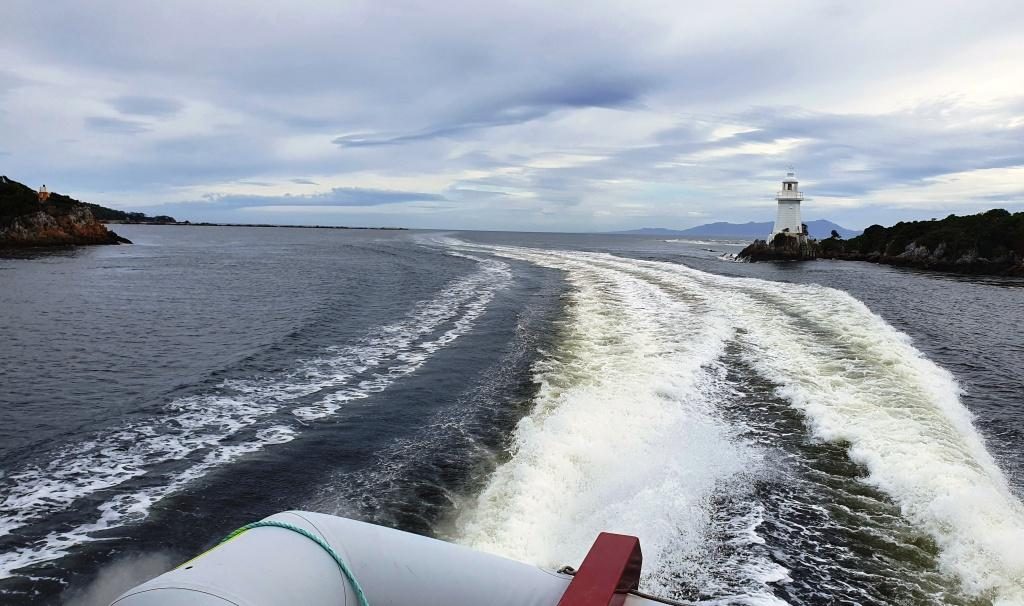
View from inside Hell’s Gate out to sea. Ships entering and leaving port had to pass between the channel light and the point on the left.

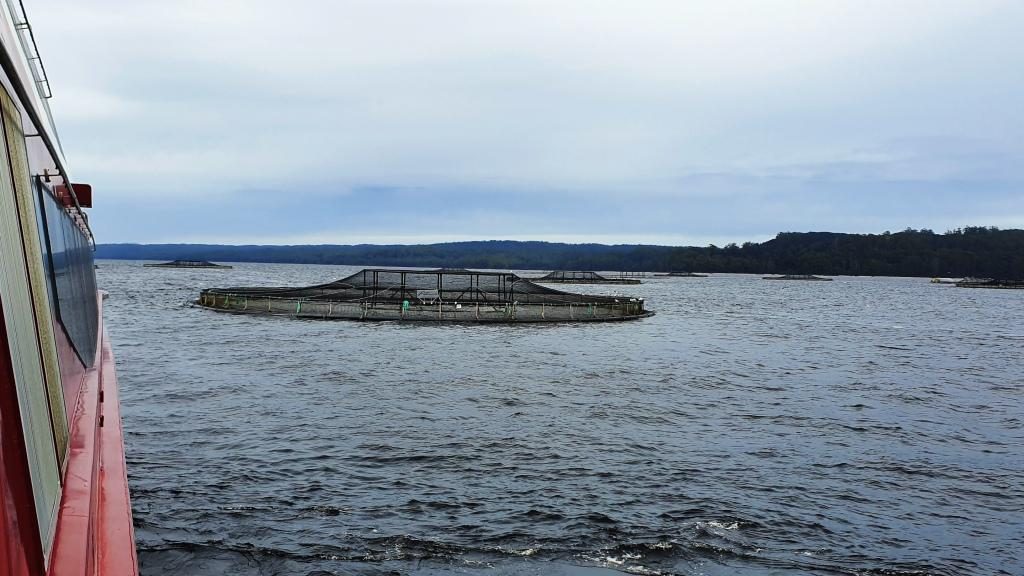
I had read about Sarah Island as a convict prison but for some reason thought that it was located near the heads. But it is at the other end of this rather long harbour. On our way to Sarah Island from Hell’s Gates we stopped to see the salmon and trout farms where the fish are grown to eating size in large circular mesh cages that are anchored in the waters of the harbour. There is nothing to see other than the nets but the skipper of the boat gave us quite a bit of information about the husbandry practices. In short, they feed the fish and the fish grow to eating size. What else is there to known?

Fish farms in Macquarie Harbour
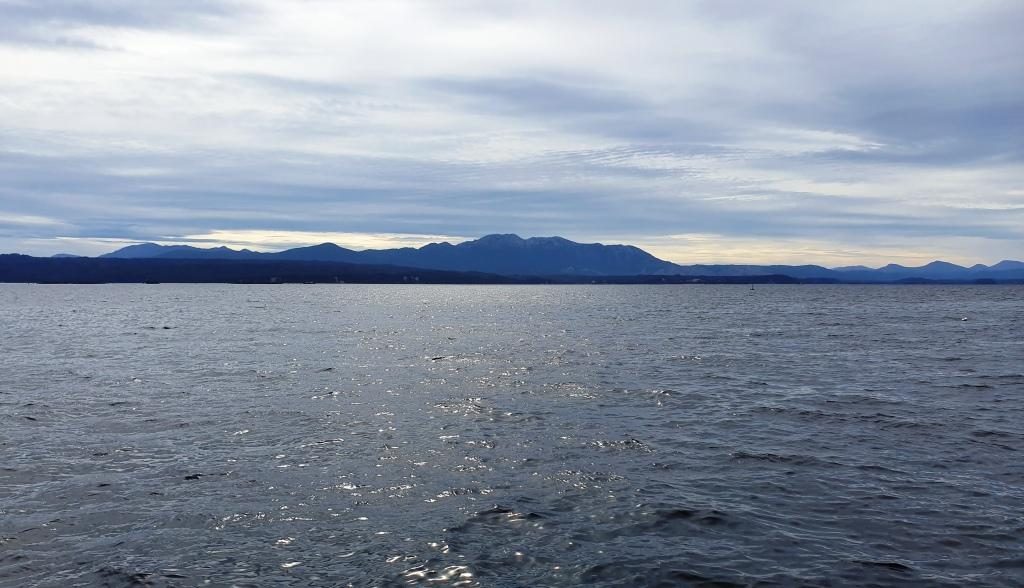
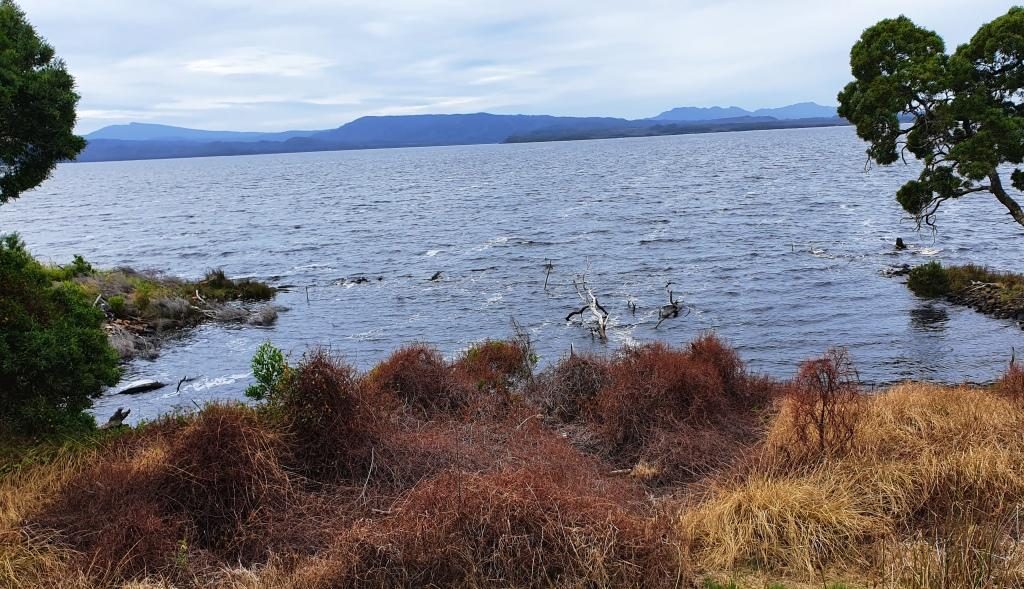
View to the east in Macquarie Harbour

Sarah Island had the worst reputation of any Australian convict settlement. It was established to gather Huon pine from the surrounding forests, but when the difficult harbour entrance restricted the transport of the timber, shipbuilding was established at Macquarie Harbour at the Sarah Island convict settlement. Well over one hundred boats were built with over half of them ocean going ships.

Walking ashore at Sarah Island
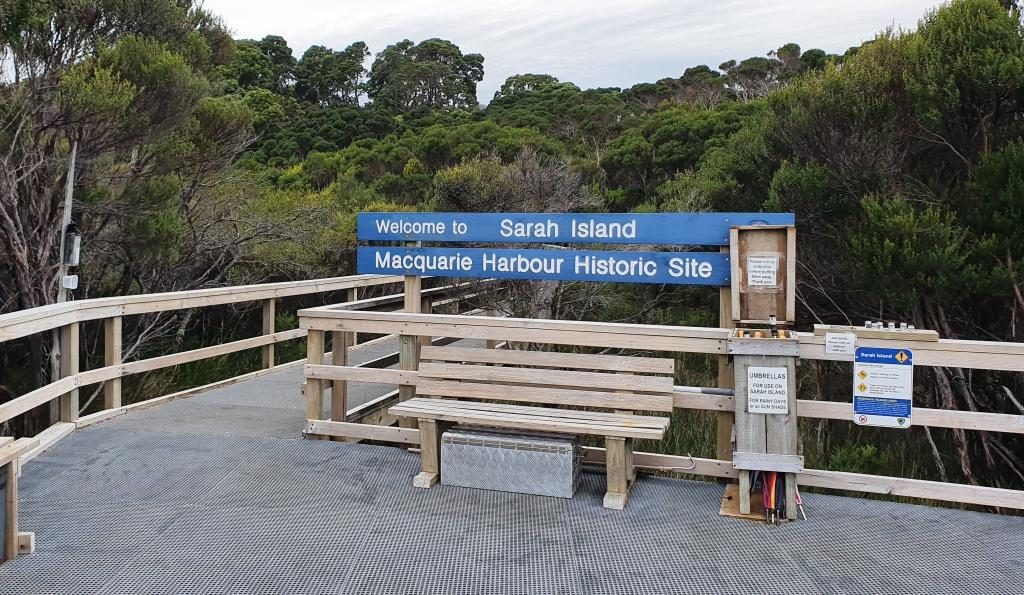
Sarah Island landing

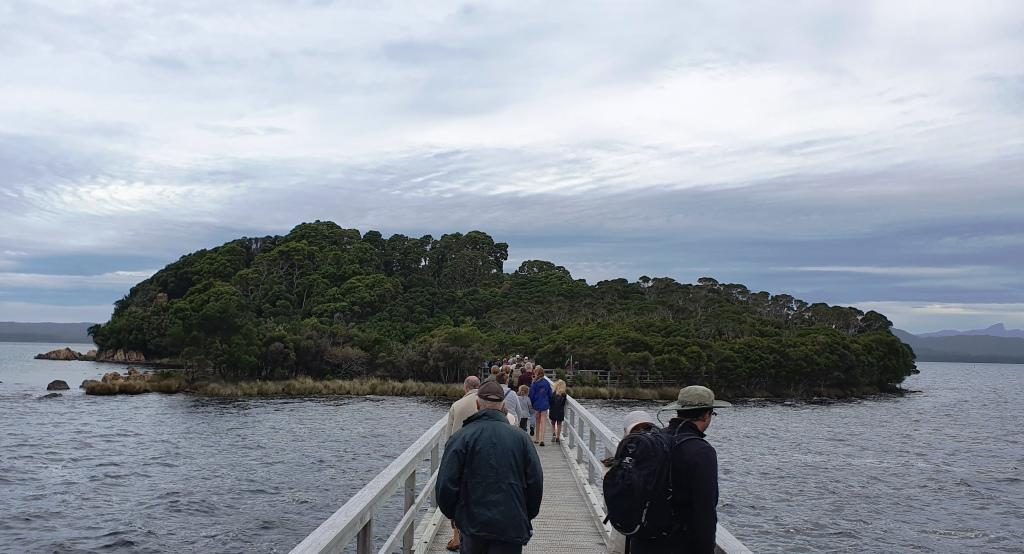
A solid path has been built linking the ruins to the jetty for ease of access. Guides are on hand to tell tourists all about the settlement. You can still see remnants of the construction slipways embedded in the shoreline. There are ruins of buildings with information signage throughout. It is all very well done.
Remnants of boat building slipways in the shore line of Sarah Island
A larger ship building slipway and an alternative landing jetty
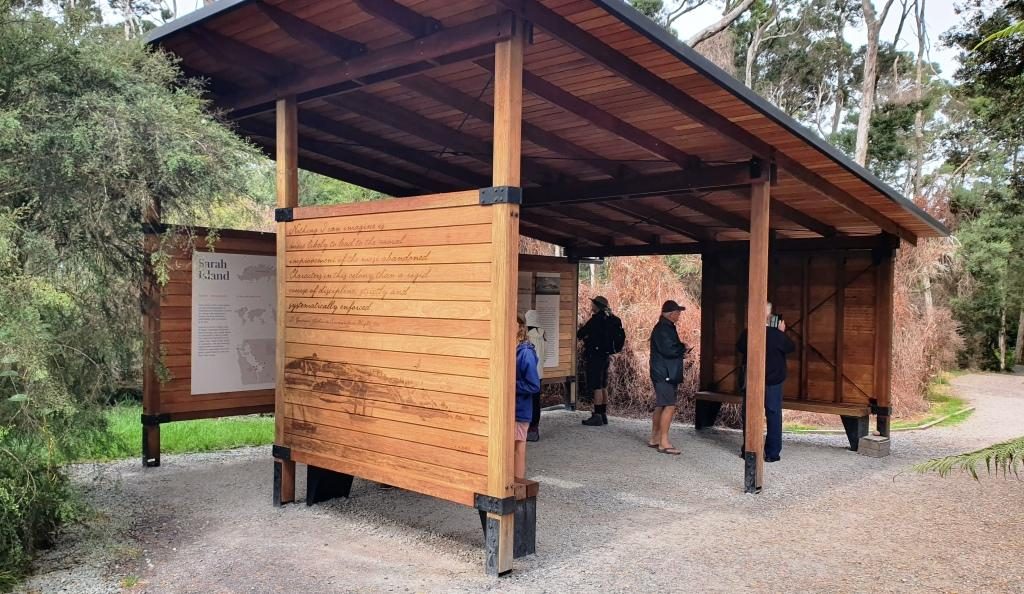
Information shelter

As we departed Sarah Island, the crew prepared a delicious buffet lunch of cold meats and salad including slices of Camembert cheese so large that you would think the stuff was made in Tasmania.

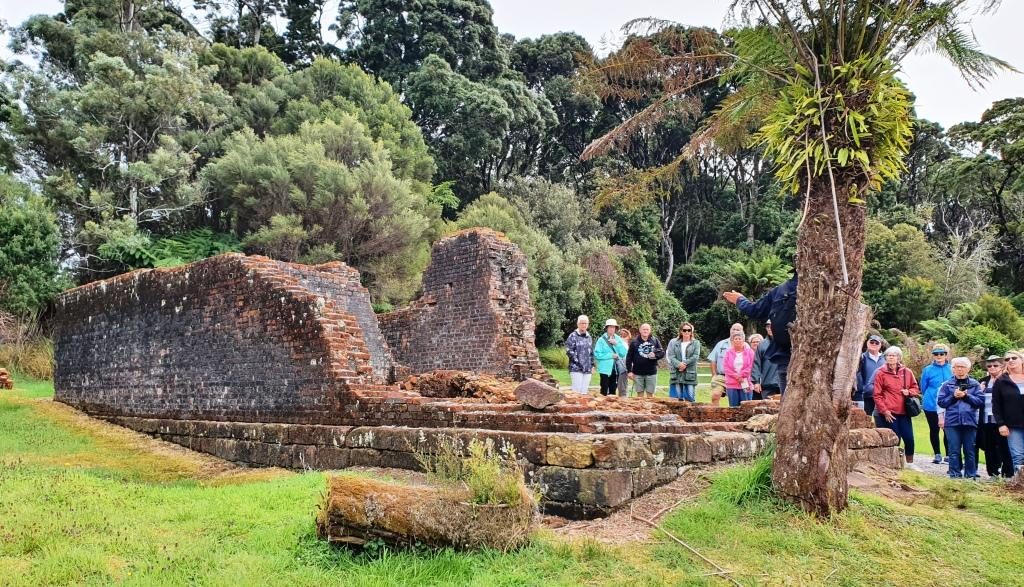
Cruise passengers with a guide at convict prison ruins
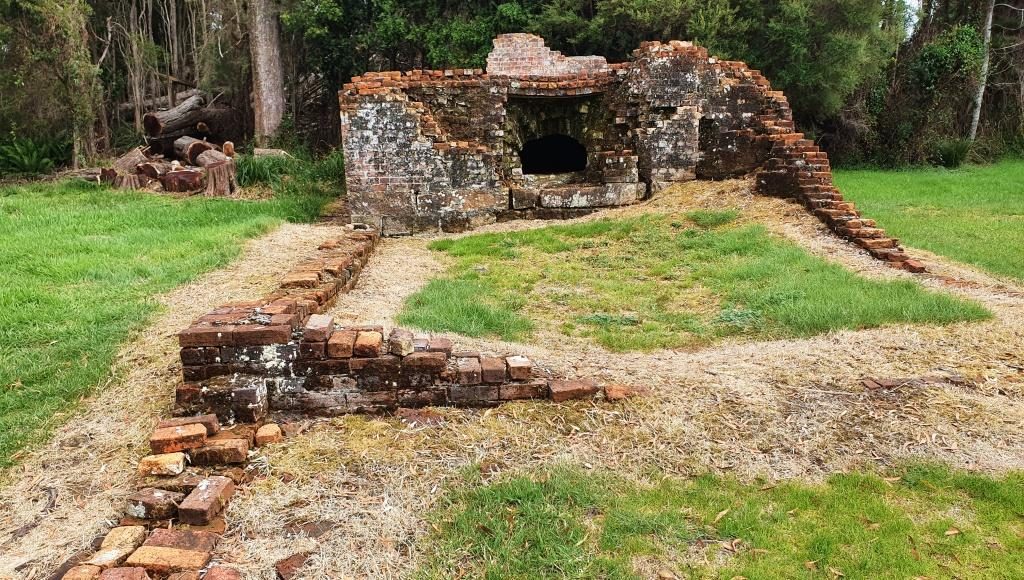
Ruins of Sarah Island Bakery
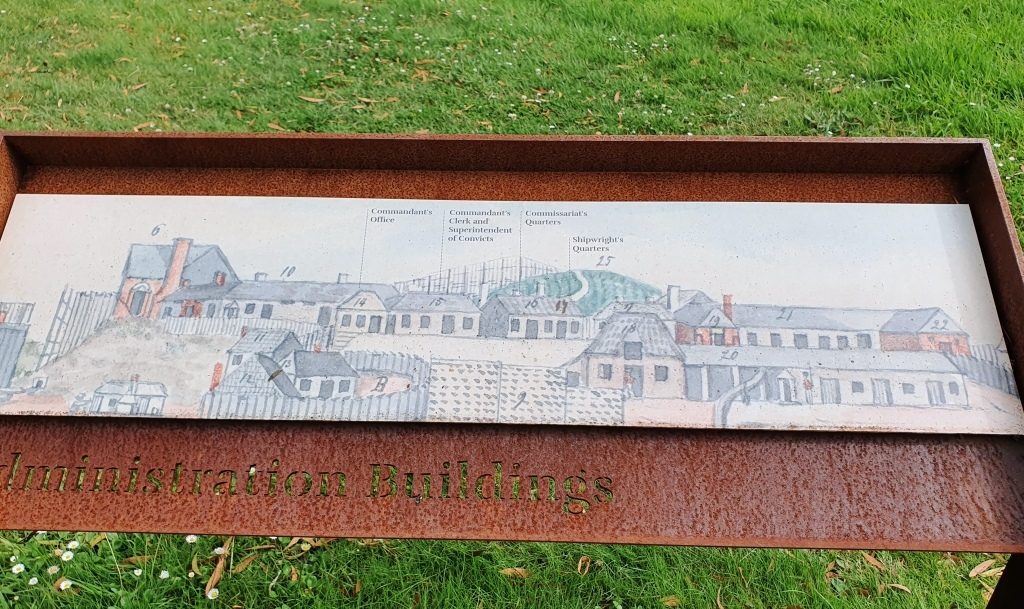
Information plaque showing layout of Sarah Island administration building

From Sarah Island we motored directly to the mouth of the Gordon River where speed was reduced to a sedate 5 knots or so. The destination in the river was Heritage Landing, where berthing facilities have been built for the boat and a board walk constructed to provide access to the rain forest that covers the steep sides of the Gordon valley. Particularly, it gives access to Huon pine in its natural setting. Huon pine is not only resistant to rot but also to the marine worm that destroys lesser timber. It is a slow growing tree. Large specimens are thousands of years old.
Excellent reflections are sometimes viewed on the Gordon but the wind had come up by the time we reached it so the surface was a series of ripples instead of a mirror.

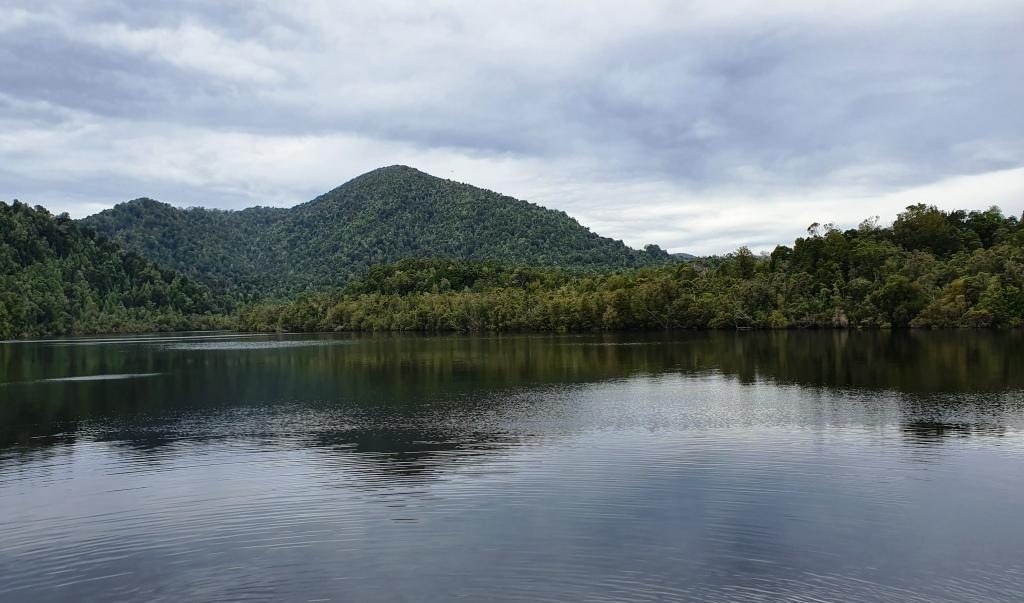
The placid Gordon River near where it joins Macquarie Harbour
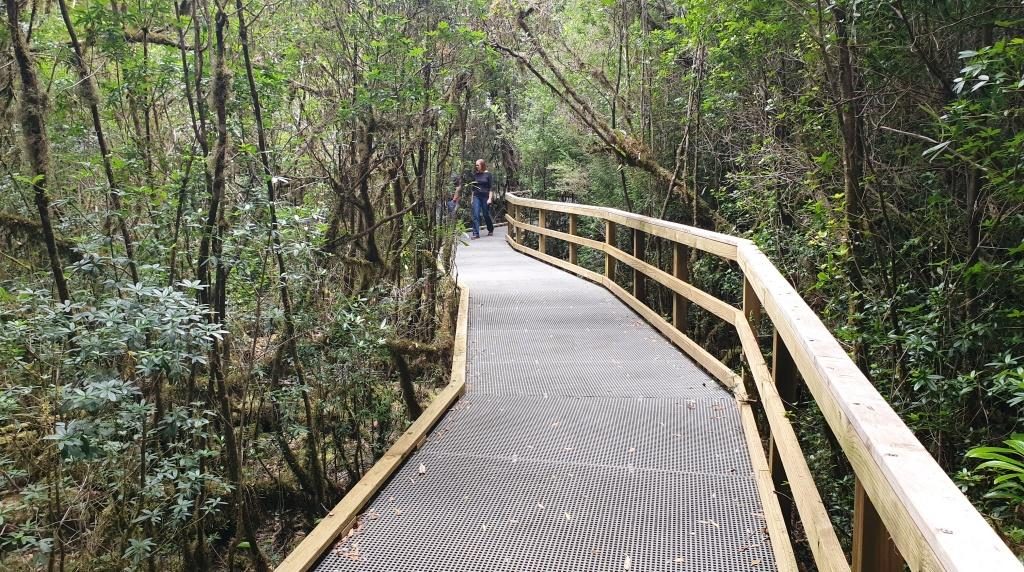
Boardwalk to Huon pine viewing area at Heritage Landing

As we cruised slowly up the river the skipper retold the story of the Franklin River protests of thirty or forty years ago when the Tasmanian Hydro Electricity Commission wanted to build a dam on the Gordon River downstream from where it is joined by the Franklin River. If you are over 60 you will no doubt remember all the fuss.

Mature Huon pine
The “Blue Boat” from the other cruise operator at Strahan

On the quayside at Strahan there remains an operating sawmill that processes Huon pine. The cruise boat completes the tour by berthing at the mill to enable passengers to see the Huon pine being worked. The mill sells completed timber products including a range to appeal to tourists with spare money. I would rather spend the money on the finished product of the fish farm.
The sawmill that works Huon pine at Strahan wharf

Our second day in the South West was set aside for a driving tour in the area. We did the triangle Strahan-Queenstown-Zeehan-Strahan, about 125 km. But before heading off on the 47 km first part of the trip to Queenstown we took a closer look at Strahan.

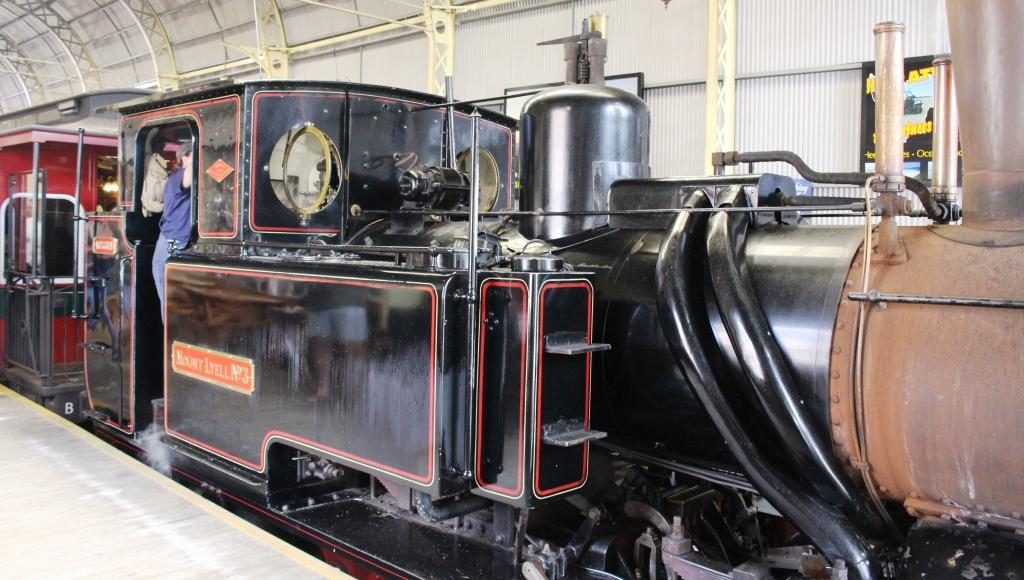
We first visited Regatta Point to look at the Strahan end of the Queenstown to Strahan tourist railway. This service operates on the railway built to get copper ore from the mines in Queenstown to the port, to be shipped to the world.  Because of steep inclines on the route, part of the track uses a rack and pinion system where drive cogs on the engine engage with teeth in a track that is positioned between the normal rails.

Strahan historic railway station
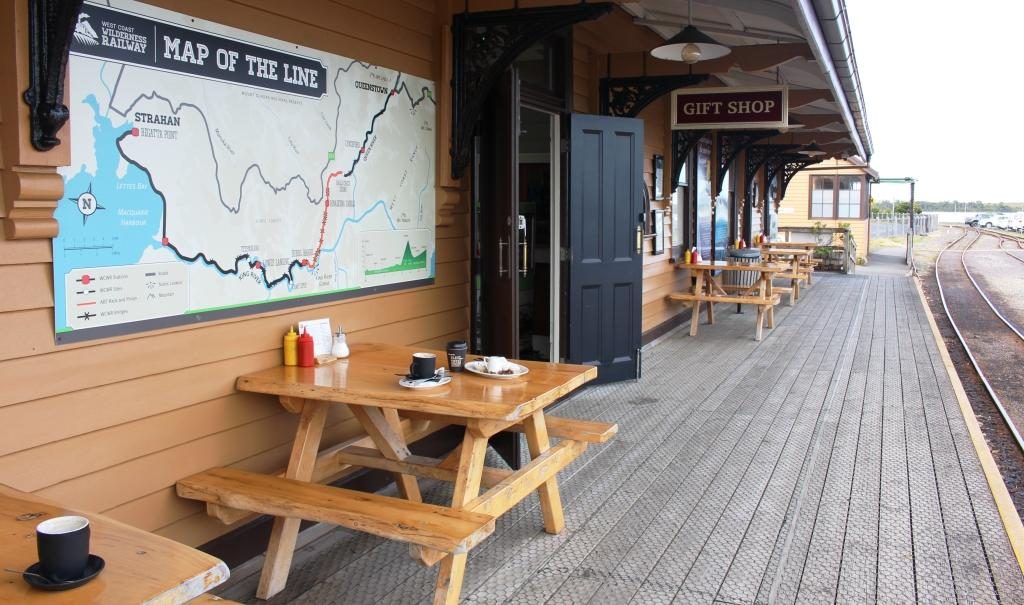
Cafe tables at Strahan station
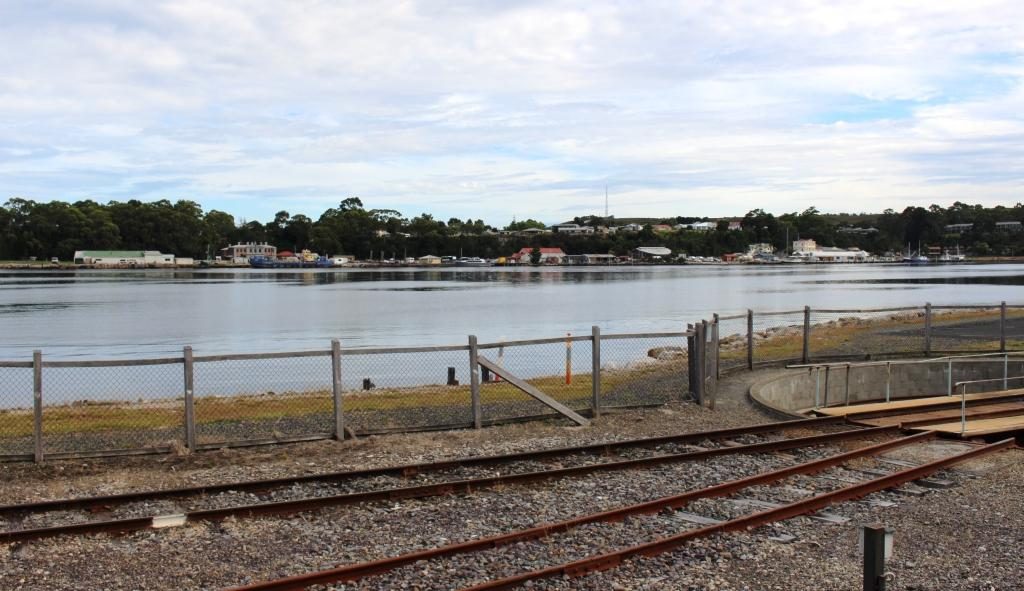
Strahan waterfront area viewed from Regatta Point station

The station building in Strahan is the original, built in the late 1990s. It now contains a cafe and gift shop and normal tourist facilities.  We were a bit early for coffee, but the view from the tables on the old platform is such that you would not want to finish your coffee too quickly.

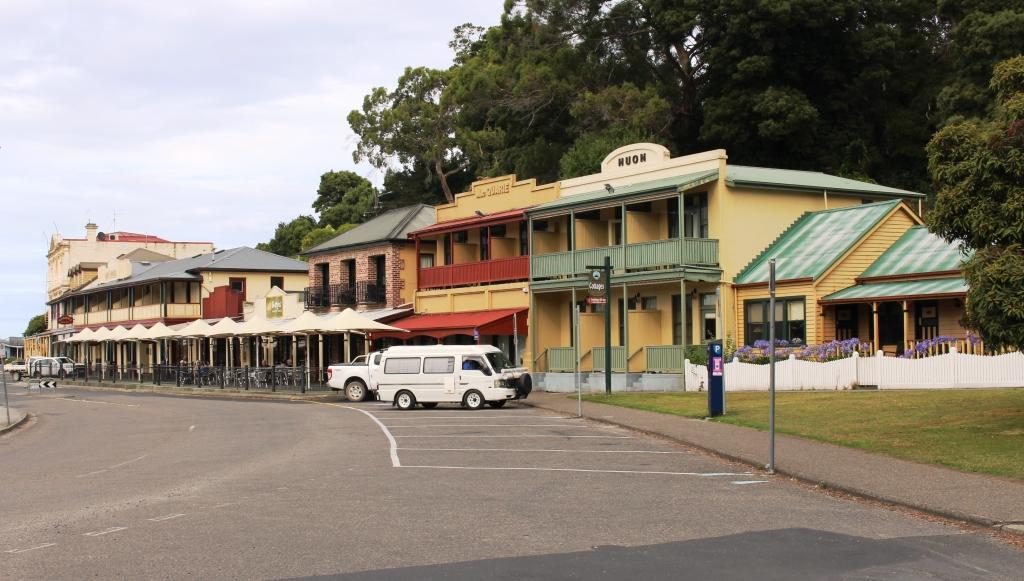
Historic buildings over the street from the wharf at Strahan
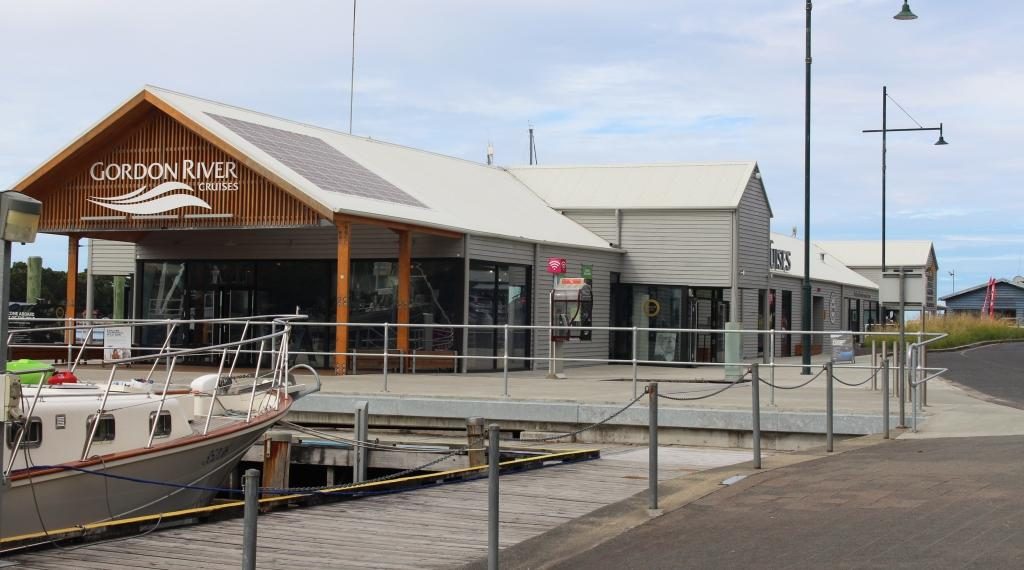
Tourist cruise base at Strahan
Strahan main street
Tourist accommodation overlooking Strahan waterfront

Queenstown occupies one of the most dramatic sites that you can imagine. It is totally surrounded by rocky mountain ranges, much without vegetation. Some naturally lack vegetation, but hills were denuded in a clearing frenzy to feed the copper smelters in the early days of mine operation.  It is a town where I would prefer not to be on a hot day.
Rocky mountains approaching Queenstown
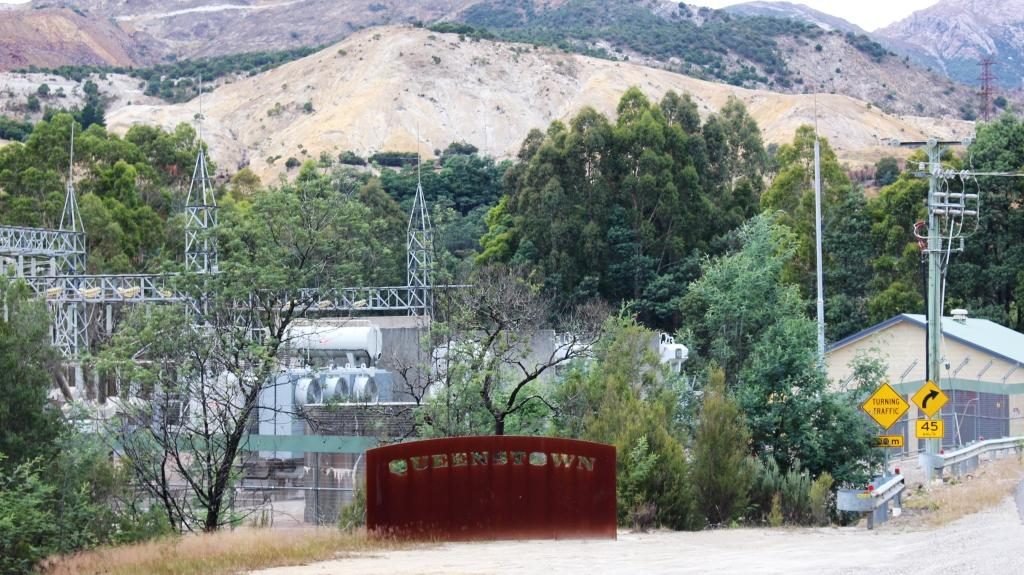
Queenstown sign approaching from Strahan

We drove around to get a feel for the place and then walked around the main streets of the commercial area. We then located the nearest street access to the Spoin Kopf lookout which is conveniently located near the CBD, almost in the centre of town. I climbed the steep track to the summit and I am glad that I did. The view was spectacular. The lookout was built as a memorial to its namesake, a battle for a hill during the Boer War in South Africa.

Main business area of Queenstown from Spion Kopf
Queenstown suburbs to the east of the central business district
Mine workings and the corner of Queenstown where the highway passes through
Hills surrounding Queenstown were stripped of vegetation to fire refinery furnaces. The area is slowly re-vegetating.

Queenstown’s history has long been tied to the mining industry. This mountainous area was first explored in 1862. Later alluvial gold was discovered at Mount Lyell, prompting the formation of the Mount Lyell Mining Company in 1881. In 1882 the company began searching for and discovered copper. The Mount Lyell company ultimately became the Mount Lyell Mining and Railway Company.

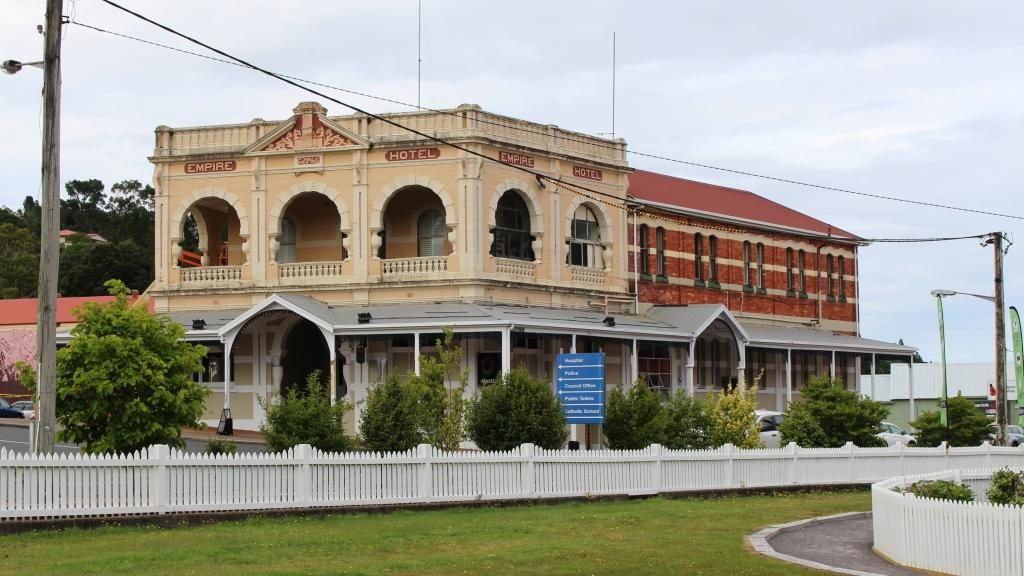
Queenstown’s Empire Hotel. Completed in 1901.
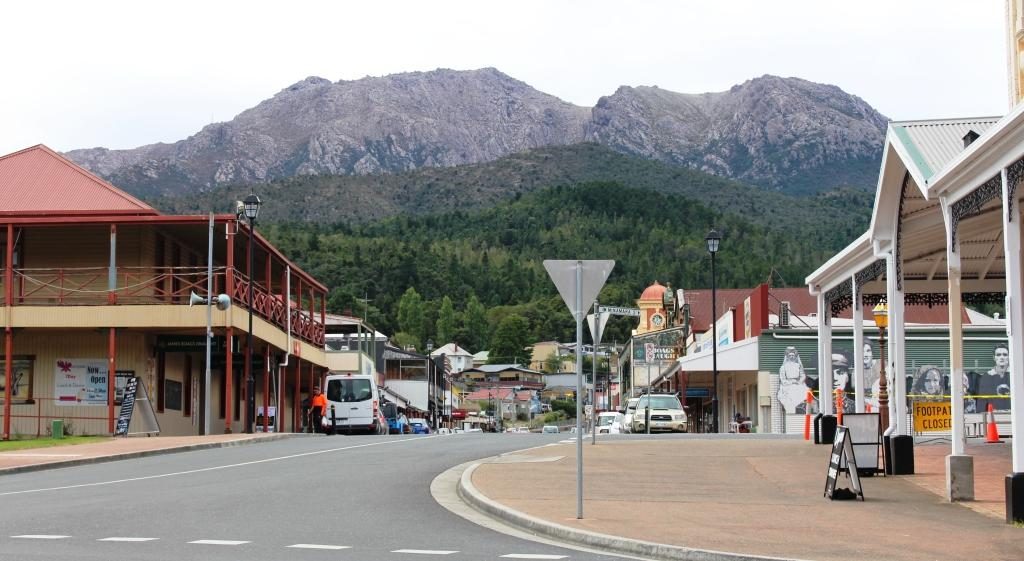
View along Orr Street towards Mount Owen
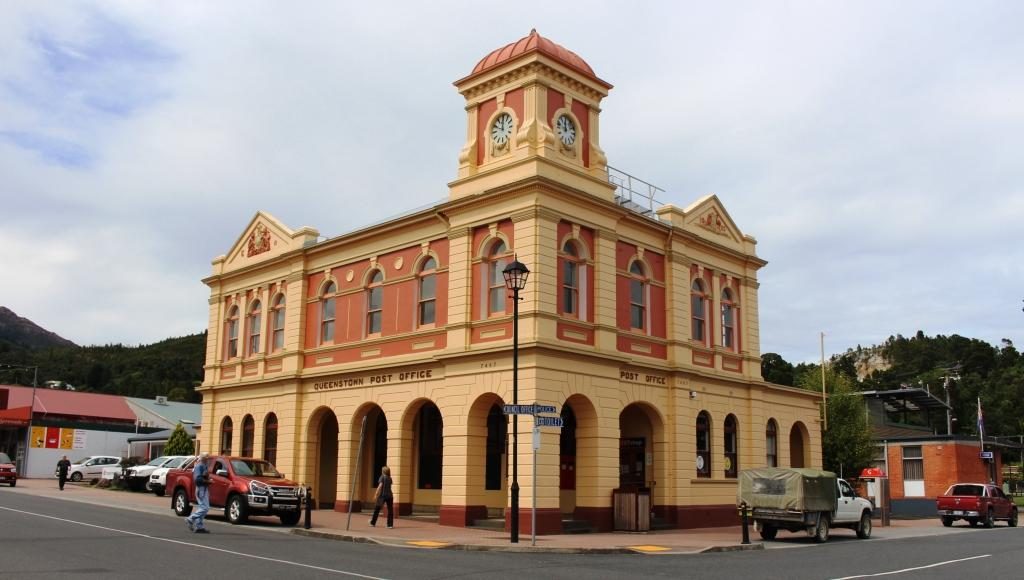
Queenstown Post Office. Built in 1902.
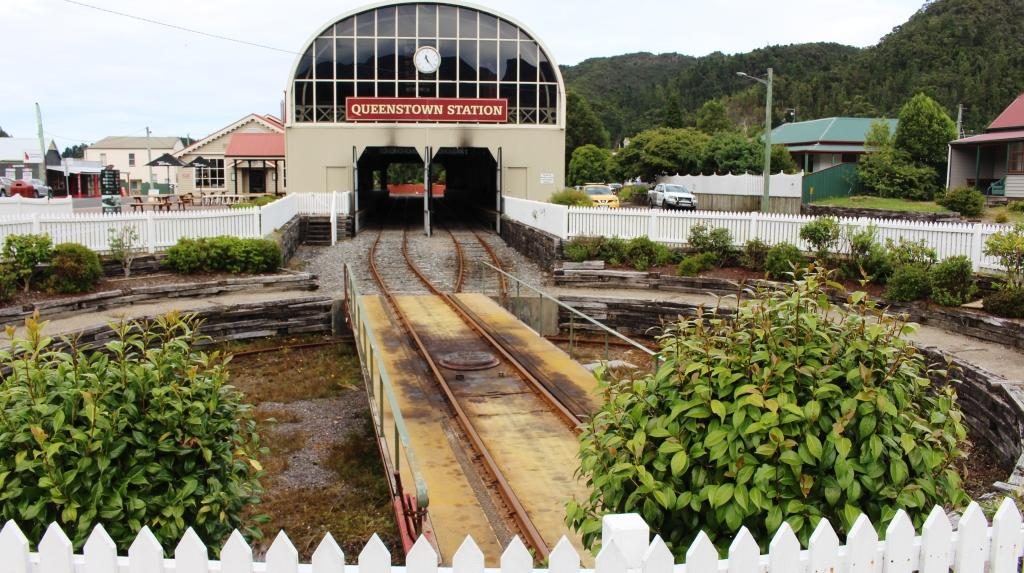
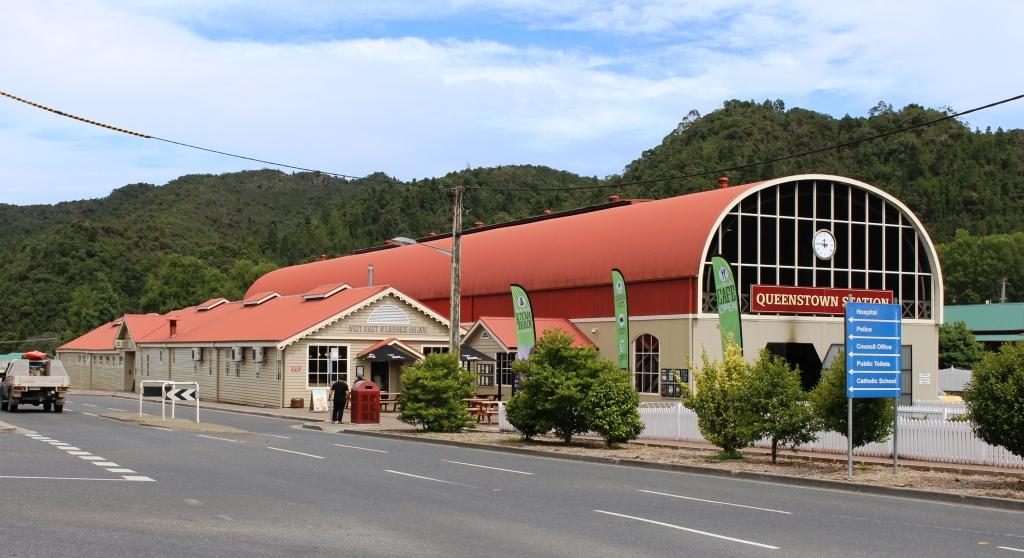
The Queenstown end of the railway has a smartly rebuilt station that offers the same facilities as its counterpart at Strahan, but on a larger scale. We had lunch in the cafe and then waited a few minutes to watch the train come huffing in from its return trip to a point about half way to Strahan.  There was a good number of people on board who seemed to have enjoyed the experience.

Queenstown Railway Station and engine turn table
Queenstown Railway Station. New building for the West Coast Wilderness Railway
A steam engine at the end of its days work
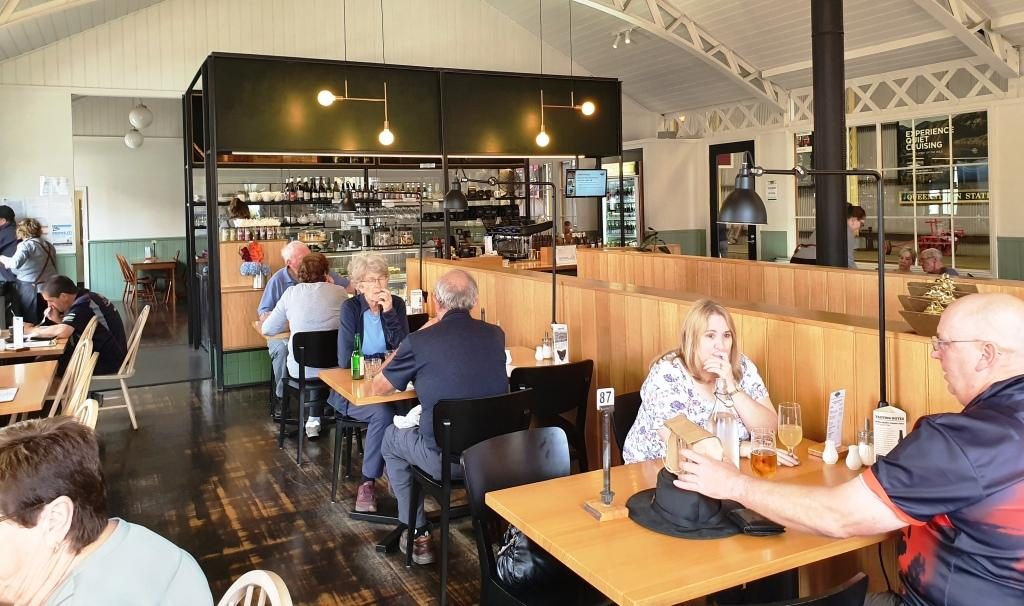
Tourist cafe at Queenstown Railway Station. You can watch the train through the glass wall on the right

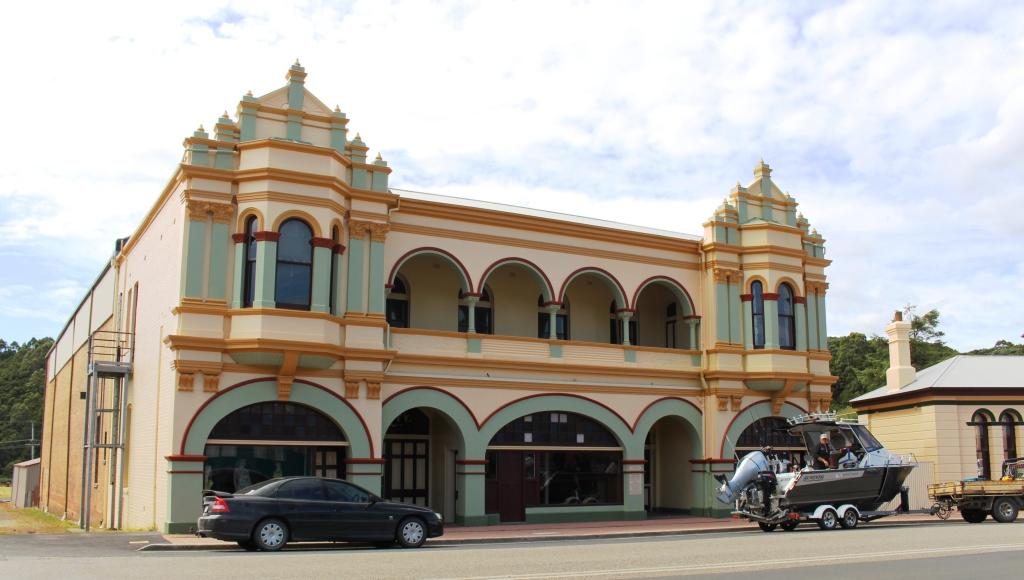
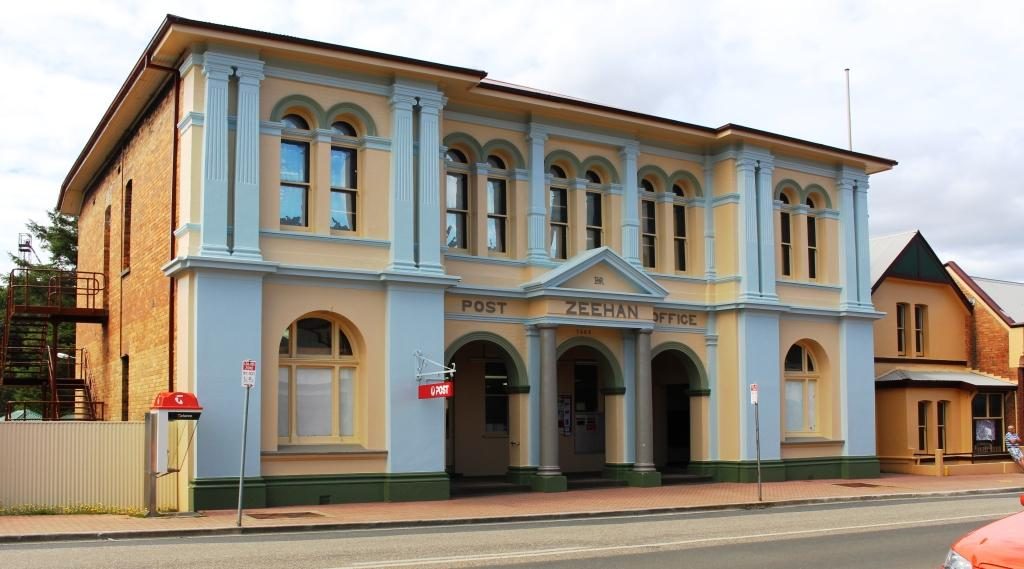
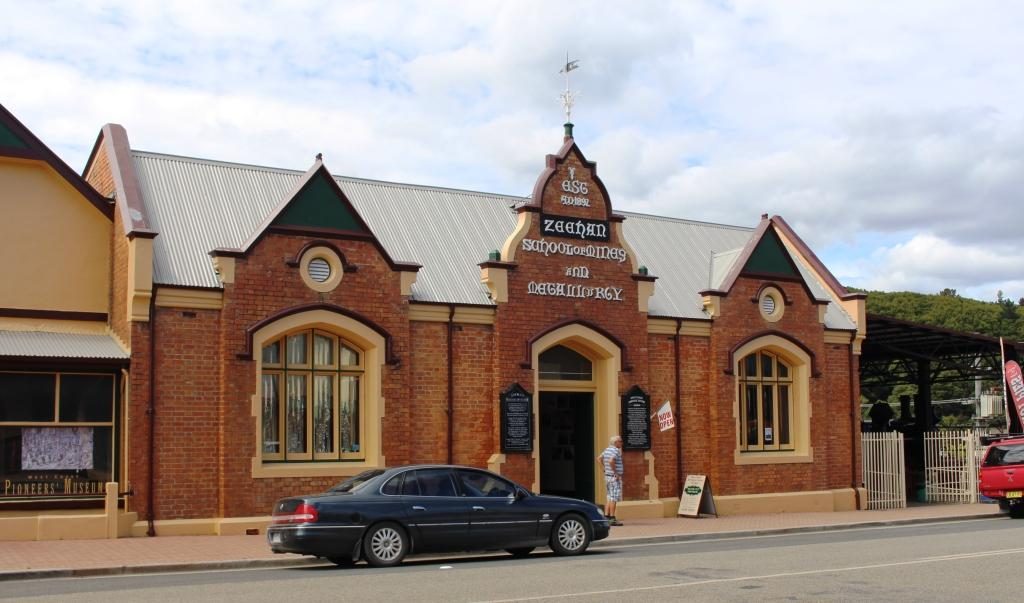
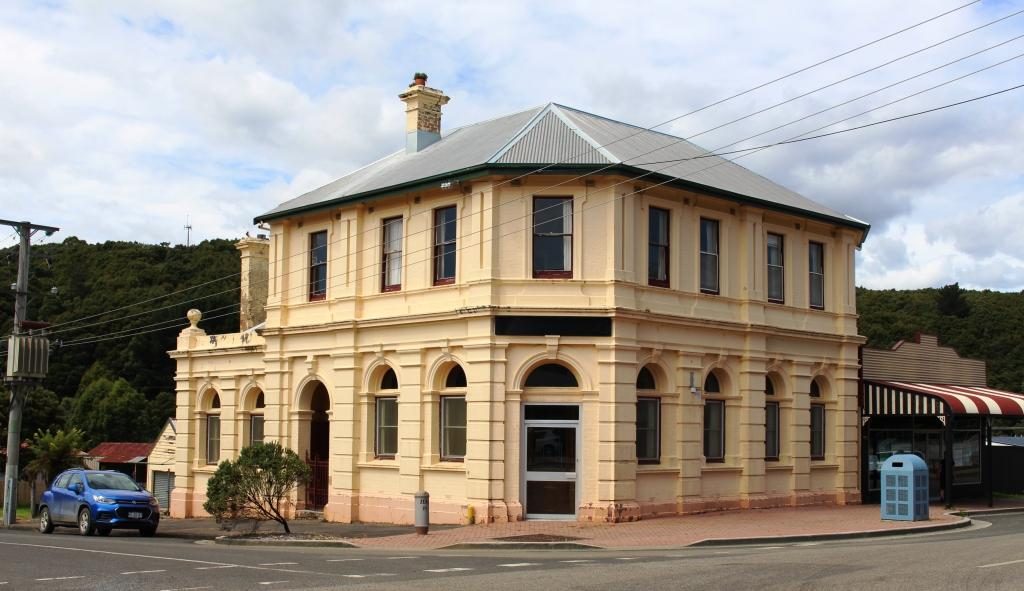
We then drove the 35 km or so to Zeehan, another mining town, but this time a producer of silver and zinc.  I am not sure of the status of mining in Zeehan but the town appears to be partly closed down. But it had its days of grandeur, demonstrated by the fine buildings that line its main street. The West Coast Heritage Centre is in Zeehan, housed in the ornate School of Mining and Metallurgy building.

Gaiety Theatre and Grand Hotel, Zeehan
Zeehan Post Office
Zeehan School of Mines and Metallurgy is now the West Coast Heritage Centre
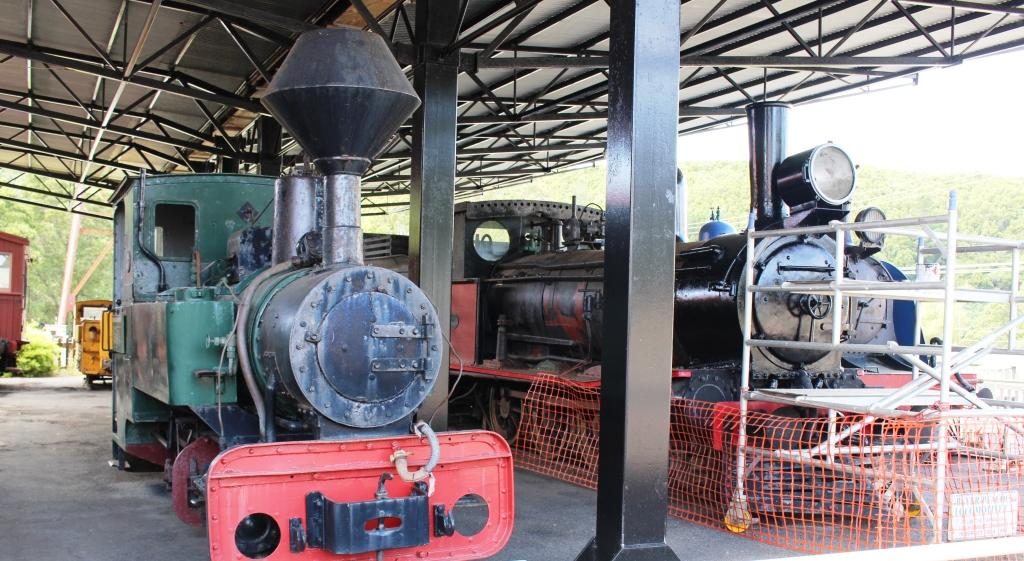
The Railway Museum is part of the West Coast Heritage Centre
One of Zeehans banks

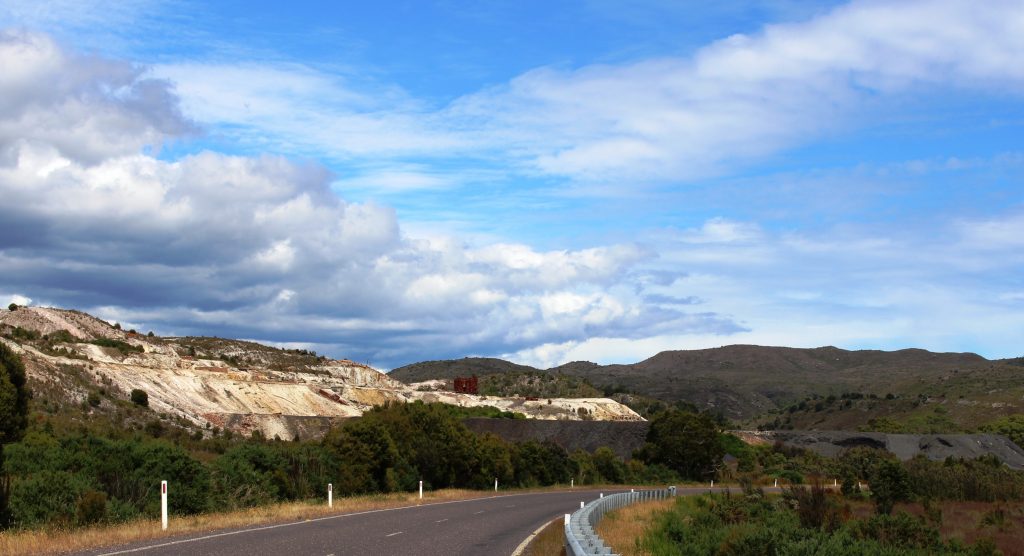
Returning to Strahan, we were on the same road as we had travelled two days before. We had noticed mining residue beside the road but we now had time to stop and take a look. Some old pieces of equipment were strewn over the area but it was not clear what kind of mining activity had been conducted there.

Mining area at Zeehan on the road to Strahan
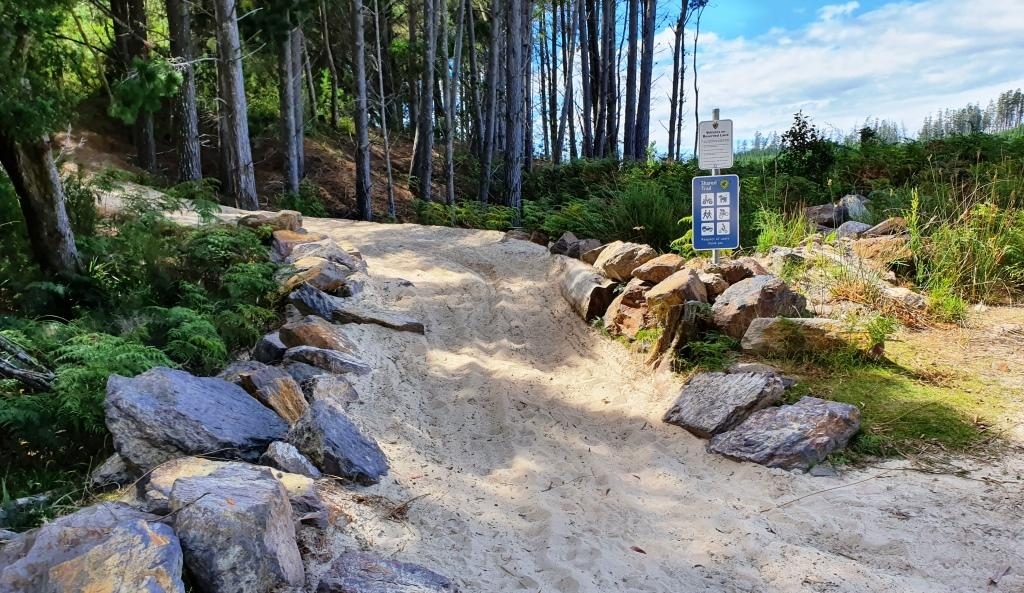
Four wheel drive access to the beach at Henty Dunes

With time left in the day, before we returned to our cabin, we took the opportunity to drive out to Macquarie Heads, to see it from the land as well as having seen it from the boat. It is Strahan’s closest surf beech with a reasonable drive over sealed and dirt roads. There is also a caravan park and on the way out, a neat little picnic area with a boat launching ramp.

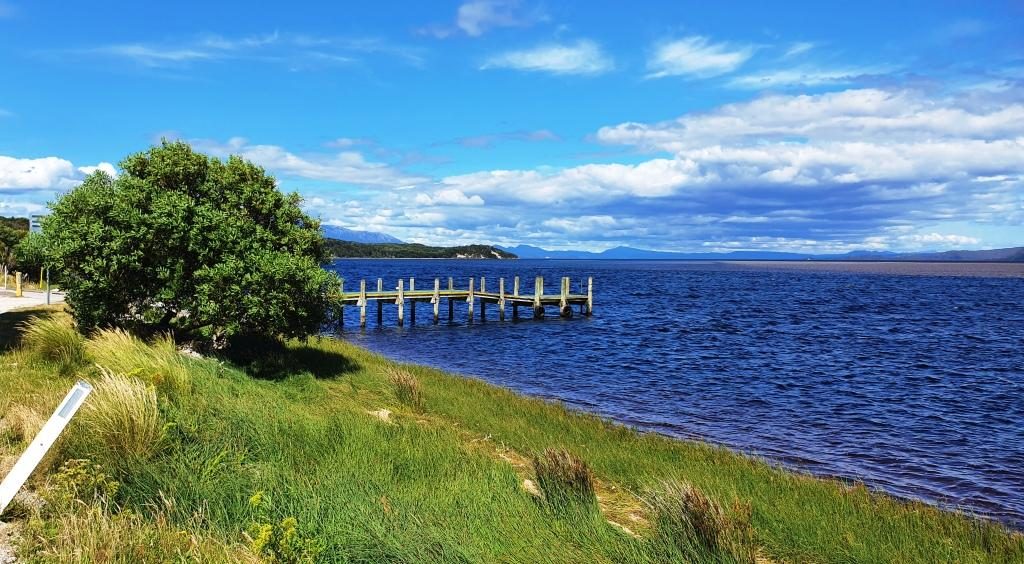
Jetty at Macquarie Heads
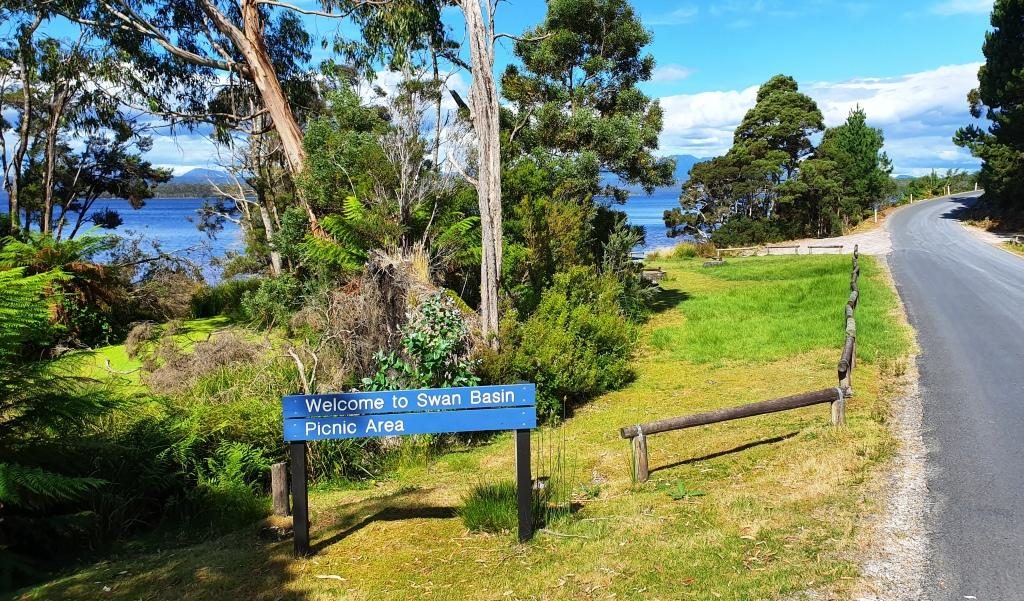
Swan Basin near Strahan

Destination Tasmania – Part 3 – North West Tasmania and the West Coast

8th & 9th February 2020

Please Note: Videos covering the material in this blog post can be found at the bottom of the post.

Leven River, Ulverstone

From Fourth we made the short drive to Ulverstone where we did morning coffee in a riverside park and had a drive around town. We then moved on to Penguin, where we again stopped to do the tourist thing. We were following the road nearest to the coast. Sometimes this was the Bass Highway and sometimes secondary coastal roads.

Sea side at Penguin
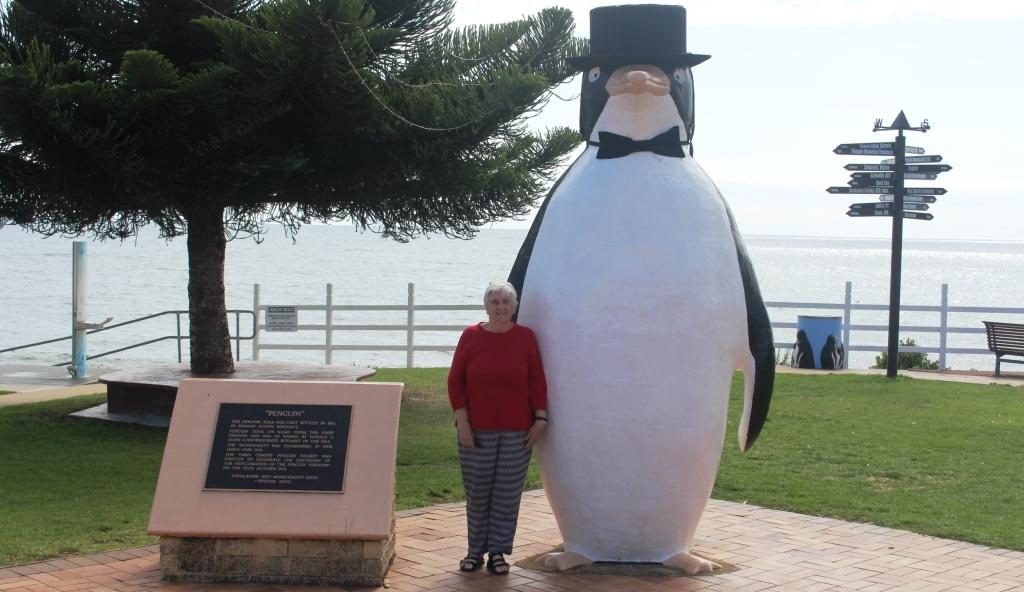
Ruth and the Big Penguin at Penguin
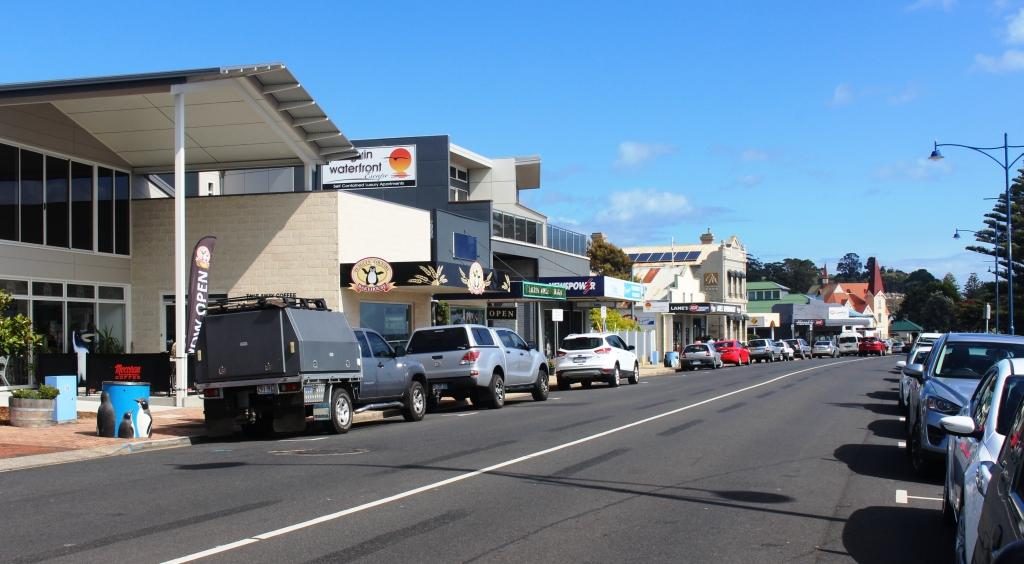
Penguin main street

After Penguin, Burnie is the next major town. It is a significant sea port, handling export cargo such as wood chips and it handles much of the freight to and from the mainland. This port doesn’t have a harbour or major river mouth but the wharf area gets some shelter from a bit of a bulge in the coast. Burnie is probably the major industrial centre on the Bass Strait coast of Tasmania.

Port of Burnie from the Bass Highway

Wynyard is the next town and is home to the Burnie-Wynyard airport, which services the North West area. Wynyard has a beach and some retirement homes but not much more, other that to provide the eastern approach to and view of Table Cape, a flat topped promontory that pokes out into Bass Strait. 

Table Cape from Wynyard

The cape is elevated and quite prominent. It is a rich agricultural area with crops rather that sheep and cattle. One of its crops is industrial poppies, grown under tight governmental control, for the pharmaceutical industry. At its highest point a lookout is provided near to its lighthouse. The views of the coast in both directions and to the mountainous inland are excellent. There is also a popular tulip farm but we were not there at tulip time.

Wynyard from Table Cape
Table Cape Lighthouse over harvest stubble
An industrial poppy field.
Boat Harbour and the western end of the North coast

We bypassed Stanley, our stop over place for the night, and passed through Smithton to join the road that would take us to Arthur River and the lookout known as The Edge of the World.

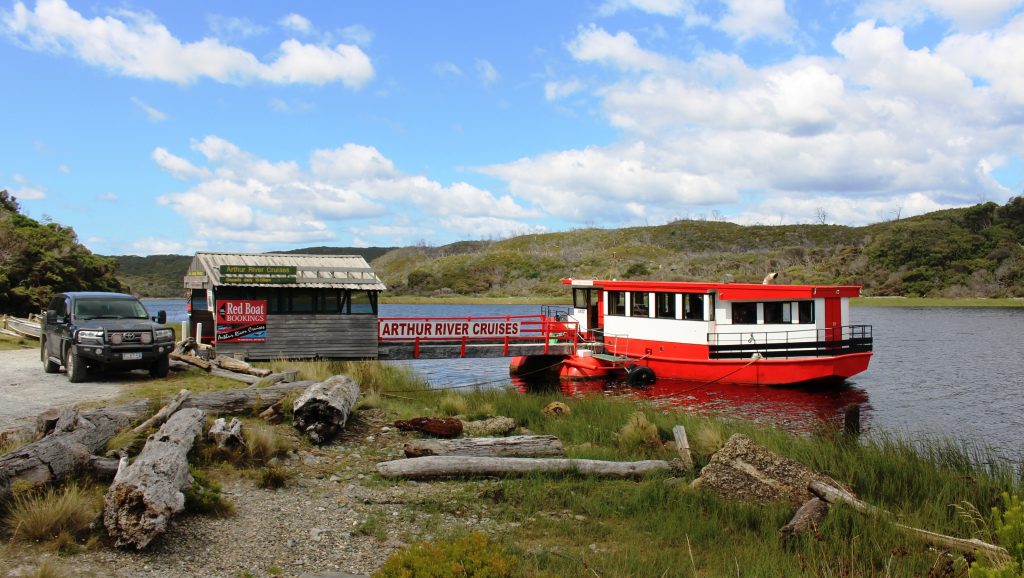
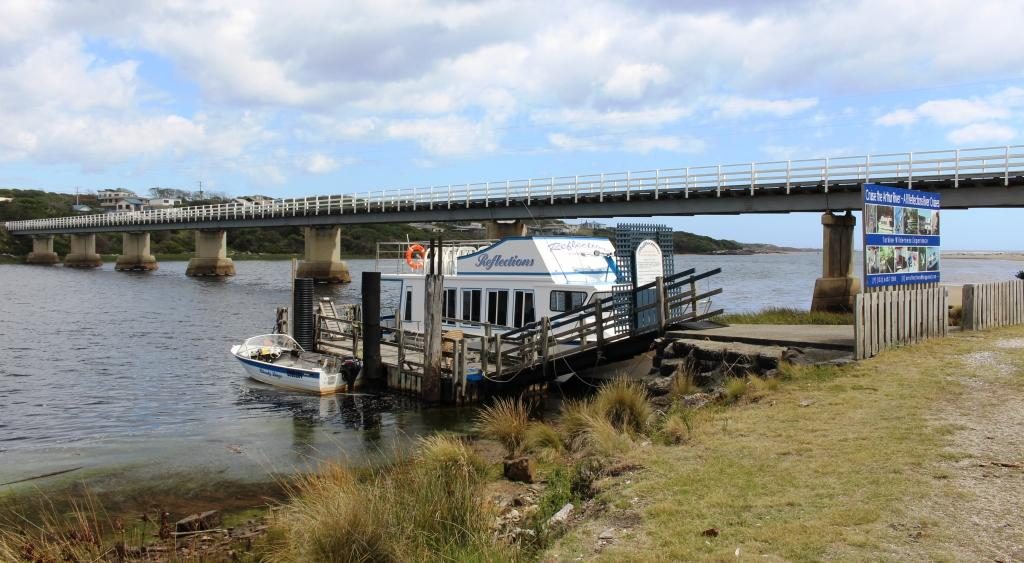
Arthur River is a small remote settlement in the Arthur-Pieman Conservation Area, a reserve that covers a substantial proportion of the northern part of the west coast of Tasmania. One of the tourist attractions is a cruise on the river. There appeared to be two cruise boats, a red boat and a blue boat, but I think they have the same operator. Under the right conditions the reflections in the river are said to be magnificent.

Arthur River estuary
The troubled waters of the Arthur River bar, on a calm day

But for those, like Ruth and I with less time, the attraction is the Edge of the World, a lookout on an elevated dune just south of the mouth of the Arthur River. It is so named because as you look west the next land is Argentina, 40,000 km away, so you can’t quite see it. When strong westerly winds blow, the waves can be huge. The light wind was out of the north, so it was relatively calm.

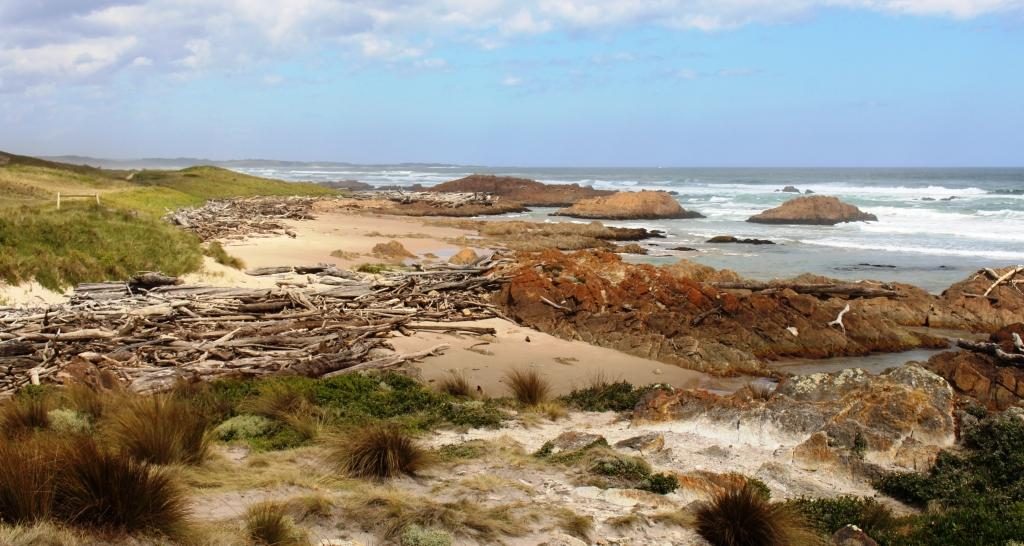
South from Arthur Mouth. Coloured rocks and drift wood
The Red Cruise boat at Arthur River
The Blue Cruise Boat and the Arthur River bridge.

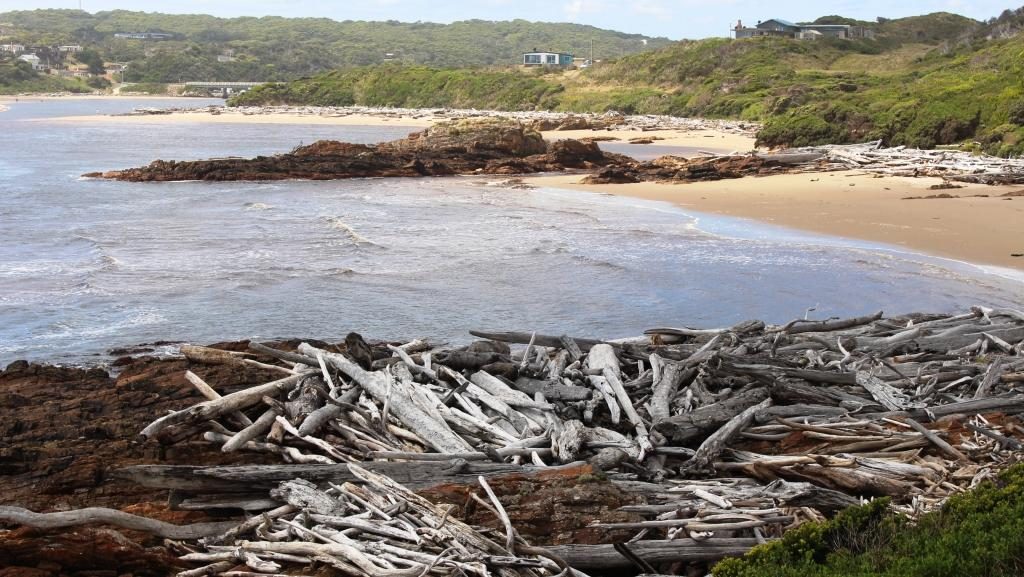
Apart from a great view of the Indian Ocean and the river mouth, you get to see a display of driftwood in its larger form. Logs that wash into the sea during floods, or perhaps fall off the decks of ships, end up washed ashore on this coast and into the small coves and exposed rocks of the river estuary. Some of it is said to be Huon Pine.

Serious drift wood at Arthur River

We found a cup of tea and a biscuit to nibble at the towns small general store, then returned to Stanley to spend the night in a very comfortable cabin in the Stanley Caravan Park. The plan was to explore Stanley and the famous Stanley Nut next morning.

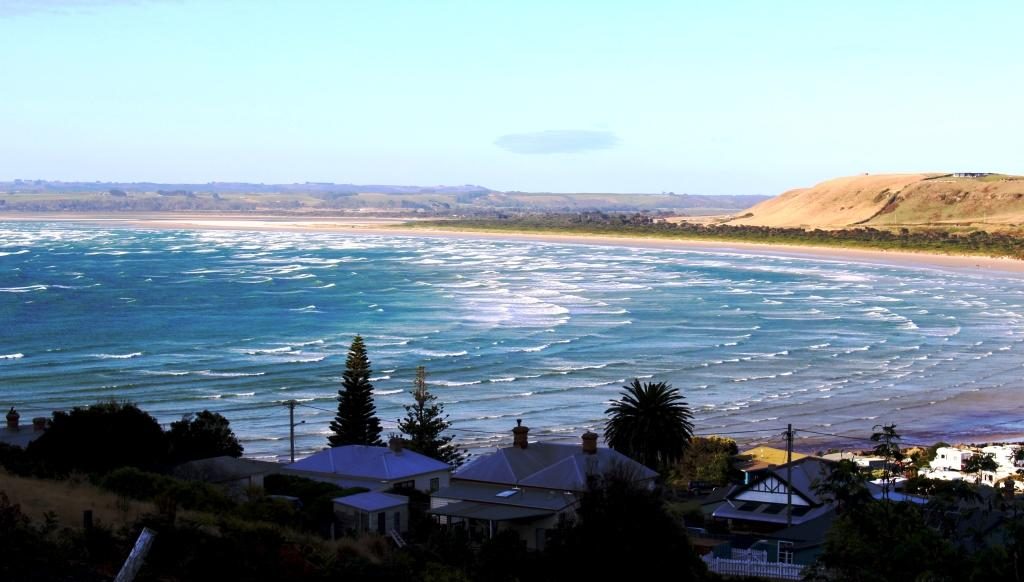
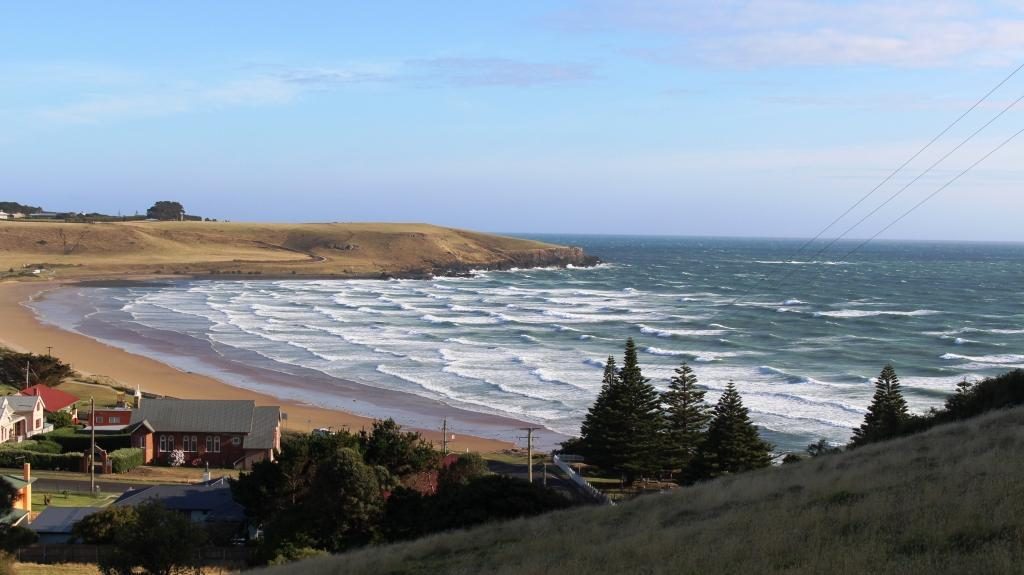
Sunday 9th February dawned in Stanley with the wind trying to blow the town into Bass Strait.  Overnight, yesterday’s mild northerly became a budding south easterly gale. It started howling around our cabin in the early hours of the morning and had lost none of its enthusiasm by get up time. Rows of white capped waves were dashing across the bay and dumping themselves on the beach.

Waves on Sawyer Bay, Stanley
And waves on Perkins Bay, Stanley.

The wind strength at the summit of the Nut would require you to hold on to your hat with one hand and a stout post with the other. This being the case, we abandoned my plan to ride the chair lift to the summit. Instead we looked around town before starting on our drive for the day. On the way out of town (we had noticed it on the way in) a road turned to a lookout.

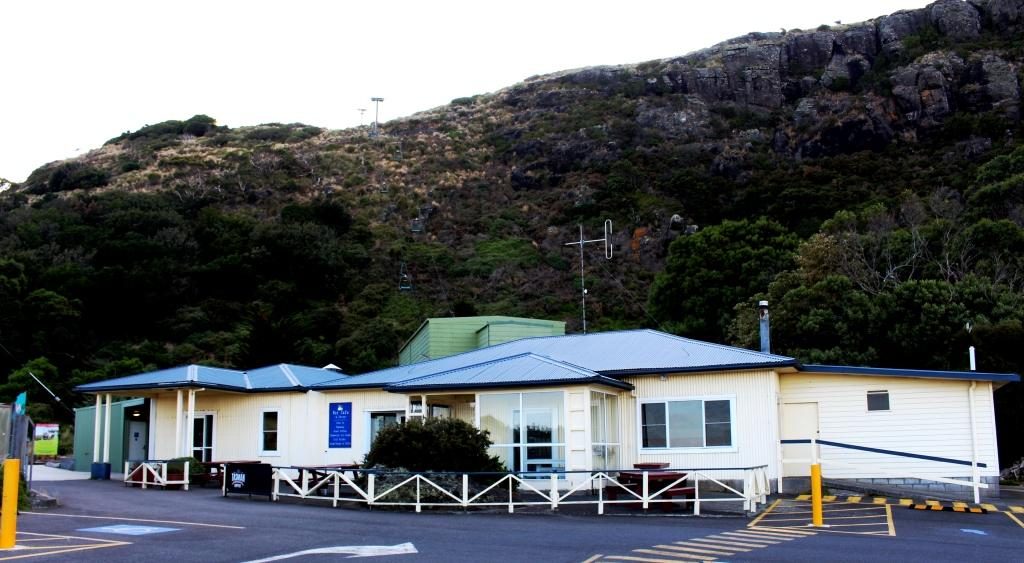
The chair lift at Stanley Nut

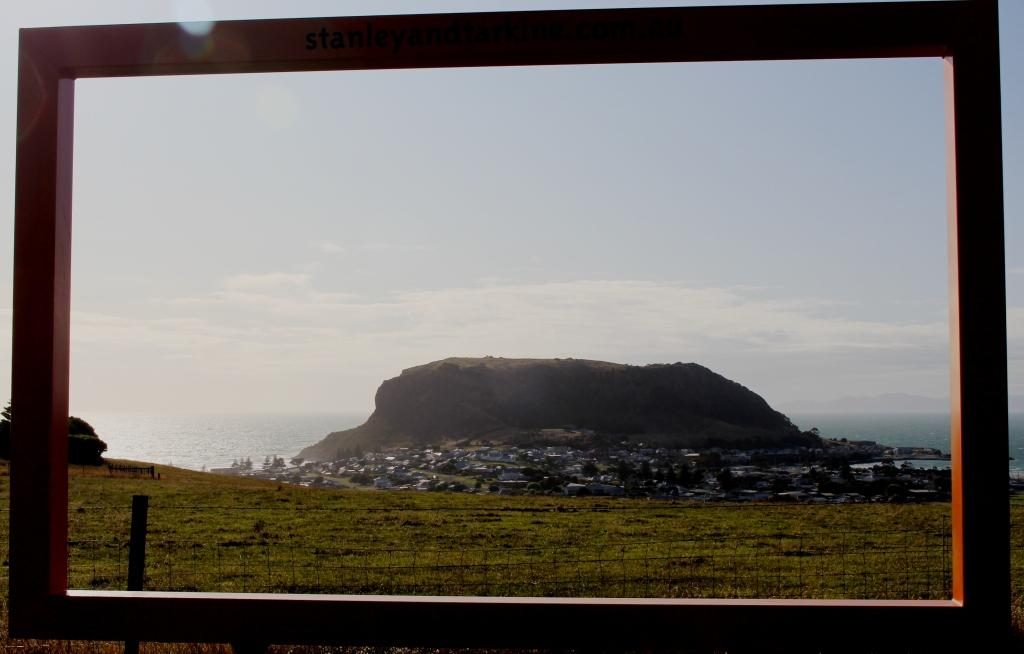
The lookout is located on the next hill inland from The Nut and provided an elevated viewing platform and a giant picture frame, through which to view or photograph Stanley. The view emphasised that Stanley Nut is a promontory with bays on each side. It also provided good views of the pasture land that surrounds Stanley.

Stanley Nut inside of the frame

The road to the central west coast ( you can’t drive to the southern end of the west coast) turns near Burnie, so we had to retrace our route along the Bass Highway for about 50 km. On our way to the turn we stopped to take a closer look at the shipping wharf at Port Latta. This port is a long loading conveyor that makes its way out to deep water. Iron ore and magnetite are mined at Savage River near Queenstown and pumped as slurry through a pipeline. It is then solidified and converted to pellets at Port Latta and shipped overseas.

Loading conveyor at Port Latta. The Nut in the background.
Ore processing facility at Port Latta

We diverted to Burnie for a visit to a pharmacy. While we were there we had coffee, but at a handy McCafe, not at the pharmacy.

Burnie to Strahan is 180 km. After leaving the coast we travelled through dairy, beef and sheep country followed by endless forests, always with mountains in the far or muddle distance. About half way along, just off the highway to the right, is Waratah. About 40 km to the left, as the crow flies, is Cradle Mountain. You pass its turn to the left a bit further south.

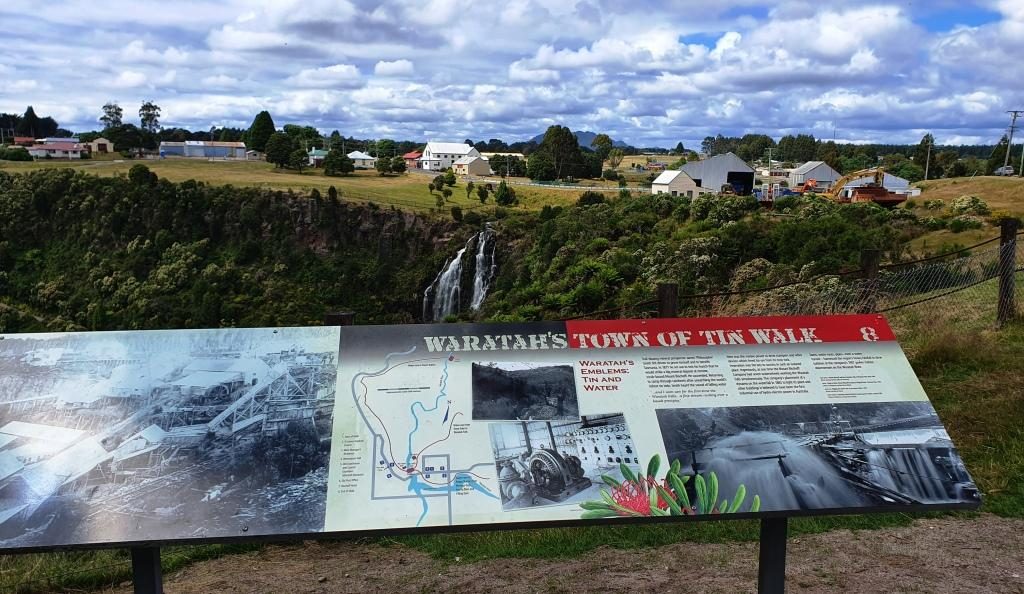
Waratah information, water fall and tow,
Old mining ruins can be seen during a walk through this gorge at Waratah

As I learned in primary school, Waratah is the home of the Mount Bischoff tin mine. The body of ore was discovered in 1871 and mining commenced, initially using water from the water fall in the middle of the town, in a sluicing process. Later the water fall was used to power one of Tasmania’s first hydro electric generators to power the tin refining process.

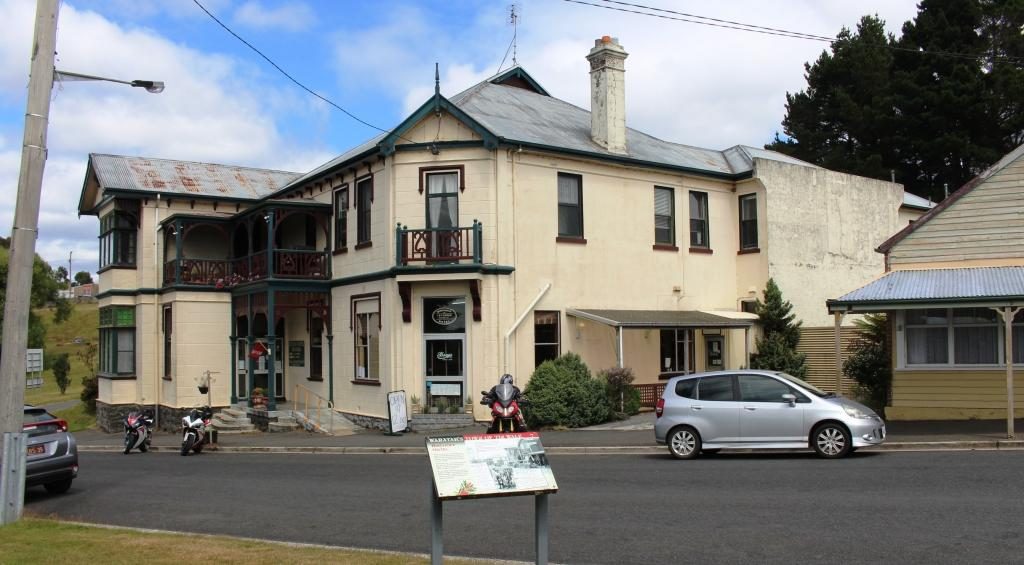
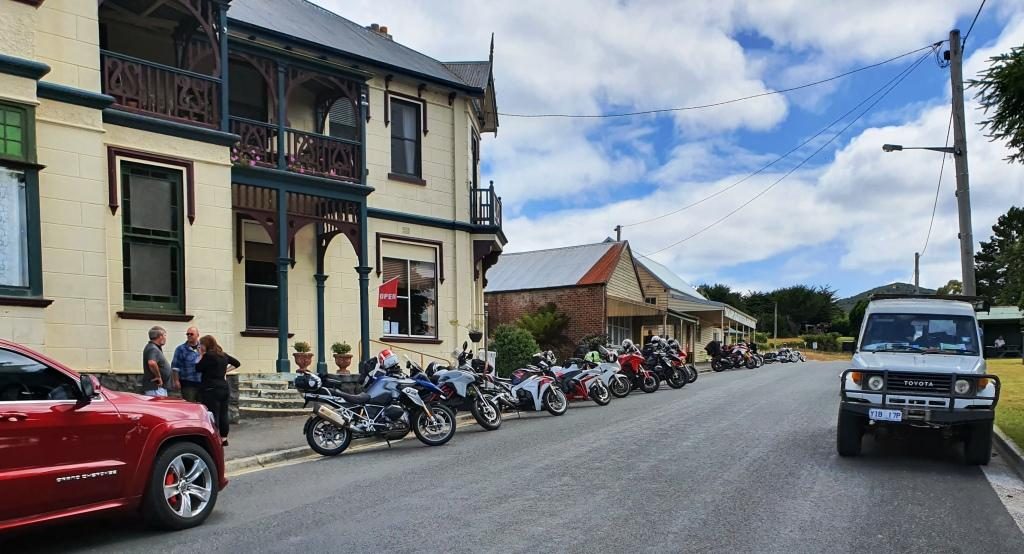
Bischoff Hotel, Waratah
The Bischoff Hotel seems to be a Sunday destination for bikers.
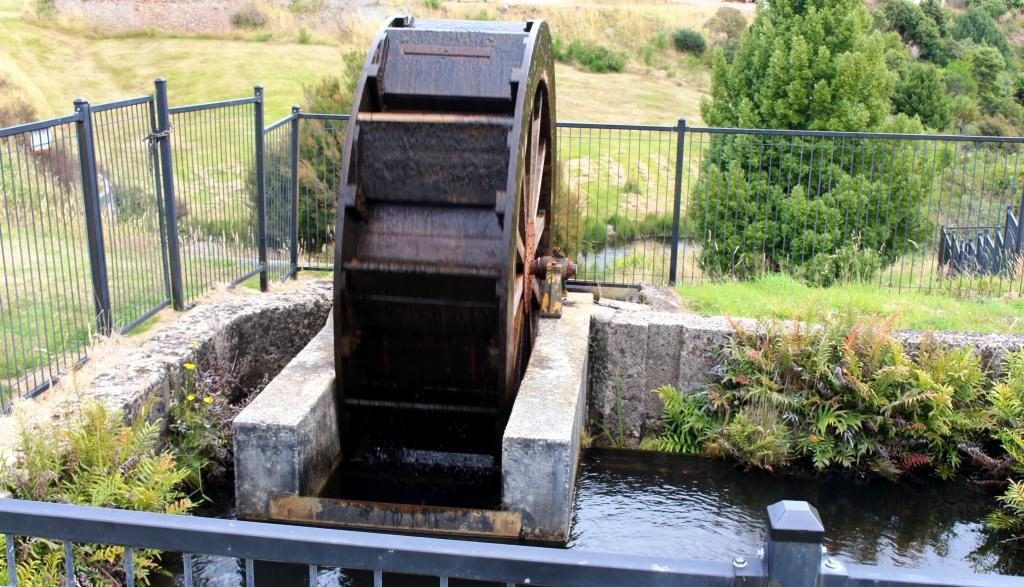
A water wheel now used for a display instead of work

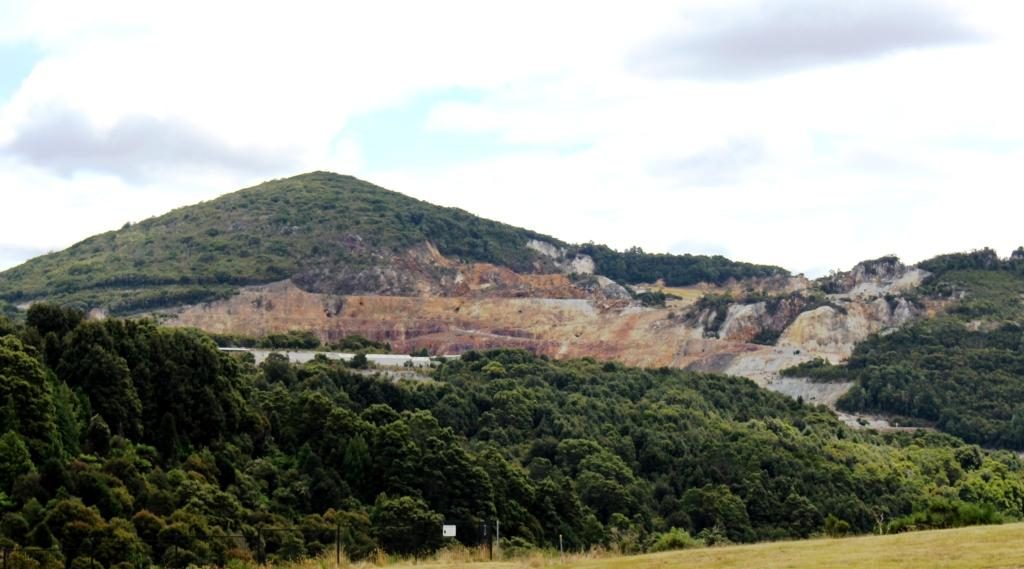
Tin mining continued until 1929, but was opened again in 1942, to support the war effort. It finally closed permanently 1947, about the time that I was learning about it at school.  Displays in the town relate to those times. A walking trail leads into the gorge where those with the time can see more of the mining relics. The excavation activities created a huge gouge into the face of the mountain, although much of the mining was under ground.

The above ground part of the Mount Bischoff tin mine
This hut was the home of James “Philosopher” Smith, one of the prospectors who discovered tin at Mount Bischoff

We continued south to Tullah, after which we had a choice of road. We chose the route nearest to the west coast, through Rosebery and Zeehan. Tullah is a Tasmanian Hydro Electricity town with some tourism based on two large man made lakes. Rosebery and Zeehan were both mining towns. Zeehan was a tin, silver and zinc mining town. We returned to Zeehan a couple of days later. Rosebery was a gold, zink and copper mining area.

After Zeehan the road swings west towards the coast and crosses a winding mountain range, the road running through rain forest that is often like a tunnel. As the ocean comes into view a lookout has been provided. It gives sweeping views of the coast including the distant Cape Sorrel Lighthouse at the mouth of Macquarie Harbour, but you need a long lens or binoculars to see the lighthouse clearly.

A view of the west coast to the north of Strahan and Macquarie Harbour.

The drive to Strahan from here is along the coastal plain, mostly behind sand dunes. The road, known as the Murchison Highway, for the entire distance from Burnie is well formed and sealed throughout, although a bit on the narrow side, as are many of the secondary roads in Tasmania. Our accommodation for the next three nights was in a cabin in the Strahan Caravan Park.